
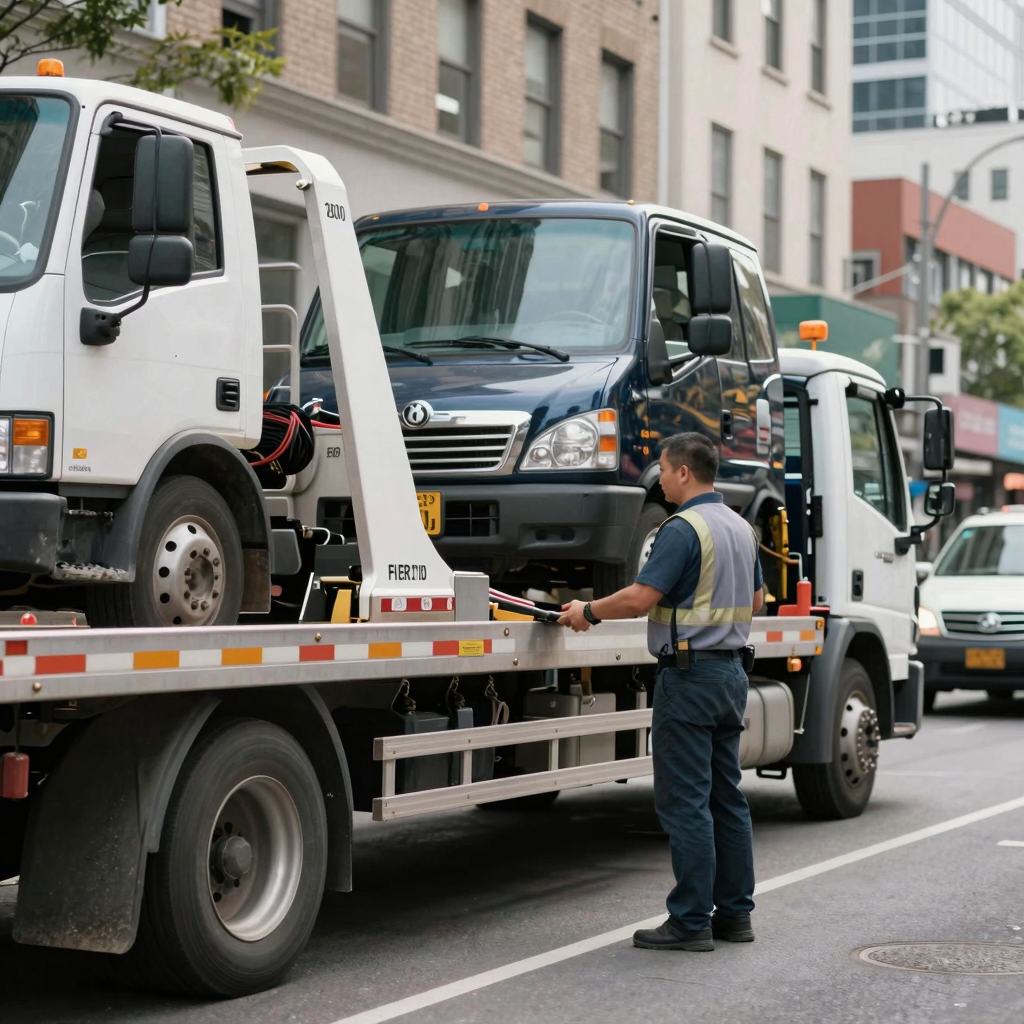
In today’s fast-paced business landscape, towing services are not just an accessory-they’re a necessity for operations to run smoothly. Business owners, especially in industries like logistics and fleet management, understand that unforeseen vehicle breakdowns can lead to significant downtime and financial losses. Investing in towing solutions is pivotal to ensuring rapid recovery of disabled vehicles, mitigating traffic disruptions, and supporting operational continuity. This is why knowing how to buy a tow truck is essential; it empowers you to make informed decisions that can safeguard your business assets and enhance service reliability. Not only does a reliable towing service protect your investments, but it also ensures compliance with industry regulations, helping you avoid potential liabilities. Whether you’re looking to streamline operations or strengthen emergency response protocols, having the right towing support is crucial. Ready to take the next step? Reach out to Zoomlion for expert guidance on purchasing the perfect tow truck for your business needs!
Top Reasons Business Owners Need a Tow Truck
Investing in a tow truck can be a game-changer for business owners, especially those reliant on vehicles for their operations. Here are some compelling reasons to consider:
-
Enhanced Emergency Response: Having a tow truck allows businesses to respond swiftly to vehicle breakdowns, minimizing downtime and ensuring continuous operation. This is crucial for logistics and delivery services, where time is of the essence. Learn more about emergency response capabilities.
-
Cost Savings: Owning a tow truck eliminates the need for expensive third-party towing services. Companies report significant cost reductions-up to 28%-in towing-related expenses when they manage their towing solutions in-house. This investment pays for itself over time through savings and increased efficiency.
-
Improved Fleet Management: A tow truck can improve fleet reliability by enabling quick recovery of vehicles that break down. This ensures that delivery schedules are maintained, and operational disruptions are minimized, leading to increased productivity.Discover strategic advantages for fleet-based companies.
-
Increased Customer Satisfaction: By providing immediate assistance to stranded vehicles, businesses can assure their clients of their reliability, enhancing customer satisfaction and loyalty. This is particularly beneficial for businesses where first impressions count, such as rental and delivery services.
-
Operational Resilience: In high-risk environments, having a tow truck ensures that businesses can manage emergencies effectively, protecting their assets and personnel while maintaining service levels.Read more about the essential role of tow trucks.
By investing in a tow truck, business owners not only protect their assets but also enhance their operational capabilities and improve their bottom line.
Overview of Tow Truck Types Available in the Market
When considering purchasing a tow truck for business applications, it’s crucial to understand the various types available. Each type serves different needs and operates in distinct environments. Below is a detailed overview of the current market options for tow trucks, highlighting their advantages and disadvantages.
1. Light-Duty Tow Trucks
Applications: Ideal for passenger vehicles and small commercial vehicles.
-
Pros:
-
High demand in urban areas since they can easily maneuver through tight spaces.
-
Lower initial costs and maintenance expenses compared to heavy-duty trucks.
-
Suitable for small towing businesses or roadside assistance services.
-
Cons:
-
Limited towing capacity; cannot handle larger vehicles.
-
May not be suitable for more extensive commercial operations that involve heavy machinery.
2. Medium-Duty Tow Trucks
Applications: Best for larger vehicles like vans, SUVs, and light trucks.
-
Pros:
-
Versatility in handling a variety of vehicles.
-
Perfect for businesses that operate in urban and suburban areas.
-
Offers a balance between capacity and mobility.
-
Cons:
-
Higher purchase and maintenance costs than light-duty trucks.
-
May be too small for specific heavy-duty applications.
3. Heavy-Duty Tow Trucks
Applications: Necessary for large commercial vehicles, semi-trucks, buses, and equipment recovery.
-
Pros:
-
Highest towing capacity, allowing for the transport of larger vehicles and machinery.
-
Increasing demand among logistics and transportation companies due to freight transportation activity.
-
Fastest-growing segment of the market, indicating strong future potential.
-
Cons:
-
Substantial initial investment and ongoing operational costs.
-
Requires specialized training to operate safely and effectively.
Market Trends
According to a recent analysis, light-duty trucks held the largest market share in 2023, driven by urban demand and private fleet operations. Moreover, the heavy-duty segment is expected to see significant growth, with an anticipated increase in infrastructure development and freight activities in emerging economies.
For more information on local towing services, you can learn more about our Burke Towing Service or explore Washington D.C. Towing options.
Conclusion
Selecting the right tow truck type is essential for maximizing efficiency and profitability in your towing business. Consider your operational needs, budget constraints, and the types of vehicles you will be towing to make an informed decision. A well-chosen tow truck can enhance your service offerings and contribute to the success of your business.
Tow Truck Brand Comparison Table
Here’s a comparison table of popular tow truck brands and their models, including specifications and pricing for your consideration:
| Brand | Model | Towing Capacity (kN) | Price Range (£) | Dimensions (mm) | Engine Type |
|---|---|---|---|---|---|
| JMC (Jiangling) | Domain 7 (Diesel) | 120 | 289,900 – 350,000 | 5,795 × 1,990 × 2,150 | 2.0L Turbo Diesel (141 HP) |
| Howo (Sinotruk) | TH7 (6×4) | 200 | 395,000 – 450,000 | 6,990 × 2,550 × 3,950 | 11L Turbo Diesel (480 HP) |
| Dongfeng | Chuanlong H7 (6×4) | 220 | 425,000 – 480,000 | 7,050 × 2,550 × 3,960 | 12L Turbo Diesel (480 HP) |
| Foton | OMAN EST (6×4) | 200 | 462,000 – 520,000 | 7,080 × 2,550 × 3,850 | 13L Turbo Diesel (520 HP) |
| Sany | Justice Series (6×4) | 180 | 318,000 – 360,000 | 6,950 × 2,530 × 3,850 | 12L Turbo Diesel (480 HP) |
This table provides essential specifications and pricing to help you make an informed decision when choosing a tow truck. For more detailed information on local towing services, you can learn more about our services in Burke or our Manassas towing options.
Financing Options for Purchasing Tow Trucks
When it comes to buying a tow truck, business owners have several financing options to consider, each with its own pros and cons. Understanding these options can help ensure that you choose the best path for your financial situation and business goals.
1. Business Equipment Loans
Business equipment loans are secured loans specifically for purchasing commercial vehicles like tow trucks. Lenders in this category include banks, credit unions, and specialized equipment financing companies.
- Interest Rates: Approx. 5.9% – 12.0%
- Typical Terms: 3 to 7 years
- Eligibility Requirements: Usually requires a good credit score (680+), established business history (1-2 years), proof of income, and collateral (the tow truck itself).
2. Lease-Option Agreements
Leasing allows you to use a tow truck for a specified period with the option to purchase at the end of the lease term. This can lead to lower monthly payments than a traditional loan.
- Interest Rates: Not applicable; monthly payments vary based on the agreement.
- Typical Terms: 3 to 5 years
- Eligibility Requirements: A credit check is required, and some providers have higher credit score requirements than loans.
3. Equipment Finance Companies
There are many companies that specialize in financing heavy equipment, including tow trucks. Their terms can be more flexible than traditional banks.
- Interest Rates: Approx. 6.5% – 14.0%
- Typical Terms: 2 to 7 years
- Eligibility Requirements: Typically requires a business entity, minimum revenue threshold, and sometimes a down payment (10%-20%).
4. SBA 7(a) Loan Program
This is a government-backed loan available through the U.S. Small Business Administration (SBA), which can be used for equipment purchases.
- Interest Rates: Approx. 6.5% – 9.5% (with SBA guarantee)
- Typical Terms: Up to 10 years for equipment
- Eligibility Requirements: Must be a small business (under $1 million annual revenue), have good credit, and a solid business plan.
5. State/Local Grants & Incentives
Various government programs offer grants or low-interest loans for purchasing environmentally friendly or safety-enhanced tow trucks. These grants can be an excellent avenue to explore as they often do not require repayment.
- Interest Rates: Grants may provide 0% interest, while loans have standard terms.
- Eligibility Requirements: Specific eligibility varies based on vehicle type, location, and business size.
Conclusion
Each financing option comes with its own set of criteria and benefits. Be sure to evaluate your business’s financial health, credit status, and future plans when deciding the best financing route for purchasing your tow truck.
To explore more about the towing services available in your area, check our Washington DC Towing services or learn about our services in Alexandria.

Chart: Tow Truck Financing Options
Understanding these financing pathways can empower business owners to make informed, strategic decisions that enhance their operational capabilities in the towing industry.

Blockquote:
“Owning a tow truck isn’t just about driving-it’s about risk management, customer service, and regulatory compliance. You must understand local laws, have proper licensing, and maintain flawless records. I tell every new owner: your reputation is everything. One bad call or mishandled job can damage your credibility faster than a flat tire.”
- Sarah Chen, Certified Towing Operations Manager
In this industry, the stakes are high. As a business owner, understanding these nuances can turn your investment in a tow truck into a rewarding venture. It’s not merely a vehicle; it’s an essential tool that enables you to make a significant impact on your community while building a sustainable business.
For those considering entering the towing business, remember that solid management and customer relations help generate trust and long-term success.
Looking for top-notch towing services? Contact us today for assistance!
Tips for Evaluating Tow Truck Sellers
Selecting a reliable tow truck seller is essential for business owners, as it directly impacts the efficiency and reputation of your towing service. Here are some actionable tips to help you make an informed decision:
1. Assess Reliability
- Availability: Choose a seller that provides 24/7 services. This ensures that your business can operate round the clock without interruptions.
- Professionalism: Look for companies that emphasize professionalism in their operations. Check customer feedback and testimonials to gauge their reliability.
2. Warranty Considerations
- Extended Warranties: Reliable tow truck sellers often provide extended warranties on their vehicles. This can be crucial in minimizing future repair costs and ensuring peace of mind. Make sure to understand the terms and coverage of any warranty you might be offered.
- Service Guarantees: Assess if the seller offers any service guarantees. These can help protect your investment in case of unexpected issues.
3. Customer Service
- Transparent Communication: A good seller should maintain clear and open communication with their clients. This includes setting expectations for service delivery and being available to address concerns.
- Post-Purchase Support: Ensure the seller provides ongoing support post-purchase. This can include maintenance recommendations, parts availability, and guidance on operating your new truck efficiently.
4. Equipment Maintenance
- Vehicle Condition: Inspect the tow trucks to ensure that they are well-maintained and equipped with the necessary safety features. A reliable seller takes pride in their fleet and ensures that all vehicles meet safety standards.
- Tech Capabilities: Consider sellers who provide trucks with modern technology such as tracking systems and enhanced towing capabilities, which can improve service quality and efficiency.
Conclusion
Investing time to evaluate tow truck sellers carefully can save you money and enhance the overall service you provide. For more details on reliable towing services, check our Burke Towing Service or Washington DC Towing pages for insights.
Conclusion: The Smart Investment for Business Owners
Investing in a tow truck is a strategic move for business owners aiming to enhance their service offerings and boost operational efficiency. Tow trucks provide indispensable value by enabling prompt roadside assistance, expanding service capabilities, and increasing revenue potential through diversified towing services. Understanding how to buy a tow truck ensures you select the right vehicle tailored to your business needs, balancing cost, durability, and functionality.
For business owners in the region, the benefits extend beyond just owning equipment; it’s about gaining a competitive edge and ensuring customer satisfaction with reliable, timely support. Partnering with trusted suppliers like Zoomlion can simplify the purchasing process and provide ongoing support, making the investment even more worthwhile.
If you’re ready to take the next step in growing your towing business, don’t hesitate to reach out to trusted experts. Consider contacting Acex Towing to explore professional towing services and support as you build your fleet and expand your business footprint.
For more detailed insights on local towing services, you might find this resource helpful: towing company Arlington VA and tow truck service Alexandria VA.
Growth Trends in the Towing Industry
The towing industry has shown notable growth trends over the past decade, with an average annual growth rate of approximately 5.5% from 2017 to 2022. The impact of the COVID-19 pandemic in 2020 caused a temporary downturn, but the industry quickly rebounded in 2021.
Industry Revenue Growth Chart

Here are the specific statistics outlining this growth:
| Year | Industry Revenue (USD Billion) | Growth Rate (%) | Notes |
|---|---|---|---|
| 2017 | ~6.8 | – | Base year for growth trend |
| 2018 | ~7.1 | ~4.4 | Continued steady growth |
| 2019 | ~7.4 | ~4.2 | Market expansion observed |
| 2020 | ~7.0 | ~-5.4 | Dip due to pandemic-related disruptions |
| 2021 | ~7.3 | ~4.3 | Recovery phase post-pandemic |
| 2022 | ~7.7 | ~5.5 | Resumed upward trajectory |
Note: Data is based on industry reports from 2023-2025, including the U.S. towing market analysis and global tow truck market assessments.
For tow truck requirements and services, learn more about our towing services in Burke or explore our offerings in Washington DC.