

When it comes to business, especially in industries reliant on logistics, understanding your truck’s towing capacity is crucial. Did you know that companies that align their vehicles with appropriate towing capacities report a staggering 34% increase in operational efficiency? Towing capacity not only determines how much weight your truck can pull but also influences maintenance costs, safety compliance, and ultimately, your bottom line. In this article, we will explore the essential factors that affect a truck’s towing capability and why it’s vital for business owners to grasp these details. We’ll also discuss how to assess towing needs accurately to avoid costly mistakes, ensuring you maximize your vehicle’s potential-because when your truck is properly equipped, it drives your business forward effectively. For those looking for reliable towing services, don’t hesitate to learn more about our services.
Factors Affecting Towing Capacity
When it comes to understanding how much weight your truck can tow, various factors play essential roles in determining its towing capacity. Here are the main factors to consider:
-
Engine Size: One of the most critical factors, the engine size affects the power and torque available to tow heavy loads. Larger engines or turbocharged units generally provide better towing performance due to increased horsepower and torque output.
-
Weight Class: Trucks are categorized into different weight classes (e.g., Class 2, Class 3, Class 4). The weight class influences the truck’s structural integrity, which is vital for safe and efficient towing. Higher weight classes typically allow for greater towing capacities.
-
Transmission Type: The transmission type (manual or automatic) can affect towing performance. For instance, vehicles with specialized transmissions designed for hauling may offer improved towing reliability and efficiency.
-
Axle Ratio: The axle ratio impacts how power is distributed to the wheels. Higher axle ratios can enhance towing capacity but may reduce fuel efficiency. It’s essential to choose the right ratio based on your towing needs.
-
Suspension System: A robust suspension system helps maintain stability and control while towing. Heavy-duty suspensions can better handle the additional weight and prevent sagging.
-
Cooling Systems: Adequate cooling systems are crucial for keeping the engine and transmission functioning efficiently under load, especially during long hauls.
-
Trailer Brake Controller: A built-in trailer brake controller can enhance safety by ensuring that braking power is appropriately distributed between the truck and the trailer, improving control during towing.
-
Legal and Manufacturer Specifications: Always refer to the manufacturer’s guidelines and legal regulations to understand the maximum towing capacity. Exceeding this limit can compromise safety and vehicle performance.
For more insights into the importance of adhering to these factors, you might want to learn more about our towing services in Burke, VA or check our Manassas towing options.
| Truck Model | Maximum Towing Capacity | Engine Specs | Horsepower | Torque |
|---|---|---|---|---|
| Ford F-250 Super Duty | 12,500 lbs | 6.7L V8 Diesel | 475 | 1,050 lb-ft |
| Chevrolet Silverado 2500HD | 13,000 lbs | 6.6L V8 Gasoline | 401 | 464 lb-ft |
| Dodge Ram 2500 | 37,090 lbs | 6.7L Cummins Turbo Diesel | 485 | 1,450 lb-ft |
| Ford F-150 Raptor | 10,000 lbs | 3.5L Twin-Turbo V6 | 450 | 510 lb-ft |
This comparison helps business owners identify the right truck for towing needs. For more information on towing services, you can learn about our towing services in Arlington or get in touch with our team.
How to Calculate Your Truck’s Towing Capacity
Calculating the towing capacity of your truck is essential for ensuring safe transport for your business operations. Here’s a step-by-step guide to effectively determine how much weight your truck can tow:
Step 1: Understand Key Definitions
Before you start, it’s important to know the following terms:
| Term | Definition |
|---|---|
| Curb Weight | The weight of the truck when empty, including all fluids and standard equipment. |
| Payload Weight | The total weight of passengers, cargo, and additional items in the truck. |
| Gross Combined Weight Rating (GCWR) | The maximum allowed weight of the loaded truck combined with the trailer. |
| Trailer Weight | The weight of the trailer without any additional cargo. |
| Towing Capacity | The maximum weight your truck can tow, calculated using the factors above. |
Step 2: Gather Required Data
You need to find the values for:
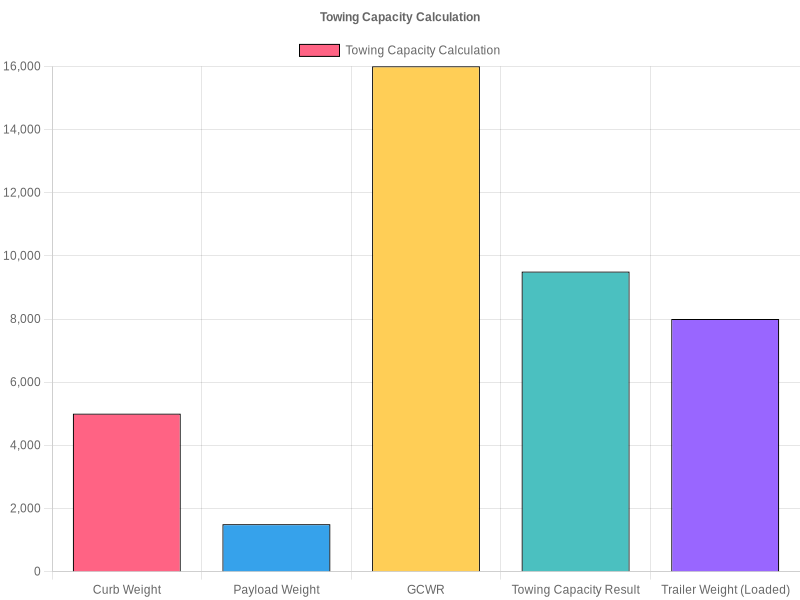
- Curb Weight (e.g., 5,000 lbs)
- Payload Capacity (e.g., 1,500 lbs)
- Gross Combined Weight Rating (GCWR) (e.g., 16,000 lbs)
You can find these specifications on the driver’s side door jamb or in your truck’s owner manual.
Step 3: Calculate Maximum Towing Capacity
The formula to calculate your towing capacity is:
Towing Capacity = GCWR - (Curb Weight + Payload Weight)
Example Calculation:
If you have a GCWR of 16,000 lbs, a curb weight of 5,000 lbs, and a payload of 1,500 lbs, the calculation would be:
Towing Capacity = 16,000 - (5,000 + 1,500)
Towing Capacity = 16,000 - 6,500 = 9,500 lbs
So, your truck can safely tow 9,500 lbs.
Step 4: Verify Trailer Compatibility
Ensure the weight of your trailer and its load do not exceed the calculated towing capacity:
- If your trailer (with cargo) weighs 8,000 lbs, it’s safe to tow.
- If it weighs 10,000 lbs, you will exceed the limit, which is unsafe.
Step 5: Final Check – Ensure All Weights Are Within Limits
Always leave a safety buffer, generally recommending 10-15% of your total capacity to account for hills, braking, and emergencies.
For further assistance and towing services, consider checking out our Burke Towing Services or Manassas Towing. Additionally, stay updated on local towing regulations to ensure compliance as you manage your business’s towing needs.
Industry Standards and Regulations for Truck Towing Capacities
Understanding the towing capacity of trucks is crucial for business owners who rely on these vehicles for transportation and logistics. Several industry standards and regulations govern towing capacities in the U.S., ensuring safety and compliance in various towing operations. Below is a summary of these critical standards:
Federal Regulations
The Federal Motor Carrier Safety Administration (FMCSA) regulates towing capacities for commercial vehicles under Title 49 of the Code of Federal Regulations. Key points include:
- Maximum Vehicle Weight Limits: A standard maximum gross vehicle weight (GVW) limit of 80,000 pounds (approximately 36,287 kg) for six-axle combinations on interstate highways.
- Bridge Formula Compliance: Towing capacities must adhere to bridge formula calculations to prevent overloading axles.
- License and Inspection Requirements: All commercial towing operations must have the appropriate licenses and vehicle safety inspections, including regular compliance checks.
For detailed regulations, check the FMCSA’s official site.
State-Specific Regulations
Individual states may impose stricter towing regulations than federal law. For instance:
- Some states have limits under 80,000 pounds due to infrastructure limitations.
- States like California and New York have additional requirements for moving oversize/overweight loads, often requiring special permits, advance notification, and escort vehicles.
You can find state-by-state guides and recommendations through the American Trucking Associations.
Safety Standards by NHTSA
The National Highway Traffic Safety Administration (NHTSA) oversees safety standards pertaining to truck towing, focusing on:
- Hitching and Braking Systems: Compliance with Federal Motor Vehicle Safety Standards (FMVSS).
- Maintenance and Training: Regular checks are vital, alongside specialized driver training for safe towing practices. A vehicle’s towing capacity should not exceed the manufacturer’s specifications to mitigate risks associated with mechanical failures.
In summary, understanding and complying with these standards not only enhances safety but also ensures legal protection for business owners involved in towing operations.
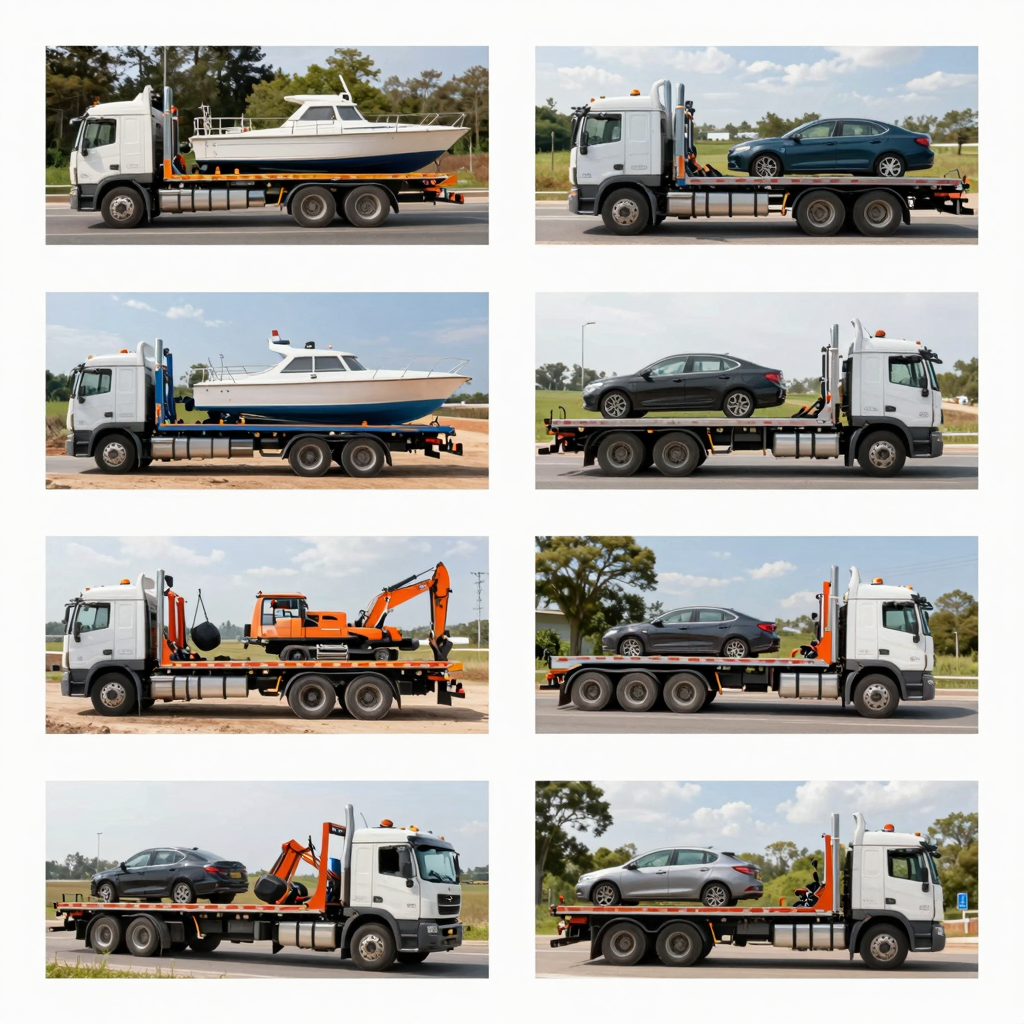
This image highlights various towing scenarios, illustrating practical applications of towing capacities with trucks. It shows trucks towing boats, cars, construction equipment, and assisting in roadside situations, highlighting the versatility and functionality required for different towing needs.
For more information about our towing services, feel free to contact our towing company or learn about our towing service in Burke.
Tips for Maximizing Towing Efficiency
Maximizing the towing efficiency of your truck not only enhances operational performance but also improves safety and saves costs over time. Here are some actionable tips that business owners should consider:
-
Know Your Truck’s Towing Capacity: Always refer to the manufacturer’s guidelines regarding your truck’s maximum towing capacity. Exceeding this limit can lead to severe damage and safety hazards.
-
Distribute Weight Evenly: Ensure that the load is evenly distributed across the tow vehicle and trailer. Uneven weight distribution can lead to instability, decreasing towing efficiency and increasing wear on tires.
-
Use Proper Hitching Techniques: Invest in a good-quality hitch and ensure it is correctly installed and rated for your truck’s towing capacity. Proper hitching minimizes sway and improves handling.
-
Perform Regular Maintenance: Regular vehicle maintenance is critical for towing efficiency. Key practices include:
-
Checking tire pressure and tread depth regularly, as tires impact both towing stability and fuel efficiency. Properly inflated tires can improve gas mileage by as much as 3%.
-
Regular checks of the engine, specifically oil levels, air filters, and cooling systems, to ensure optimal performance under load. Use high-quality, low-viscosity oils for effortless operation during towing.
-
Monitoring brake system integrity is vital for safety, especially under heavy loads.
-
Utilize Technology: Consider using load-assist technologies that can help monitor weight distribution and vehicle dynamics, allowing for real-time adjustments and optimization.
-
Adjust Driving Habits:
-
Drive at moderate speeds; excessive speed can lead to decreased fuel efficiency and increase the risk of accidents.
-
Avoid rapid acceleration or hard braking, as smooth driving reduces fuel consumption and wear on vehicle components. A steadier driving style can improve fuel economy significantly, especially when towing heavy loads.
-
Choose the Right Equipment: Invest in lightweight, high-strength materials for your trailer. Reducing the overall weight of what you are towing can significantly improve efficiency.
-
Stay Informed on Load Limits: Always check local regulations regarding weight limits on towing, especially when traversing different jurisdictions. Understanding these limits can prevent potential penalties and dangers.
For enhanced safety and efficiency, consider professional services for your towing needs. Learn more about our towing services to keep your operations running smoothly.
By implementing these tips, business owners can ensure that their towing needs are efficiently met, keeping both cost and safety in mind.
In conclusion, understanding how much weight your truck can tow is crucial for business owners who rely on heavy-duty transportation. As we have discussed throughout this article, the towing capacity of your vehicle depends on several factors, including the truck’s model, engine specifications, and any modifications made. Ensuring that your truck is capable of towing the necessary weight not only enhances your operational efficiency but also maintains safety on the road.
When the need arises for reliable towing services, remember that Zoomlion has been a trusted partner since 1992. With decades of experience in heavy machinery and towing solutions, Zoomlion guarantees the performance and dependability you expect from a towing company. Their commitment to quality and customer satisfaction is firmly rooted in their long-standing reputation in the industry.
Don’t compromise when it comes to transporting your valuable assets. Contact Zoomlion today for all your towing needs and experience the reliability that has been a hallmark of their service over the years. Whether you operate in Alexandria, Arlington, or Washington, DC, our team is ready to assist you anytime. To learn more about our offerings, visit our towing services in Alexandria or reach out for a personalized consultation on how we can help your business thrive!
“Overloading or uneven packing increases the likelihood of losing control while driving.”
- Superintendent Shane Johnson, South Australia Police
Learn more about towing services in Burke, VA
This quote emphasizes the critical importance of respecting towing limits and managing load distribution, particularly for business owners who rely on towing for operational needs.
Vehicle Class Weight Limits
Understanding the loading limits by vehicle class is crucial for business owners who rely on trucks for their operations. Below is a bar chart that clearly displays the weight limits associated with various vehicle classes. This information helps in assessing what types of loads each class of vehicle can safely tow.
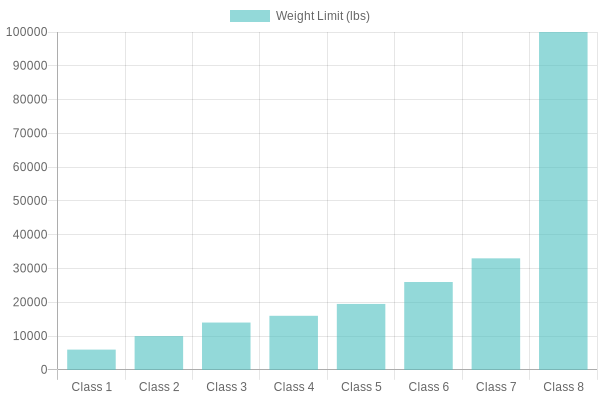
Weight Limits by Vehicle Class:
| Vehicle Class | Weight Limit (lbs) |
|---|---|
| Class 1 | Under 6,000 |
| Class 2 | 6,001 to 10,000 |
| Class 3 | 10,001 to 14,000 |
| Class 4 | 14,001 to 16,000 |
| Class 5 | 16,001 to 19,500 |
| Class 6 | 19,501 to 26,000 |
| Class 7 | 26,001 to 33,000 |
| Class 8 | Over 33,000 |
Note: This chart is based on standard commercial vehicle classifications used in the United States for regulatory and operational purposes. Actual towing capacity may vary depending on vehicle make, model, and configuration.
For more detailed information about towing services, you can learn more.
Also, if you’re interested in our service offerings in specific areas, check out our Burke Towing Service.