
Introduction
In the ever-evolving trucking industry, understanding how much a truck can tow is crucial, especially for business owners. This capability directly influences the efficiency and profitability of operations, from transporting heavy machinery to hauling equipment. A truck’s towing capacity not only determines what loads can be managed but also plays a significant role in procurement decisions and fleet management. As business owners strive to optimize their resources, having a solid grasp of towing specifications can help make more informed choices, enhancing productivity and reducing operational costs. Whether you’re a seasoned veteran or just starting, knowing the limits of your truck is essential to ensuring safety, compliance, and maximizing your bottom line. Explore our related towing services in Arlington to understand how we can assist you in meeting your logistics needs.
Overview of Truck Towing Capacities
Truck towing capacities vary significantly depending on the type and model of the vehicle. Generally, trucks are categorized into three types: light-duty, medium-duty, and heavy-duty, each with its own towing capabilities and intended uses. Understanding these differences is essential for business owners relying on trucks for logistics and transportation.
Light-Duty Trucks
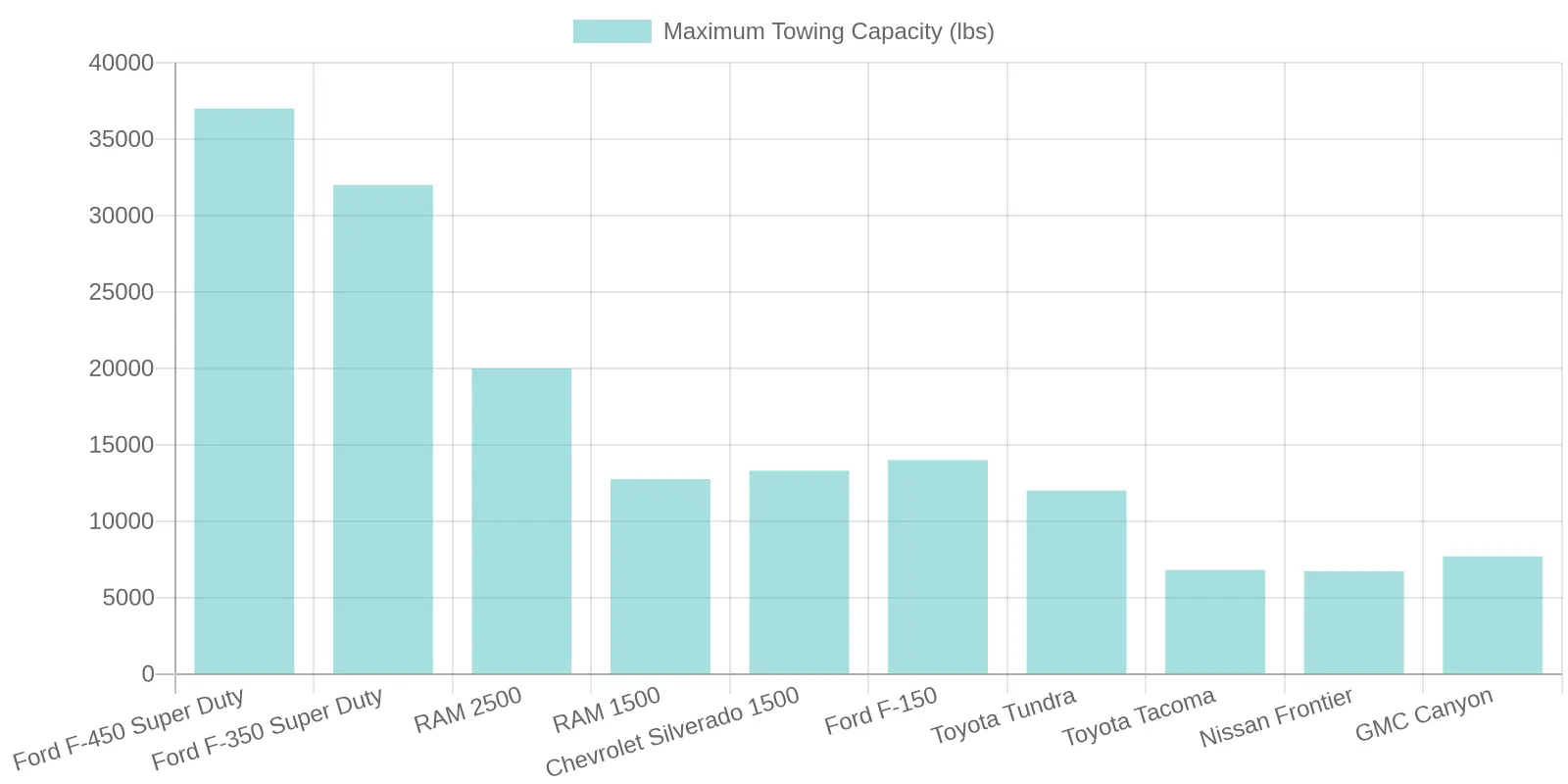
Light-duty trucks, such as the Ford F-150 and Chevrolet Silverado 1500, are designed for personal use and light commercial applications. The Ford F-150 can tow up to 14,000 lbs, while the Chevrolet Silverado 1500 boasts a maximum towing capacity of 13,300 lbs. These trucks are suitable for towing smaller trailers and equipment.
Medium-Duty Trucks
Moving up the scale, medium-duty trucks like the RAM 2500 offer greater towing capacities, with a maximum of 20,000 lbs. These trucks strike a balance between capacity and maneuverability and are often used for larger trailers and more substantial loads.
Heavy-Duty Trucks
For maximum towing efficiency, heavy-duty trucks like the Ford F-450 Super Duty shine with incredible towing capabilities of up to 37,000 lbs. These trucks are engineered for the demanding tasks encountered in commercial industries, making them ideal for towing oversized equipment and materials.
Chart of Towing Capacities
To better illustrate the distinctions in towing capacities among various trucks, the following chart outlines maximum towing capacities for some popular models in 2023:
| Truck Model | Type | Maximum Towing Capacity (lbs) |
|---|---|---|
| Ford F-450 Super Duty | Heavy-Duty | 37,000 |
| Ford F-350 Super Duty | Heavy-Duty | 32,000 |
| RAM 2500 | Heavy-Duty | 20,000 |
| RAM 1500 | Full-Size | 12,750 |
| Chevrolet Silverado 1500 | Full-Size | 13,300 |
| Ford F-150 | Full-Size | 14,000 |
| Toyota Tundra | Full-Size | 12,000 |
| Toyota Tacoma | Mid-Size | 6,800 |
| Nissan Frontier | Mid-Size | 6,720 |
| GMC Canyon | Mid-Size | 7,700 |
Choosing the right truck based on towing capacity is crucial for business owners. Understanding these specifications allows for more effective planning in logistics and transportation. For more information on towing services in your area, check out our Burke Towing Service or Washington DC Towing Services.
Towing Capacities by Truck Class
Trucks come in various classes, each designed for specific purposes and with unique towing capacities. The following table provides a quick visual reference for you to understand the towing capabilities of different truck classes:
| Class | Towing Capacity Range (lbs) | Example Vehicle(s) |
|---|---|---|
| Light Duty | 5,000 – 10,000 | Ford F-150 (max 13,000), Toyota Tacoma (max 6,800) |
| Medium Duty | 10,000 – 26,000 | Ford F-250 (max 20,000), Chevrolet Silverado 2500HD (max 18,500) |
| Heavy Duty | 17,000 – 45,000 | Ford F-350 (max 38,000), Chevy Silverado 3500HD (max 36,000) |
| Super Duty | 20,000 – 35,000 | Ford F-450 (max 40,000) |
These capacities provide an overview for business owners looking to invest in the right truck for towing needs. For more information on towing services, check out our Burke Towing Service and Manassas Towing.
Visual Representation of Towing Capacities
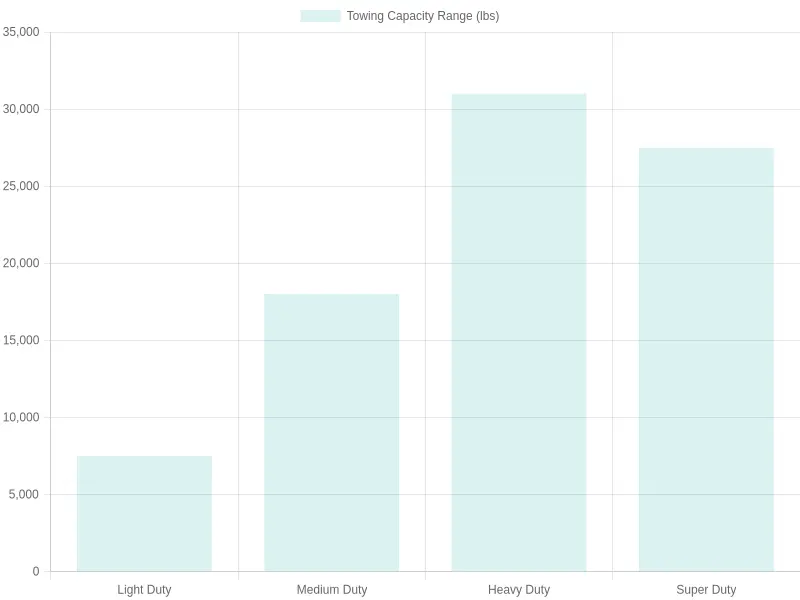
This chart visually illustrates the towing capacities across different truck classes, aiding in your decision-making process regarding the suitable truck for your business’s towing needs.
Understanding Towing Capacity: Key Factors for Business Owners
When considering how much a truck can tow, business owners must evaluate several critical factors that can significantly impact towing capacity. Understanding these components not only helps in choosing the right vehicle but also ensures safety and reliability in operations. Here are some of the essential factors to consider:
1. Vehicle Weight
The weight of the vehicle itself plays a crucial role in determining the towing capacity. Heavier trucks generally have higher towing capabilities due to more robust structures and systems designed to handle the strain of towing.
2. Engine Power
A powerful engine is vital for effective towing. Engine specifications, particularly horsepower and torque, influence how much weight a truck can pull without straining the vehicle. For instance, vehicles with higher torque can move significantly more weight.
3. Trailer Weight
The weight of the trailer, including any cargo it carries, directly affects the total weight the vehicle must tow. It’s crucial for business owners to ensure that the combined weight of the truck and the loaded trailer does not exceed its rated towing capacity. Excess weight can lead to dangerous driving conditions and mechanical failures.
4. Suspension and Frame Strength
The suspension system must be capable of supporting the additional weight of the trailer. A truck’s frame should be reinforced if it’s used frequently for heavy towing to avoid damage and ensure stability. Heavy-duty trucks come with specialized suspensions that enhance their towing capabilities.
5. Brake Systems
Braking capacity is equally important when assessing towing needs. A truck must have adequate brakes not only for stopping itself but also for controlling the trailer it tows. Many trucks are equipped with enhanced braking systems, such as trailer brakes, to manage heavier loads safely.
6. Gear Ratios
The truck’s rear axle ratio can affect performance when towing. A lower gear ratio often provides better torque and power for towing, while a higher ratio might offer better fuel efficiency but reduce towing competency.
7. Manufacturer Ratings
Lastly, always refer to the manufacturer’s towing specifications for the vehicle. This information provides the recommended limits and configurations for safe towing practices.
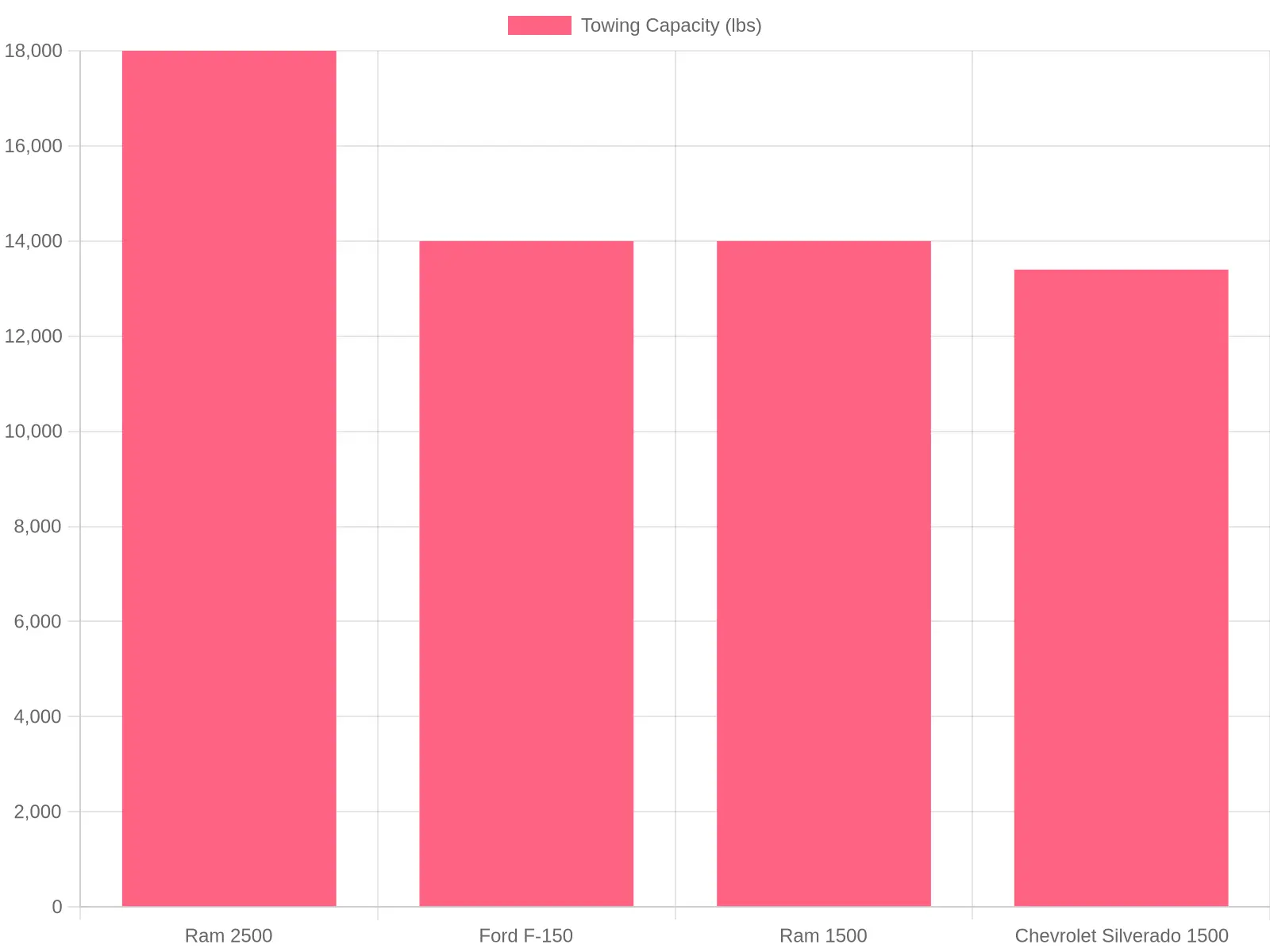
To visually understand how different truck models compare in terms of towing capacity, see the chart below detailing capacities from popular models:
| Truck Model | Towing Capacity (lbs) |
|---|---|
| Ram 2500 | 18,000 |
| Ford F-150 | 14,000+ |
| Ram 1500 | 14,000 |
| Chevrolet Silverado 1500 | 13,400 |
Understanding these factors will help business owners choose the right truck for their towing needs and ensure safe and efficient operations. For tailored towing services, consider reaching out to Washington DC towing experts to learn more about what fits your specific business requirements.
Understanding How Engine Size Affects Towing Capacity
When it comes to choosing a truck for towing, one of the most critical factors to consider is the engine size. Generally, larger engines provide higher towing capacities, which can be critical for businesses that rely on hauling equipment or other vehicles.
Engines are typically measured in liters (L), and as a general rule, trucks with larger engines (more liters) can tow heavier loads. For example, a truck with a 5.7L V8 engine can tow significantly more than one with a 2.0L turbocharged engine. This relationship is important for business owners who need reliable towing capabilities.
To help visualize this relationship better, we have prepared a chart that outlines various truck models, their engine sizes, and maximum towing capacities:
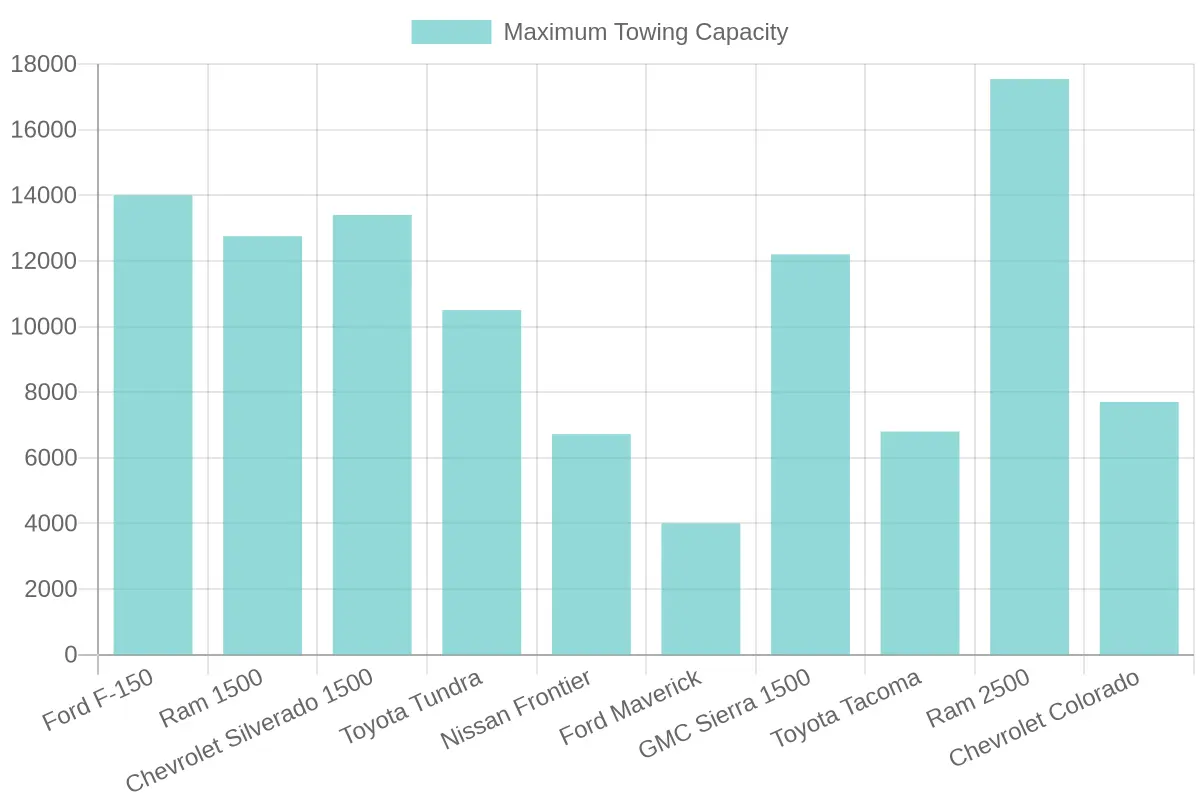
This chart shows the following data:
| Truck Model | Engine Size (L) | Maximum Towing Capacity (lbs) | Source |
|---|---|---|---|
| Ford F-150 | 3.3L V6 | 14,000 | Ford |
| Ram 1500 | 5.7L V8 | 12,750 | Ram |
| Chevrolet Silverado 1500 | 6.2L V8 | 13,400 | Chevrolet |
| Toyota Tundra | 5.7L V8 | 10,500 | Toyota |
| Nissan Frontier | 3.8L V6 | 6,720 | Nissan |
| Ford Maverick | 2.0L EcoBoost | 4,000 | Ford |
| GMC Sierra 1500 | 6.2L V8 | 12,200 | GMC |
| Toyota Tacoma | 3.5L V6 | 6,800 | Toyota |
| Ram 2500 | 6.4L V8 | 17,540 | Ram |
| Chevrolet Colorado | 2.5L I4 | 7,700 | Chevrolet |
Understanding these ratios between engine size and towing capacity can assist business owners in making informed decisions when purchasing a truck for towing purposes. For further information on towing services available in your area, you can learn more about our services in Arlington or contact our towing company.
Safety Considerations in Towing Heavy Loads
Towing heavy loads is an important task for many business owners, especially those involved in logistics, construction, and transportation services. While it offers efficiency, it also introduces a unique set of safety considerations that must be addressed to prevent accidents, damage, and legal issues.
1. Understanding Legal Requirements
Before engaging in towing operations, it is essential to understand the legal requirements within your area. Regulatory compliance can affect everything from the type of equipment used to the maximum weight allowed for towing. Business owners should stay updated on local towing laws, including licensing, insurance, and safety requirements to ensure they are operating within legal boundaries. For more on legal aspects, check this comprehensive guide.
2. Choosing the Right Equipment
Selecting the appropriate vehicle and towing equipment is critical. This includes ensuring that:
- The tow vehicle has the proper towing capacity that exceeds the weight of the load.
- The hitch and connection points are rated for the weight of the load.
- Safety chains and straps are used to secure the load effectively, reducing the risk of sway or detachment.
Using proper towing equipment minimizes the risk of mechanical failure, which can result in catastrophic incidents. For practical insights on equipment, consider reading about best practices for towing.
3. Proper Weight Distribution
Correct weight distribution is vital when towing heavy loads. Uneven weight can lead to loss of control, swaying, or tipping of the towing vehicle. Adjust the load to ensure a balanced distribution, keeping heavier items positioned low and centered. This adjustment can improve handling and increase safety during transport.
4. Speed and Driving Adjustments
When towing, drivers should maintain a slow and steady speed, avoiding rapid acceleration or hard braking. It’s essential to understand that towing increases both stopping distance and turning radius:
- Braking Distance: An increased distance is needed to stop safely. The heavier the load, the longer the stopping distance.
- Turning Radius: Wider turns are necessary to accommodate the length of the trailer or towed load.
Business owners should train drivers on these adjustments to enhance safety on the road. More on safe driving tips can be found in this article on safe towing practices.
5. Regular Maintenance Checks
Daily or regular maintenance checks on towing equipment can identify potential issues before they become serious hazards. Inspect the following:
- Tires: Ensure proper inflation and tread depth;
- Brakes: Check for responsiveness and wear;
- Hitch Connections: Verify that all connections are secure and functioning well.
Regular preventive maintenance can significantly reduce the risk of accidents and equipment failure while towing.
6. Know Your Vehicle’s Limitations
Understanding the limitations of your towing vehicle helps prevent overloading and ensures safe operations. Familiarize yourself with the manufacturer’s guidelines on maximum towing capacity and payload.
Conclusion
For business owners, focusing on safety when towing heavy loads is not just a regulatory requirement; it is fundamental for protecting your assets and ensuring the safety of your staff and the public. Adhering to these precautions and best practices can make a difference in creating a safe, efficient towing operation that results in long-term benefits for your business.
For reliable towing services in your area, consider our extensive range of towing options by exploring our services in Alexandria or Burke area.
-
Ignoring Vehicle Capacity: One of the most common mistakes is exceeding the towing capacity of your vehicle. Always check the manufacturer’s specifications to avoid breakdowns or accidents. Learn more about the importance of knowing your vehicle’s limits.
-
Using the Wrong Hitch Type: Using an incompatible hitch can lead to instability and accidents. Make sure that the hitch matches the trailer’s requirements and your vehicle’s towing capacity.
-
Neglecting Maintenance Checks: Failing to perform regular maintenance checks on both the truck and trailer can cause mechanical failures. Regularly inspect brakes, lights, tires, and connections to ensure everything is in working order.
-
Improper Weight Distribution: Unbalanced loads can lead to dangerous swaying. Always secure the load properly and distribute weight evenly across the trailer. This ensures better control during towing.
-
Not Using Safety Chains: Safety chains are critical in case the hitch fails. Always use safety chains to prevent the trailer from completely detaching from the towing vehicle.
-
Driving Too Fast: Speed limits are crucial when towing. Driving too fast increases the risk of accidents due to longer stopping distances and decreased stability.
-
Lack of Proper Training: Many business owners underestimate the complexity of towing. Consider professional training to understand the nuances of safe towing.
Implementing these practices will not only enhance safety on the road but also ensure your business operations run smoothly. For more assistance with towing strategies, feel free to contact Ace Towing.
In conclusion, understanding the towing capacities of various vehicles is paramount for business owners involved in transportation, logistics, or emergency services. Whether you are considering towing heavy equipment or vehicles, knowing your truck’s capabilities can significantly enhance safety and efficiency. From factors like engine power to transmission type and the overall vehicle design, several elements dictate how much weight your truck can manage effectively. For instance, vehicles such as the VW Amarok can tow up to 3500kg, showcasing that even smaller trucks can handle significant loads when properly equipped.
At Zoomlion, we are committed to supporting our clients in protecting lives and property through reliable towing services. If you have specific towing needs, or if you’d like to request quotes or learn more about how we can assist your business, please contact us today. We’re here to help you navigate the complexities of towing with expertise and dedication.