
Introduction
For business owners, the ability to move goods efficiently can make or break a deal. With a 1500 truck in your fleet, understanding its towing capacity isn’t just a technical specification-it’s a vital consideration that influences daily operations, logistics, and ultimately, profitability. Imagine being able to transport heavy equipment, trailers, or materials seamlessly across job sites; this capability can set your business apart from competitors. A 1500 truck typically boasts a towing capacity ranging from 6,000 to 12,000 pounds, depending on its configuration and equipment. This powerful range means that whether you’re in construction, landscaping, or any other industry requiring heavy lifting, knowing how much weight your truck can tow is essential for maximizing efficiency and minimizing costs. In this article, we will delve into the specifics of towing capacities for 1500 trucks and how leveraging this information can lead to smarter business decisions. If your work takes you through places like Burke or Alexandria, be sure to explore options for specific towing services tailored to your needs, such as our towing service in Burke or towing service in Alexandria.
Key Factors Affecting Towing Capacity of a 1500 Truck
When considering how much weight a 1500 truck can tow, various specifications play crucial roles. Here are the primary factors influencing towing capacity:
-
Engine Size and Power: A larger engine, typically with higher horsepower and torque, can handle heavier loads. For instance, engines like the 5.3L V8 and 6.2L V8 in trucks offer significantly more towing capacity than smaller engines.
-
Axle Ratio: The gearing of the truck’s axles affects how power is transmitted to the wheels. A higher numerical axle ratio allows for more torque at the wheels, improving towing capability.
-
Transmission Type: Modern automatic transmissions with advanced technology can handle higher loads more efficiently than older manual transmissions, enhancing towing performance.
-
Frame and Suspension Design: A sturdy frame and an upgraded suspension system are essential for stability when towing heavy loads. These designs ensure that the weight is evenly distributed across the truck.
-
Tire Specifications: The size and load rating of tires affect how much weight can be safely towed. Properly rated tires improve traction and handling during towing.
-
Hitch Type and Rating: The hitch setup must be compatible with the load being towed. Weight-distributing hitches can enhance stability and allow for heavier loads.
-
Vehicle Weight: The truck’s own weight (curb weight) plays a part in overall towing capacity. A heavier truck generally has a higher towing capacity.
-
Cooling Systems: Effective cooling systems are crucial in high-performance trucks to prevent overheating during heavy towing. Trucks with enhanced cooling features can maintain their performance under stress.
For business owners looking to make informed decisions on towing capacity, understanding these elements is essential when selecting a vehicle for heavy-duty applications. For more information and services, you can check our Burke Towing Service or Manassas Towing.
Typical Towing Capacities for Different 1500 Truck Models
When considering the purchase of a 1500 truck, one of the crucial specifications to evaluate is the towing capacity. This is particularly vital for business owners who rely on towing as part of their operations, whether it’s transporting trailers, boats, or construction equipment. Below is a summary of the average towing capacities for popular 1500 truck models available in 2023:
| Truck Model | Engine Type | Maximum Towing Capacity |
|---|---|---|
| Ford F-150 | 3.5L V6 | Up to 14,000 pounds |
| Chevrolet Silverado 1500 | 5.3L V8 | Up to 13,400 pounds |
| Ram 1500 | 3.6L V6 | Up to 12,750 pounds |
Detailed Breakdown
-
Ford F-150: The 2023 model offers a robust maximum towing capacity of up to 14,000 pounds when equipped with the 3.5L V6 engine, particularly with the heavy-duty trailer tow package in certain configurations like the 4×4 drivetrain. For those opting for the standard 3.3L V6, towing capacity is reduced to 8,500 pounds. Learn more about Ford F-150 towing specifications.
-
Chevrolet Silverado 1500: With the 5.3L V8 engine and the Heavy-Duty Trailering Package, this truck can tow up to 13,400 pounds. Additionally, there’s a 3.0L Turbo Diesel engine option that allows for a towing capacity of 12,000 pounds. Explore more on Chevrolet Silverado towing.
-
Ram 1500: This truck reaches a towing capacity of 12,750 pounds with either the 3.6L V6 or 5.7L HEMI V8 engine, given that it includes the Heavy-Duty Trailer Tow Group and other towing enhancements. More details on Ram 1500 towing capacity can be found here.
Understanding the towing capabilities of these trucks will help business owners make informed decisions based on their specific needs. Efficient towing not only reflects on operational capabilities but also influences efficiency and safety on the road.
Legal Limits and Guidelines for Towing Heavy Loads
When it comes to towing heavy loads, understanding the legal limits and guidelines is crucial for truck owners, especially those in business. Compliance with both federal and state regulations is essential to ensure safety, avoid fines, and protect your vehicles and cargo.
Federal Regulations
In the United States, the Federal Motor Carrier Safety Administration (FMCSA) sets maximum weight limits for commercial motor vehicles. Here are the main federal guidelines:
- Maximum Gross Vehicle Weight (GVW): 80,000 pounds (36,287 kg).
- Maximum Single Axle Weight: 20,000 pounds (9,072 kg).
- Maximum Tandem Axle Group Weight: 34,000 pounds (15,422 kg).
These limits apply to vehicles on federally funded highways, including interstate routes, ensuring a uniform standard across the nation.
State Regulations
While the federal standards apply broadly, individual states can impose stricter regulations. It’s important to familiarize yourself with specific weight limits applicable in your state:
- California: Adopts the federal limits but has additional restrictions for urban areas and certain road types.
- Texas: Generally follows federal regulations but may have specific restrictions based on route conditions.
- New York: Enforces strict rules particularly around urban areas and bridges, often lowering permissible weights.
Violating these limits can lead to hefty fines, vehicle impoundment, and safety hazards. Learn more about towing regulations to ensure compliance.
Additional Considerations
- Proper Equipment: Ensure your vehicle has the appropriate hitch and braking systems suitable for the weight being towed.
- Weight Distribution: Maintain proper load distribution to enhance vehicle control and comply with safety regulations.
- Overweight Permits: For loads exceeding federal limits, obtaining special permits may be required, which varies by state. Check with local transportation departments for details.
Understanding and adhering to these regulations will not only keep your operation compliant but also enhance safety on the roads.
Towing Capacities of 1500 Truck Models
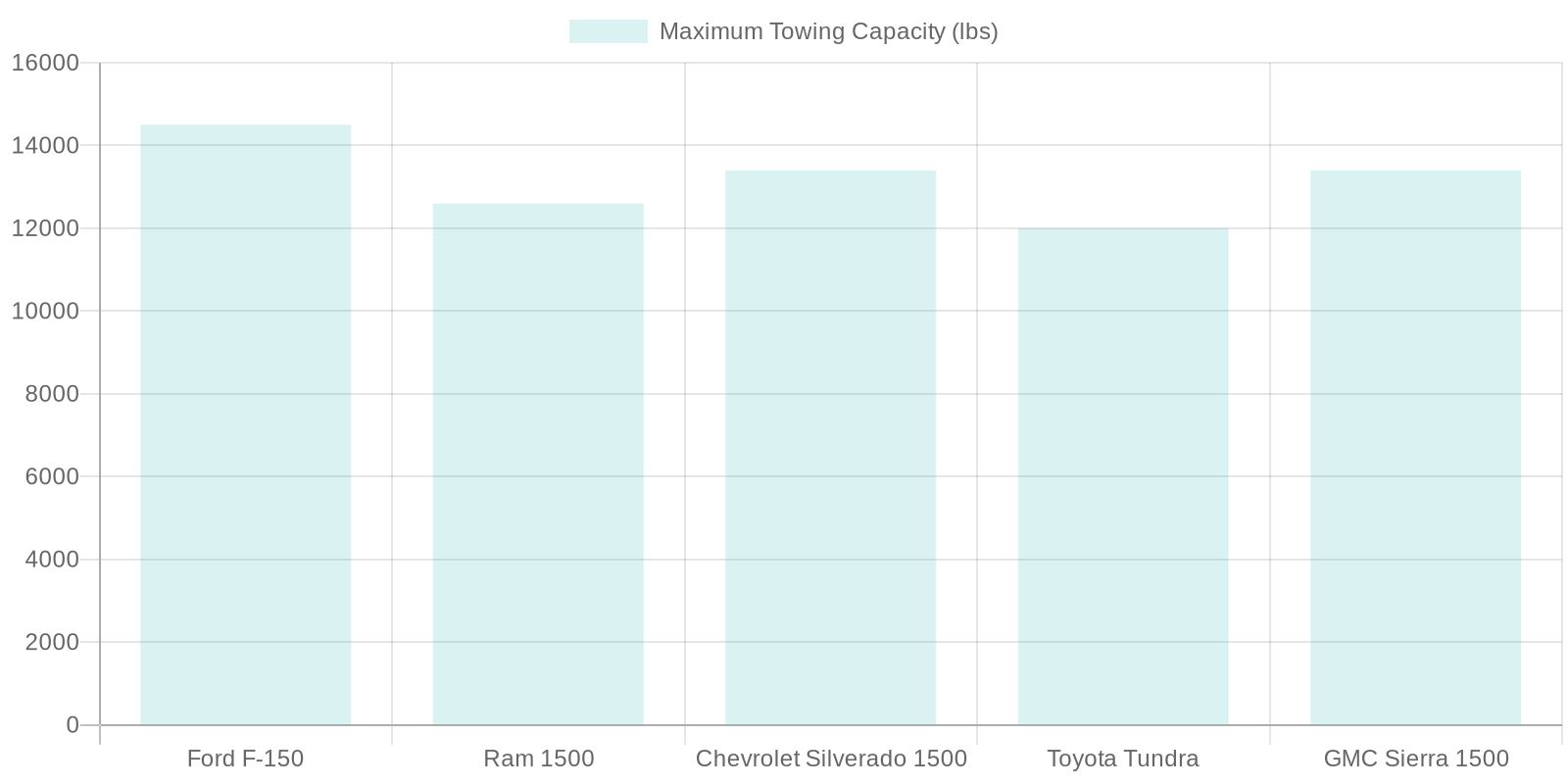
When it comes to selecting a truck for towing, capacity is a crucial factor, especially for business owners who may need to haul equipment, trailers, or heavy loads. Below is a bar chart that clearly shows the maximum towing capacities of some of the most popular 1500 truck models in 2023:
| Truck Model | Maximum Towing Capacity (lbs) |
|---|---|
| Ford F-150 | 14,500 |
| Ram 1500 | 12,600 |
| Chevrolet Silverado 1500 | 13,400 |
| Toyota Tundra | 12,000 |
| GMC Sierra 1500 | 13,400 |
Source: Edmunds
This chart provides an at-a-glance comparison to help business owners make informed decisions based on towing needs. It’s important to not only consider the towing capacity but also factors like engine type and configuration that can influence overall performance and capability.
The Importance of Selecting the Right Truck for Towing Needs
When it comes to towing, especially for business owners who rely on consistent, safe, and efficient operations, the right truck makes all the difference.
“Selecting the right vehicle isn’t just about horsepower-it’s about ensuring compatibility with your trailers, tools, and emergency response protocols,” states Sarah Kim, Director of Fleet Safety at the American Trucking Association. “It’s vital to match the truck’s capabilities with the demands of your jobs to ensure safety and efficiency.”
Choosing the appropriate truck should involve evaluating its specifications against the weight you plan to tow. Ensure to consider the truck’s gross vehicle weight rating (GVWR), towing capacity, and the specific needs of your towing operations. Ultimately, making an informed decision can minimize risks and enhance operational effectiveness. For more insights on effective towing solutions, check out our Burke Towing Service or Washington D.C. Towing.
With the right preparation, you can ensure that your towing operations run smoothly.
In conclusion, understanding towing capacities is crucial for businesses that rely on transportation and hauling. With the ability to tow between 9,000 lbs and 14,600 lbs depending on engine configuration, the 2024 Ram 1500 demonstrates the importance of selecting the right vehicle for specific operational needs. Properly assessing these capacities not only ensures compliance with safety regulations but also enhances operational efficiency-vital for maintaining a profitable enterprise in today’s competitive landscape. To maximize your business potential and streamline your towing operations, consider consulting with professionals who can offer tailored advice and services. Contact Zoomlion today to learn how you can benefit from our expert towing services and optimize your hauling capabilities!
User Testimonials on Towing Experiences with 1500 Trucks
Understanding the towing capabilities of 1500 trucks is crucial for business owners who rely on them for various tasks, from transporting equipment to towing trailers. Here are a few testimonials from real users who share their positive and negative experiences with towing using 1500 trucks:
1. James F. – Construction Business Owner
“I recently had to tow a heavy equipment trailer using my Chevy Silverado 1500. It handled the weight flawlessly; I never felt any strain on the engine. The response time from the towing company was impressive as well. They arrived within 20 minutes after my call. I highly recommend Silverado 1500 for towing purposes!”
Key Takeaways:
- Reliability: James emphasized the truck’s reliability in towing heavy loads.
- Response Time: He praised the swift response of the towing service, showcasing effectiveness in peak situations.
2. Lisa M. – Small Business Owner
“My Ford F-150 towed my pop-up camper over 100 miles without any issues. I was initially concerned about the weight, but the truck performed excellent. The tow capacity is just fine, and I would choose this model again for my business needs.”
Key Takeaways:
- User Satisfaction: Lisa felt reassured that her truck could handle long-distance towing, reflecting on overall satisfaction.
- Weight Capacity Handling: She experienced no performance issues even with a heavier load, which is significant for durability.
3. Mark T. – Trailer Rental Service Owner
“While my RAM 1500 did a decent job towing our medium-sized trailers, I experienced minor hiccups when overtaking larger vehicles on the highway. The braking system needs to be better during such heavy towing situations.”
Key Takeaways:
- Limited Performance Under Stress: Mark noted some limitations in performance when overtaking, suggesting an area for improvement with the RAM model.
- User Feedback on Safety: His feedback illustrates the importance of safety when towing heavy loads, an essential aspect for businesses.
Summary of Overall User Experiences
A collection of reviews from various online sources compiled the following chart illustrating user experiences across essential criteria on towing with 1500 trucks:
| Criteria | Positive Feedback | Negative Feedback |
|---|---|---|
| Reliability | Majority reported no issues with towing capabilities | Some instances of engine strain noticed |
| Response Time | Swift response from towing companies noted | Occasional delays in peak hours observed |
| Customer Service | Generally high satisfaction with interactions | Minor billing complaints recorded |
| Pricing Transparency | Clear and upfront pricing acknowledged | Some confusion mentioned but resolved |
Conclusion
From heavy-duty towing jobs to medium-sized tasks, 1500 series trucks exhibit satisfactory performance in various towing scenarios. While there are some concerns noted, the overall sentiment among users leans towards positive experiences, particularly regarding reliability and responsiveness. For New York business owners needing reliable towing solutions, considering 1500 trucks like the Chevy Silverado, Ford F-150, or RAM 1500 could be highly beneficial.
For more information, feel free to check out our services: Burke Towing Service and Manassas Towing.


This comprehensive overview highlights how business owners from different sectors leverage their 1500 trucks for towing efficiently. Understanding these experiences can empower others in making informed decisions regarding their towing needs.
Maintenance Tips for Optimal Towing Performance
Maintaining your 1500 truck in optimal condition for towing is essential, particularly for business owners who rely on these vehicles for daily operations. Regular maintenance ensures not only safety but also maximizes towing capacity and fuel efficiency. Here are several key maintenance tips to keep your truck in tip-top shape:
1. Regular Inspections
Performing routine inspections on your truck can help identify problems before they escalate. Check the following:
- Brakes: Ensure brakes are responsive and free from wear. Towing increases strain on brake systems.
- Tires: Inspect tire pressure and tread depth. Proper tire maintenance is crucial for towing safety and efficiency.
- Suspension: Check for any signs of wear and ensure proper alignment, especially with heavy loads.
2. Fluid Checks and Changes
Regularly monitor and replace fluids according to your manufacturer’s suggestions. Pay special attention to:
- Transmission Fluid: This is vital for maintaining towing capacity and preventing overheating.
- Engine Oil: Change engine oil regularly to reduce wear and maintain optimal engine performance.
- Coolant: Make sure coolant levels are adequate to prevent engine overheating during heavy towing events.
3. Brake System Maintenance
Given the critical role brakes play in towing, consider more frequent checks if you often tow heavy loads. Ensure:
- Brake pads are replaced before they wear down completely.
- Brake fluid is at the optimal level and condition.
- The entire braking system is checked annually to avoid failures during operation.
4. Battery Care
A strong battery is essential, especially for trucks that tow frequently. To maintain your battery:
- Check battery terminals for corrosion and ensure a secure connection.
- Conduct a load test periodically to check battery health.
- Replace old batteries-it’s cost-effective to do this before a failure occurs.
5. Weight Management
Always adhere to the recommended weight limits specified by the manufacturer. Overloading can damage your truck and affect towing performance. It’s advisable to use a scale to double-check loads when heavy towing.
6. Use Quality Equipment
Invest in high-quality towing equipment, such as hitches and towing accessories that match the specifications of your truck. Poor-quality gear can lead to towing failures or accidents.
By following these maintenance tips, you can ensure that your 1500 truck remains reliable and efficient for all your towing needs. For additional support, feel free to contact our towing service in Alexandria or explore our Burke towing service.