
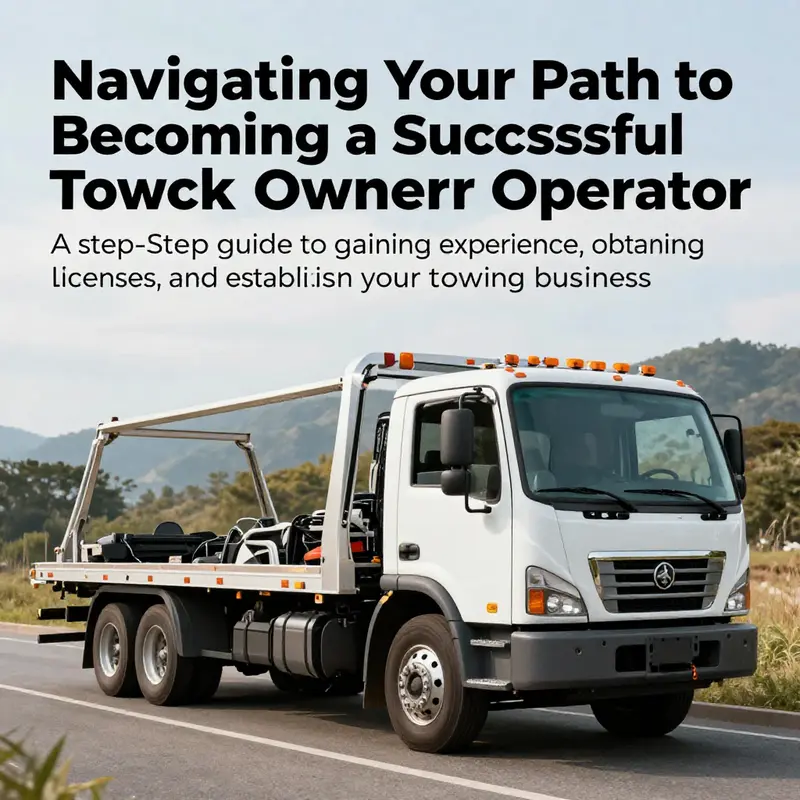
Owning and operating a tow truck business can be a rewarding venture, especially for those with a passion for helping others in times of need. As a tow truck owner-operator, you are not only providing essential roadside assistance but also running your own business. This article will delve into the crucial steps needed to become a successful tow truck owner-operator, starting from gaining practical experience to understanding licensing requirements, and finally establishing a solid business presence. Each chapter will explore these critical areas, offering insights and actionable advice for aspiring towing entrepreneurs.
From Road Experience to Fleet Ownership: Mastering the Path to Tow Truck Ownership Through Gained Experience
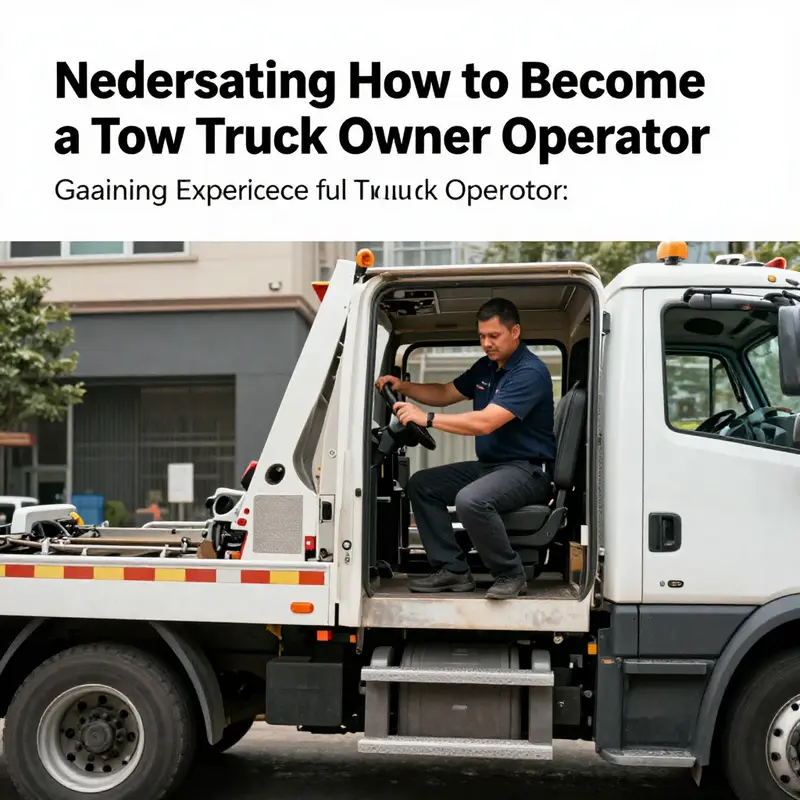
Experience is the quiet engine behind every successful tow truck owner-operator. It is not merely time behind the wheel; it is seasoned familiarity with the rhythm of roadside calls, the nuances of different recoveries, and the daily discipline of running a service that people rely on in moments of stress. The journey begins with the driving miles and the lessons those miles teach about safety, efficiency, and people skills. When you understand what it takes to haul a vehicle, you gain a practical lens on every other facet of the business you will eventually own. This is why the early phase—earning seat-time with a reputable towing outfit—rests at the core of a durable, long-term plan.
To build that foundation, the first priority is mastering essential skills in a lived, hands-on environment. Vehicle recovery techniques are more than a checklist; they are a fluid set of responses that balance risk, equipment capability, and the road conditions of a particular moment. You learn when to deploy a winch, how to rig a load for stability, and how to protect the surrounding scene so you don’t create new hazards for bystanders or other drivers. You also refine customer service on every call. Tow work is often a customer’s first experience with a tow provider, and clarity, empathy, and timely communication can transform a difficult incident into a reference point for future business. Equally important is a grounded understanding of local traffic laws and road safety procedures. The pause you take to confirm compliance before securing a vehicle can prevent a legal or safety problem that could derail a future operation.
Hands-on experience yields a practical literacy around the equipment and the demands of the job. It exposes you to the variability of real-world conditions—quiet suburban pullovers, multi-vehicle accident scenes, or a remote breakdown on a winter night. Those experiences reveal the subtle but critical differences between types of towing, whether it’s roadside assistance, light towing, or heavy-duty recoveries. They also lay bare the operational challenges you’ll face as a business owner: the need to predict delays, coordinate with dispatch, manage multiple call-outs, and maintain a steady stream of reliable service even when the clock is against you. The skill set you develop as a driver—problem solving under pressure, precise vehicle handling, and a calm, respectful approach with clients—becomes the core of your reputation and the currency you trade for recurring work.
Beyond the concrete skills, this phase is about building a solid professional identity. Reliability is the single most transferable trait in the towing world. A driver who shows up on time, communicates clearly about ETA, follows safety protocols, and carefully documents each step with the customer and the insurer sets a standard that colleagues and potential partners notice. Reputation is not built in a single heroic recovery; it is the sum of dozens, sometimes hundreds, of dependable shipments, transparent billing conversations, and a track record of minimal property damage and maximal safety. In time, your consistency becomes a platform to expand your network: local auto shops that need dependable partners, rental car fleets that require quick, careful service, and municipal or private entities that value repeatable performance.
As you accrue this experience, the path toward ownership begins to unfold with greater clarity. The first shift in mindset is recognizing that ownership is a two-part venture: you must run a business and you must be technically competent. The business side includes drafting a plan for operations, understanding the cost structure of a small fleet, and learning the financial discipline that keeps a service sustainable through slow periods and rising costs. Related to that is the capacity for fleet thinking—anticipating how one or two trucks can scale when demand grows. Even if you intend to start with a single truck, thinking in terms of potential future additions helps you choose the right vehicle, the best insurance coverage, and a scalable pricing model from the outset. When you begin to conceive of a future fleet, you also become attuned to the talent you will need: a reliable driver, a capable dispatcher, and a straightforward process for onboarding and compliance.
An essential transition is to couple your route knowledge with a formal understanding of insurance, licensing, and compliance. In many regions, becoming an owner-operator requires not only a Commercial Driver’s License but also specific endorsements and permits that regulate body types, commercial use, and weight classes. You will learn which permits your state or locale requires for a tow truck business and how to maintain them alongside your CDL. Insurance, too, is not a one-time purchase but an ongoing requirement, with policies that cover liability, cargo, and physical damage to your vehicle. The practical upshot is that your early experience should be deliberately aligned with the business optics: what coverage you will need, how much premium you can sustain, and how to present that stability to potential customers and lenders. In this regard, your years behind the wheel become your strongest credential when you seek a loan, lease, or investment for a first fleet.
Another piece of the experience puzzle is the practical, on-the-ground knowledge of pricing and customer expectations. Pricing is never a static equation; it must reflect fuel costs, maintenance reserves, insurance, local demand cycles, and the realities of competition. Your track record in the field gives you empirical data to test different pricing approaches, measure profitability, and adjust over time. It’s also where relationships with clients matter most. A business built on trust with local dealerships, repair shops, and car rental agencies is more resilient because those partners offer regular, predictable work. To nurture this trust, you’ll want to be visible and accessible within the community—an active participant in local business networks, trade associations, and regional service directories. If you happen to operate in a region that values particular clusters of services, you may find it beneficial to explore nearby markets or collaborate with established operators on larger jobs. For those venturing into the capital region, you might explore connected service pages that reflect the local landscape, such as tow-truck-washington-dc, to anchor your understanding of market opportunities and local expectations.
Throughout this process, staying current with regulation and safety standards remains non-negotiable. The towing business lives under a complex umbrella of federal, state, and local rules, with periodic changes in licensing, licensing renewals, and safety inspections. If you treat compliance as an ongoing, integral part of daily operations rather than a box to check, you’ll avoid costly delays and keep your customers’ trust. This alignment between practical experience and regulatory readiness is what distinguishes a driver who aspires to ownership from a driver who actually becomes an owner-operator. It makes the leap from performing a single tow to overseeing a small business that can adapt to market shifts without losing reliability.
For readers seeking a structured reference, a comprehensive industry guide discusses the early, experience-driven steps toward becoming a tow truck driver and laying the groundwork for ownership. It underscores how the combination of hands-on skill, disciplined administration, and knowledge of regulatory requirements is the engine of a sustainable business. As you follow this path, keep your eye on the horizon: the road you’re traveling will gradually reveal the practical steps to secure licenses, establish your business, and position yourself for growth in a competitive landscape. With perseverance, the time you spend gaining experience will translate into a capable, reputable operation that can weather fluctuations in demand and emerge as a trusted partner in your community. For more detailed information on the initial steps and requirements, see this guide: https://www.indeed.com/career-advice/finding-a-job/become-tow-truck-driver
The License Roadmap to Tow Truck Ownership: Certifications, Endorsements, and Compliance
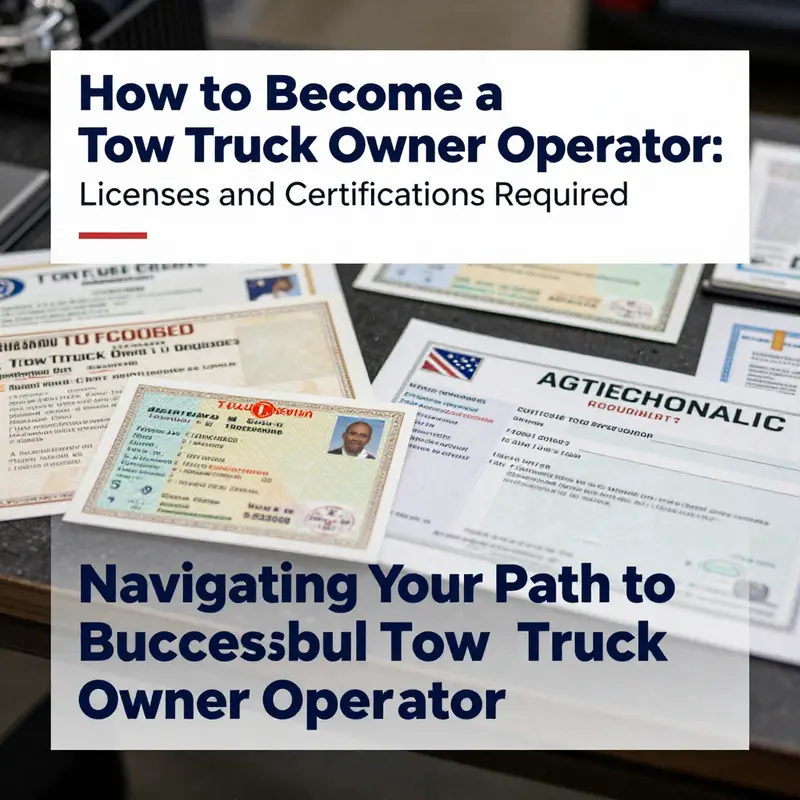
Entering the business of tow truck ownership starts with a clear credentialing path. The licenses and certifications are not mere hurdles; they are the scaffolding that supports reliability, safety, and trust with customers, insurers, and local authorities. The first destination on this road is the Commercial Driver’s License, commonly a Class B with the right endorsements. Tow trucks are heavy enough that federal rules require a CDL when the vehicle’s gross vehicle weight rating surpasses 26,000 pounds. Because tow trucks vary in size and configuration, the necessary endorsements can differ. In practical terms, most owner-operators pursue a CDL with either a Special Hauling endorsement or a Tow Truck endorsement. This combination signals to regulators and clients that the driver is prepared to handle the unique aspects of towing operations, from secure loading to on-site recovery techniques. The path to the CDL includes both written examinations and a practical skills test that is tailored to the type of tow equipment you plan to operate. Preparation helps you demonstrate competence in pre-trip inspections, braking performance, signaling, and maneuvering a sizable vehicle through busy streets and cramped spaces. State requirements are not uniform, which means you’ll need to consult your local DMV to confirm which endorsements are required for your intended scope of work. It is easy to underestimate this stage, but it is also the foundation upon which every later business decision rests—pricing, scheduling, insurance requirements, and customer confidence hinge on the legitimacy of your license.
Beyond the CDL, there are additional certifications and regulatory requirements that can strengthen your position as a professional operator. While a CDL is mandatory for most tow trucks, some jurisdictions demand extra certifications or permits for specific activities or territories. One of the most valuable expansions of your credentialing comes from towing and recovery training. Organizations that offer industry-specific coursework provide hands-on insights into successful vehicle recovery, rigging, winching, vehicle stabilization, and safety protocols. Completing recognized training can differentiate you in bidding for contracts with local fleets, auto dealerships, or insurance networks that require evidence of ongoing professional development. Hazardous materials endorsements may come into play if your scope includes transporting vehicles carrying hazardous contents or parts that require special handling. Even if HazMat isn’t immediately necessary, having a plan for future diversification keeps your business agile and compliant as opportunities evolve.
Insurance sits alongside licensing as a practical pillar of your operation. A comprehensive policy suite is not an optional expense; it is a risk management tool that protects you, your staff, your customers, and your equipment. General liability insurance is typically the baseline, covering third-party injuries and property damage. Cargo insurance can protect the towed vehicles and equipment while in transit, and physical damage coverage applies to your tow truck itself, addressing mechanical failures or collision losses. Insurance providers often require proof of licensing and a clean driving record before issuing or renewing a policy, so staying current on your CDL, endorsements, and safety discipline is essential. In many areas, insurers will also want to see a robust business plan and a track record of responsible operations. As you prepare to launch or expand, you’ll discover that the cost of insurance is closely tied to your licensing profile and the systems you put in place to reduce risk.
With licenses and insurance lined up, the next phase concerns the business structure and the regulatory landscape that governs how you operate day to day. Establishing a legal entity, such as an LLC, can offer liability protection and clearer separation between personal and business assets. An Employer Identification Number (EIN) helps with payroll, taxes, and credible banking relationships. You’ll also need to register with state and local authorities, secure any required business licenses, and understand the permitting regime for towing services in your area. Even if your city or county does not require a specialized towing license, many places demand a general business permit or occupational license to operate legally. Keeping thorough records—from driver qualifications to maintenance logs and insurance certificates—pays dividends when audits arrive or when clients request proof of compliance.
The practical proof of readiness comes not only from licenses on a shelf but from how you approach training and experience. Most successful owner-operators begin by working for an established towing company. This hands-on period teaches you the realities of client expectations, service response times, dispatch coordination, and the realities of emergency roadside work. It also gives you the opportunity to observe how seasoned operators manage risk on the road, communicate with police or accident scenes, and safeguard bystanders during complex recoveries. When you finally launch your own operation, the combined weight of a solid CDL, targeted certifications, appropriate insurance, and real-world experience will give you a head start against competitors who rely on theory alone.
Another dimension to consider is the local regulatory environment, which can shape licensing, permitting, and operating standards in subtle but meaningful ways. Jurisdictions differ in how they treat tow operators, what kinds of proof they require to access certain contract work, and how they enforce safety standards at incident scenes. In practice, you may find that some areas emphasize stricter vehicle inspection regimes, while others focus on dispatch accuracy and driver conduct. Being proactive about these expectations—regularly renewing licenses, maintaining equipment to a high standard, and aligning your business practices with local safety and environmental guidelines—helps prevent disruption and reinforces your reputation as a dependable partner for customers and authorities alike. For a local example of how licensing governs day-to-day operations, see Arlington towing VA.
As you compose your path forward, keep in mind that licenses and certifications are not a checklist to forget after the initial purchase. They are ongoing commitments that influence every interaction you have with customers, insurers, and municipal agencies. The sheer range of potential endorsements and registrations reflects the breadth of responsibilities in tow truck ownership—from securing a compliant vehicle to coordinating rapid response across multiple clients. The discipline required to stay current—continuing education, refresher courses, and periodic re-assessment—transforms a tow operator from a competent driver into a trusted business leader. In that sense, the licensing journey is not a barrier but a guiding framework that shapes your standards, your partners, and your ability to grow sustainably.
For deeper, step-by-step licensing insights as you plan your own journey, see the comprehensive guidance offered in established industry resources and regulatory outlines. This chapter has laid out the core licenses, certifications, and compliance considerations that define the early, decisive stage of becoming a tow truck owner operator. By aligning your practical skills with formal credentials, you set a clear course toward reliability, legality, and long-term success on the road ahead.
External resource: https://www.indeed.com/career-advice/finding-a-job/how-to-become-a-tow-truck-driver
From Driver to Owner-Operator: Crafting a Reliable Brand, Fleet Strategy, and Local Market Reach for a Tow Truck Business
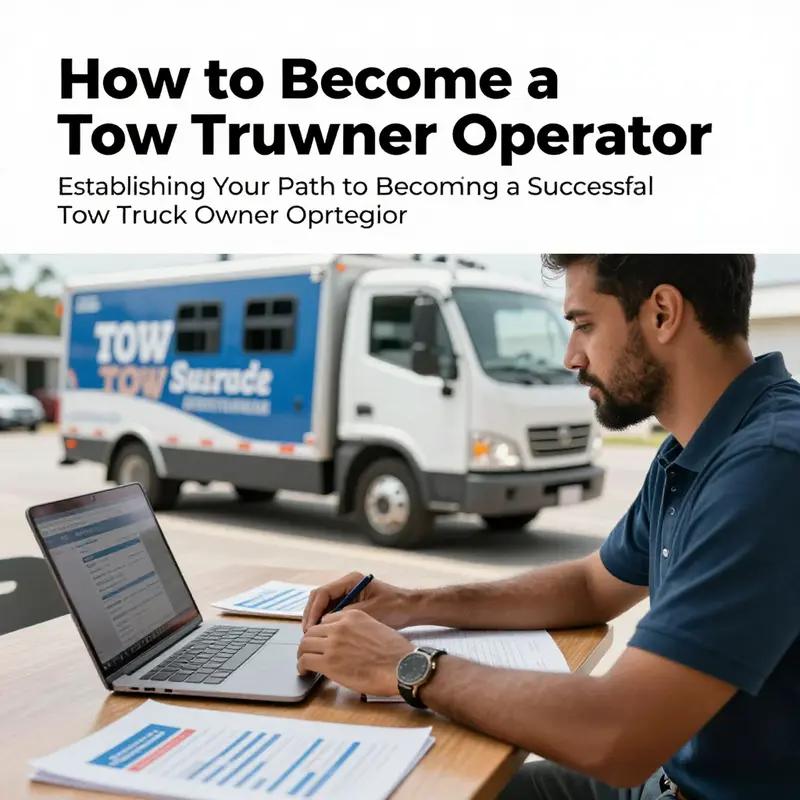
The path from rolling as a driver to driving a real business is as much about mindset as it is about machinery. It starts with the grit and firsthand knowledge earned behind the wheel, learning what customers expect when their car fails and a tower arrives in the middle of a tense moment. Leaving the shop floor behind, you enter a broader landscape of licensing, insurance, safety standards, and the daily discipline of running a service that people depend on. The transition demands more than technical skill; it requires a clear plan for how your company will show up in the community, how it will be seen by potential clients, and how it will stay compliant as you grow. Every step you take from this point forward builds credibility that translates into reliable revenue and a growing reputation in your service area. The core of the journey is balancing operational readiness with a steady, repeatable brand promise that tells customers you are dependable in a crisis, approachable in person, and professional in every interaction. The blueprint begins with sound legal and regulatory foundations. You will need a valid commercial driver license with the appropriate endorsements, and a track record that proves your ability to move vehicles safely and efficiently. In many jurisdictions the towing operation requires a T endorsement on a CDL, ensuring you can perform towing tasks with the weight and specialized equipment involved. A freight transportation qualification certificate is often a foundational document that legitimizes your capacity to move vehicles and cargo within legal boundaries. Registration and insurance come next, with liability coverage to protect against damages that may occur during towing and cargo coverage for items being towed. Vehicle registration is not just paperwork; it is a pledge that your fleet meets established standards for safety and roadworthiness. Regular safety inspections are the checks that save time and money in the long run, keeping your equipment reliable and your customers confident. Once those legal and regulatory pieces are in place, the business side comes into focus. Establishing a professional brand is more than a logo or color scheme; it is a promise customers can rely on when they dial your number. A strong brand conveys reliability, promptness, and courteous service at a moment of need. The next layer is your online footprint. A dedicated website that clearly outlines services, service areas, response times, and contact options helps convert inquiries into calls. Local listings on platforms that matter for towing services—like Google Business and relevant directories—maximize visibility when someone in need searches for help on the roadside. Visual content plays a crucial role here. High quality photos of your fleet, your gear, and your team in action give prospective clients a tangible sense of what to expect. These visuals should be paired with concise, customer oriented copy that explains your price structure, typical response times, and any value adds such as winching capabilities, flatbed service, or heavy duty towing. Importantly, encourage satisfied customers to leave reviews. A steady stream of positive feedback builds trust and helps offset the anxiety a potential client feels during a roadside emergency. As you develop your marketing strategy, think about how you want to be found by local business partners who can generate consistent referrals. Partnerships with auto repair shops, car rental agencies, and roadside assistance providers can become a steady source of work. The goal is to create a network that sees you as the go to solution when a vehicle needs towing, not just a one off call. A practical tactic is to weave visibility into the everyday fabric of your community. Vehicle signage is a simple but powerful investment. A well branded tow truck with clear contact information makes your business a moving billboard and a reminder of your reliability every time someone sees you on the road. The branding should extend to dispatch processes, crew uniforms, and the level of courtesy you show every caller. It is not only what you do but how you do it that forms the lasting impression. In terms of service strategy, the emphasis should be on speed, safety, and accountability. Rapid response may be the deciding factor when a customer is stranded, so your dispatch workflow should be streamlined from the start. Transparent pricing and clear explanations of what is included in a tow or recovery help prevent disputes after the service is rendered. If you operate in a dense metropolitan area, a focused service footprint that communicates your availability in key neighborhoods can improve both visibility and response times. For example, you might emphasize a Washington DC service area and support this with a dedicated page like towing service pages that emphasize local reach, such as the DC region. See the dedicated page for local coverage at towing-service-washington-dc. For broader regional exposure, you can mirror that model across adjacent communities while ensuring your branding remains consistent and professional across every vehicle and touchpoint. Alongside branding and marketing, the operational backbone must support growth without compromising service quality. This includes establishing simple, scalable accounting practices that track income, expenses, and taxes, as well as implementing standard operating procedures for dispatch, safety checks, and customer communication. Even as you scale, you want a culture that values promptness and respect for customers’ time. That means training your team to arrive with the right tools, to communicate clearly about ETA, and to handle each scene with safety first in mind. It also means maintaining the fleet in top condition. Regular maintenance reduces unexpected downtime and keeps insurance costs manageable by lowering the risk profile of your operation. The financial frame around all of this is essential. A clear business structure—often an LLC for liability protection—helps manage personal risk while providing a platform for potential growth, whether you add more trucks or contract with larger fleet operators. An EIN from the IRS supports proper tax reporting and makes it easier to open business accounts, manage payroll (if you hire drivers), and keep personal assets shielded from business liabilities. As you lay the foundation, keep a constant eye on compliance. The landscape of federal, state, and local regulations shifts over time, and staying current is part of the service you offer. The licensing, insurance, safety, and paperwork are not a one off hurdle but a continuous process that reinforces trust with customers and partners alike. By weaving together the regulatory base, a professional brand, an accessible online presence, a network of referrals, and a service culture built on speed and safety, you create a tow truck business that can endure the ebbs and flows of demand. The journey from the driver seat to the owner operator seat is not merely a change of title; it is a transformation in how you serve the community—consistently and reliably—through every tow, every call, and every mile. For readers seeking deeper regulatory foundations, a comprehensive reference is the FMCSA Owner-Operator Resources, which offers guidance on the essential rules and compliance expectations for independent tow operators. External resource: https://www.fmcsa.dot.gov/owner-operator
Final thoughts
Becoming a successful tow truck owner-operator involves dedication and careful planning. By gaining the necessary experience, obtaining the required licenses and certifications, and establishing a robust business with effective marketing strategies, you position yourself for success in the towing industry. These foundational steps are critical not only for legal compliance but also for building a trustworthy reputation in your community. Remember, every road to success requires a strong start and a clear vision of where you want to go.