
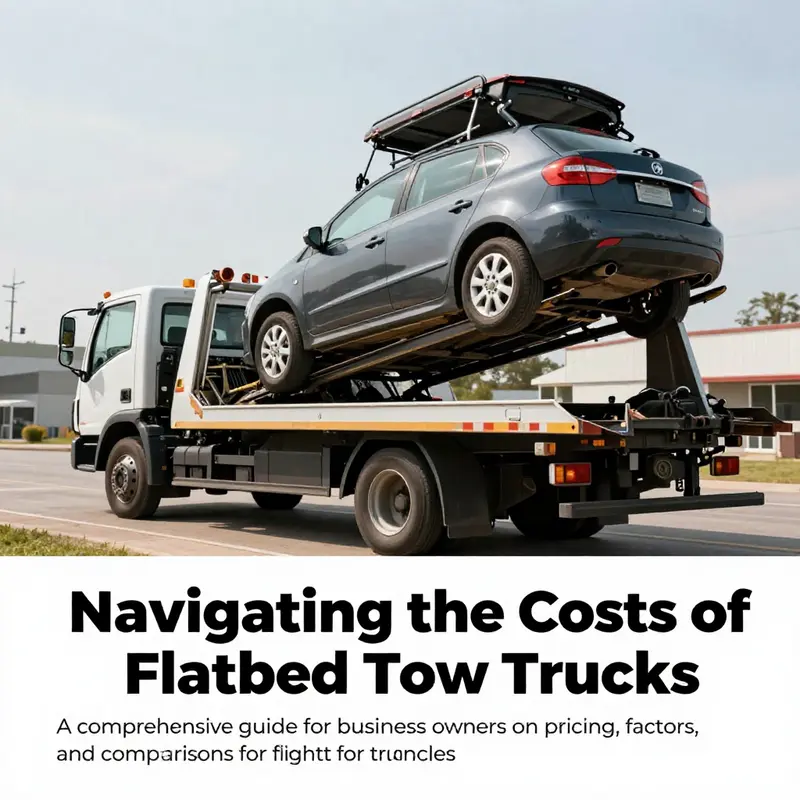
Understanding the costs associated with flatbed tow trucks is crucial for business owners looking to invest in towing equipment. The market offers a diverse range of flatbed tow trucks that cater to various operational needs. This guide explores the pricing landscape, highlights key factors that affect costs, and compares flatbed tow trucks with other towing vehicles, providing business owners with a valuable resource to make informed purchasing decisions.
The Price Tag on a Flatbed: How Costs Vary Across Sizes, Features, and Markets
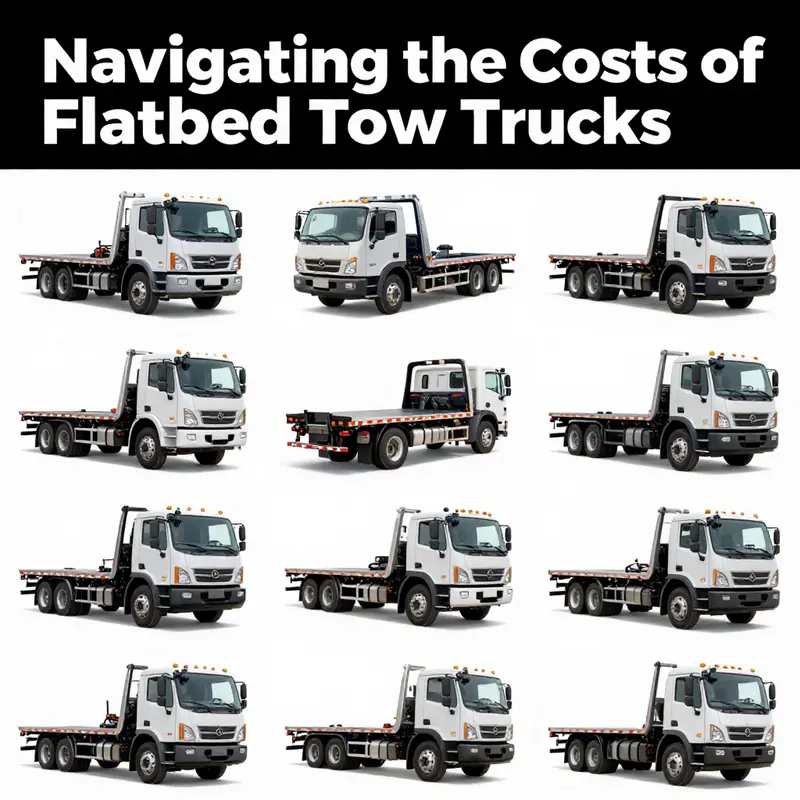
When asked how much a flatbed tow truck costs, the simplest answer is rarely the most accurate. Price is a hinge that depends on size, capacity, and the features that turn a basic platform into a workhorse for recovery, fleet rotation, and urgent roadside service. In early 2026 markets, you can find deeply different price bands for essentially the same category of vehicle. The smallest, simplest flatbeds built for passenger cars and light trucks sit at one end of the spectrum, while multi axle, crane equipped machines designed for heavy equipment and large commercial fleets sit at the other. Across this spectrum, the buyer must weigh upfront price against durability, maintenance needs, and the kind of service network that will keep the truck on the road.
For the typical 3-8 ton class, which is where most general towing and light recovery operations live, the sticker price tends to land in the mid double digits. A compact flatbed with basic recovery features can be found in the range of roughly 15,500 to 38,800, depending on the exact configuration and whether a crane or winch is included. To put that in perspective, an 8-ton flatbed rollback with a modest crane is commonly listed in the 22,000 to 38,800 bracket, while a 5-8 ton unit with a bed-mounted winch sits in the 27,500 to 28,500 zone in some listings. Those numbers reflect trucks that are purpose built for routine roadside work, with a balance of payload, reach, and maneuverability that makes them appealing to small fleets and independent operators who need a reliable platform without breaking the bank.
Stepping into the heavier, 10-15 ton range shifts the conversation from everyday towing to heavier recoveries, construction site work, and the occasional fleet rotation that must move larger objects. In this segment, price gravity increases, but so does capability. Base price bands typically range from about 15,500 up to 52,900, with the majority clustered in the mid-to-upper tens of thousands when a bed mounted crane or a robust winch is included. The 10-ton rollback or bed and wrem array can carry heavier vehicles and equipment, but it also demands more from the drivetrain, chassis, and hydraulics. In other words, you are not just buying a bigger bed; you are investing in a system designed to lift, winch, and stabilize weightier loads, often with a higher risk profile if misapplied. Buyers must consider the reliability and service availability of the crane or winch, as well as the capacity to operate in more demanding recovery scenarios.
When the conversation turns to truly heavy duty and specialized models, price responds to the most demanding requirements. In these configurations, you are likely looking at units that must carry construction equipment, excavators, or other large machinery. The price ceiling for such specialized builds can push beyond the 50,000 mark, with premium features like a full 360-degree rotating boom, ruggedized powertrains, and multi-axle chassis. It is a price tier where firms weigh the premium against the potential to secure timely recoveries in challenging environments industrial sites, highways, or disaster-response contexts where downtime is costly and the client base expects rapid, reliable service. The prospect of owning such a machine is as much about the return-to-service speed as it is about the raw capability.
Beyond the basic new versus used dichotomy, there are other levers that shape final quotes. New flatbeds, particularly those sourced from established manufacturers, also include considerations like warranty periods, dealer support, and the promise of spare parts availability. In the same breath, new models manufactured in lower-cost regions can offer substantial price advantages, especially if a buyer is prepared to manage import logistics, local assembly, and aftersales servicing. In one notable contrast, a 4×2 flatbed with a 2-4-ton capacity can show up on the market at roughly 6,500 to 8,800 for the wrecker body alone in certain markets, while a full new 4×2 flatbed with a 2,000-10,000 kg capacity might be listed around 23,990 in some online catalogs, with discounts sometimes appearing as part of a broader package. These numbers underscore the value of shopping broadly, but they also highlight the tradeoffs that come with cheaper import builds, including warranty coverage, supporting parts, and the cost of ongoing maintenance in a region that was not the vehicle original market.
The used market paints a complementary picture. It offers opportunities to acquire capability at a fraction of the new-truck price, albeit with greater variability in condition and remaining service life. A 2009 light-duty flatbed unit can be found around 19,500, while a 2016 low-mileage mid-range flatbed can appear for as little as around 8,400 in some marketplaces. The stark contrast between these examples reflects differences in mileage, general wear, maintenance history, and the available crew to operate and sustain the truck. For fleet buyers, this is where the total cost of ownership TCO becomes decisive: maintenance cycles and spare parts availability will determine whether the lower initial price translates into less expensive lifetime use or into frequent downtime and expensive repairs.
As buyers weigh these options, the decision often turns on a mix of cost discipline and long-term strategic fit. A smaller, newly built or lightly used unit can provide dependable service for years at a relatively modest upfront cost, especially when the operator plans to keep the truck within a single region or a limited service network. In markets where demand for quick, reliable standby service is high, a heavier trailer or a mid-size unit equipped with a crane or winch can deliver elevated productivity, reduced turnaround times, and stronger resale value when its time to refresh the fleet. The balance is rarely a single number; it is a calculation of upfront price, ongoing maintenance, downtime risk, insurance costs, and the certainty of parts and service when a recovery is needed on a busy highway or in a remote job site.
For readers tracking regional availability and service options, a practical step is to connect the pricing dots with local operator networks. If you are in a dense metropolitan area or a region with a mature towing market, you will likely encounter a broader array of options in the small-to-mid range and a wider array of service agreements that can cushion maintenance costs over time. In such cases, the price dynamics will not just reflect the truck features but the strength of the aftermarket ecosystem that supports it. If you want to explore a broader local context, see Alibaba flatbed tow truck example, which illustrates how service networks influence operational choices and costs in a major market.
Ultimately, the question of how much is a flatbed tow truck requires more than a single sticker price. It requires a careful assessment of scale, the kinds of loads you expect to move, how often you will need to rely on the crane or winch, and how much service reliability matters to your bottom line. Buyers should map out scenarios from routine roadside assists to heavy-duty recoveries, compare new versus used trajectories, and evaluate the long-tail implications of warranties and spare-part accessibility. In this way, the price becomes less a snapshot and more a narrative of what a particular flatbed can deliver for a given fleet, in a given region, over a defined period of time.
External reference: For a broader look at international pricing and market options in early 2026, you can review online listings that catalog a range of flatbed configurations, including vendors that ship from manufacturing hubs. Alibaba flatbed tow truck example
What Sets the Price Tag on a Flatbed Tow Truck: Specs, Brand, and Market Realities
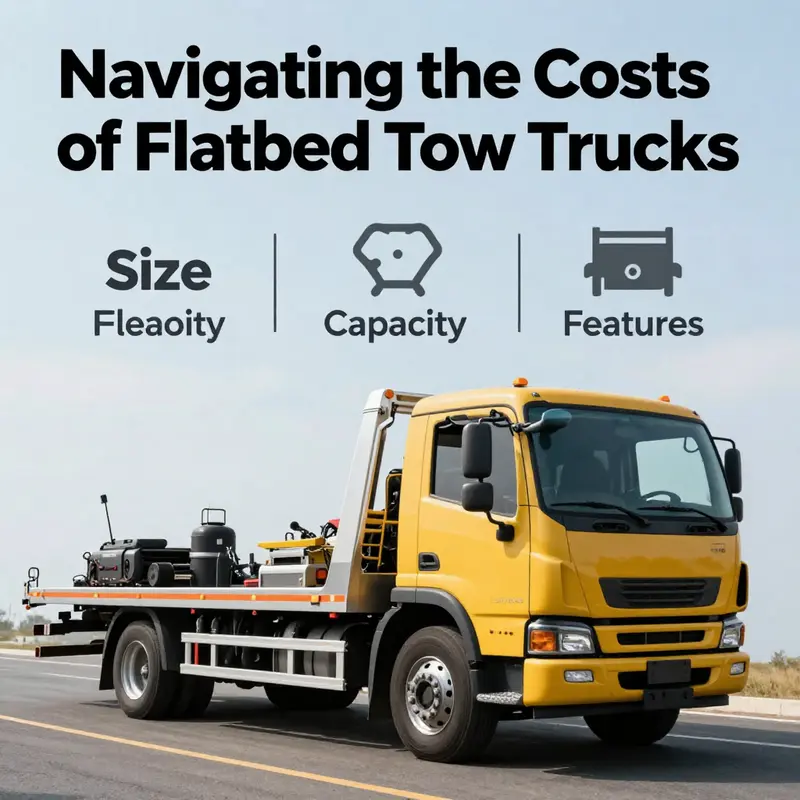
When someone asks how much a flatbed tow truck costs, the immediate answer is never a simple number. The sticker price hides a web of decisions about capability, reliability, and how the vehicle will be used. Buyers quickly discover that price swings are driven not just by size, but by a constellation of specifications, equipment options, the maker’s reputation, and the shifting rhythm of supply and demand in the market. In the early part of the current decade these dynamics translated into a broad spectrum: small to mid-size flatbeds, typically aimed at passenger cars and light trucks, often landed somewhere in the mid two digits in thousands of dollars; larger capacity units, designed for heavier work, could push well beyond that range, especially when loaded with advanced aids like cranes or power-operated winches. The most basic, entry-level configurations might sit around the mid-teens to upper-tens of thousands, while a fully equipped, heavy-duty platform capable of handling specialized recoveries could reach into the five- to six-figure territory when you factor in heavy-use environments, long-term maintenance planning, and life-cycle economics.
The fundamental driver remains the vehicle’s specifications. Size, payload capacity, and configuration are the first filters. A compact 3–8 ton flatbed designed to haul passenger vehicles or light trucks is usually priced from about $15,500 to $38,800 in today’s market. You might encounter a representative example described as an 8-ton flatbed rollback with a small crane, priced somewhere within that range, depending on the specifics of the crane’s reach, whether a winch is included, and how the platform is constructed. If a buyer moves into the 10–15 ton class, the price tends to rise, reflecting the need for a sturdier frame, stronger hydraulics, and a longer or wider platform to accommodate heavier loads. In many listings this category sits roughly in the $15,500–$52,900 band, with particular configurations skewing higher when features like a larger crane or more elaborate stabilization systems are added. It is not unusual to see a 10-ton rollback paired with a 4×2 configuration priced toward the upper end of that range when the seller highlights rugged durability and broad service capability.
Feature set becomes the next major dial. A hydraulic tilting system, a full-length level platform, or a powerful winch can change the economics of a truck’s price. A model engineered to provide a vehicle-within-a-vehicle restraint, with a platform that supports the entire weight of a loaded car, is inherently safer and more reliable. That kind of sophistication adds to upfront cost, but buyers often weigh it against long-term savings in labor and risk management on the road. For buyers evaluating heavy-duty or specialized applications—such as road rescue or equipment transport—the incremental cost of a rotating crane, a high-capacity winch, or a more robust stabilization system can be justified by the versatility and uptime it delivers. In this context, the difference between a basic, no-frills flatbed and a feature-rich unit can easily be tens of thousands of dollars, especially when the platform dimensions are larger and the hydraulic system is reinforced to handle frequent cycles of loading and unloading heavy vehicles.
Brand reputation and manufacturing origin also shape the price conversation. Established manufacturers that are known for reliability, consistent after-sales support, and access to a broad network of parts can command premium pricing. The perceived value of a brand—its track record for uptime, the availability of service centers, and the ease of sourcing replacement components—presents a compelling argument for paying a bit more upfront. In markets with scattered service networks or longer lead times for parts, that premium can be worth every dollar, because it reduces downtime and total ownership costs over the life of the vehicle. While a newer or lesser-known producer might offer a aggressively priced model, buyers often balance the lower sticker price against potential maintenance risks and the uncertainty of long-term support.
Market demand and supply chain conditions add a final, sometimes decisive, layer to the pricing equation. Today’s pricing reflects not just what the truck is capable of doing, but how readily buyers can obtain parts, how quickly dealerships can deliver a unit, and how many similar units are competing for attention in the same geographic area. When demand spikes—say, due to a surge in fleet expansions after a regional economic shift—prices can rise even for models that previously sat at a lower rung of the ladder. Conversely, when supply chains tighten or commodity costs fall, discounts and rebates can appear in otherwise steady price ranges. The net effect is a market where the same flatbed in identical configurations can vary in price over relatively short periods, even within a single procurement cycle.
The operational reality behind these price dynamics lies in what the investment yields over time. Flatbed tow trucks are designed to reduce wear on the vehicles they recover, thanks to safer loading practices and more stable transport. That reduced wear can translate into lower maintenance costs for the towed vehicles themselves and fewer mechanical failures during transport. Yet the flip side is the need for skilled operators. A taller, more capable crane or a heavier platform demands more precise handling and a higher level of driver training. The total cost of ownership thus extends beyond purchase price to include training, ongoing maintenance, and the financing terms chosen by fleets. In some cases, fleets that prioritize durability and ease of service over flashy features may end up with a slightly higher upfront price, but enjoy lower operating costs and greater uptime in the long run. These TCO considerations are central to decisions in urban settings versus rugged terrain deployments, where the expected work profile heavily influences the optimal balance between upfront cost and long-term value.
To give readers a concrete sense of the spectrum, imagine the most compact end of the market—vehicles designed to slide under standard passenger cars—with price anchors that hover in the mid-teens. Move up into mid-range configurations with robust platform dimensions and a mid-sized crane, and the price can climb toward the upper end of the $30k–$40k band. Step into heavier-duty work, where platforms are longer, engines more powerful, and the hydraulic systems more capable, and you are often looking at $40k to well beyond $50k, especially if a high-capacity winch or an advanced stabilization system is included. Some configurations, especially those engineered for frequent heavy lifting or specialized road-rescue duties, may push far past $60,000, with market reports sometimes noting ranges around $60,000 to $90,000 per unit depending on engine power, platform dimensions, and the specific mix of features. It is important for buyers to parse the exact specification sheet and to consider not just the price tag but how the truck’s capabilities align with the target use case.
For readers who want to see how these dynamics play out in real-world procurement, consider how a fleet in a major urban area evaluates options. The decision rarely hinges on a single factor; instead, it combines the cost of the base chassis, the cost of conversion or bodywork, the value of added features, and the anticipated maintenance profile over the truck’s expected life. A fleet that prioritizes urban recovery and repeated door-to-door service may place a premium on compact dimensions, quick loading cycles, and an intuitive control layout. In contrast, a fleet tasked with off-road recoveries or heavy equipment transport may justify a higher upfront investment for a longer platform, greater lifting capacity, and a more robust hydraulic package.
As readers and potential buyers weigh these considerations, a practical approach emerges: map the mission profile to a price range, then validate that the chosen configuration supports the expected workload with a comfortable margin for maintenance and driver training. The pricing landscape, shaped by vehicle specifications, brand reliability, and market dynamics, reinforces the idea that a flatbed tow truck is not a commodity but a customizable tool whose value is defined by how well it fits the operator’s particular needs. For local readers curious about how these decisions translate into fleet configurations in the DC area, see the local towing fleet considerations at tow-truck-washington-dc.
External reference to technical listings can provide additional context on scale, features, and pricing ranges outside the local market. A detailed supplier listing offers useful benchmarks for engine power options, platform dimensions, and safety features, illustrating how buyers balance capability with cost in the broader market. For a practical example of how a high-capacity flatbed wrecker is presented in a global supplier listing, see the external resource: HOWO New 4X2 Flatbed Wrecker-Tow Truck on Alibaba.
The Price of Precision on the Road: How Flatbed Tow Trucks Compare with Other Towing Vehicles
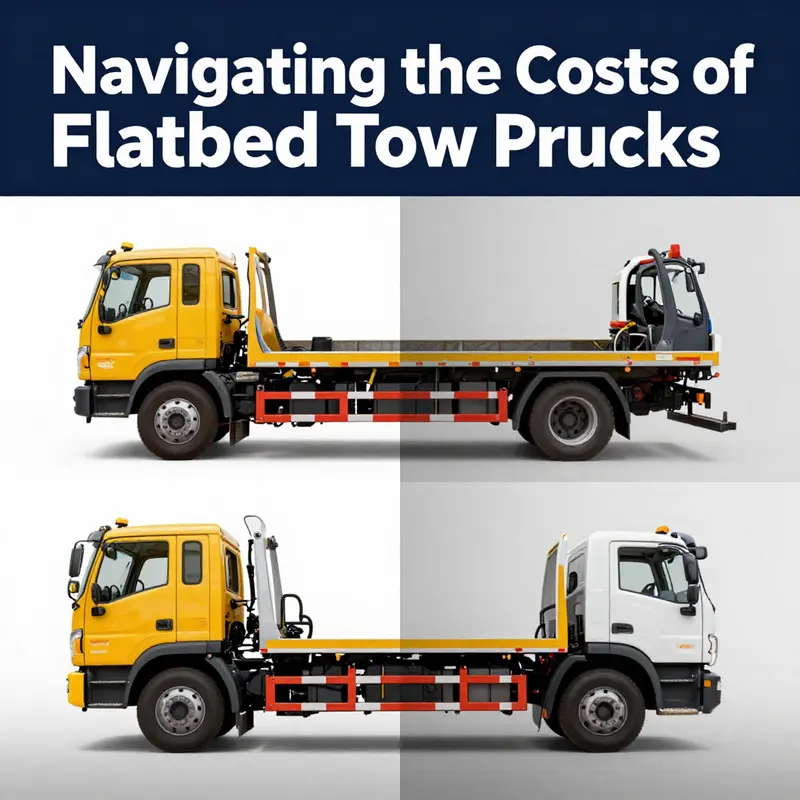
When a shop asks, how much is a flatbed tow truck, the answer is not a single number. The price depends on size, capacity, features, brand, and whether the unit is new or used. In early 2026 the market shows a broad spectrum that reflects how specialized flatbeds are compared with their conventional cousins. Buyers typically see that price scales with payload and the hardware that moves it—from simple winches to 360-degree rotating cranes. The result is a staircase of options rather than a single rung. For operators weighing a future purchase, this mosaic of options also maps to different maintenance realities, resale values, and the practicalities of daily service. A higher upfront cost can translate into faster turnaround times and safer handling of damaged vehicles, but it also means more careful budgeting for parts, training, and potential downtime during upgrades or repairs. In this light, the question becomes not only what a flatbed costs today, but how that cost compares with the broader family of towing vehicles and the specific needs of a fleet, a shop, or a municipal fleet that must balance reliability with price.
Small to mid-size (3–8 tons) are the workhorses for passenger cars and light trucks. These units command a price range that generally sits around 15,500 to 38,800 dollars. The spread within that range captures differences in crane or winch configuration, bed length, and cab-and-chassis quality. For example, an 8-ton flatbed rollback with a 3-ton crane is often listed roughly between 22,000 and 38,800. On the other hand, a 5- to 8-ton model with a winch dedicated to heavy-duty recovery might land closer to the mid-20s to high-20s or low-30s. Such variation is not just about raw lifting capability; it is about reliability, serviceability, and how many times per week a shop expects to load and unload vehicles in a municipal or urban setting. Buyers also weigh whether they are purchasing new, which can come with warranties and the latest control systems, or a used unit that may require more immediate refurbishment but offers a lower entry price. In urban contexts, the ability to maneuver around tight streets, tight corners, and parking constraints often makes the smaller flatbed a practical first choice, even if the price per ton is higher in some configurations than a larger, simpler wheel-lift unit.
Larger capacity (10–15 tons) begins where the box of capabilities expands to move heavier vehicles and even some light equipment. In that tier, the sticker price typically grows to the 15,500 to 52,900 range, reflecting the added friction of longer beds, stronger hydraulic systems, and often more complex drivetrain configurations. A flatbed rollback in this class can be found with 8, 10, or 15 tons of lifting capacity, with the broader price spread driven by features such as a crane, whether the crane is crane-only or integrated with a stabilizing system, plus the presence of a robust winch for anchor points. For many fleets, the decision depends on the typical loads they encounter. If the aim is reliable recovery of medium- to heavy-duty vehicles from varied terrains, the more expensive configurations may pay for themselves in reduced loading time and lower risk of damage to the towed asset. This tier also raises questions about maintenance scope—larger hydraulics demand more robust service plans, and operators must assess the availability of trained technicians for longer, more complex systems.
At the high end, heavy-duty and specialized models push prices even further. Some operators in construction or fleet maintenance purchase units capable of carrying around excavators or other heavy machinery. In this niche, prices can range from the upper fifty thousands, sometimes beyond fifty-five thousand dollars, particularly when a 360-degree rotating boom is included or when the bed is optimized for a specific heavy-lift workflow. The data from multiple sources shows examples such as a Sinotruk HOWO 8×4 flatbed with a rotating boom listed in a broader 48,000–55,000 band and other manufacturers offering similar heavy-duty options. These machines are engineered to travel with heavy loads, and the price tag reflects the investment in hydraulic longevity, structural strength, and the specialized maintenance those features demand. In practice, such configurations become the backbone of fleets serving construction sites, mining access points, and large-scale logistics hubs, where downtime translates directly into revenue losses.
Looking more granularly at newer-market entries, platforms that aggregate manufacturer listings throughout Asia illustrate that even small increments in tonnage or feature sets shift price points meaningfully. A 3-ton or 4-ton rollback flatbed with a winch capacity of 3,000 to 5,000 kilograms can be priced between 12,800 and 39,800 dollars per unit. This broader spread underscores two realities: first, new flatbeds enter a global market where materials, labor, and logistics can stretch price; second, buyers can often negotiate or source a unit with a favorable configuration tailored to city or highway operations. For a more robust example, an 8-ton flatbed with a 3-ton crane is available starting around 23,000 dollars, with the upper end of configurations reaching about 48,800 dollars. And a 10-ton model, when newly commissioned, starts around 15,500 and can climb to around 52,900 depending on the setup. These numbers reflect a marketplace in which the basic flatbed chassis is only the starting point; the real value comes from the integration of loading technology, control systems, and the ability to return a damaged or immobilized vehicle to service quickly, safely, and with minimal secondary damage. The breadth of options also indicates that buyers should scrutinize the long-term maintenance commitment, spare-parts availability, and the potential resale trajectory when choosing a configuration.
Beyond the sticker price, the total cost of ownership matters. Flatbeds are inherently more complex than conventional wheel-lift or chain-type tow trucks. The flatbed surface, hydraulic deck, winches, cranes, and the control electronics all introduce higher maintenance costs and more potential failure points. Fuel consumption can be higher, and the need for specialized operator training can add to ongoing expenses. Still, there are clear operational advantages that justify that premium: the flatbed minimizes vehicle damage during loading and unloading, supports low-clearance or damaged vehicles that cannot be rolled or lifted easily, and generally enhances safety for both the operator and bystanders. The longer-term economics often hinge on how frequently a shop or fleet moves vehicles, the typical payloads, and the environments in which the trucks operate. In urban settings, the flatbed’s precise alignment to ground clearance and tire conditions means fewer returns and reduced insurance claims due to accidental damage. A well-chosen flatbed can also improve efficiency in mixed fleets, since the same truck can be repositioned without a separate carrier unit or additional towing gear.
Choosing between a flatbed and a conventional tow truck is not simply a question of upfront cost. It is a strategic decision about risk, speed, and versatility. For small fleets handling regular passenger-vehicle recoveries in city corridors, a smaller flatbed may deliver a favorable balance between capability and price, especially when paired with a reliable crane and a sturdy winch. For larger fleets that routinely service heavy-duty roadway incidents or require long-distance transport of disabled vehicles, investing in a higher-capacity unit with a robust hydraulic system and an integrated crane can pay off in faster turnarounds and fewer repeat service calls. In the end, the market’s price ladder reflects a broader calculus: flatbeds are more expensive, but their specialized design translates into safer loads, broader service capabilities, and better protection for clients’ assets.
For readers curious about local availability or service options in specific metropolitan areas, a pragmatic approach combines price awareness with regional support. If you are operating in the Washington, DC area or nearby jurisdictions, a local provider can illustrate how a particular configuration fits typical urban scenarios such as congested streets, narrow lanes, and the need for careful vehicle placement. The following resource offers a window into how a local operator thinks about equipment choices and regional demand: Tow truck Washington DC.
Finally, readers should note that the price picture continues to evolve as manufacturers expand their offerings and new economies of scale come into play. Global sourcing can lower sticker prices in some regions while pushing up in others due to shipping and tariffs. The snapshot from early 2026 shows a broad continuum from roughly 12,800 dollars for compact, basic configurations to more than 50,000 dollars for advanced, heavy-duty units, with many mid-range options clustered in the 25,000 to 40,000 band. This spectrum is essential for fleet planners who must balance upfront investment against uptime, service costs, and resale value. In this context, buyers gain a clearer sense of how a flatbed’s price translates into daily performance, risk management, and long-term capital planning for a towing operation.
External reference and further reading provide depth beyond any single seller listing. For instance, a detailed product listing that highlights the capabilities of a roll-back flatbed with crane and winch offers a practical look at how these machines are configured and priced in international markets. External resource: https://www.made-in-china.com/products/roll-back-flatbed-tow-truck-with-crane-and-winch.html
Final thoughts
In conclusion, understanding how much a flatbed tow truck costs involves not just the initial price but also a wider set of influencing factors. This comprehensive guide has illuminated the various price ranges associated with different models and highlighted key aspects that can impact these costs. By making informed decisions based on this knowledge, business owners can better assess their towing needs and budget accordingly, leading to strategic investments that enhance their operations.