
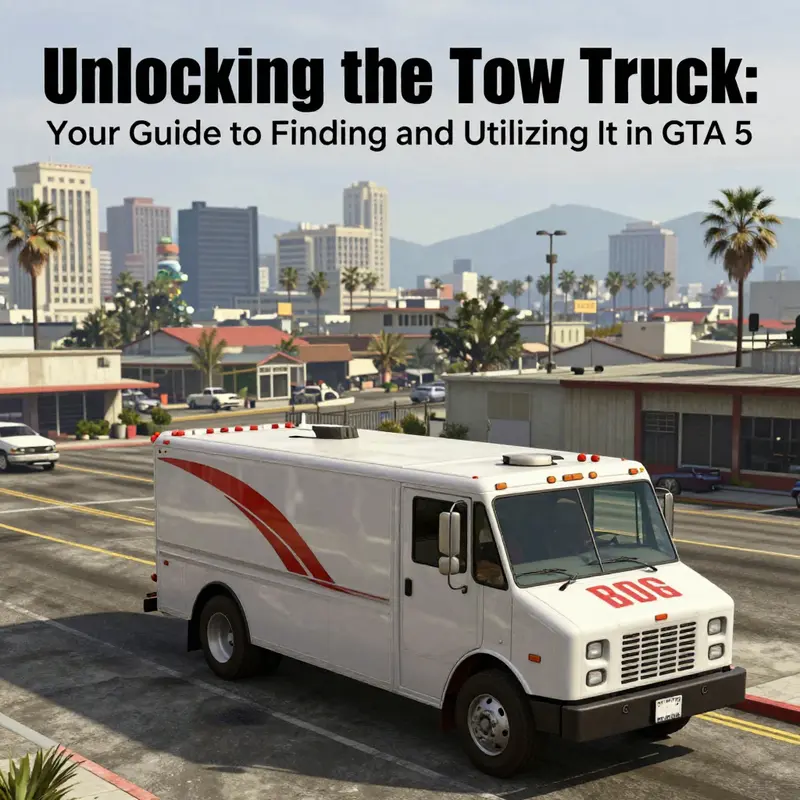
Navigating the expansive world of GTA Online requires not only skill but also access to essential vehicles like the Tow Truck. For business owners, the ability to locate a Tow Truck can be a game-changer, especially during missions requiring vehicle retrieval or transportation. This guide provides in-depth insights into where to find a Tow Truck in GTA 5, specifically at the FIB Headquarters, and explores its functionality and implications in the game. Understanding these aspects can significantly enhance your gameplay experience and operational efficiency as you manage your in-game business.
null
null
Tow Trucks, Hidden Garages, and the Economy of Recovery: Navigating GTA V’s Tow Vehicle Landscape
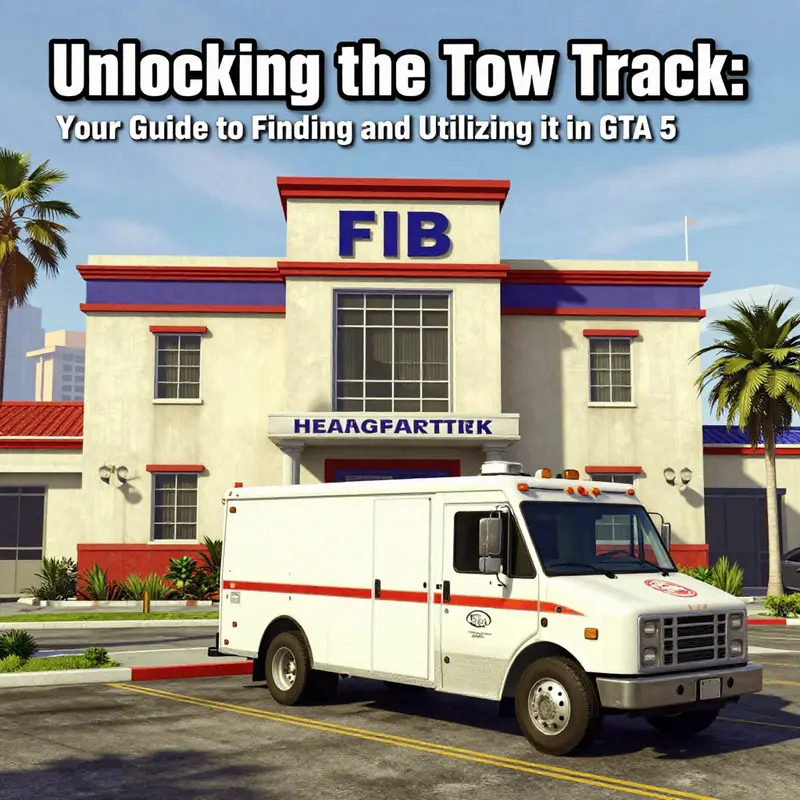
Locating a tow truck in GTA V isn’t just about a quick swap of wheels; it’s a window into how the game blends exploration, utility, and a light economic layer into the open world. The most reliable starting point for players who want to take control of this mechanic is the FIB lot in Davis, Los Santos. Within the sprawling city map, the FIB precinct and its surrounding parking zones sit at the edge of the action, offering a practical entry point for a vehicle that can haul, tow, and transform pickups into moving assets. The tow truck you’ll want is typically parked near the main entrance or in the designated parking area of the FIB building. Getting there is straightforward once you know the lay of the land: head to the FIB headquarters in Davis, follow the road network toward the facility, and keep an eye on the cleared areas by the entrance where a tow vehicle often waits. An added tactical edge is the hill shortcut nearby, which provides a faster route to the freeway and onto the broader network that makes the Davis corridor a convenient staging ground for any recovery mission. The specific placement of the vehicle can shift with game updates or after certain story or side-mission milestones, but the general rule holds: this is a legitimate and reliable spawning ground rather than a random, once-in-a-blue-moon find. For players who want real-time verification of spawn patterns and precise map cues, official guides and map references online can provide navigational clarity, though the core experience remains intuitive in practice and built for quick immersion rather than long-winded detours. The utility of this location extends beyond simply acquiring a tow truck. It becomes a starting point for a small but meaningful loop—the ability to recover damaged vehicles across Los Santos, transport them to a garage, and then decide whether to repair and restore them to service or move them into a broader market loop that mirrors a simple, in-game economy of repair, reclaim fees, and resale opportunity. The open world is designed to reward experimentation, and the tow truck mechanic is a prime example of how a single vehicle can unlock a chain of purposeful actions without forcing players into one rigid path.
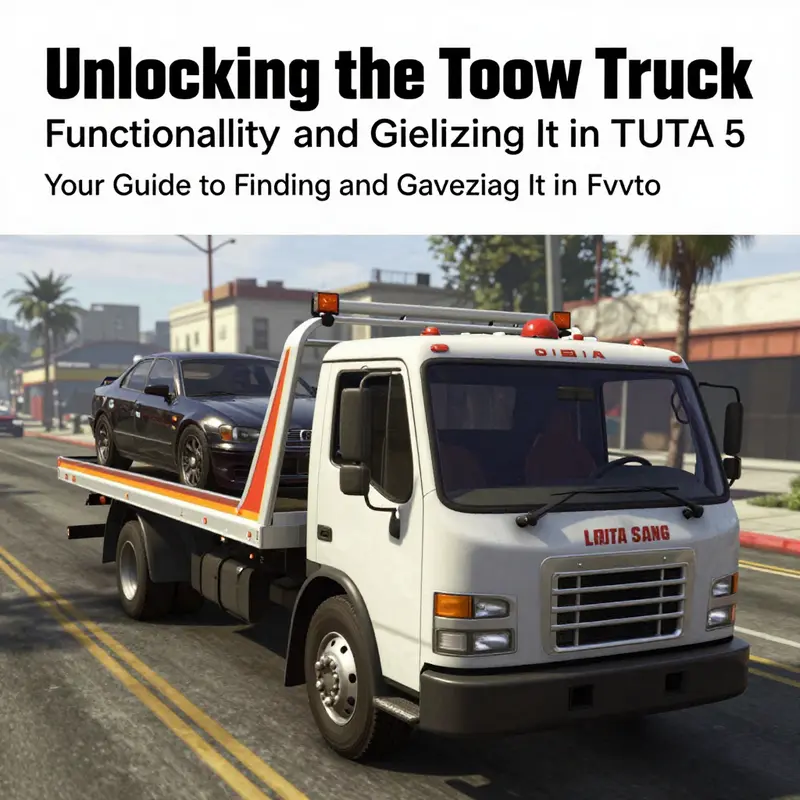
Beyond the FIB lot, there’s a separate, more expansive functional hub worth noting: the Tow Truck Garage, located in the La Puerta district near Los Santos International Airport. This garage isn’t merely a storage space; it’s a node in the game’s practical economy of vehicle recovery. When you are ready to take a damaged or disabled vehicle off the street, you deploy the tow truck, connect to the target vehicle using the right D-pad (or the right analog stick, depending on your controller setup), and commence a retrieval process that feels tactile and earned. The act of attaching a vehicle isn’t just a mechanic; it’s a moment of contact with the city—an interaction that emphasizes responsibility, precision, and timing. Once connected, you can drive the linked vehicle to the garage for repair or park it outside for later retrieval. The choice matters because it introduces a risk-reward dynamic: storing vehicles gives you the option to re-sell or re-task them later, but it also ties up space and time that could be spent pursuing other activities.
The economic texture of the tow truck system is where the mechanic becomes more than a shortcut or a cheat. In practical terms, when a vehicle is recovered from the wilds of Los Santos and brought into a workshop scenario, the owner of that vehicle—whether an NPC or a player with a garage—must pay a reclaim fee to retrieve it. This fee isn’t just a number on a screen; it’s an in-game signal that aligns with how vehicle ownership and responsibility are imagined in a bustling city: someone has to shoulder the cost of bringing the vehicle back from the brink, and the fee structure mirrors a real-world concept of storage and recovery charges. If the fee isn’t paid, the system grows more curious and volatile: the vehicle can be auctioned off. The potential is then created for players to leverage, either by grabbing the recovering vehicle themselves, or by watching the market tilt as certain recovered cars become suddenly scarce. This is where the tow truck operator gains a small but real economic lever: a recovery mission becomes not just a quick fetch but a calculated venture tied to timing, strategy, and the player’s appetite for risk.
From a gameplay standpoint, the tow truck mechanic pushes players toward a more deliberate kind of exploration. Rather than rushing from mission to mission in a straight line, you end up charting routes across the city with a mind toward resource management. The tow truck becomes a portable tool that unlocks access to vehicles that might be hard to reach by other means, expanding the player’s scope for lootable or sellable cars and creating opportunities to practice careful vehicle handling, efficient hauling, and strategic decision making about where to store or repair assets. The real-world parallel—of course, is visible in any context where recovery fleets operate in dense urban areas—can be evoked through a broader sense of realism: you learn to manage time, fuel, and space as you execute a sequence of pulls, pulls that gradually reveal a profitable rhythm and a sense of ownership over a local market within the game world.
Control and technique are central to how this system feels authentic. The process begins with locating a tow truck, which often means treating the FIB lot as a reliable gateway. From there, the mechanic unfolds: position behind the target vehicle, engage the tow cable with the right control input, and secure the connection. The moment you lift a car and begin to maneuver it toward a garage becomes a microcosm of strategic planning—the choice between repairing the car and selling it as-is, or storing it for a later, potentially more lucrative, resale. The garage near La Puerta offers a convenient staging ground to practice these operations in a safe space before venturing back into the bustling streets where unpredictability looms larger than a controlled environment. And there’s a certain rhythm to the whole process. The tow truck’s pulling action, the ease with which a connected car glides onto a truck bed, and the careful navigation through traffic create a loop that rewards patience and precision over brute force or reckless speed. This is not a flashy skill; it’s a practical one, built into a living city that invites you to learn by doing rather than by reading a long manual.
As you refine your approach, the chapter of the tow truck becomes a larger narrative about how GTA V’s world rewards curiosity. It invites you to explore different districts, test the limits of the vehicle’s reach, and observe how vehicles enter and exit your possession through a short legalistic arc—the reclaim fee, the potential auction, the opportunity to resell. It’s a playful, economy-forward thread that gives a new texture to the open world: you aren’t simply transporting a car for a mission; you’re participating in a small, dynamic market that can swing in response to your choices and to the city’s rhythms. And because the FIB lot and the La Puerta garage sit in visible, accessible parts of Los Santos, you can weave tow operations into other activities—stunt runs, races, or casual cruising—without feeling like you’re detouring into a separate, artificial zone. The connective tissue is the city itself, a place where a tow truck isn’t a one-off tool but a doorway into a regular, repeatable practice that blends exploration with the practicalities of vehicle recovery.
For players who want to surface more directly into the broader world, the narrative threads around tow trucks also offer a subtle reminder: the city is a living system with its own rules, and you can learn to read those rules by paying attention to where vehicles tend to appear, how they’re moved, and how ownership and repair play into a larger loop. The experience is about more than cashing in on a single pickup; it’s about cultivating a nuanced understanding of how a single tool can unlock a broader set of possibilities across the city’s map. The FIB lot in Davis and the La Puerta garage near the airport function as twin anchors for this practice, giving you dependable access points while you test your limits, both in terms of technical skill and strategic thinking. In the end, the tow truck isn’t just a vehicle in GTA V; it’s a key to a small, self-sustaining economy that lives within the city’s open world, inviting players to experiment, plan, and execute with a calm confidence that grows with every recovered car and every well-timed sale.
External resource: https://support.rockstargames.com/hc/en-us/articles/360047987211
Internal link (for context and cross-reference): tow-truck-washington-dc
Final thoughts
Finding and utilizing a Tow Truck in GTA 5 can greatly enhance your capabilities within the game, especially as a business owner. By knowing where to locate this essential vehicle at the FIB Headquarters, you position yourself to efficiently manage missions, transport vehicles, and navigate the chaotic environment of Los Santos. As you explore the functionalities of the Tow Truck, consider how it can optimize your operations, ensuring that you remain a step ahead in both gameplay and business management. Embrace the opportunities the Tow Truck presents and elevate your strategy in GTA Online.