
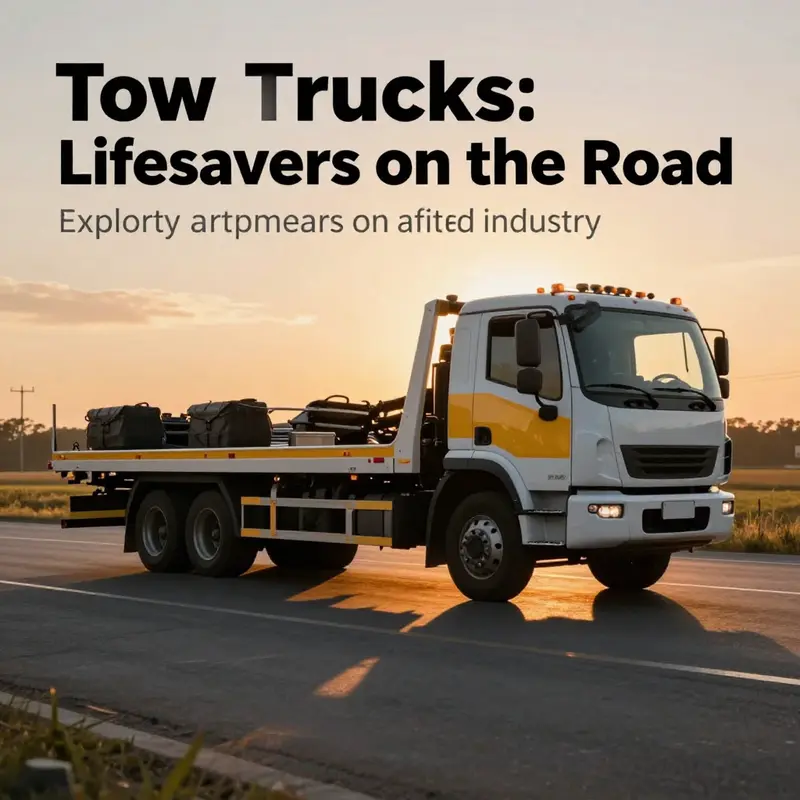
Towing trucks serve as vital assets in maintaining road safety and efficient emergency responses. Businesses and transportation services rely heavily on these specialized vehicles not only to assist drivers in distress but also to ensure the smooth flow of traffic during critical situations. This article delves into two primary aspects of towing trucks: their essential role in road safety and emergency response, and their technical specifications and varieties tailored to different applications. Understanding these facets will equip business owners with insights necessary for optimizing their roadside assistance strategies and ensuring compliance with industry standards.
Ropes, Rules, and Rescue: How Tow Trucks Safeguard Roads and Restore Order in Emergencies
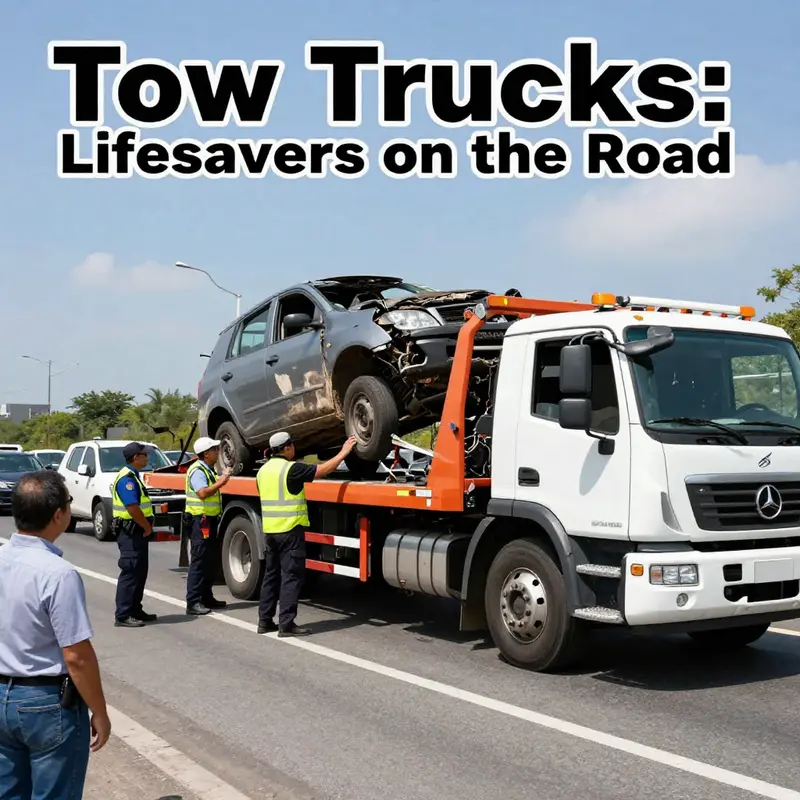
When a vehicle breaks down on a busy freeway or a car veers off the shoulder into a ditch, the immediate response is not just about moving metal from one place to another. It is a calibrated act of risk assessment, precise mechanical work, and coordinated traffic management that keeps the road network functioning and protects the people who depend on it. A towing truck, in its most effective form, is less a simple transporter than a mobile operation center. It carries the tools, the know-how, and the procedural discipline necessary to turn a potential bottleneck into a manageable incident. The narrative of road safety and emergency response hinges on this balance between speed and care. Quick arrival on scene is essential, but speed cannot override the safeguards that prevent a secondary collision, a fuel leak, or a reckless maneuver by onlookers. In this sense, the presence of a tow truck signals not only the answer to a mechanical problem but a disciplined commitment to preserving life, preserving property, and preserving traffic flow. Road users move more confidently when they know that trained professionals are arriving with the right equipment and a plan that prioritizes safety over speed alone.
The core function of towing operations begins with the dispatch and the scene size-up. Operators must translate a radio call into a mental map of the scene within seconds. They read the roadway geometry, the direction of travel, the volume of traffic, the weather conditions, and any hazards that could complicate recovery. This is not a cosmetic process; it dictates whether a flatbed is deployed or a wheel-lift and boom combination, whether tarps and chocks are needed, or whether additional personnel are required to control traffic and secure bystanders. The decision tree is guided by principles that aim to minimize additional damage to the disabled vehicle while also preserving road safety for other travelers. On highways, the focus is on rapidly securing the vehicle and creating a controlled work zone. In tighter urban streets or rural byways, the emphasis shifts toward maneuverability and stability on uneven surfaces. The operator must also understand the legal framework that governs traffic management around an incident, which can include temporary lane closures, the use of warning devices, and coordination with law enforcement and emergency medical services. This layered understanding makes the tow truck crew an integral node in the broader network of emergency response.
Once on scene, the equipment choices become the language of safety and effectiveness. Flatbed tow trucks, sometimes called rollback units, present a bed that tilts and lowers, allowing the entire vehicle to be winched or rolled onto the platform in a controlled manner. This minimizes the risk of further damage to a vehicle with alignment concerns or structural issues. In other scenarios, integrated tow trucks combine a wheel-lift system with a boom or winch, providing the versatility to pull vehicles out of ditches, recover off-road incidents, or lift a vehicle with suspended components. The engineering logic behind these machines is simple in principle but demanding in practice: the selection of a recovery technique must align with the vehicle’s condition, the surface under the vehicle, and the surrounding traffic environment. Operators must be fluent in the safe application of winches, lifts, and stabilizers, always using rated equipment, appropriate straps and hooks, and redundancy measures to prevent a sudden failure that could harm the operator or bystanders.
The relationship between equipment and training cannot be overstated. The most capable tow truck in the world becomes a liability if operated without the requisite skill, discipline, and situational awareness. Training encompasses not just mechanical operation but also risk assessment, scene protection, and communication with other responders. Operators learn to read the damaged vehicle aloud through careful inspection: is there a fuel or oil leak? Is the vehicle’s suspension compromised? Are there airbags that could deploy? How can the wheels be stabilized to prevent a surprising shift during loading? Each of these questions informs a sequence of actions that protect both the towed vehicle and the public. The personnel on the scene must also be equipped with the right protective gear, high-visibility clothing, and clear, consistent communication protocols so that every team member knows where others will be and what their role entails. In many regions, the standards for training and equipment are continually updated to reflect new safety insights, better materials, and evolving traffic patterns. This ongoing professional development is what keeps towing teams resilient in the face of rising demand and more complex road environments.
The strategic value of towing services becomes especially evident in densely populated areas and on major corridors where even a single stalled vehicle can trigger cascading delays. The ability of a tow crew to rapidly detach a vehicle from the travel lanes, restore a safe flow of traffic, and prevent secondary incidents is a public safety service, not merely a private business activity. In places with diverse road conditions—narrow city streets, mixed-use corridors, or winding rural routes—the same crew must adapt to a wide range of constraints. The flatbed may be favored on a car involved in a minor collision to reduce further damage, while an integrated unit may be called when a vehicle is deeply embedded in a ditch or has a wheel or axle issue that requires pulling or lifting. The versatility of the fleet matters, but so does the readiness of the crew. The combination of flexible equipment and highly trained operators is what makes a tow company a reliable partner for police, hospitals, and road authorities who rely on consistent, predictable responses.
In Malaysia, where vehicle ownership has surged and the road environment runs from congested urban arteries to challenging rural stretches, towing services have assumed a vital role. The operators face the daily realities of mixed traffic, diverse road dimensions, and variable surface conditions. The efficiency of a recovery operation in such contexts depends on the crew’s ability to perform a rapid assessment and to implement a plan that minimizes disruption while maintaining safety. The country’s road networks depend on the towing sector to clear the way after collisions, remove obstructive vehicles from highways, and address illegally parked cars that block emergency access or essential routes. The operational philosophy remains consistent across borders: safety first, then speed, with a clear sequence of tasks designed to protect motorists who are stranded, other road users who might be at risk, and the personnel who carry out the extraction. The public’s trust in roadside assistance rests on the demonstrated competence of the tow operators and the transparent way they approach each incident. This trust, once established, translates into reliable response times and fewer repeat incidents, which in turn keeps traffic moving with less friction and fewer sudden slowdowns.
The choreography of an effective tow operation also highlights the importance of coordination. A scene is rarely a solo performance; it is a collaborative event that may involve dispatch centers, traffic control devices, police officers who regulate lane usage, and sometimes emergency medical teams. The dispatcher’s role is not only to summon the right equipment but also to anticipate the likely sequence of events. A well-coordinated response reduces the duration vehicles spend in lanes where they pose a hazard to themselves and to other drivers. It also helps in protecting responders who work along the shoulder or within a lane closure. The on-scene team, meanwhile, must communicate clearly about the state of the vehicle, the stability of the recovery, and any fluid spills that could necessitate additional containment measures. As the recovery unfolds, a careful balance is struck between rapid action and meticulous caution. The goal is not to rush the job to meet a clock but to ensure that each step is performed without compounding risk. This philosophy—deliberate, disciplined, and safety-driven—defines professional tow work and distinguishes it from hurried, improvised attempts that can create more danger.
The broader impact of tow trucks on road safety is felt in their preventive value. By ensuring disabled or illegally parked vehicles do not linger in critical positions, tow teams reduce the likelihood of secondary crashes. They restore lane capacity and support smoother traffic flows, which is particularly important on high-traffic corridors and during peak travel periods. In addition, the presence of well-equipped and well-trained tow crews can deter reckless parking and encourage motorists to seek assistance through legitimate channels rather than attempting risky, do-it-yourself recoveries. This deterrent effect, while less tangible, contributes to the overall safety culture around road transport. The continuous improvement of tow operations—through better equipment, enhanced training, and refined protocols—further strengthens the reliability of the transportation network, enabling a faster return to normal conditions after incidents. A public safety mindset percolates through the industry when operators understand that every recovery has a potential ripple effect on thousands of other travelers. Respect for this responsibility is what anchors the profession in both technical competence and ethical practice.
On a practical level, the visibility of tow trucks and their crews matters. Bright markings, flashing lights, and reflective gear are not mere show; they signal to approaching drivers that a work zone exists and that a decision to reduce speed or change lanes may be necessary. Proper positioning of the vehicle at the scene—often upwind of the hazard and at a distance that protects workers from passing traffic—helps to create a safe buffer while enabling effective recovery. The alignment between the crew’s actions and the control of traffic is a constant negotiation, especially in environments where space is tight and the risk of interference from bystanders is real. In such situations, polite, clear communication becomes as important as the mechanical steps in the recovery. The operator must convince drivers to slow down, to maintain a safe distance, and to follow directions that keep the entire operation running smoothly. This human element—the ability to manage attention, set expectations, and de-escalate tension—complements the technical prowess of the equipment and completes the picture of professional tow work.
For readers who are curious about how these principles translate into real-world practice across different jurisdictions, the broader literature in the field emphasizes that the combination of adaptable equipment, rigorous training, and coordinated response is what underpins road safety outcomes. A deeper technical overview of modern tow truck technology and its applications provides further illumination on the specifications that determine recovery capability and on-scene safety. This external resource offers a comprehensive synthesis of equipment capabilities, operating procedures, and practical considerations that guide fleet managers and frontline operators alike. See the detailed technical overview for more on the specifications and applications of contemporary tow trucks: https://www.towtruck.com.au/technical-overview-best-tow-trucks-specifications-applications/.
In the end, the value of a towing truck lies not only in its power or its precision but in the relationship it sustains with the road and with the people who depend on it. The job is a constant reminder that road safety is a shared responsibility. A well-equipped, well-trained, and well-coordinated towing team embodies that responsibility, turning scenes of danger into organized recoveries and returning the road to its normal rhythm as quickly and as safely as possible. The blend of mechanical skill, situational judgment, and disciplined teamwork makes the tow truck more than a vehicle; it is a lifeline for commuters, a safeguard for families, and a steadying hand in moments of disruption. To whoever stands by the roadside, waiting for assistance, the presence of a professional crew signals that the journey back to safety has begun, and that order will be restored with care, competence, and unwavering attention to the shared limits of speed and safety.
Tow Trucks in Motion: Design, Safety, and Adaptability Across Recovery Scenarios
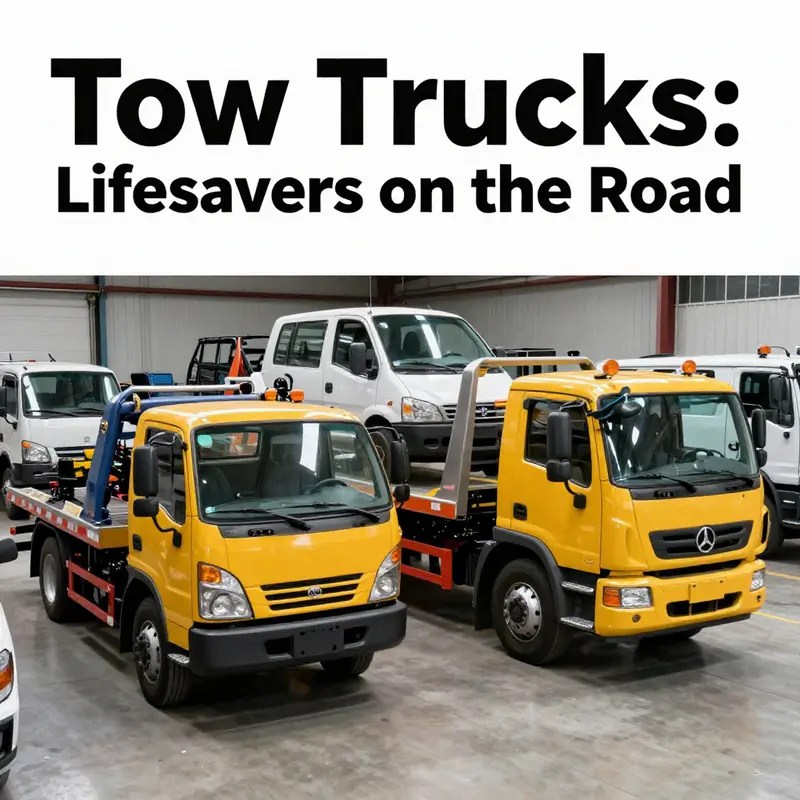
Tow trucks are engineered response tools that combine physics, safety, and rapid decision making. When a vehicle stalls on a highway, a badly parked car blocks a lane, or a damaged truck sits on a shoulder, the tow truck becomes a moving safety asset. The core rule is to move the other vehicle without adding risk. This guides the choice of recovery method, the hydraulic layout, and the training that keeps operators precise under pressure. The family of machines includes flatbeds, wheel-lift units, and heavy-duty rotators, all designed to handle different classes of vehicles while protecting the recovered vehicle and bystanders. The goal is to restore mobility with minimal damage and disruption.
The evolution tracks road demands: early hooks and chains gave way to controlled winches and soft-touch loading. Flatbeds minimize undercarriage contact; wheel-lift systems offer speed in tight spaces; rotators handle heavy vehicles with a need to sequence lifts and stabilizers. Tilting flatbeds add versatility on uneven terrain. Across configurations, principles such as payload stability, boom reach, winch capacity, chassis geometry, and braking reliability shape safe, predictable recoveries. Operators rely on training that blends mechanical fluency with scene assessment and clear communication with other responders.
Decision making at the scene weighs vehicle weight, fuel or hazardous material considerations, road geometry, space around the vehicle, and equipment readiness. The intent is to choose a method that preserves the vehicle, reduces secondary hazards, and respects the safety of all road users. Maintenance and inspection cycles—brakes, hydraulics, stabilizers, and load-limiters—support reliable performance and minimize downtime. Beyond the machines, tow operations depend on coordination with police, fire, traffic management, and service providers to clear lanes and safeguard the scene.
This chapter frames tow trucks not as stand-alone tools but as components of a broader, adaptive system that keeps traffic moving and communities safe. The spectrum of configurations allows responders to tailor the solution to each incident, from a simple roadside pull to a complex recovery involving multiple units and specialized equipment. The next layer points toward emerging technologies such as sensor-guided stabilizers and remote operation capabilities that promise further safety and efficiency gains.
Final thoughts
In summary, towing trucks play a crucial role in safeguarding roadways and facilitating quick responses to vehicular mishaps. Business owners in the transport and automotive sectors should recognize the significance of investing in appropriate towing solutions, not only for compliance but also for enhancing operational efficiency and customer satisfaction. By understanding the technical specifications and varied applications of towing trucks, companies can strategically implement towing services that align with their business needs. This preparation ultimately contributes to a safer driving experience for all road users.