
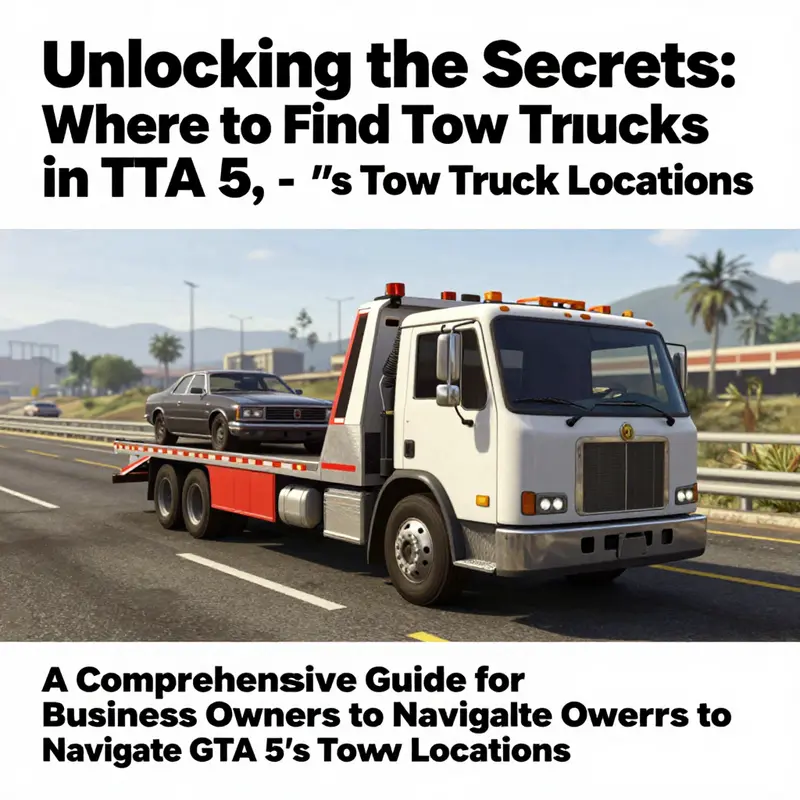
Understanding the intricacies of GTA 5 can greatly enhance your gameplay, particularly when it comes to acquiring essential vehicles like tow trucks. These versatile vehicles play a crucial role in various missions, particularly in the logistics and transport sectors, making them invaluable for business owners looking to streamline their operations. This guide will explore prime locations where tow trucks can be found, delve into the different types of tow trucks available, and provide best practices to ensure you efficiently acquire one when the need arises. Whether you’re looking to transport vehicles or enhance your business’s operational capabilities, this article will empower you with critical insights into the world of tow trucks in GTA 5.
Tracking the Towing Pulse of Los Santos: Where Tow Trucks Live in GTA 5
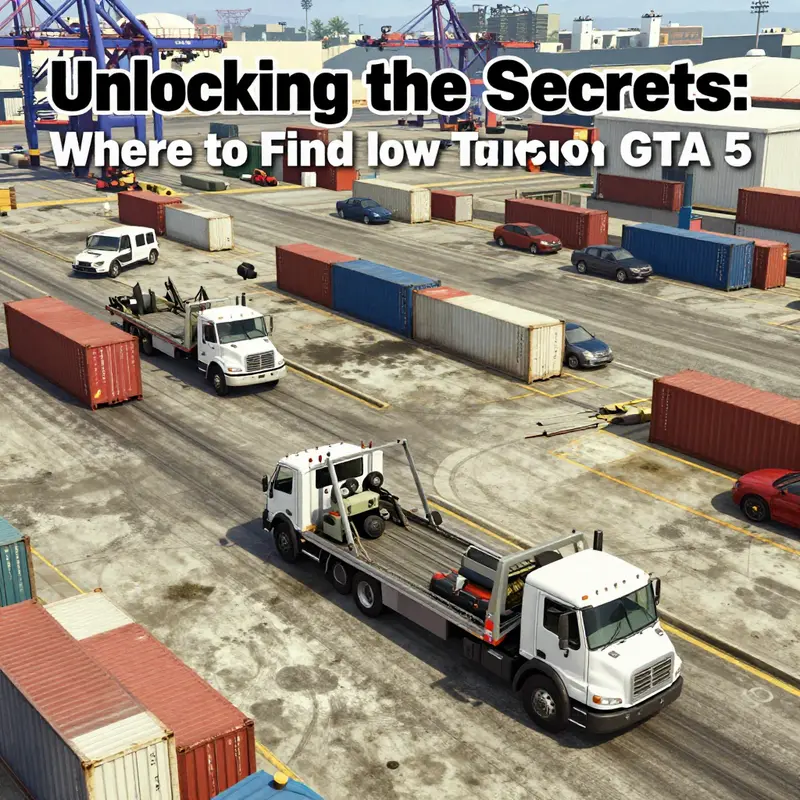
A tow truck in GTA 5 moves through a city built on the pulse of industry and movement, a slow, patient machine that you notice only when you need it. Yet the game world has its own cadence for these workhorses, a rhythm shaped by docks, depots, and the long, straight stretches of road where cargo hauls itself from one end of the map to the other. If you know where to look, the tow trucks blend into the background of Los Santos and Blaine County, functioning as reliably as the other work vehicles that keep the city running. The places where they appear are not random curiosities but signs of the city’s logistical spine. Look for them where freight moves, where containers stack in neat rows, and where the roar of an engine travels across warehouses and service stations alike. The most dependable spots unfold in a few distinct zones that echo the real-world logistics network, which makes sense given how often players rely on tow trucks to recover derailed rides, transfer vehicles for missions, or simply shuttle a stubborn ride to the impound lot after an escapade gone sideways. In the industrial outskirts of Los Santos, the cargo district and the port-area freight yards stand out as prime hunting grounds for tow trucks. The lanes near the Los Santos Port, with their maze of docks and containers, host tow trucks that look purpose-built for hauling overlooked cargo or hauling out a stubborn car from a precarious position. The vibe here is not a city street but a working zone: trucks idle near loading bays, and you can imagine the roar of diesel engines as the workday moves between shifts. Dimly lit warehouses and the long, quiet stretches between cranes and stacked crates create a backdrop that makes a tow truck feel like a character in the city’s ongoing labor story. The same logic applies a bit inland, where industrial zones around Chiliad Park and Sandy Shores yield more chances to spot a tow truck during a driver’s circuit of the map. These areas aren’t the glamorous avenues, but they are the arteries of a functioning economy within the game, where maintenance crews and recovery teams keep the city’s wheels turning, even if the spotlight falls on more explosive or dramatic moments elsewhere. The San Fierro Freight Terminal, though technically abstracted into the broader map, adds another layer of realism. It sits at the edge of the play area, a symbolic reminder that the GTA landscape borrows from real-world logistics layouts. You’ll find tow trucks nearby when a mission requires moving a heavy vehicle between bays or repositioning a heavy-lift unit for a driver-side pickup; it’s not just a random spawn, but a vehicle that understands the flow of cargo in the area. When you shift your gaze to the highways, the game’s rhythm becomes a little more kinetic. Interstates and state routes act like timelines on which tow trucks move with a calm predictability. Along major arteries such as Interstate 101 or Route 64, daytime traffic and service stops create a steady trickle of tow trucks patrolling the shoulders or parked at rest stops. These roads form a corridor of routine, where a tow truck might be found outside a service station, its cab reflecting the sun off its chrome bumper while the engine hums with a patient undertone. There’s a quiet satisfaction in spotting a tow truck in a place where you’d expect a tow truck to be, and the game rewards patience with the right timing: more trucks appear when traffic is dense and the road network is busy, mirroring how real-world towing activity peaks with the flow of vehicles and incidents. The commercial and parking zones also play their part in this city-wide choreography. Look around places that draw people for shopping and leisure, such as Vice Point Mall or the Grand Senora Hotel’s parking lot, and you’ll notice tow trucks in and around the perimeters who handle immediate recoveries or help clear vehicles that have slipped into compromised spots. The presence of tow trucks in these spaces underscores a practical truth: where there are frequent vehicle events and a steady stream of traffic, there are tow trucks nearby, discreetly waiting for a moment when a car needs to be moved into a safer position or relocated for a mission objective. The city’s civic core adds another dimension. Tow trucks surface near the Los Santos Police Department and Los Santos Fire Department stations, reflecting the real-world role of towing teams in accident response and clearances. In the game, these appearances aren’t just about utility; they add texture to the urban ecosystem, reminding players that even a city built on chaos and spectacle carries a network of support vehicles quietly doing their work in the background. And then there’s spontaneity—the random spawn factor that makes GTA 5’s behavior feel alive. Tow trucks can emerge on highways like Interstate 110 and Route 68, especially when the day wears on and traffic swells. The daytime window is particularly fertile for spawns, aligning with the period when roads are busiest and the likelihood of vehicle incidents rises. If you’re hunting for a tow truck with a specific role in mind, the game’s vehicle ecosystem offers some clear paths. The Mule and Boxville series models have been staples in GTA Online as tow-truck variants, designed for cargo movement and recovery operations, and they appear in the game’s broader vehicle lineup in ways that players can plan around. These models, favored for their stability and load capacity, are well-suited to tasks like the Freight Cargo missions in the online space, reinforcing a practical link between the vehicle’s design and the work it performs in the game’s various modes. In online play, players can often access these and other specialized trucks through the Custom Vehicle Shop or by earning them through contracts and missions, depending on how the game’s progression unfolds. While the offline experience rewards you with the chance to stumble upon a tow truck in a well-chosen industrial or arterial location, the online space expands that possibility through a broader catalog of vehicle options and a steady stream of tasks that lean on a tow truck’s unique capabilities. For those who want a dynamic, real-time sense of how spawns shift with the game’s week and player activity, community tools like GTA5-Mods.com provide up-to-date spawn points and week-to-week data shared by players. This is more about keeping a map of the city’s rhythms than about chasing a deterministic location; a tow truck’s location becomes a reflection of the city’s current tempo, a clue to where the next large cargo move or incident response might occur. If you’re exploring a specific area and want a quick reference to real-world logistics parallels, you can explore resources like Washington DC towing to understand how actual recovery operations map onto the city’s streets. For a more game-focused reference, the GTA 5 community remains the most immediate compass for shifts in spawns and the best routes to encounter a tow truck during a particular session. External resources, especially those dedicated to mods and vehicle spawn data, offer a landing pad for players seeking to optimize their routes or prepare for particular in-game tasks. The key is not simply to find a tow truck but to understand how the city’s machinery uses these vehicles to keep traffic flowing and incidents handled with speed and care. A nuanced hunt—driven by the industrial zones, the arterial highways, and the city’s commercial and civic corners—will yield a dependable set of spots where tow trucks appear, and a deeper appreciation for the role these quiet workhorses play in GTA 5’s sprawling theater of chaos and control. External resource: https://www.gta5-mods.com/vehicles/tow-trucks-in-gta-5
Tow Trucks in GTA 5: Identifying Types, Spawns, and Strategic Uses Across Los Santos
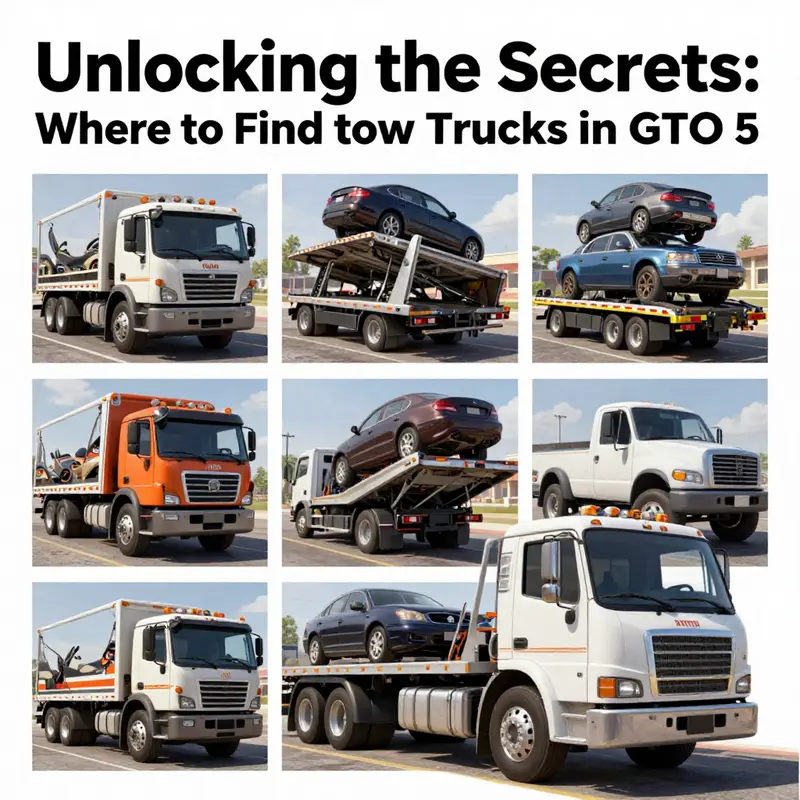
In the sprawling cityscape of GTA 5, tow trucks are more than just utility vehicles slipping through traffic. They embody a quiet, dependable thread that ties together the game’s rough-and-tumble realism with moments of strategic calm. You’ll encounter them not only during missions that require moving a damaged car from a curb to a depot, but also as part of the world’s everyday routine—a reminder that Los Santos runs on logistics as much as impulse. Understanding what kinds of tow trucks exist, where they tend to show up, and how to use them effectively can transform a casual drive into a deliberate, resourceful playthrough. This isn’t about chasing a single model or chasing a canonical spawn point; it’s about recognizing the logic behind the vehicles and how their presence shapes your options on the map.
Three broad families define the core of GTA 5’s towing capabilities. First, the standard tow trucks—compact, nimble machines fitted with a crane along the side or near the front. They’re designed for the everyday job: lifting a car that’s stopped in the wrong place, hauling a small salvage, or assisting in a casual recovery during a stealthy or non-lethal moment in a mission. Their cranes are precise enough to hook onto a damaged wheel or axle and lift with controlled, predictable movement. This makes them reliable for routine repossessions, quick rebounds after a failed stunt, or simply repositioning half-scrapped vehicles so you can admire their lines from a different angle. In the world of Los Santos, the standard tow is the bread-and-butter workhorse—efficient, familiar, and perfectly suited to the city’s traffic rhythm.
Second, the heavy-duty tow trucks enter the scene when size and strength matter. These beasts of burden are designed for larger targets: bus-sized hulls, freight trucks, and other heavy salvage that would challenge lighter gear. They boast sturdier frames and more robust lifting capacity, which translates into steadier control when you’re dealing with oversized or heavily damaged vehicles. The heavy-duty model is less about speed and more about stability and capability. In the right scenario, it feels like cheating the physics in a controlled, satisfying way—an echo of the real-world law of leverage, where a longer reach and greater torque make the impossible manageable on the road. If you’re planning a mission or a stop in a busy industrial zone, the heavy-duty tow becomes an essential option to ensure you can move what others cannot.
Third, there are specialized tow trucks—quirky, purpose-built variants that appear in specific contexts or events. These aren’t everyday workhorses; they arrive when a scene demands a particular look or a unique mechanical capability. Their designs vary, mirroring the game’s broader habit of riffing on real-world aesthetics through fictional models. While they may not appear in every corner of the map, they provide color and utility in moments when a standard or heavy-duty truck would feel a little too ordinary for the moment. This tiered system—standard, heavy-duty, specialized—gives players a spectrum of choices that suits both the narrative needs of a mission and the personal thrill of vehicle collection. The vehicle roster in GTA 5 bends toward satire and playfulness, with fictional brands and models that echo real-world design without copying it outright. Rockstar’s embedded design philosophy invites players to enjoy the vibe of towing while recognizing the world-building that makes Los Santos feel lived-in and witty.
Where these vehicles live in the game world is a matter of urban economy and regional activity. In Los Santos, the cargo district around the port and the freight docks is a reliable hotspot for tow trucks, particularly those dealing with cargo containers and the type of recovery work that blends into the city’s logistical hum. The industrial zones—areas like Chiliad Park and pockets around Sandy Shores—also host depots and warehouses where tow trucks regularly park, ready to be summoned for a quick pickup or a longer haul. Across San Andreas, the pattern shifts with the urban-to-rural balance. Construction sites near Countryside or La Mesa are common stages for tow trucks because, in those zones, heavy vehicles and ongoing work create abundant opportunities for lift-and-move tasks. Garages and repair shops near Maze Bank or Rancho likewise attract tow trucks, serving as hubs where players can observe the mechanics in action and even re-create a scene of vehicle recovery to satisfy a creative or mission-driven impulse.
Beyond fixed locales, spawn variability adds a layer of dynamism to the pursuit. Tow trucks appear at random along major arteries—Interstate 110 and Route 68 are reliable veins where traffic density and daytime energy make a tow truck’s presence plausible. Daylight hours, in particular, seem to stage more frequent spawns, aligning with a natural tempo of freight movement and roadside assistance that you’d expect in a living city. This randomness is not chaotic; it mirrors the game’s broader design where the world remains believable through predictable unpredictability. For players who want to stay ahead of the curve, community-driven tools and reports help chart current spawns and movements. These tools collect player reports to map where tow trucks have appeared recently, giving you a real-time sense of where to locate a crane that can swing into action without waiting for a random chance.
If you’re curious about how this balance of systems translates into real-world comprehension, there’s value in looking at practical resources beyond the game. For readers who want a grounded perspective on how towing operations are structured in reality, a real-world reference can be insightful. tow-truck-washington-dc offers a viewpoint on how tow trucks function in a metropolitan context, which can illuminate the kinds of decisions a player makes when choosing a vehicle and route in GTA 5. This link is a bridge between in-game mechanics and real-world logistics, highlighting the shared logic of weights, placements, and reach in every tow.
Of course, GTA 5’s in-game world is built with playful exaggeration. The towing system relies on fictional-brand mechanics that parody real manufacturers while delivering a satisfying sense of function and physics. The result is a green-lit sandbox where you can test different power figures, crane reach, and load stability—experiments that are as informative as they are enjoyable. For players who want to deepen their knowledge of the game’s vehicle ecosystem, the official vehicle list maintained by the developers offers a comprehensive map of performance and design, including how tow trucks differ in capability and look as you progress through the game. In practice, you’ll notice that the standard tow is quick to deploy in a routine recovery, the heavy-duty variant shines when the target is large, and the specialized forms pop up at moments that require a particular aesthetic or capability.
Using these vehicles effectively also means thinking about the tasks you’re pursuing. If your aim is a clean, precise extraction of a damaged car from a busy street, a standard tow with a tight crane works well. If the vehicle you need to move is a larger transport or a stubbornly anchored wreck, the heavy-duty option offers the extra lift and stability you’ll appreciate as you edge around other cars and traffic cones. In scenarios that demand a distinctive look or a mission-specific requirement, the specialized tow trucks provide the flavor and the toolset that keep you engaged and creative. Finally, the world’s random spawns ensure you stay mindful of timing and location, nudging you to plan routes with an eye toward the city’s pulse rather than simply chasing a single fixed point.
As you move through the city, you’ll notice that tow trucks are not just chase objects; they’re practical instruments in a larger ecosystem. They allow you to reposition vehicles for a photo sequence, to stage a recovery for a story beat, or to complete a mission by moving a car back into play. They also remind you that Los Santos is a place where logistics, speed, and control coexist with humor and personality. The next steps—whether you’re chasing a specific spawn pattern, crafting a meticulous vehicle collection, or plotting a heist that depends on a careful recovery—draw on the same core idea: that the right tow truck, in the right moment, can turn a rough road into a carefully navigated route. For players who want to explore more about the in-game vehicles themselves, Rockstar’s vehicle list is the definitive guide to design, performance, and usage. Official details can be found on the developer’s site: https://www.rockstargames.com/v/vehicles/gta5
In sum, GTA 5’s tow trucks are more than their cranes and hooks. They are a vehicle class that reflects the game’s attention to environmental realism and to the playful, satirical spirit that makes Los Santos feel alive. By understanding the three core types, knowing where they tend to spawn, and recognizing how their strengths align with different tasks, you gain a practical strategy for leveraging these workhorses on the city’s streets. Whether you’re a completionist who wants every lane of the map covered or a creative explorer who loves staging scenes with a hooked cab pulled free from a curb, the tow truck’s reach extends beyond mere function. It becomes a way to tell your own Los Santos story, one lift and one move at a time.
Tow Truck Tactics in GTA 5: Best Practices for Securing and Deploying Your Freight Hauler
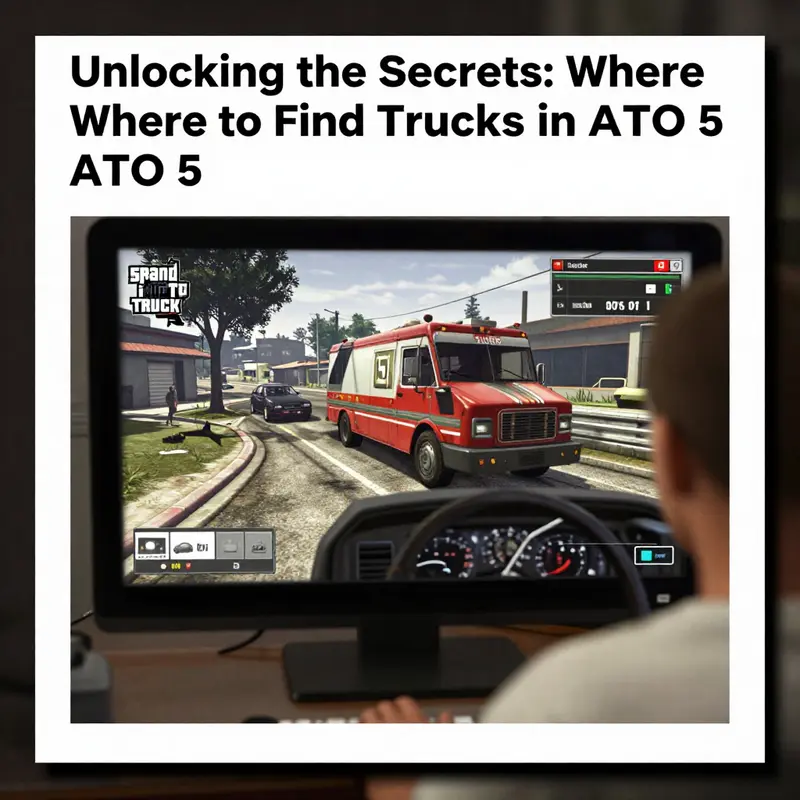
When you set your sights on Freight Cargo in GTA Online, the tow truck becomes less a novelty and more a vital tool. It’s the difference between a flaky, last-minute chaos run and a steady, repeatable operation that consistently meets the ticking deadlines of the mission brief. The best approach starts with how you acquire your tow vehicle and extends through how you outfit it, plan routes, and work with a teammate. In the game’s fabric, the road to a reliable freight hauler is paved with deliberate choices rather than impulsive upgrades. The first and simplest truth is that a tow-focused, cargo-ready machine is obtained through the in-game vehicle purchase flow. In the vehicle shop, under the Commercial or Industrial classifications, you can add a dedicated cargo carrier to your roster. The goal is to pick a workhorse that balances stability, cargo integrity, and resilience against the inevitable bumps the route will throw at you. In practice, most players gravitate toward two steadfast options: the Mule-like cargo hauler and the Boxville family of vans. Both are purpose-built for loads, offering enclosed cargo bays and stronger sides to minimize cargo shift during transit. A rarer, but tempting, path is to acquire a modified Tow Truck variant. This model isn’t a heavy-hauler in the strict sense, yet its pulling capacity and tunable components can give you a surprising edge when you’re threading your way through industrial districts and docks. The underlying principle remains simple: invest in a vehicle that you can rely on for repeated runs, then optimize it for the precise demands of Freight Cargo tasks rather than chasing a single high-speed sprint you can’t sustain. Financial discipline helps here—finish enough Freight Cargo contracts to accumulate a basics cushion, then allocate funds toward a durable, upgrade-ready chassis. The game rewards patience with a steady fleet that can absorb mishaps without derailing your progress.
Once you’ve secured your primary rig, the real work begins in the tuning bay. The aim is a balance between protection, acceleration, and handling so you can deliver your cargo with minimum risk of cargo shudder or container loss. In-game upgrades that consistently prove their worth include reinforced tires and a tougher chassis to weather road hazards and NPC interference. Power and control upgrades follow in importance: a turbo to sharpen acceleration out of neighborhoods and loading zones, a sport or sport-tuned suspension to keep the vehicle composed on swift highway sections, and fine-tuned steering to keep high-speed travel predictable in tight corridors. The intention isn’t to win a drag race; it’s to arrive with the load intact and the timer ticking down in your favor. Navigation tools, too, matter. Keeping waypoints clearly visible and having a reliable on-dash pathfinder helps you maintain a straight line from dock to depot, minimizing the slowdowns caused by detours or misjudged turns.
With the truck chosen and tuned, the real game begins: how you execute the mission. The Freight Cargo contracts demand efficiency, but they also punish hesitation. A practical route strategy emphasizes main arteries over meandering city streets. A high-value corridor is the highway system that connects cargo docks to industrial zones, allowing you to shave precious seconds off each pickup and drop-off. In-game testing shows that a well-planned loop on major interchanges can compress a run into well under three minutes, a dramatic improvement over circuitous city routes that invite delays. If the map provides a straight shot from port or depot to the warehouse, take it. The fewer traffic signals and slowdowns you contend with, the more consistent your delivery times become.
Teamwork is another pillar of success. In a two-player setup, one person handles driving while the other serves as a lookout and signaler. The driver focuses on maintaining a steady rhythm, avoiding abrupt accelerations that could unsettle the cargo, while the partner monitors traffic and potential interdiction points ahead of the convoy. This division of labor yields a tangible boost: compilation data from players shows task completion rates rise markedly when teammates communicate and preannounce delays or hazards. In practice, the lookout’s job is to pre-warn about oncoming vehicles or checkpoints, allowing the driver to ease into slower zones with minimal cargo movement. The effect is not merely cosmetic; it translates into faster, smoother runs and less cargo misalignment when the container edges meet the drop-off bay.
Beyond standard routes and teamwork, there are subtle in-game tricks that can shave a fraction of a second here and there. Several routes feature blue-highlighted acceleration zones along the way. These are not gimmicks; they’re designed to reward players who maintain consistent velocity through specific stretches. The principle is straightforward: pass through these zones at a steady speed of about 85 km/h or more to trigger a brief boost that nudges your overall time forward. Executing this correctly calls for a light touch on the throttle and a calm grip on the wheel, especially as you navigate the pressure points near loading docks.
Of course, conditions matter. Weather and time of day can tilt the odds in or against you. Rain increases the risk of slipping and reduces your ability to keep the cargo perfectly steady, so many seasoned players avoid rain-impacted runs for Freight Cargo. Visibility can also influence outcomes; heavy fog or late hours create moments where a misread turn or sudden slowdown can mean a red cargo indicator and a failed attempt. The cargo status overlay—displayed in the top-right corner—provides a practical at-a-glance read on stability. Sustainable progress means treating the green status as the baseline, yellow as a cautious signal, and red as a combat alert: if the indicator turns red, the safest response is to slow to around 40 km/h and proceed in a straight line for several seconds to stabilize the load. This feedback loop helps you maintain cargo integrity even when you’re pressed by time.
Ahead of any mission, it’s worth framing the operation as a choreography rather than a sprint. Plan your approach to minimize the number of times you stop and re-accelerate, and avoid aggressive maneuvers at the moment of pickup or drop-off. The combination of careful route selection, steady speed, and clear comms with your partner creates a reproducible routine you can repeat on multiple runs. The payoff isn’t flashy; it’s predictable reliability across a string of shipments, with reduced risk of cargo loss and fewer mission restarts. In the broader arc of GTA Online progression, this translates into more contracts completed, more money earned, and more consistent control over your in-game logistics empire.
For players who want to explore outside the core in-game economy and see real-world service perspectives, consider exploring one of the practical examples linked through the broader content ecosystem. Burke Towing Service offers a case study in how fleet management translates to service viability, and although it sits outside the GTA universe, it provides a tactile sense of prioritizing vehicle integrity, asset maintenance, and route reliability. You can read more at this internal resource: Burke Towing Service.
Ultimately, the path to a robust tow-truck operation in GTA Online rests on three pillars: a solid, cargo-oriented base vehicle; disciplined upgrades that prioritize cargo safety and handling; and a route-and-team discipline that converts chaotic spawns and busy docks into repeatable, efficient freight runs. The Mule or Boxville workhorse, properly equipped, and paired with a partner who can spot trouble ahead, becomes the backbone of your Freight Cargo success. Above all, stay mindful of the on-screen cargo status, respect the speed and road conditions, and treat each run as a test to refine your routine. The payoff is not just a faster time but a steadier flow of deliveries that reinforces your in-game reputation and paves the way for more ambitious logistical ventures.
For a deeper dive into mission optimization from the broader GTA Online ecosystem, see the official guidance on Freight Cargo Mission Optimization. https://www.rockstargames.com/gta-online
Final thoughts
Acquiring a tow truck in GTA 5 is a strategic move for any business owner within the game, allowing for enhanced logistics and vehicle management. By knowing the right locations to find these essential vehicles, understanding the different types available, and utilizing the best practices for acquisition, players can significantly boost their business operations. Whether it’s for transporting other vehicles, assisting friends, or engaging in missions, having a tow truck at your disposal opens up numerous possibilities in the expansive world of GTA 5. Stay ahead in your gameplay and ensure your business can handle any situation effectively.