
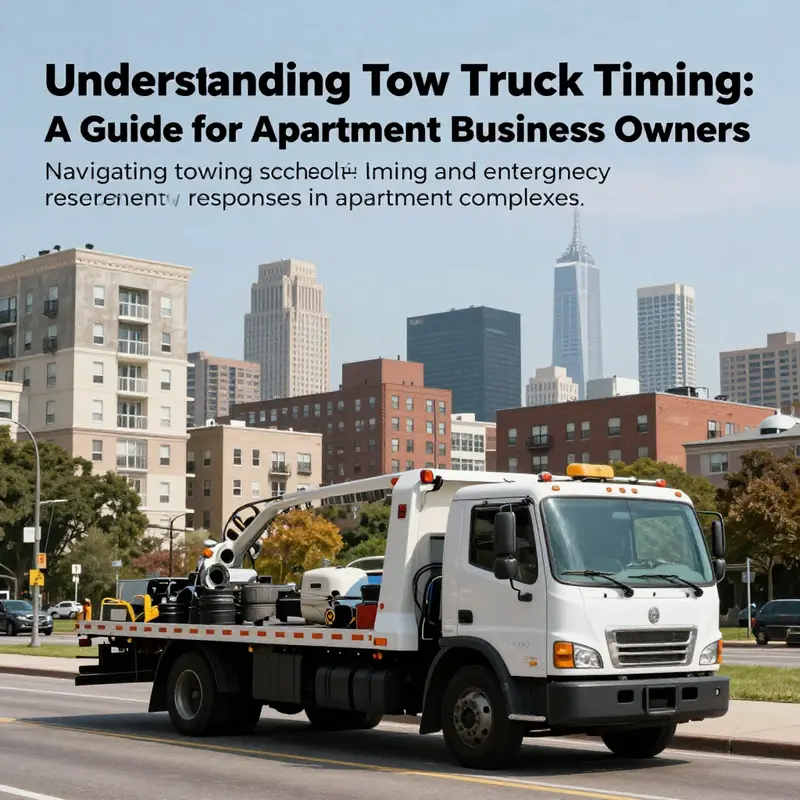
For apartment business owners, effective management of parking spaces is essential, both for tenant satisfaction and safety. An integral part of this is understanding what times tow trucks typically come to apartments, which can greatly impact operations and resident relations. Towing services usually work within set business hours but may spring into action at any moment under certain conditions. Through this guide, we will explore the normal business hours for tow trucks, as well as emergency towing situations that arise in residential complexes. Each chapter aims to equip you with the knowledge to efficiently handle any towing-related circumstances in your community.
Timing the Tow: When Tow Trucks Arrive at Apartment Complexes
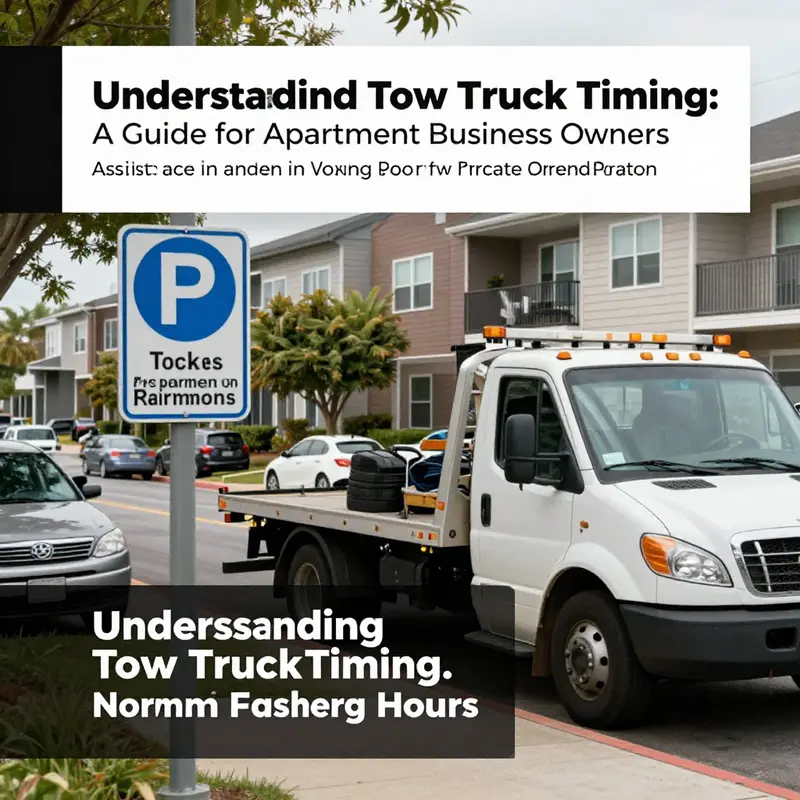
Vehicles can disappear from a driveway or a parking lot under the same weather that moves tenants through a building lobby. Yet the clockwork behind when a tow truck actually shows up at an apartment complex is not a single, rigid schedule. It is instead a composite of many moving parts: reports that trigger dispatch, the nature of the violation, the time of day, and the local rules that govern private property enforcement. The practical reality is that tow services operate with a dual rhythm. They maintain a 24/7 readiness for emergencies or urgent removals, while coordinating routine tows through property managers and leasing offices during normal business hours. This blend shapes the everyday experience for residents who may wake to find a car missing or, conversely, a car has suddenly appeared towed away in the middle of the night. The timing hinges on a careful balancing act between customer need, safety, and regulatory constraints.
The urgent side of the equation is straightforward in principle and relentless in practice. When a vehicle blocks a fire lane, blocks resident egress, or stands as a potential hazard after an accident, the dispatcher treats it as an emergency. In those moments, time becomes the critical variable, and a tow truck may be dispatched immediately, night or day, to restore access and safety. This is not merely about convenience; it is about preserving life and reducing risk. The immediacy of such calls often means the vehicle is removed within minutes or a few hours, depending on how quickly the company can reach the scene, locate the vehicle, and complete the hook-up and transport process. In rural or remote settings, the same urgency applies if a blocking vehicle threatens access to essential services, but the logistics may involve longer travel times or the need to coordinate with on-site security or local authorities who oversee property access.
Beyond emergencies, there is a subtler cadence that residents encounter when parking rules are enforced or when private contractors service a complex. In many apartment communities, the order of operations is predictable: a resident violation is reported or observed by management or by cameras, a ticket or warning is issued, and a tow is scheduled if the vehicle remains in violation after a set grace period. In these cases, you will typically hear that the actual towing appointment occurs during the property’s normal business hours. The property management office, often operating from around 9:00 AM to 6:00 PM on weekdays, becomes the central hub for coordinating non-emergency tows. The towing company knows this rhythm well, and the appointment windows are planned to align with on-site staff who verify access, confirm owner information, and ensure that the vehicle is indeed parked illegally or in a restricted zone. This coordination matters because it reduces disputes on the day of the tow and helps residents understand when to expect paperwork, notices, or the arrival of a tow operator.
Residents who want to anticipate timing can glean a few practical cues from how management and towing partners typically operate. Clear signage around the property, posted parking rules, and transparent notification practices all shape the expectations. If you see warnings posted or digital notices appear from the leasing office, you can reasonably expect the next step to involve a tow if the vehicle remains in violation. If the vehicle is legally parked but appears to be obstructing access during a special event or construction project, the situation can shift toward a temporary immobilization or a targeted removal during a specific window. In these cases, the timing is less about the clock and more about the coordination with maintenance teams and security personnel who oversee the affected areas.
An important nuance is that many tow operators, particularly those serving apartment communities, provide 24/7 emergency coverage. The same company that can respond to a fire lane blockage at 2:00 AM can also arrange a standard tow earlier in the day. This dual capacity is rooted in the broader industry practice that recognizes a resident may need a tow at any hour due to a failed battery, a flat tire in a dangerous location, or a car accident on a residential street. The presence of 24-hour emergency service means that the question ‘what time do tow trucks come to apartments?’ is not a simple one. It is often answered by a two-part reality: if the request is urgent, the tow can happen almost immediately; if it is a routine enforcement matter, the tow will typically align with the property’s office hours.
The local regulatory environment further shapes timing. Some city ordinances limit towing activities during late-night hours unless an emergency is in play. In jurisdictions with this kind of rule, a routine enforcement tow cannot be scheduled after a certain hour unless safety or legal conditions exist. For residents, this means that a late-night towing scenario may be less about the incident itself and more about whether the triggering condition qualifies as an emergency under local law. When in doubt, the safest approach is to contact the property management office or the towing company directly to confirm whether a tow can proceed at that hour. The social dynamics here matter as well: management may prefer to handle the situation during daytime hours to minimize resident disruption, while emergency conditions compel a rapid, around-the-clock response.
One practical way to frame these timelines is to think in terms of a service continuum rather than a single moment. On one end, you have the rapid responders—the 24/7 emergency tow operators who can be at a scene within minutes by mobilizing the right crew and equipment. On the other end, you have the scheduled, non-emergency tows that require administrative steps—verification of parking violations, issuance of notices, and confirmation from the property manager. In well-run communities, the gap between the initial report and the tow’s arrival is minimized by clear protocols: a designated contact at the leasing office, a direct line to the towing contractor, and a process that confirms the vehicle’s location and status before the hook is set. This streamlined approach reduces the confusion that residents might feel when a car disappears overnight and helps ensure that the community’s parking rules are enforced consistently rather than arbitrarily.
The heart of the matter for residents is to understand not just when a tow might happen, but why. Clarifying the purpose behind a tow helps people navigate the process with less anxiety and more awareness. If a vehicle is blocking a fire lane or preventing access for emergency responders, the tow is often prioritized for safety reasons. If a vehicle is parked in a reserved space or in a spot designated for tenants, the tow is a tool of property management to preserve predictable access for residents who have paid for certain rights and privileges within the complex. In either case, the aim is not punishment but order—an order that, when communicated effectively, reduces conflict and confusion.
For residents who want to know more about how timing works in practice, consider the real-world pattern your community may follow. A typical path could begin with a violation notice posted by the property management team. The notice may specify a grace period, such as 24 hours, during which the vehicle owner can move the car without penalty. If the vehicle remains after that window closes, a tow may be scheduled. The actual tow is then executed by a licensed operator who arrives with the necessary equipment, confirms credentials, and completes the removal with proper documentation. The process is designed to be transparent: a notice, a scheduled window, and then an on-site arrival. In some complexes, residents can even track arrival times via the management portal or by contacting the office during business hours. The practical effect is that, while there is a potential for a tow at any time, the most predictable timing occurs during regular business hours when staff are on-site to supervise and verify every step of the operation.
To illustrate how this translates into a tangible experience, imagine a scenario in which a car is parked in a fire lane on a weekday evening. A security officer or an automatic camera system might trigger a response from the towing contractor immediately. If the complex’s office confirms the violation and the owner has not moved the car by the end of the grace period, the tow could be scheduled for that night or the following morning, depending on staffing and access constraints. If the same scenario occurs on a weekend, the emergency path becomes more likely. The appointment time then depends on whether the situation is deemed urgent by management and whether the local regulations permit late-hour towing without an emergency. The resident, meanwhile, may learn of the impending tow by a phone call, an on-site notification, or a text message from the property management system.
This layered understanding can be reinforced by recognizing patterns across different markets. In some cities, the towing ecosystem operates with a robust network of contractors who are accustomed to serving a dense cluster of apartment communities. The dispatchers coordinate with the property manager to confirm access routes, gate codes, or security requirements for arrival, while the drivers bring the appropriate equipment to haul away a variety of vehicles. The consistent thread across these patterns is the central role of communication. When property management communicates the rules clearly and the tow contractor follows a predictable dispatch routine, timing becomes less of a mystery and more a function of policy, safety, and professional practice.
For readers seeking a practical touchpoint, a sample understanding of service patterns in a metropolitan corridor can be gleaned through the broader industry perspective on local towing services. This perspective is anchored in the recognition that 24-hour emergency towing is the industry standard, even if routine tows are scheduled within standard business hours. In other words, the clock matters, but it is not the sole determinant of when a tow arrives. The combination of emergency readiness and structured scheduling creates a reliable but flexible system, one that property managers can tailor to the needs of their residents and the constraints of their property. When a tow is imminent, the most important steps are clear instructions from the management office, a confirmed location, and a resident who understands the process and knows whom to contact for updates. For those who want to explore real-world local patterns, a practical reference point is available through this example of Washington, DC-area towing services, which offers an accessible lens on how urban communities coordinate tow operations and how residents can prepare for them. towing service in Washington, DC.
Of course, the most reliable source of timing information remains the property management office and the towing contractor assigned to the property. They control the on-site access, confirm the vehicle’s status, and schedule the actual removal. Residents should keep a few simple habits to navigate timing with confidence: read and understand posted parking rules, note any grace periods after a violation, ask for a copy of notices, verify the contact numbers for the property manager, and keep a record of any communications about a tow. If a car is to be towed, it helps to know where to find the written policy, how notices will be delivered, and where to check if the vehicle is in a lot that is temporarily closed for maintenance or renovation. These steps reduce the chance of miscommunication and help residents anticipate when a tow could occur without feeling blindsided.
In the end, timing is not a single moment but a process that unfolds through coordinated actions. The emergency facet ensures safety and rapid response, while the routine facet reflects the community’s enforcement standards and management capabilities. The practical upshot for residents is to stay informed, stay prepared, and recognize that the clock is often a measure of both safety and order. When you understand the logic behind the timing, the occasional surprise of an overnight tow becomes less about punitive spectacle and more about a predictable, managed system designed to keep private-property rules effective and accessible to everyone who calls the complex home.
External resource for broader context: https://www.nhtsa.gov
Time-Sensitive Tows: Navigating Emergency Towing in Apartment Complexes
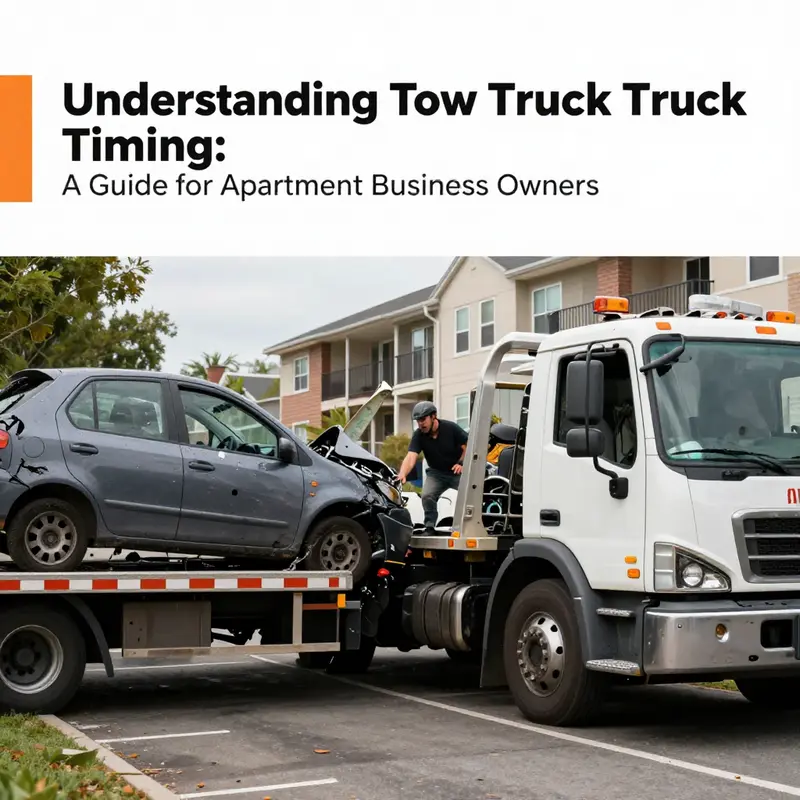
Emergency towing in apartment complexes operates under the pressure of safety and the requirements of local law. In most days, a tow occurs within normal business hours, but emergencies can trigger actions at any hour. Dispatch decisions hinge on hazard severity, obstruction in evacuation routes, and the availability of responders. When a fire lane or critical exit is blocked, a tow may be initiated immediately to preserve life safety. In these cases, the clock is measured by risk, not calendar, and the operator may arrive on scene within minutes or coordinate with authorities before removal proceeds.\n\nWithin the property, clear protocols define who may call for service, what constitutes an emergency, and how verification is documented. Visible signage, written authorization, and a licensed towing partner are essential to ensure the action is lawful and fair. Residents should be informed about the policy and the process for contesting charges. The best practice is a transparent, consistent system that reduces surprises for tenants and protects the property from liability.\n\nRegulatory and contractual frameworks shape timing as well. Local ordinances may restrict non-emergency towing hours and require documentation and notice. A well-designed policy typically includes a three-part sequence: confirm obstruction, notify on-site management, and engage a certified tow service. When used properly, emergency towing keeps corridors clear and life safety intact while maintaining due process and accountability for charges. Residents and managers alike benefit from clear communication, prompt documentation, and access to records for review.\n\nFor readers seeking concrete procedures, many properties publish a single point of contact for towing matters and provide written policies, posted signage, and contact information for the towing contractor. In practice, the emphasis is on safety first, transparency second, and fair handling of fees third. When a tow is truly an emergency, speed matters, but so does compliance with applicable rules and the coordination with emergency responders to ensure the action does not create new hazards. This approach helps preserve trust and reduces disputes that can arise from misinterpretation or perceived overreach.
Final thoughts
Understanding the timing of tow trucks is crucial for apartment business owners. Knowing the normal hours helps in preemptively managing parking issues, while being aware of emergency towing protocols ensures compliance with safety regulations. By effectively integrating this knowledge into your property management strategies, you will not only enhance the safety of your residents but also foster a more organized community environment. Stay proactive about the rules governing towing in your area and maintain open communication with both your residents and towing services.