
Becoming a tow truck driver is an opportunity to enter a vital industry that keeps our roads safe and functional. For business owners considering this career path for themselves or their employees, understanding the requirements is essential. From age restrictions to specialized training and certifications, this article outlines the processes you need to follow. The first chapter will detail the necessary steps to meet age and licensing requirements, while the second will explore regulatory and certification aspects crucial for a successful application. Together, these chapters provide a comprehensive guide to setting the foundation for a rewarding career in towing.
On the Hook: Navigating Age, Licensing, and Training on the Road to Becoming a Tow Truck Driver
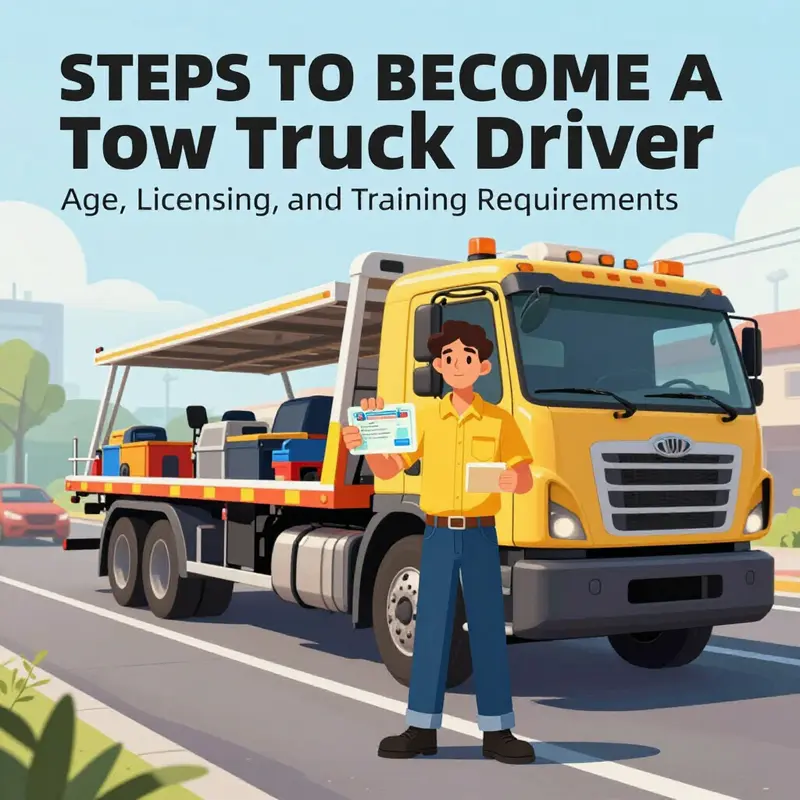
Choosing to become a tow truck driver is often about more than interest in vehicles or a steady paycheck. It is a commitment to safety, service, and the steady rhythm of responding to breakdowns, accidents, and obstructed roadways at any hour. The path toward this career is defined by a sequence of practical, enforceable steps that vary from city to city and state to state, yet share a core logic: you must be old enough to handle the responsibilities, possess the right kind of license, and prove you can handle the vehicle, the equipment, and the people who depend on you. The road to right-sized tools, the right training, and the right mindset begins with the most basic requirement of all—your age. In many jurisdictions, you must be at least 18 to apply for a tow truck operator position or the corresponding license. This threshold isn’t arbitrary. It reflects the sequence of responsibilities that follow: operating a vehicle with heavy duty hardware, moving other cars, and sometimes working near traffic or at the scene of an incident where decisions are made quickly and under pressure. In larger metro areas, this 18-year baseline becomes a practical gate, but there are exceptions. Some operations, especially those involving hazardous materials or specialized tasks, may demand you to be older still—21 or more—before you can handle certain assignments or obtain an endorsement that expands the range of work you can take on. The difference between merely driving and driving with a tow truck operator’s credential is vast, and it often translates into the type of work you can pursue and the environments in which you can operate. The next layer of the journey is your license and endorsements, because the vehicle you drive is not a standard passenger car. A typical Class C license might be the starting point for a general driver, but tow trucks, especially the heavier models equipped with winches, cables, and hydraulic lifts, almost certainly require an upgrade: a Commercial Driver’s License, or CDL, with the correct endorsements. The exact combination of endorsements varies by jurisdiction, but several common threads run through many programs. A towing operation often relies on a specific endorsement—sometimes labeled as a “T” endorsement or a similar designation—that authorizes the holder to perform towing, vehicle removal, and related services for compensation. In some places, a separate endorsement is required to perform certain activities, such as moving or removing abandoned or disabled vehicles, which may carry the authority to operate within city limits or on public roadways. HazMat is another consideration. If your role ever involves transporting hazardous materials, even in the context of towing, you might need a HazMat endorsement. The inclusion of HazMat changes the scope of the tests you will face, the pre-employment background checks, and the ongoing expectations for maintaining safety standards. The licensing journey isn’t only about the endorsements; it also hinges on passing both written examinations and practical skills tests, including a thorough pre-trip inspection of the tow truck you’ll operate. The pre-trip inspection is not a formality. It is a disciplined approach to ensure every safety mechanism, every safety device, and every control on the vehicle is functioning correctly before you hit the road. This is particularly important for tow trucks because their responsibilities are heightened: they must successfully secure a vehicle, operate heavy equipment like winches and hydraulic lifts, and maneuver in often unpredictable environments, all while keeping the safety of the driver and the public in mind. It is common for state departments of motor vehicles to require a clean driving record as a baseline for licensing. A history marked by DUIs, reckless driving, or repeated infractions signals risk and unreliability, which authorities and employers alike take seriously. A spotless record signals readiness to be trusted with the life and property of others, especially during high-pressure emergency scenes. In tandem with driving history, most applicants will undergo a background check and drug screening. These checks are designed to ensure you are reliable, law-abiding, and capable of making sober, sound judgments in difficult situations. It is not merely a box-ticking exercise; it is a essential component of public safety. The application process, too, varies by region, but the general trajectory is consistent: you prepare your documents, submit your license application through the appropriate local authority, and then you complete any required training or certified programs. In many places, formal classroom training is not legally mandatory. That does not mean you are off the hook. On-the-job training remains common and highly valued in the industry. Employers often pair new drivers with experienced operators to teach the nuances of vehicle securing, the use of winches, the operation of hydraulic lifts, tire changes, on-scene safety, traffic control, and customer communication. Even where formal programs exist, many employers insist on a period of hands-on learning, so the new driver can understand the physical realities of the job: the length of the truck, the limits of its weight capacity, the mechanics of securing a vehicle without causing further damage, and the choreography of approaching a disabled car in a safe and predictable way. Many jurisdictions encourage or require some form of operator certification as part of licensing. This certification, issued by state DMV authorities or other regulatory bodies, can consolidate the practical skills you’ll need, from the proper use of wheel straps and chains to the safe deployment of a winch and the patching of a vehicle to avoid secondary hazards. It also signals to employers that you have met a documented standard of training and a recognized baseline of knowledge. The practical reality is that the exact requirements you will face depend on where you live. Some states and cities keep the requirements fairly close to a common core: age, a valid driver’s license with the correct endorsement, a clean record, and the successful completion of a background check and drug screening, followed by training that demonstrates competence in both safety and operation. Others may layer in additional checks or certifications, and some might require you to obtain a specific municipal permit or license before you can operate within city limits. The process of moving from applicant to employed tow truck driver typically unfolds in predictable steps, even if the timing varies. Gather your documents such as your driver’s license, identification, and proof of residency; complete any required application forms; undergo the background checks and drug screening; and then enroll in the training or certification program that matches your location’s expectations. If you are pursuing a pathway in a large metropolitan area, you may find that the licensing authority operates through city agencies that oversee consumer and worker protections, and you may need to apply through a city department, such as a city consumer affairs office or a workers protection agency. In some cases, the licensing path is connected to the DMV, while in others it is a municipal process. Regardless of the exact channel, there is a clear rhythm: prove you are fit to work, prove you know how to work safely, and show you can perform the tasks required to secure another vehicle and manage the equipment that moves it. The practical upshot is that once you are licensed and trained, you are positioned to begin actively applying for jobs with towing companies, roadside assistance services, or fleets that operate on a 24/7 model. The transition from student or applicant to hired driver is helped along by a combination of on-the-ground experience and demonstrated reliability. When you are new to the industry, there is value in starting with a company that offers robust on-the-job training or a structured orientation program. A strong first year is about learning to read the road and the scene at the same time: recognizing potential hazards quickly, coordinating with other responders or drivers on the scene, and maintaining composure when you are called to work during late-night storms or rush-hour congestion. As you build experience, you’ll become more proficient with the tools of the trade: the winch, the hook, the strobe lights, the reflective safety gear, and the lines that keep a vehicle secure during transport. You’ll learn how to assess a scene from a safety perspective, how to set up perimeters to protect others, and how to manage the delicate balance of speed and deliberation that is often required to clear a road efficiently without creating new risks. The work also invites a practical sense of ongoing professional development. Some operators pursue additional endorsements or certifications to expand the range of tasks they can perform, such as heavier-duty vehicle removal, or specialized techniques for securing vehicles with different wheel configurations or under variable weather conditions. There is also a practical, everyday dimension to the role: you become a problem-solver who communicates clearly with customers and other drivers, explains the process to a frustrated motorist, and coordinates with dispatchers to map out the most efficient route to recover a vehicle and return to service. The job also calls for a strong commitment to safety and to the public you serve. You will be working in environments where distractions are present, traffic is busy, and time pressures can mount quickly. Your ability to remain calm, to communicate with empathy, and to follow a structured checklist for securing a vehicle and operating the winch makes the difference between a smooth recovery and a dangerous incident. In many communities, the pipeline from trainee to seasoned operator is not a straight line; it is a network of relationships and local regulations. You may find value in connecting with a nearby towing company or roadside service provider that offers mentorship, apprenticeship, or formal in-house training. In places where municipal licensing ties into the broader regulatory framework, you’ll notice a shared emphasis on accountability, ongoing safety training, and the continuous improvement of operating procedures. It is also useful to consider how this work intersects with the broader transportation ecosystem. Tow truck drivers are essential to keeping roads moving, responding to emergencies, and supporting larger public safety objectives. They often coordinate with police, fire services, and municipal departments to manage scenes, blockages, and the safe removal of disabled vehicles. The ability to work under pressure, to stay physically fit to handle equipment and long shifts, and to maintain a professional demeanor with customers is as critical as any mechanical skill. If you are charting your own course toward this career, a practical approach is to map out the steps in your jurisdiction: confirm the minimum age, identify the license class and endorsements required, understand the background and drug screening expectations, and locate a reputable training option that aligns with your local regulatory framework. From there, prepare a timeline that accounts for the testing, the training, and the licensing process, and then begin the job search with a resume that highlights your driving record, your willingness to learn, and your commitment to safety and service. The journey is both a technical and a personal one, and it rewards steady progress. For those focused on regional opportunities, there is value in exploring local networks and service providers to understand the unique conditions in cities, towns, and suburbs. For example, a city-based hunting for a tow driver may emphasize the importance of being able to operate safely near schools, hospitals, and commercial districts, with heightened attention to noise, traffic control, and the expectations of business customers who rely on rapid, careful service. In metropolitan areas, the licensing and certification landscape often reflects a blend of state and municipal rules, and the practical steps you take to prepare for the job will be shaped by the agencies that license and regulate the industry in your region. To ground this discussion in a concrete example, consider the process in New York City, where the Tow Truck Operator endorsement is a distinct requirement for those who move or remove disabled or illegally parked vehicles for compensation within the city. While this chapter presents a generalized framework, it is important to recognize that the details can be surprisingly specific. The NYC approach underscores the value of a clean driving record, the necessity of a background check and drug screening, and the importance of completing the required city-specific application through the appropriate authority. If you’re exploring the path in that region, you’ll want to consult the official NYC DCWP resources to confirm current requirements, application steps, and any accompanying documents. For regional guidance and practical orientation, you can also explore localized resources that reflect the broader highway-to-work transition across the country. These resources offer case studies, tips for preparing your proof of identification, and best practices for ensuring your vehicle and your own readiness meet safety and regulatory standards. In the end, becoming a tow truck driver is a combination of formal authorization and hands-on competence. It is about passing the tests and earning the endorsements that unlock the work you want, while cultivating the on-the-ground skills that keep drivers, passengers, and pedestrians safe on busy streets. It is a career that rewards meticulous preparation and steady, reliable performance on the road. As you prepare to step into the field, you can look to the practical steps outlined above and the local authorities that govern licensing and training in your area. For a concise regional reference, see the DC-based resources that discuss tow service operations in the Washington, DC area, which provide an accessible overview of typical requirements and common paths into the trade: DC towing service resources. For official guidance specific to New York City, you can consult the Tow Truck Driver License Application Checklist on the NYC government site to verify the exact documents and steps required for the city’s licensing process. External reference: https://www.nyc.gov/site/dcwp/license/tow-truck-driver-license.page
Laws, Licenses, and Lifting Gear: Navigating Certification on the Road to Tow Truck Driving
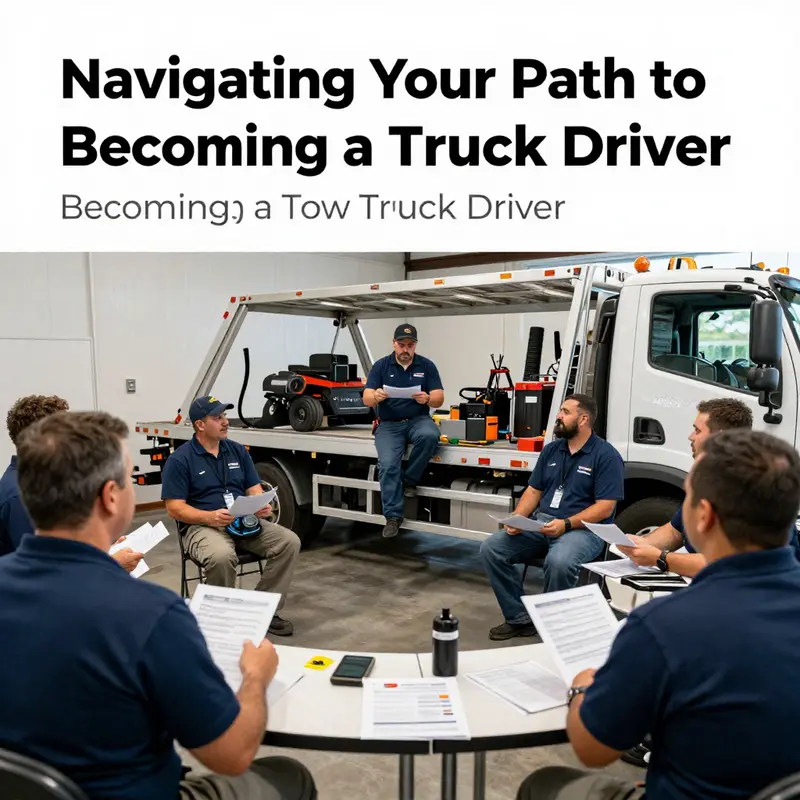
Becoming a tow truck driver is less about conquering a single driving test and more about navigating a layered regulatory map. Across the United States, the path is shaped by state rules, industry standards, and the practical realities of roadside work. The job demands more than skill behind the wheel; it requires a deep commitment to safety, compliance, and continuous training. In this chapter we explore the regulatory and certification contours that determine who may drive a tow truck, what credentials are required, and how a driver moves from the first mile to a steady, responsible career. The landscape is not a straight line but a series of interlocking checks and balances designed to keep crews safe, protect the public, and ensure that vehicles in distress are handled with care and precision. To understand this terrain, imagine the tow truck as a tool that must be wielded with both mechanical know-how and a firm grasp of law and policy. The regulatory framework governs who can operate a tow truck, what kind of vehicle they may drive, what training they must complete, and how they must conduct themselves under pressure. Those who chase this path should expect to learn ancillary requirements in addition to the basic license, because the title of tow truck driver carries responsibilities that extend beyond personal driving. The goal is not simply to pass a test but to maintain an ongoing discipline of safety, documentation, and professional accountability that keeps everyone on the road safer and more secure. The core of this journey begins with a foundational age requirement and the license that proves the driver’s competence. In most states, the entry point is being at least 18 years old, a threshold that signals legal adulthood and a baseline level of maturity necessary for the demanding situations that arise in roadside work. Some operations, especially those involving hazardous materials or heavy, specialized tows, may set a higher age floor—typically 21—reflecting the higher risks and stricter compliance standards associated with those roles. The next step is the driver’s license itself, and here the specifics matter a great deal. A standard state-issued license is the starting point, but the vehicle you intend to operate will often dictate the class you need. Tow trucks vary in size and weight, and the GVWR—gross vehicle weight rating—of the tow vehicle is the key determinant. Vehicles with a GVWR above roughly 26,000 pounds commonly require a Commercial Driver’s License (CDL). Even if the towed vehicle is light, the act of towing can push the operation into CDL territory, particularly when specialized equipment and multiple axles are involved. In many operations, a “T” endorsement is required for towing. This endorsement typically involves passing both a written examination and a practical test focused on safe towing practices, braking, maneuvering with a towed load, and securing tows in a way that protects other road users. A HazMat endorsement may be necessary for transporting hazardous materials, adding another layer of testing and background scrutiny. The pre-trip inspection, a staple in CDL testing, also applies in many states to ensure the operator can perform a thorough check of the tow truck’s critical systems before hitting the road. The emphasis on pre-trip inspection underscores a philosophy that safety begins long before departure: a well-prepared vehicle and a vigilant driver reduce the risk of roadside failures that can escalate into emergencies for others. The licensing pathway, while clear in its aims, is not the same everywhere. Some jurisdictions require additional certifications or permits beyond the CDL framework. A tow truck operator’s license might exist as a standalone credential in certain states, while others tie it to a broader business license framework for drivers who operate a towing business or work as independent contractors. In some places, a background check is a non-negotiable gatekeeper, especially for roles that involve on-road operations in potentially high-risk environments or near vulnerable populations. Proof of insurance, compliance with local safety standards, and ongoing regulatory adherence are often part of the package. These elements reflect the fact that the job sits at the intersection of mechanical skill and public accountability. Beyond the initial licensing and endorsements, many regions impose ongoing training requirements to maintain licensure. Recertification can be triggered by changes in state law, updates to safety standards, or the introduction of new equipment and procedures. Ongoing education ensures drivers stay current with best practices in vehicle securing, load management, and emergency response. The commitment to continuous improvement is more than formality; it translates into real-world safety outcomes when tow crews respond to collisions, immobilized vehicles, and abandoned autos in complex traffic scenarios. The practical training that underpins this certification often unfolds through a mix of on-the-job instruction and formal programs. Employers frequently provide hands-on exposure to the equipment essential to the trade: winches, hydraulic lifts, wheel lifts, and the robust securing gear that keeps a towed vehicle immobilized without causing damage. Trainees learn to harness chains, binders, and snatch blocks with a level of care that minimizes the risk of injuries to themselves or bystanders and reduces the chance of secondary damage to the vehicle under tow. They also learn the mechanics of safely attaching a towed vehicle to the carrier, the geometry of lifting, and the critical importance of securing loads so that shifting weight cannot endanger other drivers on the highway. Safety protocols—reflective clothing, high-visibility lighting, proper traffic control methods, and the use of wheel chocks and warning devices—form a core part of daily practice. As with any specialized trade, the specifics vary by region and employer. Some municipalities require a formal tow-truck operator certification as part of licensing, while others rely on employer-provided training and the backstopping authority of state agencies. In all cases, the underlying aim remains the same: ensure that the person behind the wheel possesses both technical competence and a robust commitment to safety. The regulatory maze may feel dense, but there is a practical rhythm to it. Start with the basics—age and a valid license—then map out the next steps based on the weight class of the vehicle you intend to operate and the types of tows you expect to perform. If your aim is to work with heavier wreckers or to haul hazardous materials, plan for the additional endorsements and background checks that those roles demand. Consider how the job may require you to become a small business owner or to operate within a larger fleet. The distinction matters because a private roadside assist unit may have different licensing expectations than a full-fledged towing company with multiple units, dispatch responsibilities, and liability considerations. For those unsure where to begin, state departments of transportation and motor vehicle agencies are the most reliable navigational aids. They publish official requirements, point you toward the needed tests, and outline any regional exemptions or special considerations. A practical, real-world approach is to check your state’s DMV or DOT resources, then compare the rules against those of neighboring states if you anticipate interstate work. When you are ready to plan a path tailored to your locale, a useful compass is to examine how urban centers shape regulation. In dense metropolitan regions, authorities emphasize quick roadway clearance, staged safety protocols near multi-lane highways, and coordination with police or traffic management during tow operations. Rural or suburban settings may place a premium on low-speed maneuvering, rural road restrictions, and routine recovery work that keeps traffic manageable and predictable. The bottom line is that the regulatory and certification landscape is designed not to impede opportunity but to ensure that tow truck drivers are prepared to handle real-world pressures with competence and care. It is a career that rewards careful preparation as much as bold, reliable service. For those who want a concrete path, a practical action plan begins with confirming age eligibility, securing the correct driver’s license class, and then identifying whether a CDL with a T endorsement is required for the intended duties. From there, determine whether additional state certifications or business licenses are necessary. Seek out reputable training programs that cover not only the mechanics of towing equipment but also the crucial safety and legal aspects of roadside assistance. Build a record of safe driving, demonstrate a willingness to learn, and cultivate a professional posture that reflects the seriousness of the work. In metropolitan hubs where a driver may encounter rapid traffic, tight spaces, and high-stakes recoveries, the combination of technical skill and regulatory compliance becomes a competitive advantage. Employers value that blend: someone who can secure a vehicle efficiently, make smart decisions under pressure, and maintain meticulous documentation and adherence to safety standards. As you advance, keep in mind that the journey does not end with a license. The world of towing evolves with new equipment, updated guidelines, and shifting legal frameworks. Your ongoing commitment to training, licensing renewals, and professional development will determine how smoothly you move from trainee to trusted operator within a team. For readers navigating this path in a specific region, the practical route is to consult local resources—for instance, the DC area’s towing service page for regional context and example workflows that reflect urban regulatory expectations. See: towing service in Washington, DC. This kind of local reference helps translate the general principles into concrete steps you can take within your community. Of course, the broader landscape continues to be shaped by national guidance and real-world practice. A comprehensive external perspective can provide supplemental clarity and perspective on what it takes to become a tow truck driver in today’s market. For a detailed, user-friendly overview that supplements state agency guidance, you can explore practical guidance and considerations at the following external resource: Indeed’s guide to becoming a tow truck driver, which distills licensing, training, andjob-market realities into an accessible framework. Indeed: A Complete Guide To Becoming a Tow Truck Driver.
Final thoughts
Embarking on a career as a tow truck driver necessitates a clear understanding of the requirements and qualifications. From reaching the appropriate age to obtaining vital certifications, each step builds towards ensuring safety and professionalism in this essential service. By following the outlined steps and remaining compliant with regulatory standards, aspiring drivers can successfully transition into this rewarding career that supports road safety and emergency assistance. Prioritize the learning and adherence to both local laws and industry best practices as you develop your career in the towing industry.