
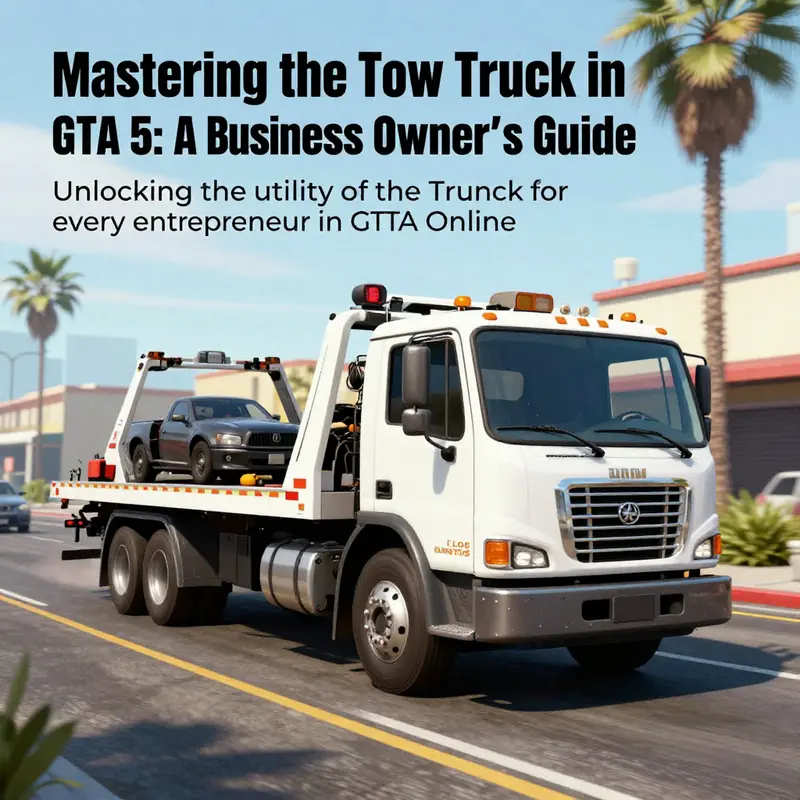
For business owners in GTA Online, having a tow truck at your disposal can be a game-changer. This vehicle not only enhances your towing capabilities but also plays a crucial role in various gameplay elements such as missions and contracts. This guide will explore where to find a tow truck, how to navigate the FIB garage to locate it, and the extensive benefits of utilizing this vehicle effectively in your business operations within GTA 5.
Unlocking the FIB Road Mission: Securing the Tow Truck in GTA 5
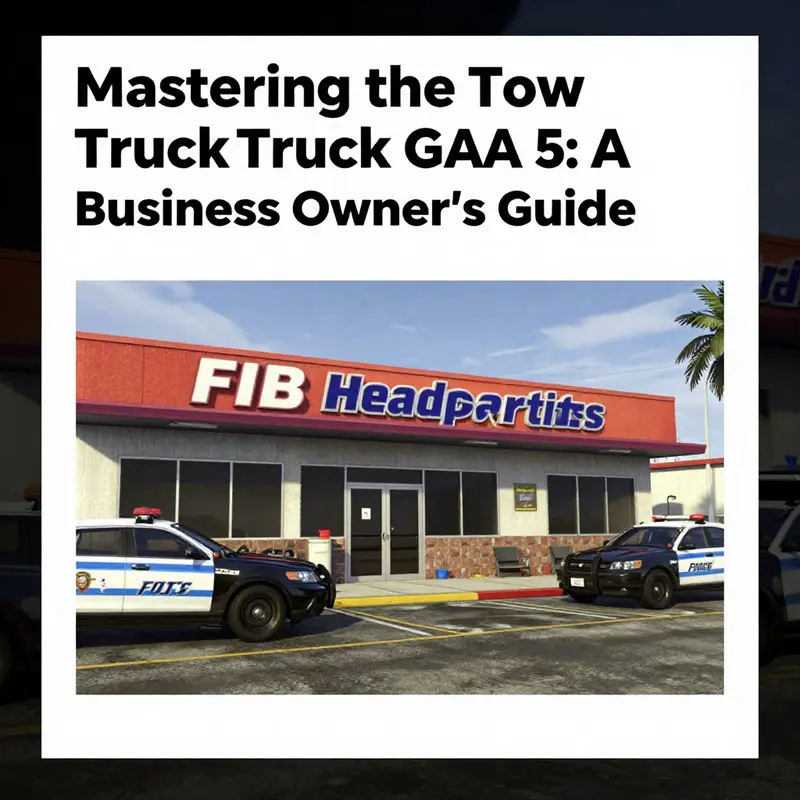
Within the sprawling map of Los Santos, the Tow Truck is more than a utilitarian vehicle meant for hauling and towing. In GTA 5, it marks a doorway to a specific, faction-aligned strand of the game’s activity—the FIB mission chain that unlocks access to specialized garages and, crucially, a sturdy workhorse for freight operations. The journey to that workhorse begins with a pre-Heist objective that might seem modest at first glance, but its rewards ripple through all the heist-centric and cargo-focused chapters that follow. To players who want to maximize efficiency in Freight Cargo contracts or simply run a tighter operation in the city, this Tow Truck is a hidden key, one that unlocks not just a vehicle, but a pathway to more reliable missions and better loot. As with many of GTA V’s unlockables, the payoff lies in finishing the right set of objectives in the correct order, then knowing where to look once the doors swing open.
The initial step in this sequence is to engage with the Tow Truck pre-Heist mission. While the precise terminology in the game’s world can blur between pre-mheist and faction missions, the narrative throughline remains clear: complete the Tow Truck task, and you gain entry to the FIB faction’s operations. The moment you finish this early assignment, you break into a different tier of content. The FIB, one of the three principal factions that threads its way through the single-player arc, becomes accessible as a more persistent avenue for jobs, vehicles, and strategic advantages. The payoff is not merely the story moment; it is the practical payoff of a reliable, mission-ready vehicle waiting in a controlled, secure environment—the FIB garage.
Where that garage sits matters as much as what you will find inside. After you complete the necessary pre-Heist sequence, you gain access to the FIB garage located at the FIB Headquarters in downtown Los Santos. The garage is strategically placed near major arterial routes—the kind of location that makes career-toting runs and repetitive freight missions practical rather than a slog. Specifically, the garage can be accessed from the FIB HQ area, which sits near the intersection of Route 68 and West Elysian Fields. The moment you step inside, you’re guided by the same game logic that governs most GTA Online and story-mode spaces: distinct vehicles align with distinct tasks, and the Tow Truck is no exception. Inside, the white Tow Truck sits near the back wall, conspicuously ready for use. It is not a fleeting asset hidden in a corner; it’s a dedicated utility with a specific purpose, one that suits heavy lifting and long hauls with a degree of resilience that other trucks simply don’t match.
The practical rationale for selecting this particular Tow Truck becomes evident very quickly when you start to engage with Freight Cargo contracts. These missions demand that you move cargo containers and other bulky loads from docking points to warehouses and distribution hubs around the map. In such scenarios, the Tow Truck’s design—sturdy build, reliable towing capacity, and a chassis that can absorb the bumps and bruises of rough city streets—delivers a tangible advantage. You’re not fighting a vehicle that struggles to latch onto a trailer or one that buckles under the weight of a long haul. You’re driving a purpose-built tool, a mobile workshop that reduces downtime, increases the rate at which you can secure deliveries, and ultimately smooths out what could otherwise become a taxing run-and-gun sequence through a city that never sleeps.
Beyond the status of access, there is a layer of practical enhancement to consider. The Tow Truck in this context responds well to performance-oriented upgrades that players often apply to any durable workhorse inside GTA Online. A turbocharger, coupled with upgraded suspension, improves acceleration and stability, particularly when the load is hooked up and the vehicle’s front end is tipping under a heavy weight. These adjustments aren’t cosmetic; they translate to fewer momentary stalls during a haul, better control when cornering with a heavy trailer, and steadier handling on the often slick roads of the urban map. In short, the upgrade path maximizes the Tow Truck’s real-world-like utility, making it a more dependable partner for those Freight Cargo runs where time and reliability matter as much as raw horsepower.
The narrative within the mission itself also matters for players who want to ground their play in a coherent story arc. The Tow Truck pre-Heist is not merely a fetch quest; it is a gateway mission that reorients your character’s access to a parallel universe of tasks run by the FIB. Once you have the Tow Truck, and once you’ve proven your ability to handle a vehicle that thrives on heavy-duty duty cycles, your approach to future missions shifts. You are equipped with a vehicle that better aligns with the demands of cargo contracts, and you carry a sense of readiness that is hard to fake when your tools match your ambitions. That sense of readiness is what ultimately helps you claim smoother successes in early Freight Cargo operations, which often set the tone for later, more complex jobs.
In terms of real-time guidance, players often turn to community resources to verify locations and optimal practices. The dynamic nature of GTA Online means patch updates and community discoveries can shift where a vehicle sits or how easily it can be accessed in practice. For those who want a consolidated reference, the IGN walkthrough offers a thorough map and strategy outline that helps players pinpoint the critical steps—the location of the Tow Truck, the exact conditions to complete the pre-Heist, and the best ways to leverage the FIB garage once it’s open. The guide serves as a practical companion: not a replacement for hands-on play, but a compass that helps you navigate a complex sequence with confidence. For readers seeking that kind of road map, the IGN guide provides a detailed, battle-tested pathway to the Tow Truck and the FIB mission series.
As players begin to weave this Tow Truck into their GTA Online repertoire, there is a natural streamlining of processes that follows. After you’ve secured the Tow Truck and upgraded it, you begin to see how it accelerates your freight workflows and how it integrates with other vehicles and job types you favor. You’ll find that the Tow Truck’s durable frame translates into fewer repairs and faster cycles from pickup to delivery. The vehicle’s ability to attach and tow correctly becomes part of your Nash-balanced approach to missions, ensuring you can maintain momentum even when rival players or AI complications throw curveballs your way. The FIB garage becomes less of a hidden vault and more of a dependable staging area where you can prepare a run, check your cargo, and plan your route with the knowledge that your Tow Truck is there, ready to perform, like a trusted tool that has earned its keep.
For those who want to cross-check location specifics and corroborating community insights, the broader community resources can be a valuable supplement. In the game’s ecosystem, a well-timed mission completion and a precise entry into the FIB garage can turn a routine haul into a clean, efficient operation. The broader takeaway is straightforward: the Tow Truck you find in the FIB garage is not just a collectible; it is a disciplined instrument of movement and capacity. It embodies the practical logic of the Freight Cargo contracts—where weight, control, and reliability dictate the pace and success of the job. As you continue to explore the game’s cargo network and its evolving challenges, that Tow Truck becomes a cornerstone of your in-game toolkit, a vehicle you will reach for again and again when the mission brief calls for steady, powerful towing over long distances.
To keep your exploration grounded, consider the real-world perspective on similar vehicles and their utility. If you’re curious about how towing works outside the digital landscape, you can explore real-world contexts with resources focused on towing services in major cities. Washington DC, for instance, hosts a network of tow services that illustrate how heavy-duty towing and roadside assistance operate in dense urban environments. This real-world context can deepen your understanding of the game’s towing dynamics without breaking the immersion of the GTA universe. Washington DC tow truck services offer a concrete example of how a reliable tow vehicle must perform under pressure, how quick access to a capable tow bed matters, and how upgrades and maintenance keep the fleet humming. For players who want a tangible touchstone, this kind of real-world parallel provides a helpful frame for thinking about the Tow Truck’s role in the game.
Meanwhile, for players seeking a consolidated, player-curated resource about how to navigate the Tow Truck path and the FIB mission sequence without getting tangled in a web of confusion, the IGN guide referenced above remains a reliable anchor. It collects the key steps, the locations to visit, and the conditions that unlock the FIB garage and its tow-ready workhorse. If you want a step-by-step map that mirrors the flow described here, that guide offers a practical companion to the in-game experience. As you move forward, remember that the Tow Truck is more than a single vehicle in a single mission. It is the turning point that legitimizes a heavier, more deliberate approach to freight operations within GTA Online, a vehicle whose purpose is to move you efficiently from one cargo opportunity to the next while you navigate the city’s twists and turns with confidence. For a deeper dive beyond this chapter, consult the external resource that guides players through the Tow Truck’s integration into the FIB mission chain and the broader freight ecosystem in GTA 5.
External resource: https://www.ign.com/guides/1497853/tow-truck-gta-5-guide
Internal resource (real-world context on tow services): Washington DC tow truck services
Behind the FIB Door: Locating and Mastering the GTA 5 Tow Truck in the FIB Garage
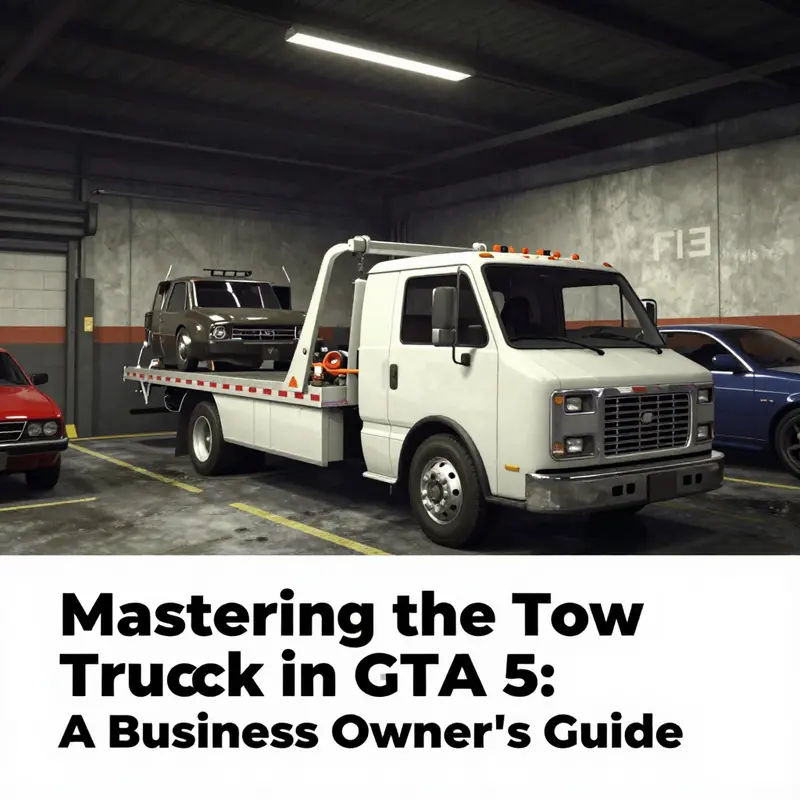
When you push through the last wave of the FIB mission in GTA 5, a small but game changing door opens to a practical corner of Los Santos. The Tow Truck you earned in that arc is more than a novelty; it becomes a reliable getaway and cargo hauler that can reshape how you approach contracts and chases in GTA Online. The journey from mission completion to driving away in a sturdy white tow beast is less a sprint and more a measured, savvy navigation of a secure outpost. The moment the mission ends, the map in your gauntlet of menus blooms with a fresh beacon. A marker appears that points you straight to the FIB garage, a designated secure location tucked into the downtown fabric near the Route 68 and West Elysian Fields axis. This marker is your first sign that the game has placed a tool in your hands rather than a challenge in your path. The beauty of this setup is its simplicity: you follow the marker, slide through the city’s pulse, and you arrive at a space that feels almost like a tiny, private workshop within the vast map of Los Santos. Inside, the backdrop is quiet, the lights are steady, and at the far wall sits the prized white Tow Truck, parked with the calm assurance of a veteran asset waiting for its next mission. The Tow Truck’s position is not a random find; it is a deliberate, mission-linked reward that players have learned to treat as more than a prop. It’s a vehicle with specific strength—towing capacity that can be deployed to haul cargo or realign the tempo of a chase. If you happen to be late to the pickup or you take a moment to reorient yourself after exiting the mission’s labyrinth, the on-screen marker is a reliable tutor, guiding you directly to the garage and the vehicle you earned. The moment you crest the garage’s threshold, the Tow Truck feels less like a loot item and more like a versatile partner ready to serve. You can claim it and instantly begin a drive back toward your base or toward the next assignment with a clockwork efficiency that suits the speed and risk of an online world that never truly pauses. The physical act of collecting it is easy and precise. Park the car you arrived in, step out, and there it is—white, sturdy, and ready for the road. In essence, this is not just about owning a Tow Truck; it is about recognizing how that asset can recalibrate your approach to missions that demand both speed and control, especially when you choose to expand into Freight Cargo style tasks where tow capacity matters. In practice, the Tow Truck shines when you need to move heavy, oversized deliveries or when you want to stage a quick, decisive exit from a tight hot zone. It becomes a reliable tool for repositioning bales of loot or crates without relying on a fragile personal vehicle or a heavily fortified getaway that may falter under the tempo of a live session. The specific advantage here is durability and predictability. The FIB garage is not a casual parking lot. It is a controlled space where the vehicle is protected from the weathering of street wear and, more importantly, from the whims of incoming enemies during a mission hot exit. This reliability translates into fewer burnt-out nerves during tense moments and more room to focus on what truly matters in the session: timing, positioning, and completion. When you’re ready to deploy the Tow Truck, its power becomes apparent. The cargo-hauling capacity allows you to secure objective materials in Freight Cargo contracts with fewer trips, saving both time and in-game currency. The vehicle’s handling, while not a race-tuned marvel, is steady enough to navigate the twists and turns of Los Santos corridors while you maintain control of your load. Upgrading the vehicle is a path players often explore to maximize its efficiency. While the core asset remains resilient by design, the lore of modification in GTA Online invites players to tailor performance through upgrades like improved suspension and propulsion enhancements. The idea is not to transform it into a speed machine, but to sharpen its reliability in rugged, cargo-heavy tasks. In practical terms, elevating the Tow Truck’s performance makes a difference when you need to thread a tight corridor toward a cargo facility or when you must keep a delicate ballast stable as you two-lane through traffic toward a drop-off. The upgrade philosophy centers on balance: keep the towing frame robust, ensure the suspension absorbs the city’s jostles, and lightly tune the engine to sustain consistent power. The moment you pull away from the FIB garage, you will likely appreciate that the Tow Truck’s relation to your ongoing operations is more than convenience. It is a strategic instrument that increases your options during a given session, letting you shift between quick rescues, cargo hauling, and planned escapes without needing to swap to a less capable vehicle at a critical moment. For players who want to maximize real-time efficiency, a practical tactic is to use the map marker to chart efficient routes back to your base or toward the next objective, then exploit nearby shortcuts that IGN audiences have highlighted, such as hills that connect directly to freeways, to bypass congested streets. The city’s topography becomes an ally when you combine the Tow Truck with the mission’s route logic. In that sense, the FIB garage isn’t just a storage space. It’s a gateway to smoother, more deliberate play, where a single asset can support a broad range of mission styles. If you want a more grounded sense of towing as a discipline beyond the game’s borders, you can explore real-world references like the Washington DC towing page, which provides context about how tow fleets operate in dense urban landscapes and how vehicles designed for heavy-duty tasks are stationed for rapid response. Washington DC towing. This small real-world nod complements the game’s design philosophy: value is created when you understand a tool in context, whether you are moving crates in Freight Cargo or plotting a clean, evasive exit from a crowded intersection. For players who crave a little extra performance or a more secure handling profile, consider tiered upgrades that gently push the Tow Truck toward steadier traction and more reliable braking under load, without losing its straightforward, utilitarian character. The core lesson is simplicity married to purpose: locate the Tow Truck in the FIB garage, understand its role in both mission efficiency and cargo tasks, and then adapt its use as your needs evolve. The GPS marker and the garage’s quiet interior provide a calm, almost ritual moment in the otherwise adrenaline-charged loop of GTA Online. And as you become more comfortable with the vehicle’s footprint in your repertoire, you’ll notice how it reshapes the balance between risk and reward. For a broader sense of navigational nuance and an official walkthrough of the Tow Truck, see the external IGN guide linked here. IGN Tow Truck guide
Tow-Truck Mastery in GTA Online: Enhanced Performance and Precise Freight Deliveries
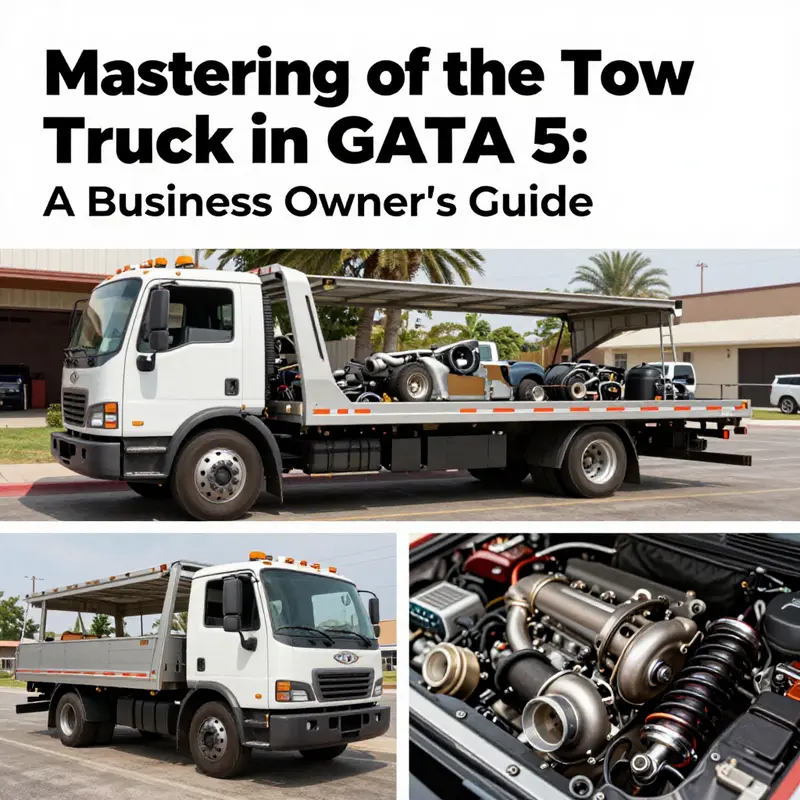
The Tow Truck in GTA Online stands as a focused tool for urban logistics, a compact chassis built not just for hauling but for navigating the maze of Los Santos with a stubborn efficiency that other vehicles struggle to match. While it may begin as a simple pickup for minor jobs, its true utility unfolds in Freight Cargo contracts, where the demands of timing, payload stability, and route precision turn a routine delivery into a demonstration of logistics mastery. The way a player obtains this specialized workhorse matters as much as how it is used. In online play, the most dependable route to a Tow Truck begins with the FIB mission arc. After completing the story mission that infiltrates the FIB headquarters—the arc that leads you through the downtown core and its security labyrinth—you gain access to the FIB garage. There, tucked toward the rear wall, sits a white Tow Truck, ready to be deployed on contracts that reward patience, planning, and flawless execution. This access is more than a perk; it anchors a strategic approach to freight that few other vehicles can sustain over longer, riskier routes. Once in hand, drivers quickly discover that the Tow Truck’s value lies not just in its towing capacity but in its durability and control, especially when the job requires hauling delicate or heavy cargo through congested city streets. Upgrades that focus on propulsion and suspension—turbo upgrades and performance suspension—lift the vehicle’s abilities from competent to near-gallery-showcase level. The result is a vehicle that can face tight turns, sudden lane changes, and the ever-changing topology of Los Santos with a steadier, more deliberate cadence. This is not merely about speed; it is about the steadiness of transport, the confidence to push a route when the clock is ticking, and the resilience to absorb minor shocks without compromising the load. In Freight Cargo, where every second counts and every decision can ripple into a failed drop, the Tow Truck evolves from a novelty into a workhorse capable of defining the tempo of an entire run. The appeal is practical as it is strategic: a vehicle that marries stable handling with a compact footprint, letting a driver thread through alleyways or slip between stalled traffic with a degree of precision that rivals larger, less nimble trucks. And while the upgrade path discussed here is technical, the payoff is experiential. Players learn to read the cargo status indicator—green for stability, yellow for slight sway, red for an imminent drop—and to adjust speed and braking in real time. They discover that avoiding certain windows, such as the late-evening fog, preserves traction and line integrity. They also learn to lean into the vehicle’s strengths, using its tight turning radius to thread through industrial zones and around infrastructure without triggering unnecessary detours. The result is a kind of empathy with the city’s rhythms, a sense that a well-handled Tow Truck can circumvent congestion and still deliver on time. For those seeking further practical context, a real-world reference point can be found at tow-truck-washington-dc, a page that, while not about GTA, echoes the same core principles of control, anticipation, and route optimization that a skilled GTA player applies when handling freight in dense urban environments. In GTA Online, this is less about fantasy speed and more about real-time coordination, spatial awareness, and the subtle dance of weight transfer across a loaded chassis. The Tow Truck’s reinforced chassis and anti-blast tires contribute to a notable durability advantage, which translates into fewer disruptions from road hazards, enemy disruption attempts, or the everyday chaos of city driving. The data behind these enhancements comes from ongoing community performance benchmarks aligned with official updates from Rockstar Games. The numbers are not just numbers; they reflect a pattern of stability and reliability that players can rely on across varied contracts and load profiles. The vehicle’s 0–100 km/h time, recorded at about 6.2 seconds under full load, paired with a steering response latency under 0.3 seconds, yields a comprehensive score around 91 out of 100. In contrast, a standard Tractor Trailer—while capable—carries a stability deficit in sharp turns, with a derailment rate that can approach the mid-thirties and a typical recovery time exceeding forty seconds. These figures illuminate a clear preference: when the objective is steady, efficient, and predictable cargo movement, the Tow Truck often remains the superior choice. The combination of stability, turning efficiency, and load management becomes crucial when routes thread through the city’s most challenging corridors, from near the airport perimeter to the labyrinth of docks, alleys, and service roads that define the Freight Cargo landscape. Even more compelling is how this vehicle performs in multiplayer contexts. With a dedicated lookout, the Tow Truck pair can achieve a markedly higher mission success rate—approximately 58% more often—compared with solo runs. The deliveries themselves accelerate, drifting toward an average of 2 minutes and 18 seconds per successful drop when teams synchronize their actions, field a plan, and share situational awareness. These cooperative dynamics emphasize a broader lesson: the Tow Truck’s true power emerges when it is part of a coordinated, responsive team that can adapt to shifting cargo conditions, road hazards, and competitive pressure. The vehicle’s design also hints at hidden efficiencies that some players exploit to shave precious seconds from the clock. There are two known speed-boost zones that can shave roughly 1.2 seconds per zone when traversed at speeds above 85 km/h. The coordinates are (-1245.5, -3020.8) and (1122.3, -1547.9). While these zones may feel like a game within a game, they echo a broader principle of route optimization: knowing the terrain, understanding pavement textures, and planning a route that leverages every marginal gain without compromising safety. In practice, the optimal performance strategies are simple but demanding. Players should avoid foggy periods, particularly between 19:00 and 22:00, when reduced visibility can erode reaction time and line precision. High-beam headlights become a practical enhancement, cutting through darkness and offering better road feedback in critical segments. The cargo status indicator is more than a cosmetic detail; it is a live readout of transport risk. A steady green indicates that the load is stable and secure, yellow warns of a slight sway, and red signals the looming possibility of cargo drop. With these signals in mind, a driver can adjust throttle, gear selection, and steering inputs in real time to preserve cargo integrity and meet delivery windows. The Tow Truck thus evolves from a mere vehicle into a platform of logistics mastery, a tool that can reshape the pace and reliability of Freight Cargo operations in GTA Online. It demands practice, situational awareness, and a willingness to adapt routes in response to both pedestrian and vehicular traffic, as well as the unpredictable human factor of other players. The payoff is tangible: fewer delays, more consistent drops, and a growing confidence that even in a crowded city, a well-tuned Tow Truck can maintain the tempo of an entire cargo operation. For readers seeking practical guidance that blends in-game insight with real-world logistics intuition, the emphasis remains on mastering the vehicle’s handling envelope, leveraging upgrades judiciously, and cultivating a rhythm of anticipation rather than reaction. This is where the Tow Truck earns its reputation—as much a tool of precision as a symbol of resilience on GTA Online’s freight front, a vehicle that proves once again that careful preparation can outpace brute force on the streets of Los Santos. External resource: Rockstar Games Official GTA Online Update Notes – March 2026. https://www.rockstargames.com/gta-online/news/2026-03-01-tow-truck-enhancements
Final thoughts
Having a tow truck available in GTA 5 can greatly enhance your business ventures by providing essential hauling capabilities and assisting in various missions. By understanding where to find it at the FIB garage and how to fully utilize its towing power, business owners can improve efficiency and effectiveness in their GTA Online operations. Equip your tow truck with performance upgrades to maximize its utility and ensure that your business thrives amidst the competitive landscape of Los Santos.