
The question of whether to tip a tow truck driver often arises among those in need of roadside assistance. For business owners who might rely on towing services, understanding the norms around tipping can not only enhance professional relationships but also reflect positively on your brand values. This article delves into the significance of tipping in the towing industry, examining various factors that influence this decision, ensuring that your experience and interactions are both courteous and beneficial.
On the Road, Respect in Hand: Should You Tip a Tow Truck Driver?
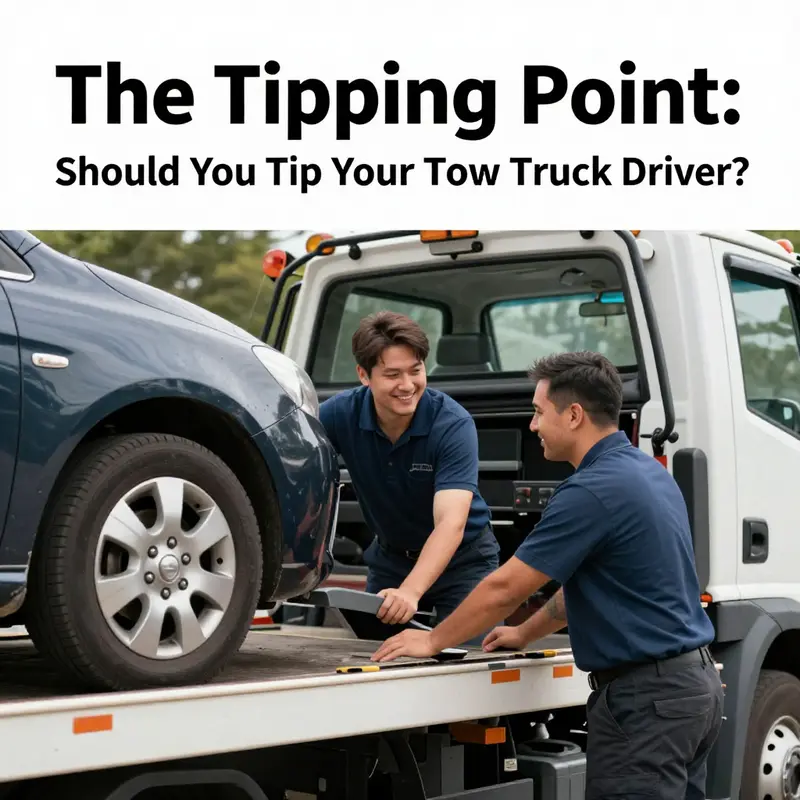
When a tow truck pulls up on the shoulder or at the edge of a busy highway, the scene is usually tense, even if the weather is calm and the road is clear. There’s a mix of urgency, risk, and the quiet competence of someone who makes the roadside environment safer for you and others. The driver may assess the situation in seconds: the type of vehicle, whether it can be moved safely, the traffic around you, and the best route to a destination. In that moment, tipping becomes less about money and more about recognizing a set of earned behaviors. Tipping tow truck drivers is not a universal practice, and you should not feel guilty if you don’t tip. Yet when the driver arrives promptly, communicates clearly, handles your vehicle with care, and keeps you informed through the process, a tip can feel like a fair acknowledgement of that effort. It’s a practical signal that you value expertise, safety, and good communication under pressure. The practice sits at the intersection of courtesy and professionalism, and it is worth understanding how it works so the gesture feels both appropriate and appreciated rather than awkward or misplaced.
Guidance on tipping in roadside situations tends to be pragmatic rather than prescriptive. There is no single standard that applies everywhere. Instead, tipping practices reflect a combination of regional norms, the level of service, and the specific demands of the moment. A common framework suggests tipping when the service materially improves your outcome: a driver who arrives quickly in an emergency, who communicates what they are doing and why, who takes extra care with your vehicle, or who offers useful advice about what comes next. In such cases, a tip signals that you recognized the driver’s professional effort and the extra mile they went to reduce your stress. It’s also a way to acknowledge the physical demands of the job. Tow trucks operate in all kinds of conditions—blinding rain, snow, ice, late nights, and early mornings—and the labor involves not only strength and skill but relentless focus and discipline. The act of tipping, then, becomes a humane touchstone in a line of work that often goes unseen and underappreciated until someone needs them.
From an etiquette standpoint, many drivers and service guides emphasize that tipping is discretionary. The American Automobile Association (AAA) and other industry voices consistently frame tipping as a personal choice that should reflect the quality of service you received. If the rescue was smooth and confidence-inspiring, a tip is a natural extension of that satisfaction. If the interaction was routine and efficient, a modest tip may still be appropriate to show appreciation. If the experience was problematic—late arrival, lack of communication, rough handling of the vehicle, or unsafe practices—there is room to withhold a tip or to provide feedback to the company rather than to the driver in the moment. The absence of a universal rule invites travelers to calibrate their response to the circumstances they find themselves in, which can feel more authentic than following a rigid protocol.
In practical terms, people frequently consider tipping ranges such as five to twenty dollars, with adjustments made for complexity and circumstances. A short-distance tow performed in favorable conditions might merit a smaller tip, perhaps five dollars, while a longer tow, a nighttime call, or a situation that requires the driver to navigate hazardous traffic or weather could justify more substantial recognition. Some drivers may request or accept a larger tip in emergency situations where the stakes are higher and the service is more demanding. The range is not a fixed rule, but a flexible guideline that helps guests translate satisfaction into a tangible gesture of appreciation. The driver’s load, the time of day, and the distance traveled all factor into the decision. If you feel the service went above and beyond, you are within your rights to offer more, even if it is outside the typical range.
A helpful nuance is to consider the nature of the interaction as you decide on an amount. If the driver provided strategic value beyond simply towing—such as offering practical advice about what to do next, helping you locate a nearby repair option, or staying with you to ensure you reached a safe location—the tip becomes a recognition of that extra effort. The driver’s demeanor also matters: courteous communication, patience with questions, and a calm, safety-first approach can transform a difficult moment into a manageable experience. In such cases, a higher tip acknowledges the added emotional labor involved. Conversely, if the driver is abrupt, unclear, or rushed to complete the job without regard to your safety or vehicle, the logic of tipping shifts toward caution. If you perceive a poor experience, it is appropriate to communicate concerns to the company after the scene, rather than rewarding subpar behavior in the moment.
For readers navigating tipping in different regions, it helps to keep a few practical tips in mind. If you carry cash, a cash tip can be straightforward and immediate. It also ensures the driver receives the gratuity in a form that doesn’t rely on merchant processing or tip platforms that may not be available in all service vehicles. If cash isn’t convenient, many drivers appreciate a digital tip or a tip left via a payment app supported by the service provider. When possible, ask the driver if digital tipping is acceptable before sending a payment, so you don’t risk an awkward moment or a miscommunication about compensation. In some cases, towing services or independent drivers may have specific policies about tips or payment methods, so a brief, respectful question at the outset can prevent misunderstandings. If you’re with a company vehicle, the corporate policy might influence whether you tip or how much you tip. In such contexts, you can use your best judgment to align your gesture with the level of service and with any guidelines you may be obligated to follow.
A note on timing also matters. While it’s natural to offer a tip at the end of the interaction, some drivers may prefer to receive a tip only after you have been safely transported or after you have had time to assess the outcome. Others appreciate the tip upfront if you feel the driver has provided a rescue-level service that immediately improves your situation. In ambiguous circumstances, a simple question can resolve the timing question: “Would you prefer a tip now or after we’re settled at a safe location?” Respectful dialogue preserves trust and avoids creating pressure at a moment of high stress.
Cultural and regional differences shape tipping behavior in subtle but meaningful ways. In some urban centers where tipping culture is deeply ingrained, smaller tips may be more common, and drivers may come to expect a little more from each encounter. In other places, tipping is less common, and drivers may rely more on standard wages or benefits. The evolving nature of tipping culture suggests that the practice remains fluid rather than fixed. The Guardian’s broader discussion of tipping across service industries, including roadside assistance, highlights how tipping norms can shift with time, geography, and changing expectations (external reference below). In the end, the question of whether to tip a tow truck driver boils down to your read of the service and your personal capacity to show appreciation without feeling compelled to conform to a stereotype or a rigid rule.
From a consumer perspective, tipping is about feedback. It’s a small, tangible signal that communicates satisfaction with skill, professionalism, and care. When a driver’s actions make a stressful event safer or easier to manage, that action deserves a response that reflects its impact. This is not a transaction dictating the value of a life saved or a vehicle saved, but a human exchange that reinforces the social contract of mutual aid on the road. The value lies not just in the dollars exchanged but in the message that courtesy still matters, even in money-driven, fast-paced environments. The act of tipping becomes part of a larger narrative about respect for labor and the dignity of those who perform difficult, physically demanding work as a daily reality.
To connect these ideas to real-world practice, consider a scenario in a metropolitan area where a tow driver responds to a breakdown on a congested street. The driver arrives with a calm, methodical approach, checks the vehicle with care, secures the scene, and communicates options for transport or on-site repairs. They might offer practical advice about what to tell your insurer, what documents to gather, and how to secure your belongings during the tow. They may also help you decide whether to wait for a repair or to be transported to a shop. In such moments, a tip can be a straightforward way to acknowledge their expertise. It can also provide a buffer for any unforeseen extra tasks the driver performs—like helping you locate a nearby alternative route, coordinating with a family member to be reachable, or staying with you until you feel safe.
In addition to tipping, customers can support tow truck drivers in other meaningful ways. Providing clear information about the situation when you call for help helps the dispatcher allocate the right resources and can reduce the time the driver spends assessing the scene. If you have had a positive experience, sharing constructive feedback with the company can reinforce good practices and encourage higher standards across the industry. Meanwhile, if a driver has offered personal safety tips or guidance—like how to prevent a repeat breakdown, or how to maintain a vehicle’s critical systems—the value of that advice often goes beyond the immediate service. The tip serves as a capstone to a comprehensive, safety-conscious outreach that helps drivers feel valued for their skills, not just their ability to move a vehicle.
For readers who want a quick anchor in consumer practice while staying rooted in local context, consider looking at regional resources that discuss expectations and norms in a given area. In particular, you can find relevant information about local towing norms at washington-dc-towing. This resource can help readers gauge what is typical in a major city context and how drivers in that area respond to tips and service expectations. washington-dc-towing offers context about the urban towing landscape, the kinds of services often required, and how residents and visitors approach the question of tipping in a manner consistent with local practice. While this is just one snapshot in a broader national pattern, it gives readers a practical frame of reference as they decide how to respond to a tow truck driver’s service.
The overarching message remains simple: tip when the service is worthy of recognition, but never out of obligation. The goal is to strike a balance between fairness to the worker and fairness to your own budget and comfort at a time when you are already stressed. If you feel unsure, err on the side of a modest tip that conveys appreciation without pressuring you into an amount you cannot reasonably give. By staying attentive to the quality of service, the driving conditions, and the driver’s professionalism, you can make the tipping decision a natural extension of your overall experience—one that reinforces respect for frontline workers who keep traffic moving and people safe on the road.
External reference: for a broader cultural perspective on tipping across service industries, see The Guardian’s discussion on tipping culture, which contextualizes the practice within evolving norms and regional differences. https://www.theguardian.com/money/2026/feb/07/tipping-should-you-tip-tow-truck-driver
Tow Truck Tipping Guide: When to Tip a Tow Driver and How Much
Tow truck tipping is a personal choice that reflects service quality, the context of the call, and local norms. If the driver arrives promptly, communicates clearly about what will be done, secures the vehicle, and stays calm under pressure, a tip feels appropriate. If the service is bundled through an insurance policy or roadside assistance membership, tipping may be less expected or even discouraged by the program. In that case, a thank you note or a brief positive review can still acknowledge good work. When you contract the service directly with a private tow company or a mobile app based provider, tipping becomes more discretionary but still thoughtful.
Money matters: Tow charges vary by distance, vehicle type, and urgency. A reasonable tip often falls in the range of 5 to 20 dollars, with more for extra help like retrieving items, jump starting a battery in cold weather, or guiding the tow with extra care. If the bill is higher, you may adjust upward; if the service was routine, a smaller tip or none is fine. In extreme cases, such as emergency or high stress environments, a larger tip may be warranted to acknowledge sustained effort.
How to give a tip: be direct and respectful. A short thank you, a cash tip handed discreetly, or a tip added on a card reader or digital payment can all work. If you can, accompany the tip with a brief note of appreciation about what stood out. Bring small bills or have a tip ready to avoid awkward fumbling.
Local customs and company policies may influence tipping. Some outfits advertise No Tips Needed while others say Tips Appreciated. If a policy exists, follow it. If there is no policy, use your judgment and consider the overall value of the service and your own budget.
Bottom line: tipping is a flexible gesture that should align with service quality, personal finances, and local norms. When in doubt, a modest tip plus a sincere thank you is often a considerate choice. In situations where the driver goes above and beyond, a more generous tip is appropriate. Remember that the driver is performing a skilled and physically demanding job, often in challenging conditions, and your gratitude can reinforce positive service for future calls.
Final thoughts
In conclusion, tipping a tow truck driver is not merely about the act of giving; it signifies recognition of their hard work and dedication in challenging situations. For business owners, adhering to respectful tipping practices can foster goodwill and reinforce positive relationships within the industry. Whether you tip is a reflection of the service you received, the complexity of the situation, and ultimately, your values as a business partner. Make a conscious decision to appreciate the efforts of those who provide critical assistance on the road.