
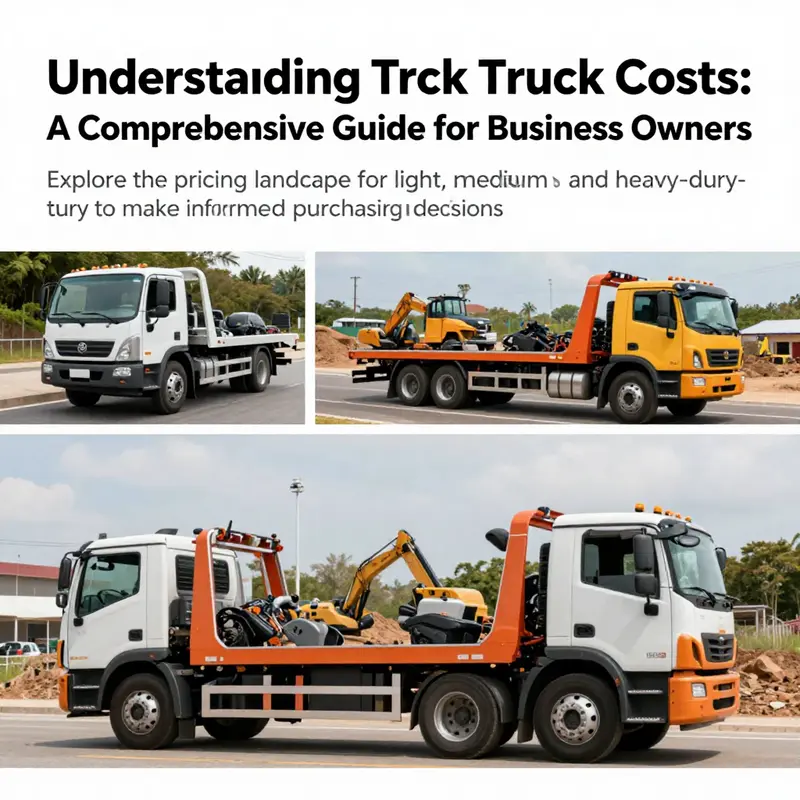
Navigating the costs associated with towing trucks can be a complex journey for business owners, particularly those in the transportation or emergency services sectors. Understanding the price spectrum for these vehicles is crucial for effective budgeting and operational efficiency. Each type of towing truck—light, medium, and heavy-duty—has its unique pricing structure influenced by various factors including capacity, features, and economic conditions. This article will delve into the specific costs associated with light-duty, medium-duty, and heavy-duty towing trucks, equipping you with the knowledge to make sound investment choices for your business.
Light-Duty Tow Trucks: Cost, Capabilities, and the Bottom Line for City Towing
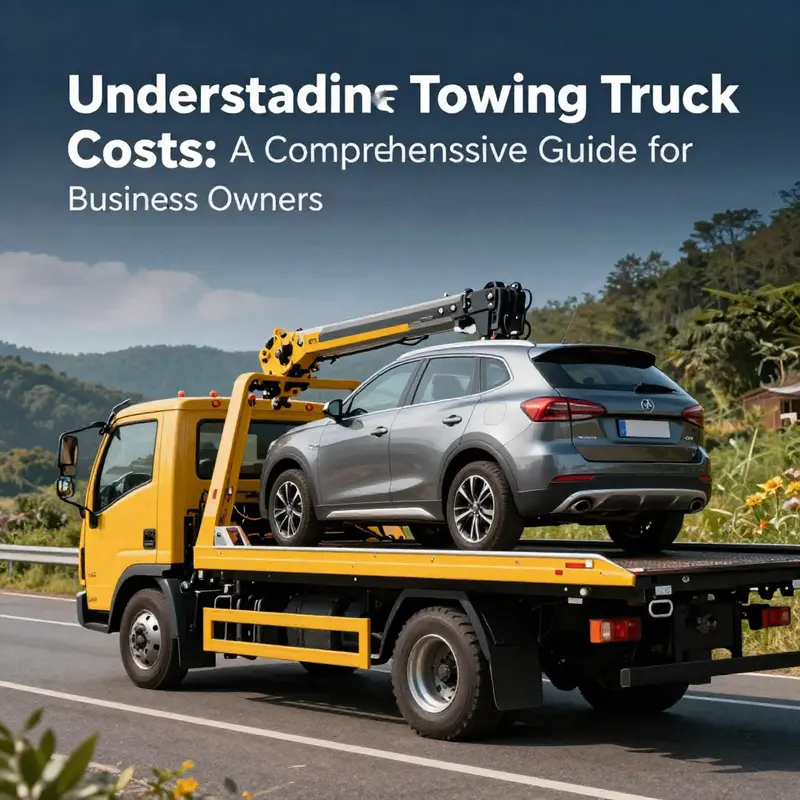
Light-duty tow trucks sit at the heart of urban recovery work, where tight streets, dense traffic, and high demand for rapid service demand a careful balance between purchase price, capability, and operating costs. When operators weigh how much a towing truck costs, they are really weighing a portfolio of decisions: how much payload the vehicle can handle, how fast it can winch and load, what kind of protection it offers for the towed vehicle, and how long the machine will operate before it needs significant maintenance. In markets with high call volumes and compact road layouts, the smallest, simplest options often win out, but the cheapest sticker price does not always translate into the best long-term value. A light-duty unit that can perform reliably day after day, in all kinds of weather and on various road surfaces, tends to deliver lower life-cycle costs even if its upfront price is modestly higher than a bare-bones alternative.
The spectrum of light-duty tow trucks is defined largely by three primary configurations: wheel-lift, flatbed, and a hybrid boom setup that combines lifting with a winch. Wheel-lift models have historically been the most common in city fleets. They rely on a hydraulic yoke that engages the wheels and enables quick, straightforward towing of damaged or parked vehicles with minimal tire contact. Their simplicity translates into favorable price bands and easier maintenance, which is particularly attractive for small operators building a fleet or for municipal contractors who need predictable budgeting. Flatbeds, by contrast, carry the entire vehicle on a hydraulically inclined platform. They offer superior protection for tires and suspension and can be gentler on high-end or low-profile vehicles during transport. However, their loading cycle tends to be longer, and the platform adds weight and mechanical complexity, which can push up both purchase and maintenance costs. The third option—an integrated boom or winch system—provides versatility that can be a major advantage in mixed urban environments. It enables lifting from awkward angles, retrieves vehicles in ditch or curbside scenarios, and can handle a variety of tow angles without multiple tool sets. While not universally necessary for every operation, the combination of wheel-lift plus winch is a compelling choice for many city-based fleets that require speed, flexibility, and a wide reach.
Price is the most immediate lens through which buyers assess light-duty options, but it is only the starting point. Basic wheel-lift models can be found at a relatively approachable entry price, while more feature-rich configurations with heavier lifting capacities and more robust hydraulic systems push toward the higher end of the light-duty spectrum. In the current market, basic, compact wheel-lift setups may start around the mid-teens in thousands of dollars, while more capable flatbeds with advanced loading controls, stronger winches, and enhanced stabilization systems often sit higher on the scale, approaching the upper end of the light-duty range. It is common to see a spread where the most basic configurations begin near twelve thousand eight hundred dollars, and more sophisticated light-duty wrecker packages hover toward or past thirty-nine thousand dollars. These figures reflect not just the platform itself but the cumulative value of included safety features, operator ergonomics, and the level of standard equipment such as lighting, radios, and alarm systems that fleets rely on during emergency calls.
Those price differences matter because they map directly onto total cost of ownership. In urban environments, where stoppages and delays can compound quickly, reliability is a critical asset. A well-specced light-duty truck may cost more upfront but can reduce downtime through simpler maintenance access, higher-quality hydraulic components, and more durable moving parts. The inclusion of higher-grade hydraulics or more capable winch systems—along with longer service intervals and better after-sales support—can translate into fewer breakdowns, faster turnarounds, and ultimately more jobs completed per shift. Conversely, a leaner setup may save capital at the outset but incur higher maintenance frequency or limited capability when called to move stubborn, heavy, or awkwardly positioned vehicles. The choice hinges on how the operator envisions use patterns: daily city towing, light roadside recovery, or occasional special tasks like long-distance transport of a damaged vehicle.
Another pivotal factor in the cost picture is the powertrain choice. Diesel engines remain common for their durability and torque characteristics, especially in demanding urban cycles where consistent pulling power is essential. Yet, there is growing attention to electrified powertrains as fleets pursue lower operating costs and emissions reductions. Electric or hybrid options can bring meaningful savings over the lifecycle, especially in regions with high energy costs or stringent environmental regulations. The upfront premium for electrified variants is a consideration, but ongoing fuel savings, reduced maintenance on certain components, and potential incentives can shift the economics in favor of electric propulsion for fleets with large daily runtimes.
Equipment and customization further shape the price landscape. Light-duty tow trucks often come with a standard mix of safety lights, sirens, and communications equipment designed to integrate with dispatch systems and protect operators during high-risk recoveries. The addition of premium hydraulic systems, more sophisticated load-monitoring capabilities, or reinforced structural components can raise the cost but substantially improve reliability and service life. For buyers who anticipate specialized tasks—such as recovering vehicles with low ground clearance, or retrieving cars from uneven surfaces—the incremental investment in a more capable platform can be justified by smoother operations, faster recoveries, and less wear on the vehicle being towed.
Market dynamics also influence pricing in meaningful ways. Bulk purchases, for example, can unlock discounts on light-duty models, a common approach for small fleets expanding their footprint or municipal programs standardizing a fleet mix. Likewise, buyers who are willing to consider slightly older units or refurbished configurations can access lower upfront costs while still obtaining serviceable, road-ready equipment. As of early 2026, the market features a wide gap between entry-level units and higher-specification configurations, with second-hand options providing a practical entry point for new entrants in the towing field. The key is aligning the selected configuration with realistic usage patterns and the anticipated return on investment from faster call completion and reduced downtime.
For operators seeking tangible benchmarks in their local area, it is helpful to observe how neighborhood towing services structure their light-duty fleets. Local crews often prioritize nimble handling, consistent performance on short runs, and predictable maintenance cycles. These preferences tend to steer buyers toward wheel-lift or compact flatbed layouts that deliver a practical balance of speed, protection for delicate vehicles, and ease of daily use. In some cases, operators supplement their knowledge with local suppliers who can arrange quick quotes and on-site demonstrations, offering a closer look at how a specific configuration handles the realities of city streets. If you are evaluating options in a metropolitan context, a practical step is to explore a local service specializing in urban towing and note how they deploy light-duty units across different job types. For a real-world view of a regional service pattern, you can explore a local example here: tow-truck-service-washington-dc.
From a financial planning perspective, the takeaway is clear: the upfront price is just one piece of the puzzle. Buyers should build a total-cost-of-ownership model that includes purchase price, financing terms, insurance, maintenance, and operating expenses like fuel or electricity, depending on powertrain choice. Sensible budgeting also accounts for potential downtime and the fleet’s ability to redeploy assets quickly to meet demand. In dense urban markets, where a single breakdown can ripple across service levels, a light-duty tow truck that delivers consistent performance, easy maintenance, and efficient loading operations tends to yield a more stable return than a lower-cost option that costs more in downtime and repairs over time. In short, choosing a light-duty tow truck is a blend of price, capability, and reliability, with a decision that should reflect how a fleet serves a metropolitan audience day after day. For broader sourcing, many operators also consult large supplier platforms to compare specifications and prices, such as a global marketplace that aggregates equipment listings and quotes from multiple regions.
External resource for broader pricing context: Alibaba pricing platform.
Balancing Power and Price: The Real Cost of Medium-Duty Tow Trucks in Modern Fleets
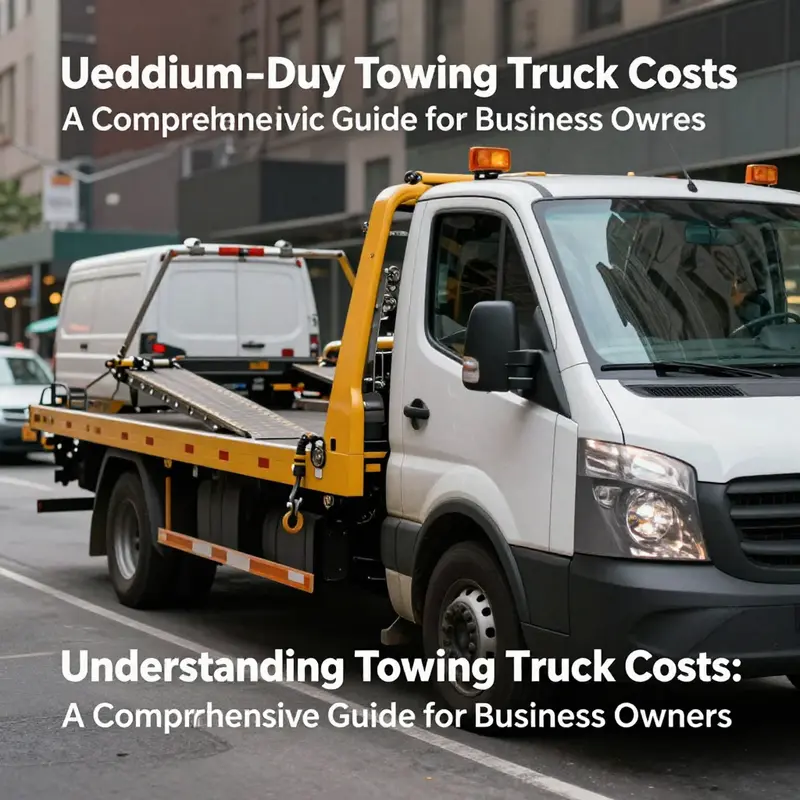
Medium-duty tow trucks occupy a pivotal niche in towing operations. They are designed to move heavier vehicles and equipment than light-duty units yet remain nimble enough to operate in urban environments and on tighter lots. In practical terms, these machines typically cover weight classes in the 10,000 to 26,000 pounds gross vehicle weight rating (GVWR) range, and they are often specified with lift capacities that match the demands of full-size pickups, large vans, and light commercial fleets. As of early 2026, new medium-duty tow trucks in the United States generally sit in a broad price corridor—from roughly $50,000 up to well over $150,000—depending on configuration, brand, and the level of towing equipment included. That sticker price is only the first part of the story, because the true cost of ownership stretches far beyond the moment of purchase and into the days and miles the truck will endure on the road.\n\nThe price you pay for a medium-duty tow truck is determined by a combination of the chassis, the torque and transmission characteristics, the lift and towing mechanism, and any specialized equipment that is embedded in the truck’s design. A basic, no-frills platform with a modest engine and the core towing gear will be at the lower end of the spectrum, but fleets rarely opt for minimal setups when the work demands dependable performance and uptime. More typically, operators choose configurations that include a heavy-duty winch, a flatbed option for secure payloads, and cranes or racks for rapid offloading and recovery. Each added feature pushes the price upward, but it also expands the range of recoveries the vehicle can perform, which can translate into faster responses and, in turn, higher revenue per hour of operation. On the other hand, a more sophisticated apparatus often equates to higher maintenance costs and greater complexity in parts and service, factors that fleets must weigh against the expected utilization of the truck.\n\nA useful point of reference in understanding the baseline and the next steps in pricing is to compare new medium-duty options with the broader market. In some fleet procurement scenarios, bulk purchases—such as five or more units—can unlock more favorable per-unit pricing. For example, bulk-buy discounts have been observed in the market for certain mid-range configurations, while single-unit purchases typically carry higher per-unit pricing. This dynamic matters for fleets that plan to scale, not just replace aging equipment. It is also worth noting that much of the long-term value hinges on the reliability of the chassis and the availability of parts and service in the operator’s region. A truck that performs fewer recoveries and sits idle for long periods will drum up less depreciation value and fewer maintenance opportunities than a high-usage model, even if the upfront price is lower.\n\nBeyond sticker price, the economic factors that shape total ownership cost are well-documented in industry analyses. A comprehensive study by the North American Council for Freight Efficiency (NACFE), published in early 2026, highlights the major drivers of total cost of ownership for medium-duty tow trucks. The most impactful elements include fuel or energy costs, ongoing maintenance expenses, depreciation, insurance, and the availability of government incentives. For diesel-powered medium-duty rigs, fuel costs do not disappear, but they tend to be predictable for fleets with steady routes or return-to-base operations. Battery-electric medium-duty tow trucks present a different calculus: while upfront costs are generally higher, fuel and maintenance expenses over the vehicle’s life can be significantly lower. The NACFE report emphasizes that this potential gap between upfront price and ongoing costs is highly sensitive to utilization patterns, charging infrastructure, and access to grants or tax credits that reduce net acquisition costs. In other words, the return on investment for an MD CBEV hinges on how predictably the truck is used, how well the fleet is served by charging networks, and how effectively incentives are applied.\n\nThe report also clarifies that the cost landscape for medium-duty platforms is not limited to the chassis and the specialized towing equipment. A basic, non-towed or non-specialized medium-duty closed-box truck might have a price tag in the range of roughly $15,800 to $34,000 for a configuration with modest power and capacity. This figure does not include the heavy-duty towing apparatus, hydraulic systems, cranes, or the bed configurations that convert a plain chassis into a functional tow truck. Once those components are added, the final price can rise steeply, and fleets must consider whether the incremental capability aligns with the expected workload. The takeaway is not simply to chase the lowest price, but to balance capability, reliability, and lifecycle costs against the expected demand on the unit over its service life.\n\nTo translate these insights into practical decision-making, fleets should adopt a holistic framework for evaluating proposals. Start with a clear assessment of operational requirements: expected load, typical recovery scenarios, urban versus rural routing, and the need for rapid payload offloading. Then project total cost of ownership over a multi-year horizon, incorporating fuel or electricity costs, maintenance and repair spend, scheduled downtime, insurance premiums, and the depreciation curve. Add to this the potential value of government incentives, which can appear at federal or state levels and can substantially tilt the economics in favor of electric or hybrid configurations when aligned with an operator’s energy strategy and policy environment. It’s not merely about acquiring the most capable machine; it’s about procuring a solution that sustains high uptime, delivers predictable maintenance costs, and aligns with the operator’s compensation model and service commitments.\n\nFor fleets that operate in regions where the work frequently involves heavy-duty recoveries, the choice becomes even more nuanced. The economics of a 10-ton to 16-ton class unit, when paired with a robust winch system and a reliable bed or crane, may outperform a lighter unit on total recovery output, even if the upfront spend is higher. Conversely, fleets with shorter average recovery times or those operating with route density and predictable miles may find a lighter, diesel-driven setup more economical over time, particularly if charging infrastructure for an electric version is not yet robust. Across scenarios, the NACFE analysis reinforces the central idea: the best choice is not the lowest upfront price, nor the highest potential capability in isolation, but the option that minimizes total costs while delivering the level of service that customers expect and demand.\n\nIf you want to explore further the factors shaping this calculation, the NACFE study provides a structured framework and data-backed insights you can apply to your own fleet strategy. It also helps translate number-driven decisions into actionable procurement plans. For readers seeking a real-world, local context, fleets can consider how the Washington, DC area is served by nearby tow-service providers and how those operators balance equipment investments with service expectations. Washington, DC towing services offer a practical lens on how urban operations shape equipment choices and maintenance planning.\n\nFor a deeper dive into the cost-of-ownership dynamics and the economics of medium-duty electric versus diesel platforms, the NACFE report remains a foundational resource. It draws together energy cost projections, maintenance profiles, depreciation curves, and the role of incentives in a way that helps fleets quantify the true economics of their investment. See the broader analysis and data in the NACFE study for a rigorous, numbers-driven perspective on how much a medium-duty tow truck costs over the life of the vehicle: https://doi.org/10.13140/RG.2.2.13068.26244
Sizing the Price Tag: How Heavy-Duty Tow Truck Costs Align with Market Dynamics and Fleet Strategy
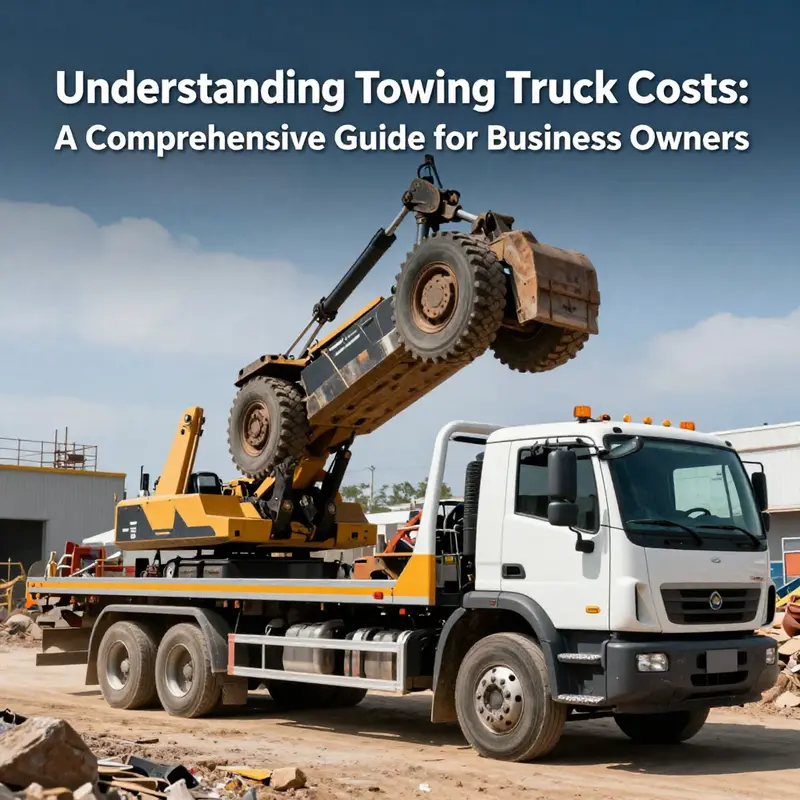
Heavy-duty tow trucks sit at the practical intersection of engineering prowess and fleet economics. They are not just vehicles; they are capital investments whose price tags reflect the intensity of the work they are asked to perform, the conditions they operate in, and the service expectations that customers demand. When a towing operation considers scale—how many to deploy, how quickly to respond, how often to recover oversized loads—the conversation naturally drifts toward price, but it drifts there with context. The cost of a heavy-duty tow truck is driven by configuration, capacity, and equipment, then magnified or tempered by whether the unit is new or used, and by the regional realities of supply, labor, and compliance. In practical terms, buyers encounter a spectrum that begins in the mid tens of thousands and can rise into six figures, particularly for units that are purpose-built for high-intensity emergency response or complex on-site recoveries. The spectrum is not an accident; it tracks the engineering choices that underpin reliability, uptime, and the speed with which a fleet can mobilize in critical moments.
Prices for new heavy-duty units typically span from roughly $15,500 to more than $200,000. That wide range is not a marketing whim; it mirrors the core levers behind capability. A basic, fully crewed 6×4 tractor-style tow unit with a modest recovery package sits in the lower-to-mid range, while larger configurations with reinforced frames, high-capacity winches, and robust crane systems move up the price ladder quickly. Consider a new 6×4 tractor with around 371 horsepower and a standard recovery package. In the current market, that configuration can be found in the ballpark of $32,500 to $39,000. A heavier-duty 6×4 setup with 351 to 450 horsepower, configured for demanding road-rescue tasks, tends to land in the $35,000 to $45,000 zone for base builds. If the operation requires a rotator—a unit designed to lift and manipulate vehicles during complex recoveries—the price commonly lands around the $45,000 to $46,500 mark for a well-equipped, new machine. And for fleets that want the absolute maximum capability, fully optioned units with the most ambitious winches, cranes, stabilization gear, and on-board recovery systems can exceed $200,000. The message is simple: the sticker price is a function of what the machine can do, how quickly it can do it, and how long it can stay in service with minimum downtime.
The option to purchase used or certified pre-owned adds another layer to the cost discussion. In most markets, a used heavy-duty tow truck can save a meaningful percentage—roughly 20 to 40 percent—versus a new unit, depending on age, uptime history, and remaining service life. This creates a meaningful decision point for fleet buyers, especially those expanding capacity without inflating depreciation or capital expenditure. Yet the used-path demands careful due diligence: a thorough inspection of hydraulic systems, structural integrity, and the condition of the winches, cranes, and rotator assemblies is essential to avoid trading lower upfront cost for a spike in maintenance and downtime that erodes value over time.
Beyond the base chassis and major recovery gear, a long list of ancillary items heavily influences total ownership cost. Towing operations run on uptime, safety, and efficiency. Essential equipment such as high-capacity winches, wheel lifts, towing dollies, axle pads, and advanced lighting contributes to the unit’s performance but also to its price. Safety gear—cones, vests, flares—and on-board systems such as GPS tracking and fleet-management software add layers of expense that compound over the life of the vehicle. In a wide market, these items are often bundled into a package or offered as add-ons, and buyers should weigh them against anticipated incident volume, geography, and the complexity of typical recoveries. The sum of the parts—winch capacity, crane reach, rotator function, stabilization, and safety systems—establishes the unit’s readiness for high-demand operations and, by extension, its total cost of ownership.
Market dynamics shape how aggressively prices move and how buyers navigate the procurement landscape. Demand for heavy-duty tow trucks grows with the logistics and transportation sectors, which means buyers face competition among major global manufacturers to deliver reliable, serviceable platforms. After-sales support, the length and quality of warranties (often around one year, with some suppliers offering extended options), and the availability of timely delivery all influence price and value. Delivery times in the wake of payment can vary, but a typical expectation is that a fully configured heavy-duty unit is delivered within a month or so, depending on customization and stock. This cadence matters for fleets coordinating contracts, insurance cycles, and fleet renewal programs.
For buyers seeking real-time pricing and supplier details, many turn to global procurement platforms and direct inquiries. These channels can expose buyers to a broad set of configurations and quotes, enabling apples-to-apples comparisons across similar specs. Yet the landscape remains nuanced. The most valuable quotes come with clear descriptions of winch capacities, crane reach, rotation ability, fuel efficiency, and the availability of after-sales support—especially when a fleet cannot afford prolonged downtime. In the bargain between price and uptime, the buyer’s decision often hinges on the total cost of ownership rather than the sticker price alone. This is where strategic questions about fleet design become crucial: How many units does the operation require? What response times are needed in peak periods? What are the anticipated annual hours of operation, and how will maintenance be scheduled and funded? Budgeting not only for purchase but for long-term upkeep and reliability becomes the true cost calculation.
Drawing from a broad market picture, buyers typically pursue a mix of configurations to balance capacity with cash flow. A portion of the fleet may invest in the more affordable, standard rotator-equipped trucks for regional recovery, while others pursue fewer, more capable units for high-demand corridors and emergency-response coverage. The bulk-buy approach, such as purchasing multiple units at once, can unlock favorable price breaks for the fleet, reducing per-unit cost and aligning capital spend with procurement planning. In contrast, single-unit purchases may require tighter capital control, but can still leverage favorable financing terms and warranties to improve the overall value proposition.
For readers focused on local market patterns and service capability, regional differences in fleet maintenance and response time highlight how cost is not just a sticker on the hood. Service accessibility, technician availability, and proximity to parts warehouses influence downtime and, therefore, the practical cost of ownership. A well-serviced unit in a busy metropolitan area accrues less downtime and, over time, a lower operating cost per hour than a similar unit stranded in a remote location. This consideration is especially important for fleets operating 24/7 service, where even small reductions in downtime translate into meaningful revenue protection.
As a closing thread, the cost discussion for heavy-duty tow trucks is best understood as a blend of engineering capability and business strategy. Buyers weigh initial outlay against potential revenue, maintenance obligations, and the reliability needed to uphold customer trust during critical recoveries. The choice between a mid-range, capable setup and a top-tier, fully equipped system is not simply about price; it is about aligning machinery with work patterns, uptime expectations, and the capital plan that keeps a towing operation resilient. For readers who want to explore current listings and compare quotes across configurations, see the Washington DC tow-truck service page for practical context on how local fleets are structured around capacity and service commitments. Washington DC tow-truck service.
External resource: https://www.alibaba.com/showroom/heavy-duty-tow-trucks.html
Final thoughts
Understanding the costs associated with different types of towing trucks is essential for business owners in making informed purchasing decisions. Each category—light, medium, and heavy-duty—offers unique features and financial implications that affect overall operational costs. By comprehensively analyzing these factors, business owners can streamline their operations, ensure better service delivery, and ultimately enhance profitability. Whether you’re entering the towing business or expanding your fleet, being informed about towing truck pricing will enable you to make strategic decisions that align with your business objectives.