
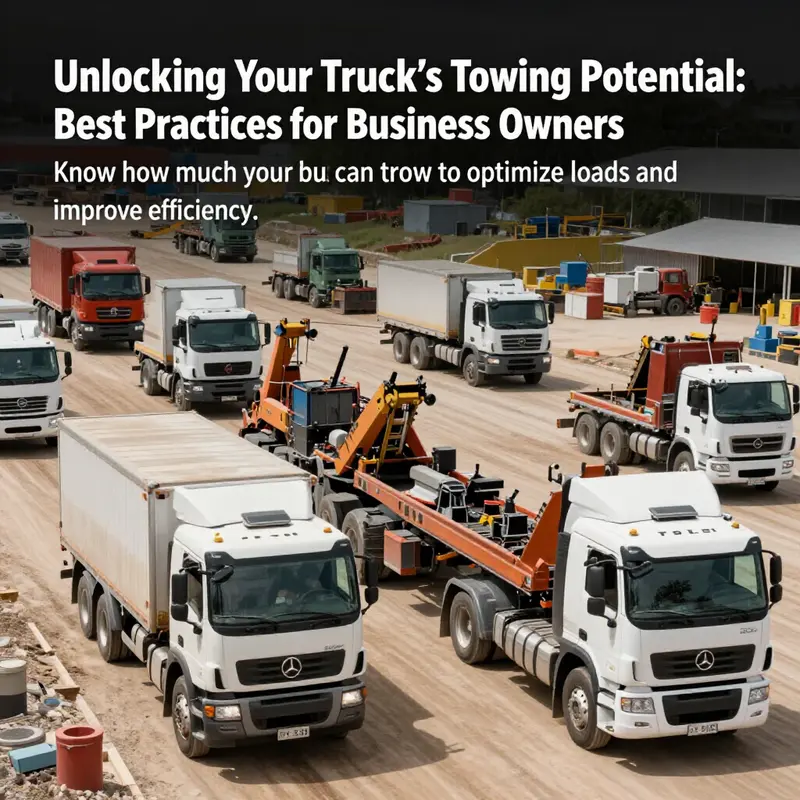
Understanding your truck’s towing capacity is crucial for business owners who rely on their vehicles for transporting goods and equipment. Whether you operate a landscaping business or a construction company, knowing the limits of your truck allows you to plan more effectively, ensuring safety and compliance on the road. This article will delve into two main areas: the different types of trucks and their towing capacities, and the various specifications and configurations that influence these limits. By grasping these concepts, you can make informed decisions about your fleet and maximize its potential while minimizing risks.
Tow Boundaries: Reading Your Truck’s Capacity Across Light, Medium, and Heavy-Duty Realities
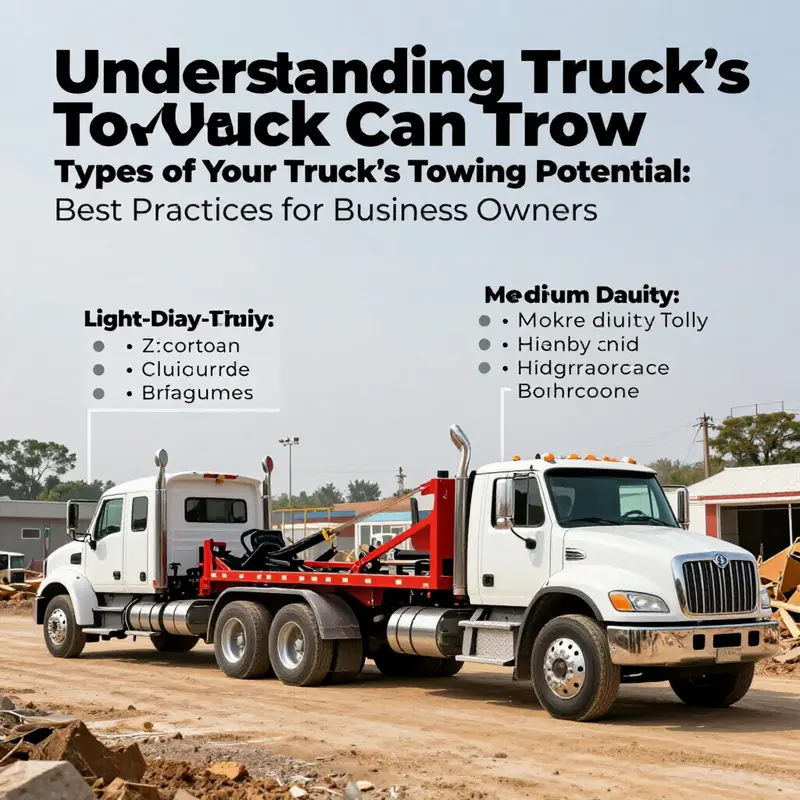
Tow capacity is not a single, universal number you can memorize once and carry into every trailer pull. It is a conversation between the truck you own, the way it is equipped, and the road you intend to travel. In practice, that conversation happens at the level of design and engineering—where the chassis meets the engine, the drivetrain, and the axle ratios—and at the level of regulations that govern safe operation. The result is a spectrum rather than a single figure. For most light-duty trucks—the ones people use for daily driving, family trips, and occasional boat or trailer hauls—the typical towing range sits roughly between 10,000 and 14,000 pounds. High-trim models with advanced aero, factory-titted diesels, or upgraded transmissions can push beyond 14,000 pounds, but those are specific configurations and are not universal across the entire model lineup. It is precisely this variability that makes it essential to consult the exact specifications for your truck rather than rely on broad generalizations. The same principle applies as you move up to medium-duty trucks, where the towing numbers rise into a broader band, generally around 14,000 to 20,000 pounds. Again, however, the exact capacity depends heavily on engine choice, the transmission housed behind it, the axle ratio the manufacturer selected for that model, and the cab and chassis arrangement chosen at the factory. Each of these choices alters the strength of the drivetrain, the gearing that governs engine speed under load, and the stability of the vehicle as it tows weight behind it. These are not abstract differences; they translate into practical outcomes on the highway and in the driveway. A truck designed for everyday tasks can become a very different machine when it carries a trailer, a balance of weight and power that tests the limits of engineering in ways that a bare chassis never would. For those chasing numbers, the dramatic jump from light to medium duty is not only about raw engine horsepower or torque figures; it is about how the entire system—axle strength, transmission cooling, fuel delivery, and electronic controls—works together when the weight on the hitch grows. It is a comprehensive package designed to keep the vehicle controllable, stable, and safe as it carries a load from point A to point B. In the realm of heavy-duty work, the landscape shifts again. Heavy-duty trucks—including the class of vehicles often associated with long-haul freight and commercial recovery—are built to move truly substantial masses. A standard semi-truck with a trailer commonly associated with long-distance freight can effectively manage loads that push well above 80,000 pounds gross vehicle weight. That figure represents the legal maximum gross vehicle weight in the United States, which accounts for the combined weight of the truck, the trailer, and the cargo. It is an upper boundary that reflects regulatory constraints as well as engineering realities. In other words, beyond a certain point, it is not simply a matter of horsepower or torque. It becomes a question of how the vehicle, the brakes, the tires, and the suspension are designed to handle sustained weight and the dynamic forces that arise in real-world operation. Since the precise towing capacity for any given truck is anchored in its operating configuration, the most reliable way to know your limits is to consult the owner’s manual or the manufacturer’s official specifications. The door jamb sticker—often called the Monroney label—will list the exact ratings for that specific vehicle, including GVWR (gross vehicle weight rating), GAWR (gross axle weight rating), and GCWR (gross combined weight rating). Those numbers are not aspirational; they are the boundaries you must respect to protect the longevity of your truck and the safety of everyone on the road. The guidance here is practical: use the official numbers as your baseline, and then consider the practical realities of your towing task. A lighter, well-balanced load with proper hitching presents a different risk profile than the same weight with a poor distribution or an overloaded hitch. For example, a 2025 Ford F-150 with a 3.5L V6 engine and a 10-speed transmission might have a maximum towing capacity of around 14,000 pounds in certain configurations, while a 2025 Ford F-350 Super Duty with a 6.7L Power Stroke diesel can tow up to about 22,000 pounds. These figures illustrate how even within a single brand, the jump from light to heavy-duty configurations translates into meaningful differences in capability. Yet the broader lesson holds across the spectrum: always verify the exact figure for your model and configuration. Beyond that, there are several key concepts worth weaving into the everyday practice of towing. First, the distinction between tow capacity and payload capacity matters. The trailer you pull is not the only load the system has to bear; the weight on the hitch, the distribution of that weight, and the energy the truck must expend to manage it all are components of a larger safety equation. Weight distribution is critical. A properly balanced load reduces the chance of trailer sway, preserves steering feel, and helps ensure the vehicle’s braking response remains predictable. This is why many towing systems emphasize tongue weight—the downward force the trailer applies at the hitch—and why certain hitch classes are recommended for particular weight ranges. The compatibility between hitch, ball, and receiver is not merely a matter of convenience; it is a structural alignment that influences how force travels through the frame and into the tires. Second, configuration matters. A four-wheel-drive truck, a diesel engine with a turbocharger, or an upgraded cooling system can all influence how much you can tow safely. The gear ratio selected by the axle setup determines how aggressively the engine can apply power and how quickly the transmission can respond while maintaining control. An engine’s peak torque is crucial, but how quickly that torque can be put to work depends on the gearing and the transmission’s ability to keep the engine in its efficient range under load. Third, you should consider regulatory and safety margins. The law sets the ceiling, but good practice respects a margin above and beyond the rating to account for maintenance, environmental conditions, and the realities of dynamic driving. Even when a truck is technically capable of pulling a given weight, conditions such as hills, heat, altitude, and tire health demand prudent operation that errs on the side of caution. The goal is not to chase a number, but to maintain predictable handling, reliable braking, and steady control throughout the journey. When it comes to choosing the exact approach for your task, it helps to keep a narrative in your mind about how the load will behave in motion. A trailer is not just a pound value; it is a shape, a balance, and a wind profile that interacts with the truck’s aerodynamics and aerodynamic drag. Heavier trailers demand more braking capacity, more accurate weight distribution, and more careful speed management. In sum, the way you interpret your truck’s towing capacity is a blend of the official numbers and the realities you face on the road. You will need to read and understand the specifications relevant to your vehicle’s exact configuration, and you will need to apply common sense and caution when planning any haul. The first place to start is the owner’s manual, followed by the manufacturer’s official site for the precise ratings. If you cannot find the data clearly presented, the door label is usually the next best source. And if you are ever unsure, seek guidance from a qualified technician or a reputable towing service in your area. For readers who want a concrete, local entry point to professional help, a nearby service such as the Washington, DC area towing team offers guidance that reflects the real-world practices of the industry. You can explore local options and get a sense of how professionals assess weight, balance, and secure hauling when the job demands it by visiting a local service page such as the one dedicated to providing towing service in Washington, DC. This kind of resource helps bridge the gap between the abstract numbers and the practical steps of preparing a safe, compliant tow. Keeping this connected framework in mind—clear official ratings, practical load balancing, and professional input when needed—will make your towing tasks smoother and safer. The bottom line is simple: the exact capacity is unique to your truck’s build and options, and the right approach keeps you out of trouble. You will rarely (if ever) be rewarded by testing the limits; instead, you gain reliability by sticking to the rated values, respecting ballast, and choosing equipment that matches the job at hand. As you navigate the planning phase for any tow, remember that the goal is to preserve control, maintain safe braking, and avoid compromising the structural integrity of the truck or the trailer. This is the core principle behind the detailed guidance you will find in manuals and professional resources. For readers who want to deepen their understanding of the broader towing landscape, the industry has long recognized that heavy-duty solutions offer capabilities far beyond what conventional chain-and-hook methods can safely provide. Integral tow trucks, for instance, embody a design where the towing mechanism is built directly into the chassis. This integration grants superior strength and versatility for demanding recoveries, allowing these vehicles to handle extremely heavy loads and challenging conditions. In practice, such systems enable professionals to manage high-value vehicles, long-distance recoveries, and scenarios involving drivetrain or suspension damage with stability and precision that older or simpler setups struggle to match. The influence of engineering choice on capacity thus extends beyond the engine alone; it touches the entire framework that makes safe towing possible. It is a reminder that the evolution of towing technology—moving away from older chain-and-hook configurations toward more secure, vehicle-friendly methods—reflects a shift toward preserving the very assets being hauled and the safety of the people involved. This evolution is well documented in industry resources and professional associations, which emphasize standards, safer practices, and the move away from outdated methods whenever feasible. The practical implications for everyday truck owners come down to a simple act: verify your numbers, know your load, and respect your equipment. If your haul involves a heavy trailer, a large boat, or a sizable equipment load, you owe it to yourself to approach the task with caution and preparation. That means confirming the exact GCWR for your specific model, confirming tongue weight, checking the brake controller and trailer brakes, and ensuring the hitch and ball are rated for the weight you intend to tow. It also means recognizing when a project spans the line from “towing a trailer” to “transporting a load that requires professional recovery or specialized equipment.” In these moments, enlisting the help of a trained crew can be the difference between a smooth operation and a hazardous situation. The narrative of towing strength is not about singular numbers but about a relationship with the vehicle and the road. It requires you to respect data, understand the constraints of your chassis, and approach each pull with a measured plan. The journey from light-duty to heavy-duty realities is the journey of a vehicle’s engineering and the responsibilities that come with moving weight on wheels. For readers who want to translate these insights into action, a connected step is to review resources that offer local guidance and service options while maintaining an awareness of how to identify legitimate, compliant help when needed. If you are curious about local services and want to explore options close to home, you may consult a nearby provider such as a Washington, DC area towing service to understand how professionals evaluate weight, balance, and safe towing on real-world roads. This kind of insider knowledge complements the data in manuals with practical, on-the-ground experience, offering a tangible sense of how the numbers translate into everyday results. External resources provide context that supports your own calculations and planning, helping you make informed decisions about the loads you pursue and the routes you choose. For a broader industry perspective and safety guidelines that underpin the standards discussed here, you can consult trusted external references such as https://www.towingandrecovery.org/. Taking the time to read these standards can help you appreciate why the industry has shifted away from older methods and toward safer, more controlled approaches to weight transfer and vehicle preservation. In the end, the capacity question is not a single test but a prudent rhythm of confirmation, calculation, and safety. It is about knowing your machine, respecting its limits, and choosing the right method for the job. The result is a towing experience that keeps you moving, with confidence and control, regardless of whether you are towing a light utility trailer or facing a heavy, demanding recovery task that demands integral strength and professional expertise. By grounding your plan in the actual specifications of your truck, by understanding the impact of drivetrain and configuration, and by aligning your approach with established safety practices, you can approach every towing scenario with clarity and competence. That is the practical takeaway: know your exact ratings, balance your load, and lean on professional guidance when the task exceeds what is reasonable to attempt alone. For more locally grounded guidance, readers can explore relevant information on the Washington, DC towing landscape and related services that best fit their needs, ensuring that any tow plan remains compliant with both manufacturer recommendations and local regulations. External resources anchor this knowledge in industry-wide standards and real-world practice, helping to bridge the gap between the data and the road. As the landscape of towing continues to evolve, the core principle remains the same: your truck’s towing capacity is a precise specification tied to its configuration, and respecting that specification safeguards your vehicle, your cargo, and everyone on the journey.
Tow Limits Revealed: Reading Specs, Configurations, and Real-World Capacity in Your Truck
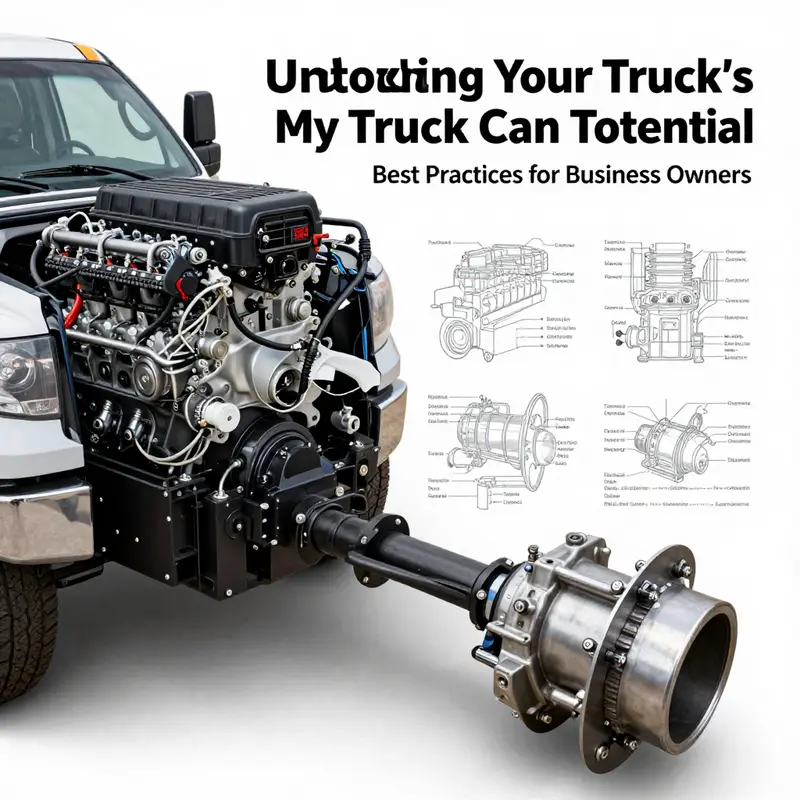
When people ask how much their truck can tow, they often expect a single, simple number. The truth is more nuanced. Tow capacity is not a universal constant; it lives in the details of the vehicle’s design, its configuration, and the conditions in which you tow. To arrive at a trustworthy number, you have to read the vehicle’s ratings as part of a larger story about how the truck is built to work. The maximum towing capacity is a ceiling, but the factors that determine where you actually operate within that ceiling are varied and dynamic. In practical terms, understanding how much a truck can tow means moving beyond memory of an advertised figure and toward a careful synthesis of engine torque, transmission behavior, drivetrain grip, and the weight margins that protect both truck and trailer on the road.
At the heart of towing capacity is power paired with control. The engine’s ability to deliver torque, especially at low to mid-RPMs, is what makes a truck able to overcome inertia when starting a heavy trailer and maintaining speed on grades. Torque describes the twisting force that gets the combination moving, while horsepower speaks to the sustained energy available as climbs become longer and steeper. A truck with ample low-end torque often feels more capable at the moment you pull away from a standstill, which is when the trailer’s resistance to motion is highest. But torque alone does not tell the full story. The way that power is transmitted to the wheels—through the transmission, gears, and driveline—shapes how that torque is used in real driving conditions. An automatic transmission with well-timed shifts can keep the engine in the torque band where it needs to be, while a manual setup relies on the driver to manage gear selection with precision. Either way, the intent is similar: deliver enough force consistently without letting the system overwork or overheat.
Drivetrain configuration adds another layer of nuance. A four-wheel-drive chassis can provide better traction on slick or uneven surfaces, which helps maintain a safe and predictable tow in adverse weather or on uneven pavement. However, 4WD does not magically increase the rated towing capacity; the rating remains tied to the vehicle’s engineering limits. What changes is the likelihood of maintaining that capacity safely across a wider range of conditions. The same logic applies to axle ratios. A lower numerical ratio (for example, a deeper gearing) tends to improve towing performance by multiplying the engine’s torque more effectively for a given speed. This leverage helps when pulling heavy loads uphill or when accelerating from rest, yet it can reduce top speed and sometimes increase engine RPM at highway cruising. The exact effect depends on the engine’s torque curve, the transmission’s behavior, and how the combination is tuned by the manufacturer.
Beyond power and gearing, the chassis and suspension play vital, sometimes underappreciated, roles. A robust frame, reinforced axles, and a suspension system designed to handle extra weight all contribute to how much you can tow without compromising safety or ride quality. The Gross Vehicle Weight Rating (GVWR) tells you how much the truck is certified to carry inside—passengers, cargo, and the vehicle’s own weight. The Gross Combined Vehicle Weight Rating (GCVWR) extends that idea to the total weight of the tow vehicle and the trailer when connected and in motion. These ratings are not interchangeable numbers you can freely mix; they are protective limits designed to keep braking, steering, and structural integrity intact under expected operating conditions. Exceeding either rating can impair braking performance, increase stopping distances, and place abnormal stress on the frame and hitch, which is why manufacturers specify these limits with care and precision.
Manufacturers also frequently offer towing packages that mechanically and electronically reinforce certain systems. A factory towing package might include a heavier-duty radiator, upgraded transmission cooling, reinforced brakes, and specific hitch configurations. These upgrades are not cosmetic—they change how the truck carries heat, how quickly it can shed it, and how the braking system responds under the additional load. The result is a higher margin of safety and, in some cases, a higher practical towing rating under the conditions those packages are designed for. But even with a towing package, the fundamental rule remains: you must not exceed the published ratings. Those numbers reflect tested limits under standardized conditions, and real-world towing introduces variables that can shift the safe operating window.
How these elements translate into a number is the central question. A light-duty pickup, designed for daily use with occasional heavy towing, typically carries a range around the mid-to-upper tens of thousands of pounds. A light-duty rig can handle heavy loads, but the margins are narrow and the engine, transmission, and cooling system are not overbuilt for constant, high-demand towing. A step up to a medium-duty pickup widens the envelope. These trucks are built to haul more regular, heavier trailers, and their configurations—engine choices, transmission options, axle gearings, and chassis reinforcement—are tuned for that role. In practice, a medium-duty setup can toe the line between robust capability and the limits dictated by safety margins and legal requirements, often totaling a higher range while demanding more careful matching of trailer weight, tongue weight, and braking capacity.
Then there are the truly heavy-duty trucks, the class that serves long-haul freight and demanding worksite needs. These machines are designed to move very heavy loads with a focus on reliability over long distances. The rated capacity of these configurations reflects substantial engineering in engine cooling, drivetrain endurance, and braking power. It’s not unusual for the upper limits of these trucks to be tens of thousands of pounds in terms of trailer weight, but even here the legal and practical frameworks insist on careful calculation and adherence to the GCVWR. The general takeaway is that the bigger the truck and the more specialized its setup, the more capacity you might expect in principle, but the exact number is still determined by the precise combination of the engine, transmission, axle ratio, chassis strength, and the trailer’s own weight and braking needs.
The practical steps to determine your exact towing capacity are straightforward but essential. Check the door jamb sticker, sometimes called the Monroney label, and consult the owner’s manual or the manufacturer’s official specifications. The maximum towing rating listed on the sticker is a limit that is tied to the vehicle’s configuration. It is not a figure to be treated as a target or a ceiling to be approached loosely. If you are considering an upgrade or modification—such as adding a heavier-duty hitch, a cooling system upgrade, or reinforced brakes—get clarity on how those changes adjust the factory ratings. Some upgrades can extend towing capability, but they may also shift other limits, like payload capacity or braking effectiveness, and can require additional professional installation and inspection.
A practical approach to planning a tow is to separate the trailer’s weight from the truck’s weight. The trailer’s gross weight is the total mass you must move. The tongue weight—the downward force the trailer exerts on the hitch—should be kept within a safe range, typically around 10 to 15 percent of the trailer’s total weight. This distribution helps preserve steering control and braking effectiveness. Overloading the tongue can destabilize the setup, even if the overall trailer weight is within the stated limit. Brakes, tires, and wheels on both the truck and the trailer must be matched to the load. A trailer that runs without trailer brakes, or that uses under-rated tires or wheels, creates a risk that can invalidate the safety margins the ratings depend on. For this reason, many drivers find it worthwhile to invest in a proper weight distribution hitch and electric trailer brakes, especially when towing the heaviest loads or traveling on grades, long distances, or in hot weather where heat buildup can affect tire performance and braking efficiency.
When you think in terms of ranges rather than a single number, the landscape becomes more intuitive. Light-duty pickups tend to fall in a broad band where the upper end often approaches 14,000 pounds, with some configurations exceeding that figure by a small margin when equipped with specialized powertrains or packages. Medium-duty pickups generally span roughly from the mid-teens to the high teens, with many configurations operating safely in the 14,000 to 20,000-pound range, depending on engine, transmission, and axle choices. For truly heavy-duty rigs, the baseline is higher still, and while the legal maximum for some long-haul applications can exceed 80,000 pounds when you consider combined vehicle and trailer weight, the practical, daily towing numbers you’ll most often encounter sit within a more conservative envelope that reflects real-world use, brake capacity, and control under load. In every case, exact numbers require checking the specific truck’s data plate and official documentation rather than relying on memory or general impressions. Moreover, the actual functional limit you can use safely will be shaped by how you plan to tow: the terrain you encounter, the altitude, humidity, wind, road grade, and the quality of your trailer’s braking and hitch setup.
For readers who want to connect the theory to practical action, consider using a local towing resource that aligns with your needs. A dedicated towing service can offer guidance about safe towing practices and equipment choices based on your vehicle’s class and configuration. For example, you can explore practical, service-level information about towing services in your area through a local provider’s online resources. The idea is not to rely on a single figure, but to build a holistic mindset: know your truck’s ratings, respect the margins those ratings imply, and plan every trip with a clear picture of trailer weight, tongue weight, and stopping power. For a focused example of how such services communicate and apply these principles in real-world scenarios, you can visit a local service page that outlines how towing teams approach a wide range of truck configurations and trailer types: towing service in Washington, DC. This is not a product pitch; it is a practical reminder that the landscape of towing is built on clear specifications, careful planning, and the discipline to stay within safe limits.
In the end, the numbers matter because safety and reliability hinge on them. The same engine that enables brisk acceleration must be capable of sustaining that effort when pulling a heavy trailer up a grade and into a headwind. The same transmission that shifts smoothly on a highway must deliver those shifts under load without overheating. The same brakes that bring you to a stop should do so reliably when the truck is towing a trailer. And the same chassis that accommodates a loaded payload must remain stiff and responsive when that payload becomes part of a longer, heavier system on the move. These are the broad truths behind the very practical question of how much your truck can tow. The act of towing is a balance between capability and caution, and the numbers you see on the door sticker or in the owner’s manual are the safe guardrails. Use them as your baseline, then plan with contingencies for weather, road conditions, and the realities of trailer weight distribution. By embracing this integrated view, you turn a potentially overwhelming specification into a clear, actionable plan for safe and capable towing every time you hitch up.
External resources can offer further context and official guidance. For formal guidelines and safety standards that help explain how towing limits are determined by vehicle design and intended use, the National Highway Traffic Safety Administration provides comprehensive information you can consult as you clarify your own setup. See the official guidelines at the NHTSA website: https://www.nhtsa.gov/vehicle-towing-capacity-guidelines. This resource helps ground the practical advice in a standardized framework and reminds readers that safe towing is as much about process and judgment as it is about raw capability.
Final thoughts
In summary, knowing how much your truck can tow is paramount for any business owner involved in transportation or logistics. Different truck types come with distinct towing capacities influenced by several specifications and configurations. Understanding these factors can help you make strategic decisions about your fleet, optimize operational efficiency, and enhance safety on the road. Always refer to your owner’s manual or manufacturer’s guidelines to ensure that you are operating within legal limits and safeguarding your assets. Maximize your truck’s potential and improve your business effectiveness by utilizing the insights provided here.