
In the world of roadside assistance, the question of whether to tip a tow truck driver can often arise for business owners managing fleet vehicles or overseeing staff travel. While tipping practices vary widely across different service sectors, the towing industry presents a unique case where gratuities are not traditionally expected. This article will explore the nuances of tipping tow truck drivers, which includes examining common practices, situations where tipping may be appropriate, and how cultural differences can influence these practices. By gaining a comprehensive understanding of these aspects, business owners can make informed decisions regarding tipping in their corporate practices.
Gratuity on the Go: Navigating Tips for Tow Truck Helpers
Stranded on the roadside, you’re suddenly in a scene that blends urgency with courtesy. A tow truck arrives, lights flashing, a uniformed driver stepping out with a practical calm and a plan. In moments like these, the question of tipping often flickers into view. The simple truth is that tipping a tow truck driver is not a universal rule; there is no global mandate that you must hand over extra cash. The service is a paid one, typically priced by the company and billed to your insurer or paid directly for the agreed scope of work. Yet, as with many service encounters, there are moments when a small gratuity can feel like a natural sign of appreciation. The decision is personal, and it rests on the quality of the service, the circumstances, and local norms. In this chapter, we explore how to think about tipping in a way that respects both the driver’s work and your own finances, without turning a straightforward transaction into a moral dilemma.
The mechanics of the service matter. Tow truck drivers are professionals performing a defined task—relocating a vehicle from a roadside position to a safe location or to a repair facility. The driver’s compensation is typically arranged through a company rate or an insurer’s coverage. In most cases, the bill you see reflects the service delivered, not an expectation of gratuity. In that sense, tipping is not a substitute for fair payment, nor should it be treated as a requirement when the charges are clearly communicated and reasonable. Recognizing this distinction helps prevent awkward moments where gratitude becomes conflated with payment.
That said, there are moments when tipping feels appropriate. Think of a tow that goes beyond the ordinary: a driver who solves a complicated recovery in icy conditions, or one who arranges a sequence of steps that minimizes risk to your vehicle and to themselves. Consider also the emotional currency of good communication—clear explanations, honesty about timelines, and attentiveness to your questions during an already stressful situation. When a driver stays in constant contact, manages a difficult maneuver with care, or offers practical advice that helps you make safer decisions afterward, a tip can be a meaningful acknowledgment of that extra effort. In such cases, the tip is not demanded, but it can be appreciated as a tangible sign of gratitude for notable service.
If you decide to tip, the guidance you’ve probably heard—about tipping percentages in other service sectors—can provide a rough framework. A range of roughly 10% to 20% of the total service cost is a common benchmark in many contexts. For longer tows or those performed under challenging conditions—think snow, remote locations, or heavy vehicle handling—some people stretch toward the higher end of that range. Still, this is not a hard rule, and many drivers will tell you that any amount is welcome if it reflects your satisfaction with the service. The key is to ensure that tipping is truly voluntary and that it accompanies, rather than substitutes for, fair payment. Before adding a tip, it’s wise to review the bill for accuracy and to confirm you are comfortable with the charges.
To bring this topic closer to practical decision-making, consider the moments you are evaluating. Prompt arrival, courteous demeanor, and careful handling of your vehicle are tangible signals of service quality. If the driver arrives late, handles the vehicle roughly, or communicates poorly, a tip is not required, and your focus should be on resolving the situation safely and efficiently rather than on expressing gratitude through money. Conversely, if the driver treats you with respect, explains each step, and demonstrates professionalism under pressure, a tip is a natural extension of that experience. In some cases, if you are paying by credit card or if tipping feels awkward for any reason, you can still show appreciation through non-monetary means—such as a kind note to the company or a positive review that highlights the driver’s competence and courtesy.
When tipping, you may also want to consider how you intend to deliver it. A cash tip given directly to the driver is the most straightforward method and ensures the driver receives the gratuity immediately. If cash isn’t convenient, some companies or drivers accept digital tips; if that option is offered, you can use it as a supplement to the cash tip, provided it’s clearly voluntary and not expected as part of the fee. It’s important to avoid pressuring a driver to accept a tip, especially in tight-money situations. Remember that a tip should reflect appreciation for the service quality and not be treated as a payment for basic service alone.
Beyond the moment of service itself, there is value in widening the lens to include the broader service ecosystem. The dispatcher who coordinates the tow, the company’s pricing structure, and the driver’s willingness to provide guidance about what happens next all contribute to the overall experience. If you feel that the experience warrants a tip, you might also reinforce your satisfaction by sharing feedback with the company or by leaving a positive online review that mentions specific actions the driver took—like staying with you during the conversation about insurance coverage, or guiding you safely through a tricky stretch of road. In places with particularly strong customer-service cultures, tipping in such circumstances can feel like part of the normal pay-it-forward dynamic, rather than a special exception.
For readers looking to connect this discussion with real-world examples, a practical reference is the availability of local services that illustrate how tipping discussions unfold in daily practice. If you want to explore a local option in a metropolitan area whose infrastructure depends on reliable roadside assistance, you can look into resources that describe how towing and recovery services frame their interactions with customers. A concrete example can be found through a page dedicated to towing in Washington DC, which offers insights into service standards and the role of customer appreciation in a bustling urban market. This is not a directive to tip, but a reminder that reputable firms often emphasize clear communication, fair pricing, and options for feedback as part of their commitment to service.
Ultimately, the decision to tip a tow truck driver rests on your values, the service you received, and the context of the encounter. You should not feel obligated to tip if the service was simply adequate or if costs were unclear. But if a driver goes beyond basic duties, if the tow required extra effort in difficult conditions, or if their guidance helped you navigate a stressful moment, a small, voluntary gratuity can be a generous gesture. It is possible to close the loop with both a tip and a clear note about what you appreciated, which can reinforce good practices across the industry for future customers. In addition, even when you opt not to tip monetarily, you can still express appreciation through the channels that connect customers with the companies that provide the service, or by choosing to share your positive experience in a review that highlights the driver’s professionalism. The key is to align your action with your experience, keeping fairness, respect, and clarity at the center of every roadside interaction.
For those who want a quick point of reference while you’re in the moment, a simple guideline can be found by treating tipping as a thoughtful choice rather than an obligation. If the driver’s conduct left a lasting impression, and you feel that the service exceeded the standard expectations for roadside assistance, a modest gesture—whether 10% to 20% of the service cost or a smaller cash amount—can be a reasonable expression of gratitude. If the service was routine, or if charges were unclear, your best course is to confirm the bill, address any concerns with the company, and avoid tipping in that moment. The goal is to acknowledge exceptional effort without turning tipping into a requirement that pressure or guilt can inadvertently create on future encounters.
Internal resource: towing service in Washington DC
External reference for further context: https://www.npr.org/2023/06/15/1181249799/tow-truck-tips
Gratitude on the Road: When to Tip a Tow Truck Driver
Stranded on the shoulder or stuck in a storm, you’re not just paying for a service when you call a tow truck. You’re inviting a person into a tense moment, someone who has to manage risk, weather, and a vehicle that isn’t their own. In such moments, the question of tipping can feel like an afterthought or a source of anxiety. The honest answer is nuanced: tipping a tow truck driver is generally not expected or required, but there are occasions when a small gesture of thanks can feel entirely appropriate. The core idea behind any gratuity should be recognition, not obligation. Your gratitude, whether spoken, written, or handed as a tip, should reflect the service you received and the context in which it occurred. Across regions and companies, the norms vary, and the person behind the tow is balancing safety, efficiency, and empathy in a high-stress situation. If you’re unsure, focus first on whether the driver went beyond the baseline expectations of the job and whether their conduct helped you feel secure and informed during a difficult moment.
Exceptional service often stands out as the clearest signal that a tip might be warranted. Imagine a driver who remains calm and clear in communication as the tow unfolds. They may explain what they’re doing before they do it, outline potential risks, and offer practical advice on how to prevent a repeat breakdown. They may also coordinate with you and with other responders to secure the vehicle in a location that minimizes danger. In such moments, the driver’s professionalism is more than technical skill; it’s a form of leadership under pressure. A small tip feels like a stamp of approval on that leadership. It’s not a price increase for the service, but a visible acknowledgment that their extra effort mattered when the stakes were high.
Difficult tows create their own justification for a tip. Weather, terrain, or the vehicle’s condition can transform a routine roadside call into a labor-intensive operation. If a driver must navigate heavy traffic, pull a car from mud, or perform a long, meticulous maneuver to avoid damage, the physical and cognitive load increases. In these cases, a tip can serve as a token of appreciation for the extra time and care invested. The gesture communicates respect for the driver’s stamina and commitment to safety. It’s not a demand, but a shared acknowledgment that some tasks deserve a little extra recognition, especially when they demand a longer window of focus and more precise handling than a straightforward pull would.
Private towing services—where the consumer directly engages the driver or the private company rather than relying on insurance or a roadside plan—often carry a different social expectation. In those settings, a tip is more commonly considered and can be seen as a courteous sign of satisfaction with the service. If the driver has been courteous, efficient, and respectful from first contact through completion, a modest tip—typically within a range like $10 to $20—fits the gesture of appreciation for a job well done. That said, the personal value of the service remains the guiding principle. The same tip given in a different context might be unnecessary or even discouraged by a company policy, so it’s wise to consider the policy and ask if resources or guidelines exist.
Beyond these scenarios, several practical considerations shape whether a tip is appropriate. First, tipping should always be voluntary. It should never feel mandatory or imposed, and you should never feel pressured to tip as a condition of receiving service. Second, company policies matter. Many towing businesses have policies that discourage tipping to maintain fairness among staff or to avoid creating perceptions of favoritism. If you’re unsure, asking the driver directly or calling the company to confirm their stance is a reasonable step. Third, the timing and form of tipping matter. A cash tip given discreetly at the end of the interaction is common, but some drivers may accept other forms of thanks if they clearly communicate what is permissible. The range of a small tip—often described in conversations as a few dollars up to a modest amount—reflects the idea that the gesture should be proportional to the service and the circumstances, not a fixed rule.
For readers trying to gauge what to do in the moment, a few practical approaches can help. If you’re leaning toward gratitude but not sure about tipping, you can start with a direct compliment or a short note of appreciation. A positive online review or a spoken thank-you that highlights specific actions—like how the driver explained the process or ensured your vehicle’s safety—can go a long way. If you do decide to tip, a discreet gesture is best, and you can tailor the amount to the level of impact the driver had on your experience. In more complex or dangerous situations, a range like five to twenty dollars is a reasonable gauge, but always let the service context guide the decision rather than a rigid expectation.
Local norms can differ, and it helps to have a sense of the area’s customary approach. For people navigating a new city or an unfamiliar towing network, there can be a particular expectation in private towing settings, while insurance-driven calls may have different conventions. When in doubt, a simple question can defuse tension: “Is tipping expected for this service?” The question signals respect for the driver and for the company’s policies. It also opens a channel for guidance, allowing you to avoid missteps while still expressing gratitude if you feel it earned through exceptional care. As you reflect on the encounter, remember that the most meaningful form of appreciation often lies in the way you treat the driver and document the experience with a note or a favorable review, alongside any gratuity you choose to offer.
If you’re seeking a local reference on how towing services present themselves and how gratuities are perceived in the broader community, consider looking into local providers such as Burke Towing Service. Their approach can shed light on how small, professional practices shape expectations around tipping in everyday roadside scenarios. Burke Towing Service
Ultimately, the question of tipping a tow truck driver remains situational. It is not a universal expectation, and it should never be compelled by policy or a fear of losing service. The right answer is rooted in your experience: Was the driver respectful, careful, and helpful beyond the basic requirements? If the answer is yes, a modest, considerate gesture can feel like an earned thank-you, not a social obligation. If the answer is no, you can still acknowledge the assistance with clear communication and a public note of appreciation, focusing on the positive aspects of the service you received. The driving principle is simple: gratitude should match merit, not ritual, and the choice to tip should flow from a genuine assessment of the service and the context in which it was provided.
For readers who want to explore recognized guidelines from a national perspective, official resources from organizations that cover roadside assistance offer broader context about expectations and standards in towing. These guidelines emphasize service quality, safety, and customer communication as the core elements of professional conduct on the road. They remind us that while gratuities are optional, the lasting value of a tow truck encounter often comes from the driver’s competence and the reassurance they provide during a stressful moment. As you move forward, carry that appreciation into your next roadside experience, and let your actions reflect the care you’d want when you’re the one under pressure on a late-night stretch of highway.
External resource: For official guidance on towing and roadside assistance practices, see AAA’s towing and roadside assistance guidelines at https://www.aaa.com/automotive/towing-and-roadside-assistance
Gratitude on the Road: Navigating Tipping Etiquette for Tow Truck Services Across Cultures
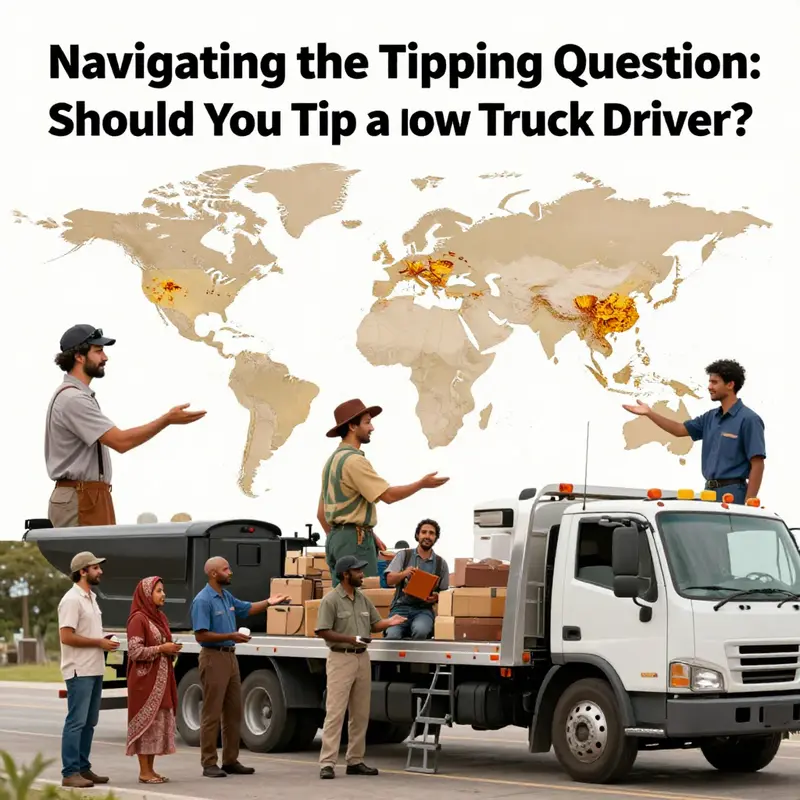
When your car stalls on a shoulder or you find yourself stranded after a collision, the arrival of a tow truck can feel like a small crew of calm in a chaotic moment. The driver shifts into a steady, practiced mode, explains what will happen, and negotiates the path forward — whether that means a long tow, a quick jump-start, or simply guiding you to a safer spot while you arrange alternatives. In those moments, you’re not just paying for a service; you’re responding to help that can prevent further risk, confusion, and stress. Yet tips, those little tokens of gratitude that many people associate with service work, sit in a curious gray zone for towing. Unlike dining rooms or ride-hailing apps, tipping a tow truck driver is not a universal expectation or mandated practice. The fee for the tow is typically set by the company and covered either by a vehicle owner’s insurance or paid directly for the service, which means the driver’s compensation is largely independent of a tip in many markets. That reality, however, does not extinguish the possibility of expressing appreciation when the service goes beyond the call of duty, or when the circumstances are particularly challenging.
Cultural norms matter here. In the United States, tipping a tow truck driver is optional and situational. If a driver responds quickly during an emergency, deftly handles a difficult recovery, or offers clear guidance about what comes next, a small gratuity can feel like a natural acknowledgment of a job well done. A tip in the range of a few dollars to a modest sum can be meaningful, but it remains entirely discretionary. In many other countries, roadside assistance fees are structured so that labor and service costs are bundled, and tipping may not be a standard or expected gesture. In those contexts, adding a tip could be seen as unnecessary or even out of place. The broader takeaway is simple: tipping is not a rule to follow, but a personal choice that should align with local customs and the actual quality of service you received.
Understanding who is delivering the service adds another layer. Tow truck drivers are typically employed by companies rather than working as independent contractors the way some ride-share drivers do. This employment structure influences how fees are calculated and how tips fit into a driver’s income. When a company sets a rate for a tow, that rate is intended to cover the work performed, the vehicle’s equipment, safety considerations, and the driver’s time. A tip can then be a voluntary expression of gratitude for exemplary behavior, such as staying with you through a stressful moment, offering clear explanations of options, or taking extra steps to secure your vehicle and ensure your safety. If the service prospects feel routine and the price reflects standard work, there is less incentive to tip, and that is normal.
To translate these ideas into practical guidance, imagine a few real-world scenarios. You’re stranded after a break-down at night on a busy interstate. The driver arrives promptly, assesses the situation with calm professionalism, and safely loads your car onto the flatbed without incident. In this moment, the service feels reliable, the driver treats you with respect, and the path forward is explained with patience. A small tip might feel like a natural punctuation mark at the end of a reassuring exchange. On the other hand, you’re in a rural area with limited access to facilities, and the driver navigates a tricky recovery with good humor, keeping you updated at every stage. Here, a token of appreciation could not only reflect gratitude but also reinforce the value of service that goes beyond the basic job. Yet if the tow was straightforward, the price was straightforward, and the driver offered only the expected level of service, a tip would not be expected and would rightly be considered optional.
The chapter’s theme also invites a broader view: the etiquette of tipping is context-dependent and deeply tied to local expectations. In this sense, a traveler or resident should consider consulting regional resources or travel guides that outline tipping norms for roadside assistance. For readers connected to local markets, a quick glance at a nearby towing provider’s policies or a conversation with the dispatcher can provide clarity. If you want to explore a local context, you can consult the Washington DC towing service page to understand how regional practices shape expectations in the capital area. This kind of practical awareness helps ensure that your gesture, if you choose to make one, aligns with both the culture and the moment. Washington DC towing service page
Beyond the question of whether to tip lies the broader value of how we express appreciation in times of stress. A tip is one option, but not the only one. A calm, kind word, a note of thanks, or a public review that highlights the driver’s professionalism can offer lasting recognition that supports good service practices. In some cases, drivers may also appreciate practical tokens of thanks that don’t feel transactional, such as offering to share your experience with others or providing a recommendation to a nearby service that helped you through a difficult moment. When you’re weighing whether to tip, consider what you would value most if you were in the driver’s seat. Would a small cash gesture reflect your gratitude, or would a sincere compliment, a quick thank-you text, or a positive review best honor the effort and risk involved in helping you regain mobility? The answer will depend on the specific circumstances and local customs, but choosing thoughtfully is the core of respectful behavior.
Local norms can shift with the landscape of regulation, insurance practices, and organizational policies. As you navigate these variables, keep in mind that the primary role of the tow truck driver is to provide a needed service efficiently and safely. Their compensation is designed to reflect the work performed, the time spent, and the safety-critical nature of their tasks. A tip, when given, should feel like a personal acknowledgment rather than a contractual obligation. If you’re unsure, you can always err on the side of courtesy: a brief expression of thanks, a clear acknowledgment of the driver’s skill, and a willingness to recommend the service to others can be just as impactful as any denomination of cash.
For readers who want to see how local service pages approach the topic, the Washington DC towing service page offers a contextual example of regional practice and expectations. It’s a reminder that tipping etiquette cannot be captured by a single rule; it evolves with place, situation, and the quality of the service received. And while it’s helpful to know that tipping is not required, it’s equally valuable to recognize when a little extra is warranted by outstanding conduct under pressure. In the end, tipping remains a personal choice grounded in gratitude, practicality, and respect for the professionals who keep people safe and mobile when the road stops working the way it should. In a world where every mile can bring uncertainty, a thoughtful gesture can be a small but meaningful way to acknowledge the human effort behind a reliable, life-preserving service.
External resource for further cultural context: U.S. Department of State Travel Advisories.
Final thoughts
In conclusion, the topic of whether to tip a tow truck driver encompasses various factors including industry standards, exceptional service, and cultural differences. While generally not required, tipping can be a meaningful way to express gratitude for outstanding assistance during stressful situations, particularly for business owners and their fleet needs. Understanding the specific context and the nature of the service received can guide decisions about gratuities, ensuring that recognition for effort is given where it’s due. Ultimately, being informed about these dynamics will allow business owners to foster positive relationships with service providers.