
The towing industry plays a vital role in road safety and assistance, making tow truck drivers integral to our daily lives. Their earnings can vary widely based on factors such as location, experience, and the specific towing services they provide. This article delves into the earnings landscape of tow truck drivers, starting with the detailed salary overview in the United States, followed by an analysis of regional salary variations in Canada. By examining these factors, business owners can better understand the compensation expectations for this crucial workforce, ultimately aiding in recruitment and operational strategies.
Wage Lanes and Roadmaps: A Deep Dive into Tow Truck Driver Earnings Across the United States
When people ask how much a tow truck driver earns, the answer is rarely a single number. The pay is a spectrum shaped by where you work, how long you’ve been on the road, and who writes the checks for the shift you’re on. In the United States, the latest data point to an average hourly wage around the low $20s, but the real story sits a little deeper than a single figure. Indeed’s extensive salary reports—from thousands of postings over roughly three years—place the national average at about $21.23 per hour for tow truck drivers. That figure captures a broad landscape where some weeks feel steady and predictable, while others demand late nights, emergency calls, and plenty of restoring order on busy highways. Yet, a different data source has suggested a notably lower benchmark—roughly $15.51 per hour in some contexts—illustrating how the same occupation can look very different depending on the data set, the region, and the specific employer. This divergence isn’t a contradiction so much as a reminder that “average pay” hides the real variation on the ground. The takeaway is clear: local market dynamics, rather than a single nationwide rate, will largely dictate what a tow truck driver can expect to earn in practice.
Beyond the hourly rate, the potential to reach higher annual earnings exists, especially for those who specialize and operate in heavier sectors. For drivers who work with heavy-duty or semi-truck towing, annual compensation can climb toward the six-figure range in some markets, with figures around $80,000 not being out of the question for seasoned, specialized operators. This higher ceiling isn’t guaranteed, and it is driven by the same forces that shape the base wage: the demand for rapid roadside assistance, the complexity and risk of the job, and the amount of time the driver spends on the road in a given year. The same national snapshot that shows broad room for growth also opens the door to a truth worth repeating: earnings are highly contingent on context.
To understand why the outlook feels so variable, it helps to map out the main levers that push pay up or compress it. Location is the most visible factor. In major metropolitan corridors and transport hubs, demand for quick, reliable towing and recovery work is relentless. There, fleets and independent operators alike compete to answer calls at any hour, and the premium for on-demand, after-hours service tends to show up as higher wages or robust on-call compensation. In contrast, rural or economically constrained regions may present fewer high-volume days, which can depress average hourly rates or limit opportunities for overtime. Even within the same state, a driver in a dense coastal city can encounter a markedly different pay landscape from a colleague in a midwestern town. The data reflect this reality: regional variations can dwarf national averages, and a close look at a driver’s location often explains the most significant portion of the difference.
Another critical factor is the nature of the employer and the job itself. Some tow operators are employees, paid hourly or with a salary and a clear benefits package. Others work as independent contractors, billing clients per tow or earning a commission on the jobs they complete. The compensation mix in these scenarios can swing widely. A driver on a straightforward wheel lift call with a standard, light-duty vehicle might earn an hourly wage plus overtime. A driver who handles flatbed operations, heavy-duty recoveries, or hazardous stops could see a higher pay rate, partly offset by the greater risk, longer hours, and more demanding training and licensing requirements. The risk-reward balance matters here: higher complexity and risk often come with stronger incentives, but they also demand greater skill, better equipment, and more rigorous safety practices.
Shift differentials also shape the numbers. The tow business runs around the clock, and night shifts, weekends, and holiday coverage often carry a premium. Overtime rules, local labor laws, and the specifics of the employer’s on-call policy can turn a modest base into a substantially more attractive annual figure for a driver who consistently works off-peak hours. In many markets, a reliable on-call driver who can respond to multiple incidents after dark or on weekends may see a meaningful lift in earnings, even if the base hourly rate remains similar to daytime levels. The calculus isn’t static; it shifts with the level of service demanded, the availability of more operators to share the load, and the market’s appetite for rapid response.
The operational scope of a role also nudges earnings higher. A driver who specializes in flatbed towing, winching, or handling oversized vehicles often commands additional pay for the specialized skill set involved. Heavy-duty towing, which encompasses tractors, semi-trailers, and other large equipment, frequently requires additional licensing, more extensive training, and a higher degree of judgment at the scene. These factors—skill, liability, and efficiency—converge to lift the compensation ceiling. On the flip side, more routine, light-duty towing or simple roadside assists may anchor pay closer to the lower end of the spectrum. This variation is not a flaw in the data but a natural outcome of a field that blends emergency response with mechanical skill, customer service, and logistics.
The broader health of the trucking and transportation sector subtly influences tow driver earnings as well. The health of related markets, such as tank trucking, offers a macro lens into the demand for professional drivers and recoveries. In 2025, the tank trucking market reached an estimated USD 53.45 billion, with projections suggesting continued growth to around USD 66.23 billion by 2031 and a compound annual growth rate around 3.64%. While these figures pertain to a different slice of the industry, they underscore a more general truth: when the trucking economy expands—more freight, more incidents on the road, more demand for rapid assistance—the opportunities for tow operators routinely expand as well. That expansion can translate into better call pooling, more steady work, and room for negotiable terms with employers who value quick, reliable service. For the individual driver, this broader context matters because it helps explain why pay in some markets seems to lift faster than in others as demand tightens.
What this means for someone weighing a career in tow trucking is clear: the first step is to look beyond a single salary figure and examine the local economics, the employer mix, and the nature of the work you’re willing to take on. In places with dense fleets and high call volumes, the base hourly rate may sit a bit higher, and the potential for overtime or on-call premiums increases. In areas with fewer opportunities or lower demand, earnings may hinge more on how well you manage shifts, cultivate repeat business, and optimize your routing efficiency. The interplay of these factors—location, employer type, shift structure, and specialization—creates the actual pay tapestry drivers experience across the country.
For those entering the field or considering a transition within it, several practical patterns emerge from the data. First, if the goal is to maximize earnings, aiming for heavy-duty or specialty towing can offer a higher ceiling, provided the driver is willing to invest in the additional training and licensing that such work requires. Second, building a track record of dependable on-call availability, safe driving, and efficient scene management can unlock overtime opportunities and premium pay, especially in markets where customers expect round-the-clock response. Third, longevity matters. Experience not only improves technical proficiency but also enhances a driver’s bargaining position with employers, allowing for better wage progression, more favorable shift assignments, and potential inclusion in incentive programs. Finally, the broader market environment—where the trucking economy is healthy and freight volumes remain robust—tends to correlate with stronger pay trajectories for tow drivers, as fleets compete to recruit and retain skilled responders who can meet high service standards.
From a reader’s perspective, the path to a well-compensated tow truck career is not a matter of chasing a single high number. It is about navigating a landscape that rewards reliability, adaptability, and specialized capability. It means choosing a location with solid demand and exploring opportunities that align with one’s skills and risk tolerance. It also means recognizing that pay data are snapshots, not prophecies; they illuminate trends but rarely dictate a precise, universal outcome for every individual. As you weigh offers, compare base pay, on-call stipends, overtime probability, and the training or certification requirements tied to the role. In other words, the earnings story for tow truck drivers is less about a flat wage and more about a dynamic balance of skill, timing, and market conditions.
Locally, the heartbeat of the industry can be felt most clearly in the cities where emergency and support calls collide with a dense web of commercial activity. For a sense of how this plays out in a specific market, readers may explore resources on the Washington, DC area’s tow truck services. The segment of the market serving the capital region offers a useful case study in rapid-response expectations and the premium places where drivers can find consistent demand. tow-truck-washington-dc provides a window into how local operators frame service standards, scheduling, and the kinds of shifts that keep a round-the-clock operation afloat. This internal reference is not a standalone endorsement but a practical reminder that location matters as much as any other variable in calculating earnings.
If you want a broader data anchor beyond regional snapshots, current salary data from reputable sources remains essential. Indeed’s compilation of 4,100 salary reports over the past 36 months offers a robust portrait of the U.S. market, while other datasets remind us that figures can diverge depending on data collection methods and regional coverage. The bottom line is to treat the numbers as directional guidance rather than fixed rules. They signal where pay tends to be higher, where the opportunities for overtime or specialty work are most likely, and how much variation is typical from one employer to another. When planning a career—or evaluating a current job offer—these numbers become a map to navigate the road ahead rather than a single destination to reach.
As with any profession that sits at the intersection of service, technical skill, and on-call availability, the earning potential for tow truck drivers is measured not just in dollars per hour but in the reliability and value a driver brings to every call. A driver who can consistently deliver quick, safe, professional service on a complex scene contributes to a fleet’s reputation and the likelihood of ongoing opportunities, which in turn supports more predictable compensation. In short, pay is a function of what you can do, how consistently you can do it, and how well you fit into the network of clients, teams, and dispatchers that keep roads moving through day and night. This is the core truth behind the numbers—the chapter in which a tow truck driver’s earnings are as much about the quality of the response as the quantity of hours logged on the road.
External data reference: For the most current figures and detailed breakdowns, see the salary insights from Indeed at https://www.indeed.com/career/tow-truck-driver/salaries.
Pay Maps Across Canada: How Regional Demand Shapes Tow Truck Driver Earnings
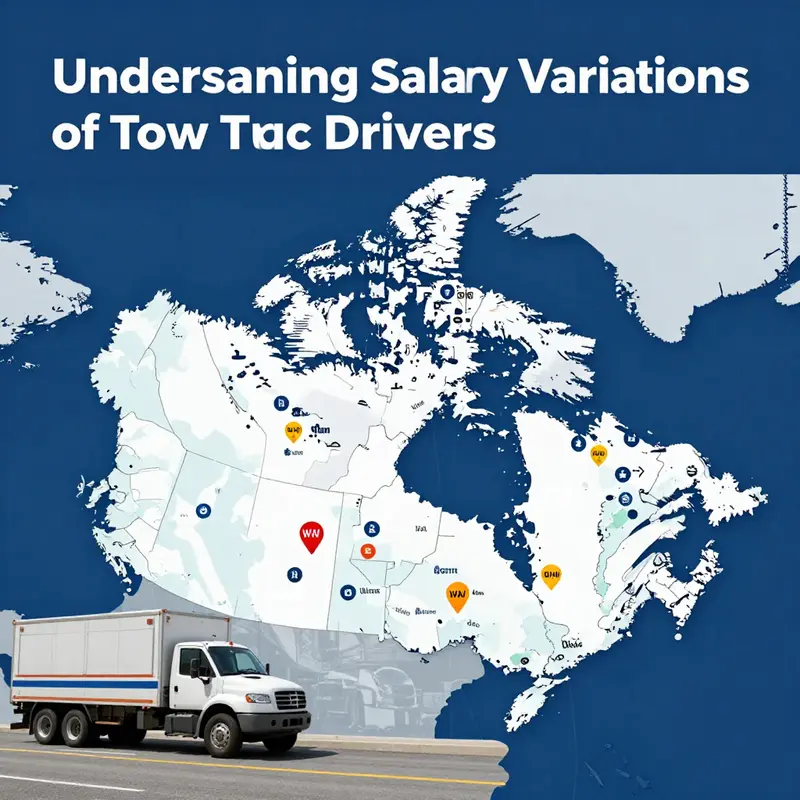
Tow truck driving in Canada presents a map of wages as wide as the country itself. The national snapshot shows an average hourly wage around $17.75 (based on 469 salary reports updated December 11, 2025). This figure provides a rough baseline, but it masks sharp gradients from one province to the next and from urban hubs to smaller towns. When you look beyond the headline number, earnings become a function of location, demand, and the specific work a driver accepts. The picture grows more nuanced when you add the realities of overtime, on-call shifts, and the type of towing—whether it’s standard wheel-lift work, flatbed operation, or heavy-duty recovery. In Canada, as in many sectors, location matters as much as skill, and a driver’s income is often a story of where the work is concentrated and how the local market values it. The data paints a landscape where some regions push pay toward the higher end while others remain closer to the national average, a distribution driven by industry concentration, population density, and the regional mix of industries that rely on tow services. For anyone weighing a career in towing, those regional details help translate a rough hourly quote into a practical, year-to-year earnings expectation.
In Alberta, the pay story tilts toward the higher end of the spectrum. Western Canada has long shown stronger demand for towing services in certain city corridors and rural areas tied to energy-related activity, industry fleets, and longer response zones. A typical starting annual figure in Grande Prairie, for example, sits around $48,000, which equates to roughly $23.08 per hour. That rate sits well above the national average and reflects both the cost of living in some Western markets and the premium placed on rapid on-call response in more remote or resource-rich regions. In Chestermere, just outside Calgary, a pay rate around $36.10 per hour underscores another facet of Alberta’s market: competitive compensation in communities that function as service bases for heavy-duty and commercial towing. These numbers aren’t isolated curiosities; they illustrate how a driver in Alberta can establish a reliable baseline that, with overtime and shifts, translates into a substantially higher annual take than the nation’s median. A driver’s progression here often follows a path from general road-service towing to more specialized, heavy-duty work, a move that typically accompanies access to higher hourly rates and the possibility of longer, more lucrative assignments.
Ontario showcases a different rhythm. The provincial market combines dense urban demand with a broader base of fleet operators and larger service operations, which tend to offer higher compensation than smaller markets. Throughout Ontario, salaries commonly land in a broad range, with Whitby offering a noteworthy example: a reported annual range of $50,000 to $80,000 for tow truck drivers and flatbed operators. When translated into hourly terms, that range is roughly $24 to $38 per hour, a spread driven by factors like experience, the specific wheelbase of equipment, and whether the role includes flatbed duties or heavy-duty recovery. In a city like Guelph, the market shows similarly elevated pay for experienced or specialized drivers, with rates around $36 per hour. Ontario’s higher pay levels echo the province’s combination of dense population centers, strong commercial activity, and a labor market that rewards reliability, safety, and the ability to handle a variety of towing scenarios—from urban breakdowns to highway incidents. For a driver contemplating career growth, Ontario’s environment often rewards skill diversification and certifications that enable flatbed or heavy-duty work, expanding the range of assignments and the potential for premium pay.
Across the maritime provinces and the Atlantic-influenced regions, the pay picture shifts again, reflecting different economic scales and demand dynamics. In New Brunswick, the contrast is clear. Dieppe and surrounding towns report hourly ranges from $18 to $25. While this still denotes a respectable wage by many standards, the top end doesn’t reach the ceiling seen in Alberta or Ontario. On a broader note, a company-wide average in New Brunswick—represented by an annual figure around $42,128 (roughly $20.25 per hour)—appears as about 32% below the national average in certain datasets. The disparity highlights how smaller markets and regions with slower population growth or fewer heavy-industrial activity can offer more modest pay scales. Yet even within New Brunswick, pockets exist where demand and logistics needs push compensation higher, especially for drivers who can handle more complex technical tasks or distant on-call routes. The wide variance within a single province underscores a larger truth: earnings in towing hinge on the weight of local demand and the ability to align with the right fleet or independent operation.
This regional mosaic has practical implications for a driver’s annual earnings and career trajectory. The national average is a useful baseline, but the numbers behind it reflect a patchwork of local economies, cost of living, and the presence or absence of high-demand fleets. Alberta’s higher pay in Grande Prairie and Chestermere points to a market that prizes quick, reliable emergency response and the capacity to service heavy-duty and commercial customers. Ontario’s broader, denser market supports a wider range of salaries, with the middle of the curve nudging upward and several pathways to the top end—especially for those who can perform flatbed operations or handle complex recoveries in urban and highway settings. New Brunswick and similar regions show that strong, steady work is possible even where pay skews toward the lower end, but growing earnings typically require expanding duties, geographic reach, or specialization that commands premium rates. For drivers weighing location choices, the decision isn’t simply “how much per hour?” but “how often will I be on the road, and how quickly can I qualify for higher-skilled work that carries premium pay?” The answer is rarely uniform from one city to the next; it evolves with professional development, fleet partnerships, and the ability to navigate varying on-call demands.
Ongoing shifts in these patterns also reflect the broader labor-market dynamics at play in Canada. Overtime and on-call bonuses often elevate pay beyond base hourly rates, particularly in provinces with heavy traffic incidents, winter storms, or remote response zones requiring rapid mobilization. A driver who pairs solid on-road performance with strong safety records, reliable vehicle handling, and knowledge of weight limits and regulatory requirements tends to land more consistent overtime opportunities. The technical divide between standard towing and flatbed or heavy-duty work further modulates earnings. Flatbeds and heavy-duty operations typically command higher rates because they demand specialized equipment handling, careful chain-down procedures, and sometimes longer drives to reach off-urban sites. In Ontario, where high-traffic corridors and industrial hubs intersect, drivers with the right certifications can push into the upper ranges, and the same dynamic plays out in Alberta’s resource-rich corridors. In contrast, smaller towns and lower-density regions may offer steadier, predictable work but with a flatter pay curve absent additional specializations.
For someone evaluating career prospects, the takeaway is clear: region sets the ceiling and the baseline, but individual choices can elevate the final number. A driver’s first step toward higher earnings often involves expanding the scope of work and the geographic reach of the job. This can include pursuing specialized licenses or endorsements that unlock flatbed or heavy-duty towing, broadening the set of clients a driver can serve, and building reliability with local fleets that value prompt, safe service. Experience also matters; as time on the road increases, so can the willingness of employers to assign more complex incidents or longer-distance calls. The incremental gains from experience compound alongside the regional pay structure, creating a path from entry-level earnings toward mid- or high-range incomes in markets where demand is strong and competition for skilled drivers remains robust. For those who approach towing as a long-term profession rather than a temporary gig, the combination of regional dynamics and individual specialization creates the best opportunity to optimize earnings.
As a practical reference point for readers who want to connect the numbers to real-world options, consider a nearby shop that illustrates the standard pay approach in smaller markets. In regions outside the largest metros but within reach of trunk routes and service corridors, a local employer often anchors the upper end of the regional range by offering competitive base pay plus overtime and occasional bonuses tied to emergency response performance. The right combination of on-call readiness, quick dispatch, and careful handling of equipment translates into a stable annual income that can meet household budgeting needs, even when the hourly figure sits near the national average. The broader lesson is that a tow truck driver’s earnings in Canada depend as much on where you work as on what you can do behind the wheel. The job’s value is shaped by the density of demand for roadside assistance, the presence of fleets that rely on rapid-response protocols, and the readiness of a driver to take on specialized tasks that command premium rates. In the end, the numbers are a guide rather than a guarantee, a snapshot of a market that rewards reliability, flexibility, and the willingness to grow skills over time. For readers who want to explore roles that align with these regional dynamics, you can look at nearby fleets and see how pay is structured in your area; for example, a local shop such as Burke Towing Service provides a glimpse into how pay scales can align with service intensity and geographic demand.
If you are charting a career path, the numbers also emphasize the importance of research and conversation with prospective employers. Look for jobs that promise a clear pathway to heavier work, certification options that broaden the types of tow services you can perform, and opportunities to work with fleets that handle multi-vehicle or heavy-haul recoveries. The Canadian pay landscape rewards those who combine practical experience with a willingness to adapt to the needs of both urban centers and remote communities. By anchoring expectations to the regional context, drivers can better plan for the costs of living, the hours worked, and the likelihood of overtime. This calibrated view helps translate the abstract national average into a concrete, day-to-day sense of what a tow truck driver can earn in a given part of the country, while still recognizing that personal value, safety records, and professional development play an essential role in determining the ultimate take-home.
For readers seeking broader context beyond Canada, the comparative picture across the globe suggests similar patterns: markets with dense logistics networks tend to reward specialized skill more readily, while more dispersed regions emphasize steady demand and reliability. The data from Canada, while country-specific, echoes a fundamentals-driven truth in many markets: earnings are a function of demand, capability, and the willingness to grow into higher-skill tasks. As you plan where to work, weigh not just the hourly rate but also the opportunities for overtime, specialized training, and the potential for advancement within the local fleet ecosystem. The result is a more informed expectation of annual earnings and a clearer sense of how to navigate toward the upper end of the pay spectrum in your chosen region.
Internal resource for contextual exploration: Burke Towing Service. Exploring such profiles can illuminate how market realities translate into pay structures in smaller markets and how a driver can position themselves for higher earnings over time. This kind of practical lens complements the regional data, helping readers connect compensation figures to real-world work patterns and employer expectations.
External resource: Indeed Job Listings for Canada tow truck driver salaries provide a current, external benchmark that complements the regional breakdown above. See https://www.indeed.ca/jobs?q=tow+truck+driver&l=Canada for recent postings and salary ranges that reflect ongoing market activity across the country.
Final thoughts
In summary, understanding how much tow truck drivers earn is essential for business owners in the towing industry. The national averages provide a baseline, but regional disparities highlight the importance of location in determining salary expectations. By recognizing these variances and tailoring compensation strategies accordingly, businesses can attract skilled professionals to ensure better service delivery. As the demand for towing services continues to grow, competitive wages will remain a key focus for successful operations.