
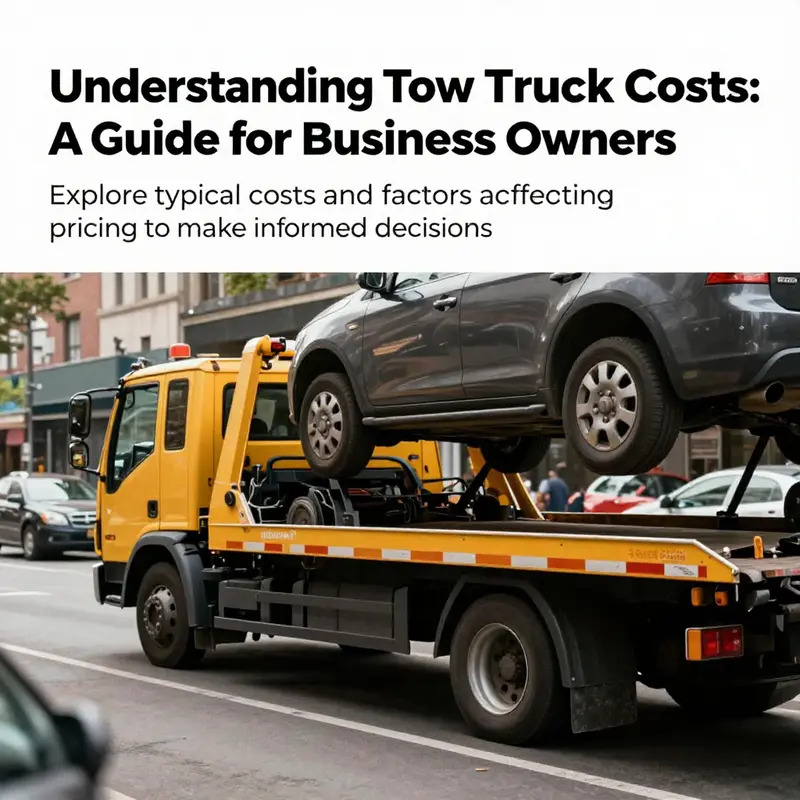
For business owners in the towing industry, understanding the financial commitments associated with purchasing and maintaining tow trucks is essential. These vehicles are not just tools; they are investments that can significantly impact your operations, profitability, and overall service quality. This guide delves into the typical costs associated with owning a tow truck, including various price ranges for different models. Additionally, we will explore the factors that influence these prices, helping you make informed choices when considering the acquisition of tow trucks for your fleet.
The True Price of the Road: Tow Truck Ownership Costs
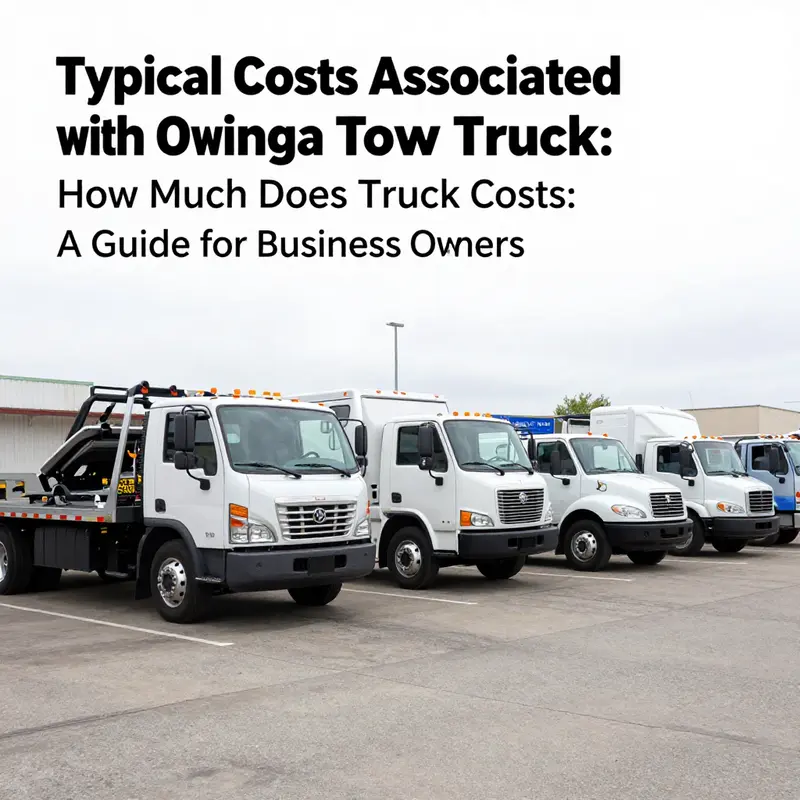
Owning a tow truck is more than the purchase price. It’s a continuous financial cycle that includes an upfront investment, ongoing operating costs, and periodic upgrades. Costs vary by truck type, usage, and location. By outlining lifecycle costs from purchase to maintenance you can plan responsibly.
Choosing the right type matters. A basic flatbed is cheaper upfront but may have higher long-term maintenance or limits on jobs. Rotator/heavy-duty units have higher acquisition costs but enable more complex recoveries and can increase revenue, but require more space, specialized technicians, and more downtime.
Beyond the chassis, essential equipment like winches, wheel-lifts, straps, lighting, radios add to upfront costs but are necessary for safe operations.
Ongoing costs include maintenance, maintenance scheduling, fuel, insurance (liability and physical damage), licensing and permits, and potential repairs. Larger units may have higher maintenance cycles and parts costs.
Financing and depreciation influence cash flow. Most buyers finance; depreciation offers tax advantages but reduces resale value.
Strategic considerations influence the cost picture: rotators require more space and certification; flatbeds offer flexibility in many markets.
A practical budgeting approach: price the base vehicle for your anticipated workload, add a buffer for equipment and safety gear, forecast maintenance, fuel, insurance, licensing, and repairs, and build a reserve for upgrades or expansion. Consider scenario planning for higher demand areas versus sparse markets.
In short, the sticker price is only the first chapter; the true cost of ownership unfolds through maintenance, downtime, insurance, and strategic investments that sustain service quality and profitability.
Tow Truck Prices Unpacked: Navigating Type, Size, and Features to Understand the Real Cost
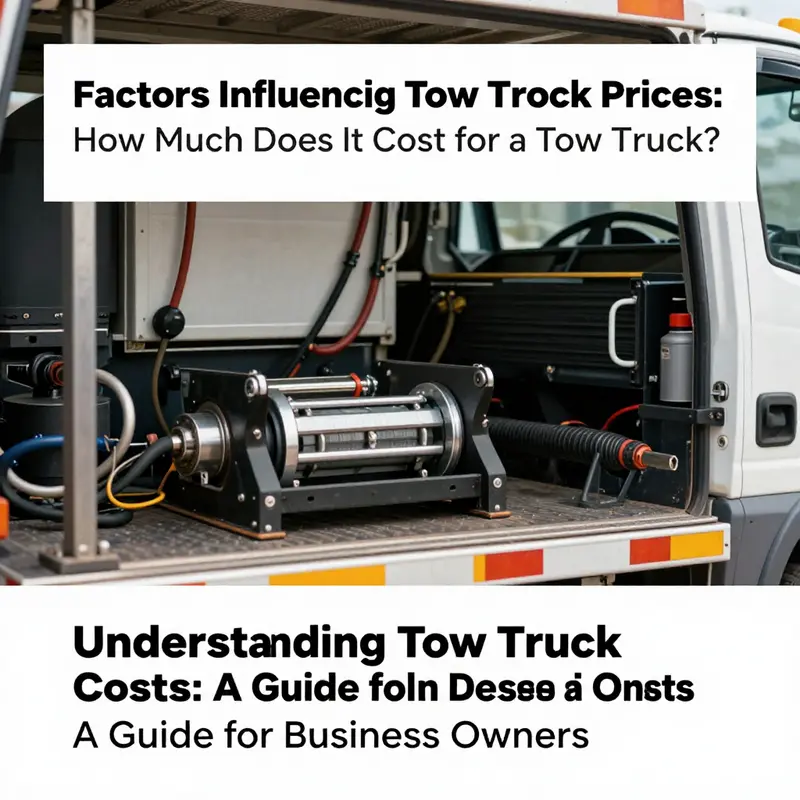
Calculating the cost of a tow truck is less a single calculation and more a mental map of needs, power, and provenance. The price you pay reflects how the vehicle is built to work, not just how it looks in the showroom. At one end of the spectrum lies the rotator—the most advanced and capable recovery tool a tow fleet can own. Rotators are designed to lift and maneuver vehicles from nearly any angle, including overturned or severely damaged units. Their sophistication and lifting capacity place them well above other configurations, with price ranges that commonly start in the low hundreds of thousands and can climb into the hundreds of thousands plus, depending on crane reach, hydraulic power, and added safety systems. They are the type most often associated with critical roadside rescue, disaster response, and large-scale fleet recovery. Nearby in the price continuum are flatbed tow trucks. Flatbeds are prized for their versatility and the gentle handling they offer to vehicles, especially those with all-wheel-drive systems, low ground clearance, or high-value interiors. A basic, smaller flatbed can be priced in the range of a few tens of thousands, with entry models appearing around the mid-teens in some markets. A fully equipped flatbed, featuring a robust hydraulic bed, precise alignment controls, and advanced electronics for winching and braking, can push well past six figures. The middle tier holds heavy-duty wreckers designed for commercial use—equipment capable of hauling semi-trailers or large trucks. In this category, price demonstrations are less transparent because configurations vary so widely, yet the benchmark sits in a range that often starts around two hundred thousand and can exceed three hundred thousand when a crane, wheel lift, or additional stabilization gear is included. On the other side of the spectrum are lighter, more compact wreckers intended for urban or local towing needs. These lighter units are generally the most affordable, with price points that can begin in the forties of thousands depending on the engine, the lifting apparatus, and the level of onboard technology. Across these classes, the line between price and capability is never simply “more power equals more money.” It is the mix of lifting capacity, chassis robustness, hydraulic architecture, and the sophistication of ancillary systems that truly drives the sticker price. The same rule applies whether you buy new or used. A new unit comes with the latest engineering, long warranties, and the assurance of factory support, but it also carries the highest upfront cost. A used tow truck can offer notable savings, especially if it has low operating hours and a documented maintenance history. Still, age, wear, and the potential need for upgrades—such as new electronics, modern lighting, or revised safety systems—can erode those savings over time. For buyers, the decision is rarely purely about the sticker price. It is about total ownership cost: maintenance, fuel efficiency, insurance premiums, and the expected return on investment based on uptime and reliability. The premium a buyer pays for a known, reputable configuration or a chassis that has a proven after-sales support network may be worth every dollar if it translates into fewer breakdowns and faster response times. In practice, regional dynamics matter as much as hardware. In markets where accident frequency, weather-related incidents, or construction activity are high, demand for capable tow units can push prices upward, especially for newer models with advanced electronics and safety packages. Conversely, regions with a healthier supply of used equipment or longer replacement cycles may offer more aggressive price points for pre-owned vehicles. Freight costs, import duties, and logistical hurdles can also affect the total expenditure. A buyer who imports a unit or purchases from overseas suppliers must consider transit times, incoterms, and the need for import clearance, all of which can add to the time and money required to bring a truck into service. Insurance costs, licensing, and regulatory compliance add further layers to the price picture. Some regions impose specific equipment requirements or modifications, which can alter the final configuration and necessitate additional investment before the truck is road-ready. The pattern here is clear: the sticker price is a snapshot of a broader cost architecture. A fully equipped, high-end flatbed with a strong crane and modern electronics will often surpass the $150,000 mark, particularly when new. Yet a bare-bones hook-and-chain model can be found in the tens of thousands, though buyers should anticipate extra expenditure on safety gear, lighting, and basic winching capabilities. Buyers should also account for ongoing costs after purchase. Routine maintenance, fluids, tire replacement, and periodic inspections add up. Security features, GPS tracking, and diagnostic systems can improve dispatch efficiency and reduce downtime, delivering a lower cost per recovery over the life of the truck. The choice between new versus used, and the selection of features, should be informed by a fleet’s expected workload, average trip distance, terrain, and the types of vehicles most commonly encountered. For a business evaluating local options and the specific regional context, it can be instructive to look at real-world examples in nearby service markets. When exploring local capabilities, you can examine how a nearby tow-truck service in Alexandria, VA handles pricing across its service range, from quick pulls to full recoveries, as a practical proxy for the regional cost envelope. tow-truck service in Alexandria, VA. Even without exact price quotes, this kind of local benchmarking helps you calibrate expectations around what a typical chassis, bed configuration, and crane setup might cost in your area, considering the same mix of new versus used stock, warranty levels, and after-sales support that define the local market. An additional reality to acknowledge is the ongoing flow of market data that freelancers, fleets, and dealerships monitor. The price of a tow truck is not static; it shifts with material costs, labor costs, and evolving technology. Industry publications and market data platforms provide real-time listings and price trends that inform both buyers and sellers about what the current market can bear. For those who want an external benchmark, market data from recognized industry sources shows how new and used units trade hands across regions and how spec-level differences translate into price deltas. In practice, the total cost to own a tow truck becomes a function of the vehicle you choose, the options you select, and the economic conditions at purchase. A fleet that expects high annual mileage and frequent critical recoveries will benefit from investing in a more robust platform with enhanced safety systems and higher uptime guarantees, even if the initial price is steeper. Conversely, a shop with modest daily towing needs and a tight budget may opt for a leaner setup, balancing a lower upfront cost against the acceleration of depreciation and limited uptime protections. The practical takeaway is that cost-awareness should shape the procurement path from the start. Buyers should methodically compare configurations, warranty terms, and service capabilities alongside price tags. They should also consider the total cost of ownership over the expected lifespan of the vehicle, including maintenance cycles, potential upgrades, and the anticipated frequency of use. Assembling a clear specification—type, lifting capacity, bed type, and safety equipment—helps prevent feature creep, where adding a late-in-life upgrade inflates the price beyond the original business case. In this sense, the price becomes a reflection of the planned role of the tow truck within a broader service ecosystem: how quickly it can respond, how safely it can recover, how long it will remain in service, and how easily it can integrate with dispatch, maintenance, and insurance programs. If you are in the planning phase, it can be useful to consult reputable market data services and compare across several configurations that match your intended workload. Real-world listings offer a practical sense of what a given combination of power, capacity, and equipment costs in today’s market, and how those costs might trend as you grow or contract your fleet. For broader market orientation and current listings, you can explore industry resources that specialize in tow-truck markets and pricing data. In the end, understanding the true cost of a tow truck means looking beyond the sticker price to the entire lifecycle, the regional context, and the daily realities of the job it is built to perform. This holistic view helps any buyer—whether a single operator expanding a small fleet or a larger company upgrading multiple units—make a choice that aligns with both budget and service goals. As markets evolve, staying attuned to price shifts, regulation changes, and technology advances will help keep the purchase aligned with long-term strategy and reliability. For ongoing market data and current listings, see professional market platforms that track tow-truck availability across regions. External resource: https://www.truckpaper.com/tow-trucks
Final thoughts
Understanding the costs associated with tow trucks is vital for making strategic business decisions. From the initial purchase price to ongoing maintenance and potential upgrades, every dollar impacts your bottom line. By recognizing the different types of tow trucks and the key factors that influence their prices, you can better assess which vehicles best fit your operational needs and budget. Ensuring that you invest wisely in your towing fleet can enhance your service efficiency and ultimately lead to greater customer satisfaction and loyalty.