
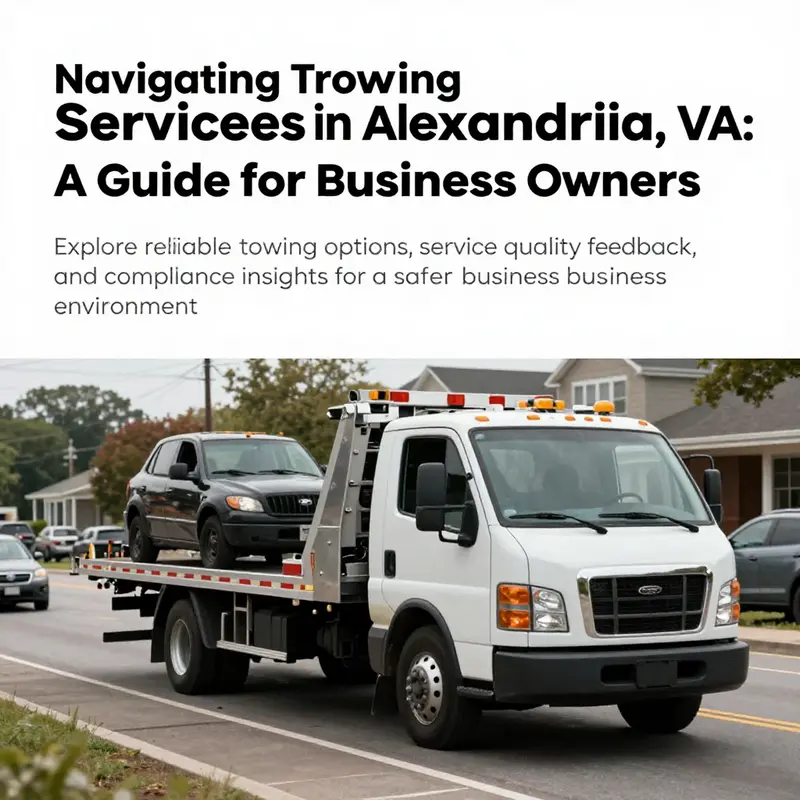
When managing a business in Alexandria, VA, knowing reliable towing companies is essential for ensuring operational efficiency and safety. This guide delves into the leading towing services in the area, providing a comprehensive overview of their operations and customer feedback. Additionally, it highlights the importance of understanding regulatory compliance as a business owner, ensuring that the chosen service providers meet necessary legal standards. By reviewing key players, evaluating service quality, and understanding licensing issues, business owners can make informed decisions when selecting towing services in Alexandria.
null
null
Quality Under Pressure: Reading Customer Voices and Choosing Towing Services in Alexandria, VA
Across the tight streets and busy corridors of Alexandria, VA, a dependable towing partner can be the difference between a minor delay and a major disruption to daily life. The local market blends long standing family operators with newer outfits that promise rapid response and clear pricing. What binds these choices together is not a slick advertisement but the actual experiences of customers who have faced emergencies, road hazards, or the simple soreness of a stalled vehicle. In Alexandria, as in many urban pockets, the clearest lens on service quality comes from the feedback that appears on review platforms, where drivers and car owners recount punctual arrivals, respectful handling of their vehicles, and transparent pricing in moments of stress. Those narratives help residents navigate a crowded field and set expectations about what a trustworthy tow will deliver when timing is critical and the vehicle cannot accompany you to its destination under its own power. The stories gathered from Yelp and similar sources sketch a pattern. They highlight firms that stand out not just for speed but for steady communication, a calm professional demeanor, and a careful approach to vehicle placement and damage prevention during loading and unloading. In one striking instance, Manu Towing emerges as a beacon in the local scene for a combination of warmth in customer service and a disciplined operational rhythm. A review dated July 30, 2025, written by Angel R, praised the company for showing up on time and completing the job quickly. The reviewer emphasized that the reliability reflected a deeper culture of responsiveness and accountability. Such remarks matter because they translate into real world outcomes: a driver who knows what to expect, a dispatcher who can provide a realistic ETA, and a tow operator who treats the customer’s car as something precious rather than a simple payload. It is not coincidence that this kind of feedback recurs in the best rated conversations about towing in Alexandria. When a motorist witnesses a swift, organized process, the impression extends beyond the moment of tow. It informs trust and invites the reader to view the provider as a partner rather than a problem solver who appears only when trouble arises. The practical implications of these customer signals ripple through the market in concrete ways. The most consistently praised providers often balance speed with courtesy, offering 24 hour availability, straightforward pricing, and the ability to handle both ordinary roadside needs and more complex emergency scenarios. In discussions surrounding the top choices, several names repeatedly surface as benchmarks of quality. Tow Me Now, Onyx Auto Towing, At Time Towing, Get Em Gone Towing, and Howard & Sons Roadside Assistance appear on Yelp’s list of top towing companies near Alexandria, recognized for professionalism, reliability, and the capacity to manage urgent situations with calm competence. The recurring themes across reviews point to a simple truth: customers value a service that communicates clearly about timing and cost, respects the vehicle during towing, and follows through on commitments with consistency. This triad – punctuality, transparent pricing, and careful vehicle handling – serves as a practical framework for evaluating providers when a roadside crisis occurs. For residents who are selecting a towing partner, the takeaway is not to chase the flashiest marketing but to seek a track record that aligns with those core qualities. It is reasonable to prioritize firms with verifiable positive reviews that emphasize timely arrival, upfront quotes, and careful handling of the car, boat, or motorcycle being towed. In parallel, a prudent approach includes checking licensing and insurance coverage and confirming that the company’s status with the state is active rather than flagged for debt or regulatory issues. The Alexandria market has shown that a service with a documented active status is less likely to encounter mid service interruptions or disputes over charges. When the choice involves a vehicle in a vulnerable position, the risk of a misunderstanding about scope of work or price can escalate quickly. A straightforward, pre service estimate helps prevent sticker shock and aligns expectations on what the tow will entail, whether it is a basic roadside pull to a nearby shop or a longer haul across the district. The best practices that emerge from customer feedback encourage a two step approach: first, a rapid but thorough confirmation of the ETA and pricing, and second, a careful, technique oriented handling of the vehicle. Drivers repeatedly mention the importance of operators who arrive with the right equipment, who place padding to protect trim and sensors, and who secure the load with appropriate restraints. These are not abstract concerns; they translate into fewer dents, fewer insurance hassles, and a smoother handoff at the destination. For someone new to Alexandria, a simple starting point is to explore a service that combines local familiarity with robust operational standards. If your situation demands a rapidly mobilized response and you want a straightforward, transparent engagement, consider consulting the local options with a proven track record. For a direct look at local options, see the towing service Alexandria, VA page. This link directs readers to a resource focused specifically on Alexandria, reinforcing the value of choosing a partner who understands the city’s streets, traffic patterns, and typical demand cycles. While the landscape features several well regarded outfits, the connective thread among the top performers is not simply speed but a consistent ability to communicate, match the promise with delivery, and treat every vehicle with the respect it deserves. The narrative from Yelp and from individual drivers alike emphasizes that the most satisfying experiences occur when a company blends warmth with competence. Manu Towing’s highlighted example underscores what good service looks like from the customer’s vantage point: punctuality that reduces waiting anxiety, efficient execution that minimizes time in limbo, and a courteous, confident team that remains in regular contact from dispatch to drop off. Across the board, these are the behaviors that convert a one time encounter into a trusted, repeat relationship. For the consumer grappling with a roadside emergency in Alexandria, the takeaways are clear. Prioritize providers with verifiable positive reviews that stress punctuality, transparent pricing, and respectful vehicle handling. Verify licensing and insurance, and request an upfront estimate before service begins. And, where possible, allow the customer feedback to guide your choice rather than rely solely on location or brand recognition. Real world experience favors firms that can demonstrate a consistent pattern of reliable performance, rather than those that rely on sporadic moments of excellence. In this sense, the chalk lines of the city’s tow operators draw a practical map for reliability: arrive prepared, communicate openly, protect the vehicle, and complete the task with competence. External feedback from platforms like Yelp provides a window into how these promises play out in practice, and it helps residents and visitors alike navigate a service landscape that can otherwise feel opaque in the stress of an emergency. To broaden understanding beyond your personal experience, consider consulting external reviews that compile local voices and present a broader spectrum of outcomes. For a comprehensive look into customer perspectives and the reputation of top local providers, see Yelp’s Top 10 Best Towing Companies in Alexandria, VA. [External resource] https://www.yelp.com/biz/top-10-best-towing-company-in-alexandria-va
The Regulatory Street Map: Compliance and Licensing for Towing in Alexandria, VA
In Alexandria, Virginia, the work of moving a vehicle off a busy roadway sits at the intersection of urgent roadside assistance and careful regulatory oversight. Public safety, fair dealing, and orderly traffic flow all hinge on a framework that governs which firms can operate, how they conduct themselves, and what protections a motorist can expect when a tow is needed in a moment of stress. The city codes, backed by state authority, shape every step of the process, from the moment a tow truck rolls out to the moment a customer receives an itemized invoice. The core of this framework rests on clear definitions of licensing, proper equipment, predictable charges, and accountable practices, ensuring that the service not only helps stranded drivers but also keeps the streets safe and the public trust intact. The regulatory environment is not a wall to navigate but a map that guides operators toward consistent service and customers toward peace of mind.\n\nAt the heart of the oversight structure are the local and state bodies charged with enforcing standards and resolving disputes. In Alexandria, the Department of Transportation collaborates with the police department and law enforcement partners to manage traffic incidents, regulate parking-related tows, and ensure that towing operators are registered with the appropriate authorities. This collaboration helps ensure that impoundment procedures are followed, that vehicles are stored under proper conditions, and that removal occurs in a manner that minimizes disruption to the surrounding community. On the state level, the Virginia Department of Motor Vehicles provides a complementary layer of regulation, particularly around licensing requirements, motor carrier compliance, and vehicle-related safety standards. Together, these bodies create a layered system that reduces ambiguity and increases accountability for every tow performed within city limits.\n\nOne of the most important steps for any towing business is obtaining a valid business license from the City of Alexandria. This is not a mere formality; it requires thorough documentation, including proof of insurance, bonding, and vehicle registration. The licensing process is designed to ensure that operators have the financial and operational capacity to meet their obligations when faced with a demanding roadside scenario. The consequences of non-compliance are tangible and severe: fines, suspension of operations, or even revocation of the right to tow vehicles. For residents, this regime means there is a straightforward route to verify whether a service provider is authorized to operate, which helps distinguish legitimate professionals from those who may cut corners. The official city resources provide guidance on how to pursue or check licensing status, underscoring the city’s commitment to consumer protection and orderly transportation.\n\nOperational standards extend beyond licensing to the day-to-day realities of tow work. Vehicles used for towing must be certified and equipped with proper lighting and signage so they are visible and identifiable to other drivers, pedestrians, and law enforcement. Response time guidelines are established, particularly during emergencies, to ensure that drivers in distress receive timely assistance. When vehicles need to be impounded or stored, there are designated procedures that govern who can remove a vehicle, where it can be kept, and how the ownership and storage will be documented. The Alexandria Police Department works with towing operators to manage incidents efficiently while respecting the rights of vehicle owners. Operators are often required to be registered with law enforcement and to participate in ongoing training. This ongoing training is essential because it keeps drivers up to date on safety practices, legal requirements, and customer service standards, all of which influence outcomes for stranded motorists and the city’s traffic management.\n\nAnother pillar of the regulatory landscape concerns what customers can see and expect when a tow occurs. Virginia law mandates that tow operators display a current, visible license plate and an identifying number on each tow truck. This visibility is a critical accountability measure, making it possible for consumers to verify legitimacy and trace activities if questions or disputes arise. Equally important is the requirement that customers receive a written invoice detailing all charges. Transparent pricing guards against unfair practices and “bait and switch” tactics that can prey on stress and urgency. The combination of clear identification, transparent billing, and accessible records helps ensure that consumers understand what they are paying for and why. These protections align with broader consumer protection goals that extend beyond the city to state-level oversight, reinforcing the idea that safe road service should not come at the expense of fairness or clarity.\n\nBeyond individual charges, the regulatory framework also addresses environmental and labor compliance. Tow operators must consider the environmental impact of their work, including the proper disposal of hazardous materials such as used oil or coolant from towed vehicles. Labor laws, including overtime and wage regulations, apply to personnel employed by these firms, emphasizing safe working conditions and fair compensation. Regular audits and inspections by city or state agencies help verify ongoing compliance, reflecting a commitment to accountability that benefits workers, customers, and the broader community. In practice, this means that a reputable operator maintains accurate records, adheres to wage and hour laws, keeps vehicles well-maintained, and follows safe procedures for load securement and traffic safety. The result is a service that performs its critical function without compromising safety, fairness, or legal obligations.\n\nFor residents who want to assess a towing firm’s suitability before a crisis arises, the emphasis on licensing and compliance provides practical guidance. A straightforward check of the company’s active status and licensing can help determine whether a given operator is authorized to work in Alexandria. The “fee delinquent” status flagged in some industry discussions serves as a cautionary alert; it signals that a firm may have outstanding state obligations that could affect its ability to operate consistently or legally. In conversations with locals and reviewers, the emphasis remains on choosing operators with a robust online footprint, verifiable licensing, 24-hour support, and transparent pricing. The risk of engaging an unlicensed or non-compliant firm is not just a regulatory concern; it translates into real-world risks for vehicle owners who may face non-standard towing practices, hidden fees, or difficulties in recovering vehicles.\n\nWithin this regulatory milieu, the chapter of Alexandria’s towing landscape aligns with broader state and national best practices: clear licensing channels, standardized equipment and operational protocols, visible truck identifiers, written billing, and robust consumer protections. The city’s approach to enforcement and education empowers residents to demand accountability while enabling legitimate operators to deliver reliable, efficient service when they are needed most. For readers seeking a concrete starting point on the topic of local towing services in Alexandria, the chapter connects with a dedicated resource on towing service Alexandria VA, which offers practical context about how local operators position themselves within these regulatory expectations while prioritizing safety and transparency. This internal reference helps bridge the regulatory framework with everyday experiences on the road, illustrating how compliance translates into smoother roadside assistance.\n\nAs residents and professionals navigate these rules, the overarching message is steady and clear: regulatory and licensing systems exist to protect the public, while a compliant operator earns trust by delivering prompt, professional service. The balance of enforcement, education, and practical guidance ensures that when a tow is necessary, drivers receive assistance that is swift, fair, and accountable. For those seeking deeper state-level guidance on consumer protections and towing regulations, the Virginia State Corporation Commission provides a detailed overview of the rules that shape transportation and towing practices across the Commonwealth. See the SCC resource for formal guidance and regulatory context: https://www.scc.virginia.gov/industries/transportation/towing/.
Final thoughts
Selecting the right towing company in Alexandria, VA is critical for business owners, impacting both operational efficiency and safety. By reviewing major players, analyzing customer feedback, and ensuring compliance with regulatory standards, businesses can make informed choices that contribute to their overall success. Prioritizing partnerships with reputable towing services not only enhances service reliability but also fosters a safer environment for both customers and employees. Emphasizing these aspects will aid in navigating the complexities of towing companies effectively.