
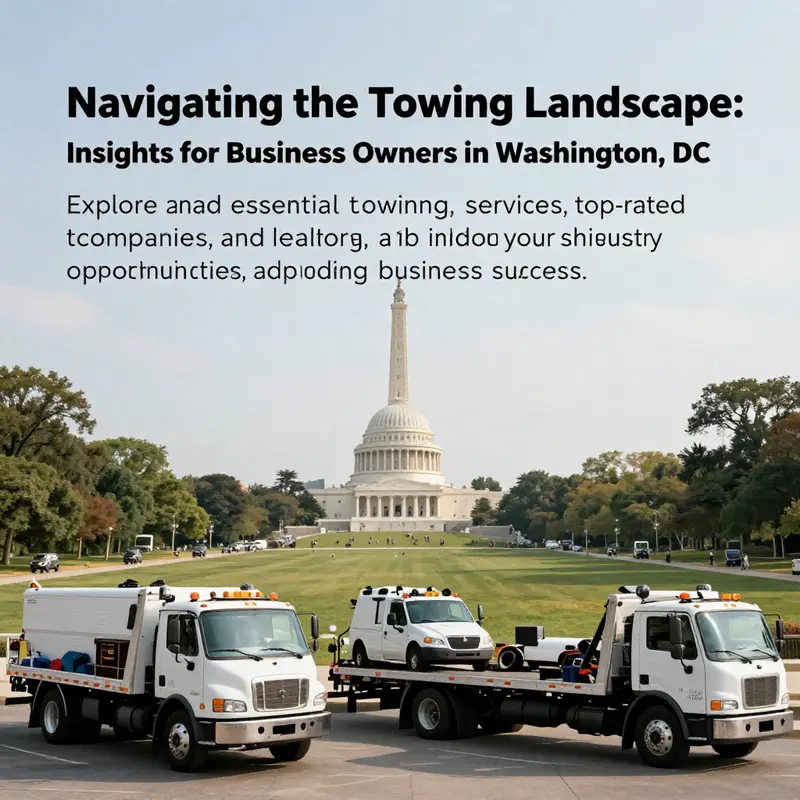
Understanding the towing industry in Washington, DC is crucial for business owners. This article delves into key aspects of the towing market, highlighting standout service providers like A & A Towing Company, and vital customer insights drawn from Yelp’s rankings. The final chapter focuses on the market’s landscape, illuminating both challenges and emerging opportunities. Together, these insights equip business owners with the knowledge to make informed decisions in an ever-evolving industry.
Around the Clock on the Capital’s Roads: How Washington DC Towing Keeps Cars Moving and People Reassured
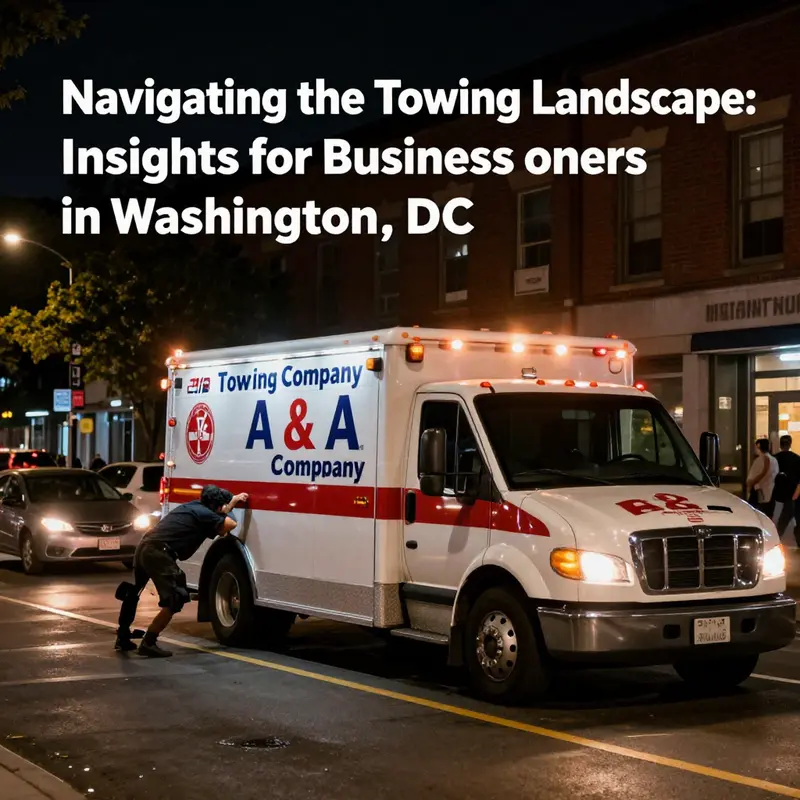
The Washington, DC area presents a demanding stage for towing companies, where urban congestion, quick-changing weather, and the constant tempo of the capital’s traffic collide. In this environment, the value of a 24/7 service plan becomes not just a feature, but a lifeline. A & A Towing Service, a persistent presence in Northeast Washington at 1075 Kenilworth Ave NE, embodies that commitment. Their emphasis on rapid response, reliable recovery, and steady communication speaks to a threshold standard in the DC market. When a roadside emergency strikes, the promise of help at any hour helps calm nerves and restore momentum to disrupted journeys.
A 24/7 operation translates into more than round-the-clock dispatch. It means a network of drivers, call handlers, and tow trucks ready to mobilize in minutes, not hours. In practice, this translates to fewer minutes spent stranded on a busy boulevard or stuck in a liminal stretch along a highway ramp. The local presence of a service provider in Northeast DC matters. It shortens response times, supports predictable arrival estimates, and increases the likelihood that a tow or recovery will be completed with minimal further delay. In a city where delays compound stress, timely intervention is a measured form of reassurance that a driver can rely on when the unexpected happens.
The customer experience in such moments hinges on two things: clear information and respectful, professional conduct. A & A Towing highlights both. From the moment a caller places the request to the moment a vehicle is safely loaded onto a trailer, the process should feel transparent. So too should the pricing structure, which many drivers watch closely as they weigh options after a breakdown or collision. In Washington DC, where insurance coverage and roadside assistance plans often intersect with local providers, straightforward communication is crucial. A driver who understands what to expect—every step of the way—is less likely to feel overwhelmed by the situation.
The DC towing landscape is not a single race but a crowded field. Yelp rankings and other consumer feedback illuminate the strengths and gaps across providers. Morton’s Towing & Recovery, for example, earns broad recognition with a solid 4.3-star average from hundreds of reviews, signaling a consistently positive customer experience in a competitive market. Yet even in this competitive space, a company that emphasizes 24/7 availability and a clear, courteous approach to both breakdowns and accidents can distinguish itself. The ability to respond promptly at any hour acts as a practical demonstration of reliability—a quality that customers notice and remember.
In addition to speed and demeanor, the technical side of DC towing demands skillful coordination. Recovery operations often require careful handling of damaged vehicles, proper use of winches, and adherence to safety standards for both the crew and the vehicle. The best firms also balance efficiency with care, ensuring that vehicles are recovered without causing additional harm or exposure to onlookers in busy streets. This delicate balance becomes even more important in a city where streets can twist through dense neighborhoods and arteries pulse with commuter traffic. A capable operator maintains calm control while maneuvering a scene, guiding bystanders and coordinating with on-scene authorities as needed.
The role of a 24/7 towing service also touches on the broader ecosystem of road safety and municipal logistics. When incidents occur, timely removal of a disabled vehicle can prevent secondary accidents and keep traffic flowing. This practical benefit echoes in insurance interactions, roadside assistance programs, and the relationships a provider cultivates with local repair shops. The DC chapter of the towing industry thus hinges on a blend of personal responsibility, professional discipline, and logistical fluency. The most trusted firms earn repeat business through the quiet confidence they build in customers who know they can call at any hour and receive consistent, compassionate service.
For readers seeking more context about the local landscape or exploring options beyond a single provider, a broader view of DC towing services is available through dedicated resources that map the region’s offerings and performance. A representative profile of a local provider helps illustrate how some firms structure their services, pricing, and response commitments in practice. If you want a glimpse into how such listings frame expectations, consider the general online profiles that accompany reputable DC operators, which often highlight 24/7 response, clear communication, and dependable recovery as core strengths. External references can offer corroboration for customer experiences and industry standards across the capital region.
Those who find themselves on DC roadways—whether in a quiet neighborhood or a bustling corridor near the National Mall—benefit from the steady presence of 24/7 towing services. The combination of rapid response, professional handling, and transparent communication creates a foundation of trust that helps motorists navigate an emergency with less fear and more control. As the landscape evolves, drivers will continue to rely on the dependable, round-the-clock availability that enables them to get back on the road with confidence. For readers curious about similar local services, a detailed resource on Washington DC towing can be explored, and further corroboration of the industry’s profiles can be found in external business listings such as the one for A & A Towing Service: https://www.manta.com/c/mx6z68q/a-a-towing-service.
Internal resource reference: towing-service-washington-dc
DC Tow Lines: What Yelp’s 2026 Towing Rankings Reveal About Speed, Trust, and Choice in Washington, DC
In Washington, DC, roadside emergencies unfold in a city where every minute can feel like a small crisis. The 2026 Yelp rankings for car towing offer a lens into how residents gauge reliability when the clock is ticking, traffic snarls are common, and the streets demand precise navigation. Across multiple lists, a handful of providers consistently earned top marks, reflecting a pattern that matters far beyond a single tow: reliability, clear communication, and quick dispatch. These factors matter most when a driver’s confidence hinges on whether help will arrive promptly, whether the tow operator will explain what’s happening, and whether payment terms are straightforward rather than opaque. In a market dense with competing options, the signal is not merely who can lift a vehicle, but who can lift the burden of an unexpected disruption with competence and calm. The best listings emphasize this mix of speed and reassurance, a combination that builds trust in a city where stress and urban complexity can quickly compound a minor problem into a major disruption.
Understanding what this means in practice requires looking beyond the price tag to the fuller experience. A successful tow in DC is rarely just about pulling a car onto a flatbed; it’s about dispatch efficiency, regional coverage, and the ability to operate smoothly amid the city’s ever-shifting conditions—near embassies, in dense downtown corridors, or along residential streets that bend with imperfect sidewalks. Five-star ratings across various categories signal a provider who can handle routine unlocks, jump-starts, and tires changes with the same poise as a full recovery in rush-hour. Yet a note of caution accompanies such high marks: most of the top-rated entries are backed by a relatively small pool of reviews. When a few customers leave perfect scores, it can skew perception if those experiences don’t translate across a broader set of circumstances. Still, the overarching thread is clear. Consumers value prompt arrivals, transparent explanations, and a sense that the service is there when needed, no matter where in the district or its suburbs the trouble occurs.
DC’s geography intensifies this demand for dependable service. The city blends dense urban cores with sprawling, sometimes confusing subregions and long approaching corridors that weave into the surrounding suburbs. A towing provider that can dispatch quickly and arrive with a well-equipped crew—knowing local routes, parking restrictions, and the best staging points near congested arteries—gains an edge. The best practitioners in the field cultivate a reputation for steadiness: they train for a wide spectrum of incidents, they communicate clearly about ETA updates, and they provide information about what the customer should expect during the tow and afterward. This is not about spectacle or flashy guarantees; it’s about the quiet competence that shows up when a driver is stranded and must rely on a coordinated network to get back on the road.
For readers who want a practical path into the DC towing landscape without wading through dozens of listings, a closer look at the city’s service options can be enlightening. A DC-focused resource that emphasizes local coverage and dispatch reliability can serve as a useful companion to broader reviews. towing service washington dc offers a perspective grounded in the city’s specific needs, from downtown alleyways to Beltway corridors. It’s not a claim about any single provider, but a reminder that the heart of a good towing partnership is compatibility: a company that can align its resources with your location, time, and circumstances, and that communicates through every step of the process. When you are dealing with a roadside incident, that alignment becomes the differentiator between a stressful detour and a manageable setback.
The narrative that emerges from Yelp’s 2026 DC rankings is one of cautious optimism. The repeatedly high performers demonstrate how a well-coordinated fleet, seasoned drivers, and transparent customer interactions translate into superior experiences. They are the ones who stand out not because they offer the cheapest ride, but because they promise and deliver consistent, courteous service when lives and schedules hinge on a successful recovery. In a city where the next move may depend on a quick, decisive decision at the roadside, those five-star performances translate into real value: faster relief, clearer expectations, and a calmer customer journey from the moment the call is placed to the moment the car is back on the street.
For a broader view of the landscape and to compare experiences across the DC area, the broader Yelp compilation remains a valuable reference. You can explore the curated lists and user feedback here: https://www.yelp.com/bestof/washington-dc/car-towing?month=2&year=2026
Navigating the Urban Grid: Understanding Washington DC’s Towing Market, Challenges, and Emerging Opportunities
Washington, DC sits at the intersection of dense urban demand, tight regulatory control, and a competitive landscape that rewards precision as much as speed. The city’s streets are a living map of vehicular movement, with limited curb space, complex parking rules, and a cadence of incidents that can turn a routine tow into a carefully choreographed operation. In this environment, a towing company must do more than move a vehicle from point A to point B. It must manage a web of city codes, court-ordered impounds, storage regulations, and the expectations of drivers, insurers, and law enforcement. The result is a market where the best operators are those who harmonize compliance with reliability, and who translate congestion and bureaucracy into dependable service on a crowded, time-sensitive stage. The operational logic, then, centers on real-time dispatch, accurate routing, and a disciplined handoff that satisfies everyone from the motorist to the city clerk. When a tow truck rolls out, the clock starts ticking not just for the driver stranded on a median but for every stakeholder who depends on clear documentation, traceable procedures, and predictable outcomes. This is the minimum threshold for building trust in a city where a single misstep can reverberate through ratings, fines, and future contracts.
The most visible challenges in Washington DC arise from the traffic environment itself and the stringent regulatory framework that governs who can tow, where storage occurs, and how impounds are managed. Traffic congestion is not a nuisance; it defines the tempo of calls and the routes chosen by dispatchers. Operators must optimize fleets for swift mobilization, employing advanced GPS and telematics to reduce response times while ensuring that every action complies with municipal codes. The regulatory layer adds another dimension: licensing, vehicle maintenance standards, and documented adherence to towing procedures must be maintained with meticulous internal processes. Companies that fail to keep accurate records or to implement rigorous safety and compliance training risk fines, service interruptions, or reputational damage. In a city where public perception can swing on a single online review, the chain of custody for a towed vehicle—from on-scene lift to storage release—must be transparent and defensible.
But regulation and congestion are not only hurdles; they also shape opportunities. The DC market increasingly rewards specialized capabilities, from accident recovery to secure, long-term storage and swift vehicle retrieval after disputes or legal holds. This creates a pathway for operators who invest in staff training, collision-damage prevention practices, and efficient, legally sound recovery protocols. Partnerships with local law enforcement, parking authorities, and insurers offer a corridor of steady, high-volume work when relationships are built on reliability and clear documentation. Such collaborations can stabilize demand in an otherwise volatile environment, turning busy days into predictable workflows rather than sporadic spikes. The forward-looking operator looks to technology not as a luxury but as a cornerstone of service integrity. GPS-enabled dispatch, digital documentation, photo logs, and electronic releases can simplify compliance, reduce disputes, and increase the probability of favorable outcomes for customers and partners alike. In this framework, technology is not merely a tool but a safeguard for professionalism and public trust.
From a workforce perspective, the market in Washington DC remains active, signaling ongoing demand for skilled personnel who can manage the physical duties of towing while upholding safety and legal standards. The labor market entry points—ranging from tow truck drivers to technicians and coordinators—reflect a sector that values practical expertise and disciplined work habits. This aligns with the broader narrative of the city’s service economy, where dependable, rule-abiding performers gain a foothold and advance through experience and training. Individuals drawn to this field often learn quickly that success rests on a blend of speed, accuracy, and integrity—the trio that makes the difference between a roadside fix and a lengthy dispute over responsibility or storage fees. For readers seeking a primer on the broader DC landscape, our overview of towing companies in Washington DC provides a starting point to explore how different operators approach the same regulatory and market pressures.
As the market evolves, the constant will be a balance among regulatory compliance, technological advancement, and customer service excellence. Those who thread this needle—delivering fast, compliant, and transparent service—will not only weather the city’s peculiar challenges but will also set the bar for reliability in one of the nation’s most demanding urban environments. For anyone sizing up opportunities in this space, the DC market offers a proving ground where disciplined operations and strong partnerships translate into sustained demand and public trust. The horizon is defined not by shortcuts but by the disciplined integration of rules, technology, and service quality. External context about the labor landscape reinforces the point: the field remains active with opportunities across roles that demand both physical capability and safety-first thinking. For further reading on the broader job market in this sector, see the widely cited resource that tracks these opportunities across the city. https://www.indeed.com/jobs?q=tow+truck&l=Washington%2C+DC&from=searchOnHP
Final thoughts
In summary, the towing industry in Washington, DC is marked by its competitive nature and evolving consumer expectations. With standout companies like A & A Towing setting the bar for service excellence, business owners have valuable resources and lessons to learn from industry leaders and customer experiences. The insights gathered here not only illuminate the landscape but also emphasize the importance of reliability and customer satisfaction in driving business success. Embracing these elements will empower businesses to navigate challenges and seize opportunities in the towing market.