
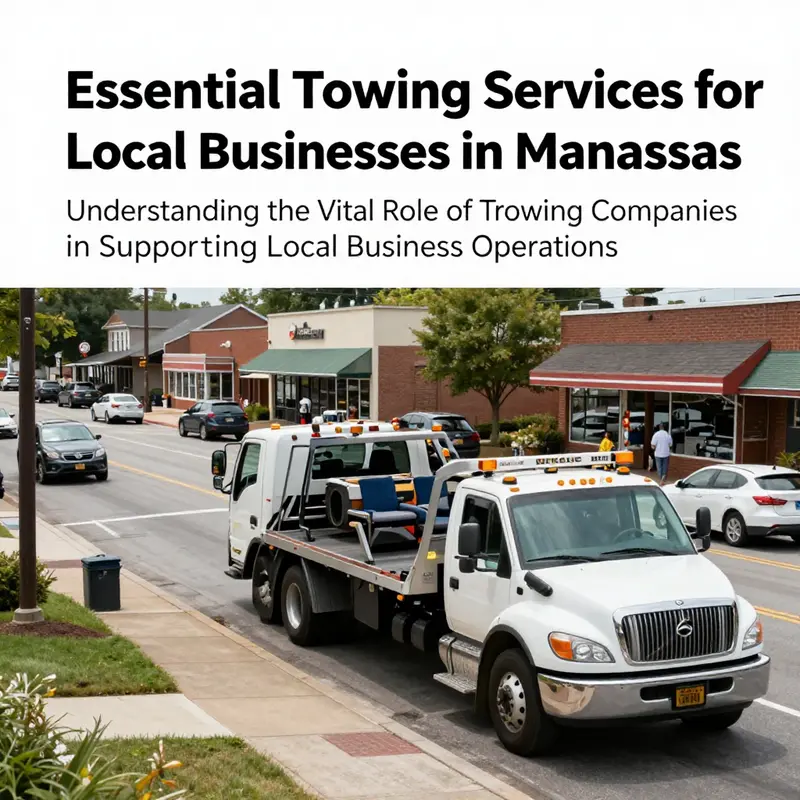
Towing companies are indispensable for local businesses in Manassas, Virginia, offering essential services that go beyond just towing vehicles. For business owners, understanding these services can lead to enhanced operational efficiency and improved crisis management. This article delves into the key towing service providers in the area and explores their economic impact on the local community. By examining the operational aspects of towing services and their broader implications, business owners will gain valuable insights into why establishing relationships with these providers can be beneficial for their enterprises.
Tow Lines and Timelines: Navigating Manassas’ Local Towing Landscape
Manassas sits at a crossroads of history and highway, where winding streets meet busy corridors that carry commuters, travelers, and delivery routes through the Virginia clockwork. When a vehicle falters, the city’s towing ecosystem steps in as a quiet but essential partner, stitching together a journey that might otherwise stall on a shoulder or in a busy lane. The value of these services extends beyond the quick fix of a tow; they preserve mobility, safety, and the confidence people rely on when the worst happens on a local road. In Manassas, the towing landscape is not a single voice but a chorus: companies with longstanding roots, mobile repair specialists who bring the shop to the roadside, and extra-local providers who branch out to cover nearby counties when incidents stretch the service network. Each actor contributes a piece of the larger system that keeps streets usable for workers, students, families, and emergency responders alike. This chapter stitches together what the current map looks like and why it matters to residents and visitors who might need a tow, roadside assistance, or heavy-duty transport on short notice.
To understand the local scene, it helps to look at the distinct players that populate the landscape. One established operator sits close to the heart of Manassas, maintaining a steady presence along a main corridor and through the city’s ordinary hours. This firm is known for its capacity to respond to emergencies, along with the more routine tasks of roadside assistance and vehicle recovery. In a place where weather, traffic patterns, and incident frequency can shift with the season, having a company rooted in the local community offers a layer of reliability that is often reflected in customer feedback and repeat calls from nearby neighborhoods. The company’s address places it squarely within reach of both residential neighborhoods and commercial corridors, underscoring the role of proximity in reducing wait times when a breakdown occurs along a key stretch of road. While exact operational details can evolve, the presence of a familiar local operator anchors the city’s towing options and provides a baseline expectation for service quality and accountability.
Another important facet of Manassas’ towing web is the emergence of mobile repair and heavy-tow capabilities. A nearby shop operates with a focus on larger vehicles and on-site maintenance, making it possible for drivers to recover a truck, van, or specialty vehicle without a full transport move to a garage. This on-site repair capacity is especially valuable in weather events or busy workdays when time is of the essence and a trip to a distant repair facility would otherwise pile up delays. The advantage of on-site service is not simply convenience; it translates into fewer additional miles driven, reduced risk of further damage, and a faster path to getting back on the road or back to a work site. This approach complements lighter-duty towing and roadside assistance, ensuring that a broader spectrum of failures—ranging from flat tires to minor mechanical faults—can be addressed quickly and effectively wherever the breakdown occurs.
A further thread in the fabric of Manassas’ towing ecosystem is a company that extends its reach beyond the city limits while remaining engaged with the Prince William County community. This operator is known for dependable, timely towing across the region and for offering a mix of services designed to suit both personal needs and commercial requirements. The emphasis here is on consistency and value, with a focus on clear communication and straightforward pricing. In practical terms, this means a customer can expect a predictable process when arranging a tow, with the added assurance that help will arrive within a reasonable timeframe, even as response demands fluctuate with traffic density and weather. The distance from downtown Manassas matters in this equation. While shorter trips can yield quicker arrival times, the ability to mobilize quickly across the broader county remains a critical piece of the service, especially for fleet operators and roadside assistance networks that rely on robust coverage.
Finally, the local landscape has gained a foothold through a service-provider known for its presence in online review spaces. This operator has built recognition through professional conduct and efficient handling of calls and dispatches, which can shape a customer’s perception in real time. In today’s connected world, where a few minutes of feedback can travel far and influence future decisions, positive testimonials often reflect a combination of reliability, clear communication, and thoughtful problem-solving. For residents who lean on word-of-mouth insights and peer recommendations, such providers become a trusted option whenever a vehicle issue arises. The stories that circulate in community networks and across review platforms contribute to a practical sense of which operators consistently meet expectations and which may fall short in certain scenarios.
In contemplating these dynamics, it’s important to acknowledge the practical considerations that shape a decision when a tow is needed. One critical factor is response time. For emergencies, the clock starts ticking the moment a call is placed, and the perceived urgency is often tied to the vehicle’s location, time of day, and traffic conditions. For many in Manassas, a nearby operator with proven dispatch efficiency translates into shorter waits and a faster return to the road. Licensing and insurance are non-negotiables when choosing any provider. A properly licensed operator carries the credentials that reassure customers they are accountable for the work performed and for any incident that might occur during towing or roadside services. Insurance adds another layer of protection, reducing risk for drivers who are already dealing with stressful situations. These credential checks are not just bureaucratic hurdles; they are visible signals of legitimacy and professional stewardship.
Beyond regulatory compliance, customer feedback provides a practical lens through which to view local options. Reviews on platforms that aggregate experiences help prospective clients gauge what to expect in terms of responsiveness, professionalism, and workmanship. While every tow scenario is unique, patterns in reviews—such as consistent on-time arrivals, courteous dispatchers, and clear explanations of fees—become useful compass points when evaluating a provider. Services offered also matter: some drivers might need 24-hour towing, while others require specialized transport for heavy equipment, on-site repairs, or extra-heavy loads. The best operators in Manassas are those who can flex between these needs without sacrificing reliability or safety.
With these considerations in mind, the question of how to verify credentials moves from a momentary decision to a thoughtful habit. The Virginia Department of Motor Vehicles, the Better Business Bureau, and the Virginia State Corporation Commission all maintain records that can illuminate a company’s standing. Consulting these sources can illuminate past complaints, current licenses, and the general reputation of a towing business, providing a data-informed basis to choose the right partner for a given situation. The intent is not to complicate the choice but to equip residents with a framework to assess credibility, timing, and value. For those who want a quick, practical starting point, a look at local options through dedicated city or regional pages can reveal the nuances of service areas, response times, and service breadth. A broader awareness of the landscape helps ensure that a tow, when needed, becomes a link back to mobility rather than a barrier.
Readers seeking a straightforward path to exploring local options can start with a focused look at Manassas’ towing environment through a dedicated local hub. This resource compiles a profile of nearby operators, their service ranges, and the realities of scheduling and dispatch in the area. It also surfaces the kinds of questions to ask during a call, such as whether the provider offers on-site repairs, whether they can handle heavy equipment, and what the typical wait time is for emergency vs. non-emergency calls. The goal is not to proscribe a single choice, but to illuminate what good service looks like in practice and how to recognize it when time is of the essence. For readers who want to explore more about local options and to navigate the landscape with greater confidence, a visit to the Manassas towing page offers a concise, informative gateway that can supplement personal research and neighborly recommendations. Manassas towing.
In assembling a practical framework for approaching towing services in Manassas, the final piece is a reminder that the landscape is not static. New players can emerge, service models can shift toward more on-site expertise, and pricing structures can evolve with insurance practices and municipal regulations. The best approach is steady and informed: know the core capabilities you may need, understand the credentials to look for, and keep a simple, direct line of communication ready for when a breakdown or accident interrupts a journey. The stories behind these companies—addressed in part by their proximity to downtown, their capacity to manage light and heavy-duty jobs, and their ability to provide reliable, professional support—paint a portrait of a city that values mobility and resilience as much as it values history and community. When the road calls for help in Manassas, a clear sense of what to expect makes all the difference between a stressful delay and a smooth return to the road.
External resource for credential verification and regulatory context: https://www.scc.virginia.gov
Rolling Economies: How Manassas’ Towing Firms Move More Than Cars
Manassas, Virginia sits at a strategic juncture where everyday commutes, weekend trips, and regional trade intersect. The work of its towing companies extends beyond simply moving a stalled vehicle. Tow trucks help keep roads clear after incidents, support local businesses, and underpin a broader economy that relies on reliable road service as a form of public utility.
This chapter examines how firms, dispatchers, and on-site technicians coordinate to reduce downtime and minimize ripple effects on deliveries and daily routines. The speed and reliability of towing services influence how quickly a scene clears after a breakdown or crash, and rapid response reduces the time a congested lane remains blocked, which in turn supports local commerce and maintains predictable travel for residents.
In Manassas, the towing ecosystem includes several firms each with a distinct but complementary role. Small, mid-sized, and on-site repair capabilities allow fleets to stay active, minimize shop downtime, and keep commercial operations on schedule. Dispatch operations, service technicians, and maintenance crews all contribute to a broader ecosystem that values safety, transparency, and accountability for regulators, insurers, and customers.
Beyond direct service, towing work catalyzes local economic activity. Partner shops, insurance providers, and law enforcement agencies build networks that manage claims, regulate operations, and ensure reliable roadside assistance during incidents. Those relationships also contribute to municipal revenue through licensing, permits, and the ongoing demand for road-ready infrastructure.
As Manassas grows, the demand for dependable towing services is likely to rise. A well-functioning towing sector reduces risk for businesses that rely on timely deliveries and for households that depend on mobility. The chapter concludes with a note on continual improvement: better regulation, modern fleets, and skilled workers who can adapt to changing road conditions will help keep Manassas moving, no matter what the road throws at it.
Final thoughts
The success of businesses in Manassas is tied, in part, to the swift and efficient services provided by local towing companies. By familiarizing themselves with these service providers, business owners can not only prepare for emergencies but also strengthen their operational capabilities. The relationship between local towing companies and businesses is symbiotic, contributing to a robust economy and ensuring that both residents and enterprises can navigate unforeseen challenges with confidence.