
For business owners in the towing industry, understanding the evolving landscape of regulations, safety standards, and ethical considerations is essential. The Towing Services Bill 2024 marks a significant step towards creating a regulated towing environment in Western Australia. This article delves into the implications of the bill on Ajax Towing services, the technical standards that ensure vehicle compliance and safety, and the ethical practices that protect consumers and enhance transparency. As we explore these chapters, you will gain insights into how these elements interconnect to uphold the integrity of your towing business.
Regulation in Motion: Rewriting the Rules for Ajax Towing Under the Towing Services Bill 2024
Across Western Australia, the towing industry stands at a turning point. The Towing Services Bill 2024, introduced in August and passed in October of 2024, codifies a different future for how cars are moved from the roadside to safety, and how the public encounters those movements. For Ajax Towing, the benchmark question is not only what the law says, but how it reshapes trust between operators, law enforcement, and road users.
The core aim is straightforward yet ambitious: create a safer, fairer, and more efficient towing sector. The bill seeks to purge practices that erode confidence—most notably the long-standing problems around fee disclosure, coercive removal, and opaque pricing. The immediate ban on spotter fees is perhaps the most striking emblem of that shift. No longer can a tow operator advertise, collect, or receive a third-party payment that could influence which cars are moved, who is asked to wait, or how customers are guided through the process. In practical terms, the ban reduces a common source of conflict: a vehicle owner who discovers later that the fee structure depended on a bystander’s role or on the presence of a particular worker.
Behind this ban lies a broader architecture that demands accountability without paralyzing service delivery. The Authority to Tow form, a central feature of the new regime, ensures that towing proceeds only with proper authorization. Completed in quadruplicate, it is designed to be signed by the vehicle owner or driver, by a police officer if the driver is absent or incapacitated, or by authorized staff from Main Roads. This document chain creates a traceable record that the operator must then supply without charge initially. The possibility of future cost recovery by the Department of Transport and Major Infrastructure acknowledges that bureaucracy costs cannot be avoided entirely, but it also sets a deliberate boundary between administrative oversight and commercial exploitation.
The licensing regime reinforces these aims on a technical level. Each tow truck must undergo an initial licensing inspection at the Kelmscott Vehicle Inspection Centre to verify roadworthiness and compliance with standards that already exist, and which were tightened in November 2023. The emphasis on equipment—fire extinguishers, rear underrun protection, clear signage, and safe lifting devices—translates a set of safety checks into everyday practice on the road. Operators must align their fleets, their documentation, and their customer-facing processes with these requirements, not as an afterthought but as a core capability of the business. In this sense, the reform is less a punitive measure than a calibration tool that aligns incentives toward safer, more predictable outcomes.
Public confidence in towing hinges on clarity as much as safety. The Bill’s provisions, alongside earlier amendments that compelled disclosure of maximum fees, respond to a problem that extended beyond isolated incidents. It is about reducing the room for mischief and ensuring that a roadside encounter does not become a trap for surprise charges or coercive tactics. The enforcement approach—combining in-the-field compliance checks with targeted blitzes such as Operation City—signals a practical commitment to turning law into lived practice. In tandem with the new framework, operators have time to restructure their practices, train staff, and retool their customer interactions so that a tow is a straightforward service rather than a confrontation.
For Ajax Towing and the broader field, these changes invite a reorientation around transparency and legitimacy. Managers are compelled to reexamine how they communicate fees, how they verify authorization, and how they document every step of a tow. The path to compliance becomes a path to reliability: a company that can demonstrate consistent adherence to the Authority to Tow protocol and to the vehicle inspection standards will likely find public trust translates into steadier volume and fewer disputes at the roadside. The shift can also narrow the competitive field by raising baseline expectations—fewer operators will rely on opaque practices, while those that invest in training and records management may stand out as dependable partners for police, insurers, and motorists alike.
The broader dialogue about best practices travels beyond WA borders, and practitioners in different jurisdictions often look to one another for insight. For readers seeking a related perspective on how towing operations are discussed in other markets, see this overview of towing service in Washington DC. towing service in Washington DC. At the same time, the WA framework invites closer scrutiny of the legislative text and its practical application, which is why the official act remains a critical reference for operators and researchers alike. For the full legislative text, see the Towing Services Act 2024 on WA Legislation: https://www.legislation.wa.gov.au/legislation/acts/2024/towingservicesact_2024.pdf
Technical Standards in Towing: Ensuring Vehicle Compliance, Safety, and Public Trust in Western Australia
Technical standards are not merely a checklist; they are a promise to road users that every tow operation is governed by clear rules, tested equipment, and accountable professionals. In Western Australia, the Towing Services Bill 2024 introduces a comprehensive regulatory framework to address long-standing issues. The reforms aim to protect consumers from exploitative practices, such as extortionate fees and unlawful vehicle retention, while elevating safety standards across the industry. The new framework also signals a shift toward transparency and accountability, with enforcement measures that can deter coercive or negligent towing. This isn’t about bureaucracy for its own sake; it is about real-world consequences: safer roads, predictable charges, and fewer surprises when a vehicle breaks down or is involved in a collision.
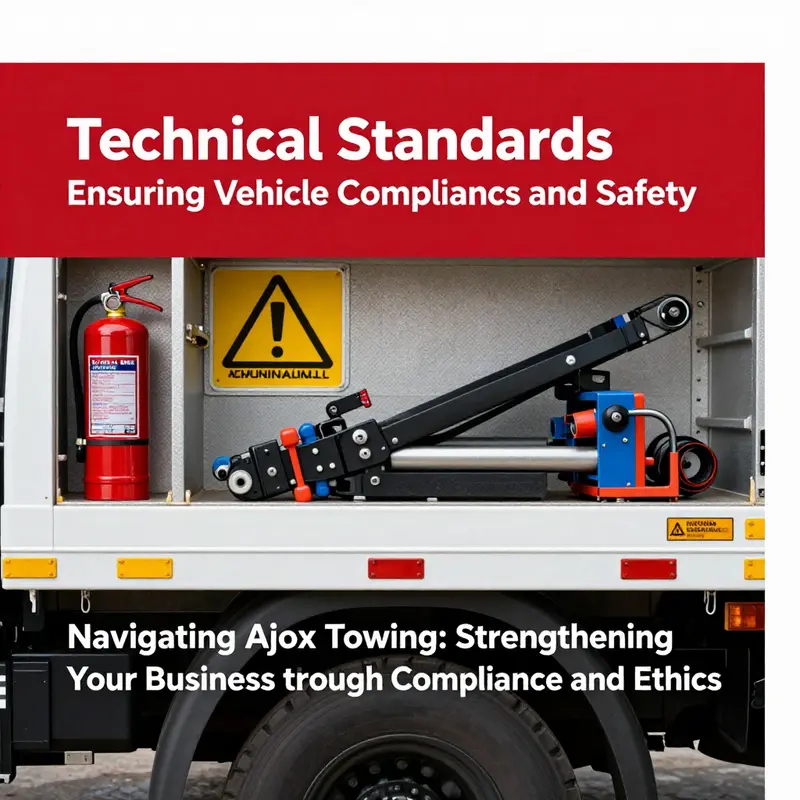
Technical requirements underpin these policy goals. Under the new rules, every tow truck must meet clear equipment standards. Fire extinguishers sized and positioned for quick access; rear underrun protection to reduce secondary crashes; legible signage on the tow rig; and lifting devices that meet safety protocols and are maintained to a documented schedule. The detailed standards translate into practical decision points for operators during a breakdown or a crash scene. A central feature of the regime is the Authority to Tow form, designed to ensure that towing occurs only with proper authorization. The form must be completed in quadruplicate and signed by the vehicle owner or driver, a police officer when the driver is unavailable, or authorised Main Roads staff. This process creates paper-based accountability at every tow, making coercion less likely and improper vehicle retention harder to justify. Tow operators are required to provide these forms free of charge initially, with future costs determined by the Department of Transport and Major Infrastructure.
Before a tow truck hits the road, it must clear a licensing inspection at the Kelmscott Vehicle Inspection Centre to verify roadworthiness and adherence to current standards. The requirement, which came into force in late 2023, signals a decisive move to align on-the-ground practice with formal safety expectations. Inspections cover critical systems, braking performance, lighting, load restraints, and compliance with the posted equipment requirements. The aim is not to trap operators in red tape but to prevent unsafe equipment from endangering drivers and passengers during high-stress recoveries. When standards are observed, the public gains a reliable signal: a trained operator, a certified vehicle, and a commitment to consistent service. The enforcement framework also relies on targeted checks and ongoing audits, so the rules stay relevant as technology and fleet configurations evolve. The broader intent is to restore public trust in an industry long criticized for opacity and abrupt charges; with robust standards, communities feel safer when assistance arrives.
These arrangements matter beyond the mechanics of compliance. They shape how motorists experience roadside assistance in moments of vulnerability. A standardized approach reduces the risk of price gouging and arbitrary extras, because charges align with explicit caps or disclosures embedded in the policy framework. It also clarifies expectations about what a tow entails: where the vehicle will be held, who has access to it, and under what circumstances.
Within the broader arc of professionalizing towing services, the Western Australian reforms echo a global need to balance market flexibility with consumer protection. The Authority to Tow concept, the licensing inspections, and the equipment mandates together forge a credible narrative: towing is not a discretionary service but a regulated activity with public safety at its core. This is particularly important in communities with limited options, where the arrival of a compliant tow truck can prevent a cascade of delays and potential hazards. For readers of this article, the chapter underscores how technical standards become a social contract, not merely a set of specifications. The result is clearer pricing, safer operations, and a pathway for training and career development within a legitimately regulated sector.
To connect with the broader theme of this article, the shift toward standardized, accountable towing practices matters for any jurisdiction grappling with similar pressures. It demonstrates how regulatory clarity, when paired with practical checks on equipment and authorization, can deliver tangible safety gains and consumer confidence. For those seeking deeper context on policy development and service standards, explore related discussions on service networks and consistency in the field: towing-service-arlington-va.
External resource: https://www.transport.wa.gov.au/towing-services
Transparent Tow, Trusted Service: Building Consumer Protections and Ethical Practice in Ajax Towing
Trust is not merely an abstract asset in towing; it is earned through consistent, accountable behavior from the first call to the final invoice. Ajax Towing operates within a shifting regulatory landscape that elevates consumer welfare as a core standard. In Western Australia, the Towing Services Bill 2024 and related reforms illustrate a policy direction that makes pricing clarity, service quality, and accountability non-negotiable expectations for operators. Those principles translate to practical realities far beyond one jurisdiction: honest assessments, respectful interactions, and a verifiable trail of decisions that customers can inspect and understand. When a company chooses to foreground ethics in everyday practice, it creates a foundation of trust that withstands scrutiny and market competition alike.
At the heart of ethical practice lies upfront pricing. In moments of breakdown or crash, customers face stress, time pressure, and sometimes uncertainty about what will be charged. The ideal standard is simple: all charges—towing fees, storage, administrative surcharges, and any ancillary costs—should be disclosed before the service begins. The Department of Mines, Industry Regulation and Safety’s consultation on accident towing underscores that transparency must be woven into every quote and receipt. This emphasis aligns with broader consumer protection norms that goods and services be fit for purpose and accompanied by a clear statement of terms. When a provider declines to spell out fees or buries costs in obscure clauses, it creates a power imbalance that responsible operators should resist. Ajax Towing can meet this expectation not as a compliance checkbox but as a deliberate differentiator that earns enduring loyalty.
Licensing and accreditation are not punitive hurdles; they are quality signals that elevate industry standards. The WA framework contemplates mandatory licensing and operator accreditation to uplift training, equipment, and customer service across the sector. For Ajax Towing, this translates into robust onboarding and ongoing training on safety, legal obligations, and the humane treatment of customers in distress. It also means standardized equipment checklists, transparent maintenance records, and visible indicators that the responding vehicle complies with safety and access requirements. In today’s market, customers increasingly expect digital proofs—receipts that are verifiable, live vehicle tracking data, and an accessible complaints portal—as routine features, not optional add-ons. Embedding these capabilities into daily operations turns ethical commitments into measurable realities.
The Authority to Tow mechanism offers a clear model of ethical control in practice. Under WA rules, the form must be completed in quadruplicate and signed by the vehicle owner or driver, or by a police officer or Main Roads staff when necessary. The central aim is to ensure that towing occurs only with proper authorization, avoiding coercion, misrepresentation, or unlawful vehicle retention. Ajax Towing can adopt a similar accountability framework by documenting every tow with an explicit authorization trail, time stamps, and accessible copies for customers. This approach reduces confusion in moments of stress and provides a solid foundation for dispute resolution. It conveys governance rather than opportunism, signaling to customers that the company operates with legitimacy and care for property, safety, and personal circumstances.
Ethical practice is also a strategic asset. Transparent operations—clear digital receipts, real-time vehicle tracking, and straightforward channels for complaints—build public trust and mitigate reputational risk. When customers recognize a provider as one that prioritizes honesty, they are more likely to refer others, leave positive reviews, and refrain from punitive retaliation during misunderstandings. That kind of culture lowers acquisition costs over time and stabilizes revenue through repeat business and referrals. Practically, this means a no-surprises policy at every stage: from the initial assessment to the final dispatch and aftercare. It also means setting realistic timelines for recovery, communicating any delays with updates, and following up to confirm satisfaction or address concerns. Such practices turn a stressful event into a manageable experience and demonstrate that profitability and ethics are not mutually exclusive.
Turning theory into action requires accessible, customer-facing policies. Ajax Towing can publish transparent pricing schedules, publish service standards, and provide an easily navigable complaints mechanism with guaranteed response times. When a company publicly embraces accountability and demonstrates improvements in response to feedback, it invites scrutiny in a constructive way and raises the bar for the entire sector. The regulatory pathway outlined by DMIRS offers a practical framework: it clarifies expectations for pricing, licensing, and service delivery while still allowing capable operators to innovate and compete fairly. In this sense, ethics become a growth strategy, not a cost center, guiding everyday decisions toward fairness, clarity, and reliability.
For readers seeking broader context on regulatory shaping of the towing ecosystem, the WA regulatory landscape serves as a meaningful reference point. This chapter uses Ajax Towing as a case study in how high-level policy translates into concrete, observable behaviors that customers notice and value. The objective is not to police but to illustrate how ethical choices align with business performance, risk management, and public accountability. As consumer demands for transparency rise, the opportunity for responsible operators grows. When a company integrates ethics into training, technology, and communications, it remains resilient across markets and governance environments. External resources offer additional guidance and formal context; see the WA regulator’s accident towing consultation and related publications for deeper insight into how standards evolve and why they matter for everyday service design. External resource: https://www.commerce.wa.gov.au/publications/accident-towing-industry-consultation-report
Internal link: throughout this chapter, practical references to the broader towing landscape reinforce the message that customers reward clarity and accountability. For a real-world example of available service information in another market, you can explore this related page: towing service in Washington DC.
Final thoughts
In conclusion, Ajax Towing stands at the forefront of an evolving industry marked by regulatory reforms and a commitment to ethical practices. The Towing Services Bill 2024 not only establishes a protective framework for consumers but also provides a pathway for business owners to align their operations with safety standards and transparent practices. As you navigate these changes, embracing compliance will not only enhance your business’s reputation but will also ensure the safety and trust of your clientele. Staying informed and adapting to these regulations will ultimately position your towing service for success in the years to come.