
In the Fairfax area, reliable towing services are essential for businesses that rely on transportation and logistics. With a growing economy and increasing vehicle reliance, understanding the offerings of local towing companies is crucial for business owners. One such prominent name is Triple Time Towing, known for its exceptional service and community trust. This article delves into the services and reputation of Triple Time Towing, along with the latest trends and challenges in the towing industry, equipping Fairfax business owners with the knowledge to make informed decisions about their towing needs.
In Fairfax, Towage You Can Trust: Speed, Skill, and Clear Pricing
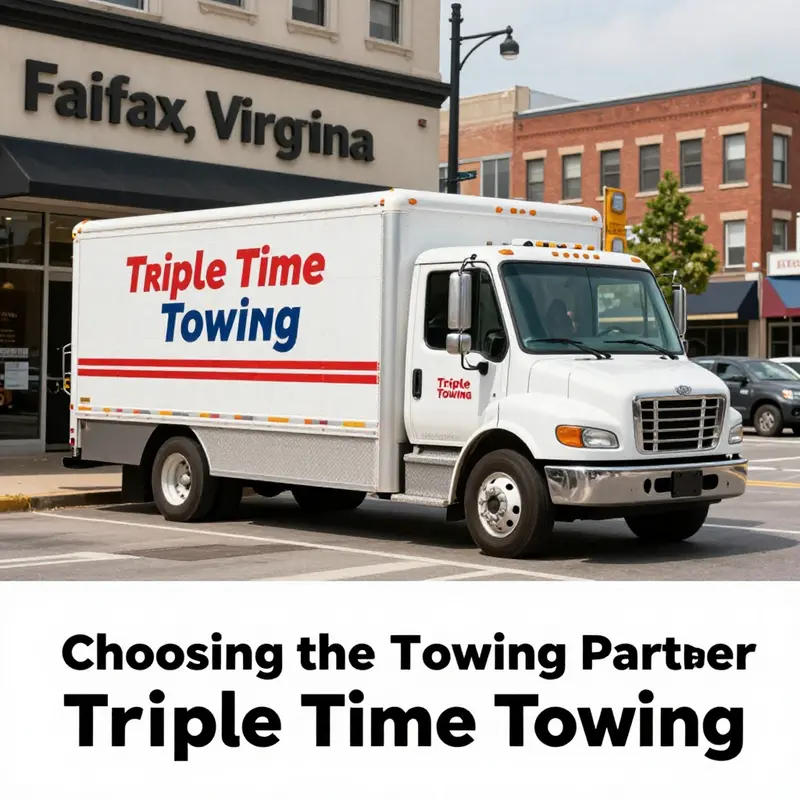
When a car stalls on a Fairfax street or a highway exit rolls by with its hazards blinking, the outcome of that moment often hinges on one thing beyond the vehicle itself: the towing service that arrives. Reliability in this space is not a luxury; it is a lifeline. It is the quiet competence of a driver who shows up within minutes rather than hours, the calm professionalism of someone who speaks clearly about what will happen next, and the transparency of a bill that does not surprise you when the driver has already left. In this part of the region, residents learn quickly that the best tow operators are valued not only for how fast they can lift a car but for how well they manage the entire experience from call to completion. A solid provider’s value shows up in small ways—an on-time arrival, polite communication, careful handling of the vehicle, and a willingness to explain the process without jargon. These are the signals that distinguish a routine roadside assist from a trusted partner in a moment of constraint.
To understand what makes a Fairfax-area tow service worth keeping on speed dial, it helps to look at the service spectrum itself. A dependable operation is more than a tow truck on standby; it encompasses roadside assistance, vehicle transport, accident recovery, and on-site emergency support. The fleet quality matters, too: modern tow trucks equipped with the right hoists, tie-down straps, wheel dollies, and safety lighting reduce the risk of further damage during loading and transport. Practically, that means a driver who checks the vehicle’s condition, secures it carefully, and then communicates the plan for transport—whether to a shop, a dealership, or a repair facility. In safety-critical moments, that combination of preparation and communication becomes a kind of insurance against missteps.
What a majority of customers appreciate most are those moments of consistent parity between expectation and delivery. Reviews across Google and Yelp tend to highlight three core strengths. First is speed—response time and arrival often cited as the difference between being stranded and being back on the road. Second is professionalism—the demeanor of the crew, their adherence to safety, and their ability to coordinate with the driver and any other parties involved. Third is transparency—pricing that follows a clearly explained structure rather than a surprise tally at the end of the service. These are not mere marketing claims; they are the informal contract that builds trust within a community. Yet not every experience is flawless. A fair proportion of feedback acknowledges that during peak hours, bad weather, or unforeseen traffic conditions, response times can stretch. It is a reminder that even the best operators face the same external pressures as every motorist on the road.
Alongside the praise, there are cautions worth noting. Some customers report that charges can feel opaque if the conversation about price happens after the work has begun. A handy discipline, then, is to seek clarity before the tow begins. Ask for the base fee and the rate per mile, and request an itemized estimate that includes any potential add-ons—after-hours surcharges, wait time, or vehicle preparation costs. This isn’t about turning a simple service into a tedious negotiation; it is about turning a stressful event into a transparent transaction where both sides share a clear map of expectations. In regions like Fairfax, where drivers may encounter varying street layouts, narrow lanes, or restricted parking, a good operator will talk through the logistics and confirm those expectations before the engine starts to roll.
The practical wisdom here extends beyond the price tag. It also touches on the relationship between the customer and the company in a moment of vulnerability. People who rely on a tow service often need more than transportation; they need reassurance. The best responders understand that and respond with a combination of practical efficiency and human warmth. A driver who asks, “Would you like me to call your mechanic or your dealership, and do you want me to wait while you contact them?” provides a level of service that puts the customer at ease. It is this blend of technical competence and empathetic handling that, over time, fosters a strong local reputation. In Fairfax, the most widely recommended operators tend to be those who maintain that balance, delivering steady performance even when conditions outside the vehicle are not ideal.
In conversations among residents and local drivers, another theme emerges: the ecosystem of options available in the area is broad, so reputation becomes a differentiator. A top-tier Fairfax tow service often collaborates with nearby repair shops, dealerships, and rental agencies. This ecosystem isn’t merely a convenience; it helps ensure that a vehicle can be moved to the right place with minimal friction. The ability to coordinate with a dealership when the key issue is reissuing a key or retrieving a vehicle from service after an accident can significantly reduce downtime for the vehicle owner. The most reliable providers in the region are those whose dispatch networks are robust, whose drivers are familiar with the local streets, and whose staff can communicate in plain language that the average driver can understand.
For readers who want a sense of local options, our Fairfax-focused page provides a concise map of what to expect and how to compare offerings. It guides readers toward understanding service scope, typical response patterns, and the kind of customer service that most aligns with their needs. You can explore practical local context here: towing in Fairfax. The page serves as a useful starting point for evaluating how a provider fits into the broader landscape of roadside assistance in this part of Northern Virginia. The takeaway is simple: when shopping for a tow service, look for consistency across multiple experiences, not a single standout act. Reliability builds reputation, and reputation, in turn, builds confidence when you need help the most.
Across this region, there is also value in drawing insights from external reviews and community feedback. A widely cited external perspective in the broader industry shows how customers frame their expectations around speed, transparency, and courtesy. While the specifics of a given incident will vary, the underlying principle remains constant: clear communication before and during the service reduces stress and strengthens trust. In Fairfax, where streets can be complex and time windows narrow, the capability to provide real-time updates, to confirm the estimated arrival window, and to adjust plans gracefully as conditions change, becomes a practical marker of quality. The best operators integrate dispatch technology with personal accountability. The dispatch system can be fast, but it must be paired with drivers who are trained to handle delicate situations—whether a car with emergency equipment issues, a vehicle with a broken key, or a trailer needing precise alignment on a busy curbside.
Ultimately, the Fairfax towing landscape emphasizes a simple truth: community trust is earned through dependable performance, transparent pricing, and respectful treatment at a moment when the usual routines of daily life are interrupted. When a driver arrives promptly, listens carefully, explains the process in plain terms, and follows through with careful vehicle handling, the chapter of stress that begins on the side of the road can close with a sense of closure and progress. The region’s most respected operators cultivate these qualities not as a series of tactics but as a consistent practice—something neighbors can count on, and something a driver can quietly rely on for many miles to come. The next layer of the conversation invites readers to consider how pricing structures and service options shape the decision-making process in real time, a topic that will unfold alongside practical guidance for selecting a dependable local partner. For now, the core takeaway remains: in Fairfax, towage you can trust is built on speed, skill, and clear communication as much as on any single act of service.
External resource: https://www.google.com/maps/place/Triple+Time+Towing
On Fairfax Roads: Market Trends, Community Trust, and the Evolving Towing Landscape
In Fairfax, Virginia, the road network tells a story of dense neighborhoods, commuter arteries, and sudden slowdowns that can strand a driver at the worst possible moment. The towing market here is not a simple service sector but a dynamic system that links road safety, customer trust, and rapid problem resolution. Today, many residents expect a coordinated response: a dispatcher who understands local streets, a driver who arrives with professional training and clear communication, and a process that preserves both time and dignity in stressful moments. Market dynamics in Fairfax reflect two broad currents. First is the surge in on-demand, mobile roadside assistance driven by transparent pricing, ETA accuracy, and real-time updates. The second is the growing weight of reputation in shaping choices, with online reviews and easy booking guiding decisions when time is tight. In this environment, a well-regarded operator becomes a trusted partner who understands local routes, weather, and traffic patterns, and whose service is judged by reliability, safety, and courtesy rather than flash marketing. The Fairfax market thus rewards operators who pair legitimate credentials with calm, professional conduct, particularly during night shifts or after winter storms when demand surges. Beyond operations, the market is shaped by regulation and risk management: Virginia licensing and insurance requirements, local rules for towing in busy corridors and residential areas, and a focus on well-maintained fleets and ongoing driver training. Transparent pricing and clear quotes are differentiators in a marketplace where anxious drivers weigh every option against the clock. The evolving landscape also highlights the importance of digital accessibility, with online booking, dispatch visibility, and trusted reviews helping first-time customers become repeat clients. In this sense, Fairfax options are increasingly about partnership and communication as much as about speed, with operators pursuing smarter dispatch tools, compatible routing, and precise ETAs that reflect current traffic realities. For readers seeking Fairfax-specific options, local providers often publish clear service descriptions, transparent pricing, and practical guidance to help drivers know what to expect when speed and safety collide. The broader trajectory suggests that the most successful operators will invest in professional development, fleet readiness, and respectful customer engagement, shaping the standard for dependable roadside assistance in the years ahead.
Final thoughts
Understanding the towing landscape in Fairfax, especially the role of companies like Triple Time Towing, is vital for local business owners. They not only need reliable services for roadside emergencies but also partners who can adapt to market changes and challenges. With the right towing partner, businesses can ensure better operational efficiency, safeguarding their assets and supporting their local community’s infrastructure. Building relationships with trusted towing services can lead to positive outcomes for any business in need of emergency assistance.