
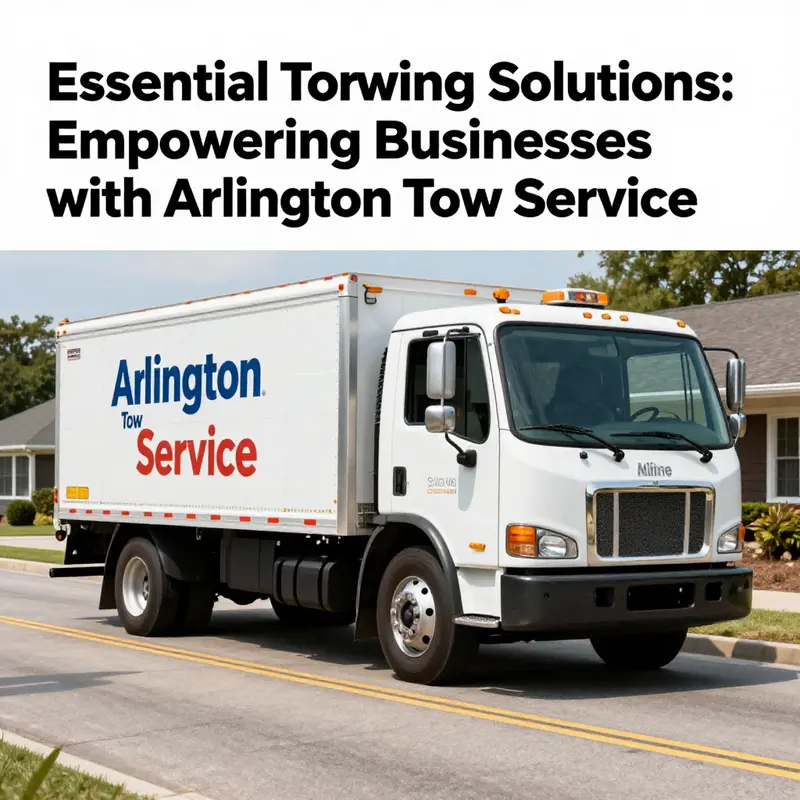
Reliable towing and roadside assistance are crucial for business owners to ensure smooth operations and customer satisfaction. Arlington Tow Service, based in Arlington, Tennessee, is dedicated to providing effective solutions for vehicle recovery and emergency situations. This article delves into the company’s operations and emergency support mechanisms, illustrating how it meets the diverse needs of businesses facing breakdowns, accidents, or other roadside emergencies. Each chapter will provide insight into Arlington Tow Service’s capabilities, enhancing your understanding of how partnering with a reliable tow service can benefit your business.
Tow Line and Trust: A Deep Dive into Arlington Tow Service Operations
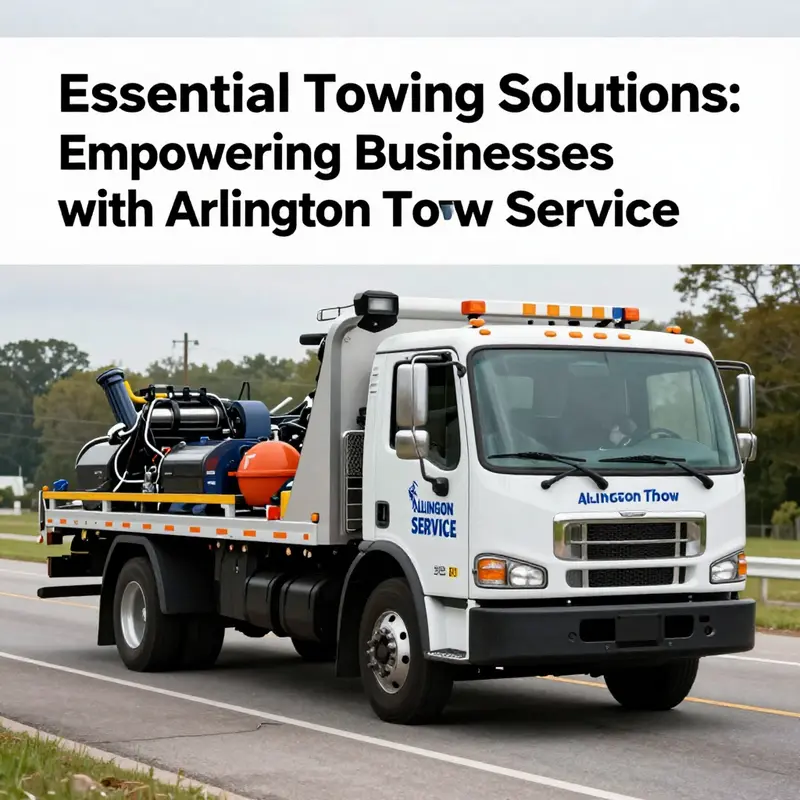
On a shoulder of the road where city traffic weaves around each other like threads in a busy fabric, the moment a vehicle falters or a driver finds themselves stranded, a responsive system comes to life. In Arlington, Texas, the heart of that system is a tow service network that blends depth of fleet, skillful operators, and a steady commitment to safety. This is less about moving metal from one place to another and more about reestablishing momentum for a person whose day has suddenly slowed to a halt. The essence of Arlington Tow Service services—the kind that keeps ordinary life from grinding to a halt when a breakdown, a collision, or an unforeseen lockout occurs—is a careful choreography of dispatch, preparation, and execution that respects both time and circumstance. The city itself, covered by the reach of Tarrant County, depends on this choreography to succeed in emergencies, to minimize disruption for local businesses that rely on dependable transportation, and to maintain the trust of residents who value speed without sacrificing care. Tacitly, the operation operates on a principle that might seem simple but is rarely easy in practice: respond quickly, handle the vehicle with care, and communicate clearly with the person waiting on the roadside. When a driver calls in with a breakdown or an unexpected incident, the dispatcher has to translate a spoken location into a precise set of actions, mapping the quickest route, the right equipment, and the appropriate specialist for the situation. The goal is not merely to tow a car; it is to stabilize the scene, secure the vehicle, and reduce the overall risk for everyone in the vicinity of heavy traffic and flashing lights. In Arlington’s environment, where streets thread through residential neighborhoods, business corridors, and industrial districts, this risk management aspect is central. The fleet varies in size and capability, because the demands of the job shift with the hour and the road conditions. There are heavy-duty wreckers capable of lifting and relocating larger commercial vehicles, including freight haulers and service fleets that serve local enterprises. There are lighter, more versatile flatbeds and wheel-lift tow trucks that can recover a mid-size sedan from a ditch, a stalled SUV in a dark cul-de-sac, or a vehicle involved in a minor fender-bender that requires careful handling to preserve its frame and safety features. Each vehicle in the fleet is equipped not just with tools but with a mindset: the driver must assess the scene for hazards, secure the area to protect bystanders, and communicate a plan that the customer can understand as the roadside light changes with the setting sun or the glare of oncoming headlights. This blend of equipment and temperament is essential, particularly when weather conditions tilt from mild to severe. Arlington experiences its share of rain, wind, and seasonal temperature swings, and the best operators plan for these fluctuations in advance. They study the road geometry, know which neighborhoods tend to be congested during rush hours, and maintain a flexible approach to scheduling that minimizes waiting times for customers while still respecting the safety protocols that govern every transport operation. The service is not merely reactive; it is proactive in its approach to safety. Safeguards begin at the point of dispatch: technicians are trained to evaluate hazards such as runaway wheels, leaking fluids, and the risk of secondary incidents once the vehicle is on the tow. They use appropriate wheel chocks, emergency lighting, and reflective gear to ensure they remain visible in traffic. They also confirm that the vehicle is stabilized before any movement begins, a practice that protects both the operator and the customer’s property. In this sense, the Arlington Tow Service operation serves as a cornerstone of the city’s resilience, a growing thread in the fabric that keeps commerce moving and families where they need to be. The city’s needs are diverse. The service area extends beyond Arlington proper to nearby communities and counties, a reach designed to address the reality that breakdowns rarely respect municipal borders. In practice, this means the ability to respond quickly to a variety of incidents, from a single-vehicle crash on a busy arterial to a stranded delivery van in a warehouse district. The emphasis is equally strong on personal and commercial clients. For the individual, the reassurance comes in knowing that a trained technician will show up with the right equipment, speak calmly, and provide a clear understanding of what will happen next. For the business customer, the approach centers on reliability and consistency: a fleet that can handle recurring emergencies, a partner who can coordinate with repair shops and rental providers, and a willingness to work within tight timelines that keep operations humming. It is in the communication that a central piece of trust is built. The dispatcher becomes a lifeline, offering an ETA, describing the steps the technician will take, and confirming the location and access instructions. The aim is not to promise instant perfection but to set achievable expectations and then meet them. This is where the human element distinguishes the best operators. A competent tow service understands that a roadside crisis is more than a mechanical problem; it is an emotional moment for the driver who feels stranded and possibly stressed. The best teams acknowledge that, and they respond with empathy alongside technical skill. A calm, respectful conversation can ease anxiety, help the customer prepare for the next steps, and minimize the confusion around what might otherwise feel like a chaotic scene. As the operation continues to evolve, the role of technology becomes more pronounced. Real-time tracking, GPS routing, and digital communication platforms allow the team to shorten response times and adapt when conditions on the ground change suddenly. A well-tuned system can tell a customer that assistance is two minutes away, then adjust to four minutes if traffic slowdowns arise, and still deliver a reliable, safe service. The value of such precision is measured not only in minutes saved, but in the confidence it builds. When a driver sees a familiar truck arriving at the roadside at night, the sense of reliability is immediate. It becomes a reminder that in Arlington, a community of motorists, fleets, and service providers share a common expectation: that an operator will arrive ready to work, will treat the vehicle with care, and will respect the customer’s time and circumstances. The service’s impact extends beyond the roadside. Vehicle recovery, towing, and emergency support create a ripple effect of practical benefits. A timely tow may prevent further damage to a vehicle that has run off the road or been involved in a collision, preserving resale value and reducing repair costs. For business clients with fleets, rapid response translates into reduced downtime, allowing workers to resume duties and customers to receive goods without prolonged delays. In this sense, the Arlington operation acts as a logistical asset, a component of the city’s operational efficiency that often goes unseen by the average driver until they need it. The continuity of service is anchored by a consistent level of professionalism. Technicians arrive in neat uniforms, follow established safety protocols, and communicate in straightforward terms. They explain the process if a vehicle must be moved to a repair facility or a storage lot, and they coordinate with relevant parties to arrange alternative transportation if necessary. A key aspect of this professionalism is transparency in the customer experience. People want to know what they are paying for and why. Transparent pricing, upfront estimates, and a clear outline of the steps involved in the recovery or towing operation contribute to a sense of fairness and trust. In practice, this means that the dispatcher and technician will discuss the scope of work before any work begins, including potential variables that could affect pricing, such as the weight of a vehicle, the distance to the destination, or the need for extra equipment for difficult recovery conditions. The tone remains approachable, never harsh, even when dealing with the frustration that accompanies a roadside emergency. The long arc of Arlington Tow Service’s operations also reflects a city that values accessibility and local relevance. The service area is not just about distance; it is about proximity to repair shops, rental partners, and vehicle storage facilities that can expedite a driver’s eventual return to the road. By maintaining relationships with these local resources, the provider can streamline the entire process, from the initial call to the final handoff at a repair shop or a lot. For readers exploring options in the region, consider that broader coverage matters, but the most important factor is the consistency of service when it matters most. Acknowledging the complexity of roadside incidents, the best tow operators in the Arlington ecosystem invest in ongoing training and equipment upgrades. They stay current with safety standards, industry best practices for vehicle recovery, and the evolving needs of commercial clients who depend on on-time deliveries, school districts, public services, and local businesses. The result is a service that evolves with the city itself: more capable, more adaptable, and more attuned to the lived realities of the families and workers who rely on dependable transportation. For those seeking a deeper sense of what makes a local tow operation reliable, the narrative is not just about the trucks or the prices; it is about the relationships formed in moments of stress. It is about the technician who shows up with a steady demeanor and a plan that makes sense to someone standing on a curb with a blinking hazard light. It is about the dispatcher who treats a late-night call as if it were a priority for a neighbor, because in a small yet bustling city, neighbors rely on neighbors. If you are researching options to understand the operational logic behind Arlington Tow Service, a close reading of the service philosophy can be illuminating. The emphasis on rapid response, professional handling of vehicles, and clear communication creates a benchmark for what a regional tow operation can achieve. It also invites readers to reflect on what they value most in a roadside partner: speed, safety, empathy, accountability, or all of the above. In practice, a well-rounded approach blends these elements into a coherent standard. When a resident or business in Arlington calls for help, they are not simply requesting a service; they are inviting a dependable presence into a vulnerable moment and trusting that the response will be thoughtful, efficient, and respectful. To explore a comparable example of how a connected network of local towing professionals collaborates across communities, you can learn more about Arlington towing services here. Arlington towing services for readers who want to see how one partner maintains readiness, equipment, and customer communication as core parts of daily operations. In addition to the dynamic, on-the-ground realities, the broader context of regional roadside assistance includes partnerships among repair facilities, insurance providers, and rental agencies. These collaborations ensure that when the unexpected happens, a coordinated set of resources can be mobilized quickly and ethically. It is a reminder that Arlington Tow Service operates not in isolation but as part of a broader ecosystem that values reliability, accountability, and a human-centered approach to what can be a stressful experience. For readers who want a sense of the landscape beyond the immediate city limits, the industry is shaped by standards, certifications, and training programs that emphasize safe handling of vehicles, responsible waste management, and compliance with traffic laws. The best operators pursue continuous improvement, seeking feedback from customers and staying engaged with evolving best practices in the field. In the end, the purpose of Arlington Tow Service is straightforward: to restore mobility and reduce friction at moments when every second counts. Its operations illustrate how a local service can balance the practical demands of heavy equipment and urban logistics with the compassionate touch of a human-centered response. The result is a service that feels less like a distant technician arriving with a notebook and more like a trusted neighbor stepping in with guidance, a steady hand, and a clear plan. External resource: https://arlingtontowservices.com
Rapid Rescue on the Road: The Emergency Support Mechanisms Behind Arlington Tow Service
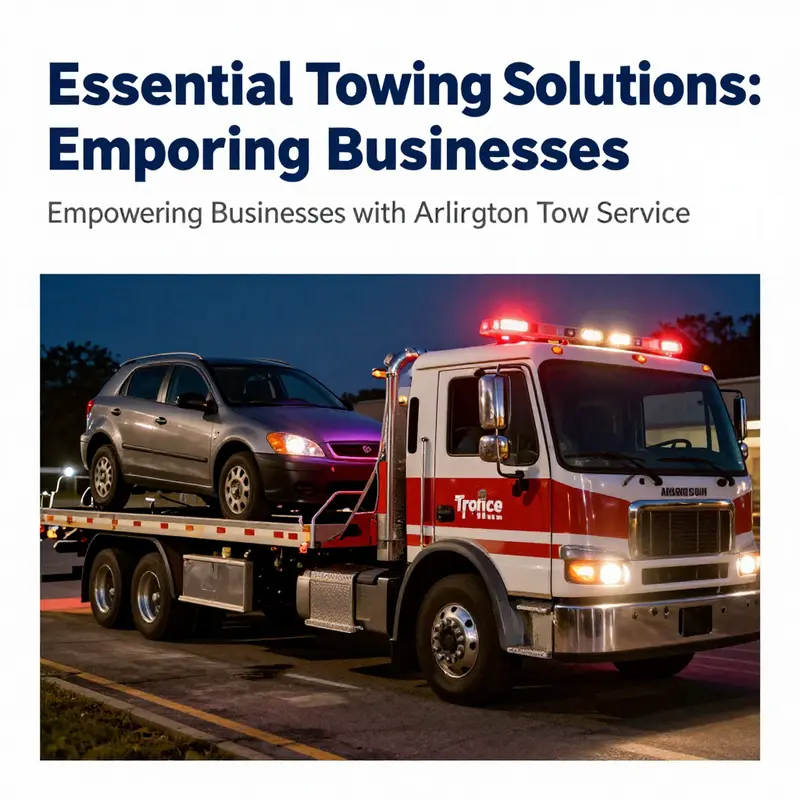
When a vehicle leaves a driver stranded on a city street or in a quiet stretch of a surrounding lane, the moment a call is placed marks the start of a carefully choreographed sequence. In Arlington, the emergency support mechanisms that power a dependable tow service are less visible than the bright lights of a rescue unit, but they are no less essential. This chapter explores how a local towing and roadside assistance operation builds a resilient, responsive system that keeps drivers moving, even under pressure. The story is less about a single truck and more about a distributed network of people, processes, and equipment that fuse to create reliable care in moments of stress. The aim is to show how preparedness and thoughtful design translate into real-world outcomes: faster responses, safer scenes, and a sense of trust that neighbors and commuters can depend on when a breakdown, collision, or locked-out situation arises. The core idea is simple yet powerful: emergency support is a holistic capability, not a single service, and it hinges on coordination, clear communication, and continuous adaptation to the road conditions of Arlington and its environs. A central thread runs through this narrative—the idea that every roadside encounter is an opportunity to demonstrate professionalism, compassion, and competence, even when time is tight and emotions are high. To glimpse the practical side of this, consider the local network that ties together dispatch, drivers, equipment, and customers, a framework that positions Arlington Tow Service as more than a last-minute fix and more as a dependable partner in the journey back to safety. For a closer look at how a local provider presents its Arlington offerings, see Arlington-towing.
The heartbeat of any emergency support system in towing begins with the dispatch center. A well-staffed, 24/7 dispatch hub acts as the city’s nervous system, translating a caller’s needs into action. In a fast-moving scenario, the dispatcher is more than a phone voice; they are a coordinator, triaging requests by urgency, proximity, and available resources. They interpret the details—whether the car won’t start in a grocery store parking lot, whether a vehicle is involved in a crash, or whether a truck needs to be unlocked for a driver stranded with keys inside—and then map those needs to the closest available unit with the right capabilities. The goal is not merely to reach the vehicle quickly, but to reach it with the right equipment and trained personnel ready to handle the task safely. The dispatcher’s role extends into real-time communication with the customer, providing a transparent ETA, updating the driver on any delays, and offering practical guidance until help arrives. In a well-tuned system, the first message from dispatch may include a realistic estimate and a brief summary of what to expect when the rescue team arrives, setting the stage for a calm, controlled moment at street level. This approach, though seemingly routine, is what differentiates a dependable service from a hurried response that may satisfy a short-term goal but leaves a customer unsettled for longer than necessary. The dispatch operation is the quiet center of gravity that keeps the chain intact when the road is slick, the clock is ticking, and an anxious driver is seeking relief.
Beyond the dispatcher sits the fleet, a fleet composed not only of different trucks but also of different capabilities tailored to distinct roadside tasks. In Arlington, a reliable tow service maintains a mix of light-duty units for small cars and motorcycles, medium-duty trucks for mid-sized vehicles, and heavier equipment prepared for more challenging recoveries. The maintenance cycle for this fleet is relentless, because the road never pauses for maintenance week. Regular inspections, fluid checks, hydraulic system tests, brake diagnostics, and tire wear assessments are part of a disciplined routine that prevents a minor fault from becoming a barrier on a freezing night. In addition to the mechanical upkeep, the fleet is stocked with the right tools for the job: wheel lifts, dollies, chain binders, portable air compressors, jacks, and recovery gear that can stabilize a scene before the vehicle is moved. The equipment’s readiness matters as much as the driver’s expertise because a well-equipped unit reduces the risk of damage and injury while increasing the speed at which a vehicle can be recovered and secured. The idea is to minimize the time a driver spends in a vulnerable position on the roadside, especially in areas with heavy traffic or limited shoulder space. The result is a more efficient operation that respects the dignity of the customer and the safety of everyone nearby.
Preparing drivers for emergency work is a parallel discipline to fleet readiness. The people behind the tow trucks carry a blend of experience, training, and situational awareness that translates into safer scenes and clearer customer communications. Certification programs in roadside assistance, load securement, hazard recognition, and advanced casualty awareness form the foundation. In addition, on-the-job practice includes mock scenarios that resemble the chaos of real-life emergencies—accidents with blocked lanes, weather-related hazards, or a driver overwhelmed by frustration and fear. The aim is not to “play heroic” but to maintain a steady, predictable approach that investors in safety would recognize as professional. This training extends to the language used when speaking with customers: courteous, calm, and precise, with explanations that help a layperson understand what is happening and why certain steps are taken. When customers feel informed and respected, the emotional tension that accompanies roadside distress tends to ease, enabling a smoother rescue and quicker cooperation with the responders. The driver’s demeanor matters as much as their technical skill, because a calm, confident personality can transform a frightening experience into a manageable one for someone who is already under stress.
One of the most important elements of emergency support mechanisms is the coordination with other agencies and resources in the locality. In Arlington, the driver may have to operate in live traffic with distractions and disruptions, which makes coordination with police, traffic management teams, or hospital corridors essential when an incident involves injury or significant property damage. The ability to request police presence, if needed, to secure a safe zone around the vehicle, or to set up a temporary traffic pattern that protects motorists and responders, is an indicator of a mature operation. In many cases, the tow service serves as a bridge between the driver needing service and the wider emergency ecosystem, relaying information about scene safety, vehicle stability, and potential hazards. The rational, professional handling of these moments helps to preserve public safety, avoid secondary incidents, and ensure that the roadside remains a controlled environment for the personnel working there. To keep trust intact, the service must adhere to local regulations regarding towing practices, permitted routes, licensing, and insurance coverage. The customer’s rights and the provider’s duties align when the process is transparent and consistently applied across all jobs, from a basic roadside fix to a complex recovery.
The human dimension of emergency response is complemented by a digital backbone that maps, tracks, and optimizes every move. Modern dispatch systems use GPS data to monitor unit locations, forecast arrival times, and adjust assignments in real time as traffic conditions and weather change. This dynamic resource allocation means that if a unit is delayed by a multi-vehicle incident on a main artery, another nearby unit with the appropriate equipment can be redirected to minimize downtime for the customer. Such responsiveness rests on a culture that treats data as a tool for service quality rather than a statistic to be harvested. When the customer calls in distress, they are not simply assigned a truck; they are connected to an adaptive system that seeks to minimize the disruption to their day and to their plans. The result is a smoother user experience that blends empathy with efficiency, where the driver’s expected wait time is reduced through intelligent routing, and the customer can feel confident that the team behind the scenes is actively solving a problem rather than merely reacting to it.
The emergency support mechanism is also about scene safety, which remains the highest priority when a responder arrives at a roadside priority. A well-trained crew will approach the scene with caution, securing the vehicle, using hazard lights, reflective vests, and appropriate cones or warning devices to alert other drivers. If a vehicle must be stabilized before it can be moved, the crew knows how to apply chocks and cribbing to prevent unexpected shifts. In accident recoveries, if vehicle fluids pose a risk to the environment or to bystanders, trained professionals connect with local authorities or environmental responders to manage spill containment. The goal is to complete the service without creating new hazards. This careful, safety-forward approach is essential in preserving public confidence in the provider and in the broader emergency response ecosystem, which relies on cooperation across multiple roles and responsibilities to ensure that the right people and tools arrive at the correct time with minimal disruption to others on the road.
From the customer’s perspective, the experience of an emergency roadside event is often a blend of fear, ambiguity, and urgency. A reliable Arlington tow service does more than lift a car; it provides clarity at a moment when the mind is crowded with questions. The pre-emptive communication strategy—what to expect, how long it might take, what the driver should do in the interim—acts as a stabilizing force. The arrival of the technician, the method by which the problem is diagnosed, and the efficiency with which the vehicle is attended to—all these details converge to offer a sense of control and predictability. The practice of post-service follow-up, a quick check-in after the car is delivered to a safe location, also contributes to trust. It signals that the company is invested in the customer’s welfare beyond the momentary relief of getting back on the road. The service may offer additional guidance about next steps, such as arranging a more permanent repair option, scheduling a follow-up appointment, or providing tips to avoid similar problems in the future. In this respect, emergency support is not merely a rescue operation; it is a relationship-building process that positions the provider as a dependable partner rather than a one-time responder.
Another facet of emergency support mechanisms involves preparedness for the unpredictable nature of the road. Arlington’s climate and traffic mix can present a range of challenges, from sudden rain that reduces visibility to icy stretches that demand extra caution during recovery work. A robust system recognizes these contingencies and incorporates them into how resources are allocated. For example, during peak travel times or adverse weather, the dispatch center may activate contingency plans that call for additional units to cover the expected demand surge. This kind of planning is not about overstaffing but about ensuring resilience: the service remains capable of sustaining a standard of care even when conditions deteriorate. The practice extends to after-hours operations, where a smaller set of highly capable units can still deliver comprehensive roadside solutions, including vehicle unlocks, jump-starts, tire changes, and fuel delivery. The underlying principle is that emergency support must be scalable, repeatable, and controllable, so that every call carries a consistent expectation of service quality regardless of the hour or the weather.
Closeness to the community anchors these mechanisms in Arlington’s everyday life. The drivers’ familiarity with local streets, neighborhoods, and typical traffic patterns translates into faster, smarter responses. This local expertise is not a nostalgic luxury; it is a practical differentiator that reduces travel time and enhances safety. The driver who knows the quickest route around a persistent bottleneck or a street with frequent pedestrian activity can plan a smoother approach, reducing the likelihood of delays that escalate customer stress. The local knowledge, combined with disciplined safety and professional conduct, creates a reliable cycle of trust: customers know they can call a definitive service, the dispatch knows they can optimize resources, and the drivers know they are part of a system that protects their safety and the public’s. In the long run, this is what sustains stability in a dynamic environment where road conditions change and emergencies cannot be scheduled.
To close the loop, consider the broader implications of emergency support mechanisms for Arlington Tow Service: it is a model of service design that blends people, process, and technology into a coherent whole. It recognizes that promptness is not a mere function of speed but of coordination, preparation, and thoughtful execution at every touchpoint—from the moment a call is answered to the moment a vehicle is safely delivered to a repair shop or home. It also acknowledges that trust is earned through consistent performance and honest communication, especially when outcomes are uncertain. The chapter’s purpose is not to romance the idea of rescue but to illuminate how the invisible architecture of a dependable tow service—dispatch discipline, fleet readiness, driver training, safety protocols, and proactive customer care—creates a predictable, humane experience for drivers who find themselves at their most vulnerable. The end result is a service that can be counted on when it matters most: when a driver is stranded, when a vehicle poses a hazard in traffic, or when a family worries about a loved one with a stalled car. If there is a lesson here, it is that emergency support in towing is a system worth studying—a system that, in Arlington, quietly intersects with daily life to keep people moving forward even after the unexpected occurs. For further context about how emergency response concepts function in critical infrastructure, readers may explore ERCOT’s Emergency Response Service at https://www.ercot.com.
Final thoughts
Arlington Tow Service stands out as a reliable partner for local businesses facing roadside challenges. By offering comprehensive towing operations and efficient emergency support, they enable business owners to focus on their core operations, knowing there’s dependable assistance available when needed. Choosing a trusted tow service like Arlington Tow Service ensures safety, swift responses, and peace of mind for both business owners and their customers.