
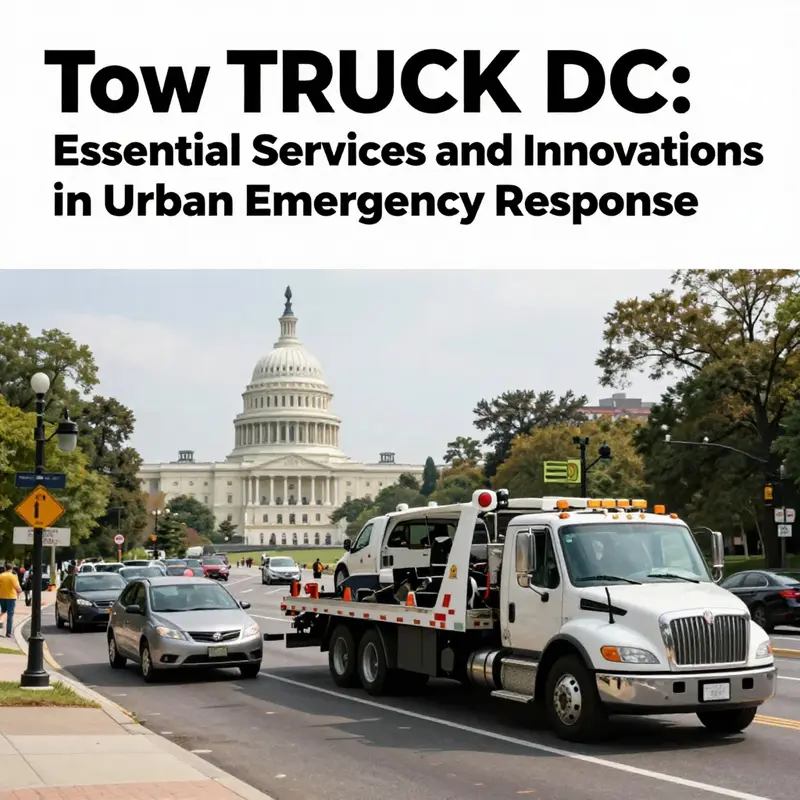
In the bustling environment of Washington, D.C., business owners face unique challenges, including the unforeseen need for towing services. Understanding the local landscape of tow truck operations is crucial not only for personal preparedness but also for ensuring the safety and efficiency of business logistics. Chapter one delves into professional tow truck services available in D.C., highlighting key providers like DC Tow Truck and examining the significance of reliable towing for urban mobility. Following this exploration, chapter two shifts focus towards innovative technologies changing the face of tow truck operations, emphasizing the integration of electrical and hydraulic systems that enhance service effectiveness in a metropolitan context. Together, these chapters prepare business owners to make informed decisions regarding towing services and equip them with knowledge about the latest advancements in roadside assistance.
Towing the Capital: How Washington, D.C. Keeps the City Moving When the Road Hits a Snag
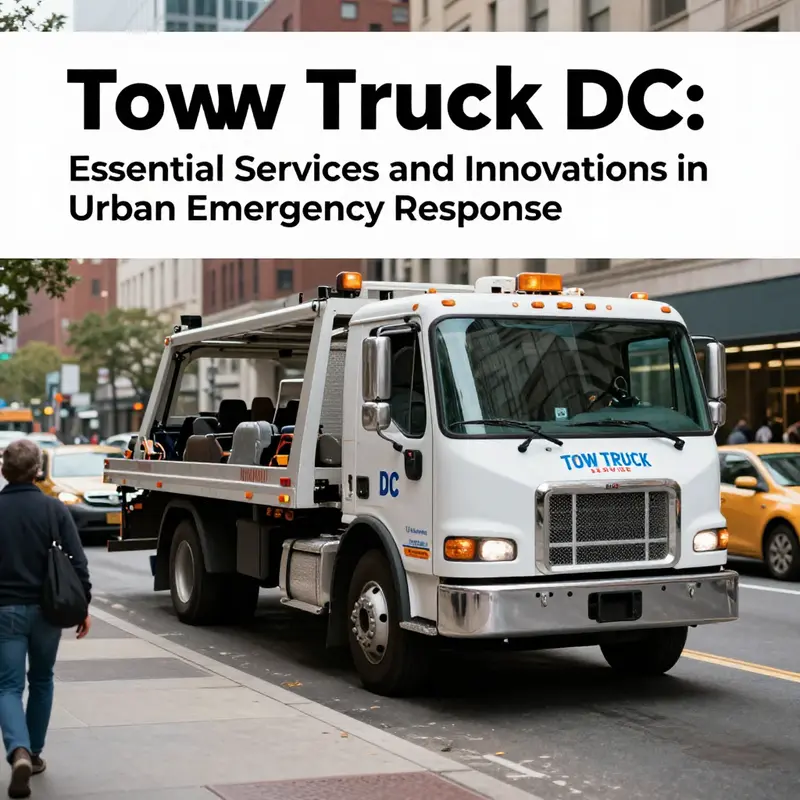
When the city hums at peak hours, every breakdown or stalled vehicle creates a ripple that touches drivers, pedestrians, delivery schedules, and emergency responses. In Washington, D.C., the ability to restore movement quickly is not just a convenience but a crucial element of urban safety and resilience. A tow service network operates behind the scenes, weaving through one way streets, tight parking corridors, and the unique rhythm of government offices and cultural institutions. The people who work in this field are skilled operators, but they are part of a system that blends logistics, safety standards, and responsive technology. Their mission is simple in description yet complex in execution: to bring a stalled car to a safe place, to unlock a car without damage, to deliver fuel or power a dead battery, and to recover a vehicle from a tricky spot without turning a routine incident into a larger disruption. In this context, the value of professional tow truck services becomes a story about urban mobility—how a city can preserve flow and safety even when an ordinary drive turns into an unpredictable interruption.
The core services offered by professional providers in the district are designed to cover the most common and the most challenging situations. Emergency towing, for instance, is not only about moving a vehicle from the middle of an avenue into a nearby repair shop. It is a carefully planned operation that considers traffic conditions, proximity to access points, and the weight and design of the vehicle. Short-distance moves to a neighborhood repair shop or a long-distance transport to a specialized facility demand precise coordination. Beyond towing, the service mix includes flat tire assistance with on-site tire changes that minimize further delays, especially during roadwork periods when shoulder spaces are limited and lanes are tightly managed. Battery jump-starts are another frequent need; a driver arrives with the right jump pack, confirms the battery’s health, and ensures the electrical system is stabilized before the vehicle is allowed back on the road. Fuel delivery is a critical safety feature in areas where gas stations may be scarce at odd hours or where a stranded driver is in a location with restricted access or heavy traffic.
Lockout services, too, occupy an important place in the repertoire. A driver can regain access to a locked vehicle without forcing doors and while avoiding damage to locks or glass. The rationale behind such careful handling is simple: a single misstep can escalate costs, prolong disruption, and complicate safety considerations in a busy city environment. Vehicle recovery and rescue extend the spectrum further into the realm of difficult operations. When a car is stuck in mud, snow, a ditch, or a similarly hazardous spot, professional crews deploy winches, cranes, and stabilizing gear to extract the vehicle safely. These capabilities are not mere curiosities; they are essential tools that enable a rapid return to the street, preserving the city’s rhythm and reducing the probability of secondary incidents.
A defining feature of professional tow services in this urban setting is the breadth of capability they offer around the clock. The 24/7 availability that is often highlighted in the industry is not just a marketing claim but a functional answer to the realities of a capital city. Accidents can occur at any hour, and a stalled car in an off-peak period can create disproportionate disruption if not addressed promptly. Transparent pricing becomes especially important in this context. In a city where street parking rules, meter zones, and permit requirements can influence the feasibility of a roadside intervention, customers appreciate clear estimates and detailed billing that spell out the scope of work, potential extra charges, and the expected timeline. A transparent approach reduces the anxiety that accompanies emergencies and helps drivers plan the next steps with confidence. Some providers also offer a free vehicle inspection after towing, a thoughtful courtesy that helps identify latent issues that might not be immediately obvious but could affect performance or safety once the vehicle is back on the road.
The mechanics of urban towing in a city like DC are deeply influenced by the physical realities of the streets. Narrow lanes, dense curbside parking, and the bureaucratic layers that govern urban mobility all shape how a tow operation unfolds. Crews must navigate an intricate tapestry of traffic signals, pedestrian crossings, and loading zones, often under the watchful constraints of street cleaning schedules and temporary closures related to city events. In many cases, the driver’s first aim is to place the vehicle in a secure location that minimizes exposure to traffic and protects the occupants. That may mean maneuvering into a nearby parking lot, a side street with better visibility, or a dedicated impound area when the vehicle cannot be moved to a repair shop immediately. The skill set required goes beyond mechanical know-how. It encompasses spatial awareness, calm communication with riders and bystanders, and a disciplined adherence to the city’s regulatory framework. The urban tow operator must be able to estimate a realistic recovery path, anticipate the shortest safe route for transport, and communicate those decisions with the customer in real time.
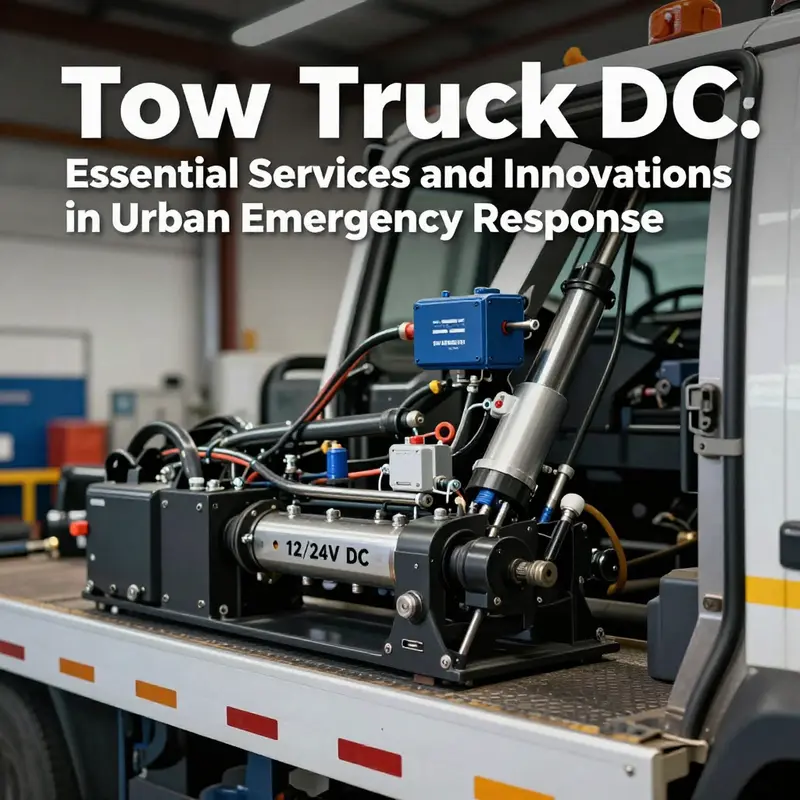
Behind the scenes, modern towing in the district is increasingly powered by compact, efficient hydraulic systems that run on vehicle electrical power. The shift toward 12/24V DC hydraulic power units marks a broader trend toward electrification and energy efficiency in this field. Electric-driven hydraulic systems offer reliability when a vehicle’s alternator is not producing enough power, a common scenario during cold starts or in heavy traffic. They also reduce the need for external power sources in remote locations, which is a practical advantage in neighborhoods removed from immediate access to service stations. This technological refinement translates into smoother operation on a city map where every minute counts. A tow truck with a robust hydraulic system can lift, tilt, and stabilize a vehicle with precision, even when working on uneven pavement or near curbs, while the electronic controls provide feedback to the operator about load limits and system status. As cities push toward greener fleets and more sustainable urban services, the adoption of electric-driven hydraulic systems in the towing sector reflects a natural alignment with environmental goals, noise reduction in residential areas, and improved reliability during off-hours when the city’s energy network is under strain.
The customer experience in this space is shaped by more than speed. It is defined by how clearly a provider communicates, how fairly pricing is handled, and how safely a vehicle is returned to service. 24/7 availability is meaningful only if the service can be reached without tolls on hold for long periods, if the dispatcher can quickly interpret a caller’s needs, and if the driver arrives with a transparent plan. Direct communication has become a hallmark of professional practice in this field. Customers receive real-time updates about the truck’s location and the estimated time of arrival, and they can confirm whether the driver needs to unlock the vehicle, replace a tire, or perform a diagnostic check once the tow leg is completed. The integration of mobile platforms and robust dispatch software makes this possible, turning a potentially chaotic roadside moment into a manageable, coordinated response. A key dimension of this transparency is the option for a free initial assessment post-tow, which helps reveal other issues that may threaten a repeat breakdown, such as a faulty alternator, a failing starter, or a loss of fuel pressure. This attention to detail elevates the service from a simple rescue operation to a preventative maintenance touchpoint that can save motorists time and money in the long run.
In discussing the DC tow landscape, it is important to acknowledge the regulatory and consumer-protection framework that governs these services. The district promotes safety and accountability by encouraging residents to verify credentials, ensure insurance coverage, and seek providers with a proven local presence. The rationale behind these recommendations is straightforward: a licensed, insured operator is better prepared to handle the risks inherent in roadside work, from the potential for property damage to the possibility of injury. Consumers who are informed about their rights are less likely to face surprise charges or tacit agreements that favor the shop over the customer. Public resources emphasize the importance of knowing what options are available during an emergency, including the kinds of services that may be appropriate to a given situation and the typical costs associated with different interventions. For those who are curious about the local landscape of DC tow services, a reference point of this chapter is the practical, on-the-ground experience that operators accumulate in the field as they assist drivers navigating a city where every mile matters. For readers seeking a more practical overview of the local market, see the resource linked here: tow-truck-washington-dc.
Beyond individual incidents, the role of professional tow services in the capital area extends into a broader social and economic function. When a vehicle stops in a high-traffic corridor or in a congested downtown zone, a timely intervention helps prevent cascading delays that could affect public transit schedules, emergency response times, and the cadence of daily commerce. Each tow operation contributes to a larger system of mobility management that city planners and service providers understand intimately. They recognize that the availability of dependable extraction and recovery options reduces the risk for accident-related congestion, allows for faster rerouting of traffic, and supports the smooth enforcement of parking and loading regulations. The reliability of these operations, in turn, shapes the confidence of residents and visitors who depend on roadways to reach schools, workplaces, and cultural venues. This reliability is reinforced by a culture of continuous improvement in the towing profession: ongoing training for drivers, investment in safer winching practices, and the deployment of newer equipment designed to minimize road wear and to protect the integrity of both vehicles and the urban fabric they navigate.
Still, the landscape is not without its cautions. A critical reader may wonder what separates a reputable, licensed provider from a less scrupulous operator. The answer lies in a combination of credentialing, transparency, and proven performance. Reputable services maintain appropriate licenses and insurance coverage, adhere to clear service-level commitments, and provide documented estimates before work begins. They also encourage direct communication with the dispatcher and the driver, which helps demystify the process and reduces the risk of miscommunication during an already stressful moment. For residents and visitors who want to be prepared, creating a small pocket of knowledge about how to choose a responder can save time and prevent frustration in an emergency. The prudent approach is to ask about whether the provider can handle the specific vehicle type, whether they can offer on-site diagnostic checks after towing, and how they handle potential extra charges for fuel, miles beyond the tow, or additional labor. In addition to licensing and insurance, look for a track record of handling different vehicle types, including smaller passenger cars, larger SUVs, and the occasional specialty vehicle that requires careful handling.
The district’s towing ecosystem also reflects a balance between local service availability and the needs of a city with dense traffic, a heavy government presence, and a constant stream of visitors who are often unfamiliar with the area. The best providers position themselves not just as responders in a crisis but as partners who can help a motorist regain control of their day. They recognize that a breakdown is rarely a straightforward mechanical puzzle; it is a moment that affects an individual’s plans, a family’s schedule, or a business’s operational continuity. In this sense, professional tow services act as a conduit for maintaining trust in urban mobility. The city’s infrastructure relies on such services to keep roads open, to reduce the risk of secondary incidents, and to support a safe, efficient recovery from the inevitable hiccups that accompany life in a busy capital.
For residents who want to be proactive, the practical guidance is simple and pragmatic. When calling for assistance, provide clear information about your location, the vehicle type, and the symptoms you observed before the breakdown. If possible, guide the operator toward the safest pickup point and share details about any hazards in the area, such as busy intersections or narrow lanes. If you will be present at the scene, it helps to stay with the vehicle until the truck arrives, which reduces the risk of confusion for the driver and improves overall safety for everyone nearby. After transport, consider a brief post-service check to identify anything that might cause a future breakdown and to discuss preventative steps with a trusted mechanic. A routine check that flags potential issues—like a pending battery replacement, a cooling system problem, or a tire that shows abnormal wear—can prevent a second incident and keep your daily plans on track. In this respect, the relationship between a driver and a tow service becomes a small, but meaningful, element of ongoing urban resilience, where the goal is not simply to solve the moment of failure but to reduce the chance of recurrence through thoughtful follow-up and guidance.
The external reality of street life in the district means that a dependable tow service is not an indulgence but a requirement for a smoothly functioning city. The invisible hand of reliable roadside assistance can mitigate the impact of a breakdown on a family rushing to an appointment, a courier team delivering crucial supplies, or a commuter who relies on a timely trip to the office. This is why the community benefits from a robust framework of standards, reporting, and continuous improvement in the towing sector. The integration of advanced hydraulics, the emphasis on safety, and the commitment to transparent pricing all contribute to a service that aligns with the city’s values of fairness, accountability, and public safety. It is not enough to have the fastest responder on the block; it matters more that the responder acts with caution, communicates openly, and preserves the road’s safety for everyone involved. In DC, where the streets tell a story of power, politics, and pace, a professional tow service stands as a quiet guardian of mobility, ready to restore balance when an ordinary drive meets the unexpected.
External resource: https://www.washingtondc.gov/dot
Bright Signals, Precise Maneuvers: The Tech-Driven Transformation of Tow Truck Operations in Washington, DC
In the heart of a city whose streets weave like a complex map of glass and granite, the role of tow truck operators has never been merely about hauling a car from curb to tow yard. In Washington, DC, the urgency of urban mobility magnifies the stakes. A stalled vehicle can ripple through morning commutes, spill into rush hours, or complicate a construction zone that already teems with pedestrians and cyclists. Against that backdrop, the modern tow truck has evolved from a stout, reliable workhorse into a mobile platform of precision, safety, and data-driven decision making. This transformation is not a flourish of novelty but a practical response to DC’s dense, multi-layered traffic environment, where every second saved on a roadside recovery translates into fewer closing lanes, less gridlock, and safer outcomes for drivers and bystanders alike. The chapter that follows traces how LED lighting, smarter winching, digital diagnostics, and even remotely controlled training devices have moved the profession from reactive fixes to proactive, resilient operations that align with a broader vision of urban safety and reliability.
In DC’s streetscape, visibility is not a luxury; it is a requirement. Here, the move to LED strobe lighting represents more than energy efficiency and longer bulb life. It is a strategic adjustment to a city that accommodates buses, rideshares, cyclists, and pedestrians in a constant, high-stakes choreography. LED strobes deliver brighter, more consistent illumination with less heat buildup, which is crucial when responders work at night, in rain-slicked zones, or near active construction sites. The clarity of LED beams helps other drivers anticipate the tow crew’s approach and the position of the vehicle being recovered, reducing the risk of secondary incidents. In high-traffic corridors and on dimly lit neighborhood streets alike, the reliability of LED lighting supports a more disciplined, safety-forward workflow. For operators who must execute precise deadlifts, hook placements, wheel lifts, and vehicle stabilization while surrounded by the hum of city life, the consistency of LED output matters as much as raw brightness. The shift toward LED strobes is not incidental; it is a well-calibrated response to the complex demands of DC’s urban tempo, where nocturnal calls and daytime chokepoints demand dependable visibility at every moment.
Beyond visibility, the operation hinges on the intelligence that guides every pull and every strap tension. Modern winching systems, equipped with electronic control units and load-sensing sensors, have redefined how to apply force without over-tensioning or risking damage. In the compact real estate of a DC alleyway or a narrow-shouldered lane, precise control becomes the difference between a quick recovery and a misalignment that could strand a vehicle or injure equipment. Load-sensing sensors monitor resistance in real time, allowing the winch to modulate its output, smoothing out jerks and avoiding shock loads that could damage the towed car’s frame or compromise the tow truck’s drivetrain. The integration of ECUs enhances situational awareness, too: dashboards translate mechanical strain into actionable data, signaling operators when adjustments are needed or when a more conservative approach is warranted. The result is a workflow that respects both vehicles and machinery, reducing wear while preserving the integrity of the tow. In DC’s environment, where space often constrains maneuvering room, this automated tact reduces the guesswork that used to accompany manual winching. Operators can approve a measured pulling plan rather than improvising under pressure, and supervisors can verify a move without standing inches away from a spinning winch line.
A further layer of sophistication comes with the digitization of the entire fleet’s health and activity. Digital diagnostics and telematics systems have matured into indispensable tools for fleet managers and field crews alike. Real-time data streams monitor engine health, transmission status, hydraulic pressures, and winch usage. This electronic tapestry enables predictive maintenance: when a sensor indicates rising differential temperatures or unusual vibration patterns, maintenance can be scheduled before a breakdown occurs on a busy artery or during a night shift in a secluded stretch of road. For dispatch operations, telematics offer a map of wear patterns and fuel efficiency trends, enabling smarter deployment decisions that minimize downtime and optimize response times. The value is twofold: it minimizes the likelihood of unexpected failures in the field and it refines the planning process so that the right equipment arrives at the right time with the appropriate attachments for the job. In DC, where road conditions vary from crowded downtown to corridor highways to outer suburbs, this predictive capability is not just a cost saver but a safety enhancer, ensuring the right rig is used for a given recovery scenario and reducing the chance of tunnel-visioned decisions in the heat of the moment.
There is also a growing emphasis on simulative pre-assessment that translates operational risk into controlled, repeatable practice. On-road remote control (RC) systems—lightweight, high-torque, and designed to mimic real-world scenarios—are increasingly deployed to rehearse critical maneuvers before they are attempted with a live vehicle. These RC units can be driven on urban streets or test courses that simulate tight spaces, uneven surfaces, and pivoting challenges, giving crews a first-hand preview of how a real tow will unfold. The aim is not to replace hands-on experience but to augment it, providing a risk-minimizing rehearsal space where drivers can calibrate line tension, anchor placement, and winch sequencing without the immediate hazards of an on-the-road operation. While these remote-controlled tools can be louder and demand higher maintenance, their strategic value lies in elevating the crew’s readiness and confidence when they step into a high-stress recovery. They serve as a bridge between theory and practice, linking the safety protocols, attachment choices, and spatial awareness that DC operations require with a tangible, safe platform to refine technique.
All of these technologies converge to reshape how the DC-based tow operator approaches a call. The urban environment is unforgiving in its need for speed, but speed without precision can compound risk. The modern operator reasons through a layered, data-informed sequence: first, assess the scene with good lighting and an unobstructed view; second, verify the vehicle’s position relative to surrounding traffic and infrastructure; third, select the appropriate stabilizing gear and attachment based on data from the ECUs and load sensors; fourth, initiate controlled winching that respects load limits and environmental conditions; fifth, monitor the process with telemetry that flags any deviations or performance concerns. This is why the industry’s shift toward integrated systems is so consequential. It reduces ambiguity during a high-pressure moment and allows teams to document the recovery with a level of accountability that would have been difficult to achieve a decade ago. For city managers, this clarity translates into more predictable service windows, fewer incidents tied to erroneous tackling of a recovery, and a clearer audit trail when post-accident analyses are required. For drivers and passengers, it means a swifter, safer resolution and a return to normal traffic patterns with minimal disruption.
The interplay between technology and human skill remains central. No amount of automation can replace the tacit judgment that comes from years of urban towing experience, nor should it. Wisely applied, technology acts as an amplifier of good judgment. The operator still reads the street’s micro-dynamics—the way a curb angles toward a parked car, how a bus’s exhaust drifts into the lane, the subtle vibration that hints at a compromised suspension—even as ECUs and telematics provide a second, data-backed voice to guide decisions. In DC, this synergy is more than operational elegance; it is a vital safety practice that keeps responders out of harm’s way while ensuring the best possible outcomes for vehicle owners. It also aligns with a broader industrial trend toward transparency and accountability. The digital footprint of each call—time stamps, winch load curves, engine temperatures, GPS routes—offers a narrative of the recovery that can be reviewed by colleagues, clients, or regulators, if necessary. In a city where public accountability matters, that traceability is invaluable.
In considering these technological currents, it is worth noting a practical nuance: DC, in this context, carries a dual meaning. The industry sometimes uses the acronym to refer to the duty cycle or operating profile of equipment, implying a cadence of use that prevents overheating and ensures sustained performance across back-to-back calls. At the same time, DC anchors the geographic reality of Washington, DC, with its demand for rapid, compliant service in a region dense with institutions, traffic corridors, and unique parking constraints. The convergence of duty-cycle considerations with urban geography fosters a distinct discipline in tow operations: one that treats equipment longevity and scene safety as a joint objective guided by real-time data rather than episodic hard work alone. In practice, this means engineers and operators calibrate their rigs for the city’s unique duty cycles, choosing power units, hydraulic capacities, and attachment kits that harmonize with the daily rhythm of DC’s streets. This attentiveness to both context and capability is what distinguishes a modern tow team from a merely competent one.
The narrative of technological progress in DC’s tow world is not merely about gadgetry. It is about a new calculus of reliability—how to ensure that the right truck arrives with the right tools, how to stabilize a stubborn vehicle in a narrow lane without blocking cross-traffic, and how to document every step of a recovery so that accountability follows the process as closely as the tow line. The urban environment rewards operators who can blend the legibility of a written incident report with the fluid adaptability of a live, on-scene assessment. The internal discipline of the crew—how they communicate, how they log telemetry, how they adjust plans on the fly—becomes as important as the hardware they deploy. A modern DC tow operation, therefore, reads like a well-rehearsed choreography: lighting brightens the stage, winches respond with measured force, diagnostics illuminate the backstage, and remote practice vehicles rehearse the scene before the curtain rises. The result is a service that feels both almost prescient and reassuringly tangible—the sense that, in the city’s busiest hours, help will arrive quickly, move with precision, and leave behind a clear account of what happened.
For readers seeking a broader sense of how these innovations fit into the industry-wide arc of modernization, the technical literature offers a compelling overview. The key takeaway is that LED lighting, smarter winching, digital diagnostics, and remote training tools are not experimental add-ons; they are the core infrastructure of contemporary urban towing. They enable better scene management, better resource allocation, and better safety outcomes. In a city as dynamic as Washington, DC, this translates into a service model that blends speed with responsibility. It is a model that respects the constraints of real streets while leveraging the best of modern engineering to meet those constraints head-on. If one were to trace the throughline from a simple breakdown to a fully instrumented response, the path would be clear: a brighter, smarter, safer, and more accountable practice that keeps pace with the city it serves. And as DC’s roads continue to evolve—more smart signaling, more shared-use lanes, more autonomous testing on the outskirts—the towing profession will adapt in concert, guided by the same principles that have underwritten its recent transformations: reliability, safety, precision, and the disciplined use of data to inform every move.
For readers who want to explore these ideas in more depth, a detailed technical synthesis of the innovations shaping DC tow truck operations is available at the following external resource. This overview situates LED lighting, smart winching, and telematics within broader industrial applications and offers context for their practical deployment in urban settings. https://www.towtrucktech.com/innovations-in-dc-tow-truck-operations. In addition, if you are looking for local context or connections to nearby services and communities, you can consult the DC-focused resources that discuss towing services in Washington, DC and surrounding areas. For example, a local service page that reflects the urban geography and regulatory realities of the capital region can be found here: Washington DC towing services. See https://acex-towing.com/towing-service-washington-dc/ for related information, options, and contact points that illustrate how the technology translates into accessible help when communities most need it.
In sum, the current arc of DC tow truck operations is as much about forethought and planning as it is about brute force. The city’s intricate tapestry of traffic patterns, parking realities, and construction zones requires a disciplined, data-informed approach. The technologies described here—LED lighting for visibility, electromechanical winching with load sensing, and digital diagnostics with telematics—provide the scaffolding for safer, faster, and more transparent recoveries. They empower crews to navigate DC’s street grid with confidence, guided by real-time information and anchored by the quiet assurance that every step of a recovery can be tracked, reviewed, and improved upon. The result is a service ecosystem that not only meets the immediate needs of drivers in distress but also contributes to a broader standard of urban mobility that prioritizes safety, efficiency, and accountability, even in the city’s most demanding moments. If you want to understand how such systems integrate into everyday practice, a practical touchstone can be found through the DC-focused towing service resources, which illustrate how these technologies translate into on-the-ground operations and compassionate, professional roadside assistance.
Final thoughts
As urban centers like Washington, D.C. continue to grow, the demand for reliable tow truck services becomes paramount, particularly for business owners navigating day-to-day challenges. Understanding the intricacies of professional towing services and staying informed about innovations like electric hydraulic systems are key steps in ensuring that businesses can respond effectively to roadside emergencies. By leveraging these services, business owners can protect both their assets and their customers, reinforcing the strength and reliability of their operations in the city.