
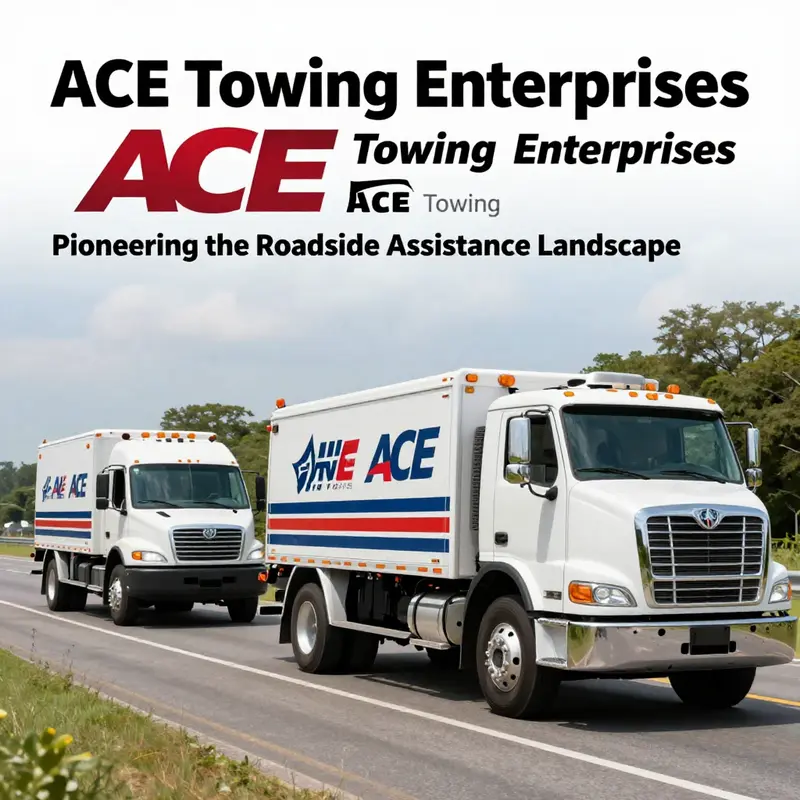
In today’s increasingly mobile society, reliable towing and roadside assistance services are more vital than ever for business owners. ACE Towing Enterprises stands out as a pillar of support in the Lakewood, Colorado area, offering 24-hour service that prioritizes customer safety and satisfaction. This article delves into the operations and services of ACE Towing, provides a comparative analysis with inactive similar entities in Florida, and highlights the significant community impact and customer relations that define ACE Towing Enterprises. Understanding these aspects will empower business owners to make informed choices about towing services and appreciate the role of such companies in local communities.
How ACE Towing Enterprises Operates: Reliable 24/7 Response, Services, and Local Partnerships
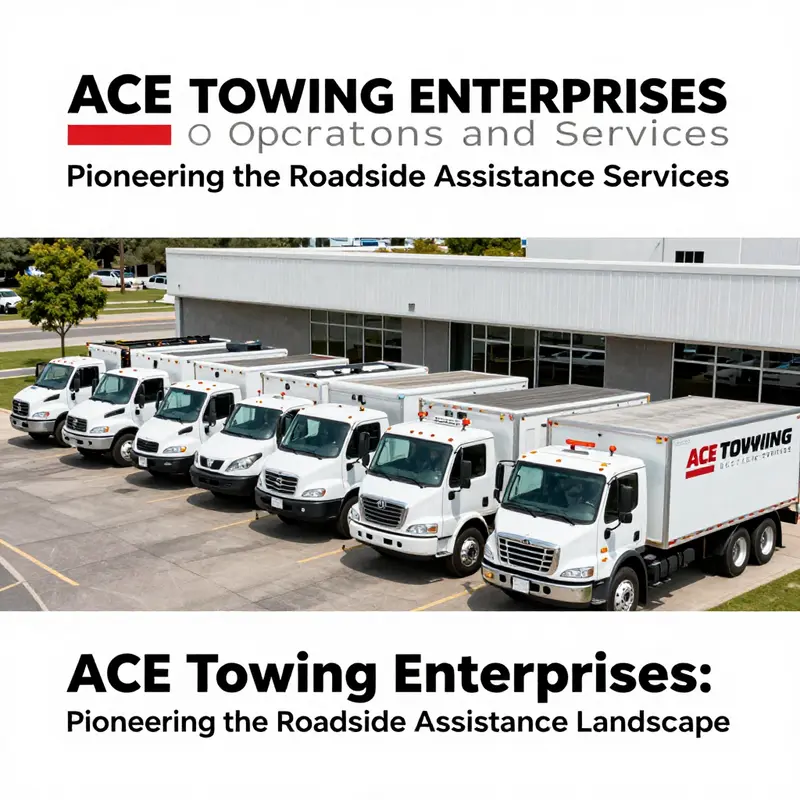
Operational Footprint and Availability
ACE Towing Enterprises operates from the Denver metropolitan area, with its public service point in Lakewood at 7800 W Jewell Ave. The company maintains round-the-clock coverage. Staff and equipment are scheduled to answer calls every hour of every day. This constant availability shapes every other operational decision, from dispatch logistics to vehicle maintenance. Customers know that whether a vehicle fails at dawn or during a late-night commute, there is a crew that can be dispatched and a clear line to reach them at (303) 980-8770.
That 24/7 posture is more than a marketing line. It defines how resources are placed across the region. Towing units and roadside teams are staged so response times are minimized within the service area. Drivers are rotated with attention to fatigue management and certifications. Communications systems link field crews to dispatch in real time, so information about traffic, weather, and incident severity is reflected in each response. Photo documentation of equipment and operations — nineteen images visible on the company’s Yelp presence — reinforces transparency and helps customers set expectations before a crew arrives.
Range of Services and Practical Delivery
ACE provides a broad set of towing and roadside assistance capabilities. For passenger vehicles, light-duty towing covers standard sedans and compact SUVs. Heavy-duty towing handles larger commercial trucks and oversized loads. Specialized equipment towing is available for items that need extra care, such as construction equipment or vehicles with unusual configurations.
Roadside assistance is structured to solve the most common immediate problems a driver faces. Crews perform jump starts, change flat tires, unlock vehicles when keys are locked inside, and deliver fuel when tanks run dry. Battery replacement is offered to restore mobility when a battery is beyond a jump. These tasks are performed on site whenever possible, permitting customers to continue their journey without vehicle transport.
The company also plays a formal role in public safety through impound services. Under contract with local law enforcement, ACE handles tows for accident scenes and impounds. That work requires careful coordination with police procedures and evidence handling. Teams trained in these protocols ensure chain-of-custody requirements are preserved. Handling impounds helps manage traffic flow after incidents and provides a reliable partner for municipal agencies.
Partnerships and Authorization
Strategic agreements extend ACE’s reach and credibility. Partnerships with national motor clubs and state transportation departments allow the company to serve members and travelers under established authorizations. Those relationships require consistent documentation, compliance with contractual standards, and proof of insurance and licensure. Working with these organizations also drives operational improvements; regular audits and performance reviews encourage investment in training and equipment.
For individual drivers, those partnerships mean accepted billing arrangements and a smoother service experience. For public agencies, they mean a vetted vendor that can be relied upon during unusual events or busy periods. The combination of private and public work diversifies the company’s workload and reinforces a culture of accountability.
People, Training, and Equipment Standards
The team at ACE is composed of trained technicians and tow operators. Training focuses on safety, proper rigging techniques, and customer communication. When dealing with disabled vehicles, crews assess risks and choose the correct towing method. Flatbed towing, wheel-lift towing, and heavy-duty rigs are selected based on vehicle type, damage, and location.
Equipment maintenance is prioritized to keep response capability high. Preventive maintenance schedules for tow trucks, hydraulic systems, and winches reduce the chance of equipment failure on scene. Field technicians carry diagnostic tools and parts for common repairs. This preparedness minimizes the need to transport vehicles when a repair on site will suffice.
Operational Transparency and Customer Interaction
ACE emphasizes clear customer communication. Dispatch provides arrival estimates and updates if conditions change. Crews explain the steps they will take and discuss pricing methods when requested. For customers facing stress after an accident or a breakdown, straightforward, calm explanations improve an already difficult situation.
Documentation is another piece of transparency. Photo records and clear paperwork for tows and impounds help eliminate disputes. When towing for law enforcement, reports align with agency requirements. For private tows, receipts and service notes clarify what work was performed.
Local Identity and Differentiation
It is important to distinguish this Colorado-based operation from inactive companies with similar names in other states. Two companies with near-identical names in Florida are listed as inactive in public records. That distinction matters for anyone seeking service or confirming contracts. ACE Towing Enterprises in the Denver/Lakewood area is the active, local provider. Customers should verify service addresses and contact numbers before requesting assistance.
Operational Resilience and Scaling
Strong local operations prepare a company to handle surges. ACE plans for peak demand during storms, holiday travel, and rush-hour incidents. During high-volume periods, additional crews may be staged, and mutual aid agreements with nearby providers can be activated. Scalability relies on trained personnel, maintained vehicles, and effective communication systems.
This approach keeps response times reasonable and preserves service quality. For commercial clients, predictable performance supports logistics planning. For municipal partners, reliable capacity ensures essential services remain uninterrupted.
How to Reach or Learn More
For customers needing immediate help, the Lakewood contact point and 24/7 availability are central. If you want to learn more about ACE’s service scope and local presence, the company’s MapQuest business listing provides an operational overview and location details.
External resource: Ace Towing Enterprises Inc. – MapQuest: https://www.mapquest.com/business/ace-towing-enterprises-inc-denver-co
Internal link: For information on round-the-clock support options, see the ACE 24-hour towing page: https://acex-towing.com/ace-24-hour-towing/
Status in Motion: A Cohesive View of ACE Towing Enterprises and Florida’s Inactive Counterparts
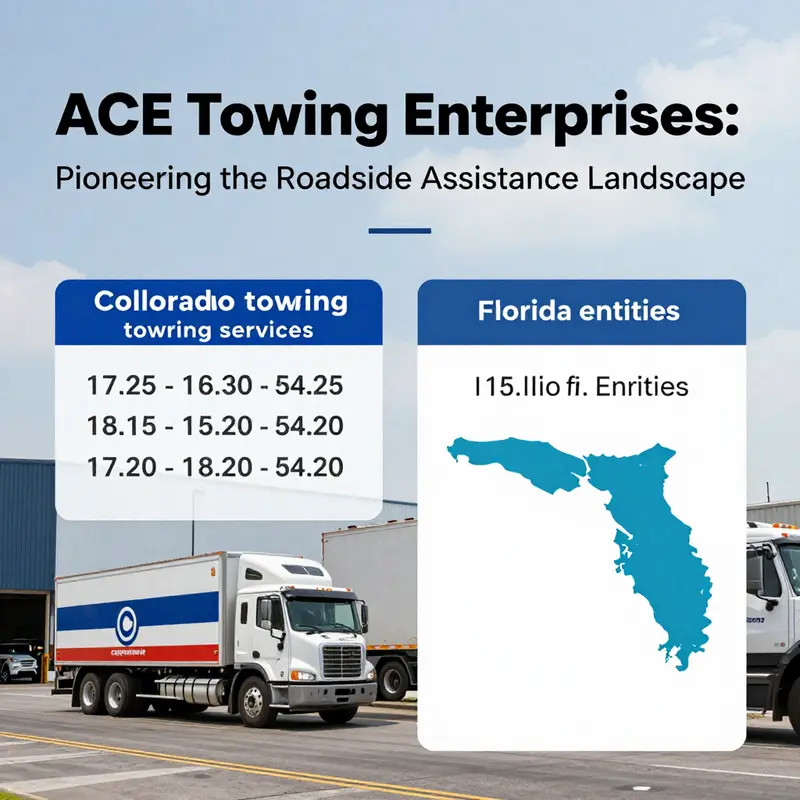
In the crowded field of roadside assistance, the name ACE Towing Enterprises stands out not for a single flashy slogan, but for consistency and reliability that a local customer can trust when wheels run to a stop. This chapter looks closely at the narrative behind that name, using it as a lens to understand how a single business identity can exist in a thriving, permanently active form in one state while similar-sounding entities drift into inactivity in another. To make sense of the landscape, we start with the Colorado operation, then juxtapose it with the Florida counterparts that have faded from active status. The goal is not to disparage the past; it is to illuminate why status matters in choosing a towing partner and how careful due diligence protects both customers and the broader reputation of a service industry that relies on trust as much as speed.
ACE Towing Enterprises operates from Lakewood, Colorado, a western suburb of Denver, and has more than three decades of history behind its name. The business profile that emerges from public observations is one of stability and round-the-clock readiness. A 24/7 service window is not merely a selling point; it is the core promise of a company that understands the unpredictable rhythms of road incidents. The operational cadence—continuous availability across every day of the week—speaks to a business model designed for emergencies, not for weekend downtime. In a sector where timing can be the difference between a delayed commute and a smooth return to the road, this level of accessibility signals market maturity and a cultivated network of drivers, dispatchers, and partners committed to rapid response.
Beyond the hours and the geographic reach, ACE Towing Enterprises is anchored by longevity. Over thirty-four years in the marketplace is more than a timeline; it is a credential that transcends marketing language. Longevity implies repeat customers who recognize reliability, and it implies that the company has weathered economic cycles, regulatory shifts, and evolving safety standards. In local markets like Lakewood, a long-standing operator often becomes part of the community fabric: a familiar presence on the street, a known phone number in the neighborhood, and a predictable path for urgent help when a vehicle turns into an immobilized object on the side of the road. The company’s public footprint—up-to-date contact information, a consistent address, and a portfolio of visuals that depict its fleet and staff—contributes to a narrative of accessibility. In the online ecosystem, such a footprint reinforces credibility; even listings on broad platforms can function as important touchpoints for first-time customers who rely on a blend of immediacy and trust when choosing a tow partner.
The Florida landscape offers a contrasting case study tucked within a broader caution about name similarity and corporate status. Two entities bearing a closely matched name—ACE TOWING, INC.—are listed as inactive in state records, with distinct registrations and office locations that place them in Sunrise and Spring Hill. The Florida Division of Corporations, often consulted for official status, records these entities as dormant or non-operational. In practical terms, this means there is no ongoing business activity, no active licensing for towing, and potential legal entanglements around tax obligations or corporate compliance. The absence of routine business activity in these entities is a signal to the public that, despite the shared name, they do not offer the same services or guarantees as an active operator. This distinction matters in real-world decisions. A customer who encounters a similar name in Florida may assume a local option is available when, in fact, the entity in question has stepped away from the market. The Florida cases underscore the hazards of relying solely on lexical cues—names that look alike or sound alike—without confirming current operational status.
This juxtaposition yields two clear patterns. The first pattern centers on operational status as the gateway to service reliability. ACE Towing Enterprises in Colorado exhibits continuity, which nurtures trust. An active status supports transparent billing, consistent dispatch procedures, and accountability. The second pattern highlights the risks of name-based assumptions across state lines. The Florida entities, though legally registered in the same namespace, reveal how a dormant status interrupts the pipeline between a customer’s need and the service provider’s ability to fulfill it. When this disconnect exists, the customer bears unnecessary risk: misdirected inquiries, potential confusion in emergency timing, and even exposure to less scrupulous actors who might use a similar name to lure customers into less robust arrangements. The difference between an living, accountable business and a dormant registration is not a trivia point; it is the essential context that informs safer, more informed choices in a high-stakes service, often rendered in the urgency of a roadside moment.
From a consumer perspective, the implications are tangible. In an industry built on speed, accuracy, and reassurance, the status of a company determines not only whether help arrives but also how help is rendered. An active operator can provide real-time dispatch updates, transparent pricing, and established procedures for vehicle care and liability. An inactive entity, by contrast, sits outside the live service loop. It cannot guarantee response times, continuity of care, or accountability for damages that might occur during towing or storage. Such a gap is not merely inconvenient; it can lead to disputes that escalate far from the roadside and into the realm of credit and compliance concerns. These distinctions reinforce the importance of verifying a business’s current standing before engagement, especially when a name shared across state borders could mask very different realities on the ground.
The broader lesson extends beyond the specifics of these CO and FL cases. The towing industry thrives on references and signals—phone numbers, addresses, website presence, and directory listings—that help customers locate help at moments of vulnerability. Yet these same signals can mislead if they do not reflect current operations. The Colorado operator’s longevity and continuous service signal a mature business model, one that investors, partners, and customers can rely on. The Florida cases illustrate a cautionary tale about identity, compliance, and the necessity of authoritative verification. In practice, consumers can guard against confusion by cross-checking the status of a business across official registries, confirming active licensing where required, and using well-maintained local listings that clearly state service availability. The result is a more predictable, safer experience when the vehicle breaks down or when a fleet needs urgent repositioning.
For readers seeking a concrete example of how a local operator presents itself, a quick look at the Colorado listing can offer further context about governance through public-facing information. This internal reference mirrors the broader idea that a stable, active status is often accompanied by a clear, accessible digital footprint that supports timely decision-making in crises. By combining this public-facing realism with due diligence checks, a customer can distinguish a trusted partner from a dormant name that no longer delivers in the moment of need. It is this synthesis of status awareness and practical verification that elevates the decision from a hopeful call for help to a confident, repeatable choice in a stressful situation.
To explore a more tangible sense of how one active operator frames itself in the local market, consider the internal link that centers on the idea of accessibility and proximity captured by the phrase ACE towing near me. This reference anchors the discussion in a real-world context while maintaining a careful boundary around brand positioning. In practice, such internal cues complement official status checks by illustrating how customers commonly discover and evaluate service options in their immediate vicinity. The interplay between public presence and regulatory reality shapes what customers can reasonably expect when they dial a number, arrive at a location, or request on-site assistance. The outcome is a grounded, empathetic portrait of how status translates into service on the pavement and in the workaday flow of a towing enterprise that serves as a lifeline when wheels must stop and restart.
External context reinforces the narrative with a corroborating snapshot from a well-known directory listing that documents ACE Towing Enterprises in Denver, Colorado. This external reference complements the localized account by offering an additional layer of verifiability that customers can consult beyond the company’s own materials. It is a reminder that trustworthy operators maintain a transparent and verifiable public profile, a characteristic that aligns with the best practice of cross-referencing status and provenance before engaging any roadside assistance provider. Readers seeking a broader snapshot of the active operator’s standing may consult the following external resource for corroboration: https://www.mapquest.com/business/ace-towing-enterprises-inc-denver-co. The pairing of a transparent public footprint with a verified active status helps readers form a nuanced judgment about whom to trust when the next emergency arises. In this way, the comparative analysis of active Colorado operations and inactive Florida entities becomes more than a theoretical discussion; it becomes a practical framework for safer, more informed decisions on the road, where status is as critical as speed.
Tow Trains of Trust: Building Community Safety and Customer Relationships with ACE Towing Enterprises in Lakewood
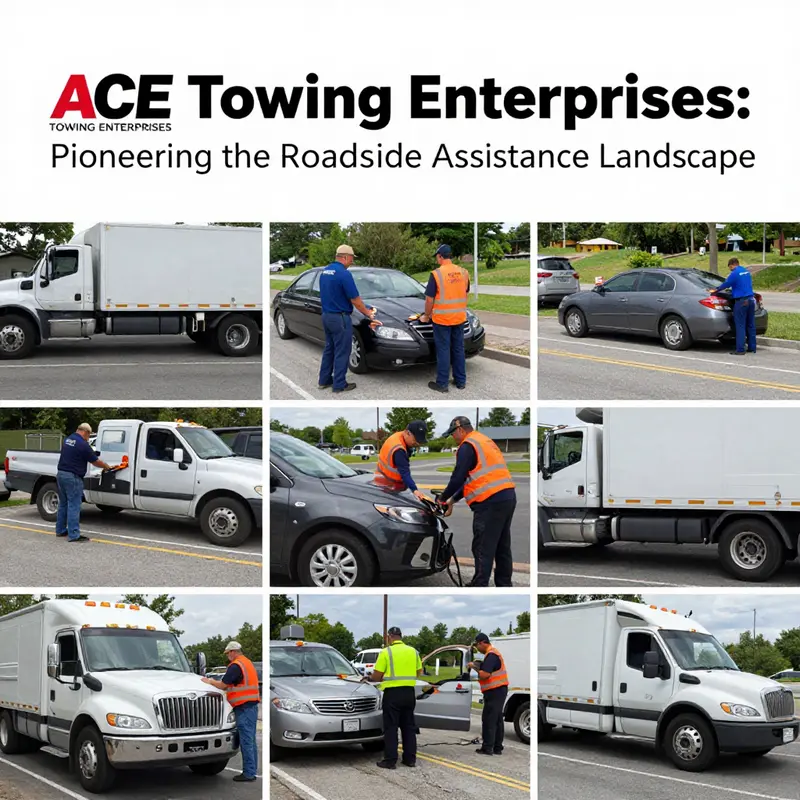
In Lakewood, ACE Towing Enterprises stands as more than a roadside helper; it is a local fixture that threads safety, reliability, and community trust into the rhythm of daily life. Located at 7800 W Jewell Ave, this operation is a tangible reminder that emergency assistance isn’t just about getting a car off the road but about preserving the fabric of a neighborhood in moments of vulnerability. The company’s 24/7 availability, echoed in updates from local reviews, underscores a commitment to being present when the road is least predictable. For residents and visitors alike, knowing there is a steady, nearby hand ready to respond—whether a vehicle has stranded a commuter on a quiet weekday night or a family on a weekend excursion—is itself a preventive measure. Quick arrival times do more than ease a single breakdown; they contribute to safer streets by reducing the time a stalled vehicle sits in traffic, mitigating the risk of secondary incidents, and easing the pressure on nearby drivers who might otherwise take abrupt, risky actions to exit a jammed lane. In that sense, the service is not merely transactional; it becomes a quiet safeguard woven into the city’s daily traffic narrative.
The speed at which ACE Towing responds often shapes a broader public perception of reliability and accountability. Promptness is more than a virtue in this line of work; it translates into tangible outcomes for road safety. When a driver’s vehicle fails on a busy arterial or in a wet evening commute, a rapid dispatch means less time spent in the deteriorating conditions that can escalate into accidents or road hazards for other motorists. The company’s operational model appears to prioritize those outcomes, balancing the realities of urban traffic with the need to reach clients with minimal delay. This balance is not accidental but a disciplined component of community service. It is about being where people need you, and being able to offer a clear, credible expectation of arrival that a stranded driver can plan around rather than fear.
Equally important is the channel of communication that ACE Towing emphasizes with customers. Transparency, a cornerstone of trustworthy service delivery, is not merely about telling a client what will happen; it is about inviting them into the process in plain terms. Clear explanations of what kind of toll or fee structure applies, how the towing will be conducted, and what the next steps look like helps demystify the experience for someone already under stress. For a resident who has never used a tow service before, such openness can convert a one-time interaction into lasting confidence. When a customer knows what to expect—ETA, the approximate duration, the safety measures being followed, and how the service will be performed—the encounter feels less transactional and more respectful. In a community context, this transparency breeds trust that travels beyond a single call. It becomes part of the social contract that neighbors extend to one another: dependable help when needed, plus straightforward communication that honors the person at the other end of the line.
ACE Towing’s approach to customer relations also reveals a broader sensitivity to how people experience a tow as a moment of disruption rather than a simple service event. The company’s emphasis on proactive communication can be understood as a response to the emotional stakes involved in roadside emergencies. A driver who is already late to an appointment, a parent balancing car seats and schedules, or a student navigating a late-night campus run all deserve to be treated with dignity and respect. In practice, this translates into practical, human-centered practices: updates that acknowledge the user’s time constraints, options that compare different approaches to resolving the breakdown, and a willingness to explain why certain actions are necessary. The net effect is a relationship built on clarity and reliability rather than secrecy or ambiguity. When such a relationship exists, clients are more likely to rely on the same service in the future, choosing to stay within a trusted local network rather than seeking alternatives mid-crisis.
Beyond the immediate interactions with customers, ACE Towing positions itself as a community partner through engagement that goes beyond the roadside. Local sponsorships and participation in neighborhood events reflect a commitment to the social ecosystem that supports safe travel. This engagement extends past the moment of service delivery and into the shared spaces where residents gather, learn, and reinforce safety norms. By supporting local initiatives and contributing to emergency response training, the company reinforces a culture of preparedness that resonates with drivers and families alike. Such involvement communicates that the business sees its role not only as a commercial service provider but as a steward of public welfare. When a company steps into community life in this way, it transforms from a vendor to a familiar, dependable presence—someone people recognize not just for performance in a particular incident, but for ongoing contributions to the common good.
In the long arc of community impact, the ripple effects of ACE Towing’s operations become clearer. Reliable, prompt service reduces the time vehicles spend immobilized on busy corridors, thereby shortening exposure to hazards and congestion. Transparent communication fosters trust, which translates into reputational strength and customer loyalty that outlasts a single encounter. The combination of quick response, clear information, and visible community involvement fosters a sense of safety and belonging that residents can rely on during stressful moments and plan around in their daily routines. This is not merely about getting someone back on the road; it is about reaffirming the city’s social contract—one where the neighborly hand that reaches out in a moment of need is also a steady presence in the broader community life.
For readers seeking a broader frame beyond the local example, the relevance of how roadside services interact with community welfare is well documented. External perspectives from professional associations emphasize that safety and customer service are inseparable in this field, with best practices built around transparency, timely response, and constructive engagement with the public. See the National Association of Roadside Services for a broader context on how community safety and customer service intersect across local providers. To explore a practical example of ongoing 24/7 availability, you can follow related information about ACE’s 24-hour offering here: ACE 24-Hour Towing.
Readers should note that there are two similar-named, inactive ACE TOWING entities in Florida, which helps clarify potential confusion with the Lakewood, Colorado operation discussed here. This distinction is important for anyone seeking service or trying to verify local licensing and accountability. In Lakewood, the focus remains on dependable access to help, transparent communication, and active participation in the health of the local transportation ecosystem.
In sum, ACE Towing Enterprises in Lakewood illustrates how a roadside service can influence community safety and customer relations beyond the moment of tow. The combination of rapid response, clear communication, and intentional community involvement creates a model where a service interaction becomes a component of a larger civic good. When a tow company shows up not just to move a vehicle but to move the community toward safer, more informed travel, the road itself seems more navigable for everyone involved. For those who rely on a nearby partner in times of stress, that reliable presence—grounded in practice, not promise—matters as much as any fee or ETA. And it is that presence, more than any single act, that leaves a lasting impression on a town and its people.
External resource: https://www.nars.org/community-safety-and-customer-service
Final thoughts
ACE Towing Enterprises operates as an essential service provider in Lakewood, Colorado, exemplifying how a dedicated towing service can positively impact both the business landscape and the community at large. In contrast to inactive competitors in Florida, ACE Towing sets itself apart through reliability, comprehensive services, and strong customer relationships. Business owners considering roadside assistance services would be well-advised to engage with a committed local entity like ACE Towing, who not only understands the importance of rapid responses to roadside emergencies but also prioritizes the well-being of their community.