
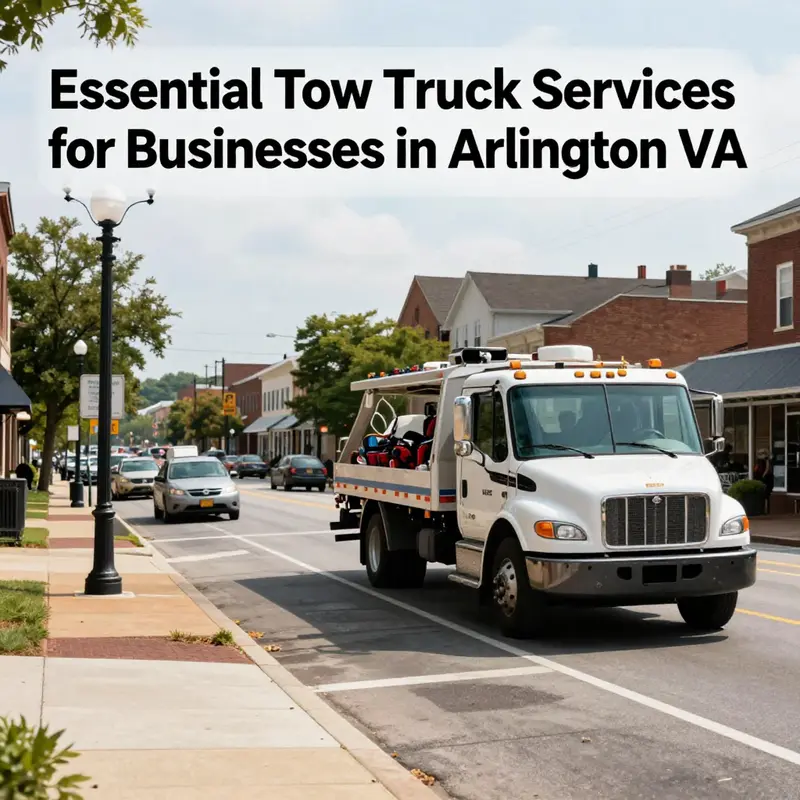
For business owners in Arlington, Virginia, understanding the intricacies of tow truck services is essential. Towing not only provides crucial support during emergencies but also plays a vital role in maintaining order on public roadways and within private properties. Key service providers such as Arlington Tow Truck, Triple Time Towing, and Eagle Towing ensure that businesses can handle vehicle issues efficiently, minimizing downtime. Additionally, local towing regulations inform owners on the rights and responsibilities associated with towing vehicles that violate parking rules. The subsequent sections will delve deeper into the major towing services available, the important local regulations governing towing activities, and the broader community impact of these services on road safety and accessibility.
Lifting Arlington’s Roadside: How a Cohesive Tow Truck Network Keeps the City Moving
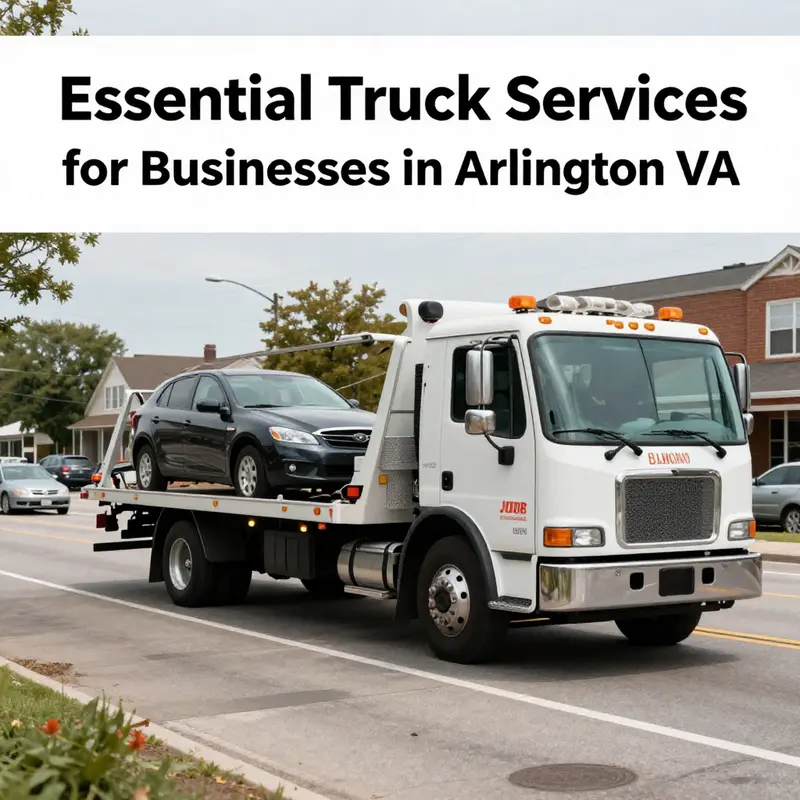
Arlington’s roads form a living grid, where a breakdown, a fender bender, or a sudden lockout can stall someone’s day or night. In those moments, the town relies on a cadre of tow truck operators who are ready at any hour to lift a vehicle from the curb and carry it to safety. The appeal of this service lies not just in muscle and machines, but in a seamless choreography: fast dispatch, careful lifting, and clear communication that keeps drivers informed from the moment the call is placed to the moment the car is back on solid ground.
Over the past years, Arlington has built a robust network of local operators who cover the city and stretch into nearby communities such as Falls Church. What unites them is a shared focus on reliability. A typical call saga begins with a dispatcher logging the location and the vehicle’s condition, then pairing the driver with a tow truck equipped for the specific job—whether a roadside recovery, a jump-start, or a wheel-lift tow. The crews bring more than equipment; they bring training in safety, vehicle handling, and customer courtesy. The result is service that respects both the vehicle and the person waiting on the curb, often reducing the stress that accompanies a breakdown.
For Arlington-specific service details and guidelines, the Arlington towing page provides official information. Arlington towing page.
Beyond speed, the real value is coverage. The network ensures timely help across different neighborhoods and during off-peak hours. In Arlington, as in neighboring Falls Church, drivers rarely wait long for assistance because the operators maintain a local presence and efficient routing, aided by real-time updates from central dispatch. The dispatch-to-driver handoff is a quiet symphony: someone calls for help, a dispatcher pinpoints the closest available unit, the driver heads toward the scene, and once the work is done, the vehicle is returned to its owner or transported to a repair facility as needed. This reliability matters not only in emergencies but in the continuity of daily life, where a stalled car in a busy corridor or a blocked driveway can ripple through a neighborhood.
Regulatory context anchors this service in public safety. Arlington’s rules are designed to deter abandoned vehicles and to keep roadways clear, with enforcement that balances deterrence with public access to vehicles. When a car is considered abandoned or poses an obstruction, it may be towed and held at the county impound facility, pending retrieval. Homeowners, commuters, and fleet managers alike can consult the county’s official guidelines to understand what qualifies as a tow, how to recover a vehicle, and what documentation is required. In practice, the process emphasizes transparency and fairness, ensuring that motorists are informed of the location of their vehicle, the reason for tow, and the steps to reclaim it.
As these operations mature, the experience for drivers continues to improve. Many local operators invest in ongoing training that covers safe hitching, secure wheel straps, and the delicate handling of newer vehicles with sensitive electronics. The best operators blend efficiency with empathy, arriving with a calm, professional presence that can turn a stressful situation into a manageable one. The road becomes less intimidating when response times shrink and the vehicle’s condition remains intact; a well-executed tow can prevent further damage while enabling a quick path to staging areas or repair shops. In practical terms, this means a service that respects people’s time, neighborhoods, and property, while delivering the practical certainty of a tow that arrives when promised and leaves no mess behind.
In the chapters that follow, readers will find practical guidance for selecting a reputable provider and navigating the administrative steps that accompany a tow. The overarching takeaway is that Arlington’s tow truck ecosystem thrives on coordination, local knowledge, and a commitment to service that extends beyond the moment of lift. It is this quiet network—present around the clock, ready to respond, and governed by clear rules—that keeps the city moving when wheels fail and traffic grinds to a temporary halt.
Arlington County Vehicle Towing: Practical Guidance for Residents and Property Owners
Arlington County’s towing rules emphasize safety and fairness. Towing on private property should occur only when there is a clear violation or hazard. Written notice is required, and storage fees are capped to prevent excessive charges. Signage must clearly indicate towing zones; when signs are missing or unclear, disputes may arise but the rules still guide enforcement. Licensed and bonded tow operators manage the process, including notice, storage, and fee handling. Residents can verify rules via official county resources and locate towed vehicles through county channels. The Arlington County Code’s Vehicle Towing and Storage Regulations provide the authoritative guidance, and the Arlington-towing page offers a concise overview for residents seeking current information.
Accessibility in Motion: Arlington’s Tow Truck Network, Road Safety, and Community Confidence
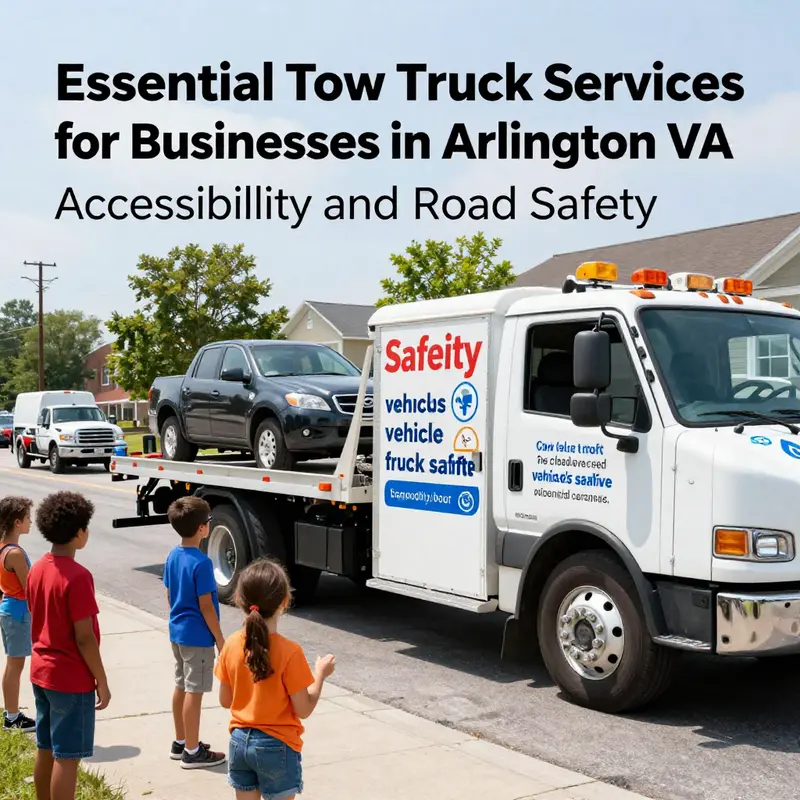
Tow trucks in Arlington are more than roadside fixers; they are woven into the fabric of the city’s mobility, safety, and daily rhythm. When a vehicle stalls on a busy artery, or an accident blocks a lane near a school or transit hub, the speed and reliability of towing services determine how quickly the street returns to normal and how safely people move through it. In Arlington’s compact, mixed-use streets, every minute counts. The prompt clearance of a stalled car or wrecked vehicle keeps drivers from clogging through lanes that feed into major corridors, supports bus and rail connections, and preserves space for pedestrians and cyclists who share sidewalks and crosswalks with vehicles. This is not merely about removing a car; it is about preserving the continuity of a transportation network that many residents rely on daily, whether they are commuting to work, dropping children at school, or visiting healthcare facilities on tight schedules.
Road safety depends on more than fast service. It rests on the way a tow operator handles a scene, protects other road users, and coordinates with police, emergency responders, and transportation planners. Arlington’s roads carry a steady influx of vehicles from nearby suburbs, plus commercial fleets delivering goods to local shops and institutions. A professional tow operation arrives with trained personnel, clear communication, and equipment that minimizes risk to bystanders and other motorists. Proper lighting, reflective gear, and cones or barriers help create a safe work zone even in rain, dusk, or early morning hours. By guiding traffic away from the incident and rerouting where possible, responders reduce the likelihood of secondary incidents—those unfortunate rear-end collisions or side-swipe mishaps that often compound the original problem. In this sense, towing services are a frontline element of road safety, closely tied to traffic management and incident response protocols that keep emergency routes open for ambulances and fire units when every second counts.
Accessibility is the other side of the safety equation. Arlington’s towing network operates around the clock, ensuring that a qualified team can reach a disabled vehicle or crash scene at any hour. The practical benefits of this around-the-clock availability become especially clear during adverse weather, after late-evening events, or along routes serving hospitals and government centers. A nearby operator reduces wait times, which in turn reduces the time a vehicle spends in a potentially hazardous position—on a shoulder, in a turn lane, or near pedestrian crossings. Quick, reliable service also minimizes the duration of traffic disruption, helping residents maintain schedules, employers meet delivery deadlines, and schools stay on time. The sense that help is consistently nearby reinforces public confidence in the transportation system and the city’s capacity to manage disruption without spiraling delays.
Regulatory clarity underpins both accessibility and safety. Arlington enforces clear provisions regarding vehicles that are abandoned or obstructing public pathways. The local framework governs tow operations, impound procedures, and the process by which motorists locate or reclaim towed vehicles. The county provides official guidelines through its Towing and Impound Lot and website, which helps residents understand when a tow may occur, what records are needed, and where to seek updates. This transparency matters because it reduces confusion during stressful moments and prevents prolonged impasses on busy streets. When rules are straightforward and impound processes are well publicized, the entire system operates more smoothly, and trust among drivers, property owners, and responders strengthens. In practice, drivers know whom to call, what to expect, and how to retrieve a vehicle if it has been towed, which keeps traffic flowing and minimizes unnecessary friction with authorities.
The community-wide impact is best understood through the lens of service quality and public reception. A well-regarded local operator—recognized by residents and commuters for dependable response times and professional handling—illustrates how a robust towing network supports daily life. Even without naming specific brands here, the pattern is clear: rapid arrival, clear ETA updates, careful vehicle handling, and courteous, informative interactions with motorists and bystanders collectively reduce stress and build a culture of reliability around roadside assistance. This reliability matters not only for individual drivers but for small businesses that rely on predictable transportation windows, healthcare facilities that depend on timely patient transfers, and municipal services that must keep routes open for sanitation, maintenance, and public safety operations. The city becomes more resilient when its roadside helpers operate as a well-coordinated part of the urban ecosystem rather than a fragmented, unpredictable network.
For readers seeking a concise overview of current local options and regulations, Arlington’s towing resources are accessible through the Arlington Towing page, which consolidates service options and guidance in one place. This internal resource provides a practical entry point for residents and visitors alike, linking to contacts, FAQs, and impound information in a way that supports informed decision-making during emergencies or routine roadside needs. In this sense, the chapter’s larger argument—about accessibility and road safety as community outcomes—rests on a simple premise: when a city maps its roadside help as thoroughly as its streets, it empowers people to move with confidence, even when things go wrong.
External resources and community feedback further anchor the credibility of these services. While the specifics of each call vary, the overarching pattern remains consistent: timely arrival, professional handling of the vehicle, and respectful interaction with road users. This constellation of factors contributes to a safer driving environment and a more resilient neighborhood, where residents feel supported by a network that stands ready to help at any hour.
External resource: https://www.yelp.com/biz/triple-time-towing-falls-church
Final thoughts
Understanding tow truck services in Arlington is vital for business owners who may face unexpected vehicle issues. The chapter on service providers highlights the importance of having reliable towing options available 24/7. Familiarity with local towing regulations is equally essential to protect your business from potential liabilities and to ensure compliance with city codes. Finally, recognizing the community impact of tow trucks underscores their role in enhancing road safety and accessibility, benefiting not only businesses but the wider community. By utilizing these services correctly, business owners can improve their operational efficiency and contribute positively to Arlington’s roadway dynamics.