

For business owners in the transportation and logistics sectors, understanding the importance of reliable towing services is crucial for smooth operations. Ace 24 Hour Towing provides essential support to businesses by responding swiftly to unforeseen vehicle issues. This article will explore the significance of these services in Chapter One and delve into the technological advancements that enhance efficiency in Chapter Two, providing a comprehensive view of Ace 24 Hour Towing’s impact on businesses.
Under All Hours: How Ace 24 Hour Towing Rewrites the Rules of Roadside Rescue

When night folds over a quiet highway and a car suddenly coughs, the world narrows to the glow of a dashboard, the pause between decision and movement, and the distant certainty that help is on the way. In moments like these, the value of a 24-hour towing service becomes less about a mark on a map and more about a human response that respects time, safety, and dignity. Ace 24 Hour Towing enters the scene not as a distant option but as a reliably present partner, ready to translate the distress of a breakdown into a clear path forward. The service philosophy rests on a simple premise: speed matters, but speed without competence can complicate matters. So the dispatch centers, the drivers, and the technicians converge on a shared objective—to minimize risk, reduce waiting, and restore momentum. The confidence drivers feel when the yellow glow of emergency lights stretches across the asphalt often comes from weeks of practice, continuous training, and a fleet of rolling tools that are as careful with people as they are with vehicles.
To understand why Ace 24 Hour Towing has become more than a stopgap solution, it helps to observe the choreography of a typical call. A driver requesting help is not met with a blank promise but with a quoted time window that respects local conditions, traffic, and the specifics of the breakdown. In urban corridors and rural stretches alike, the time from request to arrival is more than a metric—it’s a promise kept in real time. The service network is designed to reach most motorists within a practical window, typically 30 minutes to an hour, depending on the location and the nature of the call. That consistency matters because it transforms a potentially chaotic moment into a series of predictable actions: the arrival, the assessment, the selection of the correct vehicle for transport or on-site assistance, and the eventual resolution that gets a driver back behind the wheel.
What follows the arrival is a broader spectrum of offerings that elevate 24-hour towing beyond mere vehicle movement. Emergency towing is often the apparent necessity—removing a disabled car from busy lanes or a high-speed shoulder where a stalled vehicle can become a hazard to others. But the Ace network thinks beyond the hazard itself. Accident recovery is conducted with an eye toward minimizing further risk, preserving evidence when appropriate, and ensuring the scene is made safe for all involved. In some circumstances, winch-out operations prove essential when a vehicle is mired in mud, snow, or gravel. The capability to handle such recoveries underscores a fundamental point: modern towing is as much about technical finesse as it is about brute force. A critical facet of these operations is the handling of shifting loads or stabilizing a vehicle that may present multiple risks during extraction. The professionals understand weight distribution, friction points, and the trajectory of a careful recovery, an awareness that protects both people and machinery.
Within this framework, on-site repairs and rapid diagnostics become the quiet heroes of a journey interrupted. Jump-starts for dead batteries, tire changes on the roadside, and fuel delivery for drivers who have misjudged fuel needs all contribute to a faster return to the road. It is not uncommon for the technician to perform diagnostic checks on-site, identifying electrical faults, blown bulbs, or minor faults that can be rectified in minutes rather than hours. These small interventions—often overlooked by the casual observer—can prevent larger safety concerns, such as a dim headlight during night driving or a misfiring electrical system in rain. The ability to diagnose and execute minor repairs on the spot illustrates a broader truth about 24-hour towing networks: they are mobile garages, equipped and prepared to address a surprising range of problems with speed, accuracy, and care.
Specialized situations test the depth of any towing operation, and Ace answers with a blend of ingenuity and caution. Vehicles trapped in underground garages demand careful planning to avoid damage to the structure or to the vehicle itself. In such settings, the approach must account for tight access routes, the presence of other drivers, and limited maneuvering space. The technicians bring specialized equipment and a calm, strategic mindset to these scenarios, ensuring a safe extraction that respects the confines of the environment. Winter adds another layer of complexity, with de-icing and snow removal services that keep routes accessible and reduce the risk of new incidents when temperatures plunge. Each specialized service is a reminder that road safety is a continuum, not a single act of rescue, and that a robust 24-hour network is built to adapt to conditions as they evolve.
Beyond the mechanical and logistical, Ace 24 Hour Towing places emphasis on convenience and reassurance for the motorist and the family waiting at home or at the workplace. A free vehicle inspection upon arrival at a repair shop, for instance, helps to establish a baseline understanding of a vehicle’s condition. This is not a one-and-done check but a diagnostic snapshot that informs future maintenance, reduces the chance of repeat emergencies, and strengthens trust. Priority access to repair facilities ensures that when the vehicle is determined to need more extensive work, the owner is not left waiting in a limbo of uncertain timelines. Interior sanitation, too, has become a meaningful touchpoint in contemporary roadside service. A clean, comfortable space—whether inside a shop or on a tow truck with a driver who makes every effort to minimize discomfort—transforms an anxious disruption into a more manageable experience. It is in these details that the service’s character reveals itself: meticulous, considerate, and relentlessly attentive to the human dimension of a breakdown.
In practice, the Ace network also anchors its operations in local knowledge. Road layouts, parking structures, and common trouble spots differ from neighborhood to neighborhood, city to city. A driver dispatched to Washington DC, for example, benefits from familiarity with one-way streets, privileges, and the rhythm of highway on-ramps that vary across districts. To illustrate how this translates into a more efficient encounter, consider a driver in the District who needs help quickly near a congested arterial. The response is tailored: the dispatcher assigns the most suitable vehicle, the operator coordinates with traffic control if necessary, and the route planned minimizes exposure to peak-hour delays. For readers navigating the DC area, a nearby option is accessible here: towing service in DC. This link anchors the narrative in a tangible, locally relevant reality and demonstrates how a nationwide concept is grounded in neighborhood workflows.
The human story behind these technical capabilities is perhaps the most enduring element. Roadside emergencies carry emotional weight—fear, frustration, even embarrassment—and the presence of a trained professional who communicates clearly can transform a crisis into a manageable situation. Dispatch staff explain briefly what to expect, drivers provide honest assessments of timeframes, and technicians answer questions about the work they perform. The reliability of the service reduces the anxiety that accompanies an unexpected stop and reinforces a driver’s confidence that help will arrive, that it will do what it promises, and that the vehicle will be handled with care. In communities that rely on the steady availability of tow services, those who staff the roadside are not merely technicians; they become part of the network of people who keep families safe, businesses moving, and emergency services more efficient by clearing scenes promptly and safely.
An important consequence of dependable, round-the-clock towing is its contribution to overall road safety and traffic flow. When a dysfunctional vehicle remains on a lane or shoulder, the risk of secondary collisions rises dramatically, particularly in dense traffic or on busy interstates. A rapid, responsible removal prevents the escalation of danger and preserves space for responders and other motorists. In the larger system, these actions translate into fewer traffic jams, shorter travel times for everyone, and a calmer driving environment. The modern towing operation, with its combination of emergency response, on-site capability, and preventative maintenance, serves as a critical node in the wider transport ecosystem. It connects the moment of breakdown to the continuum of repair, safety checks, and onward travel, turning unpredictable disruption into a sequence of controlled, safe steps.
The breadth of Ace’s offerings also reflects a commitment to transparency and ease of access. Real-time information, clear pricing where applicable, and straightforward channels for scheduling repair or recovery are essential in constructing trust. The capacity to check local service providers, costs, and estimated arrival times online empowers drivers to make informed decisions, reducing frustration and enabling more precise planning. In this way, the service extends beyond the physical act of towing and becomes a strategic ally in the daily navigation of modern mobility. The goal is not merely to move a car from point A to point B but to restore sense of control to someone who suddenly feels displaced on the road.
In sum, Ace 24 Hour Towing stands as a multifaceted response to the realities of contemporary driving. It blends rapid response with technical expertise, on-site problem-solving with careful safety practices, and a strong emphasis on customer comfort and transparency. It recognizes that a breakdown can happen anywhere, at any hour, and that every mile of road presents a different set of challenges. By weaving together emergency towing, accident recovery, winch-outs, load management, on-site repairs, specialized rescues, and considerate customer service, Ace reframes roadside support from a mere service into a reliable, comprehensive system. It is a reminder that, when the clock never stops, the best kind of assistance is not just available but reliably present, ready to guide drivers back onto their journeys with confidence and care.
External resource for broader context: https://www.dialensearch.com/ace-24-hour-towing
Clockwork on Call: How Technology Rewinds the Clock in Ace 24-Hour Towing for Speed, Safety, and Service
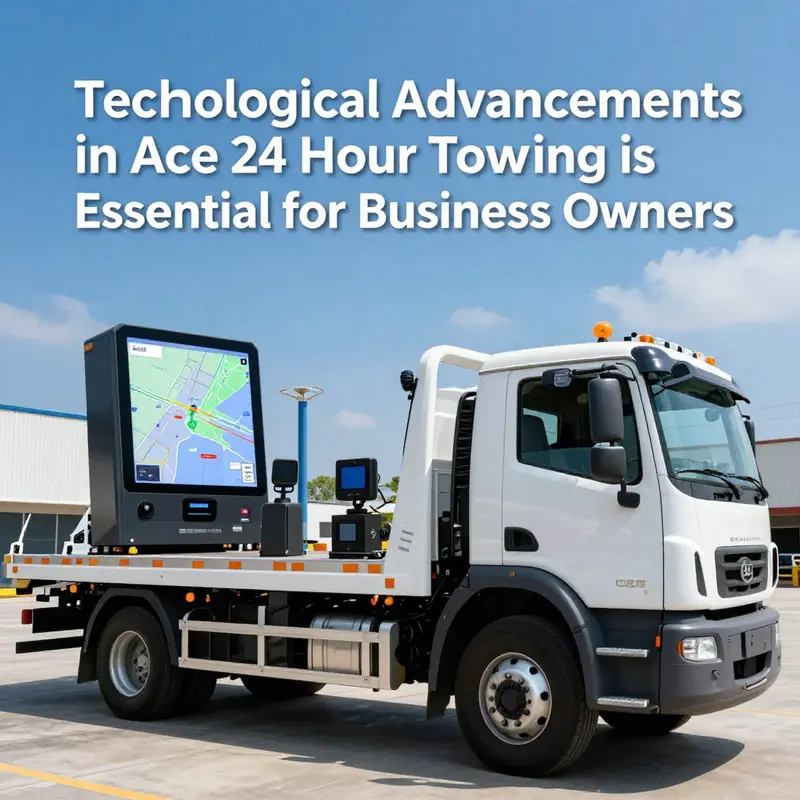
The operation behind Ace 24-Hour Towing unfolds like a carefully orchestrated relay, where a single roadside crisis becomes a coordinated sequence of data, decisions, and delicate handling. The core promise is simple in theory: reach the stranded driver, provide the right recovery option, and restore mobility with minimal stress. In practice, technology has elevated that promise from a hopeful aim to reliable routine. A leading national roadside assistance network now hinges less on chance and more on a continuous loop of information—from the moment a call is placed to the moment the driver safely resumes their journey. This transformation is not about flashy gadgets alone; it is about how an interconnected system translates a vague location and a vague problem into precise actions, resources, and timing that can be trusted even in the middle of the night, in inclement weather, or on unfamiliar roads. The result is a service that feels instantaneous because the underlying cadence is optimized and transparent to everyone involved—the driver, the dispatcher, and the technician on the scene.
At the heart of this cadence sits GPS tracking. Modern tow trucks are outfitted with location-aware hardware that allows dispatchers to see each vehicle’s exact position in real time. The practical upshot is a reliable, customer-facing ETA. Rather than giving a vague arrival window, the system can compute the fastest feasible route based on current traffic, road conditions, and the nearest suitable equipment. If a tire change requires a generator or a specific jack, the dispatch system lists the appropriate unit and assigns it accordingly. For customers, those updates come with a new confidence: they know where the tow truck is, how long it will take to arrive, and whether a contingency plan will be necessary if delays appear. This visibility is not merely a convenience; it reduces anxious waiting and empowers drivers to manage expectations from the outset. The benefit scales as the fleet expands and the geographic footprint widens, creating a consistent experience regardless of city, suburb, or rural lane.
Parallel to location awareness, real-time communication tools knit the field and the office into a single talking point. Instant updates flow between the driver and the dispatch center, with status changes, new instructions, and safety alerts transmitted in microseconds. This is especially crucial when circumstances shift—an accident scene that blocks a lane, a weather front that slows traffic, or the discovery that a more suitable recovery method is needed. In these moments, the ability to broadcast a revised plan and simultaneously receive the driver’s on-the-ground observations prevents miscommunication from spiraling into delays or unsafe practices. The net effect is a culture of situational responsiveness, where the crew on the road can react nimbly while remaining aligned with the company’s safety and service standards. In sum, technology transforms a call into a functioning chain of action.
The dispersion of that action across a mobile dispatch platform ensures the entire workflow stays compact, fast, and auditable. Dispatch software delivered through mobile platforms enables fleet managers to assign jobs, track progress, and reroute as conditions change. A single screen can reveal which units are available, which are en route, and which are already engaged in another incident. Route optimization becomes a recurring habit, not a one-off decision: drivers select the next-best path, traffic patterns are re-evaluated on the fly, and the most appropriate equipment is directed to the scene. This approach reduces idle time, lowers fuel consumption, and strengthens the service promise of a rapid response. It also creates a digital breadcrumb trail that improves accountability and helps management analyze patterns over time—useful both for training new operators and for refining standard operating procedures. The beauty of cloud-connected dispatch is that it scales without sacrificing speed; it is a force multiplier for every crew member, from the veteran technician to the rookie dispatcher.
Teaming with dispatch is telematics, the analytical backbone that turns raw vehicle data into safer, smarter routing. Telematics monitor engine health, fuel use, braking patterns, acceleration, and other operational metrics in real time. Managers gain a dashboard view of how each vehicle is performing, not just where it is. When a 24-hour shift stretches into the early morning hours, this data becomes a proactive safeguard: it can flag potential mechanical issues before they become breakdowns, suggest lighter loads or alternative routes to conserve fuel, and emphasize safer driving practices through extended trend analysis. The result is a fleet that behaves more consistently under pressure and a workforce that is trained to interpret data rather than merely respond to instincts. In practical terms, telematics enables safer operations, better maintenance planning, and longer vehicle lifespans—crucial advantages for an industry that depends on reliability around the clock.
Digital documentation and automated billing complete the loop by translating every service into a traceable, customer-ready record. The shift from paper forms to digital logs reduces processing time and administrative errors, speeding up insurance claims, invoicing, and customer confirmations. A post-service invoice can be generated automatically, with line items that reflect the actual work performed, the exact parts used, and the precise distance traveled to the scene. This level of transparency not only builds trust with customers but also streamlines reconciliation for the service provider. In a 24-hour context, where time is a scarce resource, cutting even minutes from paperwork yields meaningful gains in customer satisfaction and operating efficiency. The digital workflow also supports compliance, audits, and performance reviews by preserving a complete, searchable record of each incident from dispatch to resolution.
Accompanying these systems are the specialized tools that enable complex recoveries. Rotator wreckers, with their 30-ton capability and 360-degree rotating booms, represent a cornerstone of modern recovery operations. They extend the reach of technicians, allowing them to maneuver vehicles out of precarious positions in crowded urban spaces or rugged landscapes. The evolution of these machines reflects a broader shift toward modular, adaptable recovery gear that can handle a wider array of incident types. When speed and safety are both at stake, having the right tool on site is as crucial as having the right data. The integration of these heavy units into a technologically enabled workflow means that responders can plan the safest, most efficient sequence of actions before any wire is attached or wheel is turned. This reduces exposure in dangerous environments and supports consistent outcomes, even in the most demanding conditions.
Beyond the machinery, the adoption of IoT-enabled devices and cloud-based dispatch software is redefining how fleets are managed at scale. IoT sensors monitor vehicle health, battery status, tire pressure, and fuel levels, feeding a central system that can anticipate maintenance needs and alert managers to potential failures. Cloud-based dispatch platforms coordinate multiple jobs across the network, ensuring that resources are allocated where they are most needed and that cross-team communication remains smooth. The result is a more resilient system that can absorb the pressure of peak demand—holiday weekends, severe weather events, or large traffic incidents—without compromising response times. For operators, this means fewer surprises, more precise planning, and a steadier pace of service that keeps roads moving even when conditions deteriorate.
Localized demonstrations of these capabilities reveal how tech translates into tangible benefits for customers. In markets where dense road networks and congested corridors are common, the ability to predict arrival times, optimize routes, and deploy the most appropriate recovery equipment is especially valuable. In such environments, a local provider may become known for reliability not because of luck but because of a disciplined, technology-enabled workflow that reduces idle time and elevates safety. In communities like Arlington, for example, the combination of real-time updates and smart dispatching has become a signature advantage, offering predictable response times and consistent outcomes across a 24-hour cycle. The practical takeaway for customers is straightforward: when you call for a tow, you are not waiting for a single truck to appear—you are engaging a coordinated system that mobilizes the right resources at the right moment, guided by data you can see and trust. See how this plays out in local contexts at Arlington towing services.
As technology deepens its reach, the customer experience of Ace 24-Hour Towing becomes less about the mystery of what will happen next and more about the assurance that it will happen promptly and safely. Real-time ETAs, continuous status updates, and transparent billing converge to remove much of the anxiety that accompanies vehicle trouble. The driver benefits from clearer instructions and better situational awareness, while managers gain a holistic view of fleet performance that supports training and continuous improvement. In this way, the clockwork of Ace 24-Hour Towing is not a cold machine but a human-centered service enhanced by precision and predictability. The emphasis remains on safety, speed, and service—the core expectations that drive loyalty in a 24-hour market demanding reliability at any hour of the day or night.
Looking ahead, the trajectory of technological advancement in 24-hour towing points to even tighter integration between data, devices, and on-ground action. Predictive maintenance will anticipate equipment needs with increasing accuracy, while autonomous or semi-autonomous guidance may assist drivers in high-risk scenarios, complementing ongoing training and safety programs. The convergence of digital records with real-world recovery tasks will continue to shorten the cycle from call to completed service, while still preserving the emphasis on careful, compliant operations. In this evolving landscape, Ace 24-Hour Towing remains defined not by the speed of a single truck but by the speed of an entire, well-coordinated fleet that can respond with confidence, regardless of the hour.
External resources for broader context on modern tow fleets and telematics can be explored here: https://www.towtruckph.com/.
Final thoughts
In conclusion, Ace 24 Hour Towing services play a critical role in ensuring the operational efficiency and reliability of business logistics. By understanding the importance of these services and the technological advancements that improve them, business owners can better prepare for unexpected challenges on the road. Rest assured, having a trusted towing partner can mitigate stress and enhance overall productivity.