
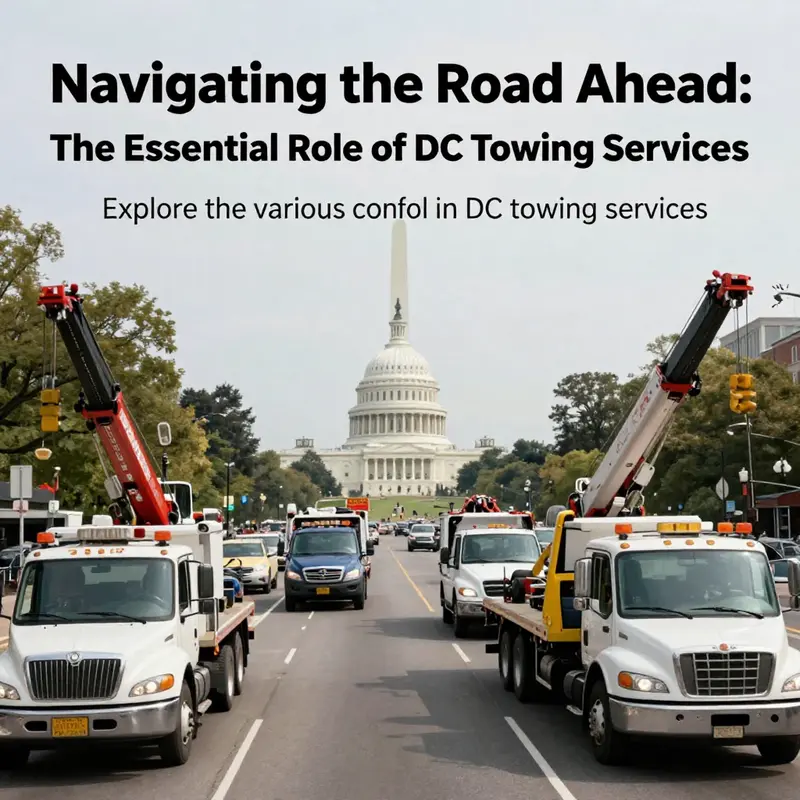
As urban environments like Washington, D.C. grow increasingly complex, the role of towing services becomes paramount. Business owners, particularly those with operations that rely on the smooth functioning of urban infrastructures, must understand how D.C. towing services not only assist in roadside emergencies but also play a crucial role in traffic management and safety. This article delves into the types of cranes used in towing operations, sheds light on their significance in maintaining urban traffic flow, and explores the technological innovations that enhance the efficacy of these crucial services.
Lifting by Design: How DC Towing Keeps Traffic Moving with Specialized Cranes
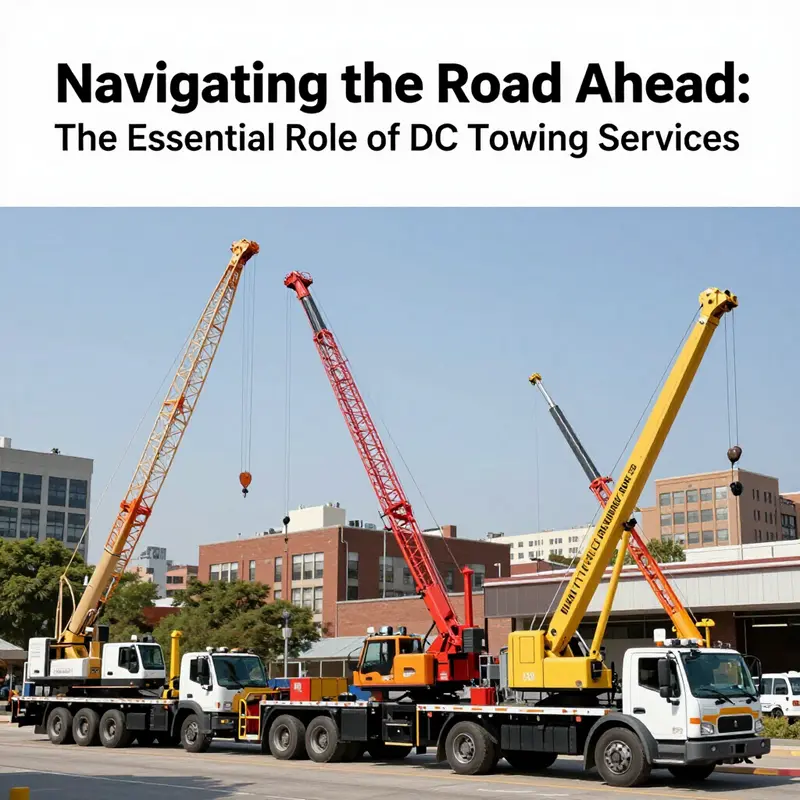
In Washington, DC towing is a choreography that blends engineering with traffic sensibility. The crane choice—rear mounted, slip, or ring and chain—shapes how a vehicle is stabilized, lifted, and moved onto the bed while minimizing disruption to surrounding traffic. The rear mounted crane provides reach for difficult access but may demand careful control to avoid unwanted swing. The slip crane offers a compact profile and faster transitions, though its lifting capacity may be more limited. The ring and chain system distributes load around the vehicle to protect delicate finishes and chassis geometry, at the cost of setup time and required precision. Across all options, safety guidelines, standard practices, and professional training guide every lift to protect people, vehicles, and road networks. DC tow operators follow ANSI, international lifting equipment norms, and NAAD guidelines to ensure predictable performance and on scene accountability. In the end, the right crane is the one that delivers a safe lift, preserves the vehicle, and restores traffic flow as quickly as possible.
Steady Tow, Steady Flow: How DC Towing Services Keep Washington’s Streets Moving
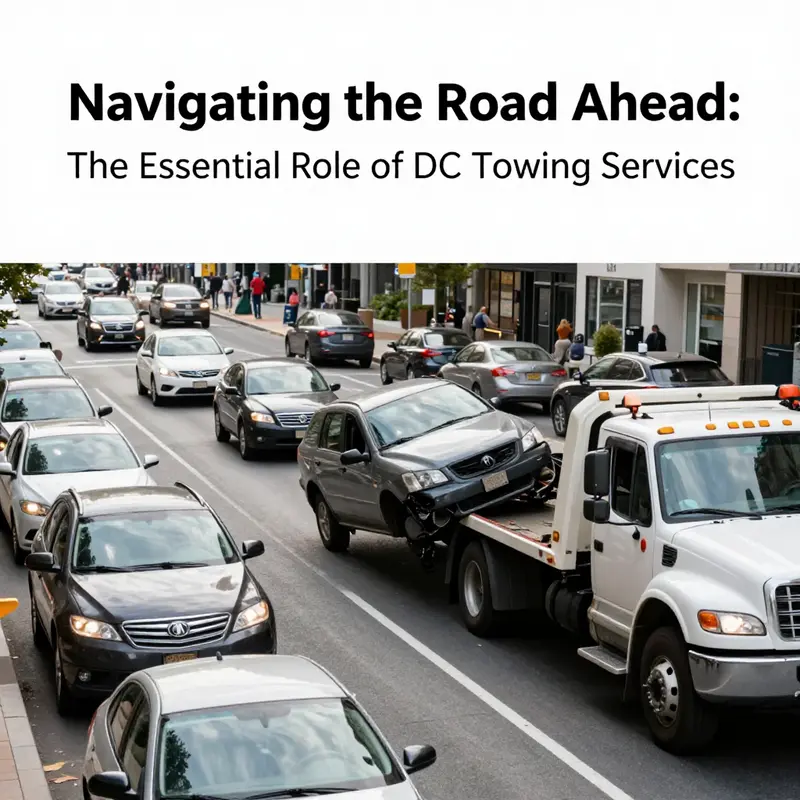
In a city built for movement, a stalled vehicle can ripple across hundreds of trips in a single hour. In Washington, D.C., towing services are more than roadside help; they are a vital component of urban mobility that helps keep lanes open, curbs clear, and emergency routes accessible. A fast, coordinated response reduces congestion, limits detours, and improves safety for motorists, pedestrians, and responders who may encounter the scene.
A core strength of urban towing lies in the adaptability of crews and equipment. Modern tow teams deploy wheel-cradle lifts, flatbeds, and reach devices to fit narrow streets, busy corridors, and curbside spaces, balancing speed with care to preserve vehicles and pavement. The best practice is a flexible plan: assess the scene, select the safest recovery method, and execute with trained precision.
The practical impact of reliable DC towing is measured not only by how quickly a vehicle is moved but by how predictably the city can maintain flow. When towing is dependable, fewer lanes are blocked, detours are shorter, and emergency lanes stay open. For residents and visitors, this translates into a smoother commute, less idling, and a safer urban environment. For those who want to learn more about local DC towing services, public listings and resources provide context for how these essential responders fit into daily mobility. MapQuest and other platforms can contextualize providers within the city’s transportation ecosystem.
In the broader arc of transportation resilience, efficient towing represents a quiet but vital public service. It demonstrates how mobility depends on quick, careful action and a service sector that adapts to a city that never stops evolving. The daily choreography of responders, drivers, and specialized equipment can keep Washington moving even when the unexpected occurs.
Technological Advancements in DC Towing Service Equipment
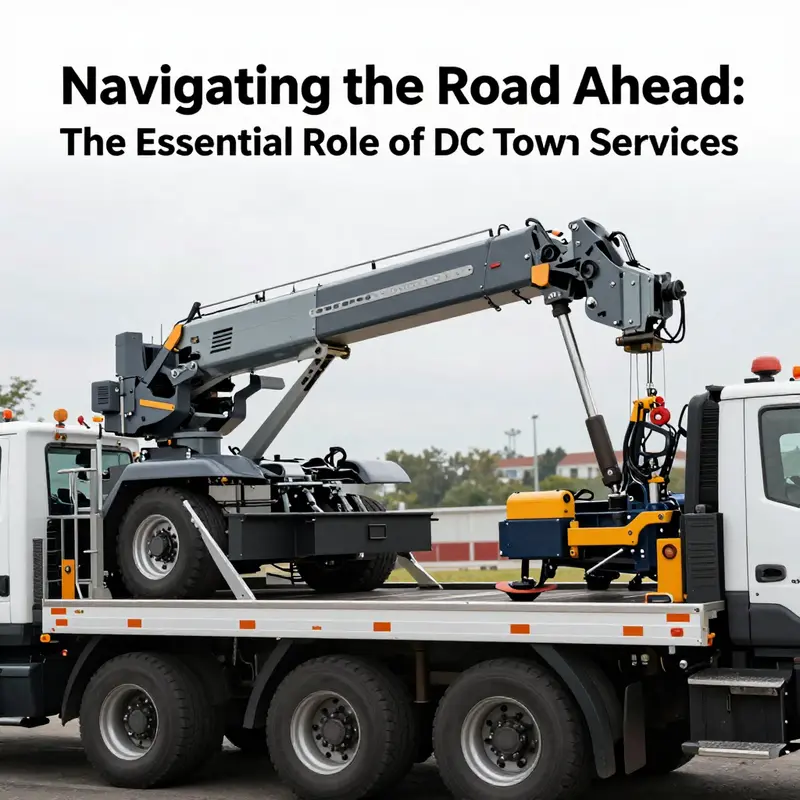
In the dense fabric of Washington, D.C.’s streets, every towing assignment is a careful blend of speed, safety, and sensitivity to the urban environment. The latest wave of technological advancement is reshaping how a DC towing service operates, turning traditional recovery into a precise orchestration of power, control, and sustainability. Fleet operators are increasingly integrating electric powertrains and intelligent systems to reduce emissions, minimize noise, and extend uptime during the busiest hours. This shift matters not only for the drivers and customers but for the city itself, where congestion relief and rapid clearance contribute to safer roads and smoother traffic flow. As urban planners push for cleaner transportation corridors, tow operators face the challenge of delivering robust performance without compromising air quality or surrounding neighborhoods. The answer lies in a convergence of electric propulsion, advanced power management, and smarter lifting mechanisms that work together to keep accident scenes cleared quickly while preserving the integrity of the vehicles involved and the city’s intricate parking and curb layouts. The result is a towing service that looks less like a roadside repair crew and more like a mobile, low-emission service hub capable of operating with minimal fuel and maximum reliability.
Central to this transformation is a growing emphasis on DC electrical systems and the ways they power not just the tow truck but the tools it uses. The concept of towed DC electrical systems—originally explored in other heavy operations—offers a blueprint for continuous operation with virtually no downtime for refueling. In practice, such systems use high-efficiency power conversion and distribution to deliver stable DC power from the vehicle to the attached equipment. For a DC-based towing operation, this means the winches, hydraulics, lighting, sensors, and control interfaces can draw clean, consistent power with low energy loss. The implications are practical: longer duty cycles between charges, smoother operation in stop-and-go city traffic, and the possibility of running auxiliary equipment without taxing the main powertrain. While these ideas are most closely examined in sectors like agricultural machinery, the underlying physics translates well to urban towing where every minute of on-scene time matters. Moreover, the environmental benefits align with city goals to reduce emissions along congested corridors and in neighborhoods that demand quiet, clean operations.
In the context of Washington’s narrow lanes and crowded curbside spaces, the choice of lifting equipment becomes a strategic decision rather than a simple afterthought. Three crane configurations dominate discussions about urban recoveries, and each carries its own set of strengths when powered by advanced DC systems. The ring loader crane, for example, uses a ring-and-chain approach to cradle a vehicle’s wheels or axles, delivering a gentler lift that minimizes chassis stress and cosmetic damage. This is a considerable advantage when handling precious or high-value vehicles that must arrive at a repair facility in pristine condition. In a city that hosts a blend of classic cars, luxury sedans, and modern electric vehicles, preserving exterior finishes can be critical to customer satisfaction and insurance outcomes. The system’s controlled grip translates into fewer paint scratches and less risk of unintended damage during recovery, which matters in a region where curbside recoveries can occur in tight spaces or on busy streets. Still, the ring loader crane requires careful setup and skilled operators who understand load dynamics and the subtleties of wheel contact. Its slower deployment compared with other mechanisms is a trade-off that districts its best use to delicate recoveries where preservation is paramount.
By contrast, the rear-mounted crane emphasizes reach and versatility, a feature well suited to the city’s congested corridors and alleyways. Placed at the back, this crane can access a vehicle from multiple angles, a capability that shines when front access is hindered by parked cars, barriers, or obstructive curbs. In dense urban environments, the rear-mounted unit can often maneuver around tight corners and align with a vehicle that sits in a tight space, allowing operators to stabilize and secure the load with precision. Its strength tends to lie in flexibility rather than raw lifting power, so it pairs naturally with high-efficiency DC systems that minimize energy draw without sacrificing control. The urban context also means stabilization becomes a more prominent concern; additional supports and sensors can help maintain balance while the operator positions the vehicle for towing. In DC’s metro area, where space is at a premium, the ability to reach and choreograph a lift from multiple angles often proves more valuable than raw vertical lift capacity. As a result, fleets gravitate toward rear-mounted solutions for complex recoveries where front access is blocked and precision matters more than sheer force.
The slip crane adds another dimension to the city’s toolkit. Compact by design, it slides into a receiver mounted on the tow truck’s frame and can retract beneath the rear ramp when not in use. This space-saving approach directly benefits fleet efficiency and aerodynamics, reducing drag and contributing to better fuel economy—an important consideration even when electric or hybrid powertrains are in play. The slip crane’s portability and quick-switch capability enable drivers to adapt to a broad spectrum of scenarios, from parking garage recoveries to highway incidents that require rapid redeployment of lifting gear. In a city known for abrupt transitions—short blocks, frequent detours, and regulated curb spaces—the ability to reconfigure a tow front or rear in moments is a significant operational edge. Yet the slip crane has its limits in heavy-duty lifts, and operators must weigh the risk of overreach against the advantage of speed and agility. Still, in the DC environment, where efficiency and space management are constant concerns, its compact footprint and flexible mounting make it an appealing option for urban towing teams that prioritize adaptability and low-energy operation.
What ties these mechanical choices together is a shared emphasis on smarter energy use and smarter data. Modern DC-powered systems are not merely about delivering power; they are about controlling that power with sensors, telemetry, and intelligent software that optimize lift timing, stabilizer deployment, and load balance in real time. Telematics provide load sensors, hydraulic pressure feedback, and position data that help the operator make precise, context-aware decisions at every stage of a recovery. In a jurisdiction like the nation’s capital, where the volumes of daily traffic demand rapid, quiet, and safe responses, this level of precision translates into shorter road closures, lower risk of secondary incidents, and more predictable service windows for stranded motorists. Training becomes a critical companion to technology, ensuring that drivers can interpret sensor data, manage power draw, and respond to changing on-scene conditions with calm efficiency. Even as the hardware evolves—from ring loader to rear-mounted to slip cranes—the human element remains essential: the judgment to choose the right tool for the right scenario and the discipline to operate within city regulations and safety standards.
Beyond on-scene performance, the shift toward DC-powered, zero-emission operations has implications for maintenance and total cost of ownership. Electric powertrains tend to experience lower routine maintenance demands than internal-combustion counterparts because there are fewer moving parts and less thermal cycling. This reduction in maintenance needs lowers downtime and keeps tow operations on the road longer. The energy efficiency of high-visibility, clean power also reduces fuel costs and the variable expenses associated with urban deployments. In addition, the capacity to power associated equipment via a stable DC link reduces the wear and tear on the vehicle’s primary propulsion system during long shifts, further extending the life of critical components. Fleet managers in the DC region are increasingly calculating return on investment not only in miles per gallon or kilowatt-hours saved but in on-scene time, reduced tailpipe emissions, and enhanced customer trust when recoveries occur with minimal environmental impact. As the city continues to grow and evolve, the responsible adoption of electric power and intelligent lifting systems will likely become the norm rather than the exception for professional towing.
For readers seeking a deeper dive into the practical dimensions of DC-powered operations, a locally focused example can be explored here: DC towing service. This resource showcases how urban fleets adapt to the unique demands of the region—balancing speed, safety, and sustainability while integrating the latest control and power-management technologies. The broader takeaway is clear: the future of a DC towing service lies not only in the cranes themselves but in the orchestration of power, data, and human expertise that makes every recovery a precise, efficient, and responsible operation.
External resource: For a broader, external perspective on zero-emission electrical systems in heavy machinery that informs these developments, see https://www.mdpi.com/2076-3478/15/12/3984. This study highlights the potential of high-efficiency power conversion and stable power delivery to support continuous operation with minimal energy loss, a principle that underpins the next generation of urban towing workflows.
Final thoughts
D.C. towing services are integral to urban traffic management, demonstrating both essential functionality and technological advancement. Whether it’s adapting equipment like specialized cranes to ensure minimal vehicle damage or maintaining orderly traffic flow on crowded streets, the role of these services cannot be overstated. Business owners should recognize the value not only in utilizing towing services but also in understanding their contribution to road safety and efficient mobility within the city. By leveraging the latest technological advancements and methods, towing services help ensure that Washington, D.C. remains navigable and productive for all its residents and visitors.