
Entering the towing industry requires more than just a truck; it demands an understanding of the intricate licensing framework that governs tow truck operations in China. For business owners aspiring to provide towing services, adherence to both driving and business licensing regulations is paramount. This guide breaks down the essential steps needed to obtain a tow truck license, including understanding driving license requirements, navigating business licensing, and fulfilling additional operational necessities. Every chapter builds on the previous to present a holistic view of the licensing landscape for successful towing business operations.
Getting a Tow Truck License in China: Navigating Driving Classifications and Road-Transport Permits
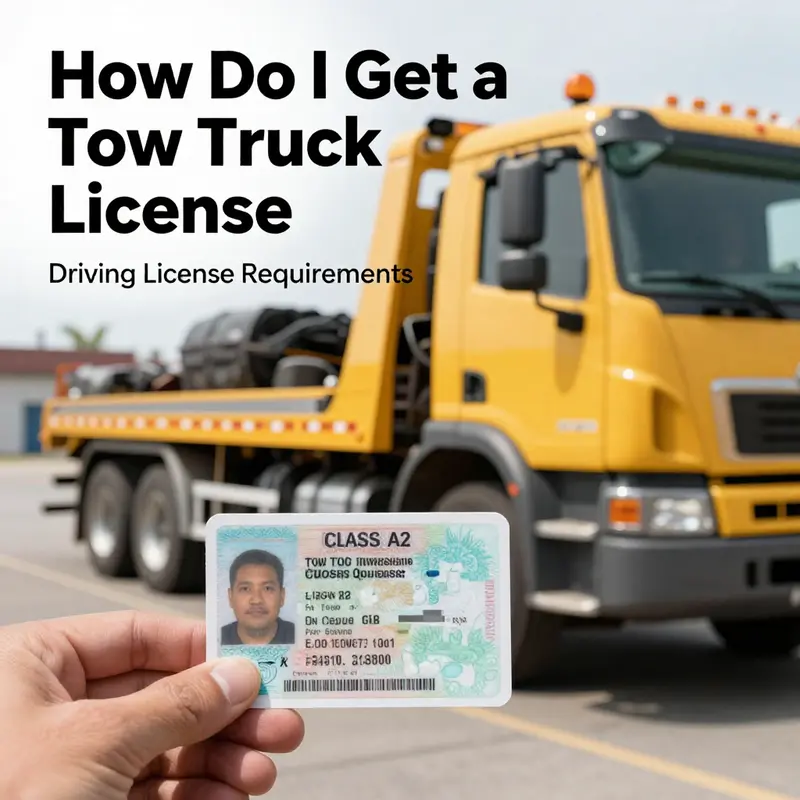
Taking on the role of a tow truck operator goes beyond owning a vehicle; it requires navigating a structured licensing and permission framework designed to ensure road safety and professional management. In practice, the path to legality starts with the right driving license, but it does not end there. The vehicle’s classification, notably its license plate color and its weight, dictates which license class you must hold. For light blue-plate tow trucks, which are light-duty recovery vehicles, a standard C-class license such as C1 or C2 is typically sufficient. For medium and large yellow-plate tow trucks, which usually fall into the heavier category, you will need a B-class license, such as B1 or B2. When the operation involves the heaviest category, particularly for ground-towing tasks and heavy-duty recovery, the A2 license becomes mandatory. The A2 classification is specifically designed for driving tractor-trailers, semi-trucks, and full trailers, and it covers the most demanding tow operations. Always verify the exact vehicle specifications and plate color before you operate, because a mismatch between license class and vehicle can trigger regulatory action and substantial penalties. This precise alignment between vehicle and license ensures that the driver is trained for the vehicle’s performance envelope, including handling weight distribution, braking, and long-haul maneuvering that often accompany towing work.
The licensing picture sits atop a broader compliance landscape. If you intend to run a tow truck business rather than simply use a vehicle for personal tasks, you must secure a Road Transport Operation Permit from the local transportation authority. This permit acts as the authorization for conducting road transport services in a commercial context. Securing it involves several steps that test your business’s readiness and safety posture. First, you must register your company or operate as an individual business with the market supervision bureau. Then gather and prepare essential documents: the business license (original and copy), the vehicle registration certificate, proof of parking and operational facilities, and documentation of your safety management system, along with a completed application form for the permit. The application is submitted to the local transportation department, where officials will inspect your facilities and your fleet. A successful review leads to the Road Transport Operation Permit, which validates your ability to provide professional tow services on public roads.
Not all operators require the permit in every circumstance, but tow trucks commonly exceed the mass threshold that triggers it. In some basic freight operations with a vehicle under 4,500 kg total mass, the permit may not be required; however, towing equipment frequently pushes the vehicle beyond this limit, creating a strong presumption that the operation falls under road transport regulation. Beyond these core documents, additional requirements reinforce safety and reliability. The driver’s license must be valid and appropriately matched to the vehicle type; the tow truck must be registered with a current Vehicle Registration Certificate; and the vehicle itself may need a Road Transport Certificate, which is issued after passing technical inspections and safety checks. Finally, professional training and certification are often required, with drivers expected to demonstrate knowledge of road transport laws, maintenance basics, and cargo safety. In many cases, drivers of lighter vehicles may be exempt from some exams, but the standard expectation is rigorous competency for heavier, higher-risk tow operations.
For anyone new to the industry or pressed for time, partnering with a licensed agency can streamline the process. A practical approach is to work through the steps systematically: verify the vehicle class and plate, prepare the required business and vehicle documents, schedule inspections, and plan for any city-specific requirements that may apply. The process, while comprehensive, becomes manageable when approached in a staged fashion, with clear milestones for licensing, permitting, and training. If you want a real-world reference point, connecting with a local tow service can illuminate how compliance works on the ground and help you align your internal procedures with industry norms. For instance, a local tow service in DC can offer practical guidance on coordination, safety protocols, and regulatory expectations while you navigate your own jurisdiction.
As you map your route to licensure, keep an eye on regional variations. Rules can differ by city, and local bureaus may require additional forms or inspections. Always verify current requirements with the local transportation department, and remember that staying compliant is an ongoing obligation, not a one-time filing. A robust safety program, documented procedures, and ongoing training will not only satisfy regulatory demands but also build trust with clients and insurers. For official guidance, consult the Road Transport Management Regulations published by the national authority, and review local advisories to avoid missteps during your licensing journey. The path may be detailed, but the payoff is a lawful operation with solid foundations for sound towing practice.
External reference: Official guidance
Internal reference: tow truck service in DC
Tow Truck Licensing Demystified: A Practical Path Through Business Permits and Road Regulations
Licensing a tow truck operation is not just about the driver behind the wheel. It is a system of permissions, registrations, and safety standards that collectively define who can tow, what they can tow, and where they can operate. In many places, including the regulatory framework that governs road transport, the road to a tow truck license runs through several layers: a general business registration, a dedicated road transport permit, and the licenses and certifications that safeguard drivers, vehicles, and the public. For anyone starting a tow truck service, the process can feel akin to assembling a complex puzzle where each piece must fit perfectly before the next is added. The first piece is the business itself. Without a lawful business entity, a permit can’t be pursued. This typically means registering with the local market supervision or commerce office to obtain a basic business license. Once that foundation is in place, attention shifts to the specialized permission that makes towing a regulated activity: the Road Transport Operation Permit. This is the linchpin of commercial towing, distinguishing legitimate transport providers from casual or private operators. In practical terms, you submit a formal application to the appropriate transportation authority, accompanied by a package of documentation. You will need your business registration details, proof of legal entity status, and evidence of financial responsibility—usually in the form of liability insurance. A detailed operational plan is often required as well, outlining the kinds of tow trucks you will operate, your service area, and how you will meet safety standards. In many jurisdictions, the vehicle fleet itself must meet technical and safety criteria before the permit is granted. For example, regulators may demand vehicle inspection reports, proof of proper recovery equipment such as winches and cranes, and a clear demonstration that your fleet can perform recoveries without compromising public safety. After submitting the file, on-site inspections of your facilities and vehicles are typical. The inspectors verify parking arrangements, maintenance facilities, and the adequacy of safety management systems. A successful review results in a Road Transport Operation Permit, which legitimizes your towing operations in that jurisdiction. It is important to note that not all tow trucks require this permit. Vehicles with a total mass under certain thresholds may be exempt for basic freight operations in some places, but in practice most tow trucks used for professional recovery exceed those limits, making the permit a common necessity. As you navigate these steps, the driver’s credential becomes the next crucial factor. A valid driver’s license that aligns with the vehicle’s weight class and the intended towing operation is essential. In many regions, heavier, medium, or commercial towing tasks demand higher classes of licenses, and some operations require a professional qualification certificate in addition to the standard driver’s license. This certification program typically covers road transport laws, vehicle maintenance, cargo loading and securing, and safety procedures. The goal is to ensure that every operator understands how to prevent accidents, how to secure loads properly, and how to respond to emergencies. Beyond licensing, there are insurance and ancillary permits to consider. Comprehensive coverage is non-negotiable: commercial auto liability to protect against damages to others, physical damage to your own tow fleet, and workers’ compensation if you employ staff. Some operations may also attract environmental or fire safety permits, particularly if you run a physical facility or handle hazardous materials. The regulatory picture can vary by city, so engaging with a licensed agency or a local transportation bureau early in the process can save time and prevent missteps. For readers seeking a local touchstone, there are practical examples of how operators in different areas structure their services; one local resource can illustrate typical requirements and timelines, with the understanding that specifics differ by jurisdiction. If you’re researching a nearby market, the Arlington-area towing service page provides a useful model of how a local operator communicates compliance expectations and service guarantees to customers and regulators alike. See the page here: towing-service-arlington-va. Ultimately, the path to a tow truck license demands careful planning, meticulous documentation, and a readiness to adapt to city or province-specific rules. Start with the business registration, prepare the road transport permit dossier with its inspections, secure the appropriate driver credentials, and secure robust insurance coverage. Allocate time for potential delays in approvals and be prepared to adjust your fleet and operations to meet safety and capacity standards. The journey from paperwork to road-ready service is a tested sequence that, when followed, converts a compliant plan into a legally operating tow truck business. For authoritative regulatory details, consult the national transportation framework and your local authority, and refer to official resources that outline road transport management regulations. External resources help anchor your understanding of the broader rules, such as the national Ministry of Transport guidelines: https://www.mot.gov.cn/.
Beyond the Test: Mastering Additional Operational Requirements for a Tow Truck License
Getting a tow truck license is more than passing the driving portion of a test. It is a gateway to a broader set of operational requirements that verify you can perform retrievals, safeguard people and cargo, and run a compliant business. The rules are designed to ensure that when a tow truck arrives on the scene, the operator can manage hazards, coordinate with responders, and uphold public safety in high-pressure situations. This is why the path to licensure often traverses three intertwined layers: licensing and endorsements, verification and insurance, and the ongoing discipline of safety and governance. The core idea is straightforward: authorities want proof you have the skills, the backing, and the procedures to operate responsibly in diverse roadside environments. While the exact requirements vary by country or state, the underlying logic remains consistent. You must demonstrate technical competence, physical readiness, and organizational accountability alongside the basic driving ability. A typical framework begins with the right commercial driver’s license and the appropriate endorsements for tow operations. In many jurisdictions, heavy or specialized tow trucks require a Class A or Class B CDL, depending on weight and configuration. Beyond the license class, a tow operator endorsement is commonly mandatory, signaling that you have completed training in recovery techniques, safety protocols, and equipment operation beyond ordinary driving. This endorsement does not replace the license; it augments it, making you eligible to perform controlled recoveries and to use the specialized tools and rigging that tow work demands. The knowledge test that accompanies these credentials usually covers a compact but essential set of topics: load securement, proper use of chains and cables, methods for handling awkward or hazardous loads, safety at accident scenes, and the regulatory framework governing tow operations. The written exam is designed to confirm you understand how to apply theory in real-time, with your decisions potentially affecting lives and property. After licensing, many jurisdictions require background checks to assess reliability in a role that often places you near vulnerable motorists in stressful conditions. A clean record supports trust on the road and during engagements with clients. Insurance is another cornerstone. You will typically need proof of coverage that meets minimum requirements for tow truck operations, reflecting the potential financial exposure of recovery work and roadside services. This is not merely paperwork; it protects your business, your customers, and the public in the event of mishaps. Alongside licensing and insurance, you may need to register your business with state or local authorities. This registration ties your operation to the regulatory framework and ensures you can legally issue invoices, maintain compliance, and renew permits as required. The regulatory landscape also emphasizes ongoing safety standards and training. National frameworks or federal guidelines often influence state rules, but local authorities dictate inspections, facility requirements, and maintenance standards. Expect to keep maintenance logs, maintain driver qualification files, and implement a cargo containment plan that aligns with industry best practices. Ongoing training becomes a routine obligation, with refreshers and updates that reflect new equipment, updated techniques, and evolving safety rules. For those embarking on a tow operation, a practical approach helps manage the complexity. Start by securing the CDL with the appropriate endorsement, then complete the required tow operator training and pass the knowledge test. Gather proof of insurance and finalize business registration. Prepare for any on-site inspections and ensure your facilities and vehicles meet safety and regulatory standards. If time is tight or you are new to the field, consider engaging a licensed agency to help with applications, inspections, and permits to minimize delays and errors. Local nuance matters, so always verify the current requirements with your regional transportation authority. For readers curious about practical industry practice in a concrete region, a real-world example in the D.C. metropolitan area can be explored through resources like the linked page on Tow-truck Washington DC. External reference and further reading can provide checklists and official guidance that augment the steps outlined here. External resource: https://www.dmv.org/us-auto/tow-truck-license.php
Final thoughts
In conclusion, obtaining a tow truck license is a multifaceted process that demands careful navigation of driving and business licensing requirements. Understanding the specifics of your vehicle’s classification, securing the proper business permits, and adhering to operational standards are crucial to successfully operating in the towing industry. By following the steps outlined in this guide, you can equip your business for success in a competitive market while ensuring compliance with legal frameworks.