
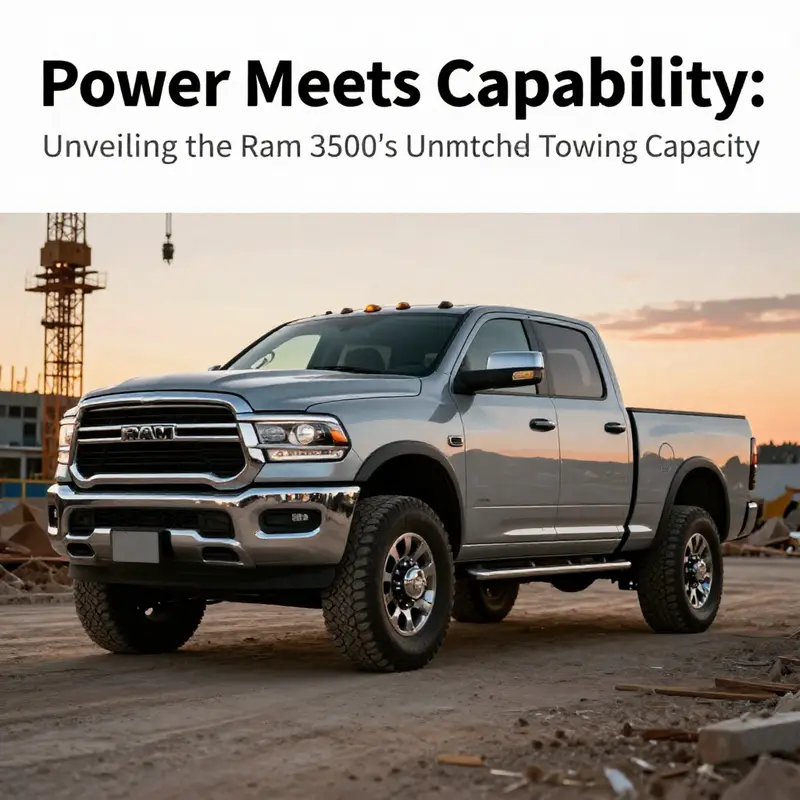
The demand for vehicles with robust towing capabilities is paramount for many business owners. Whether involved in construction, logistics, or recreational pursuits, having a vehicle that can handle heavy loads is crucial. Among production trucks, the Ram 3500 stands out with a staggering maximum towing capacity of 37,100 pounds, making it an unrivaled choice for demanding tasks. In the chapters ahead, we will first explore the features that contribute to the Ram 3500’s extraordinary towing capabilities, followed by a comparative analysis of other high-towing capacity trucks, and finally discuss the practical implications of having such a powerful vehicle in business operations.
Tow Power Redefined: Inside the Leading Heavy-Duty Pickup That Tops Hauling Capacity
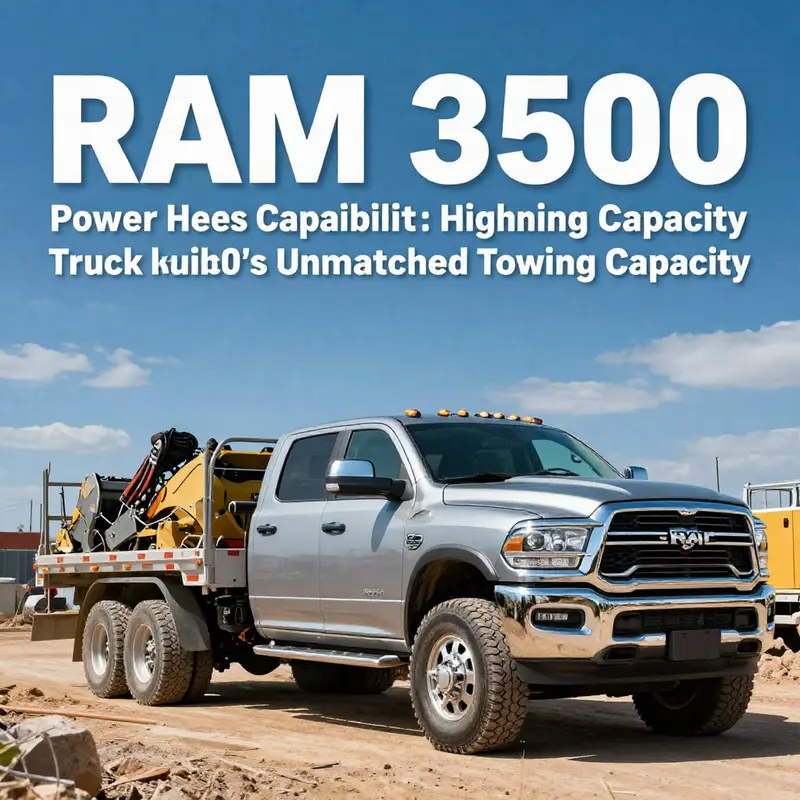
Between the metrics that define capability, towing capacity sits at the center of choice for anyone who hauls heavy loads. In the landscape of steel and torque, one model has consistently stood at the top, not merely for peak numbers but for how the power is delivered and managed under load. The figure to memorize is a staggering 37,100 pounds, or about 16.8 tons, achievable when configured for heavy-duty work and properly paired with the right hitch and trailer. This rating is meaningful because it implies a synergy: torque that arrives early, traction that keeps the wheels planted, and a frame that transmits the force forward without bending or stretching. It is the difference between a number on a spec sheet and a trusted workhorse that can be counted on day after day.
At the heart is a hybrid powertrain that combines a 3.6L V6 twin-turbo gasoline engine acting as a range extender with two electric motors. The dual-motor, all-wheel-drive system harnesses a 92kWh battery pack to supplement power when the going gets tough. The combined output reaches up to 672 horsepower, while torque peaks at around 1,456 N·m, providing a broad and usable pull from near idle. This is not a purely muscular setup; it is a calculated blend that smooths power delivery across gears and wheels, which matters when the trailer tongue tries to push back in a headwind or on a grade. The result is sustained, confident acceleration and a sense of control that standard diesel or gasoline discs alone often struggle to match.
Max towing capacity sits alongside a generous payload and a purpose-built chassis. The 4,720-pound payload rating translates into real-world ability to carry heavy equipment and tools without sacrificing towing performance. The frame uses high-strength steel throughout, with a full-frame ladder design to keep rigidity under load. A front and rear independent suspension system helps isolate the cab from road irregularities while maintaining ride quality when towing, and the ground clearance of about 11 inches gives a margin when approaching and departing driveways or loading docks. The overall geometry favors stability: the wheelbase supports a longer trailer tongue, and the approach angle of 30.2 degrees alongside a departure angle of 23.5 degrees contribute to predictable behavior when navigating uneven entries.
Inside, the cabin blends resilience with a premium feel. The layout prioritizes the operator, with durable materials, supportive seating, and a modern interface that includes a sizable vertical touchscreen and a digital instrument cluster. This emphasis on ergonomics matters when you are handling heavy loads for long shifts. Comfort and control become part of the workflow, because a driver who spends hours behind the wheel can perform tasks more efficiently when the surroundings respond quickly and predictably to commands. It is not just about being able to tow more; it is about doing so with fewer compromises on comfort and safety.
Compared with other capable pickups, the top contender stands out for the way its hybrid powertrain translates torque into traction and speed. The highest rating is reached only when the configuration is designed to support that payload and the associated pin weight, drivetrain mechanics, and cooling systems. In practice, heavy towing demands careful matching of the engine, transmission, and axles to the trailer’s weight and distribution. Buyers must consider how the trailer will be used day to day: long highway runs, frequent hill climbs, or occasional hauls across job sites. The goal is to capture a true sense of capability, not just a single benchmark.
Even with the right machine, it is essential to verify ratings for your exact build. Tow ratings vary by drivetrain, axle ratio, cab and bed choice, and hitch setup, so the published maximum may not apply to every configured truck. This is why prospective buyers should consult the official data for the precise configuration they intend to operate. In the end, the strongest conclusion is that the highest towing figure emerges from a balanced integration of power, chassis, and control, where torque is available when you need it and the frame and suspension keep the rig on course.
If you are planning a move that involves heavy hauling, having a plan for on-route support matters as much as the truck itself. For a nearby towing service in DC, the support network can be part of a robust workflow when loading, transporting, or recovering heavy trailers. towing service DC.
To stay current, consult the official product page for the specific configuration you are considering. The best source is the manufacturer’s site, which presents the full spectrum of options, weights, and technical notes that affect towing performance.
External reference: https://www.ramtrucks.com
Towing Titans: Uncovering the Heaviest Hauling Power in Modern Pickup Trucks
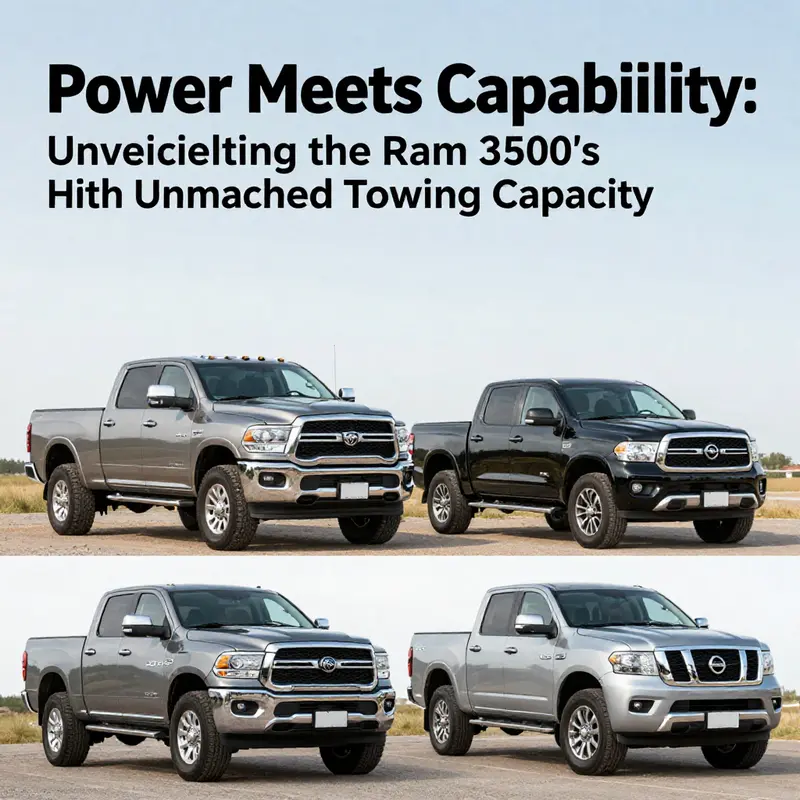
In the long arc of pickup truck development, the question of who can tow the most imposes a clear standard: torque, gearing, and chassis strength matter as much as raw horsepower. The search for the heaviest-hauling option in production trucks centers on units engineered to move large, demanding loads reliably and repeatedly. What emerges from recent data is a straightforward truth: the pinnacle of towing capacity is reached by very heavy-duty configurations that pair a high-torque engine with robust axles, a reinforced frame, and a transmission tuned for max pull rather than peak speed.\n\nWhen a factory specifies a maximum towing capability, it is not merely a number to admire. It reflects an entire system designed to maintain control and safety under the stress of pulling heavy, equipment-laden trailers. Behind the scenes, the comparison across the segment shows a spectrum where the extreme end is reserved for specialized powertrains and heavy-duty suspensions, while the lower end remains more balanced for everyday practicality. This is not just about muscle; it is about the precise orchestration of power delivery, cooling, drivetrain durability, and the optional towing packages that optimize steering, braking, and payload distribution for extreme workloads.\n\nIn documented figures from recent years, the top end of production pickups has approached a maximum towing capacity around 37,100 pounds, supported by torque figures near 1,456 N·m. Such numbers are achieved with the right configuration, including heavy-duty hitch systems and the use of gooseneck or fifth-wheel setups that distribute weight and stability in ways conventional trailers cannot. These capacities are signaling more than bragging rights; they define the practical ceiling for what a factory-backed pickup can haul when equipped for serious work. It is a reminder that towing capability is a holistic attribute, built from engine torque, axle ratios, transmission cooling and durability, and the strength of the frame that must not yield under load. The point of reference is clear: the heaviest-tow demonstrations are performed by trucks designed to maintain control at high weights, with systems and calibrations that prioritize safety and reliability in challenging conditions.\n\nBeyond the peak figures, the field leaves us with a useful hierarchy. In the next tier, heavy-duty pickups can approach around 20,000 pounds of documented towing capacity, while full-size trucks that sit just below that mark often land near the 12,000 to 13,000-pound range depending on configuration. Large SUVs and related platforms typically tow in the 8,000 to 9,000-pound neighborhood when properly equipped. For consumers, these numbers translate into practical guidance: if you foresee regularly hauling sizeable trailers, equipment, or large payloads, you will gravitate toward the upper end of the spectrum and invest in the corresponding towing package. If your needs are moderate, the mid-to-high end of the full-size category may offer the best blend of capability, efficiency, and cost. Small pickups, by contrast, have advanced in capability but generally cap out around 7,700 pounds, a level that suits behemoth cargo moves yet preserves better fuel economy and maneuverability for everyday use. The contrast is instructive: power, if paired with the right drivetrain and safety systems, enables a wider range of tasks; but it remains essential to align your choice with real-world journeys rather than theoretical limits.\n\nFor readers weighing regional realities, the practical path often involves consulting local towing professionals who understand how to safely move heavy loads in city traffic or rural lanes. A nearby service provider can illuminate practical constraints, assist with route planning, and advise on the appropriate hitching hardware and braking options. For a quick touchpoint, see DC towing service to explore how professionals in the area help transport heavy trailers or equipment when the need arises. DC towing service.\n\nThe broader picture also benefits from independent analyses that compare how mid-range and light-duty trucks perform in towing tasks, reinforcing that peak capability is one thing and real-world reliability in daily use is another. For a fuller perspective on how smaller American pickups measure up against their larger counterparts in towing capacity and applicable scenarios, industry comparisons and editorial assessments provide useful context. A well-regarded in-depth look highlights the trade-offs between power and efficiency across segments and encourages buyers to consider not only the top number but how a vehicle behaves under sustained load as conditions change. External context can be explored here: https://www.caranddriver.com/trucks/features/a54692813/small-american-pickup-trucks-towing-capacity-comparison/
Beyond the Numbers: The Practical Frontier of Ultra-High Towing Capacity Trucks
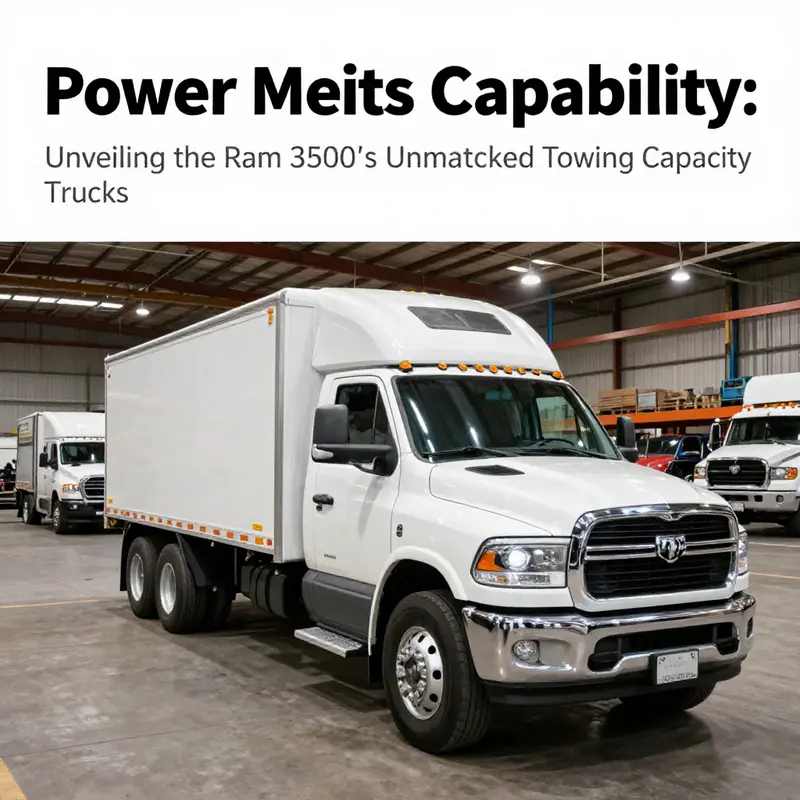
Ultra-high towing capacity trucks do more than move heavy loads. They shape how fleets plan routes, how crews schedule deliveries, and how communities respond to incidents on the road. In the latest data, some heavy-duty models reach towing capacities around 37,100 pounds (approximately 16.8 metric tons), with torque climbing to roughly 1,456 N·m. Those figures sit at the top of documented production-truck rankings in their class. Yet power is not just a brag metric; it translates into real-world advantages that guide decisions from route planning to maintenance budgeting. Effective use requires a precise blend of machinery, chassis design, and operator judgment. Power without stewardship rarely yields value, and the practical implications become evident as soon as a real load goes on the hitch.
For operations reliant on moving large equipment and materials, the ability to haul in a single trip can redefine efficiency. In industrial contexts, transporting machinery, appliances, or heavy construction components in one pass reduces labor, lowers fuel per delivered ton, and shortens delivery cycles. This translates into stricter schedules, improved customer service, and less weather-related delay risk. The payoff is not only speed but predictability; when a truck can shoulder a load that would otherwise require a second vehicle or multiple trips, fleets gain leverage in bidding and risk management. The bottom line often hinges on the reliability of the operating plan that accompanies it.
In construction and agriculture, high-torque, high-tow platforms offer practical benefits. Heavy multi-axle rigs with broad traction help maintain stability across uneven surfaces, enabling movement of soil, aggregate, steel, and heavy machinery across challenging terrains. The ability to maintain momentum without sacrificing control supports readiness and reduces the need for auxiliary equipment. On rural sites, these trucks can bridge supply gaps, carrying critical loads to locations where frequent loading would slow progress. The result is a more resilient operation where the right vehicle becomes a strategic asset.
Recovery work also benefits from this capability. Modern tow operations use hydraulic booms and integrated systems to lift and secure disabled or overturned vehicles with care. The same strength that enables heavy-haul moves supports rescue tasks while protecting people and cargo from harm. Heavy-duty power does come with considerations: higher fuel consumption, elevated maintenance costs, and the need for skilled operators in tight or uneven sites demand careful planning. Load management remains essential; securing loads with proper straps and tarps is foundational to safety and asset protection.
Ultimately, ultra-high towing capacity can transform industries and communities by enabling large-scale material movement, supporting critical infrastructure projects, and bolstering emergency response capabilities. To harness this power effectively, operators must balance performance with fuel economics, maintenance readiness, and rigorous safety protocols. For deeper technical context, industry guides and analyses illuminate how these systems perform across duty cycles and varying weather and road conditions.
Final thoughts
In conclusion, the Ram 3500’s exceptional towing capacity not only positions it as a leader in the truck segment but also offers significant advantages for business owners. Its ability to tow up to 37,100 pounds ensures that it can meet the rigorous demands of various industries. As highlighted through the comparative analysis, while other trucks provide commendable towing capacities, none match the Ram 3500’s potential for heavy-duty tasks. Ultimately, investing in a vehicle with superior towing capabilities can lead to enhanced operational efficiency and reliability in your business endeavors.