
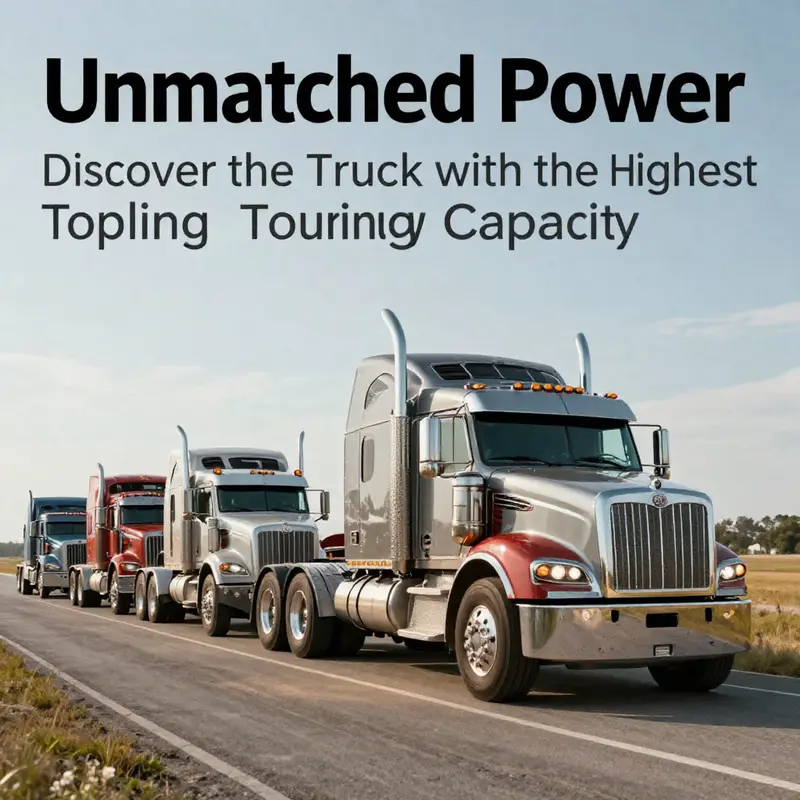
For business owners in logistics, construction, or emergency services, choosing the right truck for towing capabilities is crucial. Among the available options, the Peterbilt 579 stands out as a heavyweight champion, capable of managing extreme loads efficiently. Its impressive towing capacity makes it an ideal choice for specialized operations, ensuring businesses can tackle the most demanding challenges. In this exploration, we will delve into the specifics of the Peterbilt 579, dissecting its features and applications in heavy-duty scenarios, while also comparing it with other leading competitors in the market. This comprehensive analysis will equip you with the essential insights needed to make informed decisions regarding towing resources for your business.
Tow Power on the Open Road: Inside the Ultimate Heavy Haul Tractor
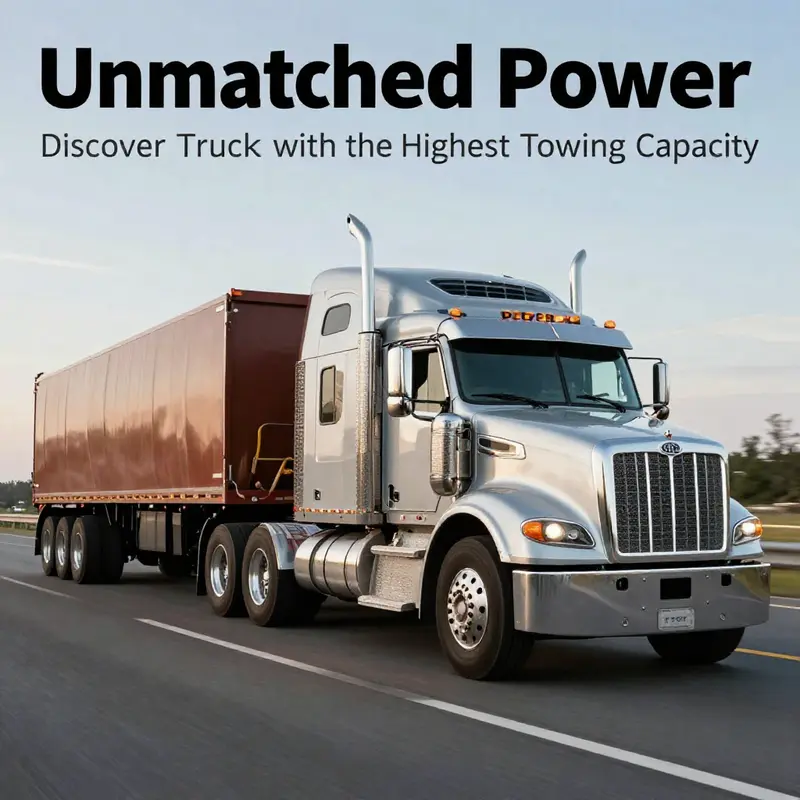
When the question surfaces about which truck can tow the most, many picture a desert-storming behemoth strapped to a mammoth trailer. In truth, the tally of maximum tow weight is less a single number than a balance of engineering choices and operating constraints. Towing capacity is a function of frame strength, axle arrangement, drive torque, brake capacity, and how weight is distributed across the combination. In the world of heavy duty trucking, a six-axle, six by four tractor-trailer set up with a purpose built recovery rig can loomingly handle loads approaching the 100 ton mark under specialized conditions. Yet the same platform, optimized for long haul efficiency and all weather reliability, may not always be the best choice for every tow scenario. The best tool is the one that maintains control, safety, and efficiency across the miles while meeting legal limits.
To understand why some configurations achieve extreme tow capabilities, we need to ground the discussion in the practical limits that govern highway operations. The 80,000 pound gross vehicle weight limit that governs interstate freight is a hard cap for most standard hauls in North America. When a tractor and trailer are counted together, the combination can be engineered to spread weight across multiple axles so that each axle carries an appropriate share, reducing per axle load and improving traction. A six axle arrangement, with a conventional two-axle steer on the tractor and four driven axles on the trailer or multiple drive axles on the tractor, can place traction where it is most effective while keeping braking forces manageable. For specialized uses, such as heavy vehicle recovery or the movement of oversized industrial equipment, operators sometimes extend capacity to the vicinity of 100 tons, but only with carefully orchestrated load distribution, trailer geometry, outriggers, and braking systems designed for such mass.
Beyond the raw weight, the heart of towing performance lies in the powertrain and the road manners of the vehicle. A high output diesel engine, matched to an automated transmission with multiple gear ratios, can deliver the surge of torque needed to move a massive load from rest and keep it pulling through grades and crosswinds. The goal is not to cram as much weight as possible behind one hitch, but to sustain the pull with consistent torque while preserving the engine’s temperature and the drivetrain’s integrity over thousands of miles. In the most capable heavy haul platforms, engineers optimize cooling, lubrication, and shafting to avoid heat buildup in the shafts and differentials that would otherwise sap performance and shorten component life. The result is a system that can maintain stable acceleration and controlled deceleration, not just in a straight line, but in the near inevitable climbs and descents of real roads.
Another essential element is the frame and suspension. A rugged chassis with reinforced rails, beefy crossmembers, and outriggers on the trailer allows the weight to be framed with maximum stiffness. The suspension must accommodate the flex and torque of a heavy load while preserving ride quality for the driver and the stability of the trailer. This is where specialized equipment enters the story: heavy wrecker configurations with built in winches, strong support points, and multi-axle trailers. In practice, a 6-bridge arrangement enables recovery teams to distribute loads and apply tenders to lifts that would otherwise fold a lighter system. The interplay of traction at the drive axles, braking performance, and steering control is what makes such a system usable on real roads rather than a theoretical ceiling. These are not toys; they are tools designed to stay within the legal envelope while delivering predictable, repeatable performance under demanding conditions.
From the fleet perspective, the value proposition of these machines rests on more than peak tug strength. Long-haul duty cycles demand efficiency and reliability that translate into lower operating costs per mile. The best long-haul tractors are designed to drink less fuel per mile when carrying heavy loads, even as they carry heavy payloads across state lines. A top tier powertrain paired with precise gearing helps the vehicle glide up to cruising speeds with the weight on, rather than fighting to move it. In practical terms this means you can cover thousands of miles between rest stops, while keeping the payload within a margin that reduces tire wear, brake heat, and fuel burn. The economics of heavy towing emphasize uptime: fewer breakdowns, longer intervals between major service work, and the ability to schedule maintenance around the network of long routes. A chassis that can go 2 million kilometers before a major overhaul and a drivetrain that expects hundreds of thousands of miles between reworks are not just hype—they are required for the kind of mass hauling that moves modern industry.
To the driver, the experience must feel safer and less punishing even as the load grows. The best long-haul tractors in this class have cabins designed for comfort after a full day, not just a place to sit. A wide sleeper berth, ample storage, climate control that keeps fatigue at bay, and seats that absorb road shocks are not luxuries; they are productivity tools. When the operator can rest properly, reaction times improve, and risk decreases. The cabin environment becomes a workspace where visibility, accessibility to controls, and ergonomic layouts reduce mental load. Combined with a robust safety suite that includes forward awareness, automatic braking at the hint of danger, and a camera system that covers every blind corner around the rig, the machine becomes more than a brute force; it becomes a controlled mechanism for moving enormous loads with confidence. The telematics system plays a quiet but crucial role here too: it monitors wear patterns, flags maintenance before it matters, and helps route planning minimize unnecessary detours and fuel waste. In this integrated package, the measure of towing power shifts from a single stat to a balanced equation of capability, control, and cost of operation.
Finally, the real world application of these capabilities reveals a broader truth about what it means to tow the most. Heavy recovery and industrial transport require a vehicle that can be trusted in the most demanding situations, not only during a showy lift or a staged demonstration. When the road conditions are fair, a machine of this class can maintain an efficient pace while the heavy load remains stable behind the cab. But when weather worsens or the weight shifts with a wind gust, the benefits of a well designed platform show up as controlled handling rather than raw brute force. And here the story returns to the core message: the capacity to tow is not only about mass, but about the system’s synergy. A six axle arrangement in a well designed configuration is the kind of tool that can enable a fleet to take on projects that would be impossible for a standard heavy-duty truck. It is a reminder that the towing arena is not a simple ledger line but a field where engineering nuance, regulatory frameworks, and operational discipline converge to determine what can and cannot be moved.
From the perspective of operators on the ground, these capabilities translate into practical realities. When a heavy recovery job arrives, the crew does not simply hitch a gigantic weight and hope for the best. They assess road conditions, weight distribution, and the trailer geometry to plan the lift or pull with surgical precision. The equipment selected must be able to apply force smoothly, avoid introducing shock loads into the recovered vehicle, and keep the whole assembly under control at all times. In urban settings these machines still need to obey every traffic law and safety protocol, requiring careful planning and coordination with dispatch, as well as with local authorities when routes involve tight streets or bridges with load limits. The tension between brute force and disciplined operation is what defines the practical ceiling for maximum tow capability in the field. The most capable platforms excel precisely because they bridge that tension with engineering and process—the kind of integration that turns raw mass into manageable, predictable action on the road.
For a sense of how these capabilities translate into real world operations, consider the everyday realities faced by a heavy-duty towing service in the nation’s capital region. When a weighty failure occurs on a corridor that links industrial districts to interstate lanes, the crew must assess the safest way to approach the recovery without compromising neighboring traffic flows. The six axle configuration can offer several advantages: better weight distribution across the pavement, more contact patches for stability, and the ability to deploy multiple points of contact for controlled winching. The operator must balance urgency with caution, maximizing uptime without courting risk. The crew will evaluate the container or equipment being moved, the surface under the tires, and the angle of any incline. They will consider weather conditions and the presence of bystanders to determine the right sequencing of lifts, stabilizing outriggers, and braking strategy. In this context, the theoretical figure of 100 tons exists not as a standalone headline, but as a practical threshold that demonstrates the upper limits of what such platforms can be asked to accomplish in the most demanding circumstances. This is the real story behind the numbers: the power to tow the heaviest loads is meaningful only when it arrives with reliability, safety, and cost effectiveness.
In sum, the question what truck can tow the most yields a nuanced answer. It is not simply a contest of which machine can pull the heaviest mass in a vacuum. It is a study of how a platform can combine mass handling with endurance, efficiency, and operator support to perform reliably across thousands of miles and in the roughest recoveries. The six-axle, six by four heavy haul configuration symbolizes a design philosophy: move the largest possible loads when needed, but do so in a way that keeps people safe, keeps fuel in the tank, and keeps the wheels turning. The most capable towing tool, then, is not a single colossal hook but a well engineered system that treats mass as a controllable, repeatable process rather than a one time show. For readers who want to explore how these ideas translate into specifications and real world practice, the conversation continues with authoritative sources that catalog heavy haul capabilities and the evolving standards that govern them. To connect with the everyday application of these ideas and see how they play out on busy corridors, a practical example from a DC area towing service offers a vivid window into the last mile of heavy towing power. towing service in DC.
External resource: https://www.peterbilt.com/
Tow Titans: The Engineering Secrets Behind the Heaviest Hauls and Edge-Case Tractors
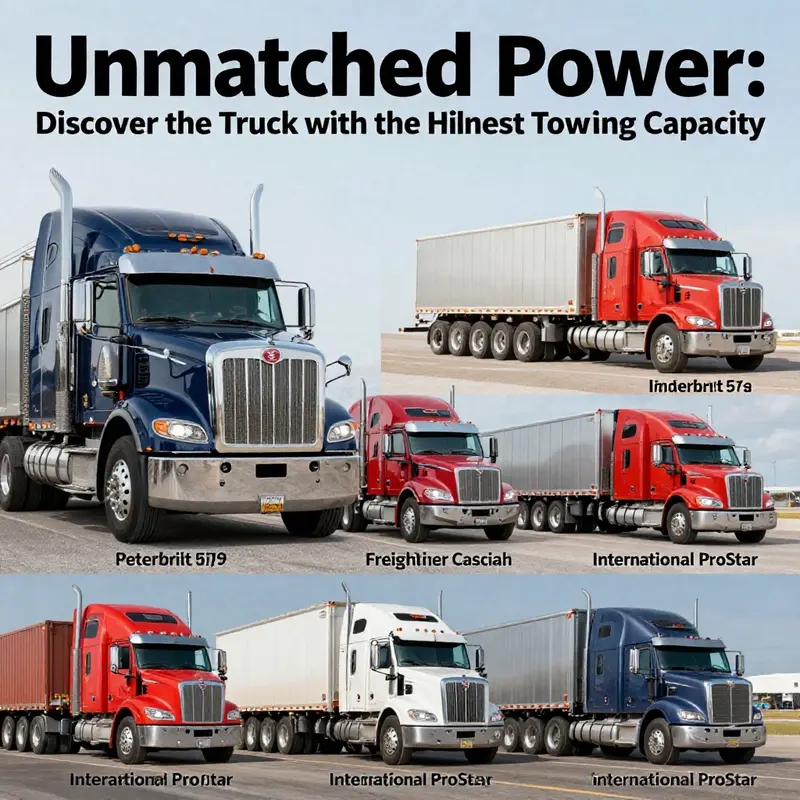
When people ask which truck can tow the most, they tap into a web of engineering choices, real-world constraints, and safety rules. Towing capacity is not a single fixed number; it is shaped by engine torque, drivetrain grip, frame strength, suspension behavior, and how weight is distributed across the vehicle and its trailer.
To grasp the upper end of towing, follow the physics from horsepower to highway, then consider the specialized recovery gear that makes extreme work possible. In heavy-duty operations, multi-axle configurations and carefully engineered drive layouts provide the platform for very heavy loads. The result is a system where power, traction, and restraint work in concert rather than as isolated specs.
Engine power and torque matter, but torque is the key to getting heavy masses moving. Engines in extreme tow trim deliver strong low-RPM torque in combination with gearing to apply substantial pulling force without over-revving. But torque alone is not enough; adequate traction is essential to translate that force into forward motion rather than heat and slip. Traction comes from tires, tread design, and how drive power is distributed across axles.
Drivetrain and chassis design complete the triad. Four-wheel-drive or multi-axle layouts improve grip on slick or uneven surfaces and increase the contact patch with the road. A robust frame with reinforced cross-members resists flex and fatigue when the load is shared across several axles. A strong chassis enables repeated, safe performance during long operations.
Suspension and braking are the final pieces. A resilient suspension absorbs the jolts of heavy pulling and keeps the trailer aligned, while braking must manage the mass with controlled pace and descent handling. Together, these systems enable safe control of extreme loads when aided by skilled operation and properly selected recovery gear.
In practice, the heaviest towing often sits at the outer edge of what is safely achievable under regulation and road conditions. A modern heavy-duty tractor with multiple axles and a careful drive arrangement can approach, and in specialized contexts occasionally exceed, 100 tons. This upper limit reflects not only raw power but the whole ecosystem of toolkits, load management, and support networks that make extreme towing feasible.
For everyday work trucks, capabilities typically sit well below that ceiling, often in the range of 30,000 to 60,000 pounds, depending on configuration and use case. The difference between these workhorses and the extreme-tow platforms lies in load distribution, recovery gear, and the ability to manage risk rather than a simple horsepower bump.
Practical takeaways emphasize the whole system: engine torque, drivetrain grip, chassis resilience, suspension stability, and the availability of proper recovery equipment. A safe, legal, and efficient tow comes from choosing the right tool for the job and coordinating it with trained operators and appropriate safety procedures. For readers seeking more, look to the literature on low-bed and recovery equipment to understand how dedicated trailers and anchoring systems contribute to safe, effective recoveries. A practical takeaway is that the maximum tow figure is a guide, not a guarantee, and success depends on planning, tooling, and discipline.
Final thoughts
In summary, the Peterbilt 579 emerges as the industry leader in towing capacity, suitable for the most demanding tasks in logistics and emergency response. With its advanced engineering, specialized design, and remarkable performance, this heavy-duty truck stands ready to handle even the heaviest loads. By understanding the comparative capabilities of other models, such as the Freightliner Cascadia and International ProStar, business owners can make informed choices that best suit their operational needs. Investing in the right towing capacity not only enhances operational efficiency but also ensures reliability during critical moments.