
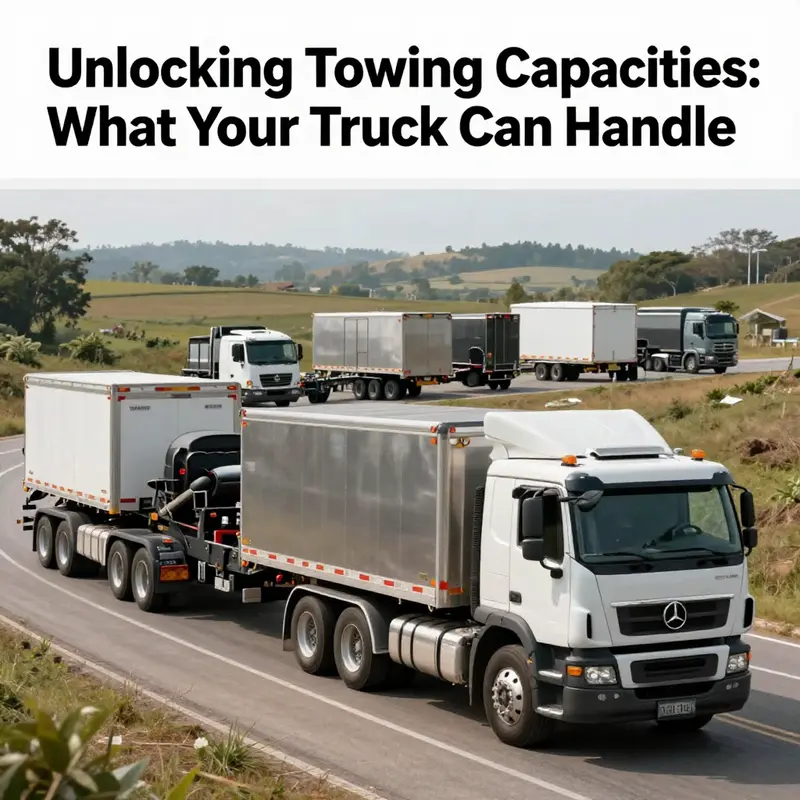
Understanding your truck’s towing capacity is crucial for business owners who rely on it for transporting goods, equipment, or additional vehicles. Each vehicle has unique specifications that dictate how much weight it can safely tow. This guide will delve into critical aspects of your truck’s towing capabilities, including essential specifications and safety considerations. In chapter one, we will explore the key specifications and ratings that inform your truck’s towing potential. Chapter two will address vital safety measures and legal requirements to keep your towing operations compliant and secure.
Tow Boundaries: Reading Your Truck’s Specs to Plan Safe Hauls
Towing isn’t a simple matter of a single number you can memorize and apply to every load. Your truck’s ability to haul a trailer sits at the intersection of several ratings, all published by the manufacturer and all meant to work in concert. The big idea is straightforward: you need to stay within the limits that keep steering predictable, braking effective, and the drivetrain from overheating. The precise figure you can tow is not a universal constant; it changes with the make, model year, engine choice, transmission, axle ratio, and whether the truck is in a 2‑wheel drive or a 4‑wheel drive configuration. In a sense, towing capacity is a map drawn from a cluster of numbers, each echoing a different part of the journey you’re about to undertake.
The most central waypoint on that map is the Gross Combined Weight Rating, or GCWR. This rating is the maximum allowable total weight of the truck plus the trailer it’s pulling. It accounts for the weight of the truck itself—its curb weight—plus fuel, passengers, cargo inside the cab, and the trailer’s weight. It’s not a figure you should ever bump against during a drive, because crossing it can strain the brakes, distort suspension, and partially or completely reduce steering control. In practical terms, GCWR acts like a ceiling for the whole towing equation; when you add a trailer, you’re stacking weight on top of weight, and the GCWR is the guardrail you don’t want to touch.
But GCWR does not exist in isolation. The truck’s own safe carrying capacity—the payload—plays a parallel, equally important part. Payload is the difference between the Gross Vehicle Weight Rating, GVWR, and the curb weight. GVWR is the maximum safe weight of the vehicle when it is loaded up with passengers, cargo, fuel, and all other items inside the truck. The payload figure tells you how much “extra” weight you can carry inside the truck itself and, crucially, how much remains for the hitch and the tongue weight that will press down on the rear axle when you’re towing. If you imagine the truck as a container, GVWR is the maximum mass the container is designed to hold, while payload is the portion of that mass allocated to passengers and gear before you even factor in the trailer.
A separate but intimately connected concept is tongue weight—the downward force that the trailer hitch exerts on the truck’s rear axle. Tongue weight is not an afterthought; it is a design parameter that helps ensure stable steering and effective braking. The rule of thumb is simple: tongue weight should typically be around 10 to 15 percent of the total trailer weight. Getting this balance right matters. If too little weight sits on the hitch, the trailer can sway, and the truck can feel unsettled in gusts of wind or when a big load shifts. If too much weight sits on the hitch, you push the rear suspension toward its limits and rob the front wheels of traction, making steering heavier and potentially shortening braking distances. The exact range isn’t universal, but the 10–15 percent guideline is a reliable starting point for most setups.
When you start planning a tow, the first step is to locate the exact GCWR and GVWR for your specific vehicle. These aren’t generic numbers printed on a chalkboard in a dealership lot; they come from the manufacturer’s specifications for your exact model year, engine, and drivetrain configuration. The reason this matters so much is that two trucks that look nearly identical on the surface can have very different towing ceilings once you account for the powertrain, axle ratio, and even the presence or absence of a towing package. A heavy-duty trim with a beefier transmission and a higher axle ratio could carry more payload and sustain a higher GCWR than a lighter configuration of the same series. The take‑away is clear: there is no single “best” towing capacity. It’s a function of the exact build you own.
Understanding the math behind these numbers helps you make safer, smarter decisions on what to tow. Start with GVWR and curb weight to estimate payload. If your truck weighs 5,000 pounds empty (curb weight) and your GVWR is 7,500 pounds, your payload capacity sits around 2,500 pounds. That payload must cover all occupants, all gear inside the cab, and the tongue weight when you’re towing. If you attach a trailer that weighs 4,000 pounds, and you plan for a tongue weight of 8 percent of that trailer (which sits in the middle of the recommended range for many setups), you’re looking at roughly 320 pounds of tongue weight. Subtract that from your payload allowance and you will have to account for any passengers or cargo beyond the tongue weight. In this simplified example, payload left for people and gear would be about 2,180 pounds. It’s a rough mental model, but it underscores the principle: the more you tow, the more payload you consume, and you must ensure that you never encroach on the GCWR.
The trailer’s own weight matters just as much as the truck’s. Trailer weight is not a fixed number; it depends on the trailer’s structural design, its cargo, and any equipment on board. A heavy trailer with a full load will demand more of the truck’s gross limits than a lighter one with the same empty weight but fewer goods aboard. When you factor in real-world items—coolers, tools, camping gear, spare tires, water—the trailer can become a moving weight you must account for as you approach your GCWR limit. The balance remains: the trailer is part of the total equation, and the tongue weight is the hinge that connects trailer behavior to truck stability.
Beyond the core weight numbers, the vehicle’s braking system, transmission cooling, and suspension are integral to safe towing. Many trucks offer a factory towing package that includes heavy-duty components designed to withstand the stresses of pulling large loads. Those enhancements may involve a upgraded transmission cooler, a more robust differential, reinforced suspension components, and upgraded brakes or brake controllers on the trailer side. When towing, you’re effectively extending the operating envelope of the powertrain and chassis, which means you must ensure these components have the capacity to handle your intended load. If your plan involves long hills, frequent stopping, or prolonged towing sessions, it’s prudent to verify that your cooling system and transmission can maintain safe temperatures. Neglecting these checks can lead to overheating, reduced performance, and in the worst case, mechanical failure under load.
Legal and safety considerations further shape what you can tow. Local regulations often specify required trailer lighting, braking, and lighting configurations, as well as permissible trailer dimensions and weights. Driving with a trailer that does not meet these requirements can expose you to penalties and, more importantly, compromise road safety. The practical implication is that you should not only be confident about your truck’s mechanical limits but also comfortable with the legal framework that governs towing in your area. The manual remains the most reliable source for any model-specific requirements. The manual lays out the exact towing capacity, the payload limits, and any special instructions—such as which hitch ratings are compatible or when a supplemental braking system is warranted.
A practical way to keep yourself within safe boundaries is to approach towing as a collaborative system between truck, hitch, trailer, and payload. The hitch you choose must be rated for the trailer’s weight, and the trailer’s brakes must be compatible with the truck’s braking system when required by law or safety guidelines. You’ll want to consider the dynamic effects of loading as well: people in the cab, gear in the bed, and cargo in the trailer all contribute to the overall mass and how that mass behaves on the highway. It’s easy to overestimate the stability of a load if you focus only on the trailer’s dry weight. In calculations, factor in the cargo you’ll carry and the fuel you’ll burn, since both contribute to the total weight.
If you’re new to towing, a cautious approach helps avoid common errors. Start with a lighter load to observe how the truck handles. Pay attention to steering feel, braking distance, and any squatting or sway as you accelerate or decelerate. If you notice any instability, favor reducing the trailer mass and rechecking tongue weight. It’s also wise to check the hitch connection for level alignment and to verify that the hitch ball, coupler, and safety chains are correctly rated for the weight you’re pulling. These checks are not merely bureaucratic steps; they are the practical steps that ensure the system remains predictable and under control when you need to stop or maneuver quickly.
For longer-term planning, you may discover that certain loads require more deliberate preparation: heavier camping gear, a larger ATV, or a boat with several people aboard. In those cases, you’ll likely seek equipment upgrades or towing solutions that align with your truck’s formal limits. It’s important to resist the temptation to “just push it a little” when you’re near the edge of the truck’s rated capacities. The costs of overloading—reduced braking performance, excessive tire wear, transmission stress, and the risk of mechanical failure—are not worth the risk to people’s safety. The goal is to align your loads with the numbers published by the manufacturer and to treat those numbers as guardrails, not negotiable ceilings.
If you’d like help translating your own truck’s exact numbers into a practical towing plan, you can share the make, model, and year of your vehicle, and I can guide you to the precise GCWR, GVWR, and payload figures for your configuration. It’s a matter of looking up your model-year data and running through a simple check: can the combined weight of the truck, driver, passengers, cargo, and the trailer you intend to tow fit within GCWR while leaving enough payload for the tongue weight and ballast you’ll encounter during real driving? Your answer to that question will determine not only what you tow, but how safely you tow it.
For those who want to see how a real-world towing operation is approached by professionals, a local towing service can help assess loads, equipment, and routing. When you’re planning a move or a camping trip with a sizeable trailer, a quick consultation with a nearby expert can reveal practical considerations such as recommended hitch classes, brake controllers, and load distribution strategies. For local services, see this resource: towing service in Washington, DC.
The core message remains unchanged. The numbers in your owner’s manual do not exist in a vacuum, and they don’t apply universally. You must tie them to your precise truck configuration, the trailer’s weight, and the conditions you’ll encounter on the road. This careful alignment—GCWR, GVWR, payload, tongue weight, and trailer weight—forms the foundation of a safe, predictable towing experience. As you plan, remember that the objective isn’t to maximize the number you can tow; it’s to ensure you can tow safely, legally, and with enough margin to handle the unexpected on real highways and byways. If you have the year, make, and model at hand, you’ll unlock the exact numbers you need to guide your next haul with confidence. The journey from concept to execution starts with reading the specs correctly and respecting the limits they set.
External resource: https://www.ford.com/trucks/super-duty/
Tow Right: Reading Your Truck’s Limits, Staying Safe, and Staying Legal
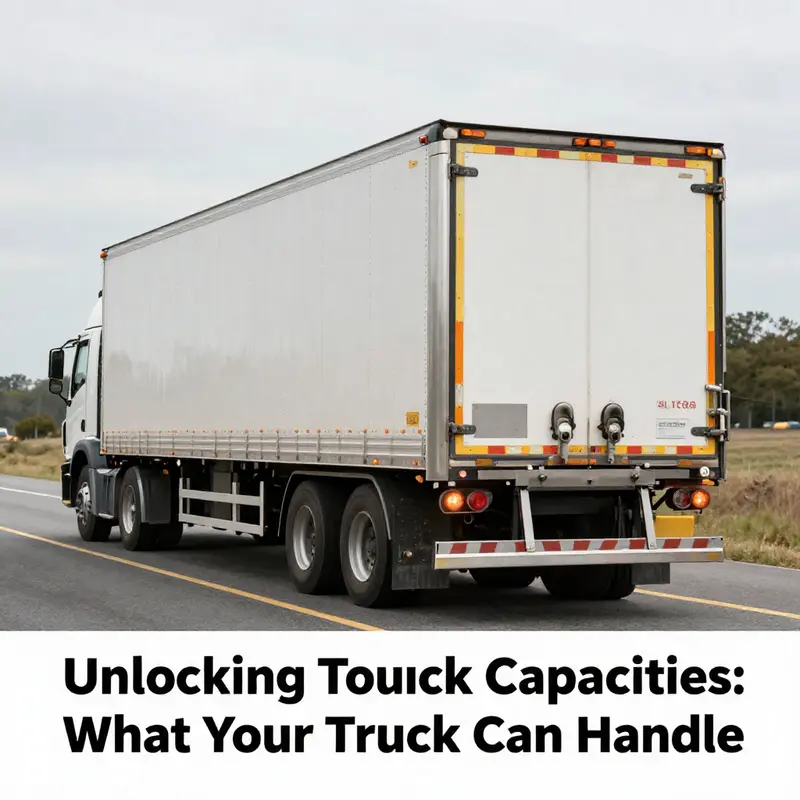
The moment you start picturing the trailer behind your truck is the moment you should lean into the numbers that come from the factory, not the gut feeling of what “looks like” it should tow. Towing capacity is not a single universal figure. It is the product of the truck’s chassis, its engine and transmission, its brakes and suspension, and the precise gearing in the axle. Add a trailer and payload into the mix, and the weight you’re moving becomes a test of physics and discipline rather than a simple arithmetic exercise. The manufacturer’s specifications are not a suggestion; they are the safety margin built into the vehicle’s design. When you ignore them, you invite a cascade of risks—from reduced braking efficiency to steering instability, or worse, a fatal failure on the highway. To approach towing with care, you begin with the numbers the manufacturer provides and you weave them into a practical, legally compliant habit that keeps you, your crew, and everyone else on the road safer.\n\nThe core concepts to anchor your understanding are the Gross Combined Weight Rating, or GCWR, and the Gross Vehicle Weight Rating, or GVWR. GCWR is the ceiling for the total weight of the truck plus the trailer when both are loaded for movement. GVWR is the maximum weight the truck itself should carry, including passengers, cargo, and fuel. It is crucial to remember that the trailer’s weight enters GCWR, not GVWR. So, even if your truck’s GVWR has not been breached, adding a heavy trailer can push the combined weight beyond what the chassis and brakes were designed to handle. This is why the siren call of “just a bit more” is dangerous when you’re calculating a tow setup. The correct approach is to verify both numbers in the owner’s manual or the manufacturer’s official specifications for your exact make, model, and year. The details change with engine options, transmissions, axle ratios, and whether the truck is configured as 2WD or 4WD. Each permutation can shift the available margin by hundreds or even thousands of pounds.\n\nTo translate those ratings into real-world decisions, you need to think in terms of payload and tongue weight as well. Payload capacity is the difference between GVWR and the vehicle’s curb weight. It represents everything that sits inside and on the truck: passengers, gear, fuel, and the trailer’s tongue load. Tongue weight—often described as the downward force the trailer hitch exerts on the rear axle—typically runs about 10 to 15 percent of the trailer’s total weight. This is not a hard universal law, but it is the well-accepted rule of thumb that helps ensure the trailer tracks properly, maintains stability, and doesn’t overload the rear suspension. If tongue weight is too light, you risk trailer sway; if it is too heavy, you’re pushing the truck toward its GVWR and possibly beyond the rear axle’s design load. Correct tongue weight is a careful balance, and getting it right often requires a scale or a precise measurement method, especially for heavier or irregularly loaded trailers.\n\nThe actual trailer weight you intend to haul matters a great deal. A trailer is not a static shape on the road; it carries gear, water, tools, or vehicles that add to its mass. The type of trailer also matters: a travel trailer, a utility trailer, or a car hauler each presents distinct weight distributions and tongue weight profiles. A travel trailer typically requires careful attention to both hitch weight and axles, because the load shifts with fuel, water tanks, and interior cargo; a car trailer will impose a different weight distribution, potentially altering sway characteristics and braking demands. Before you connect, you must know the trailer’s gross weight and, ideally, its tongue weight as loaded. Only then can you assess whether the combined mass fits safely within GCWR and whether the trailer’s braking system matches the scale of the load. If you’re unsure, you should measure and verify. Don’t rely on empty weights or manufacturer marketing numbers; the actual loaded trailer is the true test.\n\nWith those fundamental numbers in view, you then contend with the practicalities that, in real life, decide whether you should tow at all. Hitch choice matters. The hitch you select needs to be rated for the load you intend to pull, not just the mythical capacity you hope to achieve. A mismatched hitch can fail where a properly matched one would perform reliably. Likewise, braking requirements for trailers often demand a supplemental braking system when the trailer’s weight crosses a certain threshold. The rule of thumb is that follows the local regulations and the manufacturer’s guidelines. The goal is not to maximize comfort alone but to ensure your braking system, transmission heat, and suspension can manage the added mass during hill climbs, descents, and emergency stops. The proper brake controller in the tow vehicle is another essential tool. It communicates with the trailer’s brakes to synchronize stopping with the pulling vehicle, reducing the risk of jackknifing or wheel lockups in emergencies. The braking arrangement must be compatible with the trailer’s axle count and braking mechanism; otherwise, you will create a mismatch that undermines safety.\n\nThe interplay between vehicle and load also demands careful consideration of load distribution. A common mistake is loading too much at the front or rear without considering how that weight shifts when you accelerate, brake, or corner. A balanced load helps avoid hitch lift and reduces the tendency of the trailer to sway. The hitch type matters, too. Some hitch configurations distribute weight differently and may require additional components, such as weight distribution hitches, sway controls, or stabilizers, to keep the rig stable through curves and gusty crosswinds. The goal is smooth, predictable handling rather than the impression that “it feels fine until it isn’t.” That sense of safety—minute by minute, mile by mile—often rests on the quiet, almost invisible alignment of tongue weight, hitch type, payload, and braking capability working in concert.\n\nBeyond the physical setup lies the realm of terrain and weather, which can reveal vulnerabilities that the static numbers don’t show. Elevation changes, long grades, and wet or icy pavements transform towing from a controlled exercise into a second driving job. The physics don’t change, but the margin does. When the road becomes steeper, or when tires lose grip, the consequences of overloading become more severe: increased stopping distances, reduced steering response, and the possibility of trailer sway amplifying across a bend. In such conditions, you reduce risk by selecting routes with gentler grades, preserving speed that gives you time to react, and ensuring that the trailer’s brakes are fully functional and properly adjusted. The same principle applies to weather: rain, snow, or high winds can alter the required stopping distance and the stability of a loaded trailer. The precaution is simple and often overlooked—plan ahead and adjust load, speed, and following distance to reflect the actual driving environment.\n\nLegally, the landscape shifts from country to country, state to state, city to city. The vehicles and trailers you tow must comply with local regulations, which govern not just weight but equipment, lighting, braking, and even licensing requirements for drivers of heavy trailers. It’s easy to assume the rules are universal, but the law often holds different thresholds for what is permitted on the road and how a trailer must be equipped. This is not a seasonal inconvenience; it’s part of roadworthiness and accountability on the highway. If you regularly tow across jurisdictions, you owe it to yourself to know the rules that apply where you drive. In many places, towing beyond your vehicle’s rated capacity can expose you to penalties, and in some jurisdictions, it can lead to liability for damages if an accident occurs with an oversized load. Where the specifics differ, the prudent approach is to accept that compliance is a baseline requirement, not an optional add-on.\n\nIn specialized towing scenarios, the requirements become even more exacting. Wheel-lift tow operations, for example, demand precise knowledge of weight distribution and lifting points to prevent damage to the towed vehicle while ensuring safe handling on public roads. Operators in those roles are taught to respect load distribution, attach points, and the nuances of weight transfer as the vehicle is moved. The skill set extends beyond simply knowing a weight rating; it involves training, experience, and an intimate understanding of how to execute a tow without compromising safety or injuring equipment. Even in ordinary vehicle towing, those same principles—the careful match of hitch, brake, and weight, plus the discipline to drive within the limits of the vehicle—are foundational to safe operation.\n\nIf you want a practical, hands-on way to start thinking about your own truck, the place to begin is your owner’s manual and the manufacturer’s official specification sheet for your exact model year. The numbers there are the compass headings that guide every decision—from the choice of hitch and brake controller to the selection of a trailer that fits your truck’s true capabilities. And when you’re planning a trip that involves towing, you should approach it as a project of preparation rather than a matter of improvised risk management. Confirm the GCWR and GVWR, confirm the trailer’s gross weight, and calculate tongue weight in the context of your payload. If you cannot confidently fit your planned payload within the safe envelope, you either adjust the load or choose a different vehicle or trailer that matches your goal. There is no improvised margin here; the margins are built into the vehicle’s design, and violating them is what turns a routine highway trip into a safety hazard.\n\nIn the spirit of practical guidance, consider a scenario where you need to move a sizable load in a city with a dense network of streets and tight parking. If you’re near Washington and want orientation about service standards and safety practices in towing operations, professional assistance can provide a safety net that complements your own calculations. For example, a trusted local towing service in Washington DC can help validate load limits, ensure hitch compatibility, and verify that the trailer’s brakes and lights are up to standard. This is not a substitute for knowing your numbers; it’s a way to ensure you aren’t hiking beyond them without support. If you’re looking for reliable local service options, you can explore providers in the area to gain confidence that your towing setup adheres to safety standards and local regulations. Washington DC towing services are often able to tailor advice to specific routes and road conditions, an important consideration when weight and distribution are as critical as the route itself. towing service Washington DC can be a useful starting point for understanding what questions to ask and what checks to perform before you hit the road with a heavy load.\n\nAll of this points toward a practical philosophy: never trust a general notion of “what my truck can tow.” Instead, build a precise, model-year-specific picture of your capacity and the constraints that accompany it. Your owner’s manual and the manufacturer’s official data are the bedrock. The trailer you select must be weighed and weighed again against that bedrock. Tongue weight must be controlled and measured, not guessed. Hitches, brake controllers, and tires must all be chosen to support the actual load you intend to move, not the potential load you hope to move someday. And your journey behind the wheel must respect terrain, weather, and legal boundaries. This is the core mindset that separates casual towing from responsible, safe towing. It is the mindset that keeps you, your passengers, other drivers, and the roads themselves out of harm’s way.\n\nIf you need a quick check to anchor these ideas, the simplest path is to reference your truck’s manual, then cross-check that data with a qualified technician or a trusted service provider who can help validate the setup. A cautious approach, taken consistently, becomes second nature—the difference between confidence and risk on the highway. And if you’re curious about how professionals handle towing standards in a specific urban setting, the linked resource above offers an example of the type of support available from local specialists who understand the practicalities of city towing and the safety requirements that govern it. It will not replace the fundamental practice of verifying the numbers yourself; instead, it complements your own due diligence with expert guidance when needed, ensuring that you maintain a safe, legal, and efficient towing operation on the road ahead.\n\nExternal resource for broader regulatory context: https://www.dmv.ph/vehicle-registration-and-licensing. This Philippine government page provides up-to-date information on vehicle registration, licensing, and legal towing requirements, including restrictions based on vehicle type and weight class. In any jurisdiction, understanding local rules is essential to avoid penalties and to ensure proper equipment and safe operation on the road.
Final thoughts
Recognizing the towing capacity of your truck is not just about its power; it directly impacts your business’s efficiency and safety. As you plan your towing operations, remember to consult your truck’s specific ratings and comply with applicable safety regulations. Understanding these factors ensures you maximize your resources while minimizing risks. Equip yourself with knowledge, as it is key to leveraging your truck’s towing abilities successfully.