
As a business owner in the towing industry, understanding tow truck insurance costs is crucial for financial planning. The premiums for this specialized insurance can vary widely based on various factors, from vehicle type to individual driver history. In this article, we delve into the intricacies of tow truck insurance pricing, exploring the influential factors that determine costs in the first chapter. We’ll then compare different coverage types, helping you make informed decisions suited to your business needs.
Tow Truck Insurance Costs Unveiled: How Risk, Fleet Size, and Coverage Shape Premiums
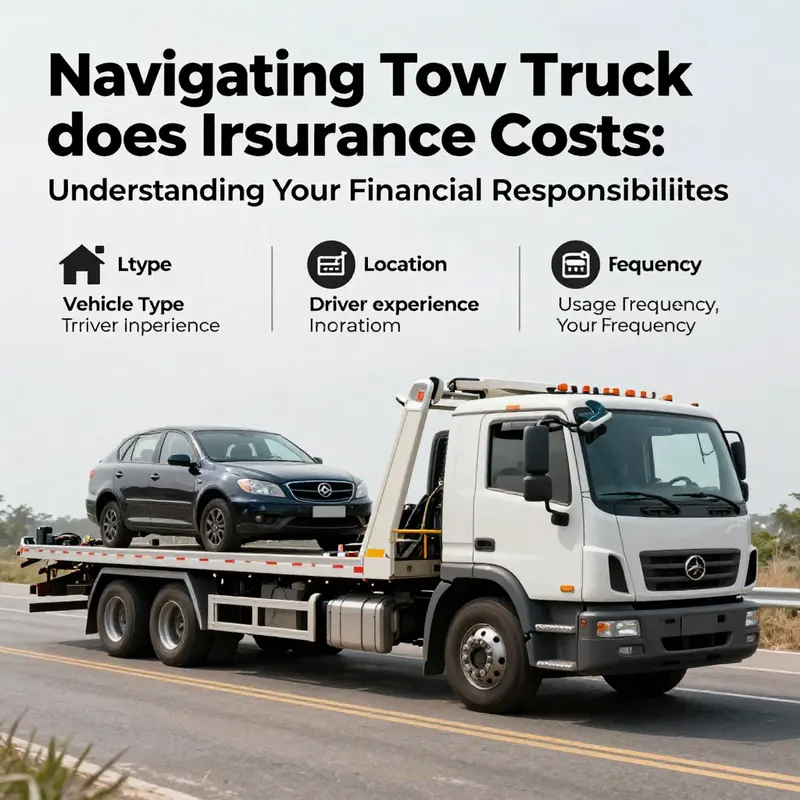
Insurance pricing for tow trucks rarely settles into a single, predictable number. Prices shift with the instrument of risk and the realities of daily operation, and this is especially true in a business built around moving fragile, high-value assets in unpredictable conditions. For operators who are trying to forecast costs and protect their bottom line, understanding what drives the premium is as important as understanding the coverage options themselves. When you consider a policy, you are not merely buying protection; you are buying a map of risk that translates into dollars. A baseline picture helps: in the United States, basic liability coverage for a tow truck typically starts around $1,000 to $2,000 per year. That core expense forms the floor for any decision about adding protection. But the moment you add more layers—physical damage, uninsured/underinsured motorist protection, hired auto liability—the annual cost can quickly climb to $5,000 or more. The exact figure depends on a blend of factors that, together, reflect the operational realities of a towing business rather than the characteristics of a single truck on the showroom floor. The most reliable way to determine an exact quote is to engage with providers directly, yet a careful reading of the landscape can empower operators to negotiate, plan, and manage risk more effectively. As local markets evolve, these dynamics also evolve, illustrating why identical trucks in different towns can end up with noticeably different price tags.
At the heart of pricing is the vehicle itself. The type and size of the tow truck shape the exposure insurers must underwrite. A larger, heavier-duty vehicle used for commercial or heavy hauling carries higher liability potential because the consequences of a misstep can reach beyond a single incident to affect multiple vehicles, warehouses, or even workers on site. The operation itself matters, too. Trucks involved in complex tasks—lifting, towing large commercial fleets, or handling specialty recoveries—introduce additional failure points and higher likelihoods of damage to both the tow truck and third-party property. These practical realities push up both the needed coverage limits and the premiums that accompany them. This is why a fleet with rotators or heavy wreckers often carries more expensive insurance than a small, light-duty tow unit that mostly handles routine roadside assistance.
Coverage limits and deductibles function like knobs on a control panel, letting a business tune protection against cost. Higher policy limits improve financial protection when a claim arises, but they also raise the price. Conversely, choosing a higher deductible reduces the monthly premium, but it shifts more out-of-pocket responsibility to the owner at the moment a claim occurs. A thoughtful balancing act is essential here. Operators who maintain good risk management practices may justify higher deductibles if they offset those costs with lower premiums through demonstrated safety and careful maintenance. In practice, the premium-saving effect of a higher deductible is often magnified when paired with proactive measures—clear driver policies, regular vehicle inspections, and disciplined incident reporting can translate into long-term savings that compound with time.
Driver experience and safety records remain a primary lever in underwriting decisions. Insurers closely examine who operates the trucks, how many years they have behind the wheel, and whether those drivers have clean records with minimal violations. Training and adherence to safety protocols weigh heavily too. Programs that certify operators in hazardous material handling, complex recovery techniques, or heavy towing operations can be viewed as evidence of lower risk, even if they do not carry a formal brand name. The narrative here is consistent: fewer incidents in the past, and robust processes in place to prevent future ones, equate to lower premiums. In practice, a fleet with a seasoned crew and documented training will usually enjoy more favorable terms than a newer team with a spotty safety record. The insurer’s calculation is not simply about past events; it’s about the certainty of future performance, and that is the key to more favorable pricing over time.
Location and operating environment also exert a steady influence on cost. Urban areas, with their higher traffic density, greater claim frequency, and more complex liability landscapes, typically push premiums higher. Rural regions, with less congested roads and fewer incidents, can enjoy lower rates. But a location’s regulatory climate matters too. States with stricter rules and higher potential damages awards can tilt the pricing landscape upward because the legal and financial exposure tends to be greater. An operator whose routes span dense metropolitan corridors or who takes on high-risk jobs—such as heavy recoveries on busy interchanges or accident scenes with multiple vehicles—will face premiums that reflect those intensified exposures. This is an important reminder: location is not just a backdrop; it is an active component of risk assessment that insurers weigh when they price a policy.
A claim history carries extraordinary weight in pricing. A track record of frequent or costly claims signals heightened risk to underwriters, which translates directly into higher premiums. It’s not merely the number of claims that matters, but the severity and cost of those incidents, along with how quickly and transparently the operator addresses risk after an loss. For a towing business, property damage, injuries at the scene, or damage to third-party vehicles can send premiums climbing. The impression insurers form from the claims history influences both the current rate and the willingness to offer certain coverages or higher limits. A company that builds a disciplined claims-management approach—timely reporting, cooperation with adjusters, and a demonstrated commitment to accountability—can sometimes demonstrate to insurers that volatility can be controlled, which may help stabilize or even reduce costs over time.
Business size and operations volume play a substantial, sometimes under appreciated, role in pricing. A single-truck operation has different risk dynamics than a mid-size fleet with multiple vehicles and a steady flow of jobs. Larger fleets with higher operational intensity face a broader liability exposure and more complex recovery scenarios, and this complexity is reflected in the underwriting process. When a business expands into roadside assistance, fleet maintenance, or additional wrecker services, the incremental risk changes in kind. Each added service expands the potential risk surface, requiring more comprehensive coverage and potentially higher deductibles to balance the premium equation. Conversely, a well-structured operation that runs efficient dispatch, reliable maintenance programs, and rigorous safety protocols can present a more favorable risk profile to underwriters. The insurance market rewards those who convert risk into measurable, repeatable practices, and that is how scope and scale increasingly become tools for controlling costs over the long run.
In all of this, the practical act of shopping for coverage matters even beyond the math. Pricing is a negotiation where understanding your risk profile translates into better policy design. If you expect to deploy multiple trucks, you may want a structured fleet policy that streamlines coverage across the fleet while offering predictable renewals. A policy that bundles liability, physical damage, and hired auto liability can deliver value, but the exact mix must fit the company’s operations. A careful review of deductibles, endorsements, and limits is essential to avoid unexpected gaps that could create uninsured losses at the worst possible moments. Even small adjustments to a policy language—such as adding hired-on-call coverage for temporary subcontractors, or clarifying coverage during specialized operations—can alter both protection and price in meaningful ways. For operators in tight-margin markets, every dollar saved on the premium can compound into a more stable cost base that supports sustainable growth.
The social and economic context surrounding towing work also matters. A local operator might partner with nearby service providers or stand alongside other businesses during peak demand periods. In one such example, a local operator might coordinate with a nearby towing service Arlington VA to illustrate how community networks influence operational risk and, by extension, pricing. These practical relationships can help manage risk by reducing downtime, improving response times, and lowering the likelihood of shoulder-season gaps in service. They also demonstrate that cost containment in tow truck insurance isn’t merely about premium shopping; it’s about building a resilient business ecology that insurers see as less volatile and more predictable over time.
To round out the picture, operators should recognize that national market trends influence regional quotes. The insurance market moves with broader patterns of auto claims, litigation costs, and the evolving landscape of ride-along and commercial towing regulations. While local factors dominate a given quote, being aware of nationwide price trajectories helps in planning. Market reports and data aggregators provide periodic snapshots of what similar fleets are paying by region, so conversations with agents or brokers can be grounded in context rather than in guesswork. If you want a broader market view, refer to authoritative resources that track auto insurance trends and state-level benchmarks.
In sum, tow truck insurance costs are not a fixed figure but a function of risk exposure and risk management. Vehicle type and size, coverage limits and deductibles, driver experience and safety records, location, claims history, and business scale all converge to shape the final premium. By articulating a clear risk profile, investing in driver training and maintenance, thoughtfully selecting coverage, and building a resilient operating model, a tow company can influence its pricing trajectory in meaningful ways. The process is iterative: as a fleet grows, as routes change, and as new safety practices take root, premiums can adjust in response. The chapter that follows will translate these insights into practical steps you can take to compare policies, discuss terms with underwriters, and design a coverage package that aligns with both risk tolerance and business goals. For now, the message is straightforward: better risk management and thoughtful policy design make insurance a tool for stability rather than a cost to fear. It is about turning a volatile expense into a predictable line item that supports reliable service delivery, even when the road throws a curveball. External context and ongoing market data can help you stay ahead, but the core work remains the same: understand your operation, describe it honestly to your insurer, and build a protection plan that scales with your business needs. External resource: https://www.naic.org/capitalmarkets/insurancerates.htm
Pricing the Risk: How Coverage Types Shape Tow Truck Insurance Costs
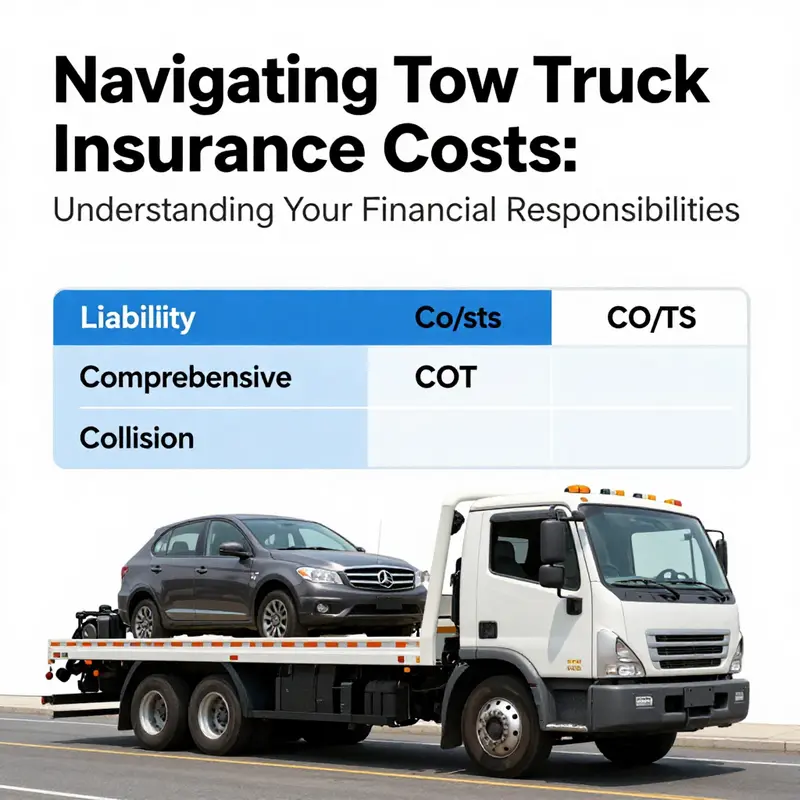
When operators ask how much tow truck insurance costs, they are really asking how much protection their business must purchase to survive a worst‑case claim. The answer isn’t a single number. It hinges on how much risk the policy covers, and how much risk the operator is willing to shoulder with deductibles and limits. Coverage types act like the layers of a protective shell: each layer adds a degree of safety, but also adds a price. To understand the math, it helps to start with the most fundamental distinction in any commercial auto policy: the mandatory backbone, liability, and the optional but often indispensable layers that sit atop it. Liability coverage is typically the floor of protection, designed to cover bodily injury and property damage claims that arise from the tow operator’s responsibilities. In most states, some form of liability insurance is required, but the price of that coverage grows with the limits chosen. The deeper you go into protection—toward higher per-occurrence limits, and toward protections that cover your truck’s own damage or the value of the towed vehicle—the more the premium rises. This isn’t a quirk of insurance; it reflects the reality that broader protection mitigates more types of risk, and risk comes with a price tag.
A basic liability policy for a tow truck can be surprisingly accessible in the right circumstances. In many regions, a minimal liability plan might start around $1,000 to $2,000 per year, especially for smaller, lower-value trucks and operators with clean driving records. However, the moment an operator wants more than just bodily injury and property damage protection—when they add comprehensive coverage for non-collision losses, collision coverage for crashes, and protection against injuries from uninsured or underinsured motorists—the annual cost begins to climb. Comprehensive policies, which guard against theft, vandalism, fire, and other non-collision hazards, can push premiums higher, particularly for trucks with expensive equipment like heavy winches, advanced lighting systems, or hydraulic lifts. If the vehicle itself is valuable or carries specialized gear used daily, the premium weight of comprehensive protection becomes even more pronounced. The cost increase is not arbitrary; it reflects the broader spectrum of scenarios that the policy must absorb when something goes wrong.
Collision coverage amplifies this effect. Tow trucks frequently operate in dense urban environments where tight turns, limited space, and busy traffic interact with the unpredictable nature of toWin operations. A policy that includes collision protection—covering damage from accidents with other vehicles, objects, or barriers—adds to the cost but is widely regarded as essential by operators who rely on their trucks every day. In practice, collision coverage aligns with the operational realities of the industry: the more time the truck spends on the road, the higher the probability of collision exposure. Operators who run fleet services or high-mileage operations typically see higher premiums because the frequency and potential severity of incidents rise with usage. The premium, then, is not just a function of the truck’s price tag, but of the risk profile that comes with how it’s used.
Beyond the core trio of liability, collision, and comprehensive, many tow operators include additional coverages that address specific risks inherent to towing work. Uninsured/underinsured motorist protection remains a crucial line of defense for drivers who navigate roadways shared with drivers who may not have sufficient coverage. Contingent cargo insurance, a specialized layer that protects against damage to vehicles being towed, acknowledges the fact that the value of the towed car can be substantial and, in some cases, the cost of repair can rival or exceed the value of the tow truck itself. Equipment breakdown coverage stands behind the idea that the truck’s own systems—hydraulic lifts, winches, electronic controls—can fail at inopportune moments, potentially leaving a business stranded. Roadside assistance, while often considered a value add, can also factor into a package when a policy is built for continuous, around-the-clock operation.
All of these coverages intersect with a common pair of levers that operators constantly weigh: limits and deductibles. Higher liability limits—think of a million dollars per occurrence, or higher—provide more protection against large claims but come with higher annual premiums. Lower deductibles reduce the out‑of‑pocket cost when a claim is filed, yet they also raise the cost of coverage—another clear example of how cost reflects risk tolerance. The decision isn’t purely financial; it is a strategic choice about risk management. For many tow operators, the costs of a truly damaging event—bodily injury, substantial property damage, or a collision involving multiple vehicles—can overwhelm a small margin. In that context, the higher premium that accompanies robust coverage is a form of price insurance against catastrophic losses.
The story, then, is one of tradeoffs between protection breadth and price. A full-coverage policy that layers liability with comprehensive, collision, uninsured motorist protection, and contingent cargo is not the same as a lean, minimum-liability policy. When coverage is expanded to include contingent cargo, the policy explicitly considers the possible damages to the vehicles being towed, which, given the high value of many modern cars and trucks, can be a meaningful exposure. The cost of contingent cargo is not negligible, particularly for operators who handle high-value tows or transport vehicles with sensitive electronics, limited spare parts, or specialized configurations. Likewise, adding road‑side services, equipment breakdown, and other ancillary protections enhances the policy’s resilience against operational disruptions. Each added protection has a price, but each also gives business owners confidence that a broader risk envelope exists when misfortune strikes.
Location matters in how these costs unfold. Urban centers with heavy traffic, frequent incidents, and greater regulatory complexity tend to yield higher premiums. A tow operator in a large city navigates more complex liability scenarios, from multi-vehicle wrecks to property damage claims across crowded streets. In contrast, rural operators with lighter traffic patterns and shorter response times may see lower overall costs, at least for similar vehicle values. Yet even in smaller markets, certain coverage types might be more heavily utilized, such as roadside assistance or equipment breakdown, if the operation relies on near-constant vehicle uptime. The operational profile—how often the truck is used, how many hours it spends on the road, and the typical towing assignment—shapes the cost in ways policy features alone cannot fully capture. This is why insurers emphasize a personalized quote process: the numbers that roll out of a quote are a function not only of vehicle value but of the full system of coverage choices and the realities of daily operation.
To ground these concepts in a practical frame, consider a mid-range tow truck in an urban market with steady but moderate daily use. A policy that includes basic liability, plus collision and comprehensive coverage, could land in the broader range of a few thousand dollars per year for liability alone, but the addition of higher liability limits typically pushes the total toward the higher end of the spectrum. When an operator adds uninsured motorist protection and contingent cargo, the annual cost can climb further, sometimes into the $4,000 to $8,000 range for full-coverage policies. This range mirrors the interplay between risk mitigation and asset protection. It’s not a universal price tag, but it captures the general acceleration of cost as coverage expands. The exact figure will hinge on the truck’s value, how it is deployed, the deductible the operator selects, and the insurance provider’s underwriting approach. The numbers, while instructive, are best viewed as anchors for conversation with insurers who can tailor a policy to the operator’s specific business model.
For operators operating in diverse markets, the pricing conversation also benefits from local context. Market dynamics—such as claim frequency, repair costs, and local regulatory requirements—shape the price of protection. In some markets, the same coverage package can produce noticeably different premiums because the local exposure profile differs. In Washington, DC, the risk calculus includes dense urban traffic, strict safety and environmental standards, and a high likelihood of incidents in central corridors. These realities tend to elevate both the perceived risk and the willingness of insurers to price in more comprehensive protection. Operators in such markets often find that bundling multiple protections not only improves risk transfer but can yield favorable terms through policy customization and a more predictable loss experience. For readers seeking practical context in this region, a local overview of towing capabilities and coverage considerations can be found through a dedicated DC towing service page Washington, DC towing service.
The pricing story also emphasizes a broader message: estimate, compare, and align coverage with business risk. The National Association of Insurance Commissioners (NAIC) and similar regulatory bodies provide accessible resources to compare policies and understand coverage options. While the NAIC guidance is not a substitute for a quote, it helps operators interpret policy language, limits, deductibles, and exclusions. The process of obtaining quotes should not be rushed. A thoughtful approach begins with a clear description of the business: the number of trucks, average daily mileage, typical types of tow assignments, the expected value of items towed, and any specialized equipment on the rigs. From there, operators can work with brokers or insurers to test different coverage configurations—lower deductibles with higher premiums, or higher deductibles with more limited upfront costs. The goal is to craft a protection plan that is robust enough to withstand a major incident, yet not so costly that it erodes the viability of the operation.
Ultimately, the decision about coverage types and limits is a strategic business choice, not a pure price exercise. A policy that is too lean may save money in the short term but leave a company vulnerable to catastrophic losses that could jeopardize operations. Conversely, a policy with broad protections can secure peace of mind and improve resilience, which, in turn, supports longer-term growth and revenue stability. In this sense, insurance costs reflect the long horizon of risk management. The more an operator understands the spectrum of coverage—what each layer protects, what limits are reasonable for their fleet, and how deductibles influence cash flow—the better they can price risk into their service model. This is the essence of the comparative analysis of tow truck insurance costs based on coverage types: a careful alignment of protection to exposure, so that premium dollars translate into meaningful protection when it matters most.
For readers seeking a broader exploration of ownership costs in this field, a comprehensive external resource provides deeper guidance on the total costs of tow truck ownership, including insurance considerations. Tow truck ownership costs — complete guide. If you’re building a quote, don’t hesitate to consult a regional provider who can translate these concepts into a policy that matches your fleet, your routes, and your risk appetite. In markets where demand for reliable service remains high, the right mix of coverage becomes not just a shield against loss but a strategic asset that supports continuity, customer trust, and operational uptime. As the economics of the business continue to evolve, the discipline of choosing the right coverage types—balanced against the realities of cost, performance, and risk—will remain central to sustainable tow-truck operations.
Final thoughts
In conclusion, understanding tow truck insurance costs is essential for business owners to navigate their financial responsibilities effectively. By recognizing the varying factors that influence premiums, as well as the differences in coverage types, you can tailor your insurance strategy to better protect your assets and ensure your business’s success. Take the time now to assess your insurance needs and explore options that align with your operations.