
Selecting the ideal truck for towing can significantly impact operational efficiency and cost-effectiveness for business owners. Whether you haul equipment, trailers, or goods, understanding towing capacities and capabilities is essential. This guide highlights the top contenders in the market for 2026, detailing their performance and specifications. Each chapter will provide in-depth insights into leading models and crucial factors to consider, ensuring you make an informed decision aligned with your business’s towing requirements.
Tow-Ready Power, Purpose, and Pace: Navigating the Best Truck for Towing in 2026
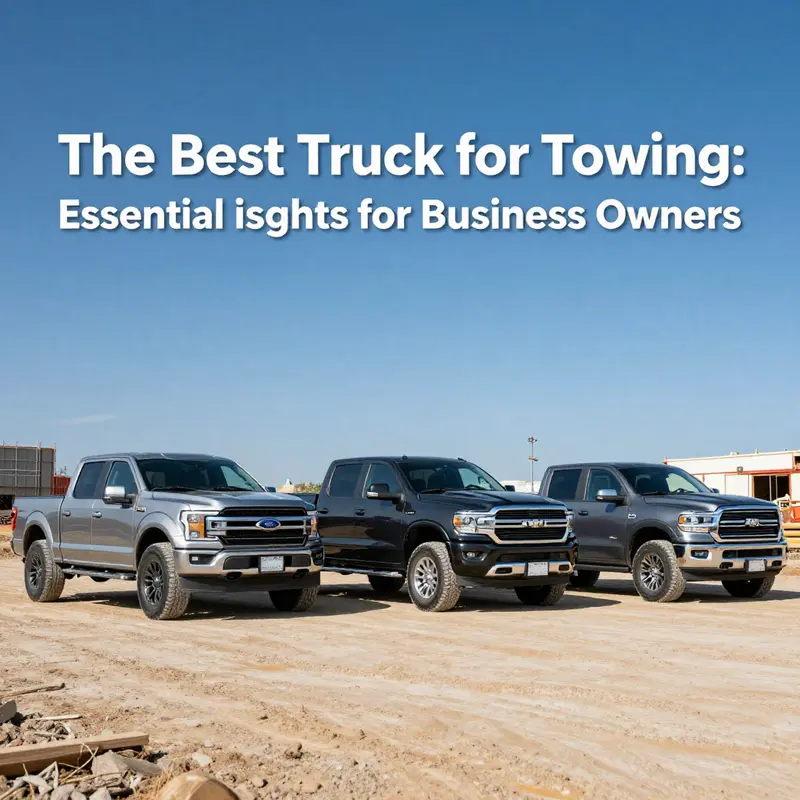
Choosing the best truck for towing hinges on trailer weight, distance, and how you balance power with control. In 2026, three core priorities define the field: raw torque, sustained efficiency, and a well-integrated towing package that harmonizes engine, transmission, cooling, and brakes with driver comfort. The top contenders tend to cluster around hybrid powertrains offering strong low-end torque for starts and climbs, diesel options for steady high-mileage pulling, and premium chassis tuning for comfort without sacrificing payload. Real-world decisions should consider GCWR, payload, and trailer brake integration, not just peak tow numbers. The Ford F-150 PowerBoost Hybrid exemplifies how electric assist can deliver confident starts and smooth acceleration while maintaining respectable fuel economy. When properly equipped, its trailering features—integrated brake control, multiple tow modes, and trailer-guide systems—translate capability into predictability. Diesel Powertrains: Diesel variants shine on long hauls with heavy trailers, delivering early torque and stable, quiet operation, though they may present more complexity in cold starts and heat management. For frequent long-distance towing, the fuel-cost-per-mile equation often tilts in favor of diesel despite higher upfront price and maintenance considerations. Luxury-tuned chassis: For those who tow heavy loads but value cabin quietness and ride quality, premium trims offer improved stability, refined suspension, and thoughtful creature comforts. The combination of torque with a refined ride helps reduce fatigue on multi-hour trips and makes it easier to maintain consistent speeds on highways. Weight is a key constant: GCWR and payload counts, along with trailer weight including cargo, drive how you plan routes, braking strategy, and cooling demands. A modern reliable transmission with ample cooling, plus a dedicated trailer brake controller, becomes a safety baseline rather than a luxury when you’re routinely towing near the limits. Trailer preparation is part of the equation: hitch type (ball, gooseneck, fifth-wheel) alters braking requirements and weight distribution, and accessories like upgraded cooling or hitch-integrated sensors reduce guesswork during maneuvering. In practice, the best towing trucks in 2026 balance torque-rich power with stability and a rich feature set that reduces the cognitive load of towing. For urban users, regional guidance and dealer-aware setups can inform decisions about load management, braking performance, and maneuverability in tight spaces. In terms of concrete guidance, anchor purchase decisions to your trailer’s actual weight and intended duty cycle: start by measuring trailer gross weight, add cargo, compare to tow rating, and evaluate GCWR and payload. A well-rounded package includes a transmission with multi-gear coverage, robust cooling, and an integrated trailer brake controller. The real value lies in a balanced package: power when you need it, control when you’re in a hurry, and efficiency to keep the trip economical. Real-world evaluations highlight Ford and Chevrolet as strong contenders for heavy-haul capability, with Ram and Toyota offering compelling alternatives depending on priorities like ride quality and long-term reliability. The best choice is the one that aligns with your trailer’s weight, your typical routes, and your tolerance for fuel use and maintenance. It’s a negotiation between torque, payload, cooling, and confidence in a proven towing package that includes an electronic aids suite and reliable brakes. The 2026 market offers a spectrum: hybrids that feel responsive at takeoff, diesels for steady long-haul torque, and premium-tuned chassis delivering a calm, controlled towing experience. Your choice should be anchored in real-world needs—distance, load, and the road you expect to travel—so you end up with a truck that handles the load with authority and keeps you and your crew comfortable on the road.
Tow-Ready Criteria: Navigating Power, Precision, and Longevity in 2026’s Best Trucks for Towing
Choosing the best truck for towing is less about chasing the largest number on a spec sheet and more about aligning a truck’s capabilities with how you actually work and travel. In 2026, the field remains crowded with capable options, but the right pick depends on your trailer weight, how often you tow, the terrain you face, and how much you value comfort and resale value over raw brute force. The core idea is simple: towing power is a function of more than horsepower. It is the product of a well-maired system—engine torque, transmission behavior, cooling capacity, and chassis tuning—that keeps the rig stable, the brakes confident, and the journey predictable from start to finish. To truly understand what constitutes the best tow truck for your needs, it helps to unpack the core concepts behind towing performance and then translate them into practical guidance for real-world use.
Towing capacity, at first glance, is the headline stat. It represents the maximum weight the powertrain and chassis can pull safely when properly equipped. Yet that number is not universal. It shifts with drivetrain configuration, axle ratios, and whether a factory towing package is installed. A given truck can boast a very high maximum towing rating, but the number you actually use in daily life depends on how you configure the truck and what you attach to the hitch. A trailer heavy enough to push the limits of a designed combination demands more than a big number; it requires a system tuned for sustained effort. This is where technology and packaging matter. A modern tow-focused setup typically includes a robust cooling system to manage heat during long pulls, an integrated brake controller to synchronize vehicle and trailer braking, and a torque-rich drive gradient that keeps the engine from hunting for gear when hills loom on the horizon. In practical terms, this translates to smoother acceleration, more predictable deceleration, and less strain on the drivetrain during stop-and-go work or long interstate sections. If you tow frequently through rolling terrain or over mountains, those cooling lines, additional transmission coolers, and a stable power delivery profile can be the deciding factors between a comfortable trip and a fatigue-driven ordeal.
Another essential dimension is gross combined weight rating, or GCWR. This figure captures the total weight of the truck, the trailer, and any cargo or passengers inside both. It sets the ceiling for the entire rig’s load-handling envelope. Exceeding GCWR can jeopardize braking performance, steering feel, and overall control, especially in emergency maneuvers or steep descents. The practical takeaway is clearer: know your trailer’s weight, plus how much you and your gear will add to the truck, and ensure your trailer and vehicle together stay well within GCWR. This discipline matters as much as raw horsepower because it directly influences how the vehicle responds to changes in grade, wind, or unexpected traffic conditions on a long trip.
Within that framework, the choice between gasoline and diesel, or even a hybrid option, becomes a question of torque delivery and operating cost over the long haul. Diesel engines famously deliver high torque at low to mid RPMs, which translates into strong pulling power at the start of a hill or when starting a heavy load from a standstill. That torque profile, combined with efficient fuel consumption in highway conditions, makes diesel options appealing for long-distance towing or frequent town-to-road transitions with sizable trailers. A hybrid or advanced gasoline setup, meanwhile, can offer a compelling blend of respectable torque and improved fuel economy, especially in mixed driving or urban-tow scenarios where stop-and-go momentum matters. The best choice rests on your typical mission profile: steady, heavy towing on open highways, or more variable towing that benefits from a broad powerband and refined ride quality.
The ease of backing up a trailer, parking in tight spaces, and maneuvering around a job site also weighs into what makes a truck feel “best” for towing. Modern towing systems include features that reduce the stress of complex maneuvers: intuitive trailer steering, responsive brake controllers, and trailer sway mitigation that helps correct instability before it becomes a problem. Even without naming specific models, the presence of an integrated trailer brake controller and a smart trailer management system can dramatically improve control in crowded parking lots or narrow streets. A truck that can guide you with confidence through a reverse maneuver or a tight turn reduces fatigue and lowers the risk of scrapes and dings to the trailer or nearby obstacles. When evaluating options, look for a package or configuration that includes these capabilities as standard or readily addable options, because they change the day-to-day reality of towing as much as the peak rating on the spec sheet.
Beyond raw power and clever features, the most valuable perspective comes from thinking through your actual use. For a contractor who tows heavy trailers across long distances, the priority is stamina. There, a turbocharged or diesel option that sustains high torque across a broad RPM range, paired with a robust cooling strategy and a transmission designed for frequent hauling, tends to pay dividends in reliability and decisive capability. The same holds for a fleet that runs in rural or construction environments, where payload and bed load are part of the job, and a stable chassis helps keep the entire operation on track from dawn to dusk. In contrast, a weekend enthusiast who tows a large camper for monthly trips might prize ride comfort, quiet cabin, and premium interior materials as much as top-end numbers, because the experience matters as much as the ability to move a big weight. That preference can steer a buyer toward configurations that emphasize refinement and driver aid features, even if the maximum towing rating is slightly lower than the peak capability of a more work-oriented setup.
A useful lens for decision-making is to anchor your choice in three questions: How heavy is my typical trailer? How often will I tow, and over what distances? What is my tolerance for higher purchase and operating costs in exchange for the added capability? If your trailer weighs up to the mid-teens thousands of pounds and you drive through long stretches of highway, you may value a diesel or hybrid with excellent low-end torque and strong highway efficiency. If your trailer sits closer to the lighter end but you still require confident braking and steady stability, a well-equipped gasoline option with strong towing prep might be ideal. If you’re a contractor who must haul payloads along with the trailer and need assured reliability in rugged conditions, prioritize cooling, heavy-duty transmission tuning, and a chassis tuned to sustain repeated towing cycles without overheating.
Even the practicalities of trailer geometry—how hitch type interacts with payload and distance—shape the best choice for a given job. Ball hitches work well for standard towing with lighter trailers, while heavy-duty setups like gooseneck or fifth-wheel arrangements unlock higher payloads in specific use cases, especially for long-haul towing or when the trailer itself is a substantial portion of the load. The trailer’s own weight distribution, coupled with the truck’s suspension tuning, determines how much of the load the axles and tires bear and how the combination behaves on corners and grades. When you’re assessing models, factor in the towing package options that position the truck for the hitch you need. A factory-installed package often bundles enhanced cooling, a trailer brake controller, and software calibrations that optimize sway control and engine/transmission responses for towing duty.
In the digital age, even the decision-making process benefits from a grounded, real-world frame of reference. For someone navigating busy urban corridors in a region with frequent stop-and-go traffic, the practical advantage of a refined ride and efficient use of fuel can tilt the scale toward a configuration that prioritizes comfort and efficiency without sacrificing essential towing torque. In contrast, a buyer facing steep grades, rough terrain, or scheduling long cross-country trips is better served by a powertrain and cooling architecture that demonstrates endurance over many miles, with a proven long-term reliability profile. The balance you strike depends on where you live, how you travel, and what you tow most often.
To connect these ideas to a local perspective, consider what a towing professional in Washington DC might emphasize when advising on a truck choice. The environment presents tight spaces, urban congestion, and the need to maneuver safely around other vehicles and pedestrians while still handling a sizable trailer on crowded streets. For a city-towing context, a configuration with strong low-end torque, precise trailer maneuvering aids, and a well-calibrated braking system can make a noticeable difference in daily performance and driver confidence. If you’re curious about a nearby service’s insights on vehicle setup for city towing, you can explore resources like this local Washington DC towing service for practical guidance and hands-on evaluation.
Anchor: Washington DC towing service
In a broader sense, the best approach to selecting the right tow-ready truck is to start with the load profile and then build outward from there. Confirm the trailer’s gross weight and cargo, then compare it against the truck’s towing capacity and GCWR in the configurations you’re considering. Verify the presence of a towing prep package and ensure it includes the necessary safety and control features. Check the hitch compatibility and whether the setup supports the trailer geometry you plan to use. Assess the transmission’s ability to hold gears or ratios under load and whether a dedicated cooling system exists to prevent heat buildup during extended pulls. These steps matter as soon as you begin narrowing the field, because the most legendary power figures won’t produce the best real-world results if the cooling and control systems falter when the road rises or the trailer sways.
The conclusion is less about naming a single “best” truck and more about matching capability to need. For some, the strongest overall towing power, paired with robust support networks and the ability to maintain performance under load, will be decisive. For others, the comfort of a refined cabin, quiet ride, and a dash of luxury will justify a slightly lower top-end rating if it keeps every mile enjoyable and predictable. And for a growing number of buyers who aim for longevity and predictable ownership costs, reliability and durability may trump the very last pound of towing capacity. The good news is that, in 2026, there are configurations with the flexible powertrains, protective packages, and tuning to cover these varied missions while delivering a balanced ownership experience.
External resource for broader comparison: https://www.motortrend.com/cars/trucks/
Final thoughts
In summary, selecting the best truck for towing hinges on a combination of performance, reliability, and specific business needs. The Ford F-150 PowerBoost Hybrid and Chevrolet Silverado 1500 represent the pinnacle of towing capability, while the Ram 1500 offers unparalleled comfort for users. By taking into account critical factors such as towing capacity, engine specs, and key features, business owners can confidently choose a truck that enhances their operational efficiency and meets their unique requirements.