
For business owners, understanding the costs associated with tow truck services is crucial for operational efficiency and risk management. Whether dealing with a minor breakdown or a significant recovery operation, knowing the financial implications can help you make informed decisions. This guide delves into the various factors influencing towing costs, beginning with standard rates in urban areas and extending into specialized services needed for emergency situations and heavy recoveries. Each chapter will equip you with valuable insights to navigate towing expenses effectively.
Tow by the Mile, Not by Guess: Understanding Urban Tow Costs and What Influences Them
When you’re stranded on a city street, the last thing you want is a mystery bill. Yet pricing for tow truck services in urban areas often feels like a moving target. The price you ultimately pay is rarely a single number at the top of a receipt. Instead, it unfolds as a base charge, a distance-based component, and a suite of possible add-ons that reflect the day, the vehicle, and the risk a driver takes to get you where you need to go. In urban settings, the starting point that most dispatchers use tends to be modest, but it can shift quickly as the service unfolds. On average, urban tow services sit in a broad range—from several tens of dollars to a couple of hundred—before distance even enters the equation. The key to understanding the final tally is to unpack the factors that combine to shape the bill rather than assuming a single flat quote across every city block and every vehicle type.
First, consider the base fee. In many city environments, the base fee functions as the minimum charge for showing up and starting the operation. It covers the essentials: dispatch time, the driver’s readiness, and the initial preparation required to handle a tow safely. This base is often the anchor that determines whether a tow feels affordable or seems pricey at the moment you call. In practice, the base fee can vary widely. Some urban notes place it at the lower end of the spectrum—roughly in the $75 to $200 range as a baseline before mileage accrues—while others tilt toward higher figures, particularly when after-hours service or a specialized vehicle is necessary. The important takeaway is that the base fee is not a fixed city-wide number; it reflects competition, local regulations, and the specific service requested.
Beyond the base, the distance component governs how far your vehicle must travel from the pickup point to the destination. Distance really matters in urban settings because fuel, labor, and the time a driver spends en route all contribute to the final price. Short city-towings, such as moving a car from a blocked curb to a nearby lot, may stay closer to the lower end of the spectrum. Longer urban drags—say, between neighborhoods or across a congested downtown to a repair shop—pull the price upward. The per-mile rate can be modest in some markets but can rise quickly in others, especially when traffic patterns, tolls, or restricted routes add complexity to the route. The math is straightforward: every additional mile adds cost, and a 10-mile tow in a dense city can push the total into a broader range than one might expect from a simple diagram on a map.
Vehicle size also shapes the bottom line. A small sedan typically fits into the lower portion of the cost spectrum because it requires less equipment, lighter effort, and fewer personnel. In contrast, larger vehicles—SUVs, trucks, or vans—often incur higher charges for both the base and the per-mile portion, reflecting the extra gear, heavier towing setups, and in some cases, the need for a second operator. The practical effect is that price quotes can vary not just by distance but by the class of the vehicle being towed. If a vehicle has unusual dimensions or a nonstandard hitch, those factors may also influence the choice of tow apparatus and the corresponding cost.
Time of service—day, night, weekend, or holiday—introduces another layer of variation. Emergency or after-hours service is frequently priced at a premium to compensate for the disruption to the dispatcher and the driver’s off-hours commitment. It’s not unusual to see a noticeable bump in rates for calls placed during late-night hours or on Sundays when the market tightens and the demand surges. The price signal here is a reminder that availability matters as much as distance. If you can wait for business hours or negotiate a window with a local shop, you may reduce the chance of paying an elevated rate. In a city where public safety and mobility considerations keep roads active around the clock, the difference can be meaningful, even if the tow itself is straightforward.
Geographical variation is a constant under the urban sun. Price levels differ not only from city to city but also from neighborhood to neighborhood within a single metropolis. Local competition, cost of living, licensing requirements, and the prevailing practice of nearby service providers all color the way quotes are rendered. Some regions have structured pricing that arrives with a published base and a stated per-mile rate, but most customers encounter a degree of negotiation or on-site assessment that shapes the final figure. In certain contexts, the public policy environment may also influence the cost structure; for example, some jurisdictions provide subsidized highway or municipal rescue services, while others rely more heavily on private contractors. The point is simple: do not assume a universal price; the city block you’re on and the route to the destination matter as much as the vehicle you’re towing.
From a practical standpoint, the important habit for any driver is to seek clarity before the tow begins. Ask for a written estimate that breaks down the base fee, the per-mile charge, and any after-hours or extra services. If the dispatcher provides only a rough figure over the phone, request a more formal quote or a live on-scene assessment. This is especially true if you suspect you may need specialized equipment, like a flatbed, a rotator, or recovery services if the vehicle is involved in an accident. Flatbed towing, in particular, tends to be more expensive than standard tow because it provides added safety for low-clearance cars, all-wheel-drive systems, or damaged frames. Likewise, a rotator—a heavy-duty tow vehicle used for complex recoveries—carries a substantial premium because of its capacity and the crew required to operate it. Hazards in the payload, such as vehicles transporting flammable or dangerous goods, may trigger additional charges as well, reflecting the extra precautions and regulatory compliance involved. In short, a quote is not just a reflection of distance; it is a snapshot of risk, equipment, and logistical certainty.
A useful mental model for urban timing is to think in layers. The first layer is the baseline: what the shop charges simply for showing up and starting the process. The second layer is distance: how many miles the towed vehicle must travel and the associated rate. The third is vehicle-specific: the size, weight, and any special handling required. The fourth includes timing and service type: whether this is an emergency call, a after-hours dispatch, or a routine daytime pickup. The fifth and final layer encompasses additives—rotators, flatbeds, hazardous materials, no-shows, and weight thresholds for heavy freight. A customer who understands these layers can navigate toward a fair quote and avoid unpleasant surprises when the final bill lands.
For readers who want a practical reference point, consider how this translates in a major urban market. If you’re in a densely populated area with heavy traffic and a high cost of living, the base charge might lean toward the higher end and the per-mile rate may exceed the national average. If you’re in a city that emphasizes quick-response service or has limited service providers, the price pressure can tilt toward the upper end of the spectrum even for shorter distances. Conversely, in markets with robust competition and transparent pricing, you may see more predictable, evenly spaced quotes that help you compare options with confidence. The takeaway is not to fear the number you’re given but to understand the factors behind it and to ask the right questions to verify what is included.
For a concrete anchor in the urban-to-tow conversation, a local touchpoint can illuminate the general rhythm of pricing in metropolitan contexts. In Washington DC and nearby urban neighborhoods, for example, you’ll often encounter quotes that reflect both the city’s density and its service-demand dynamics. If you want a specific example tied to a city context, you can explore a local resource such as a dedicated DC tow-truck service page that explains dispatch practices and pricing expectations. This kind of local reference helps anchor the abstract structure of tow pricing into real-world numbers you can anticipate when you call for help. You can learn more about the local approach here: Tow Truck Washington DC.
In closing this urban pricing lens, it’s important to plan for variability but not to be overwhelmed by it. A thoughtful approach—knowing the base fee, estimating distance, recognizing how vehicle class matters, and factoring in the likelihood of after-hours or specialized services—puts you in a strong position to obtain a fair quote and avoid overpaying. If you prepare with a few details in hand, a dispatcher can give you a more accurate expectation before a driver arrives, reducing the chance of sticker shock when the tow ends and the bill is presented. For most drivers, a straightforward short tow, performed during regular hours, with a standard sedan, carries a lower price risk than a complex recovery in a crowded downtown noon rush. And while the exact numbers will vary, the framework remains the same: price is a function of base readiness, distance, vehicle needs, and the demand and risk surrounding the task.
External resources can offer additional context for the broader market and help you compare across providers and regions. For a deeper dive into average prices and the factors shaping them, see a reputable external resource that collects price data and explains how different service options influence the final bill. This broader view complements the city-specific guidance and helps ensure you’re prepared, no matter where you need a tow. https://www.aaacarwrecker.com/blog/how-much-does-it-cost-to-tow-a-car
Tow Truck Fees in Emergencies: Understanding Costs When Help Is Urgent
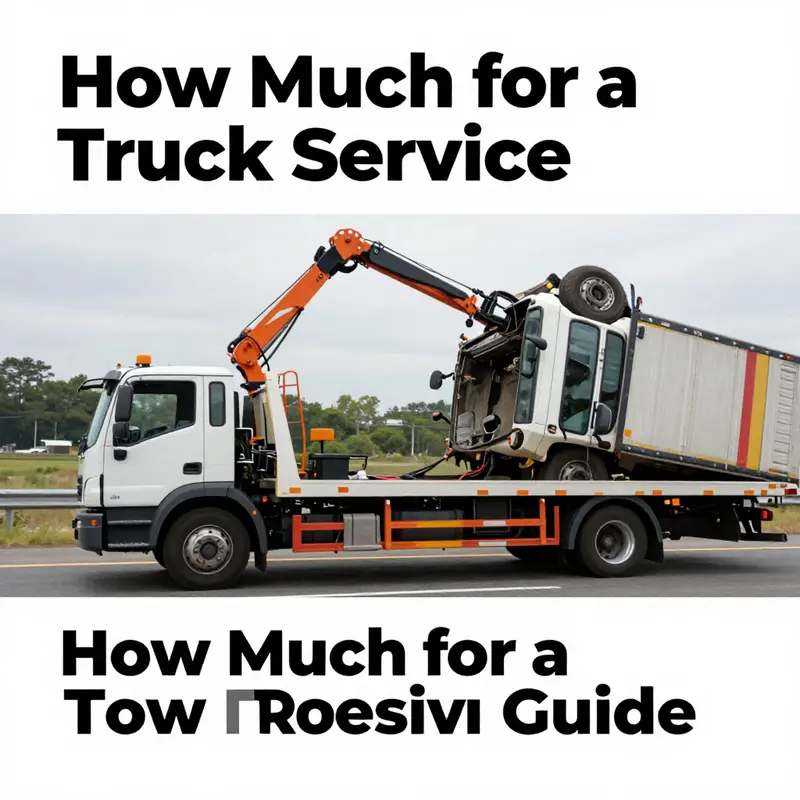
When a vehicle breaks down on a highway at night or after a serious collision, the price of a tow reflects more than distance. In emergencies, contractors balance speed, safety, and equipment availability, which can push costs higher than a standard, daytime tow. You will typically see a base fee plus a per-mile rate as the starting point, with an urgent or after-hours premium applied to compensate responders for reduced schedules and increased risk. The fastest way to estimate is to ask for a detailed quote that breaks out labor, travel, and any scene-specific charges.\n\nHeavy recoveries introduce specialized challenges that can dramatically change the math. If a rotator or heavy-duty rollback is required, the total may start in the hundreds and rise into the low thousands as crews stabilize the scene, manage bystanders, and execute complex lifts. Longer on-scene times, multiple units, and extra services such as winching, bracket stabilization, or hazardous-material handling add line items that can surprise the unwary. Keep in mind that some operations include a safety fee or weight-based surcharges for very heavy vehicles.\n\nOther factors that shape the final bill include the vehicle’s weight class, the number of vehicles involved, and regional pricing norms. In some regions, authorities subsidize or regulate towing differently, so prices can vary from one market to another. Cancelled or no-show charges are another common feature intended to cover mobilization costs already incurred. The best approach is to obtain an itemized quote before work begins and to compare a few providers to understand typical ranges in your area.
Final thoughts
In conclusion, comprehending the various factors influencing tow truck service costs is essential for business owners to ensure smooth operations. From standard urban towing rates to complex emergency recovery scenarios, being well-informed can save your business time and money. Prioritize understanding these costs and consider establishing relationships with reliable towing services to enhance your operational readiness in any roadside situation.