
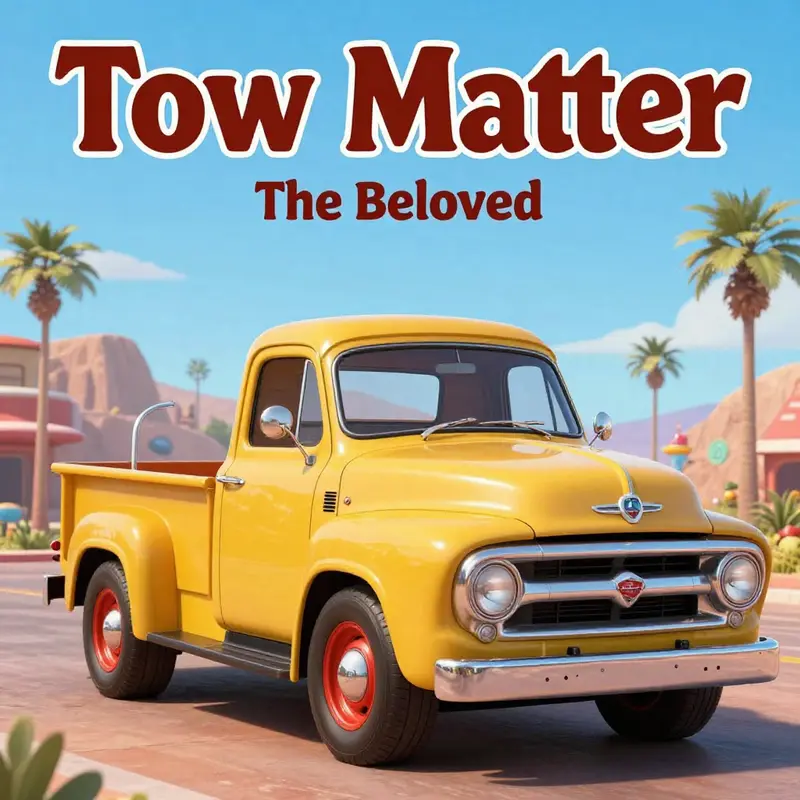
Tow Mater, an endearing character from the Disney/Pixar Cars franchise, is not just any tow truck; he is a 1951 Ford F-100 that embodies charm and personality. His unique design, befitting of a small-town hero, reflects a time when vehicles had character, much like Mater himself. This article will dive into the specifics of what truck Tow Mater is, exploring his design, detailing the cultural impact he has had, and discussing his collectibility as a beloved toy among fans of all ages. By understanding these dimensions, business owners can appreciate the interplay between character branding and consumer engagement.
Tow Mater Unraveled: A Study in Rusted Heart and Road-Ready Design
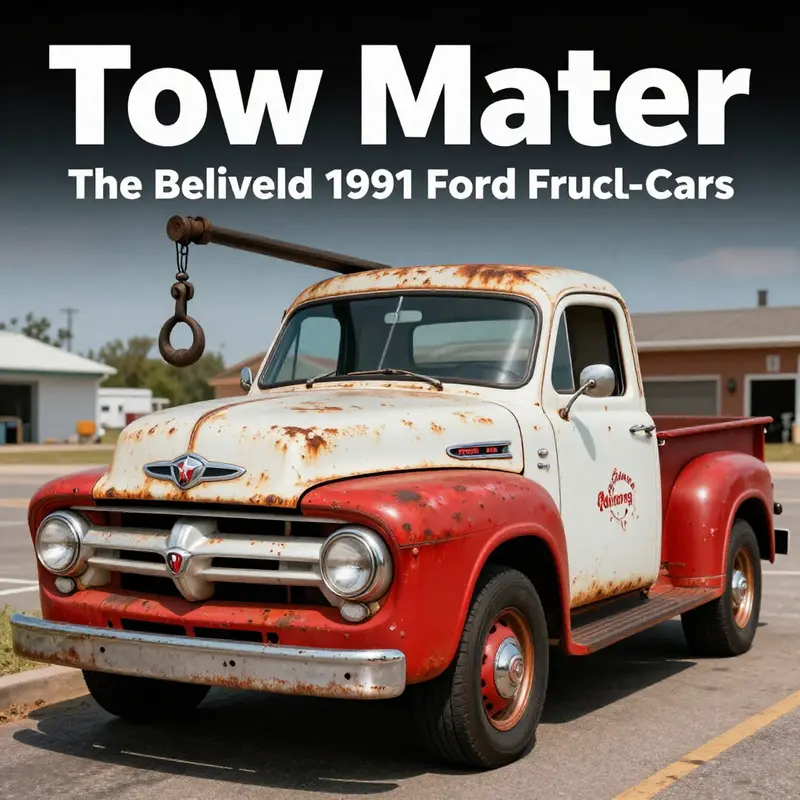
In Cars, Tow Mater is more than a tow truck; he is a narrative hinge who fuses function, history, and heart into a memorable silhouette. Mater’s identity centers on a vintage pickup-inspired chassis with a distinctive flatbed that lowers for towing. The red with white accents signals Americana, while the patina and dents tell a story of miles traveled and friendships earned. His warm personality, folksy drawl, and reliability are reflected in a silhouette that reads as approachable and sturdy. The design choices—rounded front end, prominent tow hook, and bold MATER lettering—convey reliability before he speaks. Pixar’s art team emphasizes a workmanlike body that remains timeless, balancing nostalgia with cinematic clarity. Mater’s relationship with Lightning McQueen contrasts sleek speed with rugged empathy, underscoring a theme that strength lies in service to others. The flatbed is not merely a tool but a symbol of readiness to help, a practical platform that anchors his role as a friend on the road. For readers curious about real-world towing, Mater offers a bridge between fantasy and practical roadside assistance, illustrating how utility and warmth can coexist in a single vehicle.
Tow Mater Unraveled: The Truck Identity, Design Heritage, and the Cultural Afterlife of a Radiator Springs Legend
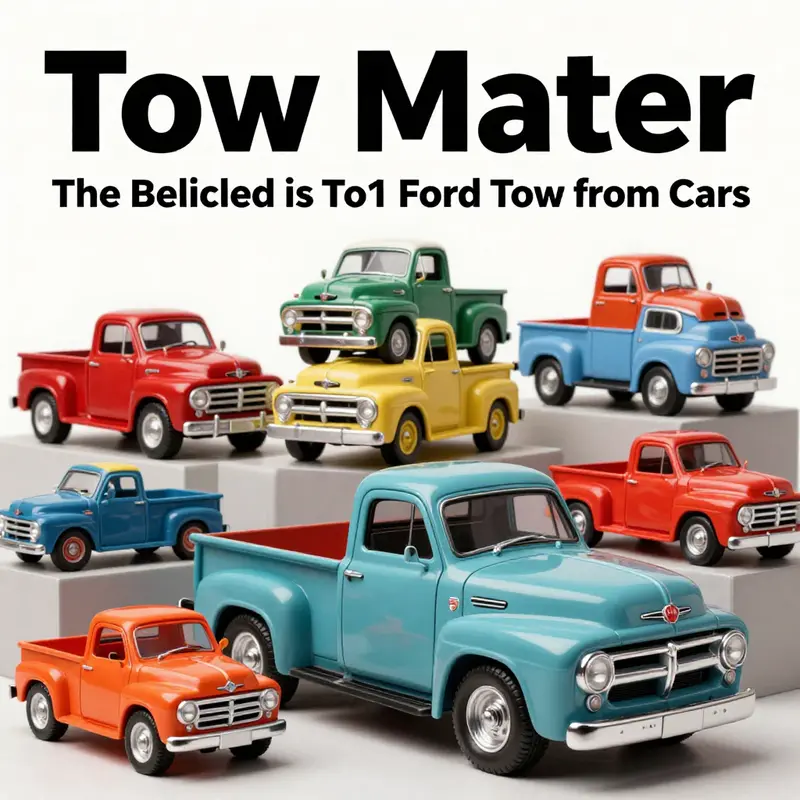
Tow Mater is not merely a tow truck in a kids’ movie; he is a symbol of memory, humor, and the way a single design can outlive a film. When fans ask what truck Tow Mater is, they touch a larger question: how a fictional vehicle becomes a real-world cultural touchstone. The Cars universe rooted him in a timeless, almost mythic, sense of American trucking. In the film’s visual language, Mater is presented as a piece of mid-century Americana that anyone can recognize—rounded lines, a conspicuously broad grin of headlights, and a color scheme that reads like a flag within a single vehicle. Yet the question of his exact model sits at the intersection of design homage and storytelling shorthand. On one hand, Mater’s silhouette hints at the classic, 1950s and early-1960s pickup and tow-truck ethos. On the other, the character’s own in-universe reiterations—his rust, his chatty voice, his earnest, unequivocal warmth—push him beyond a mere vehicular replica. The ambiguity is part of the charm. Designers have cited inspirations that range from the postwar truck proliferation in small-town America to the cab-over engines that dominated many fleet vehicles of the era. In practice, this translates into a vehicle that feels both specific and universal—specific enough to be distinctive, universal enough to belong to Radiator Springs and to any viewer who has ever rooted for the underdog on four wheels or two. Within this braided design logic lies a core truth about Mater: his very existence as a character is a celebration of the pickup as American storytelling device, an artifact that can tow not just cars but memories and identities along a road that stretches far beyond the screen. The design choices matter here more than mere aesthetics. They anchor Mater in a lineage of workaday heroes who work not because they are glamorous, but because they are indispensable. If a kid in an arcade toy store points to a Mater model and smiles, the reason isn’t only the character’s comic timing or his rough-and-tumble bravado. It is the sense that this is a real thing from a real past, now revived in bright color and heart. The canonical labeling of Mater’s actual make-and-model has never been uniformly settled in official materials, and that ambiguity is, in its own way, a deliberate menu of possibilities for fans. Some collectors and scholars cite a 1950s International Harvester L-series, specifically the L-170 cab-over-engine tow-truck template, as a structural touchstone for Mater’s proportions and silhouette. Others point to the familiar mid-century pickup frame, with its heavy-duty towing hardware and a front fascia that signals both utility and personality. The on-screen coloration—a bold, friendly red with white accents—works as a nonverbal signature that instantly communicates warmth, trust, and the sense that this is a truck with a story taped under its hood. The rust and patina are not mere gimmicks; they are visual storytelling devices that imply a long life of hard work and shared adventures. In Radiator Springs, Mater’s appearance is a map of character: he looks lived-in because he has lived. And that lived-in aesthetic resonates in the real world, where fans collect die-cast models, plush toys, and action figures that reproduce his weathered chrome, his oversized tow hook, and his uneven paint in painstaking detail. The visual language of Mater—the rounded body, the oversized headlights, the ever-so-slight misalignment—communicates something more than nostalgia. It signals that character matters more than pristine perfection. A truck’s beauty, in Mater’s world, lies in its imperfections and its capacity to serve a purpose while inviting conversation about who we are and where we come from. The cultural footprint of Tow Mater extends beyond Radiator Springs and the filmic frame. In Tokyo Mater, the short film’s global reach dramatizes the character’s adaptability and bravery in unfamiliar urban spaces. The sequence is not about speed or aggression but about ingenuity, courage, and the willingness to improvise when the road suddenly changes. That moment, set against a neon-drenched cityscape, reframes Mater as a traveler, not merely a local helper. It is a reminder that a beloved character can traverse cultures and geographies while staying true to core values: friendship, loyalty, and a sense of humor that lightens the heaviest loads. Music also threads Tow Mater into the cultural fabric through the song about trucks that plays in the Cars universe. The rhythm and refrain become part of the meme ecology around the franchise, a catchy reminder that the world can be both tough and tender. The line between the on-screen persona and the fan’s lived experience is porous. The character’s catchphrases, his clumsy yet sincere wisdom, and his on-screen resilience have invited a particular kind of devotion that extends to merchandise, fan art, and even fan-generated restorations of vintage-inspired toy trucks. Such collectibility is not merely about price or scarcity. It is about a shared vocabulary—the way fans can point to a tiny scratch on a die-cast body and remember a scene in which Mater’s heart outshines any mechanical flaw. The strongest collectibles are those that tell a story as loudly as the character does on screen. Limited-edition releases, collaborations with popular toy lines, and carefully researched paint applications that capture the “weathered but trusted” look all serve as a chorus to the character’s broader cultural resonance. These items become more than possessions; they are artifacts that document a community’s ongoing relationship with a character who represents more than the sum of his parts. The collectibility also mirrors a broader truth about how audiences engage with cinematic universes across generations. Children who first see Mater as a punchline grow up to recognize him as a symbol of resilience and friendship. Adults who remember childhoods spent with a toy tow-truck can find in Mater an echo of their own pasts—a reminder that popular entertainment often houses complex, enduring emotional ecosystems. The merchandising ecosystem around Tow Mater, including collaborations with renowned toy manufacturers and cross-franchise tie-ins, attests to the enduring appeal of his design and personality. Yet the appeal is not simply about the nostalgia for a bygone era of trucking. It is about recognizing the truck as a vessel for memory and values in a modern landscape of rapid change. The car-models within Cars become more than playthings or cinematic props; they become anchors for family rituals, storytelling traditions, and the shared pleasures of watching a story unfold across screens and living rooms. The character’s legend persists because it speaks to a universal longing: to feel seen, to belong, and to be a force for good within a noisy world. A real-world parallel emerges when one thinks about the networks that keep actual roads clear and people safe. Tow trucks in real life are critical nodes in the transportation system, a thought that brings into view the practical side of Mater’s charm. The memory of a tow-truck capable of bringing help in an emergency mirrors the emotional rescue Mater often performs for his friends. It is a reminder that the best icons in pop culture are not only about spectacle; they are about service, reliability, and a sense of community. In contemporary discourse, this is where a local towing company’s presence—perhaps in a familiar metro area such as Washington state or the Washington, D.C. corridor—becomes a live illustration of Mater’s ethos in the public imagination. The idea of a dependable, friendly tow-truck operator who can navigate both tense moments and everyday errands is a practical counterpart to the cinematic fantasy. For readers who want to place the Mater myth in a modern context, consider the way real-world service networks operate. A real-world cell of tow-truck operators embodies much of Mater’s spirit: patient, capable, ready to lend a hand with a smile or a well-timed joke to defuse stress while you await help. In this sense, Mater’s legacy is not a relic of a cartoon world but a living blueprint for how ordinary machines can become extraordinary through character and community. For fans who crave a deeper dive into his design and cultural significance, the official sources provide a starting point, bridging the gap between screen and street. For a broader, global perspective on the character’s journey, one can explore the official Pixar materials that document the roots and evolution of Tow Mater’s identity and his place within the Cars universe. As a practical matter for readers who are curious about local connections, consider how everyday services in your own city echo Mater’s core message: a dependable presence that makes the road feel a little less lonely. In the end, the question “What truck is Tow Mater?” yields more than a model number or a vintage reference. It yields a story about how a vehicle can embody friendship, resilience, and a sense of place. It is a reminder that the most endearing characters are those who translate a simple function—to tow—into a larger, more universal function: to carry us through moments of uncertainty with warmth and humor. For those who want to trace Mater’s influence beyond the screen, a practical line of thought emerges: the vehicle is a design heir to mid-century American trucks, a symbol of original work ethic, and a touchstone for a cultural language that values memory, community, and heart. And when people in communities around the world imagine a tow truck arriving in a moment of need, they draw on Mater’s spirit—an emblem of help that is as dependable as it is endearing. If you crave a fuller articulation of his formal lineage, this is where the dialogue between design history and character storytelling becomes most fruitful. While no single model can claim exclusive ownership of Tow Mater, the character nonetheless embodies a recognizable strand of automotive heritage that resonates across generations. In that sense, the question of his exact truck becomes less about specifications and more about the narrative power of design. It is about what a vehicle can symbolize when it becomes a friend, a hero, and an enduring symbol of community. To connect with audiences today, designers and storytellers continue to draw on Mater’s core traits—his honesty, his generosity, and his unyielding optimism—while inviting new audiences to see in a rusted, red-and-white tow-truck a mirror of their own values and aspirations. For readers curious about how to situate such motifs within a broader cultural context or within local service ecosystems, exploring nearby narratives—whether in the form of an approved local towing resource like Washington DC towing service or in the wealth of archival images and toy reproductions—offers a practical, grounded way to appreciate the enduring appeal of this Radiator Springs legend. And if you’d like a definitive, canonical window into Mater’s full story as conceived by the creators, the best place to start is the official Pixar domain, where the design notes and character arcs illuminate how a seemingly ordinary vehicle can become an extraordinary source of connection and memory. https://www.pixar.com
Final thoughts
In summary, Tow Mater is much more than a character from the Cars franchise; he embodies the spirit of community, friendship, and charm associated with bustling small-town life. The design of the 1951 Ford F-100 pickup truck combines nostalgia with a lovable persona, making Mater an enduring icon. Furthermore, his cultural significance has transcended the films, resulting in a robust market for collectibles, proving that a vehicle can have a heart, as well as a devoted fanbase. By understanding Tow Mater’s legacy, business owners can capitalize on the nostalgia and recognition this character symbolizes within the industry.