
Understanding when and why to tip a tow truck driver can be perplexing for many business owners. As you navigate roadside assistance situations, it’s vital to grasp the commonly accepted practices in this unique domain of service. This article dives into the norms surrounding tipping tow truck drivers, breaking it down into two critical chapters. In the first, we explore the general expectations regarding gratuity in the towing industry, helping you to determine when it might be appropriate. The second chapter considers scenarios based on the quality of service, offering insight into how exceptional assistance might warrant a tip. Together, these sections will equip you with the knowledge needed to handle these situations with confidence and professionalism.
Tipping Tow Truck Drivers: Reading the Norms When You Need a Lift
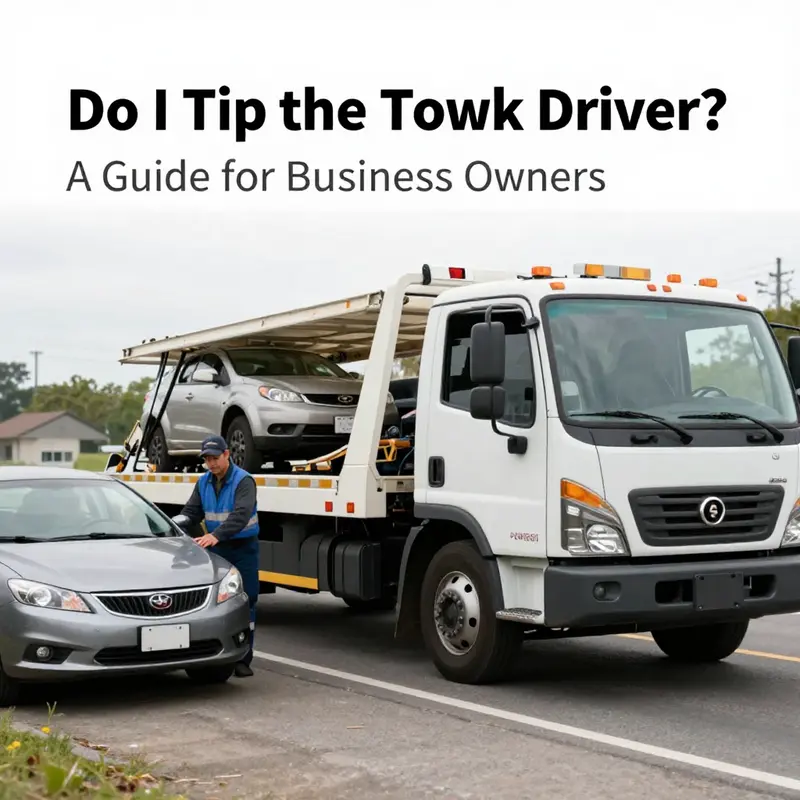
When you’re stranded on the side of the road, tipping a tow truck driver is not always expected. Tow operators are usually paid by the company per job or by the hour, and roadside rescue is often just part of the service you hire. A tip is a voluntary gesture that acknowledges extra care, quick response, or difficult conditions. The core idea is that tipping is optional and situational, not a fixed obligation.
Consider what just happened: if the driver arrived promptly, secured the vehicle competently, and handled the situation with courtesy, a tip may feel appropriate in proportion to the effort and difficulty. If the service is routine—on-time arrival and standard towing—tipping is less likely to be expected. In many cases, the driver’s compensation comes from the business that dispatched them, so a tip remains optional.
Policy and local practice vary. Some companies discourage tipping to keep pay structures uniform or to simplify insurance considerations; others see tipping as a local custom, especially when the driver goes above and beyond under harsh conditions. If you’re unsure about local norms or company rules, ask the dispatcher at the outset.
If tipping is appropriate, a modest amount is usually sufficient, such as five to twenty dollars depending on the service’s complexity, distance, and the driver’s level of service. In some regions, a percentage of the tow fee (for example, 10 to 15 percent) is common when service stands out. Always aim for a discreet, respectful gesture, and be mindful of the policy that might restrict extra payments.
Non-monetary appreciation matters too: a kind word, a brief note of thanks, or a positive review can support a driver’s reputation and future work. If a driver declines a tip, graciously acknowledge their professionalism. If they accept, a simple thank you reinforces goodwill. The goal is to communicate gratitude without making the moment feel transactional.
In short: tipping is not universal, but it can be a meaningful way to acknowledge exceptional effort. Use judgment, consider local norms and company policy, and choose a form of appreciation that respects both the service you received and the person who provided it.
Gratuity on the Go: Tow Truck Tipping Decisions Drawn from Service Quality
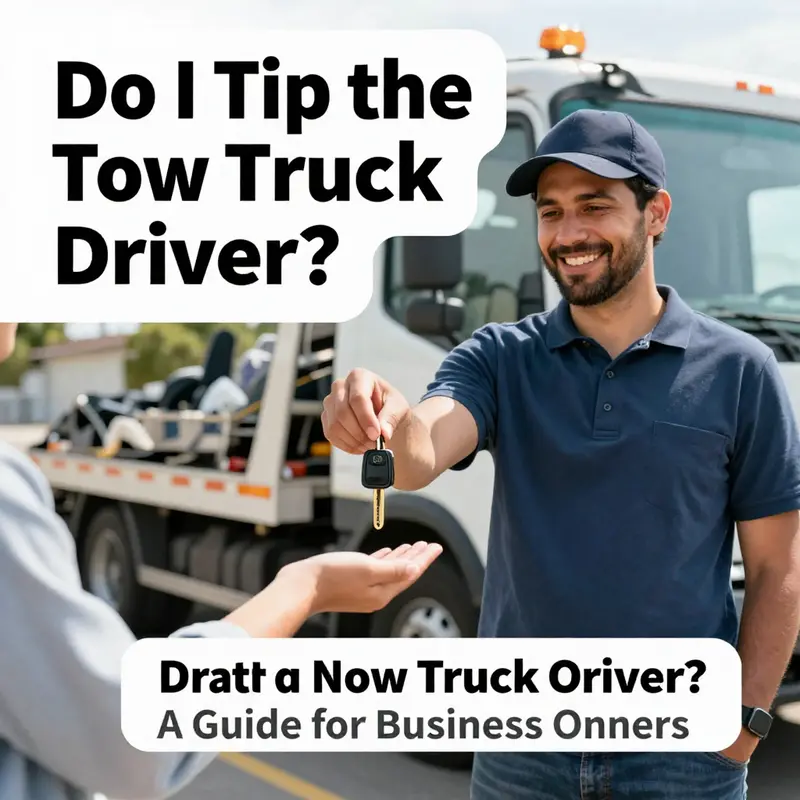
When the highway lane narrows to a shoulder or a parking lot becomes your temporary shelter from a broken-down engine, a tow truck driver steps into a high-stakes moment. The question that often rises with the first whine of the tow truck’s diesel is simple, yet not always straightforward: should you tip the tow truck driver? The immediate impulse in many minds is to offer a tip only if the service feels exceptional, but the reality of roadside assistance is more nuanced. Tipping in this arena is not a universal expectation, and many drivers operate within fixed pay structures. Yet the gesture of appreciation can carry real weight in moments that feel stressful, confusing, or urgent. Understanding when a tip is appropriate—and when it isn’t—helps you navigate the situation with fairness, practicality, and a sense of community that extends beyond the roadside. In this chapter the focus shifts from a rigid rule to a framework built on service quality, context, and local custom, all aimed at answering a question that reappears more often than any of us would like: what is the right thing to do when a tow truck arrives on the scene?
To begin, it is useful to acknowledge a core truth: tow truck drivers are typically paid by the job or by the hour. Their compensation structure, much like that of many skilled trades, is designed to reflect the time spent, the complexity of the tow, and the risks involved. In many cases, tipping is not expected. This simple baseline matters because it sets the stage for any gratuity to feel like a genuine bonus rather than a mandatory add-on. Yet the same baseline also leaves room for a discretionary gesture when the driver goes beyond the basics of service. A driver who arrives promptly, communicates clearly, secures your vehicle with care, and maintains a calm, professional demeanor can turn a difficult moment into a smoother experience. In those cases, a tip is less about prestige or pressure and more about recognition for expertise, tact, and the extra effort that can make a bad situation safer and less nerve-racking.
The landscape of tipping is further shaped by local culture and company policies. Tipping norms in one region can diverge from those in another, just as a corporate policy in a chain might discourage gratuities in order to maintain uniform compensation practices. You may encounter towing outfits that explicitly discourage tipping, or you might discover independent operators who welcome small gratuities as a sign of gratitude for good service. These variations matter because they tell you how to approach the moment with respect for both the driver and the business. If you are unsure, you can ask the dispatcher or the driver directly, or check with the company after the service. The message here is practical: when in doubt, ask. A quick, polite inquiry preserves courtesy and avoids putting the driver in an awkward position while you still receive the service you need.
When should you consider tipping? The most convincing case rests on the quality of service in that specific encounter. If the driver arrives quickly, especially in an emergency or in rough weather, that promptness can be a relief you want to acknowledge. If they handle your vehicle with care—avoiding further damage, securing it properly, and taking pains to protect your property—the gesture feels earned. If communication is clear and professional—explaining the process, outlining safety steps, and answering questions without condescension—these are all markers of service that deserve recognition. And perhaps most important, if they go above and beyond the job’s basic requirements, tipping becomes a meaningful way to express appreciation for extra effort.
Examples of exceptional assistance often go beyond simply towing a car. A driver who assists with a flat tire, offers advice that helps you navigate a tricky recovery, or lends a hand in adverse conditions—like clearing snow from around the vehicle or helping you move belongings to a safer location—demonstrates a level of involvement that transcends the routine tow. In such moments, a small gratuity can communicate gratitude for the extra miles traveled on your behalf. The range many people consider reasonable for a good service encounter is typically between five and twenty dollars. This amount keeps tipping accessible and proportional to the effort involved, and it aligns with the practical reality that tow jobs can vary widely in complexity and time.
Some travelers and readers prefer tipping as a percentage of the total tow fee, a method that mirrors tipping practices in other service industries. A common guideline is five to ten percent of the tow charge for notably outstanding service. This approach scales with the actual cost of the service, which makes sense when the job involves specialized equipment, long distances, or an orchestration that saved you time and stress. It also avoids the awkwardness of judging a service by a single moment in a stressful sequence; the percent-based approach can feel fairer when the price reflects the effort. Still, percentage tipping should be reserved for service that rises above the ordinary and is consistent with local norms. It is not a benchmark for average performance, and it should never feel obligatory or manipulative. The choice to tip by percentage is a personal one, made in the moment after you have assessed the entire experience.
There are equally important reasons to hold back from tipping. The absence of a tip should not be interpreted as disrespect or dissatisfaction with basic service. If the driver arrives late, handles the vehicle roughly, or communicates unclearly or unprofessionally, you are within your rights to withhold a gratuity. In such cases your response should not be opaque but constructive: you can politely report the experience to the towing company, request a resolution, or seek guidance on how to handle a similar situation in the future. When service is subpar, tipping does not correct the shortcomings; instead, it can inadvertently reward a performance that needs improvement. In those circumstances a tip would be inappropriate, while leaving feedback that helps the company address training gaps or policy issues becomes a more constructive action.
One practical consideration that often influences the tipping decision is policy. Some towing companies, especially those affiliated with larger corporate networks, may have explicit guidelines about tips. They might discourage tipping to maintain standardized compensation, or they may prefer that any gratuities go directly to the driver only, not to the company. If you learn of a policy that disallows tips, you should respect that policy and respond with courtesy. You can still express appreciation in other ways that do not conflict with policy, such as offering a kind word, providing a positive online review, or requesting the driver’s preferred method of acknowledgment for future service. Acknowledgment matters in roadside work, where morale, job satisfaction, and the ability to handle high-stress scenarios can hinge on simple, sincere appreciation.
For those who want a practical reference in real time, certain circumstances naturally align with tipping. When you find yourself dealing with a tow situation in Washington, DC, the region’s traffic patterns, weather, and road conditions can intensify stress. In such settings, a tip may come naturally if the driver’s actions reduce risk, shorten the time you spend waiting, or improve your sense of safety and security. If you are in a location where local customs lean toward tipping for good service, you will also find that a modest gratuity not only expresses gratitude but reinforces positive behavior you value in a service professional. If you happen to be in DC and want to learn more about how local providers position themselves for prompt roadside responses, you can explore a nearby option that focuses on dependable, timely service for the area: the towing service in Washington, DC. This link points to a resource that can give you a sense of how local providers structure their operations and respond to urgent needs, while keeping in mind the broader etiquette framework described here. towing service in Washington, DC.
There are also practical actions you can take that influence whether a tip feels appropriate, even if it isn’t required. First, treat the driver with respect and courtesy. A calm, cooperative attitude helps the interaction go smoothly and signals to the driver that you value their work. Second, ask ahead about tipping policies before the service begins if possible. This question signals your intent without placing the driver in an awkward position and gives you a clear sense of the boundaries you should observe. Third, consider the broader context of the scene: were you stranded during a storm, did you require special equipment to move a heavily damaged vehicle, or did you endure a prolonged wait due to a high-traffic incident? In scenarios where the driver displayed professionalism and problem-solving skills under pressure, a gratuity aligned with your sense of fairness can be a respectful acknowledgment of their expertise.
It is important to keep your expectations aligned with the realities of roadside assistance. Tow operators often operate under tight schedules and constrained environments. The goal of any service interaction is to move you toward safety and stability with minimal risk. If the driver achieves that goal—arriving promptly, assessing the situation accurately, communicating a clear plan, and executing the tow with care—the chance that a tip would be appropriate increases. If, however, you encounter delays, miscommunication, or rough handling, those are signals to adjust your response accordingly. In those moments, the act of tipping should not be used as a remedy for systemic issues; instead, it should reflect a personal assessment of the service you received in its totality.
The takeaway is simple, even if the details can be nuanced: tipping a tow truck driver is discretionary and situational. It should reflect your satisfaction with the service, the level of effort demonstrated by the driver, and the degree to which the experience alleviated stress or danger in a crisis. It is not a fixed obligation, and it is not a universally expected ritual. If you decide to tip, a modest amount in the range of five to twenty dollars often suffices for standard towing jobs and recognizes the driver’s skill and responsiveness without creating a sense of obligation in others who may have different financial means or local customs. If you prefer to tip by percent, five to ten percent of the tow fee can be appropriate for outstanding service, though this approach should be reserved for situations where the driver has gone beyond the call of duty and where the total cost justifies such a gesture.
In all cases, when you are unsure, the best practice is to ask, or to proceed with a courtesy that respects both the driver and the company’s policies. The goal is to acknowledge the human effort involved in getting you back on the road with minimal risk and maximum safety. The nuanced decision to tip should feel like a thoughtful expression of gratitude rather than a rushed reflex or a grudging obligation—and it should never come at the expense of your own comfort or your financial well-being. The roadside is not a stage for drama or pressure; it is a space where practice, fairness, and courtesy can make a challenging moment steadier for everyone involved. For those who want additional context on tipping etiquette in broader terms, a widely referenced resource offers insights into tipping norms across service contexts, including tow truck drivers. External resource: https://www.thebalance.com/tipping-etiquette-for-tow-truck-drivers-3305967
As you navigate future roadside needs, you can carry this approach with you: evaluate the situation, consider your local customs, weigh the driver’s level of service, and decide on a tip that aligns with your experience. If you are ever unsure, remember that tipping is not mandatory and is most meaningful when it accompanies clear appreciation for service that was timely, respectful, and genuinely helpful. And if you want to learn more about the local options in your area, you can explore our DC-focused resources to find a dependable provider ready to respond when every minute matters.
Final thoughts
Tipping a tow truck driver is not a one-size-fits-all decision. While general norms suggest that tipping is not required, understanding the nuances of when to show appreciation for exceptional service can enhance the customer experience and strengthen relationships with service providers. Ultimately, evaluating service quality and local customs will guide your decision-making, ensuring that you handle these situations effectively and respectfully.