
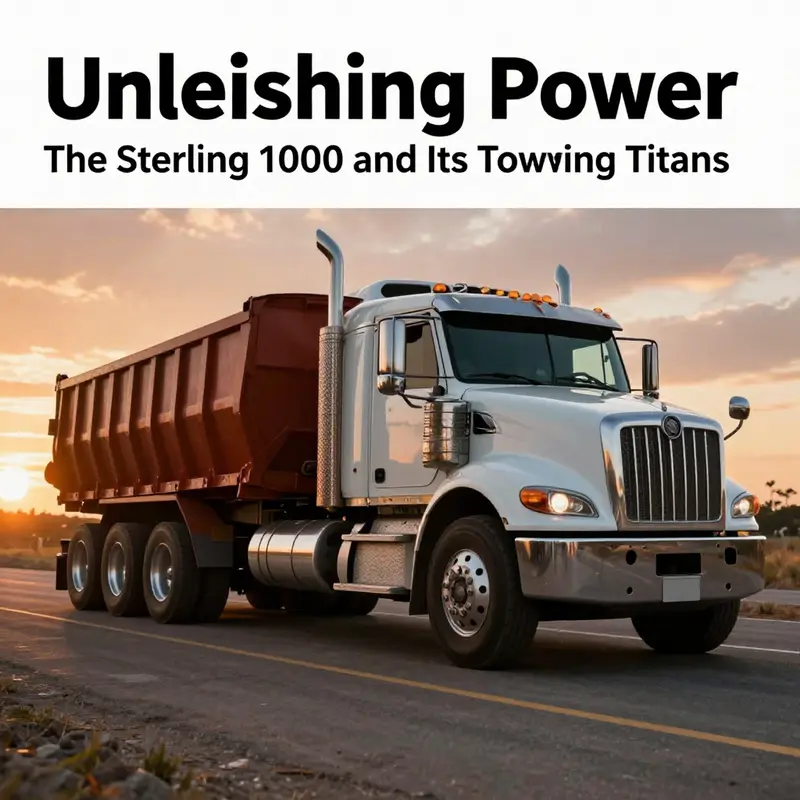
When it comes to heavy-duty transportation, understanding towing capacity is crucial for business owners who rely on trucks for their operations. The Sterling 1000 stands out as a titan in this arena, boasting an impressive towing capacity of 250,000 pounds (nearly 113,400 kg). This article will delve into the capabilities of the Sterling 1000, compare it with its competitors, and explore the various applications and implications of such immense towing capacity in real-world scenarios where heavy loads are the norm.
Real-World Leaders in Maximum Towing Capacity
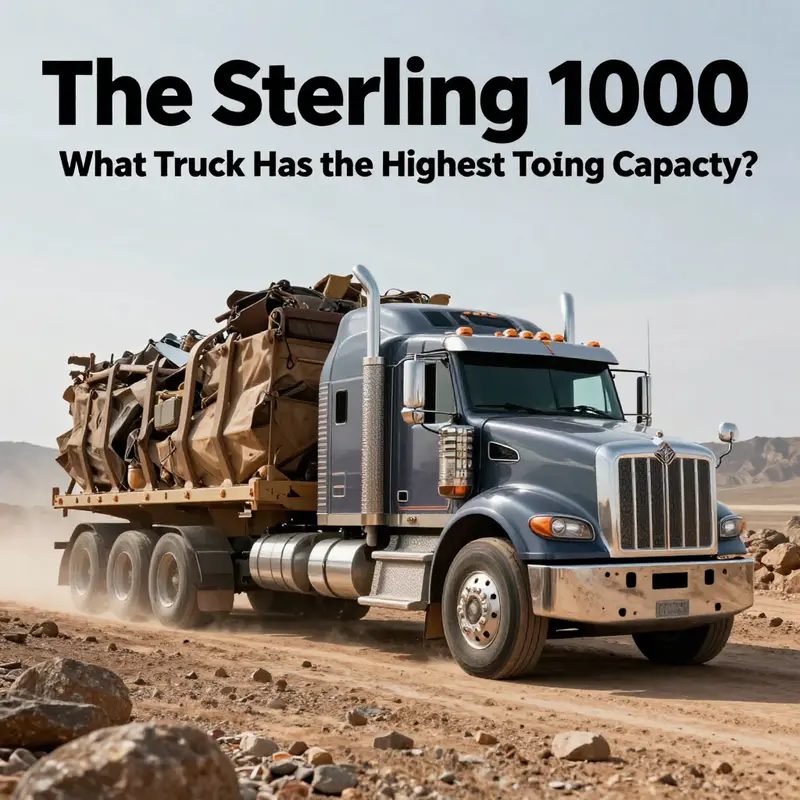
Towing capacity is a figure that depends on many systems working together: engine, torque, transmission, frame, axles, brakes, tires, and the trailer package. Marketing hype can inflate expectations, but practical capability is found in engineered lineups that balance power with control. In everyday use, the highest official numbers often belong to heavy-duty platforms, while light- and mid-duty pickups emphasize daily drivability and sensible limits. For most buyers, the key question is not the peak rating but how the vehicle behaves under load, including braking, stability, and ride quality with a trailer. Diesel powertrains tend to deliver sustained torque that helps with heavier pulls, especially in long-haul or jobsite scenarios. The right configuration – engine, transmission, axle gearing, and hitch package – can push a model toward the upper end of its rating while still maintaining reliability. Ultimately, the number is less important than whether the setup meets your trailer weight, usage pattern, and safety expectations. Local pros and manufacturer specifications remain the best sources for real-world guidance, as towing conditions vary by region and application.
Tow Capacity Unveiled: How Heavy-Duty Trucks Stack Up in the Battle for Maximum Towing Power
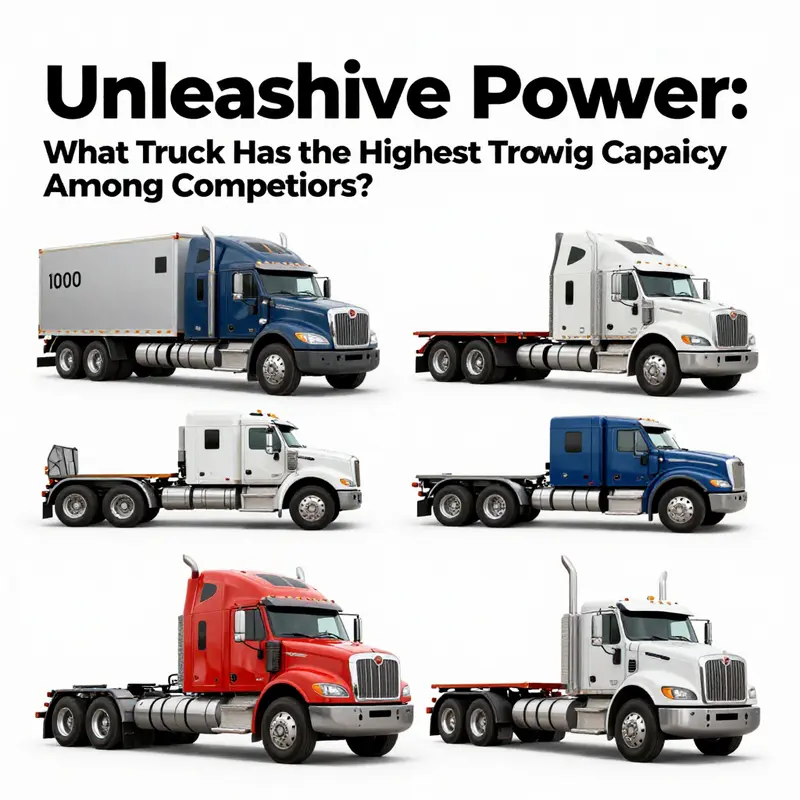
The question of which truck has the highest towing capacity tends to evoke a single number, painted large on a spec sheet. Yet true towing capability is a conversation that travels beyond sheet metal and torque curves. It begins with defining what “towing capacity” really means and then unfolds through the practical realities of chassis design, drivetrain architecture, and the way options are tuned to a specific mission. In the field, a vehicle’s official towing number is not merely a vanity figure. It is the result of a package that coordinates frame stiffness, transmission behavior, cooling capacity, and weight distribution to produce reliable, repeatable performance under load. Within the full-size pickup segment, the upper limits are reached only when a heavy-duty platform is paired with a purpose-built tow configuration. When this pairing is in place, the top end of the class can approach the high 30,000s in pounds—roughly 36,000 pounds in ideal, properly equipped scenarios. This is not a universal guarantee, but a benchmark that helps fleet operators and commercial buyers calibrate expectations for long-haul hauling, large trailer configurations, and multi-stop routes that demand steady pull and controlled braking. To understand why, it helps to look under the skin at what makes those peak numbers possible and why the margin between a 30,000-pound capacity and a 36,000-pound capacity matters in real-world practice.
In practical terms, towing capacity is a composite metric. It reflects static strength in the powertrain, mirrors the chassis’s ability to resist bending and twisting under heavy loads, and incorporates the transmission’s ability to apply power smoothly without overheating. A high-capacity unit typically combines a robust frame, a high-torque diesel or gasoline engine, a torque-conserving axle ratio, a heavy-duty rear axle assembly, and a transmission tuned for sustained, controlled movement rather than quick bursts of acceleration. The coolant and oil-cooling systems are sized to handle long durations of sustained pulling, and the braking system must be able to dissipate heat when the trailer imposes both gravity and drag on the vehicle. A high towing rating is not an invitation to ignore stability and braking; rather, it is a reminder that the entire platform has been engineered to maintain control, even when the trailer load is far from light. The numbers you see on brochures or spec sheets are the culmination of a test setup and a configuration that is widely recognized as ideal for heavy towing.
Among the options available to buyers, the most impactful factor is the combination of a trail-focused tow package and a high-output diesel or similarly torque-rich engine. With the right equipment, a top-tier pickup in this segment can achieve a maximum rating near 36,000 pounds, a ceiling that places it well above many of its closest competitors within the same class. In contrast, other models within the broader lineup—those targeted at heavy-duty work without the same emphasis on trailer-centric tuning—tend to peak in the 30,000-pound range or lower, and some niche or specialized trucks sit well below that mark. The difference is not simply about brute force; it is about how that force is applied, controlled, and sustained. A truck that reaches the upper limit typically benefits from a carefully matched equation of aggressive gearing, reinforced frame geometry, and a transmission strategy designed to maintain momentum without imposing excessive heat or compromising steering feel during long pulls.
Of course, these numbers are most meaningful when viewed as a guide for specific tasks rather than as a universal prescription. If a job requires moving an extremely heavy load across uneven terrain or through windy or hilly terrain, stability and braking performance become as critical as raw capacity. The best towing workhorse is thus one that maintains predictable handling, has adequate braking power, and sustains heat within safe limits during extended operation. It is also important to recognize that the official rating often assumes particular configurations and packages. The inclusion or omission of a trailer-tow package, wheel and tire choices, and axle gearing can shift the practical towing capability in meaningful ways. When a fleet or owner-operator evaluates options, they weigh not only the single maximum number but the total package: how the truck behaves when the trailer is attached, how quickly it recovers after hills, and how the braking system responds during a long downgrade. These factors matter for reliability, insurance costs, maintenance intervals, and uptime.
As a result, the landscape of towing capacity becomes a layered story rather than a solitary peak. Within the same class, two trucks can be closely matched on the top figure, but one may deliver superior consistency or better stability at a given weight, while another might offer more cabin comfort or cargo adaptability when the trailer is not hooked up. For commercial fleets, the choice often comes down to a blend of capacity, durability, and lifecycle cost. A vehicle that can handle a full load today but struggles to sustain that load over a four- or five-year cycle can end up costing more in downtime and maintenance than the initial purchase price suggests. In this sense, the ranking of the highest towing capacity is not simply about a momentary snapshot but about how well a platform maintains performance as workloads grow, seasons shift, and routes become more demanding.
For readers who want to explore the practical side of towing capacity in a real-world urban context, a localized example can illuminate some nuances of the decision process. For a detailed look at how heavy-duty towing services address the needs of metropolitan traffic, see the local towing service page here: tow-truck-service-washington-dc. The page foregrounds the connection between raw capacity and the everyday realities of moving heavy loads through constrained streets, where driver skill, vehicle response, and service infrastructure all play a role. This kind of context helps readers appreciate why, beyond the numbers, the optimal choice hinges on a balanced equation of power, control, and reliability. For readers seeking a broader technical reference, an external resource offers authoritative specifications on one of the leading models in this category, reinforcing how manufacturers define and measure towing performance across configurations: https://www.ramtrucks.com. The dialogue between spec sheets, on-road performance, and fleet needs is ongoing, and it is in this dialogue that the true value of an exceptionally capable towing platform reveals itself.
In the final reckoning, the highest towing capacity is not a single, universal throne but a position earned by vehicles designed to combine strength with stability and endurance. The class has a clear upper boundary when equipped for heavy-duty trailer work, but the real differentiators lie in how consistently that boundary can be reached under real loads and over time. As the field evolves with new materials, improved cooling strategies, and smarter transmission logic, the leaders will continue to push the envelope while maintaining the essential balance between power and control. This is the practical heart of the question—what truck has the highest towing capacity—and the larger takeaway is that the strongest numbers are most meaningful when they translate into dependable performance across the demanding tasks that define heavy hauling in the real world.
Harnessing the Heaviest Hauls: Real-World Uses and Implications of the Highest-Capacity Trucks
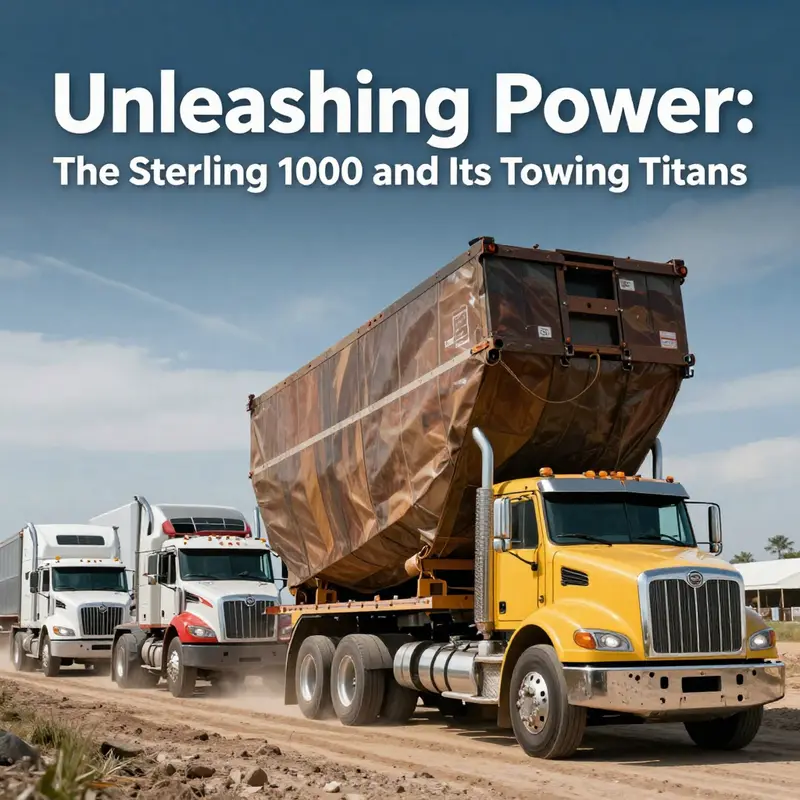
When people ask which pickup has the highest towing capacity, they are asking about something more than a number. They are asking about how far engineering can push a vehicle before it becomes a complicated tool rather than a simple workhorse. In the current landscape, the road-legal, production-grade pickups that sit at the top of the charts can reach about 36,600 pounds of towing capacity when they are properly equipped and configured with the right trailer, hitch, and braking setup. This figure is useful as a reference, but it is not a universal promise. Real-world towing depends on a constellation of factors: payload in the truck, fuel, ballast, altitude, weather, and most importantly, the geometry of the trailer and the hitch. Distinguishing between peak capability and practical performance becomes critical when the load approaches the limits of what is safe on public roads. The question then shifts from “What can this truck do on paper?” to “What can this truck do reliably, repeatedly, and within the bounds of regulation?” The answer rests on how the vehicle is engineered, how it is driven, and how it is paired with the trailer.
Within that framework, publicized maximum ratings behave as a ceiling rather than an invitation. The highest on-road capacity is the apex of a long chain of design choices: torque delivery, transmission strategy, axle stiffness, braking force, and tire integrity, all aligned to preserve stability as weight climbs. It is a relationship between power and control, where the vehicle’s systems must harmonize so that a heavy trailer will not overwhelm steering or braking. The result is a nuanced picture: the exact number published for towing capability is meaningful only when the complete system is considered. In practice, the difference between the published maximum and the feasible, everyday practice is what matters in the field. This is why fleets and serious buyers focus not only on the raw rating but also on resale value, maintenance cycles, and the training required to operate near the limits safely. The engineering trade-offs are real; higher-tlex tras, stiffer suspensions, and stronger brakes come with penalties in ride quality, fuel economy, and long-term wear. For professionals, the choice is less about chasing a headline figure and more about selecting a tool that remains predictable under stress, supports routine heavy hauling, and maintains performance across many trips.
Applications of top-end towing capacity unfold along several axes. In construction and infrastructure, the ability to move large trailers carrying excavators, cranes, or other heavy machinery can reduce the number of trips needed to mobilize resources. That simplification translates into schedule reliability and faster progress on critical tasks, even if each trip requires careful planning and precise execution. In transportation and logistics, the capacity to carry heavy loads in a single voyage can streamline routes, simplify carrier coordination, and improve service commitments. This is especially valuable when the payload approaches the upper end of what common trailers can bear and when the alternative is multiple, smaller trips that cumulatively eat more time and fuel. Recreational use broadens the appeal further. Enthusiasts who bring along oversized trailers for long trips find that high capacity makes it feasible to bring larger campers, boats, or specialty trailers in fewer legs, expanding possibilities for weekend escapes or longer adventures. In various commercial contexts, equipment relocation firms, rental fleets, and industrial service providers gain a degree of operational flexibility. They can stage loads more efficiently, respond to urgent requests, and manage fleets with a clearer sense of risk and margin. Across these domains the consistent thread is not just muscle but informed, deliberate control: capacity becomes confidence when paired with the right driver, the right trailer, and the right route.
The implications extend beyond capability. Operational efficiency shows up as fewer trips, shorter turnaround times, and better utilization of personnel and equipment. A fleet that can move heavier loads with fewer departures can redeploy drivers, save on fuel, and improve customer service levels. Yet the upside comes with a cost. High-capacity trucks demand greater investment in maintenance, including more frequent inspections of brakes, cooling systems, and drivetrain components. They also require operators with specialized training to handle high-weight, high-stress maneuvers, especially in congested areas or on uneven terrain. Fuel economy, though not the sole determinant of total cost, tends to be worse when payloads are near the upper limit, and that factor must be weighed against the savings from fewer trips. Safety considerations rise with mass: longer stopping distances, wider turning radii, and the need for robust trailer braking and hitch systems. In other words, the decision to pursue the highest-towing-capacity option is a strategic one. It should align with a company’s logistics philosophy, regional travel patterns, and the regulatory environment in which it operates. The best choice blends power with predictability, ensuring that every heavy-haul assignment can be completed on time, within budget, and with a clear line of accountability for the equipment and the operator.
Beyond the on-road, consumer-facing narrative sits a broader ecosystem of support and compliance. When loads push the boundaries of road use, professional services, route planning, and permitting processes come into play. Metropolitan regions and rural corridors alike rely on a network of specialists who understand the constraints and the contingencies of heavy hauling. For example, in dense corridors around major cities, experienced towing and transport teams provide critical backup and guidance for planning complex moves. This kind of collaboration helps make high-capacity towing a practical capability, not just a theoretical limit, and it illustrates how a truck’s rating fits into a larger workflow. If you are evaluating the purchase of a high-capacity pickup, it is worth considering how it would integrate with those support structures—permits, escort vehicles, and trained operators—so that the investment translates into real, dependable performance on the ground rather than a single impressive figure. For readers who want concrete context during planning, you can explore a local resource such as towing-service-washington-dc to see how a regional operation approaches heavy-haul tasks and the practical considerations that accompany them.
External reference: For official specifications and up-to-date figures, see the manufacturer’s information at https://www.ramtrucks.com/.
Final thoughts
The Sterling 1000 exemplifies the pinnacle of towing capacity in the trucking industry, offering significant advantages for businesses requiring heavy-duty transportation solutions. Understanding its capabilities and comparing it to other trucks can guide business owners in selecting the right vehicle for their operational demands. By leveraging the expertise of powerful trucks like the Sterling 1000, businesses can efficiently manage logistics, minimize downtime, and enhance productivity.