
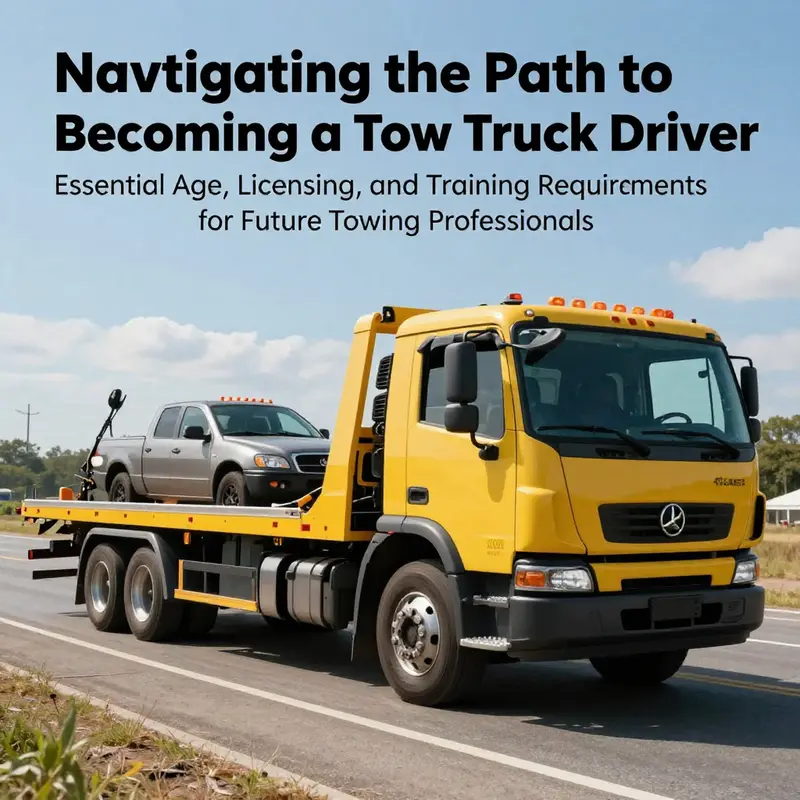
Becoming a tow truck driver is a valuable career choice that offers the chance to assist others in times of need. As business owners explore expanding their workforce in this essential service industry, understanding the requisite age and licensing requirements is fundamental. Mastering the intricacies of training and certifications further ensures a capable team that meets industry standards. This guide dissects both the age and licensing requirements alongside training procedures necessary to build a dependable team of tow truck drivers, ensuring your business thrives in the competitive towing sector.
Gearing Up: Age Thresholds and Licensing Pathways on the Road to Tow Truck Driving
Embarking on the path to become a tow truck driver starts long before your first roadside call. It begins with gatekeepers that vary by place but share a core purpose: to ensure that drivers are mature, capable, and prepared to handle vehicles that weigh more than a compact car, respond to emergencies, and operate in the unpredictable and sometimes tense environments of roads, ramps, and recoveries. The journey hinges on two intertwined pillars: age and licensing. If you meet the right age and hold the correct licenses, you unlock the opportunity to train, work, and gradually prove you belong in a field that blends skilled driving with problem solving, customer service, and situational awareness. If you don’t, you’ll need to adjust your plan, because these requirements aren’t merely bureaucratic steps; they are safeguards designed to protect you, your passengers, your equipment, and the public on busy streets and highway shoulders alike.
Age requirements act as the first gate. In many places, 18 is the minimum age to be considered for a tow truck driver role, but the specifics can shift with the duties involved. Some operations, particularly those that involve more hazardous materials, long-haul operations, or specialized heavy towing, may insist on the more stringent standard of 21 years old. Those differences aren’t arbitrary; they reflect the level of responsibility assigned to different job scopes and the maturity needed to manage complex tasks under pressure. In cities with dense traffic and frequent incidents, the age cutoff may feel like a practical threshold—teenagers stepping into the trade would still be learning the rhythms of public roadways, while older entrants bring a steadier temperament and better judgment under stress. The key is to map your ambition to the local rules that govern your area, because age alone does not confer permission to operate a tow truck.
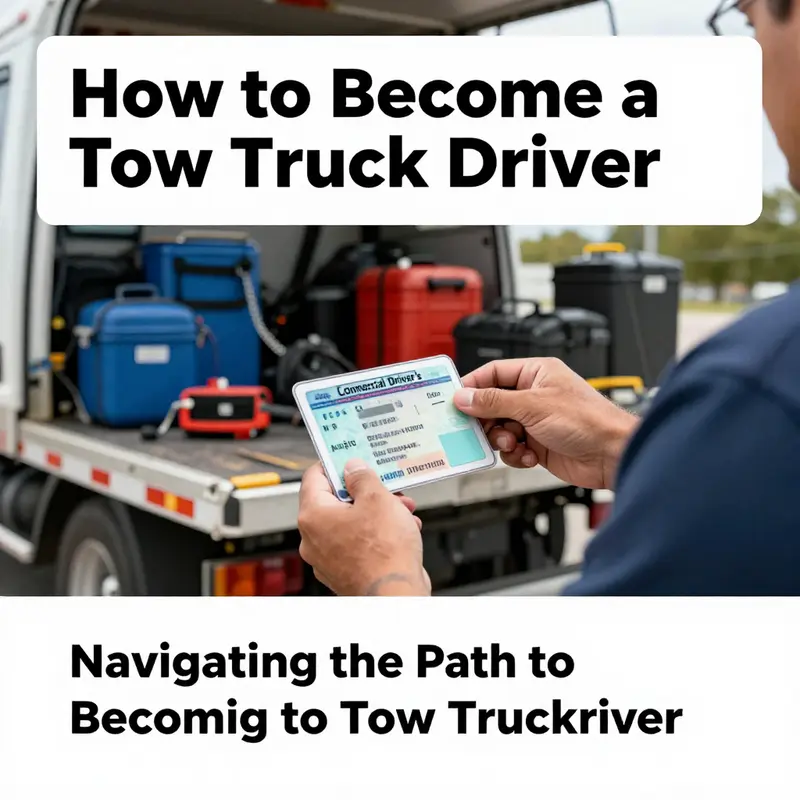
Licensing builds on age, turning potential into permission. In most U.S. states, and indeed in many developed systems around the world, driving a tow truck requires more than a standard driver’s license. The vehicle you’ll operate often qualifies as a commercial vehicle, carrying weight and operating under rules that administrative authorities treat with additional seriousness. The most common pathway begins with a Commercial Driver’s License, or CDL, with the appropriate class of endorsement. The class you’ll pursue usually depends on the weight and configuration of the tow trucks you plan to drive. A Class B or Class A CDL may be required in different scenarios; some smaller light-duty towing setups might be accessible with a standard license plus a specialized endorsement, but heavier wreckers and those designed for heavy recovery typically demand Class B or Class A credentials. The process begins with a knowledge test and culminates in a practical driving skills test, the latter designed to demonstrate your ability to control a large vehicle, perform maneuvers under real conditions, and recover or tow another vehicle without compromising safety.
Beyond the CDL, most jurisdictions require drivers to demonstrate a clean and responsible driving history. A background check is common, with particular emphasis on DUI history, reckless driving records, or other serious violations. Even if a driver has occasional infractions, the severity, recency, and nature of the offenses can influence eligibility. A clean driving record is not merely a badge of personal responsibility; it’s a signal to employers that you are dependable on the road, can manage risk, and won’t expose the company to unnecessary liability. Linked to that is the need for ongoing compliance with drug screenings and periodic medical evaluations. Drug testing has become a standard component of commercial driving culture, reflecting the high stakes of operating heavy and potentially dangerous equipment on busy roadways. The medical piece, often formalized as a Department of Transportation (DOT) physical examination, confirms you meet the physical standards required for safe operation. It’s not just about vision or hearing; it includes overall health, chronic conditions management, and the stamina to endure long shifts that can involve late-night driving, fatigue, and abrupt calls to action.
The licensing journey is not a one-size-fits-all script. In the United States, the general arc—age eligibility, a CDL with appropriate endorsements, a clean driving history, drug testing, and a DOT medical card—remains a common thread. Yet the exact steps, fees, exam formats, and timelines are distributed across state agencies and commercial-vehicle rules, which means local DMV offices or their equivalents will be your primary point of contact. Some states require formal, state-sponsored training programs in towing techniques and safety procedures, while others rely more heavily on employers to provide on-the-job training. In such places, your willingness to learn, to practice safe vehicle handling, and to absorb the specifics of equipment operation can distinguish you even before you set your first tire on a tow assignment. Even where formal programs exist, the broader licensing framework — the CDL application, the written tests, the pre-trip inspections, the road tests, and the medical and background prerequisites — remains a foundation you must master and maintain.
To illustrate how these rules play out in real terms, consider how age and licensing shape decisions in distinct locales. In New York City, for example, the local authority has explicit age guidelines for a Tow Truck Driver license. Applicants must be at least 18 to apply for the license, reflecting the city’s approach to enabling entry while maintaining a steady pathway toward professional development within a highly regulated environment. In contrast, Hong Kong requires a minimum age of 21, with a staged approach that begins with a learner’s license. From there, drivers progress through a probationary stage to a full license, ensuring a structured period of practice before taking on the responsibilities of towing in a densely populated, fast-moving city. These two snapshots—NYC and Hong Kong—illustrate the spectrum of regulatory design: some areas emphasize early entry to cultivate experience, while others guard progression with more formalized licensure milestones. Across the broader United States, the typical entry window sits around 18 or 21, contingent on whether the tow truck operation requires a CDL based on the vehicle’s weight and configuration. The pattern is not an exact mirror from one state to another, but the underlying logic remains unified: you need to demonstrate basic competence, show you are physically and cognitively fit for the job, and prove you can operate a heavy vehicle within the framework of the law.
As you chart your path, it’s worth noting that the licensing process often hinges on a combination of formal tests and practical evaluations. You will prepare for a knowledge test that covers the rules of the road, safe loading and unloading practices, and the specific procedures for securing loads on a tow truck. The practical driving test then assesses your ability to maneuver a tow pickup, a medium to heavy wrecker, or a carrier with a demonstration of proper safety protocols on and off the road. Some regions also require a pre-employment drug screen or ongoing periodic testing as a condition of employment. The DOT medical exam, which certifies you as physically fit for commercial driving, is renewed periodically, ensuring you stay up to date with health standards that protect you while you’re handling heavy vehicles and responding to roadside emergencies.
The overall licensing picture is not only about passing exams. It’s a projection of how you’ll balance risk, responsibility, and professional development on the job. A clean record, a recognized license, and a valid medical certificate translate into eligibility for more varied assignments, better shifts, and greater access to employer-supported training. Because many tow-truck outfits rely on a combination of on-the-job mentorship and formalized courses, your record and your credentials act together as a passport to more advanced roles—tow operator, supervisor during recoveries, or on-call fleet support—where you can steadily increase your expertise and value.
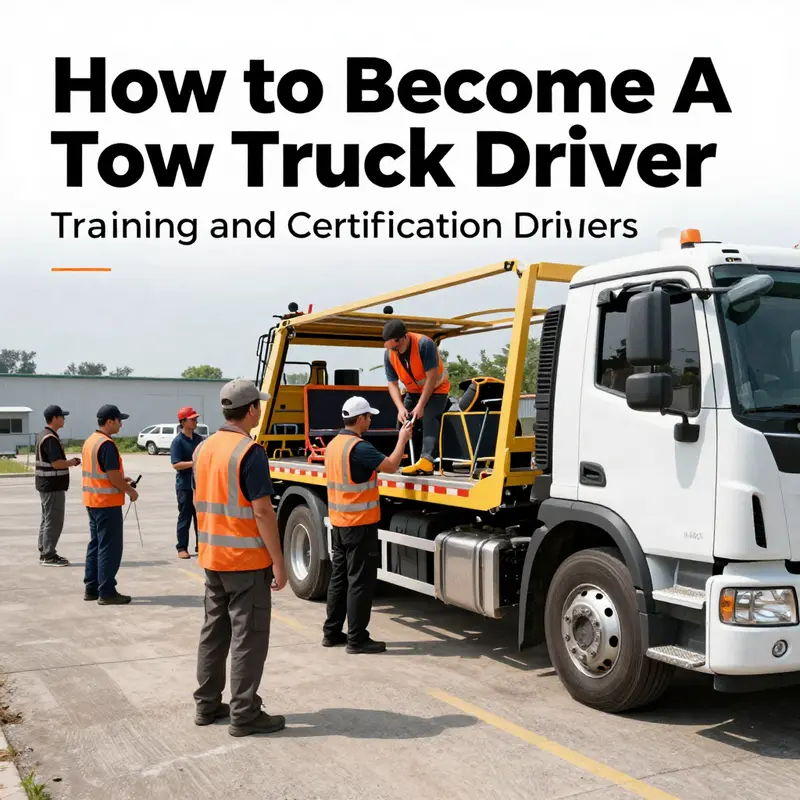
In practice, the path from applicant to certified tow-truck driver is a sequence of milestones rather than a single leap. You begin by verifying your age against local rules and confirming the license class required for the vehicle you intend to operate. You prepare for the CDL knowledge test, gather documentation for the background check, and arrange for a medical exam when your state requires it. You apply for the CDL, pass the written exams, complete any required endorsements—such as those related to vehicle combinations or air brakes—and then schedule the road skills test. Once you have the license, you maintain it with periodic medical certificates and by upholding an unblemished driving record. A steady commitment to training—whether through employer-provided programs or formal courses—ensures you stay current with best practices and safety standards, which in turn makes you a more reliable partner for operators who must respond to incidents quickly and safely.
For readers considering opportunities in a particular region, the Washington DC area offers a concrete example of how these pieces come together in a fast-paced metropolitan setting. In such environments, the same core licensing requirements apply, but the job often emphasizes the ability to navigate tight spaces, manage traffic flows around incident scenes, and communicate clearly with dispatchers and clients. If you’re curious about how a local operation frames the path from aspiring driver to road-ready professional, you can explore a relevant service page that reflects the local context and demonstrates how providers describe the role, responsibilities, and typical qualifications in a real-world setting. tow-truck-service-washington-dc.
Across the globe, the thread remains consistent: age opens the door, licensing gives you the key, and a blend of tests, medical checks, and background screenings ensures you are prepared to protect yourself and others on the road. The exact sequence and the exact thresholds may differ, but the intent is clear. As you prepare to pursue this career, map out the steps in your jurisdiction: confirm minimum age, identify the CDL class you’ll seek, plan for any required endorsements, arrange for the medical certification, and understand the local rules around background checks and drug testing. With that foundation, you can approach training with confidence, knowing that every hour you invest in studying the rules, practicing with the truck, and learning how to handle a scene safely brings you closer to becoming a tow truck driver who can be counted on when the road runs hot.
External resource for deeper reference on licensing and practical requirements in a major city setting can be found here: NYC Tow Truck Driver License Application Checklist. This official guide lays out the concrete steps, documentation, and timelines that can inform a realistic plan for anyone aiming to work in a large urban market. While the specifics vary by jurisdiction, the document captures the core processes that nearly every candidate will encounter, from the initial application through the paperwork that accompanies a CDL and the essential medical certification. It is a useful anchor as you compare what you hear in local conversations with the formal requirements you’ll need to meet to move from applicant to professional in the tow truck world.
null
null
Final thoughts
The journey to becoming a tow truck driver requires a blend of age qualifications, appropriate licensing, and comprehensive training. By aligning with certification requirements and enhancing your team’s skills, business owners can ensure their towing operations maintain high standards. Investing in the necessary training and meeting legal requirements not only cultivates expertise but also enhances the credibility of your towing business, setting you apart in a competitive market.