
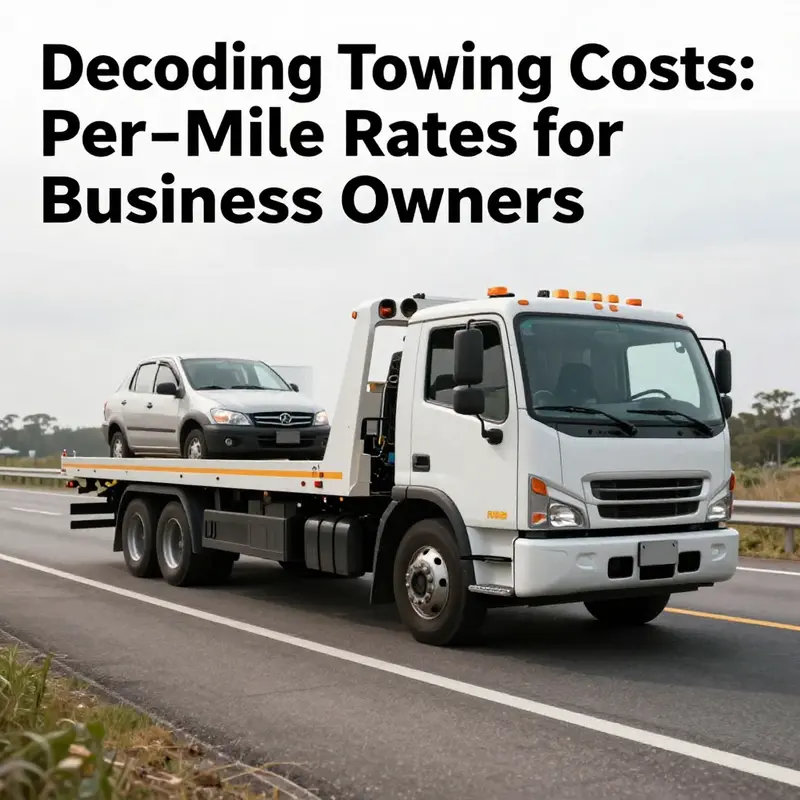
For business owners, understanding the costs associated with towing services is crucial, especially when emergencies arise. Towing can quickly become a significant expense if you’re unprepared. Knowing how much a tow truck costs per mile empowers you to budget effectively and make informed decisions when you find yourself in need of roadside assistance. This article explores the different cost structures and influencing factors in the first chapter, providing insights into what can drive prices up or down. The second chapter delves into regional pricing dynamics, highlighting how urban and rural locations differ in tow truck pricing, further assisting you in predicting potential costs based on location.
Tow by the Mile: Decoding Cost Structures, Distance, and the Real Price of a Tow Truck Ride
When a vehicle breaks down or is involved in an accident, the immediate concern isn’t just getting help, but understanding what you’re being charged for. The price of a tow truck per mile does not come from a single universal rate. It arrives as a careful mix of fees, distance, vehicle needs, and the timing of the call. For most customers, the true cost is a blend of a base dispatch or hook-up fee and a per-mile charge that can vary as the journey changes. Distance matters, but it is not the only factor—type of vehicle, the location where help is needed, and even the hour at which service is required can tilt the final bill. To navigate this landscape with confidence, it helps to think of towing costs as a layered equation rather than a single line item. The base fee covers the cost of mobilizing the tow crew and equipment from the shop toward your location. This fee can fluctuate by region and by company, reflecting local demand, labor costs, and the specific response time a customer expects. The second layer, the per-mile component, is where distance starts to matter most. However, the per-mile figure is rarely a flat, universal number. In many standard tows, a base fee is added to a per-mile rate that accounts for fuel, wear and tear, and the complexity of the towing operation. The per-mile rate can appear deceptively simple at first glance, yet it often operates within a tiered or bracketed model. Some companies publish a low per-mile range under certain conditions, while others present higher rates once trip length crosses a threshold. What makes the math even more intricate is the way this combination translates into the out-of-pocket cost for different scenarios. If a tow is only a mile or two, or if it occurs during regular business hours, the final figure might stay within a modest band. As the distance increases or as the service demands more specialized equipment—crowns, dollies, wheel lifts, or extra manpower—the price per mile and the base fees can rise. The result is a spectrum rather than a single figure: a base charge that is relatively fixed, and a per-mile cost that can drift up or down with the specifics of the job. In practice, most towing providers operate within a pricing framework that starts with a base fee and then adds miles. The base fee is the constant, the dependable anchor at the start of the calculation. The per-mile rate then scales the bill with how far the vehicle must be moved. The distance factor itself is not merely an arithmetic step; it carries with it logistical overhead. Longer tows can involve additional fuel, extra time behind the wheel, and the need for more careful planning to ensure the vehicle arrives intact at the intended destination. These considerations help explain why pure per-mile rates in some markets do not fully represent what a final customer pays when a tow is completed. The numbers offered by market data illuminate this gap. For many standard towing scenarios, the per-mile range can be described as broadly conservative, yet applying that rate across a journey must also account for other line items. A commonly cited framework suggests that the cost per mile can be in the lower end of a national range, but the real experience for a consumer often lands closer to a higher bracket once the base fee and any surcharges are folded into the math. In many urban and suburban contexts, the presence of a base fee plus a per-mile rate yields an effective per-mile cost that seems higher than the nominal rate simply because the base fee is a fixed cost that must be paid regardless of distance. The combined effect is a two-part price that feels like a single number when displayed as a total, yet it is the result of a small, predictable structure that can be understood with a few familiar terms. To grasp this, it helps to look at typical ballpark figures and how they break down in real life. For shorter tows—five miles or less—the total installed price can run roughly from the mid-30s to a little over $100. That spread reflects variations in base fees and the per-mile charge, along with any minimum-fee requirements that some companies enforce to guarantee dispatch and readiness. When the distance grows from five miles up to about forty miles, the combined charges can land in a broader band, often from roughly $125 to $275, depending on whether the vehicle is a mid-size passenger car or a larger, heavier model that requires heavier equipment and longer operation times. And for what many drivers might consider a long haul—up to or beyond 100 miles—the total can surpass $600, especially if the journey requires overnight response, multiple crew members, or more sophisticated methods to protect the vehicle during transport. The cost-structure story is not just about distance, though. Several factors can tilt the balance, sometimes dramatically, even when the distance remains the same. Vehicle type and weight is a prime example. A small sedan is far different in its towing needs than a full-size pickup or a commercial van. The equipment needed changes, as do the fuel demands and the labor hours. Heavier or larger vehicles typically require a larger tow truck, different wheel-lift configurations, and potentially extra safety precautions to secure the load. The upshot is that towing a large vehicle can easily cost two or three times more than towing a compact car over a similar distance. The time of service is another critical lever. Emergency or after-hours towing triggers premium rates that compensate for the urgency and the difficulty of mobilizing staff at odd hours. A simple way to think about it is as surge pricing for the real-world challenges of responding quickly in adverse conditions, during nights, weekends, or holidays. The multiplier effect can be substantial, reflecting not just the extra labor but the higher risk and logistical constraints that crews face under time pressure. Location and accessibility can also push costs up or down. Rural or remote locations might seem economically favorable because the per-mile rate can be lower in some markets, but the overall bill can become higher because the trip covers longer distances to reach a repair facility or an insurance-approved destination. In urban areas, a dense traffic environment can complicate the tow, increasing labor time and sometimes requiring specialized equipment to navigate tight spaces and avoid collateral damage. Accessibility matters, too. A vehicle stranded in a difficult spot—on a steep hillside, in a rain-soaked alley, or at the bottom of a ditch—may necessitate additional pulling techniques, winching, or stabilization gear. Each extra service adds a surcharge or a separate line item that reshapes the bottom line. The urgency of a situation adds another layer of complexity. Immediate roadside assistance in a time-crunched scenario almost invariably carries a premium. The need for a rapid response, the possibility of a longer wait for a preferred technician, and the insurance or service-level guarantees attached to the dispatch can all contribute to higher charges. The result is a price landscape that rewards preparedness just as it rewards speed. These dynamics underscore a practical truth: the cost to tow by the mile is not simply a stagnant number. It is a living calculation that reflects distance, weight, accessibility, timing, and the operational realities of getting a vehicle from roadside to repair. For drivers seeking to minimize surprises, a pragmatic approach is to request a detailed estimate before committing to service. A transparent quote should break down base fees, the per-mile rate, and any surcharges or ancillary costs. Knowing whether a given offer is built with a flat-rate add-on versus a tiered distance model helps a consumer compare apples to apples and decide whether a particular channel is the best choice for a specific situation. It is also helpful to compare quotes from a few local providers to understand the standard ranges for base fees and per-mile rates within a given area. Local context matters: a price that seems high in one neighborhood may be standard in another due to regional labor costs, regulatory requirements, and typical vehicle mix. When you’re planning ahead, you might consider asking about how the company handles unexpected stops or detours. Sometimes a tow path includes a required detour due to road closures or weather, and a provider may need to adjust the estimate to reflect such contingencies. In this sense, the per-mile rate is not the sole determinant of the final price; it is the scaffolding that supports a broader pricing structure shaped by distance, vehicle type, time, accessibility, and safety considerations. If you’re reading this chapter in the course of evaluating a tow, one practical takeaway is to ask for a breakdown that shows the base fee, the per-mile rate, and every surcharge that could apply. Don’t hesitate to inquire about minimum charges and whether the quoted distance is the actual miles driven or a broader estimate used for billing. A word about regional nuance can also be illuminating: the same basic model can look different from city to city, reflecting the density of traffic, the typical vehicle mix, and the local regulatory environment. This is why the most reliable guidance often comes from direct conversations with nearby providers. In practice, a simple, clear quote may include a line like: base fee plus miles at a stated rate, with any additional charges spelled out separately. For readers who want a concrete touchstone beyond personal estimates, consider how a provider in a busy metropolitan corridor might structure pricing for a short tow to a nearby service center versus a longer, cross-town haul to a facility that operates at the edge of the metro area. The relative appeal of each option, from the consumer’s perspective, lies in the transparency and predictability of the pricing—how the base, the mileage, and any extras are presented in a single, intelligible figure. When you compare your options, also consider the long-term value of service reliability, response time guarantees, and the quality of care for your vehicle. A lower per-mile quote can be appealing, but if it comes with longer delays, less reliable equipment, or fewer safeguards for your vehicle, the apparent saving may vanish in the moment you need it most. The material you’ve seen here is intended to arm you with a practical lens for reading tow quotes with discernment. It emphasizes the basic architecture—base fees and per-mile charges—while acknowledging the real-world frictions that escalate costs: heavier vehicles, remote locations, after-hours calls, and urgent needs. With this perspective in hand, you can approach a tow with clear expectations and a set of questions that cuts through guesswork. For a nearby, concrete illustration of how this pricing plays out in a specific market, you can explore local options through DC towing service costs. This reference point offers a snapshot of how the base, the distance, and the service context come together in a real-world quote. Those who want a broader industry frame should consult external resources to see how pricing standards and consumer protections shape pricing across the sector. For readers seeking a deeper industry perspective, the National Association of Automobile Clubs provides a comprehensive guide to towing costs and related protections that can help you understand what to expect and how to compare offers. External resource: https://www.naac.org/towing-costs-guide
Urban vs Rural: Regional Variations in Tow Truck Per-Mile Pricing
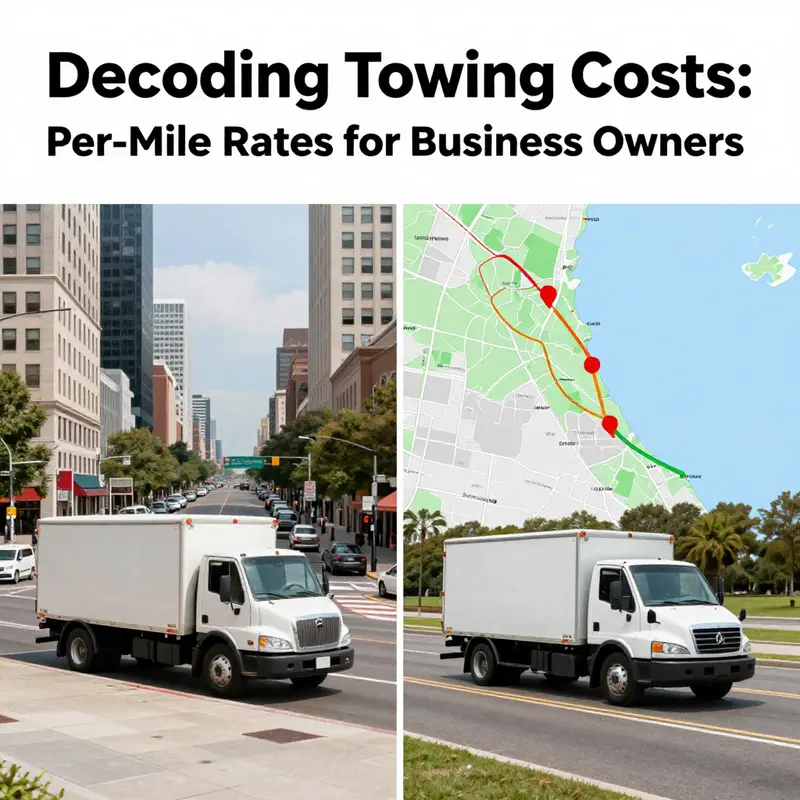
The question of how much a tow truck costs per mile is rarely answered with a single figure. It unfolds like a landscape, with the terrain changing from one region to the next, from crowded city streets to quiet rural roads. In the study of regional pricing dynamics, the per-mile rate is less a fixed dial than a moving shadow cast by a handful of persistent forces: demand density, operating costs, distance logistics, and the competitive fabric of the local towing market. What begins as a simple distance metric quickly reveals itself as a layered calculation built from base fees, time-of-day surcharges, and the specialized equipment required for different vehicle profiles. Understanding this helps explain why two similar tows separated by a few miles can arrive at strikingly different total prices, and why the per-mile figure sometimes sits within a modest range, while the final bill can still surprise the unwary customer.
In urban cores, where vehicles proliferate, delays are common, and access points to accidents or breakdowns are constrained by congestion, the per-mile cost tends to reflect urgency, speed, and risk. On the surface, a high density of service calls means more competition among providers, which should drive prices down. Yet the opposite frequently occurs. Urban markets carry higher labor costs, elevated insurance premiums, and greater overhead. A tow operator must balance rapid response with the cost of keeping a fleet ready to roll through busy hours, sometimes at night or on holidays when demand spikes. The combined effect is a pricing environment where the per-mile component of the bill can rise in the face of fierce competition, because the costs that must be covered per mile—fuel, wear and tear on a fleet that spends more time idling in traffic, and the need for quick access to urban choke points—are simply higher.
Consider a hypothetical 20-mile tow in a major city. Even in a market with competitive tension, the total charge often falls in a range that reflects both speed and service breadth: roughly $100 to $180, depending on the base fee, the per-mile rate, and the presence of any rush or emergency fees. Those numbers translate into a per-mile rate that hovers around $5 to $9, and that spread acknowledges the value of rapid response, lane-dending logistics, and the infrastructure costs that come with operating in a dense metropolitan environment. It is not merely about distance traveled, but about the value delivered along the route: the tow operator must navigate traffic, find safe loading points amid limited space, and coordinate with police or highway authorities when incidents occur. The end result is a per-mile figure that sits in a comfortable—but not guaranteed—range for the urban operator. To the consumer, this often means that even a relatively short tow can incur a premium if the timing aligns with peak demand or if the vehicle requires specialized handling.
The rural landscape tells a different story, one shaped by geography, dispersion, and the absence of the same urban pressure points. Rural pricing dynamics tend to push per-mile costs downward on average, primarily because operating costs in these areas can be lower and competition is more sparse. A smaller market means fewer operators; this can translate into lower base fees and less aggressive per-mile pricing when demand is steady. The absence of heavy traffic, fewer insurance constraints tied to high-traffic urban zones, and less expensive real estate can all contribute to more favorable cost structures per mile. Yet the rural picture is not simply a flat plain of cheap tows. Long-distance hauls—especially those spanning two hundred miles or more—present a different calculus. In those cases, fuel burn, driver hours, and vehicle depreciation rise sharply, and the total bill can climb into a substantial range, often cited as $400 to $800 or more for exceptionally long trips. In other words, while the per-mile rate may be competitively low in many rural settings, the extended distance can accumulate into a heavy final price tag. A sequence of 200 miles, even at a modest per-mile rate, becomes a significant expense, reinforcing the idea that cost structure in rural areas is highly sensitive to the length of the tow.
The intangible yet powerful influence of distance cannot be overstated. Distance in itself is a blunt metric; it interacts with time, terrain, and the equipment required. A vehicle that weighs heavily or has unique loading requirements demands heavier debris or longer winching gear, pushing the per-mile cost upward even if the distance traveled remains modest. Heavy-duty tows of trucks, vans, or trade vehicles often involve specialized equipment, longer crews, and enhanced insurance coverage, which all contribute to higher per-mile costs in both urban and rural settings. In urban areas, these factors may be amplified by the need for rapid deployment and the constraints of street access, while in rural areas, the extended time on the road amplifies fuel and labor expenses, sometimes counterbalancing otherwise lower base charges. The mathematics of the per-mile figure thus becomes a negotiation between distance and the friction of real-world logistics.
Time of day is another factor that tilts pricing in predictable ways. Nighttime tows, weekend calls, and holiday incidents tend to carry a premium. In dense markets, where 24/7 service is the norm and the difference between a standard and premium response can be a few minutes, the industry treats after-hours service as a scarce resource. That scarcity is priced in through elevated base fees and incremental surcharges that apply per mile. Rural markets, while generally less congested, still see price bumps when a tow occurs at odd hours, especially if the distance requires extended travel into less-served regions with limited local support. The result is a dynamic where the same trip becomes more expensive if it takes place during a high-demand window, regardless of urban or rural settings.
Another layer of nuance comes from local market conditions and the specific pricing model a company adopts. Some operators charge a flat base fee plus a per-mile rate, while others implement tiered pricing that depends on distance brackets. In urban markets with high overhead, tiered pricing can protect margins when very short tows occur in a congested environment, ensuring the operator covers the cost of quick dispatch, rapid mobilization, and specialized on-site support. In rural regions, pricing may appear simpler, but the absence of competition can paradoxically stabilize or even elevate prices in certain corridors where limited providers operate. Some rural operators seek to differentiate themselves through niche services—specialized recoveries, heavy equipment towing, or long-distance, fixed-route offerings—that influence the perceived value of per-mile pricing. The landscape is further altered by the presence of regional players and new entrants that adopt innovative approaches, using sophisticated dispatch networks, telematics, and strategic partnerships to better manage costs and offer more predictable pricing to customers. In underserved rural markets, this kind of competition can help stabilize or reduce prices, but supply-demand imbalances continue to shape the final bill.
For the consumer, the practical takeaway is clear: the per-mile price is only a piece of the overall equation. A standard phrase in the industry—“base fee plus per-mile charge”—is the baseline, but the real total is a mosaic of surcharges, fees, and variables that may or may not be obvious at the first glance. The tip often offered by industry professionals is not to focus solely on the per-mile number. Instead, request a detailed estimate that itemizes the base charge, the per-mile charges for the specific distance, and any additional surcharges such as after-hours, holiday, or accident-avoidance fees. In the same city, a 20-mile tow might be quoted as a single blended rate, but the shade of that price hides important distinctions: is there a separate base fee? Is there a per-mile rate with a distance cap? Are there surcharges for urban congestion, proper patient handling, or complex loading? Understanding these details helps consumers compare apples to apples and avoids the sting of a surprise final bill.
The regional dynamics—urban high demand and infrastructure costs versus rural lower overhead and longer distances—also influence how providers market themselves and how customers perceive value. In some markets, a company may emphasize response time and reliability as a premium feature, justifying a higher per-mile rate in exchange for faster turnaround and fewer delays. In others, the emphasis may be on transparent pricing and predictable totals, appealing to customers who want to avoid sticker shock. The market therefore evolves not only around the miles traveled but around the promise of service quality and the reliability of the dispatch network. In this sense, the per-mile price is almost a signal of a broader service proposition rather than a standalone numeric value.
Within the broader geographic canvas, local nuances continue to surface. For example, residents in a major urban corridor may rely on a consistent network of providers who can guarantee quick response times even during rush hours, a dynamic that tends to sustain higher per-mile charges. In contrast, communities in rural bands may experience more fluctuations in price tied to seasonal demand, agricultural equipment movements, or occasional spikes when a single operator dominates a particularly remote route. These patterns underscore the need for travelers to prepare for the regional variability that can occur even within a single state or metro area. The practical implication for someone planning a tow is straightforward: knowing the regional backdrop helps set realistic expectations about what a “per mile” charge might look like in their neighborhood, and provides context for interpreting the final invoice when the tow is completed.
For readers who want a tangible sense of regional pricing in a specific locale, local directories and dispatch networks offer a window into prevailing norms. In many markets, customers report that urban tows are more expensive per mile, but the total bills can end up lower on shorter drives if a lightweight load and efficient service minimize additional charges. Rural tows, with their longer mileages, can accumulate substantial totals even at modest per-mile rates, especially when the journey approaches or exceeds the two-hundred-mile mark. In either case, the most reliable way to gauge current pricing is to contact local providers directly and request a detailed estimate that includes all potential surcharges. A regional perspective helps consumers ask the right questions and compare apples to apples across different quotes.
The chapter’s arc circles back to the practical, real-world implications of understanding regional variations. For anyone facing a tow, the location matters as much as the distance. The same 20-mile tow executed in different settings can reflect different cost structures: urban markets with rapid dispatch and complex loading scenarios may push the per-mile component higher, while rural corridors may offer steadier, longer-distance pricing that still adds up under extended hauls. In both contexts, embracing a comprehensive quote that discloses base fees, per-mile charges, and surcharges is the best defense against surprise costs. It also equips consumers to better evaluate options—whether they are weighing the convenience of a nearby urban operator against the potentially lower but longer rural alternative. When planning a tow, consider not just the shortest route but also the reliability and coverage of the provider’s dispatch network, the availability of after-hours service, and the operator’s capacity to handle specialized loads. These facets collectively shape the actual price per mile and the total expense you will face.
For readers seeking a practical point of reference within a specific metropolitan area, consider exploring local resources that discuss towing service details and pricing in nearby regions. For example, a nearby market experience might reference a local service hub to illustrate the proximity of options and the consistency of pricing across the city’s neighborhoods: towing service in Washington, DC. Such local resources can provide context that complements broader market analyses and help readers anchor their expectations to the realities of their own streets and toll corridors.
In sum, the regional variations in tow truck per-mile pricing emerge from a confluence of demand, operating costs, distance, and market structure. Urban centers tend to magnify the price per mile through a combination of high labor costs, greater insurance exposure, and the premium for rapid, reliable service in congested environments. Rural regions, while often offering lower per-mile rates on shorter spans, can accumulate sizable totals when the distance grows, driven by fuel, time on the road, and maintenance needs. The overarching message remains consistent: to accurately assess what you will pay, request a detailed estimate that lays out all components of the charge, and compare quotes with an eye toward both the distance and the service value provided. External benchmarks, such as the nationwide guidance published by AAA, can provide additional context for centering expectations in your area. This nuanced understanding helps consumers navigate the patchwork of regional pricing with greater confidence and fewer surprises when the tow truck finally arrives.
External resource: https://www.aaa.com/
Final thoughts
Understanding the cost of a tow truck per mile is essential for business owners who may encounter roadside emergencies. Both the influencing factors and regional variations play significant roles in determining these costs. By being proactive and informed about the towing landscape, you can better manage your expenses and ensure quick, effective decisions when the need arises. Equip yourself with this knowledge, and maintain control over unexpected towing charges, contributing to more efficient business operations.