
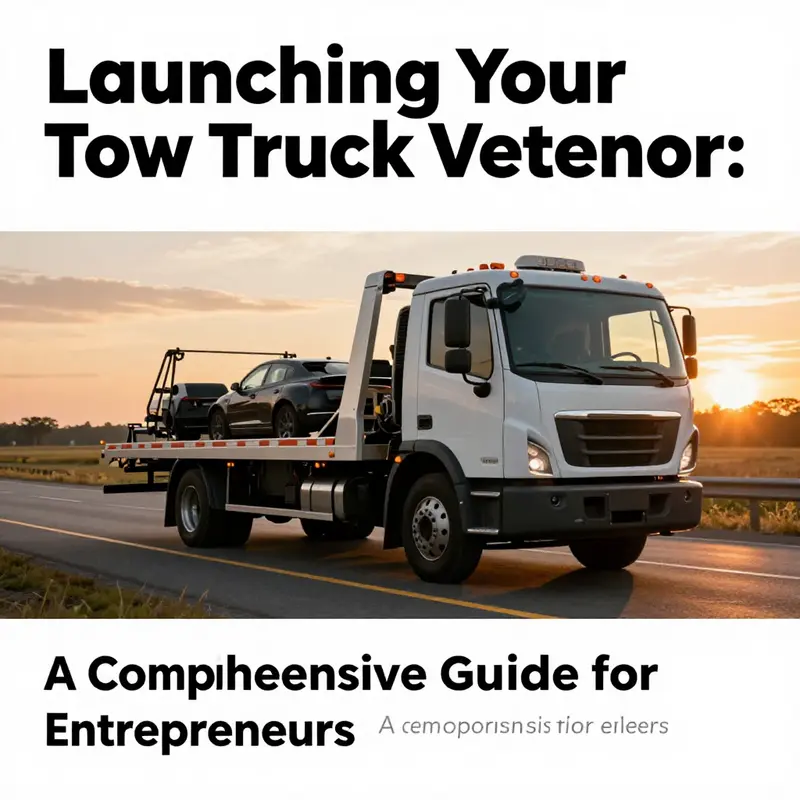
Owning a tow truck company presents a unique entrepreneurial opportunity, merging the demand for roadside assistance with the logistics of vehicle recovery. In a world where automobiles are an integral part of daily life, the chances for creating a successful tow truck business are expansive. However, this venture is not without its complexities. This guide offers a structured approach to help you launch your own tow truck company. From understanding market demands and establishing a strong business plan, through navigating the intricate licensing processes, to operational and marketing strategies crucial for success, each chapter will equip you with the insights needed to thrive in this competitive industry.
Charting the Course: Market Research and Strategic Planning for Owning a Tow Truck Company
Starting a tow truck business is less about the first flatbed you buy and more about the map you draw before you start. Solid market research and a clear strategic plan lay the groundwork for sustainable growth, especially in a field where demand follows traffic patterns, accidents, and the steady cadence of daily life on the road. The big picture is simple: know your market, define your service niche, project your finances, and align your operations with the regulations that govern every jurisdiction you intend to serve. When you approach it this way, market trends and planning decisions become a compass rather than a guess.
Across regions, the towing industry is expanding, driven by more drivers on the road and a steady stream of breakdowns and collisions in urban corridors. Global market forecasts point to ongoing growth, with particular emphasis on the types of vehicles and the methods used to recover them. The trend toward higher-performance vehicles and towed assets that require careful handling has nudged operators toward safer, more specialized equipment. A flatbed, which lifts the vehicle entirely off the ground, has become the preferred option for many fleets and independent operators, precisely because it minimizes damage during transport. For a new entrant, this signals a prudent investment direction: build a fleet capable of handling a wide range of scenarios with minimal risk to the customer’s vehicle and to your liability profile. The business case grows stronger when you recognize that demand clusters around dense urban centers and along major travel routes where incidents and vehicle failures are more frequent.
This macro context translates into practical steps for your plan. First, identify your target customers—auto repair shops, insurers, and individual drivers each have different pain points and payment cycles. Then, map a service area that balances call volume with travel time, since rapid response stays at the core of customer satisfaction and contract incentives. The shift toward premium service is notable: customers increasingly expect clarity about arrival times, transparent pricing, and the safety of their vehicles in transit. A modern plan therefore weaves on-demand dispatch with a reliable fleet, real-time communication with customers, and straightforward billing. To illustrate how a region might look in practice, consider a local page that demonstrates the kind of service presence a company aims to establish. For example, the Washington DC area page provides a tangible reference for service scope and customer expectations: towing service in Washington DC.
Your financial plan should anchor decisions about equipment, staffing, and marketing. Start with start-up costs that reflect the choice between flatbeds and conventional wreckers, the latter typically carrying lower upfront costs but higher long-term risk of damage to sensitive modern vehicles. Beyond the truck itself, you must budget for the winch systems, safety gear, radios, and GPS dispatch tools that streamline operations and reduce idle time. Ongoing costs—fuel, tire replacements, maintenance, insurance, and software subscriptions for dispatch and fleet management—shape your profitability. Crafting realistic cash-flow projections helps you foresee seasonal swings in demand, plan for maintenance downtime, and maintain reserves for unexpected repairs. In this sense, financial planning is not a one-time task but a discipline that underpins every expanded service area or added capability. A rotator or other advanced equipment can broaden your service mix, but it also increases capital outlay and maintenance complexity. Weigh these trade-offs against expected utilization in your intended market, and revisit the projections as you win new customers and contracts.
Beyond equipment and costs, the supplier and sourcing landscape informs both price and reliability. Global supply chains still influence the availability and price of new and used tow trucks. For startups, this means weighing global options against local dealerships and independent sellers, and conducting thorough pre-purchase inspections. In some cases, regional production hubs in Asia offer economical options, while local markets provide faster turnaround and easier servicing. Your sourcing strategy should include a clear take on total cost of ownership, including delivery, freight, duties (if importing), and long-term maintenance commitments. A thoughtful sourcing plan not only reduces capex risk but also underpins your ability to scale as demand grows in the chosen region. When you tie sourcing to service quality, you create a reliable foundation for your pricing strategy and customer promises.
The business model itself should be differentiated by service design. A market-aware operator stacks capability—24/7 availability, rapid response, and a diverse service menu that can include accident recovery, vehicle transport, and fleet maintenance support. Each element reinforces your value proposition and creates points of contact that enhance customer loyalty. Technology plays a key role here: dispatch software and CRM tools enable transparent communication with customers, real-time updates, and on-bill accuracy, all of which build trust in a market that prizes reliability. Equally important is the branding of safety and professionalism in every interaction. Clear, courteous service and meticulous handling of every vehicle reinforce a reputation for dependability—a critical multiplier in a competitive landscape.
Given the regulatory complexity that governs towing across different jurisdictions, your planning must also reflect compliance and risk management. Local business licenses, state-level towing licenses, and, where applicable, federal authority for cross-state operations all shape the scope of how you launch and grow. Drivers will need proper licensing and endorsements, and your fleet must meet inspection and registration requirements. The planning phase should therefore include a compliance calendar that tracks licenses, permit renewal dates, and mandatory safety training for drivers. This is not a bureaucratic hurdle; it’s a practical way to avoid costly interruptions and to maintain a consistent level of service across your footprint. The market-informed plan you build must be adaptable to these regulatory realities, with procedures in place to respond quickly to any change in rules or local requirements.
As you refine your plan, consider the broader ecosystem that supports a tow-truck business. A well-designed market entry blends demand signals with capacity planning. It depends on a steady pipeline of work from insurers and repair shops, a credible on-call system, and a reputation for ethical, transparent business practices. The research signals a robust opportunity for those who invest in modern equipment, prioritize safety, and communicate clearly with customers. If you are mapping your first year, you should test assumptions about call volumes, average job value, and travel times. Build a buffer for unexpected downtime on vehicles and for maintenance cycles—the kind of practical, conservative budgeting that keeps a fleet healthy under pressure.
The next chapters will dive into how to choose an appropriate business structure, register and license the company, and deploy the first wave of equipment and staff. Yet the core of successful ownership remains the same: a disciplined market view, a credible plan for growth, and a commitment to service excellence that turns first-time customers into repeat business. The arc from research to action is where you build resilience into your tow-truck venture, so you can navigate the road ahead with confidence and clarity. For additional context on market scale and the evolving vehicle landscape, see external market analyses that corroborate these trends and help refine your financial planning and equipment strategy. For broader context, see the MarketsandMarkets report on the automotive trailer market, which provides comparable projections and deeper industry insight: https://www.marketsandmarkets.com/Market-Reports/automotive-trailer-market-278525552.html.
Chapter 2: Mapping the Legal Road to Tow Truck Ownership: Licenses, Permits, and Compliance
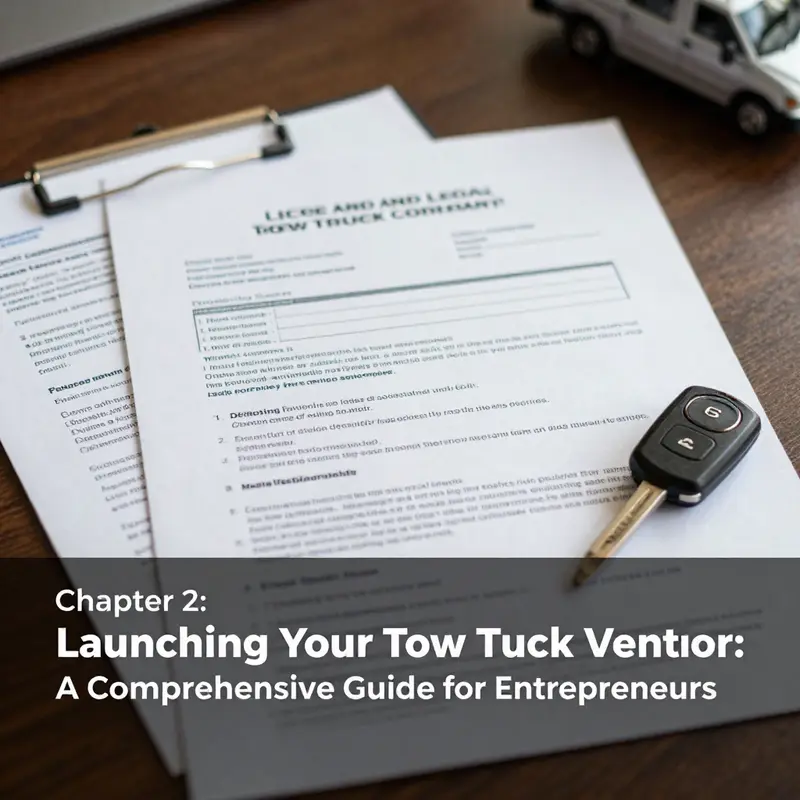
Licensing and legal compliance form the backbone of a reputable tow truck business. Without them, even the best vehicles and most reliable drivers can falter under fines, impoundment, or loss of operating privileges. The work of owning a tow truck company begins not on the roadside but in the office, where you translate a plan into a legally sound framework. You must understand that licensing is not a one-and-done hurdle but an ongoing discipline. Local authorities set the ground rules for who may operate, what equipment is allowed, and how operations are tracked. State agencies, in turn, shape prerequisites for professional credentials, vehicle registration, and insurance. If your plans extend beyond city limits, the federal layer adds another layer of requirements. This layered landscape can feel daunting, yet it is also a clear map for sustainable growth. Start with the basics, and then build a compliance program that scales with your business, fleet, and market reach.
Choosing a business structure interacts with licensing in practical ways. A properly formed LLC or corporation helps protect personal assets while simplifying tax handling and certain regulatory filings. Yet structure alone does not grant operating rights. You still need the requisite licenses, permits, and endorsements. Some jurisdictions require proof of corporate formation when applying for a local business license or a specific Tow Truck Company license. Others treat drivers differently, tying operating authority to driver qualifications and vehicle compliance. The takeaway is simple: decide on your business structure, then map every license, permit, and registration you must obtain, renew, or upgrade as your company grows. This planning saves time and reduces the risk of disruptive audits or enforcement actions later.
From a practical standpoint, the licensing matrix begins with a basic business license. Local governments routinely require a general business license to operate within city or county boundaries. Beyond that, many jurisdictions mandate a specialized Tow Truck Company License or equivalent certification. In dense urban areas, these licenses are not ceremonial; they are proof that the operator meets safety, financial responsibility, and reliability standards set by the licensing authority. For instance, in New York City, the Department of Consumer and Worker Protection requires a Tow Truck Company license for businesses that move or remove disabled, illegally parked, or abandoned vehicles. This license is not optional but mandatory and serves as a public signal that the company operates within the city’s regulatory framework. The NYC example illustrates how a well-defined license can shape your operational scope and the expectations of customers, municipal agencies, and law enforcement. For a practical view of regional licensing processes, you can explore DC-area guidelines that mirror this structure in their own way. See the DC-focused dispatch and licensing considerations at the ongoing practical reference towing-service-washington-dc.
Safety and dimensions are another critical axis of licensing. Officials monitor the physical characteristics of tow trucks to ensure they can maneuver safely on public roads without creating hazards or obstructing traffic. In many jurisdictions, vehicles used for towing must adhere to specific size and equipment standards. For example, official guidelines in some large jurisdictions set clear dimensional limits: a tow truck should not exceed 2.5 meters in width and 4.3 meters in height. Length limits are defined by the vehicle’s towing status: 12.5 meters when not towing, and up to 19 meters in total length when a vehicle is connected to a tow. Exceeding these measurements can trigger fines, vehicle impoundment, or revocation of operating privileges. Compliance is not merely about avoiding penalties; it directly influences insurance costs, fleet utilization, and customer trust. Consequently, your procurement strategy should factor in these limits when selecting equipment and planning your service offerings.
The federal layer adds another dimension for operators who cross state lines. If your business spans multiple states, you likely must register with the Federal Motor Carrier Safety Administration (FMCSA) and obtain Motor Carrier (MC) numbers. This federal authority reflects the wider role towing firms play in interstate commerce and highway safety. It also means you will face federal reporting, insurance requirements, and safety compliance standards beyond local ordinances. And even if you stay within a single state, a commercial driver’s license (CDL) with appropriate endorsements is usually essential for drivers operating larger tow trucks. A Class B CDL often applies, but you must verify endorsement requirements for equipment like tow dollies, wheel-lifts, or flatbeds. Drivers also need clean driving records and ongoing training to meet insurance and client expectations. Your hiring and ongoing training programs should anticipate these regulatory expectations rather than react to a breach.
Insurance and bonding complete the essential legal toolkit. General liability insurance covers third-party injuries and property damage that occur during towing operations. Commercial auto insurance protects your fleet and drivers, while an umbrella policy can provide excess coverage during high-risk scenarios. Bonding, or surety bonds, may be required by certain municipalities to safeguard against improper towing practices or to guarantee contract performance. These coverages not only satisfy regulatory demands but also reassure customers, insurers, and partner businesses—auto repair shops, insurance companies, and hospitals—who rely on dependable, compliant service. The financial provisions of licensing and insurance become a competitive advantage when you can demonstrate robust risk management and clear, documented procedures.
Beyond paperwork, compliance rests on people. Build a team of qualified drivers who hold valid CDLs and maintain clean driving records. Create a culture of safety and customer service that aligns with licensing expectations. Documented training, safety protocols, and routine vehicle inspections should be part of the onboarding process and ongoing performance reviews. Operational reliability, after all, hinges on the consistency of your people and equipment as much as on your licenses. In this sense, licensing becomes a performance discipline as much as a legal one. You are not merely ticking boxes; you are shaping the reputation of your company, reducing risk, and laying a foundation for sustainable growth.
To keep your path clear, approach licensing as a phased, ongoing program rather than a single milestone. Start with the essentials: secure a business entity, obtain your EIN, and apply for the local business license plus any required specialty licenses. Then verify whether state and federal registrations are needed based on service area and customer base. Create a compliance calendar that tracks renewal dates, inspections, and ongoing driver trainings. Maintain records of insurance certificates, bond documentation, vehicle registrations, and incident reports. This organized approach helps you respond quickly to regulatory changes and keeps your operations aligned with the expectations of customers and authorities alike.
For a practical reference to a regional licensing landscape and to see how a local operator navigates dispatch, licensing, and daily compliance, consider the Washington, DC area example linked above. Remember, the licensing terrain changes by jurisdiction, so consult your city or state’s official pages and seek professional guidance when forming or expanding your operation. The NYC DCWP page provides a thorough demonstration of what to expect when securing a Tow Truck Company license in a major city, including application checklists and compliance standards. As you build your licensing strategy, keep the broader regulatory ecosystem in view and plan for ongoing stewardship rather than a one-time acquisition.
External resource: For authoritative details on New York City licensing requirements, refer to the official NYC Department of Consumer and Worker Protection Tow Truck Company License page: https://www.nyc.gov/site/dcwps/business/tow-truck-company-license.page
Chapter 3: Orchestrating Operations and Marketing Excellence in a Modern Tow Truck Company
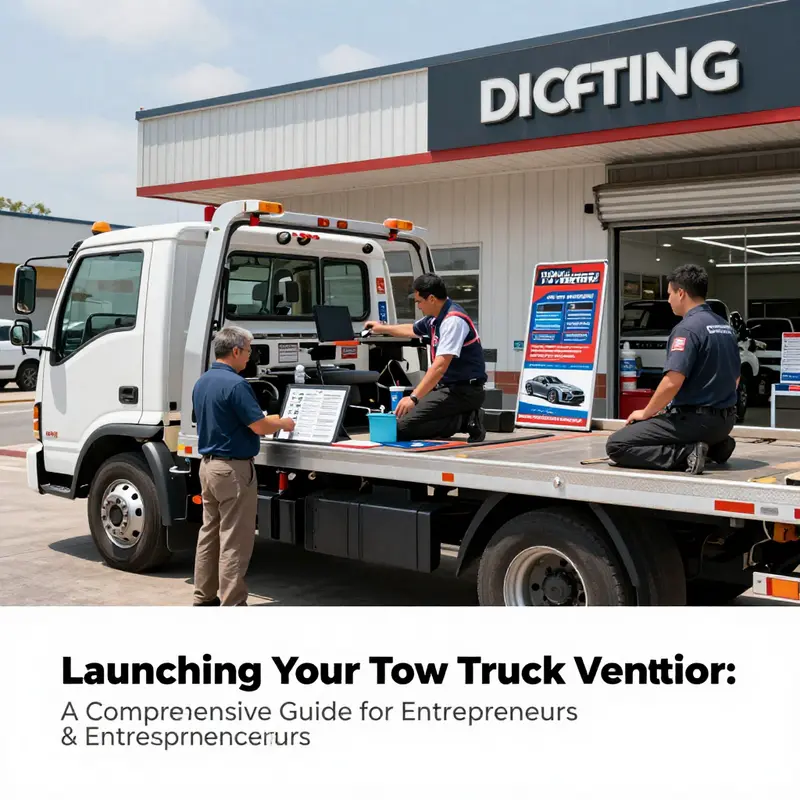
Operational excellence in a tow truck company rests on a quiet math: the right equipment, the right people, the right processes, and a compelling story that makes customers feel safe when they call. The backbone starts with the machines themselves. Modern flatbeds and wreckers use high-strength steel alloys and advanced hydraulic systems that deliver controlled lifting, safer on-vehicle loading, and reduced wear on both the towed vehicle and the recovery gear. Investing in quality trucks matters not just for performance but for reliability and insurance costs, because a well-built unit reduces breakdowns and downtime when every minute counts on the roadside.
But the hardware is only as good as the maintenance and inspections. A disciplined maintenance schedule, routine weight and load checks, tire-tread monitoring, brake inspections, and timely part replacements prevent costly failures. Fleet managers should track service intervals, keep a reserve of critical components, and establish a standardized pre- and post-trip checklist that drivers execute at every shift change. When a driver arrives on scene, their first job is to secure the area and ensure personal safety, then establish a safe connection to the vehicle. The emphasis on safety isn’t a bureaucratic add-on; it is the core of customer trust and liability management.
Behind the scenes runs a dispatch heart: real-time GPS tracking provides visibility to the dispatcher and the customer. Digital job management turns a phone call into a mapped route with expected arrival times, ETA updates, and a record of services performed. Route optimization reduces fuel consumption, allows more calls served in a shift, and minimizes responder fatigue. A robust system should synchronize with driver status, service types (flatbed, wheel-lift, or dolly), and equipment availability, so the next call is assigned to the right truck and driver. It also means building standard operating procedures for on-scene safety, secure towing practices, and efficient breakdown of tasks for the crew. Backups matter: portable radios, redundant data backups, and contingency plans during weather snarls or high-volume weekends. Legal compliance and safety posture must be baked into every dispatch decision, from weight limits on stands to speed limits near schools or residential neighborhoods.
People are the company’s most valuable asset. Hire drivers who hold valid CDLs and have clean records, then invest in ongoing training on towing techniques, hook-up procedures, brake and suspension considerations, and the unique challenges of flatbed recovery. Training should also cover customer interaction, de-escalation techniques, and professional communication with tow recipients and property owners. A transparent onboarding process, clear performance metrics, and regular feedback help retain talent and raise service standards. Consider rotation plans to prevent burnout and ensure coverage during peak periods. A strong culture of safety reduces incidents, lowers insurance costs, and creates a positive reputation that travels with the trucks and crews.
In parallel, marketing and client relationships must reflect the reliability built into operations. A polished website, easy online booking, and live chat can convert inquiries into service calls. Emphasize differentiators such as 24/7 availability, rapid response times, transparent pricing, and the presence of certified technicians. Showcasing customer reviews and testimonials on multiple platforms builds trust and helps with organic search visibility. Partnerships matter, not just for referrals but for integrated service ecosystems: auto repair shops that regularly recommend your service, insurers that trust your prompt response, and car dealerships that need dependable post-accident or off-hours support. A referral program that rewards consistent, high-quality service can amplify word-of-mouth in a way no single ad can.
To anchor these operations in the local market, you should integrate your online channels with on-the-ground capabilities. A local landing page that highlights service areas, response times, and service types reinforces credibility. For readers seeking hands-on local guidance, a nearby example of this approach can be found through a local service page: Washington, DC towing service.
Geotargeted online advertising, sponsorships at community events, and sponsorships at local sports or charity drives can establish your firm as a trusted neighborhood resource. Building a network with repair shops, gas stations, and dealerships creates a steady stream of inbound demand from partners who know the quality of your work. The marketing strategy should be tightly integrated with operations so that the brand promise—fast, transparent, safe, and courteous service—lives at every touchpoint, from the initial call to the post-service follow-up.
Operational discipline and marketing discipline feed each other. Track cycle times from call to dispatch to arrival, monitor on-scene time, and measure the accuracy of ETAs with customer feedback. Analyze loss and damage rates, insurance claims, and repair turnaround times. Use these insights to adjust fleet mix, staffing, and dispatch rules. Regular safety training and compliance checks should be embedded in quarterly goals, not treated as a separate activity. When the company treats low downtime and positive customer experiences as core goals, the business scales more predictably and resilience grows.
Another thread running through operations is regulatory awareness. Local licenses and vehicle inspections are the baseline, but for any cross-state work you must account for FMCSA authority and motor carrier numbers. Even if your current focus is regional, establishing a framework that accommodates regulatory shifts will save pain when markets expand. A well-labeled safety program, insurance structure, and documentation culture make audits smoother and more predictable for your team and clients.
Together, these elements form a cohesive system: the right machines, the right people, precise processes, and a trustworthy brand. They convert occasional calls into repeat business and referrals, and they persuade auto shops and insurers to pair with your fleet as their preferred partner. For broader industry context and research-backed insights, see this external resource: https://www.sciencedirect.com/science/article/pii/S0148559823001234.
Final thoughts
Establishing a successful tow truck company requires a well-rounded approach, integrating comprehensive market research, adherence to legal requirements, and strategic operational and marketing practices. By thoroughly understanding your local landscape and developing a strong business foundation, you can meet the demands of clients effectively while maintaining the highest standards of service. Remember, success in the towing industry doesn’t just arise from having the right equipment; it lies in your ability to leverage research, comply with regulations, and actively engage in marketing your services. As you embark on this entrepreneurial journey, remain adaptable, stay informed about industry trends, and prioritize customer satisfaction to create a reputable towing service.