
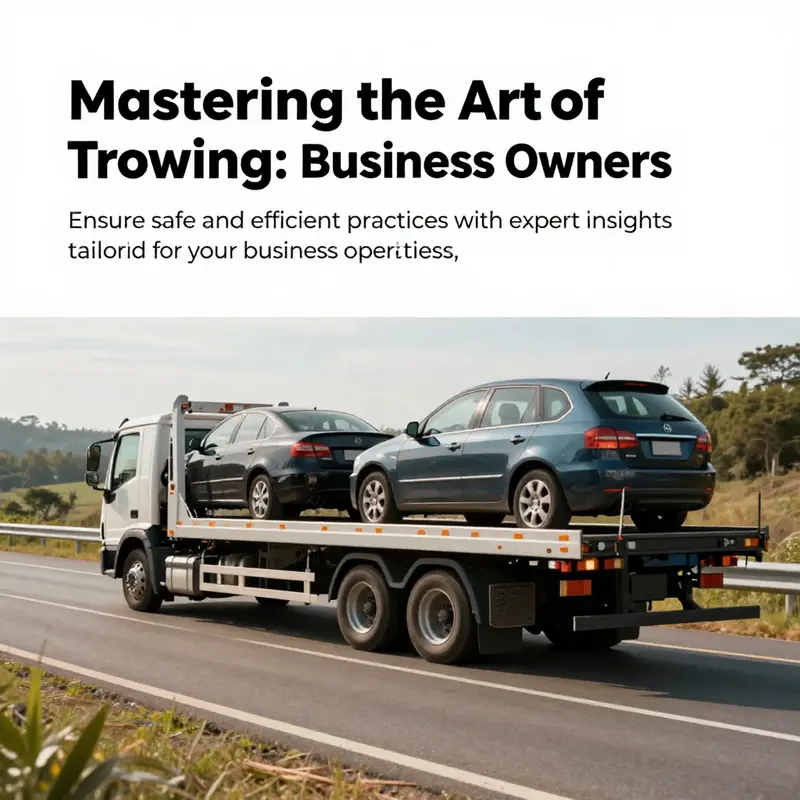
Towing a car with a truck is not just about hooking up two vehicles; it requires meticulous planning and execution to ensure safety and efficiency. For business owners relying on towing services, understanding the intricacies involved can significantly impact operational effectiveness and customer satisfaction. This guide delves into three critical areas: preparation and vehicle checks, selecting the right towing equipment, and connecting towing equipment safely and securely. By following these expert recommendations, you can enhance your towing processes, thus safeguarding your assets and ensuring compliance with regulations.
Laying the Groundwork: Thorough Preparation and Vehicle Checks Before Towing a Car with a Truck
When you set out to tow a car with a truck, the most important work happens before you ever hook anything up. Preparation and meticulous checks create a safety margin that protects both vehicles, the driver, and everyone on the road. A disciplined approach begins with the towing vehicle itself. Start by confirming the truck’s towing capacity and cross-check it against the weight of the car you plan to move, plus any additional gear or potential fuel that could ride along. If the weight mountain you must climb exceeds the truck’s capability, even by a few hundred pounds, the tow becomes dangerous and potentially illegal. Next, inspect the hitch system. The hitch receiver, ball mount, and any trailer wiring must be compatible with the towed car’s requirements and sized for the load. A loose ball mount, a cracked hitch, or frayed wiring can lead to a catastrophic failure distant from home. The checks don’t stop there. A routine brake test and a quick inspection of tires and lights on the truck are essential because the added load widens the margin for error on even a short pull. Tires should show ample tread and be inflated to the manufacturer’s recommended pressure; brakes should respond promptly and evenly, with no pulsing, grinding, or unusual heat after a light test stop. Fluids deserve a careful look as well. Engine oil, coolant, and, where applicable, transmission fluid should be at proper levels to support the extra strain of towing. Low fluids can overheat or fail mid-journey, pushing you into a roadside fix that’s best avoided. The towed vehicle demands its own quiet scrutiny. Before any hook or strap comes into play, consider the transmission type and the manual’s guidance. For manual transmissions, gear should be in neutral, and the parking brake released so the wheels can rotate freely. For automatics, the rule is strictly neutral; typically you should not tow in Park or Drive, and many manufacturers set a practical distance and speed limit unless the owner’s manual says otherwise. In many cases, a long tow over rough terrain is best avoided without a flatbed or dolly, especially for modern drivetrains that rely on internal computers and fluid couplings. Turning off electronic systems in the towed car minimizes the risk of parasitic drains or wake-up signals that could complicate the tow. If you choose a flatbed, the process is simpler in one sense because all wheels are off the ground, but even then the vehicle still needs to be secured properly and the payload balanced to avoid dynamic sway once you roll away. Allow the mind for practical safety to roam into the realm of equipment choice, because the way you connect the two vehicles shapes the entire operation. A rigid tow bar or a tow dolly offers a direct, stable link that often proves reliable for shorter distances, especially for front-wheel-drive cars. A tow rope or strap can be economical but requires careful handling, a robust rating, and proper attachment hardware. Always opt for manufacturer-approved equipment and follow the owner’s manual recommendations to the letter. The interconnection of hardware matters as much as the components themselves. When you prepare to connect, secure each pin into the hitch socket, and verify locking mechanisms, bolts, and clips are tight. For a rope-based setup, use a double-loop knot or a dedicated safety lock; avoid knots that can twist or weaken under load. A quick test pull, enough to remove any slack, confirms the system is tight. In a broader sense, preparation extends beyond the two vehicles. It includes planning your route, weather awareness, and signaling arrangements. If you operate in a region where traffic conditions are unpredictable, or if you must tow at night, you’ll need to illuminate both vehicles with side marker and taillights and consider reflective markers as a precaution. For those who drive in the Washington, DC area or nearby cities, local towing services offer guidance and help if the situation exceeds your comfort level. A DC towing service can provide professional setup and transport options, ensuring adherence to state requirements and safety norms. You can learn more about regional options when needed by exploring local resources, such as a DC-focused towing service, which can be consulted if conditions demand it. For additional regional support, consider checking the relevant pages that describe towing capabilities and service areas near you. A thorough check is not a luxury; it is the core of safe towing practice and reduces the risk of equipment failure, driver error, and road hazards. If any doubt remains about the compatibility of components, the weight you intend to move, or how to handle a specific vehicle type, err on the side of caution and seek professional guidance. In every scenario, the underlying principle stays constant: plan, verify, and secure before you roll. Once you have built this foundation, the actual act of connecting and towing becomes a managed sequence rather than a tense improvisation. For authoritative, up-to-date guidance on towing safety and legal requirements, consult the National Highway Traffic Safety Administration and their detailed guidance on towing. External resources provide step-by-step checklists that complement the hands-on preparation described here, ensuring you stay aligned with best practices while handling a tow in real-world conditions.
Choosing the Right Towing Gear: Building a Safe, Efficient Tow When Using a Truck
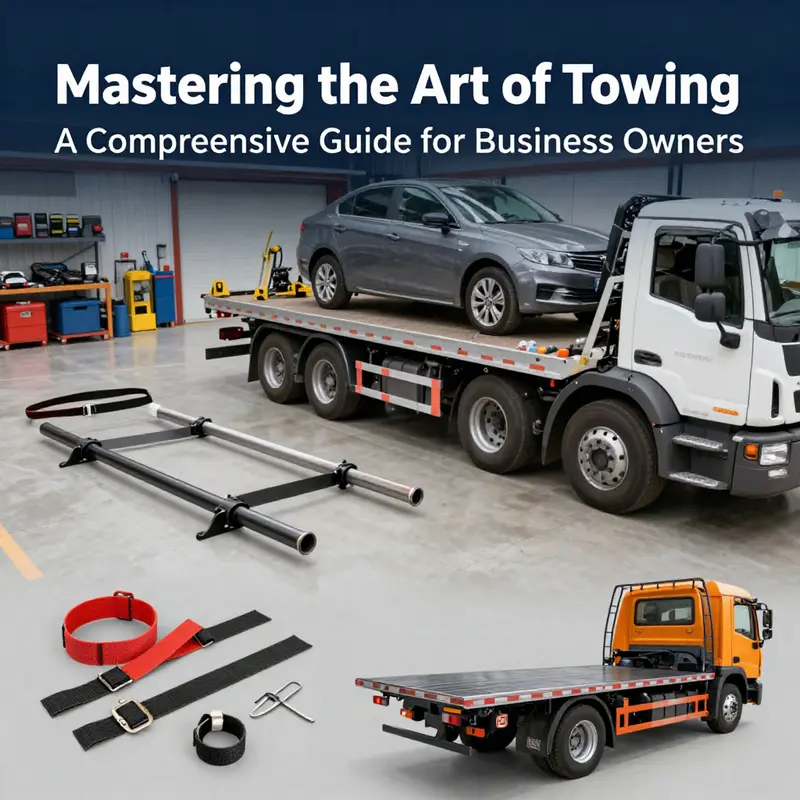
Choosing the Right Towing Gear for a car towed by a truck is more than a preference; it’s a commitment to safety, control, and efficiency on the road. The gear you select acts as the bridge between power and stability, and the consequences of a poor choice show up not only in how smoothly the vehicle moves, but in what happens if a worst-case scenario unfolds. The first anchor point is understanding your truck’s capabilities. Look up the Gross Trailer Weight (GTW) your truck is rated to pull, and compare it to the weight of the car you intend to tow. Then consider payload—the load the truck can carry in its bed—which matters when you add towing gear, a tow dolly, and any accessories. Exceeding either limit compromises brakes, suspension, and steering, and can escalate a routine tow into a dangerous situation. With this foundation, you begin to see how the framework of equipment supports every maneuver from a safe start to a controlled stop.
The next tier of choice centers on hitch type and how that choice aligns with your load and your towing method. For lighter car-to-truck combos—up to roughly 5,000 pounds—the standard receiver hitch, often in Class II or III, can be adequate when paired with a compatible ball mount. But as the load grows in weight or complexity, more robust arrangements become appropriate. A fifth-wheel or gooseneck hitch distributes weight differently and can provide greater stability for heavier tows, especially over long distances or on uneven road surfaces. The key is to ensure the hitch and the ball mount match the trailer coupler size—common sizes are 1-7/8 inches, 2 inches, and 2-5/16 inches—and that the overall tongue weight is within the hitch’s rating. The weight distribution of the setup matters as much as the total weight, because it affects steering response, braking efficiency, and how the tow responds to gusts, bumps, or quick lane changes.
When you select a towing method, you’re also choosing how the towed vehicle’s drivetrain will be treated. Front-wheel-drive cars and many manuals can tolerate certain two-axle linkages better than all-wheel-drive or heavy automatics, but you must align your plan with the manufacturer’s recommendations. For heavier scenarios or modern automatics, a flatbed trailer often emerges as the safer path because all wheels are off the ground and the drivetrain experiences minimal stress. If you do use a tow dolly or a bar-and-rope arrangement, you’ll want to confirm that the system has adequate braking support, proper alignment, and secure connections that won’t twist or slip under load. The gear you choose should also harmonize with the length of the tow and the road conditions you anticipate. For example, a longer, heavier tow benefits from smoother weight distribution and steadier control, which is where fifth-wheel or gooseneck configurations truly shine for certain heavy-to-midweight jobs. In all cases, mountings, pins, bolts, and locking devices must be secure before you creep onto the road. To stay aligned with best practices, reference the specific vehicle manual and adhere to manufacturer recommendations. If any doubt remains about the suitability of a given setup, consider contacting a professional to assess the compatibility of the hauling system with your truck and the towed car. For quick guidance and local support, you can consult a respected service in Washington DC, which offers practical advice and hands-on checks: towing service in Washington DC.
Beyond the basic hitch choice, you’ll want to ensure the braking system on the tow rig is compatible with the towed vehicle. Automatic transmissions, in particular, receive extra attention. The strongest general rule is to avoid transmitting the tow’s force directly through the automatic’s drivetrain if the vehicle is not designed for it. In many cases, manufacturers recommend a tow dolly or flatbed to minimize drivetrain wear, or the use of a supplemental braking system that can synchronize with the tow vehicle’s brake signal. If you are towing a manual or a vehicle with a robust transfer system, some setups may be appropriate, but you should still verify the compatibility and observe any recommended distance and speed limits. The emphasis remains: match the equipment to the car’s drivetrain and the truck’s capacity, then install everything with precision so the linkage remains taut, aligned, and free from sway.
All along, the road to a safe tow runs through a series of safety enhancements that should accompany any equipment choice. Use proper lighting and reflective markers so both plants of light—the truck and the towed vehicle—are visible in low light. Safety chains are essential, and they should be crossed under the tongue to catch the trailer if the primary connection fails. If you’re using a surge brake system or a manual braking setup on the towed vehicle, test the interaction between the two braking systems before leaving the driveway. It’s also wise to install reliable signaling and, where appropriate, additional warning devices during night towing. The goal is to maintain visibility and predictability for every driver sharing the road. With equipment selected and safety measures in place, you then shift to the operational phase, which relies on deliberate, controlled movements rather than forceful maneuvers.
The practicalities of the road will push you to weigh several contextual factors as you plan the tow. If you’re dealing with a four-wheel-drive or all-wheel-drive car, avoid leaving the towed vehicle’s wheels on the ground for long, unless the vehicle’s manual specifically allows this arrangement. For electric or hybrid cars, consult the owner’s manual because some models require special handling or may prohibit towing entirely unless certain conditions are met. Weather is another critical variable: rain, snow, ice, or fog can drastically alter the drag and sway forces on the rig, demanding slower speeds and wider margins. Nighttime towing adds another layer of complexity: keep lights on, use markers, and choose routes with minimal curves and better visibility. In short, the right towing gear is not just a matter of weight and attachment points; it’s about designing a system that remains stable under the expected conditions and adapts when those conditions change.
If uncertainty remains about the best setup for a specific car and truck combination, seek local expertise before you hit the highway. A trusted towing service near you can evaluate the vehicle, verify the equipment, and confirm the plan, ensuring you’re not operating outside safe limits. For readers who want direct guidance from an established source, consider the official towing safety standards and guidance from the National Highway Traffic Safety Administration, which offers detailed information on equipment specifications and safe practices: https://www.nhtsa.gov/equipment/towing. The pursuit of safety is not a shortcut; it’s built into the careful selection of gear, the adherence to capacity limits, and the commitment to controlled, predictable operation on every tow.
The Connection You Can Trust: Mastering Tow Equipment When Towing a Car Behind a Truck
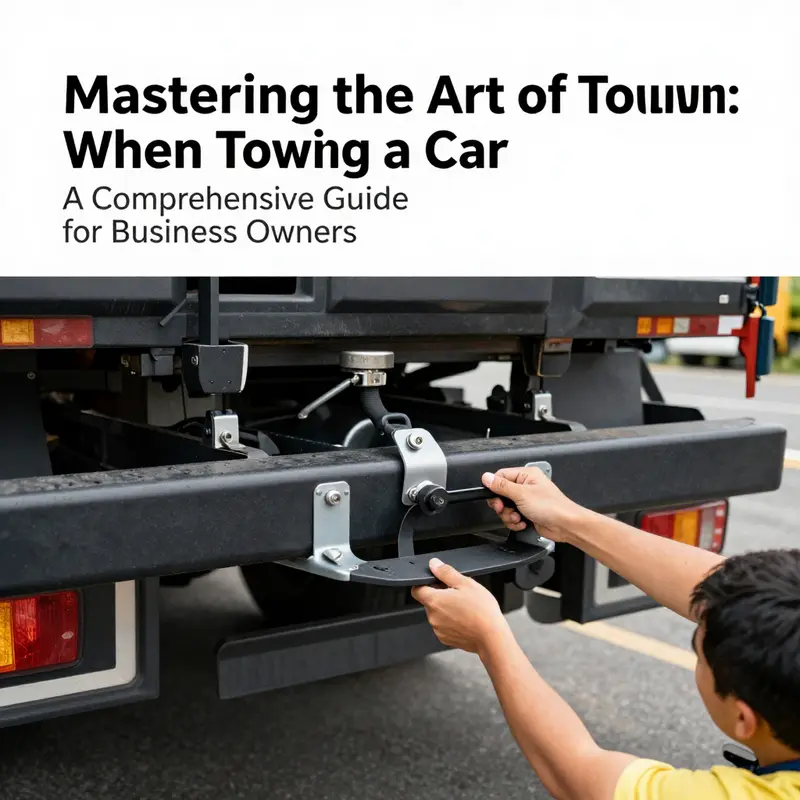
Connecting the towing gear is the moment when two vehicles become a single system, and it demands deliberate preparation rather than a quick, last-minute hookup. The choice of attachment shapes how smoothly the rest of the operation unfolds. A pickup can safely tow a car only when the equipment matches the weight, the drivetrain, and the towing points of the towed vehicle. Start by confirming the towing capacity of the truck and the curb weight of the car being towed. If the towed vehicle is near the limit of what the truck can handle, or if it uses all-wheel drive, you should rethink the setup to minimize stress on the drivetrain. The decision between a rigid tow bar, a tow dolly, a wheel-lift system, or a flatbed will guide every subsequent step. For front-wheel-drive cars, a dolly can keep the front wheels off the ground; for rear-wheel-drive vehicles, a wheel-lift may reduce drivetrain load; for the most sensitive or long-distance moves, a flatbed remains the gold standard. This early choice protects both vehicles and makes the actual connection simpler and safer.
Selecting the right equipment means weighing several factors together rather than relying on a single rule. Any attachment should carry the manufacturer’s rated capacity and be appropriate for the towed car’s setup. A rigid tow bar offers a direct connection that transfers control cleanly to the truck, but it restricts steering and can feel less forgiving on rough roads. A tow dolly keeps the front wheels lifted and free to rotate, which helps preserve the transmission in front-wheel-drive cars while still allowing modest steering. A wheel-lift system supports either the front or rear wheels depending on configuration and can reduce stress on the drivetrain by keeping one axle off the ground. A flatbed provides maximum protection for modern, sensitive transmissions and complex drivetrains, and it eliminates many of the mechanical risks associated with other methods. Above all, ensure that the tow attachment points on the towed car are reinforced frame points or manufacturer-approved locations designed for towing. When dealing with automatic transmissions, neutral and the release of the parking brake are non-negotiable steps, and many manufacturers require particular precautions or limits on distance and speed. With manual transmissions, neutral gear and free-rolling wheels are essential, but you still need to respect the vehicle’s manual guidance and any guidance in the owner’s manual.
The setup phase blends practical handling with basic physics. Begin by positioning the towed vehicle so its wheels align with the chosen equipment. On a dolly, the front wheels must sit squarely on the dolly deck and be strapped with even, tight tension so they cannot move. On a wheel-lift system, position the vehicle so the lift arms cradle the wheels securely; straps or chains must be anchored to solid, designated lift points and tightened in a way that prevents movement without stressing the undercarriage. Once the towed car is secured, attach the towing device to the truck’s hitch. If you’re using a tow bar, insert the pins fully and lock them; if you’re employing a dolly or wheel-lift, connect the coupler to the hitch and secure safety chains with a cross pattern beneath the hitch. Double-check every locking pin, bolt, and safety clip. The goal is to eliminate any slack while avoiding overtightening that could warp brackets or crush cables. A careful test pull, a few inches at a time, should confirm that the system tracks together without binding or misalignment. Any unusual wobble or contact with the vehicle’s suspension or exhaust warrants a halt and a recheck.
Attaching the towed vehicle to the tow system demands attention to the car’s designated tow points and to how the other car will respond to the combined mass. The towed vehicle’s manufacturer usually marks reinforced frame points or hitch locations; use the correct straps, chains, or alignment hardware, avoiding contact with moving parts or hot exhaust components. If a dolly is used, ensure the front wheels remain on the dolly and that the rear wheels are free to roll. If a wheel-lift setup is used, verify that both ends of the vehicle are secured and that the lift arms do not press on delicate components. After the mechanical connections are secure, connect the electrical signals for brake lights and turn signals. Depending on the setup, you may rely on the towed car’s own lighting system, a universal harness, or a separate battery-powered unit. Running a quick signal check in a safe area helps confirm that the towed car communicates properly with the tow vehicle’s lighting system.
Communication between drivers is essential once the physical connections are complete. Establish simple cues that both drivers can see and respond to, and keep the pace slow enough to respond to any shifting weight as the system tightens and settles. Maintain a generous following distance and use mirrors and, if necessary, a spotter to monitor the towed car’s movements. Avoid sudden starts, abrupt braking, or sharp turns, since even small jerks can set off a chain reaction in the linked system. If you notice any shift in alignment, looseness in the connections, or unusual noises, stop and inspect before proceeding. The objective is steady progression with full situational awareness, recognizing that the additional length and weight of the towed load demands extra caution.
If circumstances dictate professional intervention, a nearby towing service can provide a safer alternative. For readers seeking a nearby option, consider tow-truck-service-washington-dc. For broader, in-depth guidance on the mechanics of towing, you can consult the external resource at https://www.carinterior.com/how-to-tow-a-car-with-a-pickup-truck-a-practical-guide/.
Final thoughts
Mastering the process of towing a car with a truck is vital for business owners. By understanding the importance of thorough preparations, selecting appropriate equipment, and ensuring secure connections, you can minimize the risks associated with towing. This comprehension not only protects your investments but also enhances your service quality. Embracing these best practices will lead to increased operational efficiency, greater customer satisfaction, and a safer trajectory for your towing operations.