
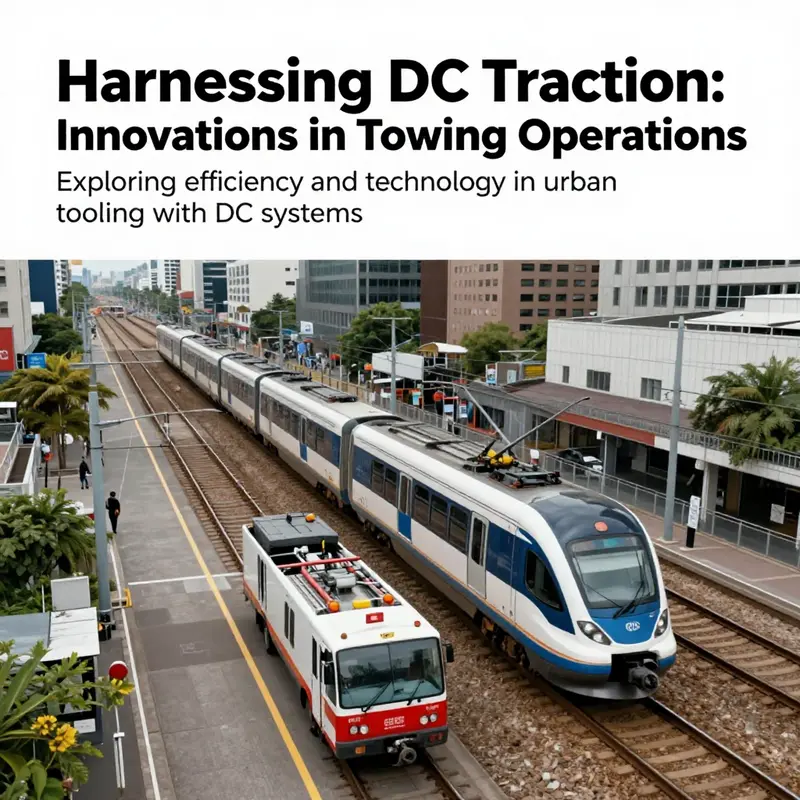
As urban transportation systems evolve, the significance of efficient towing operations powered by DC traction systems becomes paramount. Understanding the interplay of technology, energy efficiency, and operational strategies in this context not only enhances service reliability but also aids business owners in making informed decisions. This article delves into three pivotal areas: the mechanics of DC traction in urban rail systems, energy efficiency strategies for towing vehicles, and recent technological advancements that redefine towing operations. By examining these facets, business owners can better navigate the complexities of modern towing in urban transport.
DC Traction in Motion: Navigating Energy, Safety, and Towing Operations in Urban Rail Systems
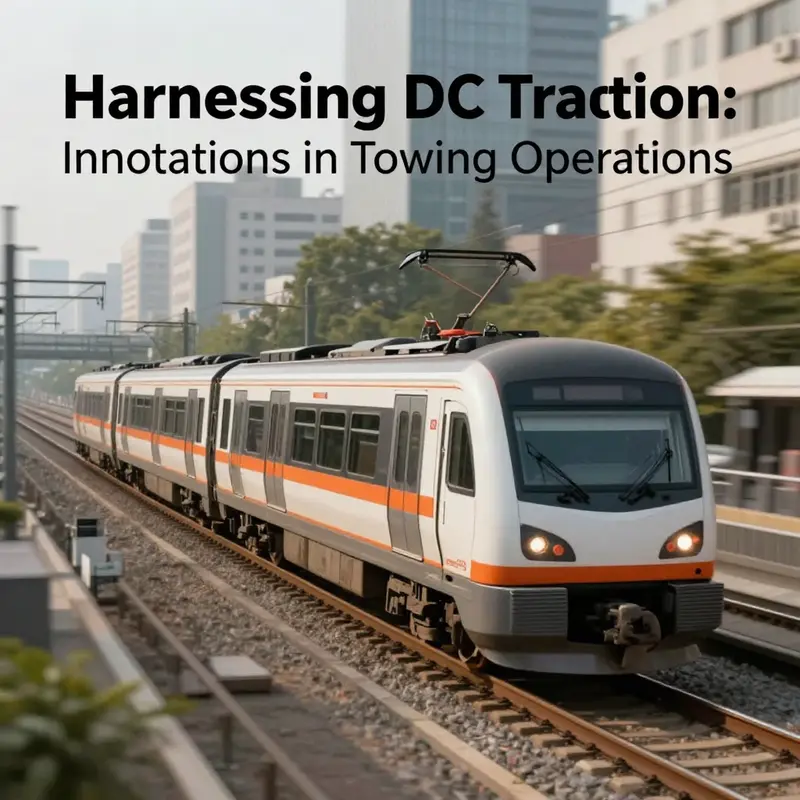
DC traction is more than a grid delivering power to moving trains; it is the orchestration of energy, control, and reliability that keeps urban rail networks humming through dense city environments. In these systems, direct current drives propulsion, while the surrounding network—substations, feeders, and catenaries—unfolds the choreography of voltage, current, and protective discipline. Traction power typically ranges from six to fifteen hundred volts DC, a spectrum chosen to balance equipment cost, arc risk, and energy efficiency. Yet the real test is not merely delivering power to a wheel rotor; it is managing the transient realities of dense traffic, variable loads, and the inevitable faults that appear as aging insulation, weather, or unforeseen demand spikes. In this environment, the relationship between traction and towing operations becomes a study in resilience. When a car or a set must be moved for routine maintenance or for emergency response, the system must accommodate moveable loads without destabilizing the grid or compromising passenger safety. Coasting, that period when propulsion is paused and the train glides under its own momentum, represents a quiet but powerful lever for energy savings. It turns regenerative potential into practical savings by reducing the energy drawn from the grid during accelerations and by smoothing the cadence of power demand across a busy line. In the best systems, coasting is not a passive drift but a calculated phase in a broader energy management strategy that respects the instant needs of service while capturing energy that would otherwise be wasted.
The efficiency of DC traction hinges on precise power distribution and vigilant voltage regulation. Feeder infrastructure must handle rapid load fluctuations as trains accelerate, decelerate, or steady themselves along a long stretch of track. Protection against faults—short circuits, insulation failures, ground faults—must be rapid and reliable to prevent cascading outages. Modern urban rails deploy sophisticated protection schemes that not only isolate faults but also maintain continuity of service whenever possible. These schemes rely on clear system architecture: a hierarchy of feeders, tie points, and sectionalizing devices configured to limit the impact of any single fault. The theoretical models that guide these protections establish thresholds for insulation performance and fault clearance times. They translate into actionable maintenance windows and predictive replacement cycles, ensuring that critical DC cables maintain their integrity under repetitive stress from trains and ambient conditions. This is where the interplay of theory and practice becomes tangible for riders and operators alike.
Reliability and safety are not separate goals but convergent threads in the DC traction narrative. Online monitoring for cable insulation, particularly within dense urban corridors, has moved from a challenging ideal to a practical necessity. Non-invasive techniques allow engineers to sniff out insulation degradation without tearing up street interfaces or reworking tunnel linings. The ability to monitor insulation in real time reduces the likelihood of service disruptions and provides a clearer radar for maintenance planning. In some implementations, this monitoring feeds into a digital picture of the network’s health, with thresholds that trigger targeted interventions before faults become outages. The theoretical underpinnings—models that define degradation thresholds and prediction horizons—translate into concrete maintenance calendars and reduced risk for passengers and staff. The result is a safer, more predictable network where the risk of surprises is lowered and the cost of downtime remains controlled.
Energy efficiency in urban DC traction has evolved through two parallel streams: smarter control of traction and braking, and the integration of storage technologies that capture regenerative energy. Stationary ultracapacitors or similar energy storage solutions have begun to occupy critical nodes in the traction ecosystem. When a train brakes, energy that would otherwise dissipate as heat in resistor banks can be captured, stored briefly, and released during next-stage acceleration or peak demand periods. This approach lightens the load on substations, improves the smoothness of service, and reduces the network’s peak power draw. The practical gains are non-trivial in busy networks where every kilowatt matters to both energy bills and the reliability of the supply. At the same time, flexible DC traction architectures are increasingly designed to accommodate renewables and energy storage as cities push toward greener transit futures. The vision here is a network that can absorb variability in generation, store it when available, and feed it back into service when demand spikes—an orchestration that keeps trains moving while easing the stress on electrical infrastructure.
Operational modes in DC traction are thus a balance among propulsion needs, protection logic, and energy strategy. The protection schemes must address abnormal conditions such as overloads or ground faults with a care that preserves service continuity while safeguarding personnel and equipment. This means robust monitoring, fast fault isolation, and intelligent fault-management strategies that can re-route power or isolate a fault segment without a total system shutdown. As cities expand and networks densify, the value of flexible traction increases. Systems that can adjust their feeder configurations, impedance control, and energy storage scheduling to accommodate changing loads and the addition of renewable sources stand to gain both reliability and efficiency. Yet even as automation and digitalization advance, the human element remains essential. Operators interpret warning signals, coordinate with maintenance teams, and make decisions in the field when automatic protections indicate potential issues. The result is a layered defense: automatic protection, predictive maintenance, and skilled oversight that together keep urban rail moving with confidence.
In this landscape, towing operations—whether moving a disabled train to a depot for service or repositioning a car from a yard to an active platform—are not isolated events but part of a continuous choreography that must respect power quality and energy balance. The ability to tow a car within a network that is simultaneously delivering propulsion and absorbing energy highlights the need for integrated planning. In the best practice, the towing process aligns with the network’s energy profile so that the move minimizes disturbances to voltage levels and does not compromise regenerative flows. Practitioners expect a system where even emergency repositioning respects the overarching energy discipline of DC traction. For readers seeking practical implementation in the field, one may consider established protocols and services that specialize in rapid, safe loco-motive or car repositioning within urban corridors—an important, though often overlooked, component of dependable service.
From a practical perspective, the urban rail operator balances quick response with long-term sustainability. The decision to rely on coasting during certain service windows, or to engage regenerative storage during peak periods, is not only technical but also financial, affecting energy costs, maintenance scheduling, and passenger experience. The coupling of coasting strategies with storage technologies and robust protection mechanisms creates a system that can absorb disturbances, recover energy, and spread the load across the network. When failures occur and towing becomes necessary, the incident is managed within a framework designed to minimize risk and restore normal service as quickly as possible. In those moments, the everyday rhythm of the city benefits from the quiet efficiency of a well-tuned DC traction system, where energy flows are harnessed, faults are anticipated, and maintenance is informed by real-time insight.
For readers who want a more hands-on sense of how this translates to practice in the field, a practical reference on DC traction and towing services can be useful to bridge theory with on-site operations. DC towing service is a concise entry point to professional support for moving equipment within the urban rail context, offering a lane for rapid, safe repositioning when needed. This connection underscores the broader point: energy-aware traction, safety-conscious design, and responsive towing capability together shape the reliability and sustainability of modern city transit. As cities grow and networks evolve, the integrated approach to DC traction, energy storage, fault protection, and towing operations will define how efficiently urban rails move people and goods through the labyrinth of urban life.
External resource: Electrical Safety of DC Urban Rail Traction Systems – CORE: https://core.ac.uk/download/pdf/28439788.pdf
Lean Power on DC Rails: Energy-Efficient Towing Operations in Direct-Current Traction
The phrase ana towing dc hints at a niche yet vital area within urban rail and heavy urban traction: direct-current (DC) traction systems performing towing or heavy propulsion tasks under tight energy constraints. In cities that rely on DC power for rapid transit or light rail, the tug of efficiency is constant. A chapter that bridges theory and practice must acknowledge the drag of heavy loads, the cadence of schedule-driven operations, and the subtleties of clean power delivery. At its core, energy efficiency in DC towing is not simply a matter of stronger motors or larger batteries; it is about orchestrating propulsion, coasting, and braking in a way that minimizes energy waste while preserving reliability and punctuality. In that sense, the topic sits at the intersection of traction technology, energy management, and operational discipline. The broader literature often treats electric and hybrid vehicles in general terms, while smart-automation narratives discuss predictive driving and cooperative control. Yet the direct-to-rail context—where a towing vehicle must move substantial mass along city corridors or metro lines using a DC power system—demands a tailored synthesis. This chapter explores a framework for energy efficiency that respects the realities of DC traction, the physics of rolling stock, and the constraints of urban schedules.
The research landscape confirms a gap: there is no well-defined, published set of energy-saving strategies that are exclusively tailored for DC towing vehicles operating in urban rail environments. What exists are broad concepts of energy management for electric and hybrid platforms, plus observations on connected and automated vehicle (CAV) technologies that promise modest gains when anticipative driving is deployed. Those gains, typically framed around passenger cars or freight trucks, do not automatically translate to the arena of DC traction where weight, track grade, adhesion, regenerative potential, and the stiffness of power supply shape every decision. The literature also discusses battery charging efficiency and infrastructure performance, but again, these are peripheral to the operational envelope of towing in a DC traction system. From that vantage point, the most valuable contribution of current work is not a ready-made recipe but a diagnostic: it clarifies where a dedicated, mission-focused study is needed. A towing vehicle that pulls carriages, expresses southern grades, or traverses mixed-traffic corridors must negotiate a unique energy map that calls for specialized control strategies and system integration.
A practical way to approach this challenge is to forge a holistic energy-management philosophy that combines optimization of propulsion, coasting, and braking with a realistic assessment of the traction supply chain. On the propulsion side, the objective is to deliver the required traction force with the minimum instantaneous energy draw, while maintaining traction without excessive slip on often slippery rails. In heavy towing scenarios, the motor torque profile should be shaped not only by the top speed target but also by the instantaneous mass. A small, disciplined margin of torque reserve can cushion grade changes and avoid energy-wasting corrections later in a climb or ramp. The control system should prefer the smooth use of power and seek opportunities to minimize the difference between desired speed and actual speed through gentle, staged acceleration rather than abrupt bursts that ripple through the electrical system. This aligns with the intuitive practice of “drive smooth, save energy,” but in the DC traction setting, smoothness must be framed in terms of current draw, voltage headroom, and instantaneous line losses.
Coasting presents another opportunity to trim energy use, but it must be deployed with caution. In a DC traction network, coasting is not a free lunch; it interacts with the overhead supply, the resistance of the line, and the momentum of the towed load. The idea is not to switch off power at every opportunity but to exploit natural deceleration when it aligns with the timetable and safety margins. A coasting strategy should be mission-aware: coasting during predictable speed reductions on a grade, or when recovery energy can be recaptured later via regenerative braking, can shave kilowatt-hours while preserving schedule integrity. The physics of inertia favors modest energy savings when the mass is substantial, but the payoff rises when coasting periods are synchronized with controlled braking events that enable energy capture back into the system or the energy store.
Regenerative braking, a cornerstone of modern electric traction, deserves particular emphasis in the context of DC towing. Tugging a heavy train demands precise control of deceleration. If the system can reclaim energy during downhill stretches or gentle slows, those credits accrue to the overall energy budget. The efficiency of regeneration, however, depends on converter design, storage or grid feedback capabilities, and the timing of deceleration cycles. In some DC networks, opportunities to recover energy are limited by the need to keep the train within safe speed envelopes or by the lack of storage capacity on the vehicle. Consequently, the control strategy must weigh the marginal gain from regeneration against the risk of delaying arrival or compromising passenger service. A refined approach integrates regenerative potential into the outer loop of speed planning, so that the inner loop has ready access to a calibrated energy budget rather than chasing demand after the fact.
Automation and prediction amplify the potential for savings, but they require careful tailoring. The literature on CAVs points to energy savings in the 3–20% range when anticipation guides driving choices. For DC towing, this translates to more than raw mileage improvement; it becomes a question of harmonizing the motion plan with the rail network’s constraints. A predictive controller can adjust speed targets to accommodate slowdowns, holding patterns, track conditions, and grade changes, thereby reducing abrupt power pulses. Yet the towing regime introduces weight, inertia, and adhesion constraints that demand robust fault tolerance and fail-safe operation. Any automation strategy must preserve safe braking distances, lock-in predictable energy profiles, and avoid destabilizing oscillations in power supply when the line or substation experiences transient fluctuations.
From a systems perspective, energy efficiency in DC towing cannot ignore the power-network side. The efficiency of the DC traction supply, including substation rectifiers, feeder lines, and the voltage drop along the catenary or third-rail, matters. Losses in cables and converters accumulate, especially under high-load towing conditions. Therefore, a holistic approach examines both vehicle-level strategies and network-level characteristics. The goal is not to squeeze marginal gains from one domain while ignoring the other; rather, it is to align vehicle propulsion, coasting, and regeneration with the behavior of the DC supply. That alignment can be achieved through coordinated control architectures that harmonize energy flow with traction demands and track topology.
In practice, operators seeking specialized DC towing support can consult the DC towing service page. This reference reminds readers that physical deployment and service readiness are part of the energy story. The chapter’s focus remains on the principles and strategies that can guide future research and deployment. It is a call for targeted studies that quantify savings under realistic urban towing scenarios, accounting for variable mass, track grades, environmental conditions, and the constraints of DC infrastructure. The aim is not to replace engineering judgment with a formula but to equip it with a coherent framework: a framework that treats propulsion efficiency, coasting discipline, regeneration potential, and predictive automation as interdependent levers, not isolated features. In that sense, the energy-efficiency challenge in DC towing becomes a design problem as much as an operation problem, inviting engineers to tailor control laws to the specifics of the traction scheme, the load profile, and the urban mission.
For readers seeking broader context on how smart transportation and energy efficiency are shaping policy and practice, the World Bank’s World Development Report 2016 offers a valuable lens. It discusses digital dividends, intelligent transport systems, and energy-conscious routing and operation across urban networks. While not targeting DC towing vehicles in isolation, the report helps anchor the discussion within a global effort to optimize mobility and electricity use together. See https://www.worldbank.org/en/publication/wdr2016 for further reading.
Modern DC Traction and the New Era of Towing: Control, Efficiency, and Urban Integration
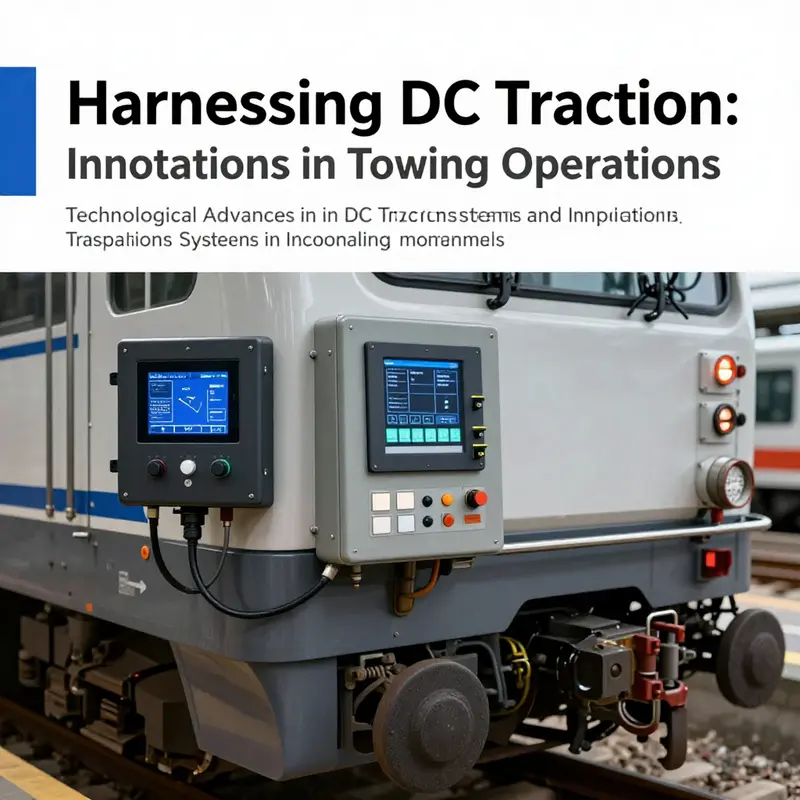
Modern DC traction systems are reshaping what towing can achieve in urban and industrial settings. Advances in control electronics, power conversion, and materials science have tightened the link between traction power and towing performance. The result is smoother starts, stronger low-speed torque, and more efficient recovery of braking energy. These changes matter when hauling heavy loads, managing frequent stops, or operating in constrained urban corridors.
Microprocessor-based relays and programmable logic controllers have moved protection and automation from hardwired, static systems into software-defined platforms. This shift allows traction substations and locomotives to detect faults faster, isolate problems with surgical precision, and adapt control strategies in real time. For towing operations, faster fault detection reduces downtime. It protects traction motors and driveline components. It also enables more aggressive energy management strategies without risking safety or reliability.
Power electronics improvements play a central role. Modern converters deliver cleaner DC rails with lower ripple and higher efficiency. They allow traction motors to be controlled with finer torque resolution, which is critical when towing heavy equipment or coupled consists. Precise torque control reduces shock loads during acceleration and deceleration. That reduces mechanical wear and improves ride quality for both freight and passenger stock. In urban networks, where trains frequently accelerate from stations, the reduction in mechanical stress translates into lower maintenance costs and longer component life.
Regenerative braking is another transformative capability. Instead of wasting kinetic energy as heat during braking, contemporary DC traction setups can recover a significant portion of that energy and either reuse it on the network or store it locally. For towing, this means climbs followed by descents no longer represent pure energy losses. Energy recovered during descent can assist subsequent towing starts or be fed back to the grid if infrastructure allows. The net effect is a measurable reduction in energy consumption and fuel or electricity costs over time.
Superconducting and cryogenic research promises to amplify these gains. By dramatically reducing transmission losses inside substations and conductors, superconducting DC systems shrink footprints and improve thermal and electrical efficiency. That matters in dense urban areas with limited space for traction infrastructure. Compact substations mean fewer site constraints and lower visual impact. For towing operations that interact with urban transit or shared corridors, a smaller infrastructure footprint simplifies planning and allows closer integration with other urban systems. Early feasibility studies indicate that superconducting approaches could change how and where traction power is deployed. For a technical perspective, see the feasibility study on superconducting DC railway traction substations: https://hal.archives-ouvertes.fr/hal-04823155
Control software and data analytics are closing the loop between traction hardware and operational practice. Machine learning algorithms can predict component degradation, optimize acceleration profiles, and recommend coasting windows that minimize energy use without degrading schedule adherence. In practice, this means operators can adopt strategies like planned coasting to exploit momentum, instead of always running under power. When towing heavy loads over varied terrain, these predictive tools can schedule power-intensive segments and reserve traction capability for critical times. The result is a smarter, adaptive approach to hauling that aligns energy use with operational needs.
Integration with the wider grid and renewables is also changing towing economics. DC traction systems can be designed to interact seamlessly with energy storage, photovoltaic arrays, or wind generation. Stored energy can be dispatched for high-demand towing operations, reducing peak draw from the grid. Regenerative braking can replenish local storage instead of returning energy to a congested utility. For fleet operators and transit authorities, this coupling can unlock lower operating costs and a smaller carbon footprint. It also opens the door for towing tasks to be scheduled when renewable supply is abundant.
From a safety and reliability standpoint, the move to distributed monitoring and remote diagnostics improves response time. Automated fault isolation keeps traction power where it is needed and limits the scope of outages. For towing operations, this reliability is crucial. A stranded heavy unit can cause cascading delays and safety risks. Smarter protection schemes ensure that single-point failures do not compromise entire lines or yards.
Operationally, modern DC traction enables more nuanced hauling strategies. Instead of one-size-fits-all power settings, operators can apply gradient-aware torque profiles. These profiles account for train mass, wheel-rail adhesion, and track geometry. The result is optimized adhesion management and fewer wheel slips. On steep grades, controlled torque reduces the chance of wheel burn and reduces the need for aggressive mechanical braking. That improves safety and reduces component replacements.
Practical implications extend to urban towing services that interact with rail or light rail corridors. Coordination between road towing operations and rail traction systems can be improved with clearer standards for energy sharing and emergency response. For services focused on the District and surrounding areas, understanding these technical trends is essential. For local towing context and services, see this resource on DC towing service: DC towing service.
Taken together, these technological trends convert DC traction from a simple power supply into a flexible platform. It supports advanced towing strategies, reduces lifecycle costs, and positions traction systems to work with renewable energy and smart grids. Continued investment in power electronics, superconducting research, and control software will shape how towing operations are planned and executed in urban centers. As these advances are deployed at scale, towing will become not just more powerful, but more predictable, safer, and far more energy efficient.
Final thoughts
Understanding the intricacies of DC traction and its application in urban rail towing operations is vital for optimizing efficiency and enhancing service reliability. With energy-efficient strategies and continual technological improvements, business owners can leverage this knowledge to implement better practices within their operations. By embracing these advancements, stakeholders can not only reduce costs but also contribute to a more sustainable urban transport infrastructure, ensuring a competitive edge in the industry.