
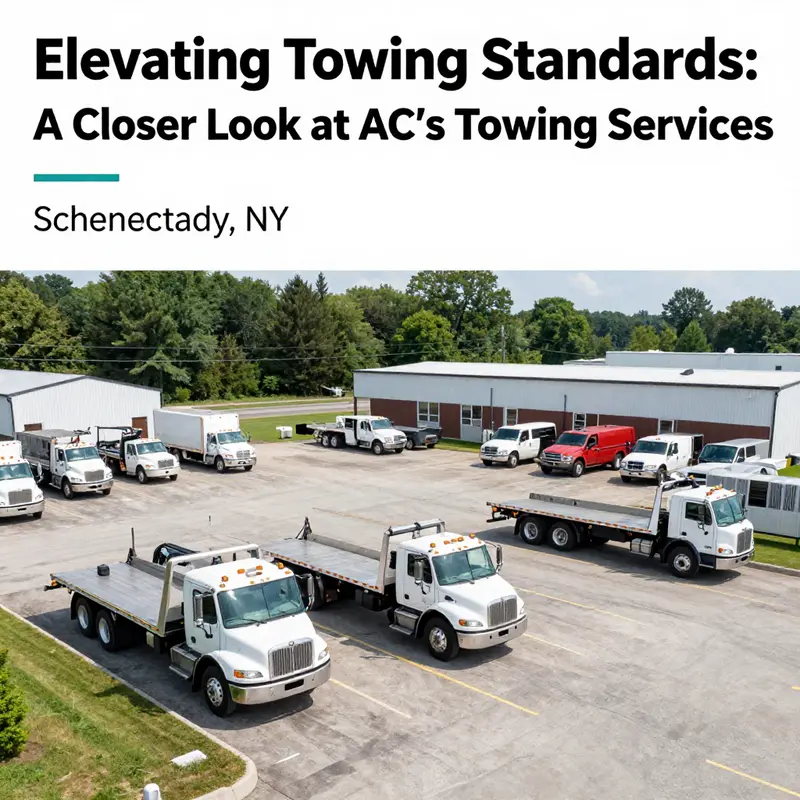
In the competitive landscape of towing services, AC’s Towing and Recovery stands out as a benchmark of quality and reliability. Located in Schenectady, NY, this company not only provides essential towing and recovery services but also embodies operational excellence and customer trust. This exploration into AC’s Towing reveals not only the comprehensive services they offer but also their commitment to high operational standards and the seamless integration of insurance partnerships. Through understanding these facets, business owners and vehicle operators alike can appreciate the vital role that AC’s Towing plays in ensuring safety and efficiency in roadside assistance.
Beyond the Tow Truck: How ACs Towing Shapes Safe Strands of Roadside Trust
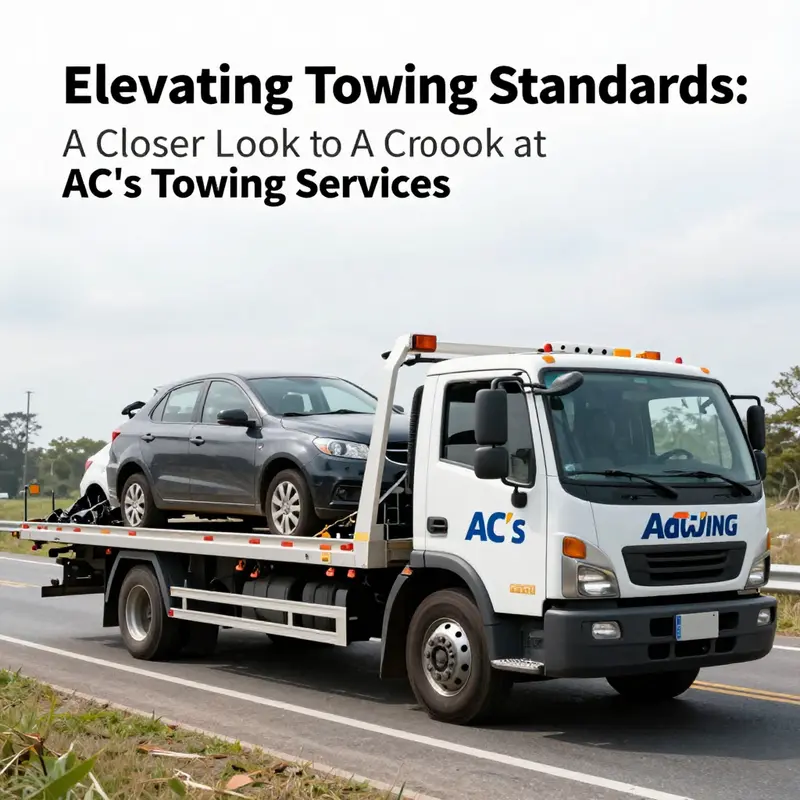
When a vehicle grinds to a halt on a busy street, in a snowstorm, or after a fender-bender, the name that surfaces in a driver’s mind is often a local, reliable partner that can be counted on in the span of a blinking light. In the world of towing and recovery, trust is built not just on speed but on competence, equipment, and the steadiness of a crew that has seen every kind of roadside scenario. The shorthand “acs towing” evokes more than a single company; it points to a network of local operators who anchor the rough edges of road life with accessible, professional help. Central to this narrative is the case of AC’s Towing and Recovery in Schenectady, New York, a service that embodies the core values driving contemporary towing work: trained technicians, dependable equipment, legitimate credentials, and a promise to respond when a driver needs help the most. A precise address—1064 Catalyn St, Schenectady, NY—sits in the municipal map as a reminder that towing is a distinctly local service. The relevance of such a shop lies not only in its ability to move a car from one curb to another but in the quality of the interaction between technician and driver at a vulnerable moment. ASE certification, cited as a mark of professional rigor in the field, signals that the people behind the tow are well-trained, upholding industry standards that have evolved to meet the changing demands of modern vehicles, including hybrids and increasingly complex drivetrains. When a driver calls for help, they are not just requesting a tow; they are asking for expertise that can assess a problem on the roadside, determine whether a vehicle can be safely moved with the right equipment, and execute a plan that preserves the vehicle’s integrity. The ASE badge is more than a credential; it is a promise that the technician has passed a battery of tests, engaged in ongoing education, and committed to a professional ethic that values safety as much as service speed. In Schenectady—and in similar towns across the United States—this certification translates into practical advantages: meticulous damage assessment, careful hook-up procedures, and a set of procedures that minimize the risk of collateral damage during transport. It is not an abstract credential but a daily practice that reassures drivers worried about who will handle their car at a moment of need. The operational reality of AC’s Towing and Recovery reflects a broader industry standard: the vehicle may be immobilized, but the service provider’s liability and readiness are front and center. That readiness is often embodied in a fleet equipped for a range of scenarios. Towing is not a one-size-fits-all motion; it requires specialized gear, from wheel-lift tow trucks to flatbeds capable of carrying vehicles with low ground clearance, depending on the vehicle type and the scene. The provision of roadside assistance in addition to towing further enhances the value of a local operator. Roadside tasks—jump-starts, fuel delivery, tire changes, and lockout service—are integral to the tapestry of emergency response. They respond to the immediate needs of drivers who may be stranded with limited options, removing the stigma of a breakdown and restoring momentum with minimal disruption. In this light, a local towing company emerges not as a transient service but as a steady-service system woven into the community’s daily mobility. Insurance is another crucial thread. The ability to accept all insurance companies means a driver’s insurer can guide the customer through the claims process with less friction. This alignment between towing professionals and insurance networks helps reduce the roadblocks that often accompany accidents or breakdowns. The practical consequence is a smoother, more predictable experience for the person in distress. The geographic reach of these services, while anchored by a singular shop in Schenectady, echoes across regions through a network of connected providers. The value proposition extends beyond the physical act of moving a vehicle; it encompasses the trust built through promptness, transparency, and a respectful, no-surprises approach to pricing and communication. Prompt response times, a hallmark of customer service focus in many reputable towing outfits, transform a stressful moment into a process that feels manageable. In a world where time on the roadside can quickly escalate anxiety, knowing that help is on the way lightens the burden even before the tow begins. This is where the narrative of acs towing resonates with drivers in all corners of the country: a dependable partner that can be counted on day or night, in sun or snow. An illustration of this ethos can be found by looking at other regional operators that share the same commitment to service excellence. For readers exploring a broader regional landscape, a related resource available online presents a similar model of responsive, 24/7 roadside support. To explore a representative example of a local provider with a similar service philosophy, you can visit the Arlington-area profile of a comparable towing team. Their emphasis on customer service, 24/7 availability, and straightforward contact points mirrors the values described here and provides a useful point of reference for anyone building an itinerary of dependable roadside partners. Arlington towing. This interconnection among local shops illustrates how the core competencies of towing—certified technicians, properly equipped fleets, insurance compatibility, and a customer-centered mindset—cohere into a reliable safety net for drivers navigating the unpredictable terrain of the road. While the Schenectady shop grounds the discussion in a concrete, real-world example, the principles translate across markets, reinforcing the idea that the essence of acs towing lies in professional reliability rather than geographic branding alone. In the end, drivers seeking help are not seeking a name but a guarantee that the people who arrive will be prepared, respectful, and capable of stabilizing a crisis in the moment. The local shop’s ASE credentials, the readiness of its equipment, and its willingness to collaborate with insurers all converge to forge a relationship of trust that turns a roadside emergency into a recoverable incident, with the car safely sheltered for transport and repair. For readers, this is a reminder that the true value of towing services rests on the consistency of the human element—the technician who communicates clearly, the dispatcher who coordinates a precise arrival window, and the crew that treats every vehicle as if it were their own. The next chapter can extend this exploration by looking at how these local practices scale to broader networks, and how drivers can select a provider who not only reaches them quickly but also aligns with their expectations for care, transparency, and accountability. External resource: http://acstowingservices.com
Tow Lines, Safety Lines: How ACs Towing and Recovery Upholds Standards Across Schenectady
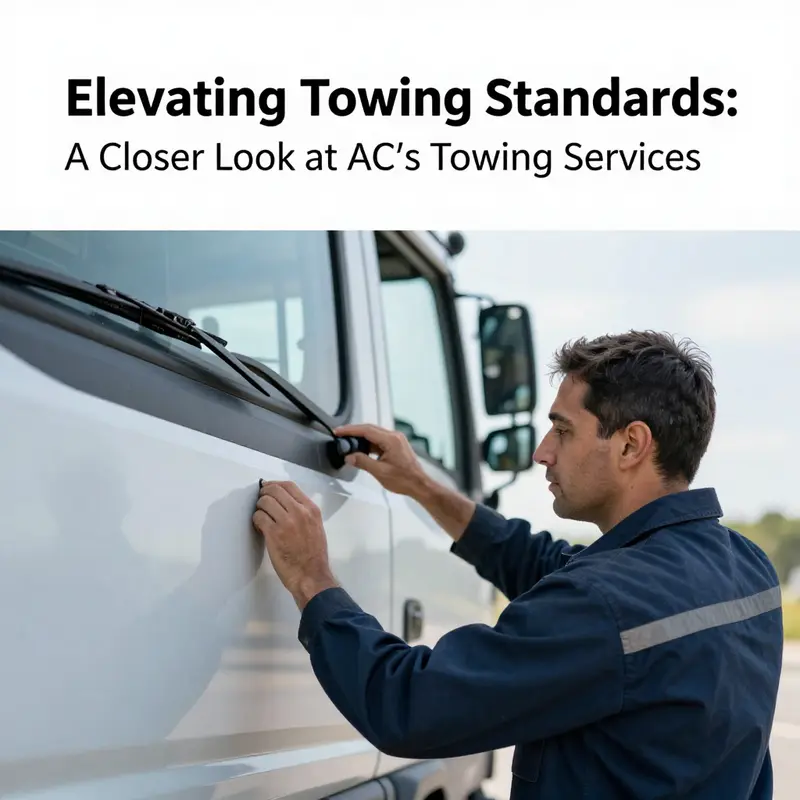
When the road throws a curveball at a driver, the first face many motorists encounter is the tow operator. Behind the cab, the chain of decisions that shapes a safe, efficient rescue is built on a framework of operational standards. In Schenectady, ACs Towing and Recovery embodies a model where technical competence, vendor coordination, and a disciplined safety culture come together to meet both urgent needs and longer-term responsibilities to the community. The backbone of this model is the recognition that towing is more than a quick pull or a jump-start; it is a disciplined process that starts long before a call comes in and ends only after the recovered vehicle returns to stable service. ASE certification for technicians, noted in industry practice, signals a baseline of trained proficiency. It suggests a workforce that understands electrical systems, braking dynamics, and the interaction between vehicle mass and the limits of its securing devices. In a field where human and mechanical errors can cascade into collisions or injuries, this emphasis on credentialed expertise becomes a form of public safety, not merely professional pride. The local setting in Schenectady, with a shop front and a known address, also matters. The proximity of a trusted operator reduces downtime for stranded drivers and supports a reliable flow of traffic in surrounding roads and highways. ACs Towing and Recovery, located at 1064 Catalyn St, is more than a placeholder on a map; it represents a nexus where community needs and professional standards intersect in real time. The operational standards that guide this and similar outfits begin with equipment that is fit for purpose. Self-loader wrecker trucks, commonly deployed during roadside breakdowns and light commercial recoveries, are designed to minimize further vehicle damage while delivering the hauled asset to a repair facility. Standards governing these units emphasize controlled loading limits—often up to ten thousand pounds in urban and suburban contexts—and the strict practice of securing the load before moving. Operators are trained to avoid last-minute improvisation, because the consequences of a rushed hitch or an unbalanced strap can be felt in the cab and on the road ahead. Flatbed tow trucks, by contrast, shoulder even greater responsibility. They transport intact vehicles without wheel contact, an approach that demands precise weight distribution, accurate alignment, and careful anchoring. The hydraulics of the bed, the geometry of the ramps, and the condition of tie-down points all enter a single, coherent discipline: stability under motion. The standards here are not abstract; they translate into checks and habits—every strap examined for fray, every winch tested for smooth operation, every anchor point insulated from abrasion, every chain and hook inspected for signs of wear. In off-road or emergency scenarios, recovery systems using tow straps and recovery devices must meet material and performance specifications that balance elasticity with strength. The nylon or polyester webbing used for these applications behaves differently under load than metal hardware, and this elasticity helps to damp a sudden yank that could transfer shock to the victim vehicle. Yet the same resilience must not mask neglect. Operators know that a controlled pull, aligned with the vehicle’s center of gravity, is essential to prevent further damage. In these moments, the value of standardized procedures rises from a guideline to a moral imperative. Beyond the gear itself, the standards extend to the human element—the training, the decision-making framework, and the communication that threads through a successful recovery. Heavy-duty applications, sometimes spanning tens of tons, demand even more rigorous inspection of winches, cables, and hydraulic systems. In industrial settings, the margin for error shrinks, and the schedule tightens. The best operators treat maintenance as a routine duty rather than a reactive fix. The same mindset informs the coordination with local authorities, roadside safety protocols, and insurance requirements. A reputable operation maintains documentation: service records, inspection logs, and a traceable chain of custody for recovered vehicles. This documentation does more than protect the company; it supports accountability in a way that benefits customers, insurers, and the broader traveling public. The standards also shape the culture of the workforce. They cultivate a mindset that values caution over speed, precision over improvisation, and teamwork over lone-wolf performance. The operator’s role blends technical acumen with situational awareness: reading weather and traffic, choosing a staging area away from live lanes, and communicating clearly with the stranded motorist about expectations and safety steps during the tow. In this way, operational standards become an everyday narrative, a shared language that translates a potentially stressful moment into a controlled sequence of safe actions. Local practice often echoes national and international frameworks, references that guide equipment design, testing, and operator training. While the specifics may vary by jurisdiction, the underlying principle is consistent: the safest path is mapped by a disciplined approach to equipment, procedures, and people. For a resident or traveler who encounters ACs Towing and Recovery in Schenectady, the experience is shaped not only by the speed of response but by the confidence that the crew adheres to a robust standard set. This confidence stems from visible signs—well-maintained vehicles, methodical load-securing practices, and a calm, transparent communication style that explains what will happen and why. It also comes from tacit knowledge—the feel of a well-timed winch, the balance of a loaded flatbed, and the way a driver calibrates the approach to a vehicle that is already distressed. That is the living essence of standards in towing and recovery: not a static rulebook, but a continuous, human-centered discipline that evolves with technology, traffic patterns, and the needs of road users. If one looks beyond Schenectady, the recurrence of these principles across regions, from urban corridors to rural lanes, speaks to a shared industry commitment to safety and service. An operator who embraces these standards is not simply moving vehicles; they are preserving mobility, reducing risk, and sustaining trust in essential roadside assistance. For readers curious about broader practices and standards in the field, consider exploring a broader set of service models and safety protocols such as those outlined by national guidelines, which provide a framework for equipment performance and operator training. For a practical, connected example of how regional standards translate into everyday practice, see the DC-area service page linked here: towing-service-washington-dc. As the road remains open to countless journeys, the quiet rigor behind each tow remains a reminder that standards are not barriers but enablers of dependable help when disaster, delay, or detour disruptions strike. For authoritative guidance on towing and recovery standards, consult the National Highway Traffic Safety Administration’s overview of towing and recovery standards: https://www.nhtsa.gov/vehicle-towing-and-recovery-standards.
Tow Lines of Trust: Local Reliability, Credentialing, and Insurance Partnerships at AC’s Towing and Recovery
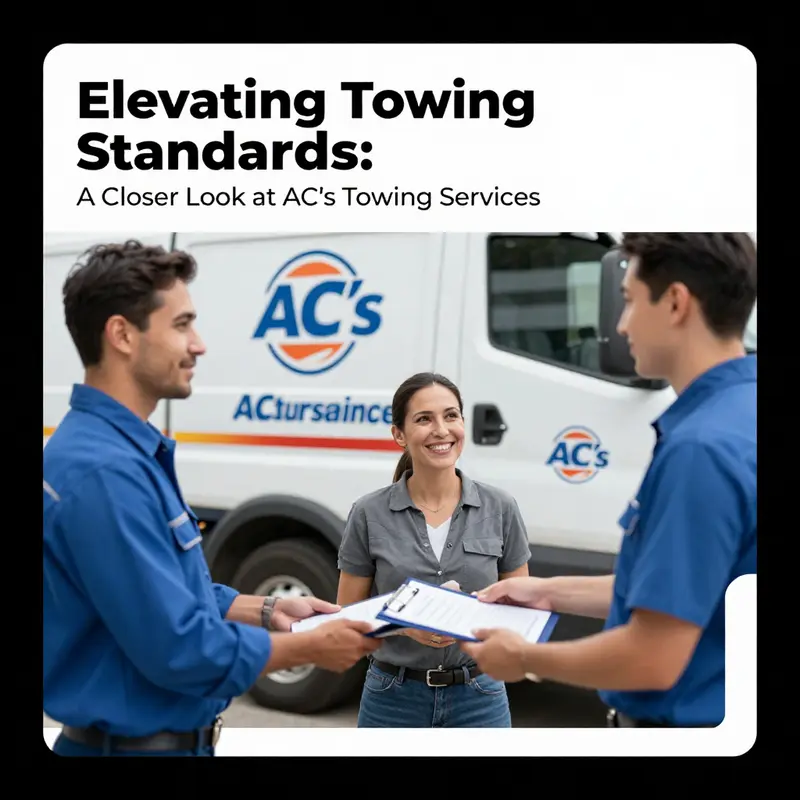
The moment a roadside crisis arises, trust becomes the critical connector between fear and resolution. For drivers in Schenectady, AC’s Towing and Recovery demonstrates that reliability manifests not only in fast arrival times but in practiced care and transparent communication. The business at 1064 Catalyn St is more than a storefront; it is a neighborhood resource that promises trained technicians, modern equipment, and a clear path from dispatch to repair. A driver may not know the mechanics of the tow, but they can expect safety, accuracy, and a calm, informative process every step of the way.\n\nCredentialing becomes a quiet but powerful signal. AC’s Towing and Recovery relies on ASE-certified technicians who carry more than a badge; ASE means they have met rigorous testing and ongoing education. This credentialing matters when the crew must rapidly diagnose a situation, assess risk, and choose the safest recovery method. The chain from scene to shop includes evaluating vehicle type, battery status, fuel considerations, and the possibility of hidden damage from a collision. When customers know the people who respond have earned recognized credentials, their confidence grows. They are not just hoping for a quick tow but choosing a partner committed to safety, clear standards, and steady performance.\n\nInsurance partnerships are a core reliability signal. A tow company that can verify coverage, obtain pre-authorization, and arrange direct-bill with multiple insurers reduces surprises and speeds claims. It signals fairness and transparency. In the Schenectady area, AC’s Towing and Recovery positions itself as a partner to drivers and to the broader insurance ecosystem. The ability to work with all insurers expands the safety net, ensuring the path to resolution stays predictable and customer-centered, from dispatch to delivery at the shop. Practical excellence includes transparent estimates and upfront communication about coverage and costs. A dependable operator helps drivers navigate out-of-pocket questions and ensures clear itemized quotes.\n\nBeyond credentials and insurance, the physical presence matters. Towing is not one-size-fits-all. On a busy Schenectady street, a wheel-lift or a flatbed may be required. Recovery operations demand careful planning, risk assessment, and precise execution. The team’s familiarity with local routes and hospitals can shorten response times and ease road disruption. The right gear—hoses, chains, winches, stabilizers—works only when paired with trained judgment. The result is a tow that protects the vehicle, the driver, and bystanders. A local operation that feels available at 2 a.m. or 2 p.m., in snow or rain, with safety, transparency, and steady communication through every phase.\n\nFinally, the story is collaborative: dispatch, on-road technicians, salvage and tow operators, and shop partners all reinforce one another. ASE credentials, insurer compatibility, and local readiness create a resilient chain that stays strong under pressure. When the vehicle reaches the repair shop, the driver recognizes that the journey began with a choice to call a provider who understands the road and the policy, and who sustains reliability long after the sirens fade.\n\n For practical contact, AC’s Towing and Recovery can be reached through the broader network via the Contact Towing Company page, or by visiting https://acex-towing.com/contact-towing-company/. External references such as local listings on MapQuest also help confirm the proximity and availability of service in Schenectady: https://www.mapquest.com/business/acs-towing-and-recovery-schenectady-ny
Final thoughts
AC’s Towing and Recovery is more than just a service provider; it represents a reliable partner for businesses and individuals needing roadside assistance. Through their commitment to operational excellence and trustworthy customer relations, AC’s Towing not only meets the needs of its clientele but also sets a standard within the towing industry in Schenectady, NY. For any business owner or vehicle operator, recognizing the significance of partnering with a dependable service like AC’s Towing can greatly enhance safety and operational efficiency on the road.