
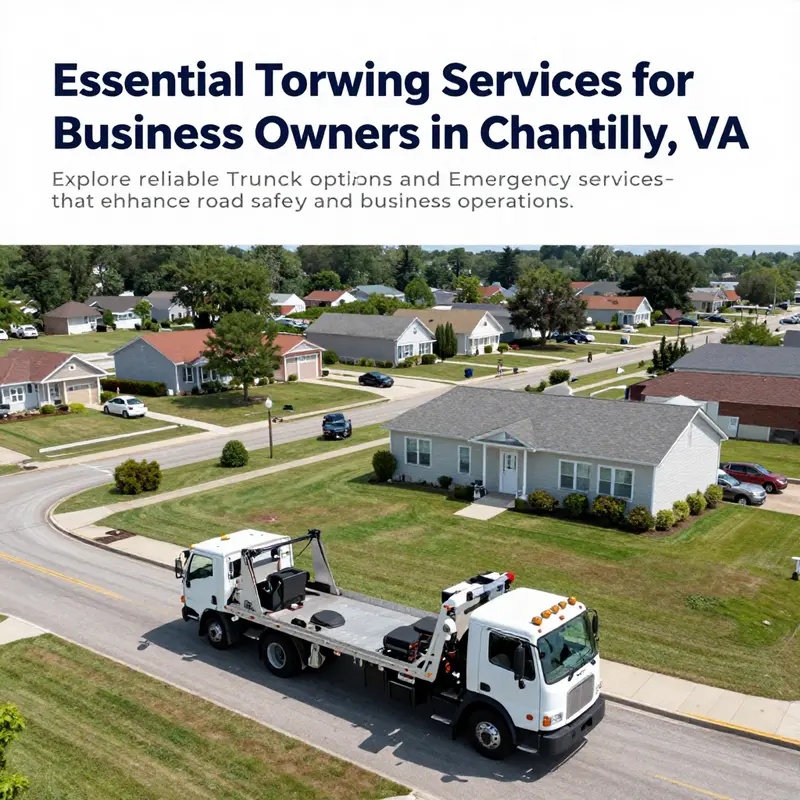
In the bustling environment of Chantilly, VA, effective towing services stand as a cornerstone for local businesses and the community. Reliable towing companies not only ensure road safety but also play a vital role in emergency responses and the maintenance of urban mobility. This article delves into the unique offerings of emergency towing services in Chantilly, VA, focusing on the needs of business owners who rely on these services to maintain operational efficiency and protect their assets. By examining the available towing options and their significance, we equip local business operators with the essential knowledge to navigate potential vehicular crises effectively.
Lifelines on the Asphalt: Emergency Tow Services in Chantilly, VA
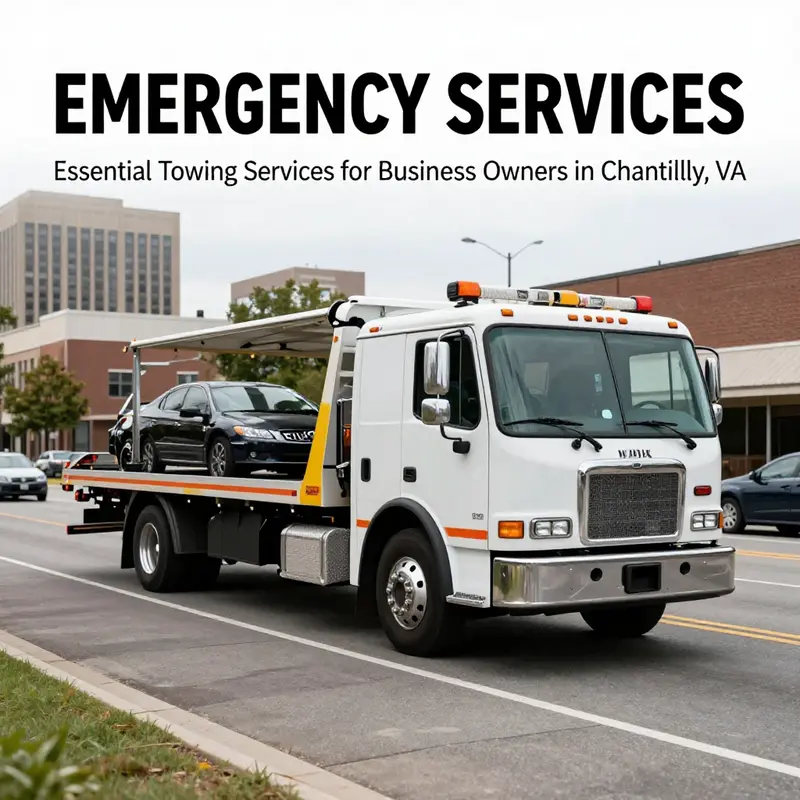
Chantilly sits along the axis where busy highways meet quiet residential streets, a landscape where the comfort of routine road trips can be interrupted in an instant. In those moments, a swift response from trained operators becomes more than a convenience; it is a lifeline. The emergency towing network that serves Chantilly arranges itself around the clock so that a stalled car, a blown tire, or a fender-bender doesn’t strand a driver for long. What unfolds on the ground is a careful choreography: dispatch centers interpreting needs, nearby tow teams mobilizing with practiced efficiency, and drivers who must balance speed with safety on increasingly congested Virginia roadways. The result is a system that feels invisible when it works, yet when a roadside crisis occurs, the relief of a quick, competent lift offers a quiet reassurance that road mobility can be restored with minimal disruption.
To understand the practical rhythm of emergency towing in Chantilly, it helps to picture the proximity of essential responders. Local operations sit very close to the town’s core, with one provider located under a mile away and another roughly a mile and a half distant. Those short distances matter. In a landscape shaped by rush-hour traffic, a few minutes can bloom into a decisive difference in whether a stranded motorist can reach a safe shoulder, or whether a vehicle will remain immobilized in a dangerous lane. The service landscape is further enriched by providers who bring more than just a tow: they offer accident recovery, breakdown towing, and roadside assistance that can include tire changes or fuel delivery. The aim is not merely to remove a vehicle from the scene, but to stabilize the situation so other traffic can flow, and so motorists can resume their journeys or receive the care they need.
Because Chantilly sits at a crossroads, the usefulness of emergency towing extends beyond simple vehicle recovery. The most capable teams operate with an understanding of how to coordinate with other responders and how to navigate the particular road patterns of the area. They know where to access secure lots for temporary storage when a vehicle cannot be repaired on site, and they understand the procedures for transporting a car to a repair facility or a storage site without causing additional risk on the highway. The value of this network is visible in the details: precise communication, clear location information, and a willingness to adjust to the evolving demands of a traffic incident. When a driver calls for help, the dispatcher on the other end of the line translates confusion into clarity, collecting key pieces of information—exact location, whether there are injuries, the type of setback (flat tire, engine trouble, collision), and the preferred destination if the vehicle must be moved. This initial triage becomes the blueprint for the response, guiding which route the tow truck will take and what equipment will be brought to the scene.
The real gauge of an effective emergency towing operation is the quality of its human and mechanical assets. A grounded, center-of-town perspective shows a fleet that prioritizes readiness: trucks that can be deployed immediately, staff trained to assess hazards, and a driver who can manage the delicate balance between safeguarding the scene and delivering a prompt service. In practice, this means having the right tools on the bed, the right recovery gear available for different surface conditions, and a knowledge of the local terrain that keeps every move deliberate rather than hurried. The chain of events in a typical rescue begins with the 911 or non-emergency line, then moves through a dispatch system that flags the nearest available unit. The operator’s skill is twofold: they must understand not only how to connect a vehicle securely to a tow apparatus but also how to keep the scene safe for other motorists. The crew may also coordinate with a nearby repair shop or storage facility, arranging for the vehicle’s transport once it is secured. Those logistics matter because a broken-down car is often more vulnerable to the elements and to the surrounding traffic than the operator can anticipate. A well-orchestrated handoff minimizes exposure to danger and reduces the time a car remains immobilized on a busy road.
For residents and visitors in Chantilly, the practical takeaway is simple but powerful: keep a few reliable steps in mind when trouble strikes. First, silence the uncertainty that comes with a roadside stop by having a plan to call for help as soon as a safe location is reachable. Second, provide precise location details. Even a simple landmark can accelerate arrival times, especially in a neighborhood where streets twist and turn with the arc of development. Third, be prepared to describe the nature of the problem succinctly—whether the vehicle will not start, there is a flat tire, or fuel is dangerously low. These details help the dispatcher select the correct equipment and the right kind of tow truck for the job. And when possible, guide the responder to the exact point where the vehicle is stranded so the approach can be made without creating additional risks for oncoming traffic.
The social fabric of Chantilly’s emergency towing network is reinforced by its integration with the wider region’s road services. The routes and corridors used by local tow teams intersect with those of nearby towns and cities, forming a ring of mobility that supports not just individual drivers but the overall health of the transportation system. When a vehicle needs to be moved to a repair shop or storage facility, the choice of destination is influenced by the shop’s proximity to major arteries and the availability of appropriate parking space to accommodate a large tow rig. In many cases, the operator will consult the driver about the most sensible route to avoid known bottlenecks, construction zones, or peak-traffic periods, if such options can be accommodated. The result is a service that feels almost anticipatory—one that thinks ahead to potential complications and plans around them.
Within this network, the idea of reliability takes on a concrete form. A driver who is familiar with Chantilly’s streets, with the quirks of local intersections, and with the typical patterns of commuter flow, becomes an invaluable asset. The sense of trust that develops between motorists and the people who come to their aid is built on consistent performance: on-time arrivals, careful handling of delicate vehicles, and a clear sense of responsibility toward public safety. This is not a luxury but a practical necessity. After all, the moment of a breakdown or an accident is already stressful enough; the last thing a driver needs is confusion or delays caused by ambiguous directions or miscommunication. The best emergency tow services transform panic into routine, turning a crisis into a coordinated, efficient operation that restores normalcy as quickly as possible.
For those who plan travel through Chantilly or live in the area, a simple, enduring habit can help preserve safety and mobility: a quick check of local towing options and a mental note of how to reach them should misfortune strike. A phone-number memory can be replaced by a saved contact, but the real strength lies in knowing that a well-organized network is ready to respond without judgment, without hesitation, and with expert care. The broader context of Chantilly’s emergency response system shows how a small, tightly clustered set of service providers can support a city’s safety ethos. When the first mile of a journey becomes an obstacle, the network’s ability to mobilize swiftly translates an ordinary trip into a shared responsibility—one that keeps roads clear, people safe, and the town’s rhythm intact.
As with many local services, there is value in looking beyond one’s own experience to understand the micro-ecosystem that makes emergency towing work. The practical wisdom offered by residents who have called for help, the feedback captured in local directories and reviews, and the steady presence of nearby operators all contribute to a resilient, responsive framework. For those who want to explore related avenues and connect to broader regional resources, one can turn to nearby pages that describe similar services across neighboring communities. Manassas Towing offers a model of how a neighboring town’s capabilities feed into Chantilly’s own infrastructure and underscores the theme that emergency road support is a shared, interwoven network rather than a collection of isolated incidents.
External reference: for a broader sense of local sentiment and real-world experiences, see the Yelp listing for towing near Chantilly, VA. https://www.yelp.com/biz/the-best-towing-near-chantilly-va-20151
Final thoughts
As we conclude our exploration of towing services in Chantilly, VA, it becomes evident that having reliable towing support is indispensable for business continuity and community safety. Local companies like Moto Tow, Battlefield Towing & Storage, and BGA Towing stand ready to provide essential services around the clock, ensuring that businesses are never left stranded during emergencies. This knowledge empowers local business owners to make informed decisions about their towing needs, thereby enhancing their operational resilience in the face of vehicular challenges.