
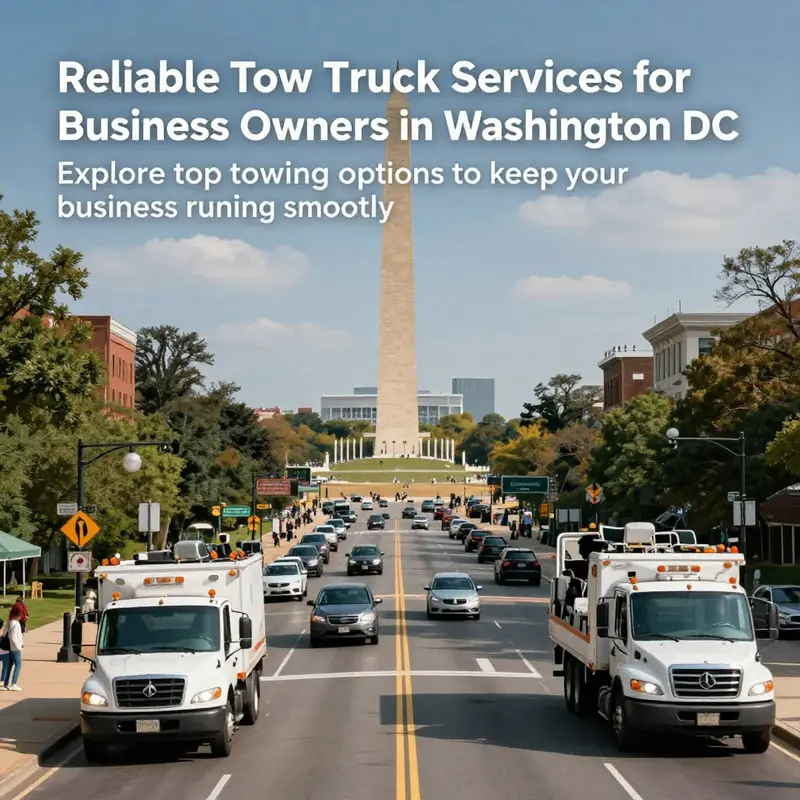
For business owners in Washington DC, reliable towing services are a crucial part of maintaining operations and ensuring customer satisfaction. In urban environments where parking challenges and vehicle breakdowns are common, having access to trustworthy towing services can save time and reduce stress. This article delves into two of the most esteemed towing companies in the area—A & A Towing Service and DC Towing & Recovery. We will explore their services, capabilities, and overall reliability, helping you make informed decisions as a business owner. Additionally, we will conduct a comparative analysis of these services, providing you with the insights needed to choose the best towing partner for your business needs.
Under the Streetlights: The Reliability and Reach of Tow Truck Service in Washington DC
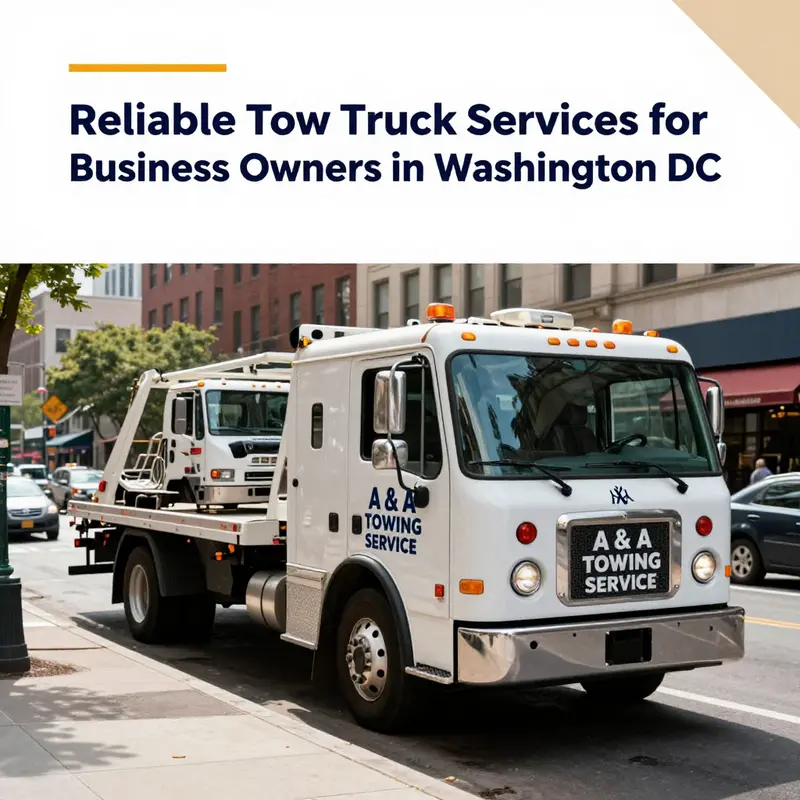
Stranded on a sun-warmed street corner or blocked by the tangle of traffic near federal buildings, a car owner’s first call in Washington DC becomes a quiet chorus of reassurance as a tow truck finally rolls toward them. In a city where the pace never fully slows, a reliable tow service does more than move a vehicle from point A to point B. It offers a bridge back to normal life, a sense that help is nearby even when the situation feels isolating. The number dialed in a moment of stress is more than a line on a sheet; it is a promise of a trained driver, a carefully equipped truck, and a dispatcher who can read the map of DC’s streets with the efficiency of a seasoned navigator. A professional towing operation in this region lives in the overlap between readiness and restraint: readiness to respond at any hour, and restraint in ensuring every action is safe, compliant, and respectful of the urban surroundings. The routine behind that promise begins long before the siren of distress. It starts with a crew that understands the city’s rhythm, from the glow of early morning commuters to the late-night returns from schools, theaters, embassies, and office towers. It includes maintenance checks that keep the fleet ready to roll, even when a vehicle sits in a lot for hours between calls. The everyday edge of the business is not flashy but essential: a driver who can locate a car on a crowded avenue, a truck that can be parked with precision on a shoulder where space is measured in inches, and a dispatch desk that can coordinate movement with the clarity of a seasoned air-traffic controller. In Washington, a tow service is part emergency response, part logistics, and part neighborly support, and that blend is what makes it trustworthy.
From the moment a call lands in the dispatch center, a chain of decisions begins: where is the breakdown, which route is fastest given traffic and weather, and what kind of tow is most appropriate for the vehicle and its constraints. In DC, the typical emergency or roadside call involves a request for rapid arrival and careful handling of the vehicle, often on crowded avenues, narrow streets, or parking lanes that feel almost alive with motion. The technicians bring more than a simple hook and pull; they carry a fleet of tools and trucks designed for different tasks. Flatbed tow trucks, with their secure platform, are favored for cars with low ground clearance or sensitive exteriors, while wheel-lift or conventional tow trucks may suit heavier vehicles or when space is tight. Each vehicle must be secured with the right chains, straps, and anchors, and every move must be coordinated with an eye toward pedestrians, cyclists, and other drivers. The operator’s knowledge extends to the mechanics of the car as well—if the vehicle’s electrical system is compromised or if a stalling engine threatens to delay the operation, the technician adapts with a calm, practical approach. The aim is a smooth, safe transfer, a result that minimizes road danger and protects the car from further damage. For many residents and businesses, the value of a dependable DC tow service lies not in the dramatic moment of a rescue but in the steady cadence of dependable service: a consistent response, a clear ETA, and a courteous, professional interaction with the person on the other end of the line. A resourceful operator will often complement towing with on-site roadside assistance—battery jumps, fuel delivery, tire changes, or minor repairs that keep people moving without the need for a tow at all. The practical choreography is what turns a potentially frightening moment into a controlled, solvable situation. The dispatch guidance and on-site discipline form the backbone of trust, and that trust is what homeowners, renters, and businesses rely on when the city’s lights glow late and the streets demand more than one kind of support.
Near the middle of this landscape, a DC tow service demonstrates its value in every interaction. The aim is not spectacle but steady competence, and that is where the true strength lies. In moments of stress, a simple, clear plan can calm nerves, and the best operators translate complexity into certainty. For many residents, the reassurance comes not from a single dramatic rescue but from a pattern of dependable responses—an ETA that holds, a vehicle handled with care, and a courteous explanation of next steps that turns impedance into progress. To illustrate the practical accessibility of this approach, readers can explore a dedicated DC towing service page that showcases how online tools align with field expertise to shorten the distance between a customer in need and a returned sense of security. DC towing service.
Urban logistics and regulatory realities shape every call. Washington’s grid is a tapestry of one-way streets, bus lanes, and permit zones that shift with traffic patterns and major events. Tow operators must not only be quick but compliant: they must observe parking restrictions, obey weight limits, and coordinate with law enforcement during accident scenes or while moving a disabled vehicle near a courthouse square or a stadium. This is why dependable DC towing is as much about process as it is about muscle. The dispatch center uses up-to-date location data, GPS-enabled routing, and live traffic feeds to determine which unit can reach the stranded motorist fastest. The fleet often includes multiple scales of operation: compact units designed to slip into tight alleys or ramps, and larger recovery trucks ready to lift and reposition heavy vehicles on uneven surfaces or slopes. The technicians carry safety gear—reflective vests, cones, safety lighting, wheel chocks—and a practiced eye for risk. They know how to assess a scene, determine if a vehicle needs to be secured to prevent rolling, and communicate the plan to the stranded driver in plain terms. The relationship between a tow operator and a customer in the capital region hinges on trust built through consistent performance—an early arrival, a transparent explanation of costs, and a respectful, non-judgmental attitude that helps diffuse frustration. For business fleets, this reliability translates into predictable service-level agreements, with dedicated account managers, routine maintenance pickups, and a swift response to incidents that could otherwise disrupt a delivery schedule or a shift change at a hospital, hotel, or government facility. The city’s varied neighborhoods—from the historic core to rapidly developing districts—underscore the need for adaptable operators who know how to navigate both traffic detours and parking rules with equal finesse.
Beyond the incident, the broader DC towing ecosystem relies on partnerships, community rapport, and a public-facing commitment to safety and service. In a city of brief exchanges that ripple into longer workdays, the quiet efficiency of a well-run tow operation becomes an unseen backbone. The person with a flat tire on a winter morning or the driver who discovers a vehicle immobilized after an event counts on the same thing: a professional who leaves the scene with everything intact, and who can outline the next steps clearly. That’s why reputable DC tow services invest in continuous training, modern equipment, and careful driver selection. It is not enough to reach the vehicle; one must leave it in good shape, with the owner equipped to decide whether to have it towed to a repair shop, to another location, or to attempt a roadside fix. The marketing story of a local towing company often centers on speed and care, but the real secret is a disciplined workflow, from the first call to the moment the keys are handed back. Some clients appreciate the ability to arrange ongoing support—regular vehicle checks for a delivery fleet, standby response for corporate campuses, or emergency standby during major events that swell traffic around the city. The online footprint of a DC towing service should reflect accuracy and accessibility, offering clear contact information, service areas, and a straightforward booking process that invites trust. For readers navigating this chapter, the takeaway is simple: in Washington, DC, a tow truck is more than a mechanical service; it is a credential of readiness, a signal that the city can still function smoothly even when the unexpected happens. It stands as a quiet reminder that far beyond the monuments and museums, a fleet of skilled technicians moves with the rhythm of the streets, turning disruption into a controlled, recoverable moment. The full value lies in the intangible: the confidence that a neighbor’s call will be answered, and that a promise kept will restore normal life as quickly as possible.
External resource: https://www.mapquest.com/us/washington-dc/aa-towing-1075-kenilworth-ave-ne-20012
The Lifeline on Call: Navigating 24/7 Tow Truck Services Across Washington, DC
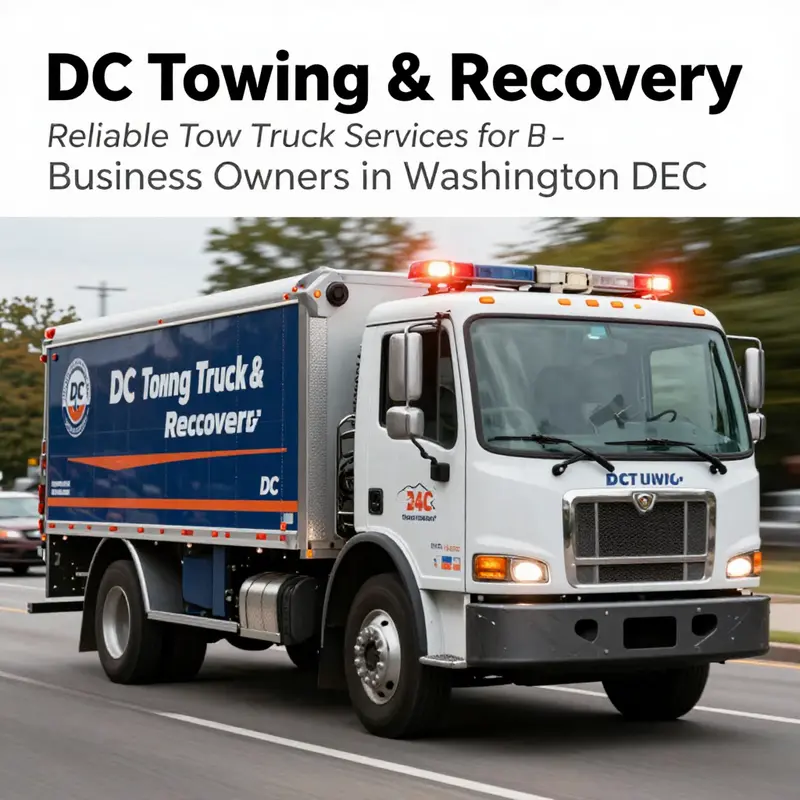
In Washington, DC, the road network feels like a living map of the city’s tempo. From the grand boulevards near the capitol to the narrow side streets that thread through neighborhoods, every mile carries a different rhythm. When a vehicle breaks down or an accident blocks a lane, the right tow truck service becomes more than a convenience—it becomes a critical link in the city’s broader safety net. The need for dependable, round-the-clock assistance is not a luxury but a practical necessity in a capital that never truly shuts down. A stalled car on a busy artery or a wheel that won’t turn on a winter night can quickly turn a routine commute into a tense, time-consuming ordeal. In such moments, people seek a reliable on-call resource that can peg the problem, dispatch the right kind of truck, and provide clear guidance about what comes next. A dependable tow service in DC understands not just how to move a vehicle, but how to manage the situation safely, efficiently, and with a respect for the surrounding traffic and pedestrians.
The realities of city driving intensify the demand for 24/7 towing and roadside assistance. Day or night, weekday or weekend, the city’s drivers face diverse scenarios: a car stalled on a rain-slicked ramp, a vehicle recovered after a minor collision, or a van that refuses to start on a crowded street near a busy transit hub. The best service is organized around continuous availability, equipped to respond quickly to a wide range of incidents. This means a dispatch system that can pinpoint a location with accuracy, a fleet that includes the right mix of light- and medium-duty units, and technicians who can adapt to conditions as varied as street closures, parking restrictions, and the unpredictable rhythms of urban traffic. The city’s geography itself—high-density blocks, curbside parking, and limited shoulder space—demands not only speed but precision. The resulting service is less about a single vehicle and more about an integrated response that aligns timing, route, and safety.
A reliable 24/7 operation stands out because it prioritizes preparation. The fleet is kept in a state of readiness, with trucks equipped to handle everything from a benign flat tire to a stubborn vehicle that must be loaded onto a bed for transport. Drivers and technicians carry a range of tools designed for urban challenges: wheel-lift capabilities to minimize contact with the vehicle and the ground, sturdy winches for secure loading, and well-maintained safety gear to protect everyone on the scene. The approach is methodical and disciplined, reflecting a deep understanding that each call can involve traffic management, bystander safety, and coordination with local authorities when needed. This is not merely about towing; it is about delivering a controlled, professional recovery that reduces exposure to risk for the vehicle, the passengers, and other road users.
From the outset, the interaction between the caller and the dispatcher matters. The most effective services have a clear, calm communication flow. When you call for help, you should receive a courteous intake that confirms the exact location, the vehicle type, and the nature of the problem. The dispatcher then translates this information into an actionable plan, selecting the appropriate truck and technician. In a city where streets can be congested and GPS signals may falter beneath tall buildings, precise location data becomes essential. Many operations now rely on coordinated routing that considers current traffic conditions, bridge weights, tunnel restrictions, and potential delays caused by incidents ahead. The goal is to arrive not just quickly, but with a plan that minimizes disruption and ensures safe handling of the roadside situation.
For residents and visitors alike, the experience of calling a DC tow truck service should be straightforward and reassuring. It should feel less like an emergency and more like a professional, steady hand guiding you through a stressful moment. This reliability often manifests in transparent communication about expected arrival times, diagnostic steps, and the scope of the solution. Even when the problem is as simple as a battery that won’t crank, the service ethos remains the same: respond promptly, assess safely, and execute with care. In urban environments, where every minute counts and the landscape of the road can change with a single lane closure, such consistency is more than convenience—it is peace of mind. If you are seeking a trusted option, a proven approach is to look for a DC-based service that emphasizes round-the-clock availability, clear updates, and a track record of professional handling under varying conditions. A practical way to explore options is to use a reliable resource for local coverage and to examine the breadth of services offered, from short-distance towing for a breakdown to longer transport for a vehicle involved in an accident.
Beyond the immediate mechanics of the call, a worthy DC tow service also demonstrates its commitment through safety and compliance. Urban towing carries responsibilities that extend to minimizing hazards on busy streets. Technicians must maintain awareness of nearby pedestrians, cyclists, and other vehicles, especially when working near intersections or on ramps. The right equipment matters here: sturdy lights that illuminate the scene, reflective vests for visibility, and secure loading practices that prevent damage to the vehicle or to surrounding traffic. A strong emphasis on customer care complements technical proficiency. That means courteous conduct at the scene, transparent explanations of what is being done, and a willingness to coordinate with insurance providers when required. The city’s diverse population and dense traffic demand professionals who can adapt their approach to a variety of scenarios, from a clogged beltway shoulder to a parking-lot recovery after hours. The most durable reputations in this field are built on consistency—on showing up when called, on handling the vehicle with care, and on delivering reliable outcomes even when conditions are tough.
When you want to know more about a specific option in DC, the practical takeaway is to prioritize accessibility and reliability above all. The best services are accessible through a straightforward phone line or online form, and they provide a transparent sense of timeframes. You should feel confident that the team is prepared for a broad spectrum of incidents, from minor flat tires to more complex recoveries, and that you won’t be left waiting in uncertainty. The right choice is a partner who is accustomed to the city’s pace and the unpredictable nature of roadside trouble. A practical pointer is to explore a DC-based towing service that can clearly articulate its area coverage, from high-traffic corridors to residential neighborhoods, and that can communicate any adjustments to timing if traffic conditions shift suddenly. For readers curious about options and looking to see how a typical DC operation presents itself, a user-friendly resource can offer a concise snapshot of service areas, fleet capabilities, and dispatch principles. For instance, one would find that the most dependable DC-oriented service emphasizes 24/7 availability and professional recovery across the metropolitan area, ensuring assistance is never far away when it is most needed. If you’re considering a local option, explore a company’s online footprint for transparency, responsiveness, and consistency, then evaluate what that means in terms of real-world performance on a busy evening or a quiet early-morning hour.
For readers seeking a direct research-backed touchpoint, you can explore the broader landscape of local towing offerings via a DC-focused service page such as this one: towing service in DC. This link points to a resource that emphasizes the core capabilities essential to urban towing—availability, fleet readiness, and safe, efficient recovery—designed to support residents and visitors alike when they need it most. The chapter’s broader context also rests on the recognition that a steady, well-coordinated 24/7 operation is a vital civic utility, weaving together private business capabilities with public road safety.
Ultimately, a dependable 24/7 tow truck service in Washington, DC, is more than a mechanical fix; it is a carefully choreographed response that preserves safety, mobility, and confidence in the city’s road system. It embodies how modern dispatch, skilled professionals, and purpose-built equipment converge to meet the moment, no matter when or where trouble strikes. The city’s rhythm demands that this lifeline be welcoming, predictable, and just a call away. When that line is answered with clarity, efficiency, and respect for the road, drivers can navigate the nation’s capital with a little more assurance, knowing help arrives promptly, handled by people who understand the city’s unique realities. For those who want to see real-world validation of the service landscape in this area, a trusted consumer review in a prominent city guide provides a useful, external perspective on reliability and responsiveness. External reference: DC Towing & Recovery on Yelp.
Tow Lines in the Nation’s Capital: A Deep Dive into Washington, DC Tow Truck Services
In Washington, DC, roadside emergencies unfold against a backdrop of dense traffic, narrow urban streets, and around-the-clock activity. When you need a tow, reliability isn’t optional—it is a lifeline. The best providers operate 24/7, ready to respond within minutes, arrive prepared with the right equipment, and communicate clearly about costs and timing. In a city that never stops, the value of a service that can dispatch quickly, navigate busy avenues, and secure the scene cannot be overstated. The expectation is not merely a tow, but a well-coordinated, calm, and safe experience from the moment help is requested to the moment you reach your destination or a repair shop.
What distinguishes quality tow services is not only speed but the breadth of support. A capable operator will handle everything from emergency pulls from a highway shoulder to wheel-lift towing on a congested downtown block, plus ancillary tasks like on-site tire changes, fuel delivery, or lockout assistance. In a city built on accessibility, the ability to reach a car parked on a busy street or tucked into a residential alley matters as much as the speed of arrival. The best firms align the dispatch, the driver’s on-site actions, and the payment process so that a stressed driver experiences transparency rather than mystery. This alignment reduces the pressure of the moment and increases the likelihood of a smooth recovery, whether the vehicle is in a rush-hour jam or stranded after a late-night breakdown.
The Washington, DC market presents a spectrum of providers. Some specialize in rapid personal towing—emergency dispatches, short-distance moves, and careful handling of a stressed driver. Others operate fleets that double as mobile repair shops, offering tire services, fluid checks, and routine maintenance alongside towing. A few emphasize heavy-duty or commercial work, serving fleets, long-haul carriers, and municipal partners. This mix is healthy for consumers because it yields options: if your priority is speed and reliability for a single incident, you can choose a nimble operator; if your needs extend to ongoing maintenance or a fleet program, there are capable partners for that as well. The challenge for a resident or a visitor is translating those strengths into a practical, trustworthy choice when a crisis hits.
Recent data from consumer review platforms through late 2025 illuminate a competitive field with clear leaders in reliability and customer satisfaction. Reviewers consistently applaud providers that respond promptly to emergencies, maintain professional conduct, and keep pricing transparent. A standout feature in the feedback is dispatch efficiency: the best operators coordinate with roadside resources the moment a call comes in, assign a compatible tow rig, and provide an ETA that respects the driver’s time and the surrounding traffic. In dense urban settings, response time is not just about speed; it is about predictability. When a driver knows that help will arrive within a known window, anxiety gives way to practical planning, and the rest of the journey can be managed more effectively.
In discussing the market, it is useful to think in terms of user needs rather than brand names. For the individual stranded on a city street, a provider with a reputation for rapid emergency response and a courteous, professional demeanor often matters most. For the business traveler who relies on reliability and predictable costs, transparency in pricing and the availability of a broader service menu can be decisive. The most trustworthy operators tend to offer a balanced package: quick mobilization, careful vehicle handling, a range of on-site services, and clear communication about what will happen next. They also show sensitivity to urban realities—tight turning radii, limited curb space, and the occasional need to coordinate with local authorities to keep the scene safe. This blend of practical know-how and customer-centric service design is what elevates a tow truck appointment from a nuisance to a manageable interruption.
For drivers who want to compare options quickly, understanding the market in broad strokes can be empowering. The city supports both lean, rapid-response operators and full-service mobile teams that come with on-board tire repair capabilities and minor mechanical assistance. In practical terms, the ideal choice is a 24/7 operation that offers transparent pricing, a track record of safe handling, and the ability to bring the right equipment for the job. It is equally important to feel confident that the provider will treat your vehicle as if it were their own, safeguarding both the car and the driver during loading, transport, and unloading. A good partner also maintains ongoing readiness, which means well-maintained tow rigs, properly trained drivers, and the right safety gear to handle varied urban scenarios—from congested arterials to residential side streets.
To explore DC-specific service options in greater depth, a dedicated guide summarizes the local landscape and the practical considerations a driver should weigh when choosing a provider. For readers seeking a targeted overview, see towing-service-dc. This resource helps connect the general principles discussed here with the concrete services available in and around the nation’s capital, offering a framework for evaluating options during a moment of need while staying mindful of urban constraints and personal safety. The overarching takeaway is simple: in Washington, the right tow partner is defined not by flash or price alone, but by a consistent pattern of reliability, clear communication, and a breadth of capability that can flex to the situation at hand.
Beyond individual incidents, the market’s health rests on several practical pillars. First, licensing and insurance reassure drivers that the provider adheres to regulatory standards and carries protection for both people and property. Second, the crew’s training matters as much as the equipment, because a well-trained operator can anticipate traffic conditions, choose the safest approach to loading, and minimize the risk of additional damage. Third, the willingness to offer a transparent estimate before work begins builds trust and helps drivers plan how to manage costs, especially when night rates or after-hours surcharges might apply. Finally, the ability to tailor services to urban realities—such as urban street parking, multi-vehicle safeties on busy corridors, and coordination with parking enforcement when necessary—will differentiate providers who can consistently perform in the capital from those who struggle with the basic constraints of city life.
For anyone who wants a broader sense of customer sentiment and expectations in Washington’s towing scene, real-world perspectives from local reviews provide an essential counterpoint to the glossy promises of any service page. External resources compile user experiences across a spectrum of incidents, from minor roadside assistances to more complex recoveries in difficult urban environments. This kind of feedback helps future callers calibrate their expectations and ask the right questions about response times, coverages, and on-site capabilities. External perspective matters, but the best preparation remains practical: know your location, describe the situation clearly, and ask for a realistic ETA and a transparent price range before the service begins. This approach reduces confusion, speeds up the process, and ultimately makes the difference between a stressful detour and a smooth continuation of your journey. External resource: Yelp top-rated towing in DC.
Final thoughts
In the competitive market of Washington DC, ensuring quick and efficient towing services can significantly impact your business’s operational capabilities. A & A Towing Service and DC Towing & Recovery both provide valuable resources that can enhance your roadside assistance strategy. Evaluating their services, customer support, and reliability will empower you as a business owner to choose a partner that meets your specific needs. As you ponder your options, remember that timely assistance can safeguard your productivity and client relationships, making efficient towing services an indispensable asset.