
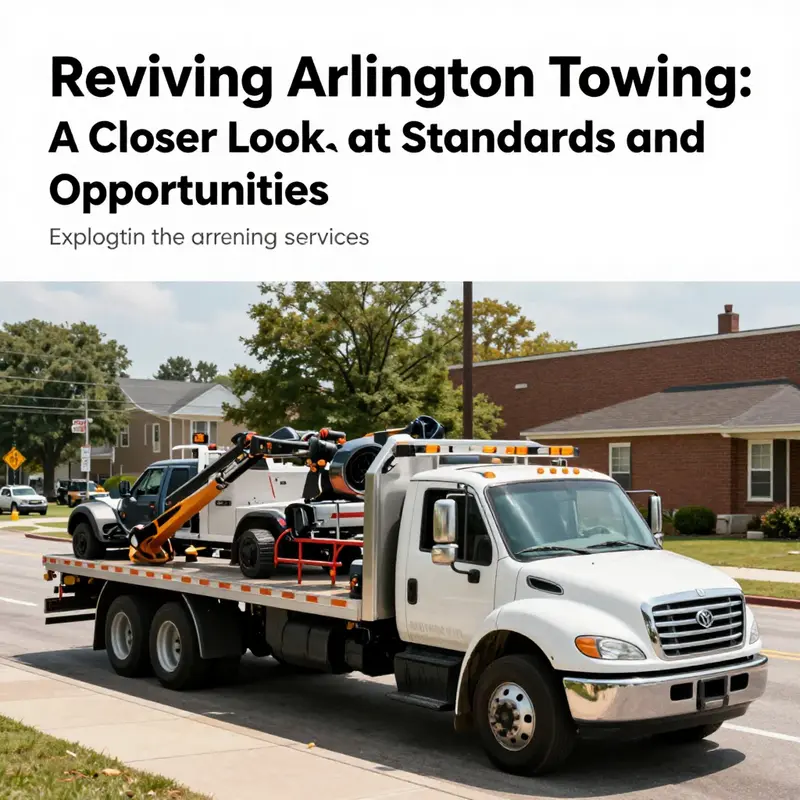
Arlington Towing’s status presents a complex landscape for businesses and consumers alike. Despite the inactive status of multiple businesses under this name, understanding their historical significance and how they relate to customer experiences is crucial. This article delves into the current state of Arlington Towing companies, offers a historical perspective on the services they provided, and shares insights from customer experiences with these towing and recovery services, ultimately revealing opportunities for future endeavors in this sector.
Shifting Ground: Unraveling the Current Status of Arlington Towing and What It Means for Roadside Needs
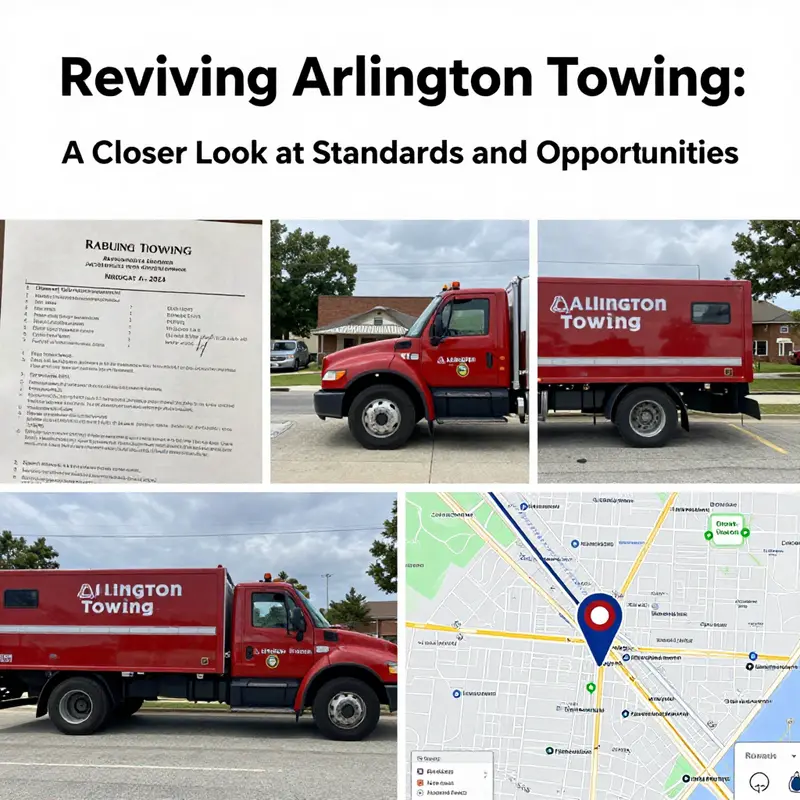
When people search for roadside help in or around Arlington, the name Arlington Towing often appears in the record of local business registries. Yet a close review of the most recent filings shows a landscape where the specific entity name has been canceled, dissolved, or is otherwise inactive across several states. This isn’t a straightforward story of one company fading away; it’s a pattern of multiple entities sharing a familiar name and moving through administrative statuses. For consumers facing a breakdown, the difference between a name that sounds legitimate and a company that is truly active can be the difference between prompt help and longer, uncertain waits. The core takeaway is not just a directory check but a disciplined verification of status before you rely on a provider for urgent help. In the Arlington context, the term Arlington Towing has appeared in Virginia and Wyoming as separate entities with distinct outcomes—none currently operating under that exact banner in a fully active capacity. This distinction matters when you need to compare options under the umbrella of regional towing and recovery services. A solid plan for approaching roadside needs begins with clarity about who is legally in business, who is insured, and who can respond quickly within your location and timeframe. The practical consequence is simple: when a name does not align with an active, compliant business, you risk receiving services from an outfit that cannot guarantee coverage, can’t provide proof of insurance, or lacks a legitimate license to operate in your state. In other words, the status of the business behind the name directly touches safety, accountability, and the reliability of the service you expect to receive. The stakes are particularly high in the Arlington area, where the density of traffic and the proximity to major corridors can turn a minor breakdown into a nerve-wracking delay if assistance comes from an entity not currently in good standing. To navigate these waters, riders and drivers alike should cultivate a habit of asking hard questions before agreeing to help. A legitimate provider will readily confirm that they are actively registered, insured, and able to issue receipts or invoices that reflect legitimate operation. They will also be willing to provide a physical address and contact information that can be verified through official channels. Such questions are not a nuisance but a necessary safeguard when you are stranded on a highway or at a curb, trying to balance time, safety, and cost. While the Arlington name itself has roots in multiple states, the current operational reality emphasizes a broader principle: status matters as much as proximity. In Virginia and Wyoming, the record shows cancellations and dissolutions, with one entity dissolved for tax reasons and another canceled in 2020. These designations are not mere bureaucratic footnotes; they indicate a business that is not actively participating in the regulated framework required for roadside assistance. For a reader who wants more than a snapshot, the practical implication is that a search result listing a familiar name should trigger a quick cross-check of status. State-level records, such as the Virginia State Corporation Commission and the Wyoming Secretary of State, serve as first stops. A call to a listed number is not sufficient if the business cannot verify its ongoing status or offer documentation of current registration and insurance. That is why many savvy residents rely on a short checklist before committing to any service: verify the business’s current status in the relevant state registry; request an invoice that shows a license or permit number; obtain proof of insurance; and confirm a dispatch capacity that ensures a timely arrival and proper handling of your vehicle. The absence of active status for the Arlington name should not discourage timely help. It should push you toward providers who can demonstrate ongoing registration and transparent billing. And in the meantime, exploring nearby active resources can provide a realistic sense of the region’s available services without compromising safety. For a nearby example of an active operation in the region, you can review Washington DC towing. This resource offers a model of how a reputable outfit communicates capacity, pricing, and proof of coverage, aligning with the expectations that responsible consumers hold when speed is essential. The aim is not to prescribe a single solution but to illuminate a principle: regional reliability hinges on verified legality and ready accountability. In practice, this means treating the Arlington name as a historical thread rather than a promise of immediate service. You can think of it as a prompt to prepare in advance—have a trusted contact or a directory of verified providers, know your location, and understand the typical response times for your area. The broader takeaway for drivers and fleet operators is consistent with the shifting status around the Arlington moniker: do not confuse familiarity with validity. If you are managing a trip, a breakdown, or a planned journey through the region, gratitude for prompt roadside help should be paired with due diligence. The road becomes smoother when you align urgency with legitimacy, and that alignment begins with recognizing the current status landscape of similarly named entities and choosing a provider based on active registration, insurance, and verifiable operations. External resources can further illuminate these distinctions, guiding you toward trusted information as you navigate a network of regional services. For readers who want to explore additional regional contexts, MapQuest remains a practical point of reference for locating recovery and towing resources online. External resource: MapQuest.
Tracing the Arlington Towing Landscape: Brand Echoes and On‑Road Realities
Across registries, the Arlington brand appears more as a historical echo than a single active service. Several entities bearing variations of the name show up in official filings, but none operates as a current, customer-facing towing service. Arlington Towing, LLC (Virginia) was dissolved in 2022; Arlington Towing LLC (Wyoming) was administratively dissolved for tax reasons; Arlington/Smokey Point Towing LLC (Washington) is listed as inactive. A separate provider named Arlington Towing & Recovery appears on maps but its linkage to the dissolved or inactive entities remains unclear. Taken together, these data points illustrate how branding can outlive enterprise, creating a navigational maze for drivers seeking help.
In Texas, a more concrete arc unfolds. Tow Truck Arlington, established in 2016, represents a modern, professional chapter in Arlington’s roadside assistance narrative. Its growth reflects urban expansion, higher traffic density, and a demand for swift, reliable help. The emergence of a dedicated towing service in Arlington, Texas signals a shift from ad hoc, neighborhood responses to a formal operation focused on dispatch efficiency, trained drivers, and transparent communications. The contrast between brand presence in registries and an active local operator underscores how regulatory and market forces shape the lived experience of roadside assistance.
The takeaway is pragmatic: consumers should verify not only that a brand exists, but that it is actively serving customers. When a name lingers only in paperwork, it cannot reliably respond to a breakdown. The broader ecosystem—complemented by established regional networks and verifiable contact channels—offers greater confidence. In many communities, local operators gain trust through visible presence, consistent response times, and open pricing.
For readers exploring nearby contexts, comparisons with related services can provide perspective on how professional towing networks organize, price, and communicate. The key point remains: reliability and accountability on the road matter more than the branding alone.
Reliability on the Road: Customer Experiences with Arlington Towing & Recovery in Arlington, WA
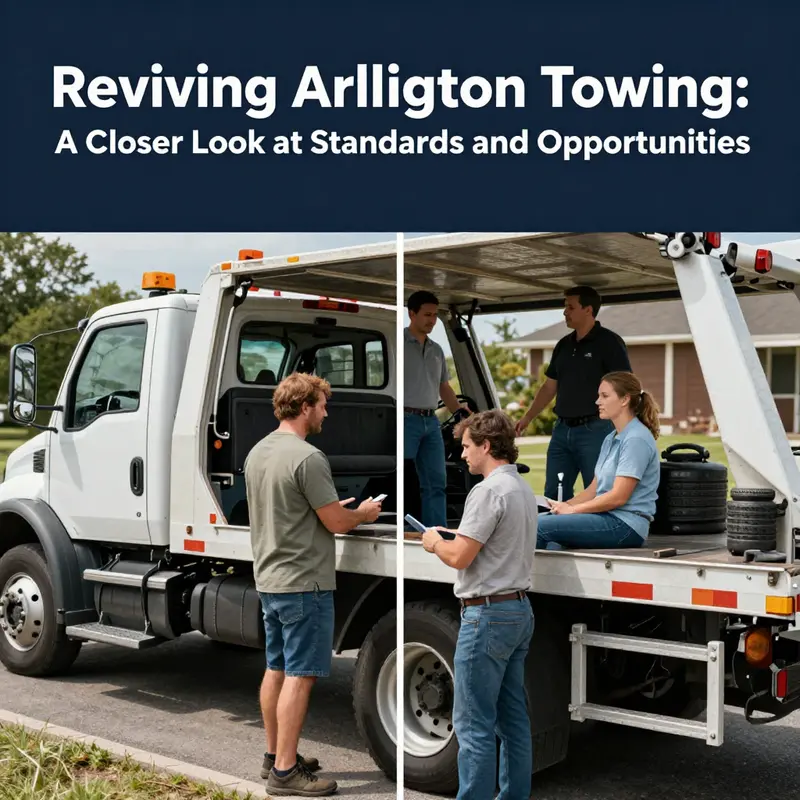
Roadside moments in Arlington, WA often hinge on more than just speed; they depend on clear communication, careful handling, and fair pricing. Customers recall dispatchers who confirm details quickly, keep them informed, and coordinate tow service with calm efficiency, turning a stressful event into a manageable process. Technicians are praised for staying with the problem until resolution, explaining options, and handling vehicles with care to prevent further damage. The most trusted providers combine punctual arrivals with transparent pricing, thoughtful safety practices, and a respectful, empathetic approach that helps people feel supported in a difficult moment. In Arlington, these patterns create a dependable local resource that residents rely on during busy commutes and weekend surprises alike.
Final thoughts
Though Arlington Towing companies have experienced a significant decline in operational status, understanding their history and customer interactions provides critical insights for both business owners and consumers. It opens avenues for new opportunities in the towing industry, emphasizing the necessity for strong operational standards and awareness. By learning from past experiences, current enterprises can better align their services to meet customer needs and expectations moving forward.