
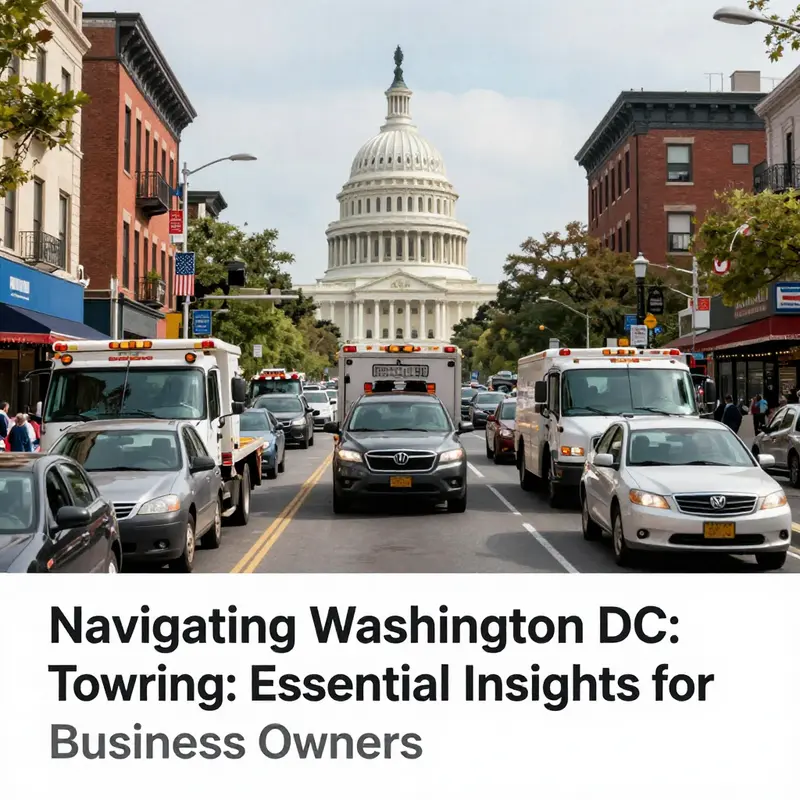
In the heart of Washington, DC, towing services play a critical role in maintaining traffic flow and assisting drivers in distress. For business owners, understanding the landscape of towing services is not only essential for effective operations but also for the safety and satisfaction of customers and employees alike. This article delves into two pivotal chapters: First, we will explore how DMV Magic Towing has become a leader in the local towing scene, known for their reliable service and customer-centric approach. Next, we will discuss the importance of emergency roadside assistance, showcasing how businesses can benefit from having trusted towing partners to handle unforeseen vehicle troubles. Together, these insights will provide a comprehensive understanding of Washington DC’s towing services and their significance for your enterprise.
DMV Magic Towing: A Leader in Washington DC Towing Services—Reliability, Reach, and Rapid Rescue Across the DMV
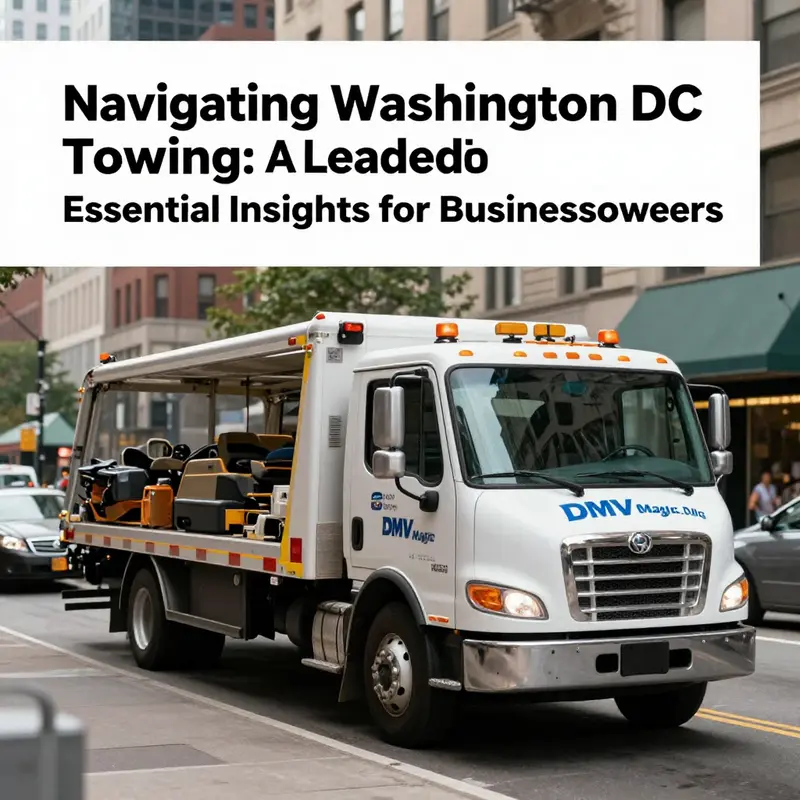
On the sprawling arteries of the nation’s capital, where a single mile can stretch from a fast-paced business district to quiet residential streets, the need for trustworthy, rapid towing and roadside assistance is a constant, almost invisible thread weaving through daily life. In Washington DC and its surrounding region—the DMV—the demand for help arrives in many forms: a flat tire on the approach to a busy bridge, a car that won’t start before an early morning meeting, or a vehicle that slips from the lanes after a fender-bender near an embankment of city lights. In this urban ecosystem, the quality of a towing service is not just about moving a car from point A to point B. It is about the assurance that, in a moment of disruption, there is a capable human response ready to interpret the maze of lanes, parking restrictions, and street regulations that define the District’s roads. It is about trust earned through consistency, transparent pricing, and the ability to deliver help when time matters most. And in this complex landscape, one provider has become widely recognized within the DMV region for meeting those exact expectations—providing calm, competent, and courteous roadside support across a broad geographic footprint that includes the high-traffic corridors of Northern Virginia and the dense, traffic-choked stretches of the city itself.
To understand why this provider stands out, it helps to look beyond a single incident and toward the broader choreography of a successful towing operation. A reliable towing service in a region as dynamic as the DMV cannot rely solely on good luck or rapid response in one neighborhood. The most enduring leadership comes from a combination of factors: a dispatch system that translates a driver’s call into a precise ETA, a fleet that can adapt to a wide range of emergencies, and a local presence that allows responders to reach congested corridors quickly while complying with city regulations around parking and curbside assistance. In practice, this means a network that covers the urban core and the surrounding suburbs, as well as a readiness to handle weather-related disruptions, holiday traffic surges, and the occasional emergency that demands coordination with police, hospitals, and other essential services. It also means maintaining a transparent, consistently fair pricing approach so that drivers know what to expect when help is on the way.
Within this framework, a DMV-area operator has established itself as a reliable and responsive provider of towing and roadside services across the Washington DC metropolitan area. The scope of service offerings is deliberately broad, recognizing that a roadside incident can take many forms and rarely arrives at a convenient moment. The core needs—flat tires, dead batteries, locked-out keys, and vehicle breakdowns—are all addressed with competence and care. But the real differentiator is the way those services are delivered: a combination of trained technicians, well-maintained equipment, and a dispatch culture that prioritizes safety, clarity, and speed. When a driver calls for assistance, the expectation is not merely that a tow will occur, but that the response will be professional, transparent, and equipped to handle the road’s ever-shifting realities. That expectation has become the operating standard in this city and its adjacent communities.
A critical element of this leadership is the practical geography of service locations. The operator serves the broader DMV area with a strategy that places proximity at the heart of reliability. One key facility, located at 1821 Midlothian Ct, Vienna, VA 22182, underscores the importance of having a base within reach of major routes that weave through Northern Virginia and into the District’s outskirts. In a city where minutes matter, being able to marshal a tow truck from a nearby hub translates into shorter wait times, a calmer driver, and a safer scene on the street. The benefit of this positioning is not simply faster towing; it is the ability to deliver rapid, reliable assistance in the early stages of a roadside emergency, helping to mitigate the risk of secondary incidents caused by stranded motorists or obstructed traffic flows.
The importance of local presence is complemented by a visible commitment to community engagement and accessibility. In the DMV, a strong operational footprint in McLean, particularly along Spring Hill Lane, has become a touchstone for residents and visitors who may encounter an unexpected breakdown while navigating the region’s suburban routes. The ability to reach such a service quickly, coupled with a reputation for professionalism and care, contributes to a sense of safety in a city where the pace of life can feel relentless and the stress of a roadside setback can compound the day’s pressures. This combination—nearby dispatch, skilled technicians, and a customer-first ethos—forms the backbone of what many drivers in the area perceive as dependable roadside support.
From a practical standpoint, the core capabilities of this leading DMV provider extend beyond the act of tow itself. Roadside emergencies often demand immediate problem-solving in the field. A driver may require a jump start if the battery has failed, but the same call can reveal a deeper electrical gremlin or a stuck lock that complicates the simplest retrieval of belongings from the vehicle. The ability to diagnose, stabilize, and, when necessary, extract a vehicle from a difficult location requires a trained team. It requires not only the physical equipment—tow trucks suited to urban curbside work and suburban driveway access—but also the judgment to navigate on-scene safety, traffic management, and the legal considerations that accompany towing in a dense metropolitan area. In this sense, the service profile described here reads as less a list of tasks and more a cohesive approach to mobility resilience.
A defining feature of this leadership is the emphasis on transparent, dependable pricing. The modern driver, facing the uncertainty of a breakdown, benefits from knowing what to expect in terms of cost and timing. Clear communication before, during, and after the service reduces the emotional charge of roadside incidents and enables drivers to plan for follow-on steps, whether they are arranging a ride to a repair shop or coordinating with an insurance provider. The industry has long struggled with opaque pricing models, but the DMV-area operator highlighted here prioritizes clarity as a core value. This commitment to transparency is not merely about business ethics; it translates into real-world benefits for motorists who are already dealing with disruption and stress. When a driver understands the likely range of charges and the ETA, the entire experience becomes less chaotic, allowing for safer decisions and more controlled responses to the situation at hand.
In the ecosystem of Washington DC towing, one encounters a spectrum of providers, each with its own strengths. The narrative around leadership in this field is not about a single, flawless operation; it is about a network of dependable responders who share a common standard for service quality, safety, and accountability. The widely recognized provider described here has earned prominence through a consistent pattern of quick response, professional conduct, and reliability across the DMV region. This reputation has been reinforced by a broad base of positive feedback from drivers who have relied on emergency road services during some of the most challenging moments on the city’s roads. Beyond individual emergencies, the company’s approach also supports the long-term stability of the region’s transportation ecosystem. When such a provider is accessible, drivers feel more secure in their daily commutes and weekend travels, knowing there is a trusted ally available to help when an unexpected setback interrupts plans.
To illustrate the practical dimensions of this leadership, consider the everyday moments that define a city’s relationship with its road network. A driver on the Beltway who experiences a sudden tire failure must navigate a high-speed merge with minimal disruption to other vehicles. The ability of a nearby towing team to arrive swiftly, stabilize the vehicle, and relocate it to a suitable repair facility is not just a matter of convenience; it is a matter of safety and efficiency for the entire corridor. Pedestrian and bicycle traffic, the proximity of schools and government buildings, and the dense pattern of rush-hour movements all shape how a towing operation must function. The leading DMV provider has built its service model to be adaptable within this framework—able to respond to a crash scene, a vehicle that has stalled in a no-personnel-lane, or a scenario where a simple jump-start unfolds into a more comprehensive roadside solution. The experience of drivers who have called for help often emphasizes speed, accuracy, and a respectful manner of engagement from the dispatcher through the field technician. This is how trust is earned in a city that never fully rests and where roads can switch from smooth sailing to gridlock in the blink of an eye.
An important, sometimes overlooked facet of this leadership is the sensitivity shown to both residents and visitors who may be new to the area. Washington DC attracts a broad mix of people—from government employees and business travelers to students and tourists—each arriving with different expectations about vehicle breakdowns and roadside support. A premier provider in this space has learned to adapt its communications, so that a tense moment can be navigated with a calm, informative voice on the other end of the line. The dispatcher serves as a guide, not just a technician; they set the tone for the encounter, helping the driver understand the process, manage expectations, and collaborate on the best course of action. That human dimension—empathy, clarity, and steady leadership—often distinguishes the good from the great in roadside assistance. In a city where every second can matter, this blend of technical capability and thoughtful customer care is essential.
Among the practical outcomes of this leadership are the relationships formed with the community and the collaborations that arise with local authorities, auto repair shops, and insurance providers. A well-established towing partner becomes more than a single service event; it becomes a reliable touchpoint in the city’s transportation system. The ongoing engagement with residents—through rapid response, transparent pricing, and a readiness to handle a broad spectrum of roadside situations—helps create a sense of continuity. When a driver encounters an unfamiliar route or a new neighborhood, the knowledge that a trusted, nearby service exists can reduce anxiety and promote safer decision-making. In this way, the leadership asserted by this DMV-area operator extends beyond the moment of tow and into the broader experience of mobility within an urban region that rewards predictability, accountability, and human-centered service.
To complement the narrative of leadership, it is helpful to acknowledge the wider ecosystem, including other regional operators that shape the competition and collaboration that drive quality in this field. While this chapter foregrounds a particular DMV-area leader, the reality is that the region benefits from a network of providers capable of meeting diverse needs—from rapid response in heavy traffic to specialized assistance for complex roadside challenges. For drivers, the practical takeaway is straightforward: when a roadside emergency occurs, seeking a service with a proven track record of quick, transparent, and professional performance across multiple neighborhoods can make a meaningful difference in outcomes. The DMV landscape rewards providers who can balance speed with safety, who can navigate the intricacies of local regulations, and who can communicate clearly from the first phone call until the vehicle is back on the road. This balance, more than anything, defines the standard by which a credible towing partner is judged in Washington DC and its surrounding communities.
For readers who want to explore regional options or gain a better sense of the DMV towing landscape, one may consider examining local service pages that highlight nearby communities and services. A useful reference point is the Burke towing service page, which showcases how regional operators position themselves to serve neighboring neighborhoods and suburbs. This kind of local lens helps illustrate the broader principle that accessibility, proximity, and a sense of local familiarity contribute to a higher level of service in urban towing operations. The idea is not to replace the central figure in this chapter but to situate it within a coherent, interconnected web of regional providers that collectively uphold the standard of roadside assistance in the DMV.
In sum, the leadership described here rests on a simple but powerful premise: when roadside trouble arises in a dense metropolitan area, the most effective response blends speed, expertise, and clear communication within a network that understands the city and its surrounding communities. For drivers, this translates into peace of mind, knowing that a trusted team can respond quickly, assess the situation without drama, and execute a safe and efficient solution that returns them to the road as soon as possible. The DMV region’s leading towing service embodies this approach, turning potential chaos into a manageable moment and turning a difficult incident into a story of reliable practice, professional care, and a commitment to the community that sustains countless journeys every day.
External resource for further context on regional towing options and current market perceptions in Washington DC can be found here: https://www.yelp.com/search?finddesc=Towing&findloc=Washington%2C%20DC&sort=date_desc
Internal link to related regional services for readers curious about nearby offerings: Burke towing service
When the City Stands Still, Help is a Call Away: A Deep Dive into Emergency Roadside Towing in Washington, DC
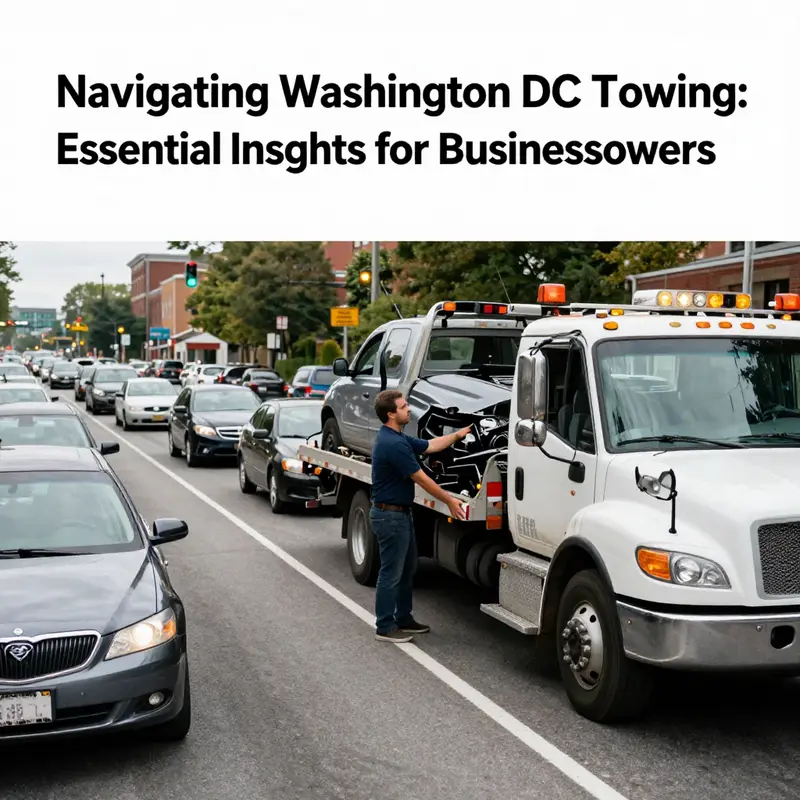
Washington, DC is a place where journeys unfold in the midst of constant motion—traffic that threads through grid-like streets, the gloss of government buildings, and the shadow of the region’s dense commuter corridors. When a vehicle breaks down, the disruption is not merely a personal inconvenience; it becomes a moment when the city’s complex choreography falters. In those moments, emergency roadside towing is more than a service. It is a lifeline that reconnects drivers to safety, work, and family, and it must be reliable, swift, and respectful of the city’s rules and rhythms. The experience of getting stranded on an urban arterial or a Beltway ramp is shaped not just by the mechanical failure, but by the quality of the response—the dispatcher’s clarity, the technician’s expertise, and the vehicle’s readiness to be moved and to be kept safe. In Washington, where time is money and every mile counts, the difference between a disrupted day and a swiftly restored itinerary often rests on choosing the right roadside partner at the right moment. The challenge for drivers is not simply to locate a tow truck, but to understand what makes a provider trustworthy in a city that moves at a relentless pace and where safety, legality, and speed must align in a carefully balanced act.
To appreciate the practice of emergency towing in this region, one must first recognize the realities of DC’s road system. The city sits at the nexus of interstate travel, federal traffic patterns, and dense street grids that test even the most seasoned drivers. Emergencies can arise anywhere: a tire blown on a rain-slicked stretch near a tunnel, a dead battery in the early morning chill outside a government office, or a lockout that leaves a commuter vehicle stranded near a metro station. The response, therefore, cannot be a one-size-fits-all. It requires a fleet that can handle a spectrum of situations—from light-duty jumping and tire changes to heavy-duty tows that artfully navigate tight corners, bus lanes, and zones with parking restrictions. In DC, the practical demands extend beyond mechanical know-how. Technicians must be adept at communicating with drivers who are often stressed, managing needs while keeping safety a foreground concern, and coordinating with city regulations that govern where and how a vehicle may be moved.
One of the most important attributes of a capable emergency roadside service is response time. In a region where a minute can feel like an hour and where congested streets can turn a routine delay into a crisis, the ability to receive a dispatch, locate the vehicle quickly, and deploy a crew with the right tools is essential. A dispatcher who asks for a precise location, an estimated arrival, and a clear description of the vehicle’s situation helps reduce uncertainty for everyone involved. The best operators in DC keep their communication channels lean and their updates frequent. They understand the value of transparency—not just in pricing, but in expectations about arrival windows, possible access restrictions, and the steps required to secure a safe lane for loading or towing. The complexity of DC traffic means that a one-size-fits-all ETA rarely suffices; the most reliable providers continuously reassess routes, factoring in lane closures, special events, and the ongoing needs of first responders.
Another core element is the breadth of services that a reputable roadside partner can offer. In the city, a comprehensive emergency service must be able to handle a range of contingencies: a jump-start on a battery that stubbornly resists the cold; a tire change with a spare; a lockout for a keyless-entry vehicle; and, of course, secure, professional towing when the vehicle cannot be moved under its own power. For drivers, this means finding a company that can transition smoothly from roadside repair to safe transport. The best providers carry the right equipment for mid- and heavy-duty towing, have technicians trained for rapid on-site assessment, and can perform ancillary tasks—like winching out of a garage or maneuvering onto a tow truck—with care. In practice, this means a driver can remain in control of the situation, receive clear instructions, and avoid the compounding stress of multiple vendors or improvised work.
Alongside speed and capability, pricing ethics matter. The DC area features a mosaic of municipal rules and local ordinances that can influence fees for roadside services, especially in controlled zones or near major government facilities. Drivers deserve price transparency—an upfront explanation of what the service includes, what surcharges might apply, and how the final bill is calculated after the vehicle has been transported. In a region where a brief moment of silence at a red light can give way to a long wait for a tow, the last thing a driver needs is ambiguity about costs. A trustworthy provider will walk a caller through the likely charges, offer a written estimate when possible, and confirm any changes in scope before proceeding. This ethical approach reduces surprises and protects both the driver and the provider, facilitating a more respectful encounter with a city that already places demands on its residents and visitors.
The social dimension of emergency towing in Washington is closely tied to the city’s local knowledge. Local operators understand the nuances of the road network—the quirks of two-way streets that become one-way during peak hours, the timing of street sweeps that can block a so-called quick stop, and the routes that keep tow trucks out of the busiest corridors while still delivering timely service. A driver who relies on a national, cookie-cutter network may encounter delays or miscommunications if the dispatcher cannot account for on-the-ground realities. By contrast, a local or regional operator with a robust DC footprint is more likely to anticipate traffic patterns, coordinate with other nearby responders, and offer a calmer, more predictable experience for someone already unsettled by a vehicle problem. In this sense, emergency towing in DC becomes not just a mechanical service, but a localized partnership built on familiarity with streets, traffic psychology, and the city’s unique tempo.
The market in Washington and its surrounding environs shows a spectrum of capable providers, each bringing their strengths to bear in different situations. Some are known for rapid response and strong on-site problem-solving, others for steadfast reliability in the face of complex tows, and still others for the breadth of roadside support—from battery work to lockouts to vehicle recovery after a collision. In February 2026, several DC-area towing firms were widely recommended for their quality of service when emergencies arise. Among them were firms that earned praise for speed and professionalism, for clear communication, and for transparent pricing during stressful moments. The common thread across these providers is not merely a fleet or a price tag; it is a careful alignment of skill, responsiveness, and a client-centered approach that treats the driver with respect and exerts careful control over the situation to minimize risk.
The practical takeaway for drivers is straightforward but consequential: when you encounter a roadside incident in Washington, you should look for a partner that can show up quickly, assess the situation on the curb or shoulder safely, and offer clear options for on-site fixes or transport. A good provider will explain what can be done on the spot, what requires a tow, and how long each option might take. For flat tires or battery failures, a skilled technician can often perform a roadside repair that saves a tow, if feasible. For situations requiring removal from the roadway, a towing operation should proceed with a plan that keeps pedestrians and other motorists safe, respects park and curb rules, and completes the move with minimal stress. In DC, this balance is especially essential because the city’s dense traffic, variable weather, and the presence of both federal and municipal authorities add layers of coordination to any roadside operation.
To illustrate the landscape of available choices, consider the well-known local options that residents and frequent visitors rely on when the first call comes in. These firms are often praised for rapid response times, professional demeanor, and the ability to handle a broad spectrum of emergencies—from a minor jump-start in a crowded street to a more involved recovery after a collision. They cultivate reputations not only for technical skill but for practical, empathetic customer service. A driver who has experienced a prompt, courteous dispatcher, a technician who speaks clearly about required steps, and a transparent invoice at the end of a tense incident tends to feel more assured about their safety and their vehicle’s long-term condition. The city rewards this combination of competence and character with repeat business and positive word-of-mouth that helps motorists navigate an urban environment that can be unforgiving to delays.
In addition to the locally grounded providers, the DC area also draws attention to services that bridge the gap between emergency needs and routine maintenance. For example, some firms specialize in both mid- and heavy-duty towing and in emergency road assistance that includes jump-starts and minor garage pushes. These capabilities are emblematic of a broader shift toward more integrated roadside care, where a single visit can resolve multiple issues and return a driver to the road with minimal disruption. Such breadth matters particularly when a vehicle is time-sensitive—commuter traffic, a family heading to a medical appointment, or a professional traveling to an important meeting. The ability to coordinate a jump, unlock a car, and then tow the vehicle if the battery proves unreliable is a holistic approach that reduces the number of vendors needed during a single incident and helps the driver maintain a sense of control.
For many DC drivers, the decision to call a particular service comes down to trust formed through consistent, real-world performance. This is why word-of-mouth and online reviews carry weight in this market. Drivers often ask around their neighborhoods, consult online reviews, and weigh the testimonies of others who have faced similar predicaments. The result is a feedback loop in which reliability becomes the currency that distinguishes one provider from another. A reputable operator will listen to the specifics of a driver’s situation, explain what can be done within the constraints of the location and vehicle type, and then execute with precision. The emphasis on safety—both of people and of the recovered vehicle—permeates every stage of the encounter, from the moment the call is answered to the moment the tow is completed and the driver is on their way again.
Turning to the practicalities of the DC market, drivers who live in or travel through the region frequently encounter a mix of local specialists and broader-service providers. In the February 2026 landscape, a few local firms stood out for their neighborhood familiarity and their ability to service the full range of roadside needs. These firms earned credible reputations for speed and for maintaining transparent communication with customers during the process. They were recognized for their readiness to respond to diverse situations—engaging with both ordinary road failures and extraordinary circumstances that occur in a city with a busy event calendar and ongoing construction. The underlying lesson for drivers is simple: when you plan a trip through Washington, knowing where to call for help can transform a potentially crippling moment into a manageable delay with a clear path forward. It’s not just about the tow itself; it’s about the entire sequence—from the initial call, through the on-site assessment, to securing safe transport and a fair bill.
If a driver needs a concrete point of contact within the local towing ecosystem, it can be useful to consider a trusted local option that has built its reputation on dependable service. For those familiar with the DC area, a reliable choice is the Burke towing service. This link is more than a URL; it reflects a local niche that residents often rely on when an everyday breakdown becomes a time-sensitive ordeal. The beauty of a local option lies in its proximity, its familiarity with neighborhood streets and parking restrictions, and its ability to adapt quickly to the city’s changing conditions. In many emergencies, this combination of proximity and adaptability translates into real-time benefits—a shorter wait, a safer evacuation from the roadway, and a smoother coordination with any legal or safety requirements the moment demands. The DC area rewards such nimbleness with trust built on repeated encounters that prove helpful across a spectrum of situations, from a minor nuisance to a substantial emergency.
Beyond individual choices, the overall takeaway for anyone driving in Washington is the importance of preparedness. Having a trusted contact list, a charged mobile device, and a clear plan for what to do if a breakdown occurs can drastically reduce the stress of the moment. Drivers should keep the essential information handy: the vehicle’s location, the nearest landmarks or mile markers, any parking or lane restrictions, and the best place to place hazards or to wait safely for a tow. It is also wise to share a rough ETA with a family member or colleague, so there is someone on the lookout while arrangements are made. In a city defined by careful coordination and swift action, being proactive about roadside safety is as important as having a fully functioning car. The optimal approach blends practical readiness with the wisdom of choosing a partner whose expertise and approach align with the city’s tempo, ensuring that when disruption occurs, the path back to normalcy is direct and respectful of the urban fabric.
In closing, emergency roadside assistance in Washington, DC, is less about a single act of pulling a vehicle off the street than about a networked process that supports people through disruption. It demands quick thinking, clear communication, and a provider capable of navigating the city’s physical and regulatory terrain. It requires a cooperative relationship between driver and technician, one built on transparency about timing, costs, and the steps toward safe transport. It calls for a local sensibility that recognizes the city’s unique traffic patterns and parking realities while offering a calm, competent hand to guide the situation toward resolution. For those who experience a breakdown in this dynamic environment, the right response is to seek a partner who combines speed, skill, courtesy, and a straightforward approach to pricing. In the DC context, that combination makes all the difference between a day derailed and a day ultimately regained with dignity and safety, and it reaffirms why steady, dependable emergency roadside support remains a vital public-facing service in the nation’s capital.
External resource: https://www.yelp.com/biz/encompass-roadside-assistance-washington-dc
Final thoughts
Understanding the towing landscape in Washington, DC, allows business owners to make informed decisions about their vehicle support needs. DMV Magic Towing demonstrates what reliable service looks like, while the emphasis on emergency roadside assistance underscores the importance of having dependable partners in times of crisis. By engaging with these services, businesses can ensure their operations run smoothly and their employees and customers feel secure. Embrace the partnership with trusted towing companies to enhance your business’s resilience and responsiveness.