
Understanding where to obtain a Tow Truck in GTA 5 is crucial for business owners involved in cargo operations, heavy-duty towing, and overall vehicle management. Whether you are engaged in GTA Online or diving into the single-player story mode, knowing how and where to acquire this versatile vehicle enhances your gameplay experience and operational efficiency. This article outlines strategic methods to get your Tow Truck, explores distinct locations for easy acquisition, and shares valuable tips to maximize your investment in one of the game’s most robust vehicles.
Tow Line Routes: Securing and Using the GTA 5 Tow Truck Across Online and Story Modes
When you plan money making runs in GTA 5, the tow truck stands out as a dependable workhorse. It offers more than hauling vehicles; it supports Freight Cargo contracts, salvage runs, and simple vehicle repositioning. This chapter treats the tow truck as a practical tool that fits into two different game worlds: the persistent GTA Online economy and the scripted yet exploratory Story Mode. In both modes, owning the tow truck matters for steady access and reliable performance on missions and open world errands.
In GTA Online, the most reliable route to a tow truck is buying it from the in game store. Instead of relying on random spawns or mission rewards, you get a dedicated tow vehicle that can be customized and stored. The process is straightforward: open the in game menu, go to the vehicle section, and look under the utility or commercial categories for a tow vehicle. After purchase, the vehicle becomes part of your garage roster, ready whenever you log in. This path has two clear advantages: it guarantees a tow truck in every session and it unlocks customization options to tailor the truck for cargo duties with performance upgrades that improve acceleration, handling, and load stability on long hauls. The result is calmer, faster cargo runs with upgrades like turbo, better suspension, and higher quality tires to maximize your contract yield.
There is a practical nuance. While the online route is to buy the tow truck, missions may also assign a tow truck as part of the loadout during Freight Cargo operations. In those cases the truck may come with specialized equipment or a tailored tow capacity. Even so, the purchase path remains the most dependable for repeated access and long term business style play. If you want to understand how the online ecosystem shapes these choices, view the tow truck as a versatile asset that scales with funds and ambition. It is a portable workshop for cargo, logistics, and repositioning across Los Santos.
In Story Mode, access to a tow truck is more situational and less predictable. You may encounter them near industrial zones and garages as you move through side missions or optional shortcuts. The simplest tactic is to locate a tow vehicle near a government or industrial district and bring it toward your next objective. It is not guaranteed and it does not transfer to online play, but it rewards patience and map literacy. A typical moment involves flagging down a tow truck at a nearby facility, using it to maneuver a stranded trailer, and driving it to a designated lot or mission point. The fun here is the improvisation: learning to read denser map sections where workhorses are more likely to appear and timing routes so the tow vehicle becomes a repeatable shortcut rather than a one off advantage.
For players aiming to build a ready to use tow fleet, the best practice remains consistent access through the in game shop. It is simple and practical for long term cargo operations and maintaining a flexible, high performance vehicle lineup. As you pursue larger contracts, a well upgraded tow truck becomes a core instrument for the business side of your GTA career, enabling you to orchestrate deliveries with fewer delays and greater reliability. If you are curious to compare the feel of a tow vehicle in the real world with its in game counterpart, you can explore real world references such as Tow Truck Washington DC. It provides a grounded sense of how these machines are described and operated in practical terms, even as you drive your GTA version through virtual warehouses and docks.
Beyond the core path to acquisition, a few broader takeaways remain. The tow truck continues to be a top choice for cargo delivery due to stability, speed and ability to handle heavy loads, especially when equipped with the right modifications. If you are assembling a fleet for Freight Cargo, set upgrades with cargo in mind, prioritizing components that minimize sway and boost towing stability. In online play, this translates to faster runs, more consistent payouts, and fewer sessions spent hunting a usable vehicle. In Story Mode, random spawns remind you that the world is alive and not scripted around your every move; with time and map literacy you can still leverage a tow truck as a valuable asset on the road.
For a deeper dive into how the tow truck fits into the GTA V vehicle ecosystem, see the external guide linked below. It offers a structured breakdown of models, upgrades and mission related usage that complements the practical approach described here. External resource: https://www.ign.com/wikis/gtav/Tow_Truck
Tow Lines Across Los Santos: How to Get the GTA 5 Tow Truck in Story Mode and Online
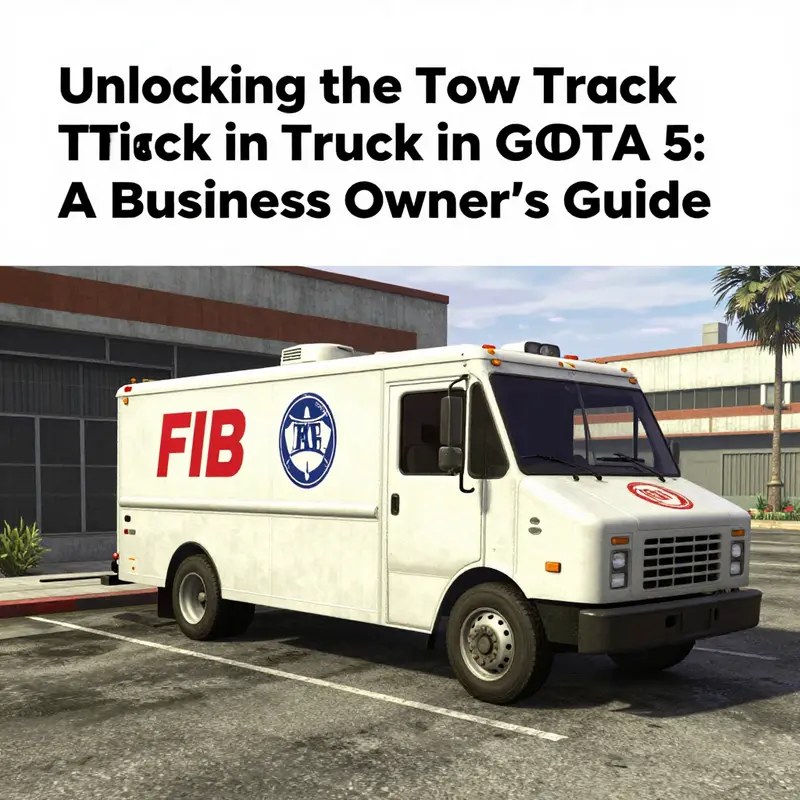
The tow truck in GTA 5 isn’t just a utility vehicle; it’s a flexible workhorse that opens up faster cargo runs, better mission flow, and cleaner shortcuts across Los Santos and Blaine County. The way you acquire it depends on whether you’re steering through the single-player story or building a business in GTA Online. In both cases, the Tow Truck becomes a reliable companion when you need to move heavy freight, recover stranded assets, or simply reshape the route of a mission so you don’t waste time wading through traffic or dead ends. The journey to ownership, or access, unfolds differently in each mode, but the goal remains the same: a sturdy, dependable tool that can haul real loads without breaking down under pressure. In Online, the pathway is practical and straightforward, while in Story Mode, it’s earned and gated behind a mission that teaches you where to store and summon your tow assets for future endeavors. The balance between method and payoff makes the Tow Truck a memorable fixture in Los Santos, especially when you’ve learned to tailor it to your play style with upgrades and smart positioning during hunts for cargo and contracts. For players chasing cargo runs, the Tow Truck’s stability, combined with the capacity to handle heavy loads, translates into smoother deliveries and fewer detours when time matters. Those small efficiencies compound into a reliable edge in a competitive online environment, where every fraction of a second shaved from a delivery adds up over a night ofFreight Cargo missions and other contracts that reward consistent performance. The game has kept the Tow Truck relevant in 2026 by emphasizing its durability in high-stress runs and its compatibility with cargo loads that would challenge lighter vehicles. That resilience, paired with upgrade options, creates a compelling case for making the Tow Truck your go-to tool when a job demands more muscle than speed alone can provide.
In GTA Online, the most reliable route to ownership is practical and immediate. The Tow Truck is a commodity you can purchase from the in-game vehicle dealer, specifically in the Paleto Bay area, in the section designated for larger commercial vehicles. The process is simple: you pay the in-game cash price, and the Tow Truck becomes a standard option in your garage. Once you own it, you’ll discover that its towing capacity and interior space allow you to transport sizable freight, a core requirement for Freight Cargo missions and other cargo-focused contracts. If your aim is efficiency, you’ll want to outfit the Tow Truck with performance mods that are commonly available through the upgrade menu—turbo charging and racing suspension are widely discussed as upgrades that reduce acceleration time and improve handling, especially when you’re balancing speed with the need to avoid wrecks during tight, high-Stress deliveries. While the base model is sturdy, these upgrades sharpen its competitive edge and can transform a difficult run into a dependable, repeatable process. A useful note for Online players: sometimes a Tow Truck can appear as part of a mission loadout when you’re participating in Freight Cargo-style tasks. The mission design sometimes provides a Tow Truck to help you move large containers, so staying flexible and ready for spontaneous assignments can yield both cash and efficiency. A final strategic tip is to monitor sales and dealership rotations; although the Paleto Bay location is the most reliable place to buy, occasional in-game events can present alternative opportunities or bundles that boost your cargo-delivery capabilities.
In practical terms, this means that Online players looking to maximize Cargo work should head straight to the Mammoth vehicle dealership in Paleto Bay and purchase a Tow Truck under the Commercial category. It’s a straightforward transaction that unlocks a durable workhorse you can rely on for the long haul. If you’re in a hurry to test its practical performance on a Freight Cargo run, you may discover that some missions will briefly assign you a Tow Truck, which is a nice demonstration of its role in the broader economy of the game. The vehicle’s reputation as a cargo-delivery stalwart is reinforced by its compatibility with heavy loads and its resilience in congested city environments where precise handling matters more than sheer speed. For players who want step-by-step guidance or a deeper dive into upgrade paths and mission-specific loadouts, official resources and guides remain a solid reference, and a well-timed upgrade can turn a stubborn run into a textbook delivery sequence.
Turning to Story Mode, the Tow Truck isn’t a vehicle that simply sits in a lot waiting for you. Its presence is dynamic and earned through progression. The most direct route to permanent access is tied to a canonical mission that follows Curtis, also known as Curt. The side quest “Towing for a Living” serves as the gateway to a functional Tow Truck Garage located in Paleto Bay, in the map’s northwestern corner. Completing this mission is the moment you unlock the Tow Truck Garage, and with that lock lifted, you gain immediate access to several tow trucks from that garage at any time. It’s a payoff that aligns with the game’s design philosophy: you work for a practical utility, and once earned, the utility remains readily accessible for future operations. The garage itself becomes a hub for your towed operations, a place where you can select a tow truck and bring it into mission cycles, heist planning, or simply as a reliable vehicle for exploration.
Beyond the Paleto Bay garage, Tow Trucks can surface in other locations across Los Santos and Blaine County, providing a sense of discovery for players who enjoy exploring. A classic Tow Truck might appear near the Paleto Bay Car Dealership, often stationed in the vicinity of a nearby repair shop or “Chop Shop” area, with the vehicle design and color pattern giving away its identity to those who know what to look for. In some missions, Tow Trucks appear at secure facilities such as the Vehicle Storage Facility or at FIB-related sites, offering opportunities to borrow one for mission-specific tasks. And, like many GTA stables, Tow Trucks can spawn on streets or in parking areas of industrial zones or abandoned lots, giving patient players a chance to pilfer one during a routine night drive. The visual cue—red-and-yellow contrast and the unmistakable silhouette—helps players spot the Tow Truck when the moment calls for a quick grab-and-go maneuver, letting you slide into a mission or a shortcut with minimal detours.
For players who plan ahead, the Curtis mission “Towing for a Living” remains the clearest path to permanent access to a Tow Truck in Story Mode. It not only unlocks the Paleto Bay Tow Truck Garage but also standardizes access so you can retrieve and deploy tow units whenever a new job arises. This aligns with the broader aim of the chapter: to map out a practical approach to acquiring a tow vehicle across both modes, with reliable locations, mission-framed access, and upgrade considerations that empower a player to handle cargo with greater ease. As you prepare for the next phase of your GTA 5 journey, keep in mind the dual value of the Tow Truck: a dependable partner for heavy-lift contracts in Online play, and a earned, ready-to-use asset that expands your options in Story Mode. For those who want a broader real-world reference, you can read about towing service resources tied to modern contexts at a reputable industry page: https://acex-towing.com/tow-truck-washington-dc/. And for an authoritative, official GTA reference on story-mode vehicle details, consult Rockstar’s support resource at https://support.rockstargames.com/hc/en-us/articles/201746793-GTA-5-Story-Mode-FAQs.
Tow Lines and Deadweight: A Fluid Guide to Grabbing a Tow Truck in GTA V Across Online and Story Modes
In a city built on chaos and deliveries, the tow truck stands out as a steady workhorse. It isn’t just a vehicle; it’s a reliable tool for moving heavy freight, rescuing stranded cars, and shaving minutes off long cargo runs. In GTA V, the routes to obtaining one are as varied as the city’s back alleys: you can buy one outright in the online world, you can stumble upon it in the story mode, or you can summon it when urgency demands it. The choice depends on your mode, your cash, and how you want to play the game’s logistics side. What matters most is that the tow truck is a durable partner for players aiming to master cargo delivery, recovery missions, or simply shortcutting through a busy map with a heavy load in tow. The journey toward ownership and access is a thread that weaves together both the online marketplace and the sprawling single-player landscape, and it’s worth tracing each path to understand which route best fits your play style.
For players who roam GTA Online, the tow truck is not merely a transport option but a strategic asset. The most straightforward path is to acquire it via the in-game vehicle marketplace, where you can browse the catalog, compare prices, and purchase a tow truck with the virtual currency you’ve earned through missions, heists, and freighter tasks. The Paleto Bay area hosts a major vehicle dealer where a one-time purchase grants you permanent access—no mission gating, just cash on hand and a confirmed purchase in the dealership’s catalog. Once you own it, you can load it with cargo or use its powerful tow mechanism to reposition unwieldy containers for Freight Cargo contracts. If you’re juggling cargo missions, sometimes the mission setup itself will lean into a tow-equipped loadout, making the vehicle not just an option but a requirement for efficient completion. Upgrades matter here. Performance enhancements—turbo boosts and upgraded suspension—can shorten freight times, improve acceleration under load, and help your towing rig keep pace with faster transports. The effect isn’t merely cosmetic; it translates into more reliable deliveries and cleaner routes across the map, especially when you’re circling between distribution points with a full cargo hold.
Turning from the online market to the single-player campaign, the city’s layout reveals a different rhythm. Tow trucks can be found tucked away in practical spots: near industrial zones, garages, and service yards where utility vehicles cluster. A common pattern is to encounter a tow truck in the vicinity of a large work site or a maintenance district, where drivers leave a rig idling or parked while they handle repairs. In practice, you’ll often spot a tow truck near the FIB facilities or other government-adjacent compounds. The strategy here is not to rely on a single spawn, but to move through the map with patience, checking garages, warehouses, and loading docks. The allure of this approach is the possibility of scoring a free vehicle, which can then be used for side missions or quick shortcuts when a mission demands a fast repositioning of a car. This method isn’t guaranteed and can depend on the game’s dynamic spawning, but many players find it a refreshing alternate track to ownership.
Beyond the two core tracks—direct purchase in Online and scavenged vehicles in Story Mode—there exists an in-game ecosystem designed to provide rapid access when time is tight. The fastest, most reliable option for an immediate tow is an in-game service accessed through the player’s phone. This is not a real-world dealership, but a simulated service that lets you instantly summon or purchase a tow truck for use in your current session. The advantage is speed: you don’t need to drive around, dodge traffic, or squeeze through a delivery route to secure the vehicle. The convenience is undeniable when you’re sprinting to complete a freight contract or a quick logistics run where every second counts. If speed isn’t the priority, there’s another legitimate, strategic choice in the game’s wider delivery ecosystem: an emergency in-game transport option that you can call on when a vehicle must be moved urgently. This “air support” style feature is meant for rapid vehicle repositioning during missions or high-pressure sequences. It’s not as hands-on as driving your own tow truck, but it provides a crucial lifeline during a tense delivery or retrieval scenario.
For players who enjoy a more exploratory path, there are free-spot spawn points worth keeping in mind. Industrial zones, docks, and freight terminals—areas dense with trailers and service vehicles—are your best bets when you want to encounter a tow truck without spending money. Major highway service areas and rest stops also occasionally host tow trucks, especially if you’re traversing the map on a long cargo route. The Los Santos International Airport corridor and surrounding logistics hubs can surprise you with a tow truck tucked away in a back lot or side street, waiting for a driver who knows how to turn a routine run into a quick recovery. The map’s dynamic nature means you’ll want to scout multiple areas and move with the flow of traffic and mission demands. A practical approach is to use the map markers and GPS route to systematically sweep likely zones, returning to proven spawn clusters during a play session when you need a reliable fetch more than a flashy haul.
A final note ties the practical mechanics to the broader strategy. If you prefer a hands-on operational flow, the internal route through the in-game phone system is the cleanest path to fast access. For a world that still rewards exploration and opportunistic spawns, a careful scan of industrial pockets and transport hubs will yield tangible rewards—sometimes even a tow truck waiting for a careful approach and enough luck to discover a free vehicle along the way. Throughout all paths, the thread remains the same: the tow truck is a stable asset for cargo, a versatile helper in retrievals, and a trusty companion for players who care about efficiency and reliability on the move. To learn more about related towing topics and to explore broader logistics considerations, see the external resource linked at the end of this chapter.
Internal reference note: for readers who want a real-world parallel to the service network described here, consider exploring specific local towing resources that resemble the in-game utility this vehicle provides. An accessible entry point is the linked page below, which reflects the type of service network that inspires the towing dynamics in GTA V: tow-truck-washington-dc.
External resource for deeper context: https://www.ign.com/wikis/gtav/Tow_Truck
Final thoughts
Securing a Tow Truck in GTA 5 can significantly enhance your business operations, from facilitating heavy loads to optimizing cargo missions. With methods defined for both GTA Online and Story Mode, players can choose the route that best suits their gameplay style. By utilizing the recommended locations and tips outlined in this article, you can efficiently integrate the Tow Truck into your logistical framework, making your gaming experience more productive and enjoyable. Embrace the versatility of this essential vehicle and pave the way for successful operations in Los Santos.